
Review · TANZANIA
Street Food and Community Walking Tour
Arusha has more to offer than safari departures. This Sinoni walking tour takes you south of the city center for local food, neighborhood life, and a close look at everyday work. I like the mix of tastings and community visits, and I like that all profits support education, women’s programs, and basic needs through Jamii Imarika Foundation. The main consideration is simple: this is a real neighborhood walk, not a polished food show, so expect a modest setting and a fair amount of walking.
I also like the small-group limit of 10 people. Guides Jackson and Given have been praised for being friendly, helpful, and generous with local information, which matters when you are entering a community rather than simply passing through it. At $25, the tour offers good value, though private transport to the start is not included and the walk can be affected by poor weather.
Key things to know before you book
- Taste food from several local vendors: The tour includes sweet and salty Tanzanian foods along the route, giving you more variety than a single restaurant meal.
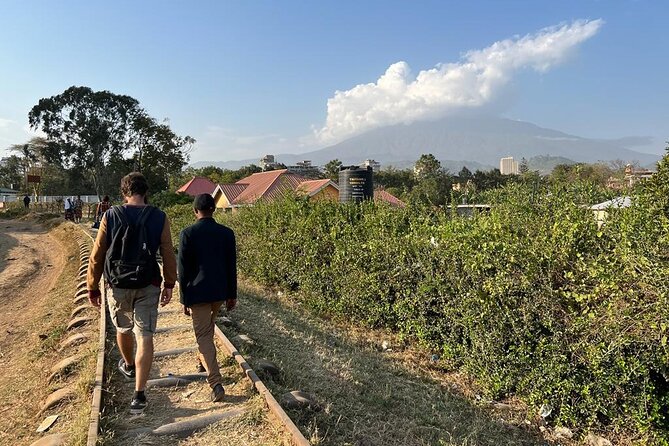
- See everyday work in Sinoni: Stops can include urban farming, recycling, maize milling, carpentry, mud houses, and churches.
- Support a local foundation: All tour profits go to Jamii Imarika Foundation and its work with children, women, and young people.
- Plan for about two and a half hours: The advertised duration is two to three hours, with the main walk listed at roughly two hours and thirty minutes.
- Expect a small group: A maximum of 10 people keeps the walk personal and leaves room for questions.
- Finish in Sinoni: The tour begins at Kajo Art Gallery near the Maasai Market and ends in the community, with help offered for returning to your hotel.
Why this Arusha food walk feels different
Many Arusha tours are built around the city’s role as a gateway to Mount Kilimanjaro, the Serengeti, and other major sights. This one asks you to slow down and pay attention to the city itself. You are not being taken to a staged cultural display. You are walking through Sinoni, meeting people in the places where they work and live, and learning how the neighborhood functions.
That makes the experience useful for anyone who wants context before or after a safari. You may see how food moves through a community, how materials are reused, and how small trades support daily life. The guide also explains Tanzanian culture and ordinary life in Arusha, so you can ask questions instead of simply watching from the sidelines.
The tour is offered by Jamii Imarika Foundation, a local nonprofit organization. Its stated goals include providing education and basic needs for disadvantaged children, supporting women, and educating young people. Since all profits from the walk go to the organization, your $25 pays for more than food and guiding. It also supports local work, though the exact use of each dollar is not specified.
More Street Food Tours in the world:
- Dubai: Old Town, Creek, Museums, Souks, & Street Food Tour
★ 4.8 · 10,816 reviews - Ho Chi Minh City Street Food Tour & Sightseeing By Motorbike
★ 5.0 · 9,413 reviews - Medellin: Comuna 13 Graffiti Tour, Cable Car & Street Food
★ 4.8 · 9,046 reviews
Meeting at Kajo Art Gallery near the Maasai Market
The walk begins at Kajo Art Gallery on Tanesco Road, near the Maasai Market in Arusha. This is a practical starting point because the Maasai Market is a known point in the city, but you should still allow time to find the gallery and meet the guide.
Your mobile ticket provides confirmation at booking, so keep it available on your phone. The tour does not include private transportation. You need to make your own way to the start, and the cost of getting there is separate from the $25 tour price.
The route then heads toward Sinoni, south of central Arusha. The end point is listed in Sinoni at JM7M+65W. The team helps you return to your hotel after the walk, but you should clarify the exact arrangements when you meet. The tour does not promise a private vehicle or hotel transfer.
Walking through Sinoni, one stop at a time
The heart of the experience is the walk through Sinoni Community. Rather than moving from one major attraction to another, the route uses ordinary places to explain local life. That gives the tour a grounded feel, but it also means you should arrive ready for a neighborhood walk, not a formal museum visit.
The guide points out community activities and explains what you are seeing. You can ask questions as you go and speak with local people where appropriate. That personal exchange is one of the strongest reasons to choose this experience. You get a chance to understand a place through conversation, not just through a list of facts.
Urban farming
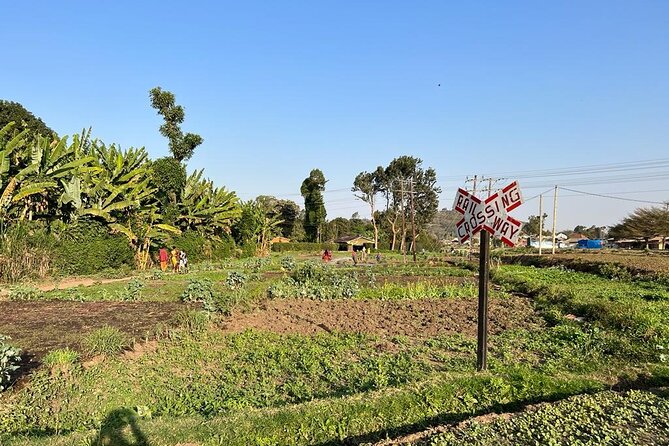
Urban farming is one of the planned points along the route. In a city setting, small growing projects can show how residents make use of available space and connect food production with daily needs. The tour does not specify the crops or the size of the farms, so you should treat this as an introduction rather than a full agricultural visit.
Still, it is a useful stop because it moves the conversation beyond restaurants and markets. You see food as part of the community’s work before it reaches your plate.
Same place, a different plate:
- Dubai: Old Town, Souks, Street Food, Guided Tour & Abra Ride
★ 4.9 · 7,170 reviews - Naples: Street Food Walking Tour with Local Guide
★ 4.9 · 4,976 reviews - Small Group Hanoi Street Food Tour with a Real Foodie
★ 5.0 · 4,682 reviews - Rome: Street Food Tour with Local Guide
★ 4.8 · 4,077 reviews
Recycling
The recycling stop offers another look at practical neighborhood activity. It can help you understand how materials are collected and reused at a local level. Since the tour is about everyday life, this stop fits the wider theme: Sinoni is presented through the work people do, not only through sightseeing points.
The exact recycling process is not listed, so the guide’s explanation will shape this part of the walk. Ask questions if you want to know how the activity supports households or the wider area.
Maize milling
Maize milling is a particularly useful food-related stop. Maize is important in many African cuisines, and seeing the milling process connects the snacks you taste with the work behind them. You may find this more memorable than simply being told the name of a local dish.
The tour does not state that you will operate machinery or buy flour. Expect to observe and learn about the process. It is a short, practical look at how a basic ingredient is prepared.
Carpentry
The carpentry stop brings another local trade into view. A workshop can show how practical skills and small businesses fit into the neighborhood economy. The tour description does not provide details about the products made or the length of the visit, so the focus is likely on explanation and observation.
For you, the value is in seeing a working community rather than a collection of attractions. You may also find this a good place to ask how young people learn trades or how local businesses serve nearby residents, though the guide may not have an answer to every question.
Mud houses
Mud houses provide a clear contrast with the more familiar tourist image of Tanzania. They show building methods and living conditions that can be missed when you stay in hotels or pass through by vehicle. The guide can help explain the homes in a respectful way, without turning them into scenery.
This is also where sensitivity matters. You are walking through someone’s neighborhood, so follow the guide’s lead about photography and conversation. The experience is built around contact with the community, but that contact should remain polite and welcome.
Churches
Churches are another planned feature of the route. Their presence gives the guide a way to discuss faith and community life in Arusha. The tour does not promise entry, a service, or a formal religious presentation. You should expect to see and learn about churches as part of the local setting.
Together, these stops give the walk a broad focus. You are not only eating. You are looking at food production, work, housing, faith, and environmental activity in one neighborhood.
The food: small tastes instead of a full meal
Food is included in the tour price. You receive both sweet and salty items from different vendors along the way. That variety is a strength because it lets you sample more than one local flavor and see how food is sold in ordinary settings.
The specific dishes are not listed, so you should not book this expecting a fixed tasting menu. What you receive may depend on the vendors available that day. This uncertainty is part of the local character, but it also means you should eat lightly beforehand if you need a guaranteed full meal.
Food allergies and dietary restrictions are not addressed in the supplied details. If you have a serious allergy or follow a strict diet, contact the provider before booking and explain your needs clearly. The guide may be able to help, but no special menu is promised.
The food stops also create natural openings for questions. You can ask how something is prepared, when it is eaten, or how it fits into local life. That exchange is likely to be more rewarding than rushing through a list of named dishes.
The guides make the difference
The tour includes a guide from the community, and Jackson and Given have been specifically praised for being friendly, helpful, and willing to share information. Those qualities matter here because the tour depends on conversation and trust.
A local guide can explain details that a general city tour might skip. You can ask about work, family life, food, worship, and neighborhood changes in a direct way. The guide also helps you approach local people appropriately, which is important when the route passes homes and workplaces.
The small maximum of 10 people helps. A group of that size is easier to manage on foot and gives you more space to ask questions. It also reduces the chance that conversations become a performance for a large crowd. Even so, group dynamics vary, and you may have less time at each stop if everyone has many questions.
The experience has an overall rating of 4.8 from 12 ratings, with 100 percent recommending it. That is a strong early signal, though the number of ratings is still small. One detailed rating gave it four out of five and singled out Jackson and Given, the neighborhood information, the friendly help, and the food tastings. I would read that as a sign of solid personal guiding, while keeping expectations realistic about the simple setting.
Is $25 a good value?
For $25 per person, the tour includes a community guide, several sweet and salty tastings, and all fees and taxes. You also receive a two to three hour introduction to a part of Arusha that many short-term visitors might otherwise miss.
The value is strongest if you care about local contact and community benefit. You are paying for time, access, explanation, and support for a local foundation, not for a luxury meal or a long list of major attractions. The price is also reasonable for a small group capped at 10 people.
The value is weaker if you want a full lunch, air-conditioned transport, or a polished attraction with fixed timings. Private transport is excluded, tips are optional, and the food selection can vary. A tip for the guide is not required, but you may wish to budget for one if you appreciate the service.
The best comparison is not a restaurant meal. It is the cost of a guided introduction to daily life, with food added along the way and the profits directed to community programs. By that measure, the price is fair.
Timing, weather, and practical comfort
Allow two to three hours, with the main walk expected to last about two hours and thirty minutes. You will be on foot for much of that time, so comfortable shoes are sensible. The supplied information does not describe the walking surface, distance, shade, or restroom access, so ask the provider if any of those details are important to you.
Most people can participate, and service animals are allowed. The activity is near public transportation, which gives you another way to reach the starting area. No special fitness level is stated, but anyone who finds extended walking difficult should confirm the route before booking.
The tour requires good weather. If poor weather causes cancellation, you are offered another date or a full refund. The experience also requires a minimum number of participants. If that minimum is not met, you are offered another date or experience, or a full refund.
Free cancellation is available up to 24 hours before the start time. Cancel at least 24 hours ahead for a full refund. Inside that window, the payment is not refunded and changes are not accepted. Since the tour is often booked about 42 days ahead, reserve early if your Arusha schedule is fixed, then watch the cancellation deadline.
Who should book this Sinoni experience?
I would choose this walk if you want to see Arusha through local work, food, and conversation. It suits first-time visitors who want more context before a safari, as well as returning visitors who have already seen the main city sights.
It is also a good fit if you prefer small groups and want your spending to support a local organization. Families with older children may find the mix of food, workshops, buildings, and questions more engaging than a standard sightseeing loop, though parents should decide if the walking time suits their children.
I would be more cautious if you need a confirmed menu, private transport, guaranteed indoor stops, or a fully accessible route. The activity takes place in an active community, and the details can naturally vary from day to day.
Should you book it?
Book this tour if you want an affordable, human-scale look at Arusha and you are comfortable with a flexible food walk. The strongest reasons are the local guides, the chance to ask questions in Sinoni, the range of everyday stops, and the fact that profits support Jamii Imarika Foundation.
Skip it if you are seeking a formal cooking class, a guaranteed meal, or a sightseeing tour built around major landmarks. For most visitors who want to understand more than the safari circuit, this is a worthwhile two and a half hours, especially at $25.
FAQ
Where does the tour begin?
It begins at Kajo Art Gallery near the Maasai Market on Tanesco Road in Arusha, Tanzania.
Where does the tour end?
The walking tour ends in Sinoni at the listed location JM7M+65W, Arusha. The team helps you return to your hotel after the tour.
How long does the experience last?
The tour lasts about two to three hours. The main walk is listed at approximately two hours and thirty minutes.
What food is included?
The tour includes sweet and salty foods from different local vendors. Specific dishes are not listed.
Is transportation included?
Private transportation is not included. The start is near public transportation, and the team helps with returning to your hotel after the walk.
How many people can join?
The tour has a maximum of 10 participants.
Are service animals allowed?
Yes. Service animals are allowed, and most people can participate.
What is the cancellation policy?
You can cancel at least 24 hours before the start time for a full refund. Cancellations or changes made within 24 hours are not refunded or accepted. If poor weather or an insufficient number of participants causes cancellation, you are offered another date or experience, or a full refund.
Just added around the world
- Zanzibar:Stone town Street food market walking tour,transfer★ 4.5 · 9 reviews
- Vienna Food Tour: Dishes, Wine, Street Food & Culture★ 4.7 · 12 reviews
- Verona: Street Food Tour and City Guided Sightseeing★ 4.9 · 11 reviews
- Xi’an: Gourmet & Street Food Tour★ 4.8 · 22 reviews
- Verona: City Highlights & Street Food Walking Tour★ 5.0 · 3 reviews
- Verona: Street Food and History Tour with Local Guide★ 4.7 · 6 reviews
- Xi’an Muslim Quarter Night Market Foodie Walking Tour★ 4.2 · 22 reviews
- Verona: street food walking tour near the historical center★ 5.0 · 2 reviews
Street Food Tours, compared.
Old Town, Creek, Museums, Souks, & Street Food Tour
What we made of it →
Ho Chi Minh City Street Food Tour & Sightseeing By Motorbike
What we made of it →
Comuna 13 Graffiti Tour, Cable Car & Street Food
What we made of it →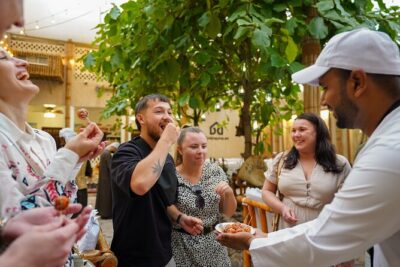
Old Town, Souks, Street Food, Guided Tour & Abra Ride
What we made of it →
Small Group Hanoi Street Food Tour with a Real Foodie
What we made of it →
Saigon By Night and Street Food By Motorbike | Opt: Ao Dai Riders
What we made of it →Where this tour turns up