
Review · ATHENS
Street Food Tour – Sample the Food the Locals Love
Come hungry, then let Athens feed you. This 2.5-hour walk links Monastiraki, Psirri, the Central Market, and the Roman Agora through the food locals eat every day. I like the mix of classic Greek bites and neighborhood history, and I like that your guide gives your own group personal attention rather than herding a large crowd.
The main tradeoff is value. At $71.04 per person, the food is tasty but not always unusual enough to justify the price for confident Athens eaters. You are paying for the guide, the route, the explanations, and the ease of finding small local stops, not just for a meal.
What makes this Athens food walk worth considering
- Greek breakfast starts with koulouri: Try the sesame-covered bread from one of Athens’ old bakeries.
- Four central districts fit into one walk: Monastiraki, Psirri, the Central Market, and the Roman Agora each add a different side of the city.
- The meal builds as you go: Coffee, koulouri, olives, Greek pie, loukoumades, and souvlaki or soup make this more than a snack stop.
- Your group gets a private guide: The activity is private, so only your party participates.
- It works well on your first Athens evening: You can eat, learn the layout, and avoid choosing a restaurant while tired.
- Come ready to walk: Comfortable shoes matter, and the amount of food is substantial.
Starting at Monastiraki Square with coffee and koulouri
Meet your guide at the Holy Church of the Virgin Mary Pantanassa, the small medieval church in the middle of Monastiraki Square. The bell tower makes the meeting point easier to spot, though the square can be crowded and noisy, so arrive with the church name and location saved on your phone.
The opening conversation sets the city in context. You hear about Athens under Roman, medieval, and Ottoman rule, then see how the same central area functions today. This is useful because Monastiraki can feel like a jumble of ruins, market stalls, cafés, and traffic until someone explains how the pieces fit together.
Your first food is Greek coffee and a fresh koulouri. Koulouri is a round, sesame-coated bread that many Athenians eat for breakfast. It is simple, portable, and lightly crisp on the outside. The bakery used for this stop is described as one of the oldest in Athens and as a source for many street sellers, which gives this modest snack a stronger local connection than a pastry bought from a generic café.
The coffee stop also introduces an important part of Greek daily life. Coffee is not simply a quick caffeine fix here. It is tied to sitting, talking, and spending time in cafés. Depending on the guide and timing, you may hear about cold frappé, which one couple specifically learned is the classic Greek coffee choice, rather than only the hot drink served at the start.
Monastiraki is also where you begin walking through the Athens flea market. The route heads toward Psirri, so the first section feels like an orientation walk as much as a food stop. You get a sense of the commercial center, the market streets, and the transition from major sightseeing territory to smaller local businesses.
More Street Food Tours in Athens:
- Athens: Street Food Tasting Tour
★ 4.9 · 3,343 reviews - Athens Street Food Walk
★ 5.0 · 385 reviews - Athens: Greek Street Food Tour
★ 4.8 · 246 reviews
Psirri and the city’s old working quarter
Psirri was once a working-class district and is now one of central Athens’ more alternative neighborhoods. Its appeal is the change in atmosphere. You are still close to Monastiraki and the ancient sites, but the streets have a different rhythm, with food shops, bars, and small businesses replacing the grand setting of the Acropolis zone.
The guide makes another stop for koulouri at an old bakery. This may sound repetitive after the first tasting, so clarify with your guide how the portions work. The experience description treats koulouri as an early sample and also as part of the Psirri visit. In practice, the route appears to give you a fuller look at the bakery tradition rather than simply adding another large meal.
This neighborhood section is one of the strongest reasons to book the tour. You are not only checking off foods. You are seeing how an area once associated with working life changed into a popular central district without losing all of its everyday character.
Guide quality matters here. Helen, Eleni, and Helini are praised by name in separate accounts, while Dionysius is credited with explaining Athens and ancient history clearly. The spelling varies, so do not assume you will have a particular guide, but the consistent strength is the personal conversation. One party said the guide helped answer historical questions connected to the areas they were seeing. That is a real benefit when the route passes Roman, Ottoman, and modern landmarks in quick succession.
Greek pie in the old commercial center
From Psirri, the walk continues toward the Varvakios Central Municipal Market. The route passes through Athens’ old commercial center, where the food becomes more varied.
Greek pie is one of the main tastings. Expect fillings such as feta and spinach, with vegetarian and vegan choices available. This is a practical strength for mixed groups because you are not limited to meat-based street food. The pie stop also gives you a taste of a bakery and pastry tradition that is easy to miss if you spend your entire Athens visit eating gyros and grilled meat.
The tour description calls the pastry shop one of the city’s old and famous establishments. That does not mean every pie will be a revelation. One of the less enthusiastic accounts felt the food was pleasant but not especially different from what they could have found alone. I think that is a fair warning for experienced Greek-food fans. If you already know your favorite pie shops, the stop may feel familiar.
For a first visit, though, the value is better. You do not have to compare menus, judge a crowded counter, or guess which filling is worth ordering. Your guide turns a quick purchase into a chance to ask what Athenians eat, when they eat it, and how the ingredients vary.
Varvakios Market, olives, herbs, and produce
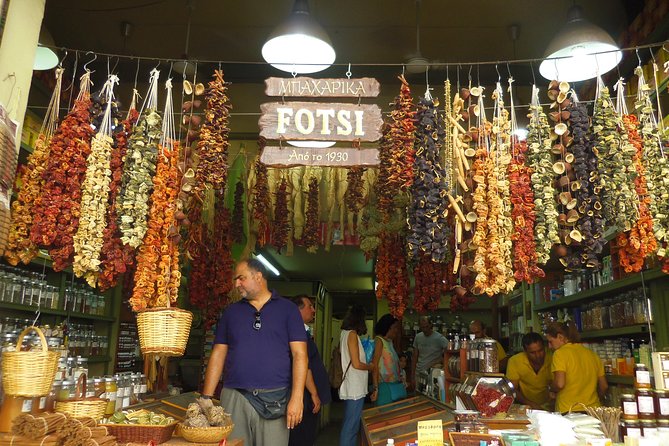
The Varvakios Central Municipal Market is the most useful sightseeing portion of the route. It is a working public market, not a museum built for visitors. Stalls show Greek olives, herbs, honey, fresh fruit, and vegetables, giving you a direct look at the ingredients behind the food you have already tasted.
The olive sampling includes Kalamata olives, one of Greece’s best-known food products. This is a small tasting, but it helps you notice the difference between an ordinary table olive and the plumper, more distinctive Greek varieties sold in local markets.
The market also gives your guide room to explain products that are hard to identify on your own. You can ask about Greek herbs, honey, and produce rather than simply walking past stalls. If you are staying in Athens longer, this may help you shop for snacks or choose ingredients to look for at restaurants.
The drawback is the pace. About 30 minutes is enough for a focused look, but not enough to explore every section of the market. You should also expect a real food market, with the sights and smells that come with one. If you prefer polished food halls, this stop may feel rough around the edges. That is also its point.
Same place, a different plate:
- Athens: Food Market Visit and Cooking Class with Wine
★ 4.9 · 1,087 reviews - Athens Street Food Tour: Explore City’s Iconic Eateries
★ 5.0 · 155 reviews - Classic Athens Food Tour with Local Drink & Market Visit
★ 5.0 · 34 reviews - Piraeus Street Food Walking Tour
★ 5.0 · 20 reviews
Loukoumades and souvlaki near the Roman Agora
The final part of the walk heads toward the Roman Agora. Here the food shifts from breakfast and market samples to the two items many people hope to eat in Athens: loukoumades and souvlaki.
Loukoumades are small fried Greek doughnuts served with honey and cinnamon. They have been made since antiquity, and they are best enjoyed fresh and warm. The honey and cinnamon make this the sweetest stop of the tour, so save room even if you think you are already full.
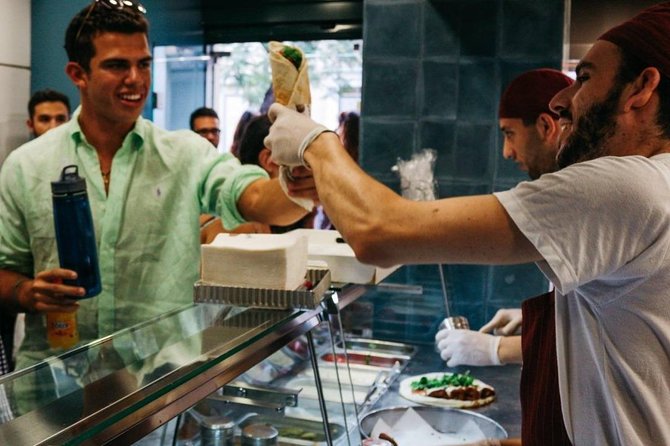
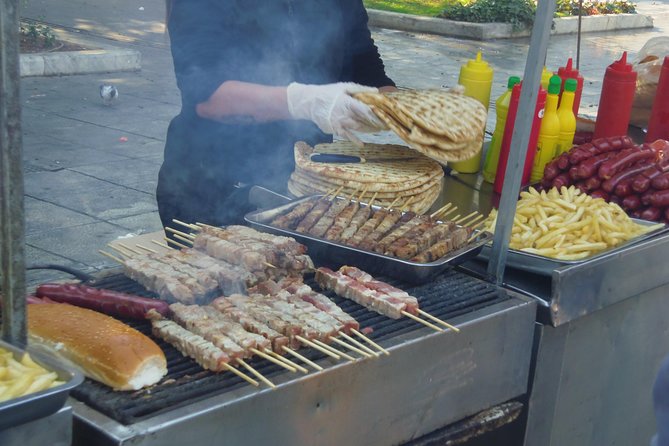
The main savory tasting is souvlaki or gyros, a wrapped pita with meat, tzatziki, tomato, and onions. The route uses an eatery favored by local residents, which is important because souvlaki quality can vary widely from one tourist-heavy counter to another. You may also receive fresh soup instead, depending on the day and the guide’s arrangements.
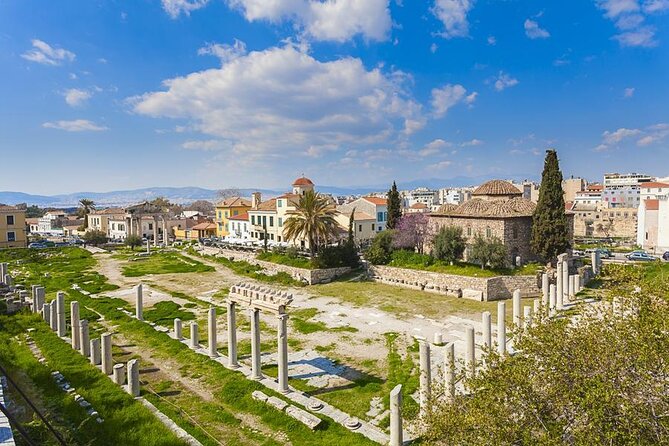
The tour ends at the Roman Agora, the ancient Roman market. This is a fitting final location because the site has continued to serve as a marketplace in one form or another since the middle of the 19th century. You get an ancient setting without turning the entire food walk into a formal archaeological tour.
This last hour contains several tastings, so do not schedule a large dinner immediately afterward. One person described the tour as a good choice after a long flight because it removed the need to figure out dinner. That is exactly how I would use it: book it early in your stay, eat a broad sample of Greek food, and let the route help you get oriented.
How much food do you actually get?
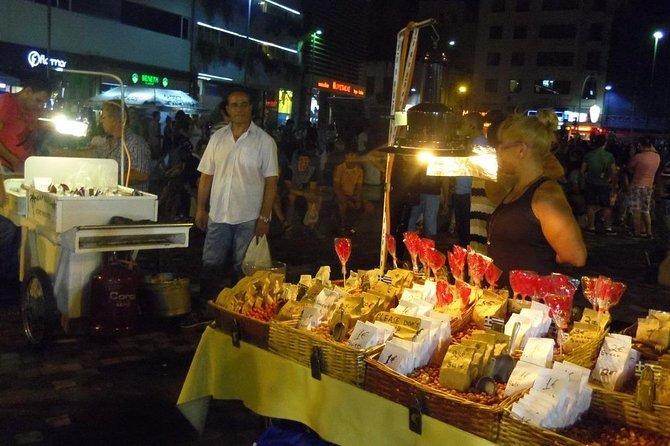
The planned tastings include:
- Greek coffee
- Koulouri with sesame
- Kalamata or other Greek olives
- Greek pie, including feta and spinach options
- Loukoumades with honey and cinnamon
- Souvlaki or gyros
- Possible soup, depending on the final stop
This is not a light nibble tour. Several people found the portions generous enough that you should not eat two full meals beforehand. The best plan is a small breakfast or lunch, depending on the start time, followed by water and comfortable clothes.
Additional food and drinks are not included. The included list covers the specific tastings and the guide, so ask before ordering anything extra at a stop. Tips are also separate.
Is $71.04 a fair price?
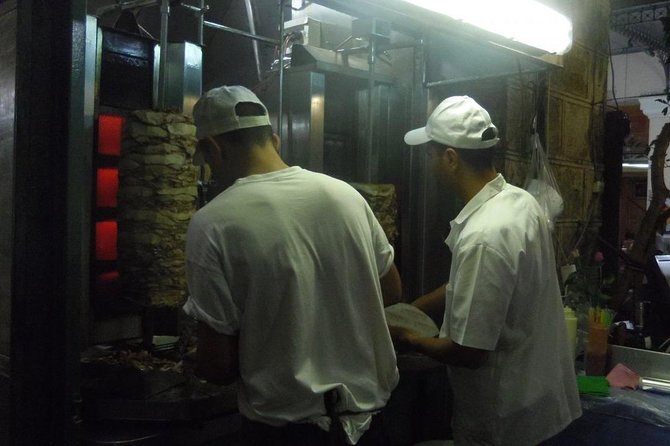
At $71.04, this tour costs more than walking through Monastiraki and buying individual snacks yourself. If you are comfortable ordering from Greek bakeries, market counters, and souvlaki shops, you can spend less and perhaps eat more.
The price makes more sense if you value the route and the explanations. You receive a private guide, a planned progression through four central areas, several included tastings, and help finding places you might otherwise pass. The strongest value comes from the combination of food and neighborhood context, not from any one dish.
The private format is especially useful for couples, families, or a small group with mixed interests. You can ask questions about ancient Athens, local food, markets, and neighborhoods without competing with a large group. One party was surprised that the experience was private, so check that detail before booking if you expected a shared group.
The overall rating is 4.2 from 13 reviews, which suggests a good but not flawless experience. Most praise centers on the guides, the amount of food, the local eateries, and the chance to try items people might not order alone. The main criticism is that the food may feel ordinary for the price, and one person had trouble hearing the guide in a group of five without earphones. The provider responded that the format is designed for small private groups, but you should still speak up if the street noise makes conversation difficult.
Who should book this food tour?
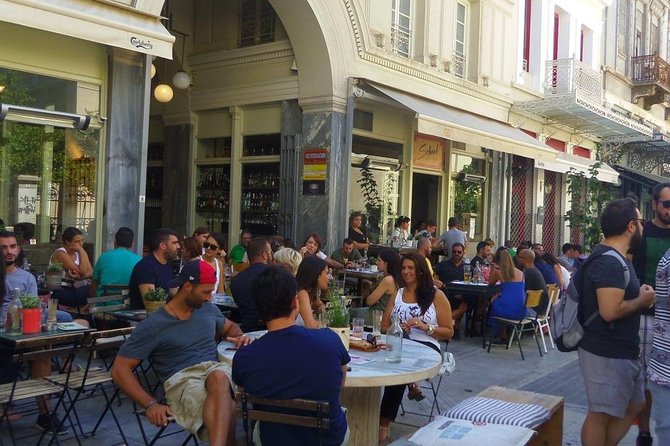
I would recommend it most strongly to first-time visitors who want a gentle introduction to central Athens. It combines a meal, a neighborhood walk, and a basic history lesson without demanding a full day.
It also suits you if you:
- Prefer tasting several foods instead of sitting for one long restaurant meal
- Want a private guide for your own party
- Like local markets and old commercial districts
- Need vegetarian or vegan pie choices
- Are arriving tired and want dinner plans handled
- Enjoy asking questions about food and city history
I would be more cautious if you already know Athens well or have a carefully planned food itinerary. The dishes are classic rather than rare, and you may find some stops yourself for less money. This is also not the right pick if walking through markets and central streets sounds tiring.
Wear comfortable shoes and dress for the weather. The walk operates in all weather, and it is near public transportation. Most people can participate, and service animals are allowed. Free cancellation is available up to 24 hours before the start time, but changes or cancellations inside that window are not accepted for a refund.
Should you book the Athens Street Food Tour?
Book it if you want an easy first taste of Athens with a private guide who can connect koulouri, olives, pies, loukoumades, and souvlaki to the streets where people buy them. The route is practical, filling, and strongest when your guide brings the neighborhoods to life.
Skip it if you mainly want bargain-priced food or already know exactly where you want to eat. At $71.04, the tour earns its price through convenience, access, and conversation. It is less convincing as a simple food purchase. For a first or second day in Athens, especially after a long flight, I think that trade can be worthwhile.
FAQ
Where does the Athens street food tour start?
It starts at the Holy Church of the Virgin Mary Pantanassa in Monastiraki Square, Athens 105 55, Greece. The guide waits in front of the small medieval church with the bell tower.
Where does the tour end?
The activity ends back at the meeting point according to the meeting information. The route also describes the final food stop and farewell near the Roman Agora.
How long does the experience last?
The tour lasts approximately 2 hours and 30 minutes. The listed route includes about 20 minutes in Monastiraki, 30 minutes in Psirri, 30 minutes at the Central Market, and 1 hour around the Roman Agora.
What food and drinks are included?
Included tastings are coffee, sesame koulouri, loukoumades with honey and cinnamon, Greek pie or souvlaki, and Greek olives. The final savory tasting may also be soup.
Is this a private tour?
Yes. Only your group participates in the private activity. The tour is offered in English.
Are vegetarian or vegan choices available?
Vegetarian and vegan choices are available at the Greek pie stop. The provided information does not specify vegan choices for every other tasting.
Can I cancel for a full refund?
Yes, if you cancel at least 24 hours before the experience start time. Cancellations or changes made less than 24 hours before the start time are not accepted for a refund.
Just added around Athens
- Classic Athens Food Tour with Local Drink & Market Visit★ 5.0 · 34 reviews
- Street food tasting in the locals favorite hidden places★ 5.0 · 15 reviews
- Fun Athens Street Food Tour with Local Guide Marina★ 5.0 · 2 reviews
- Piraeus Street Food Walking Tour★ 5.0 · 20 reviews
- Athens Street Food Markets and Hidden Gems Experience★ 5.0 · 18 reviews
- Athens Street Food Tour: Taste the best street food★ 5.0 · 5 reviews
- Explore Athens Street Art & Street Food Extravaganza★ 5.0 · 18 reviews
- Evening Athenian Street Food Tour: An Essential Guide to Athens★ 3.5 · 3 reviews
Street Food Tours, compared.

Old Town, Creek, Museums, Souks, & Street Food Tour
What we made of it →
Ho Chi Minh City Street Food Tour & Sightseeing By Motorbike
What we made of it →
Comuna 13 Graffiti Tour, Cable Car & Street Food
What we made of it →
Old Town, Souks, Street Food, Guided Tour & Abra Ride
What we made of it →
Small Group Hanoi Street Food Tour with a Real Foodie
What we made of it →
Saigon By Night and Street Food By Motorbike | Opt: Ao Dai Riders
What we made of it →Where this tour turns up