
Review · KENYA
Swahili Street Food Tour
Come hungry, leave with a better sense of Mombasa. This four-hour food walk links Fort Jesus, Old Town streets, local markets, and six food vendors in one guided outing. I like the way it pairs eating with Swahili history, architecture, and everyday life. I also like that the $55 price includes all food, drinks, and transport during the tour, so you are not constantly reaching for your wallet.
The main consideration is the pace and setting. This is street food, not a polished restaurant meal, and the experience takes place around local vendors and markets. If you prefer a quiet table, a fixed menu, or complete control over every ingredient, this may feel less comfortable. For most curious eaters, though, the chance to try several dishes while walking through Old Town is the real appeal.
Key points at a glance
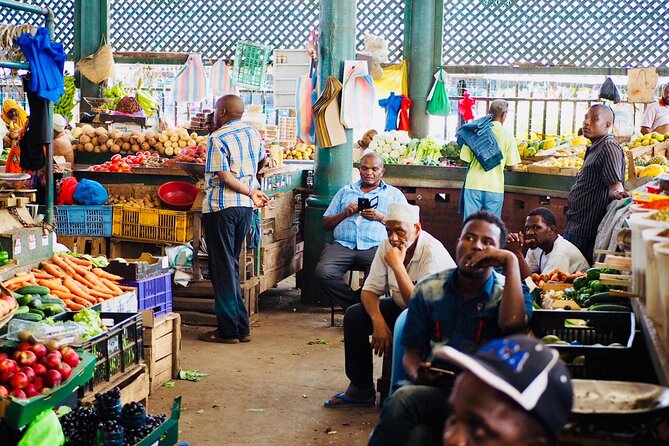
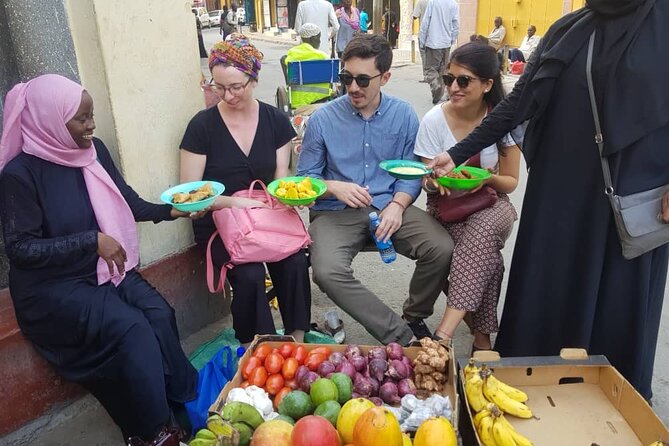
- Six food vendors in four hours: Each breakfast, lunch, or evening departure includes several tasting stops rather than one large meal.
- Fort Jesus sets the scene: Your guide begins outside the museum with an explanation of its place in Mombasa’s past.
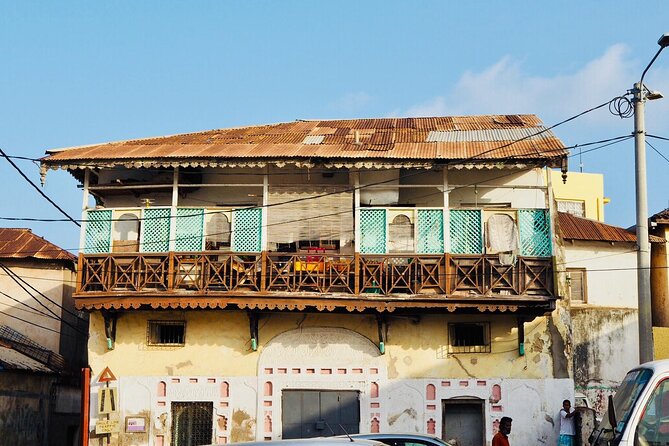
- Old Town is part of the meal: You explore Swahili architecture, streets, markets, and daily life as you taste.
- Food, drinks, and transport are included: The $55 cost is easier to judge because the main tour expenses are covered.
- Small groups keep it personal: A maximum of 10 people gives the guide room to explain dishes and answer questions.
- Guides Hawa and Havah receive strong praise: Their food, culture, architecture, and Mombasa background are central to the experience.
Starting at Fort Jesus in Mombasa
The tour begins at the Fort Jesus Museum, the meeting point in Mombasa. You do not go inside the fort as part of this experience. Instead, your guide gives you an introduction to the fort’s role and explains why this spot matters before the food portion begins.
That opening is useful. Fort Jesus is not just a convenient landmark. It gives you a starting point for understanding Mombasa as a coastal city shaped by trade, different cultures, and Swahili traditions. Even without an admission visit, the fort helps place the rest of your walk in context.
I appreciate this approach because it avoids turning the outing into a simple sequence of snacks. You get a short cultural orientation first, then begin tasting food connected to the place around you. The food makes more sense when you have some idea of the city’s past and the cultural influences that shaped its cooking.
The meeting point is listed as Fort Jesus Museum, P.O. Box 82412, Mombasa, Kenya. Plan to arrive with enough time to find the exact meeting spot. The tour ends back there, which makes the start and finish easy to manage if you are planning another activity afterward.
More Street Food Tours in the world:
- Dubai: Old Town, Creek, Museums, Souks, & Street Food Tour
★ 4.8 · 10,816 reviews - Ho Chi Minh City Street Food Tour & Sightseeing By Motorbike
★ 5.0 · 9,413 reviews - Medellin: Comuna 13 Graffiti Tour, Cable Car & Street Food
★ 4.8 · 9,046 reviews
Six stops through Old Town
The main part of the experience takes place in Old Town. Your guide leads you through local food markets and to six different vendors, with each stop offering a chance to try a local delicacy or drink.
The exact dishes are not fixed in the information provided, so I would not book this expecting a precise menu. That flexibility is part of the point. Street food changes with the vendor, time of day, and what is being prepared. Your guide can explain what you are tasting and how it fits into local food customs.
The three departure choices shape the experience:
- Breakfast tour: A morning route for an early start and a first meal of the day.
- Lunch tour: A midday option that fits well between other sightseeing plans.
- Evening tour: A later outing when you want food and Old Town atmosphere after the heat of the day.
Each slot still includes six vendors, but the food available may differ by time. I would choose the departure based on how you normally eat rather than trying to force a breakfast tour into a late-morning schedule.
The six-stop format also gives you variety. Instead of committing to one unfamiliar dish, you get several small opportunities to try something new. If one taste is not for you, another stop is coming soon. That makes the tour a good introduction for anyone who wants to sample Swahili food without ordering a full plate of unknown items.
Food becomes a way to read the city
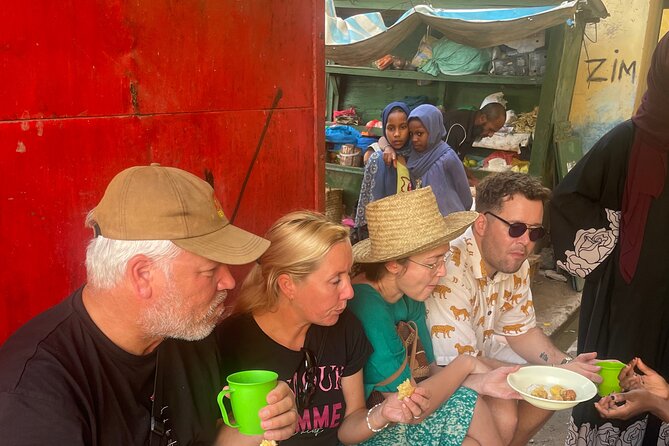
The strongest part of this outing is the link between food and place. You are not simply taken from one vendor to another. The walk includes Swahili history, culture, architecture, and daily life, so the streets become part of the experience.
Old Town is especially suited to this format. Food vendors operate within a living neighborhood, and your guide helps explain what you are seeing as you move between stops. The tour gives you a chance to engage with local producers and sellers rather than observing the area only from a vehicle.
This is where the guides matter most. Hawa is praised for explaining Mombasa’s history, culture, architecture, and food in a clear, engaging way. Havah is also singled out for passion and strong knowledge of the local cuisine. Guide quality can make or break a food walk, and these comments suggest that the explanations are a major reason the experience earns its five-star rating from seven published ratings.
You should still keep your expectations practical. A four-hour walk cannot explain every layer of Mombasa or provide a full history lesson at each stop. Its strength is in the connections: a food, a street, a building, and a local custom can be discussed together in a way that makes the city easier to understand.
What the $55 price really covers
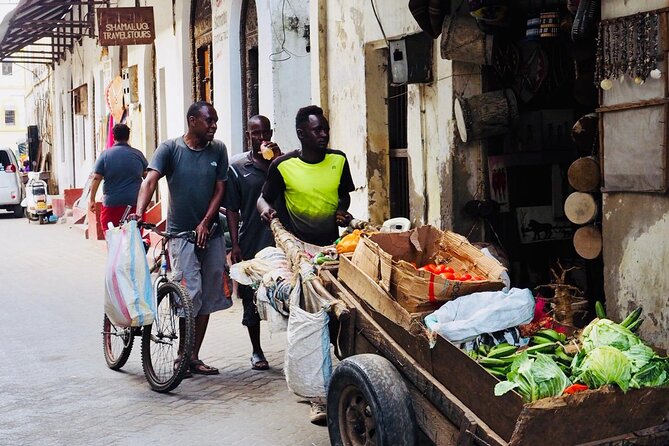
At $55 per person, this is not the cheapest way to eat in Mombasa. You could spend less by choosing individual street food on your own. The question is what the extra money buys you.
Here, the cost includes all food, drinks, and transportation during the tour. You are also paying for a guide who organizes six stops, explains the dishes, gives cultural context, and handles the movement between vendors. That makes the price more reasonable for someone who wants a planned introduction rather than a self-guided food hunt.
The value is strongest if you are new to Mombasa or unsure where to begin. You do not need to guess which vendors to try, work out how to fit several stops into one route, or wonder what a dish represents. The tour gives you a structured first look, and you can return later to places or foods that caught your attention.
It is less compelling if your main goal is quantity. Six tastings over four hours are designed for variety and conversation, not one oversized feast. I would think of the $55 as paying for access, guidance, and context as much as for the food itself.
Same place, a different plate:
- Dubai: Old Town, Souks, Street Food, Guided Tour & Abra Ride
★ 4.9 · 7,170 reviews - Naples: Street Food Walking Tour with Local Guide
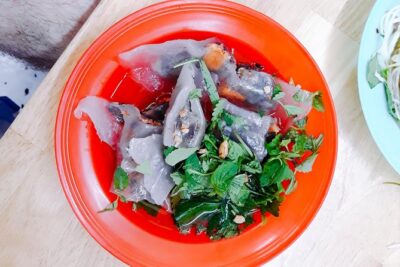
★ 4.9 · 4,976 reviews - Small Group Hanoi Street Food Tour with a Real Foodie
★ 5.0 · 4,682 reviews - Rome: Street Food Tour with Local Guide
★ 4.8 · 4,077 reviews
Why the small group size matters
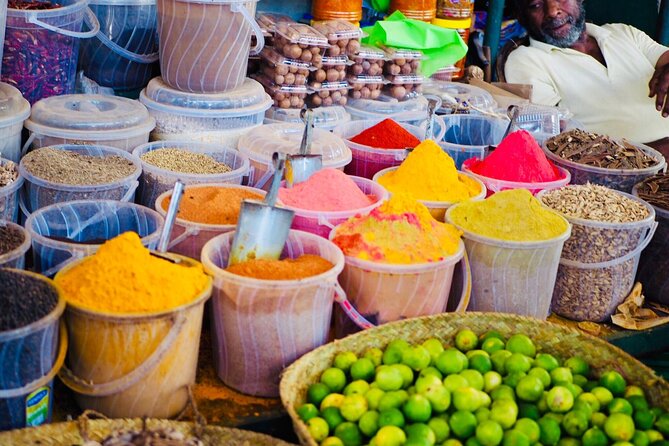
The tour accepts a maximum of 10 people. That is a useful limit for a food walk in Old Town, where the group may need to stay together around vendors and narrow public areas.
A smaller group also gives you a better chance to ask questions. You can ask what an ingredient is, how a dish is normally eaten, or why a certain food is associated with the coast. With six vendors in four hours, those short explanations add up.
The group size does not guarantee a private tour. Ten people can still feel like a proper group, especially at busy food stops. But it is far more manageable than a large coach outing, and the guide should have a clearer view of the group as it moves through the area.
Transportation during the tour is included, though the supplied details do not specify the vehicle or how much of the route is walked. That is worth keeping in mind if you need exact mobility information. The outing is near public transportation, service animals are allowed, and most people can take part according to the provided participation details.
Choosing breakfast, lunch, or evening
Your choice of time can change the feel of the outing. The breakfast slot suits you if you like starting early and want food exploration to be the first major activity of the day. It may also be a good fit if you plan to spend the afternoon elsewhere.
The lunch option is the most natural choice for many schedules. You can visit Fort Jesus in the morning or plan other sightseeing around the four-hour route. Since all three slots include six vendors, lunch gives you a straightforward midday food program without needing to arrange a separate meal.
The evening departure may work best if you want to experience Old Town after daytime sightseeing. It also spreads your eating across the evening rather than treating the tour as a quick lunch. Exact lighting, crowd levels, and vendor availability are not specified, so I would choose the evening slot for timing rather than expecting a particular atmosphere.
A practical tip: do not eat a large meal just before any departure. Six food stops are meant to be sampled, and arriving full would make the tour less enjoyable. At the same time, the precise serving sizes are not stated, so I would avoid treating the outing as a guaranteed substitute for every meal of the day.
The cultural side is not filler
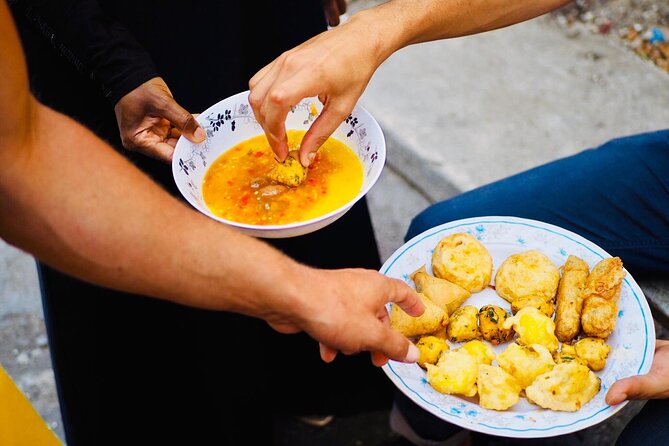
Many food tours add a few facts between tastings. This one gives culture a central role. The guide discusses Swahili traditions, architecture, local life, and the story of Mombasa while taking you through the food scene.
That makes the tour useful even if you already know you like East African cooking. You get a better sense of how food fits into a community and how Old Town functions beyond its landmarks. The interaction with vendors is also important. You see the people involved in preparing and selling the food, not just a finished plate in a restaurant.
The strongest praise for the experience focuses on exactly this combination. Hawa is praised for linking the dishes to Mombasa’s culture and buildings, while Havah is praised for bringing energy and strong food knowledge to the half-day route. Those are the qualities I would look for in a food tour: explanations that help you notice more, not just a list of ingredients.
Still, the tour cannot control every vendor or market condition. A street food experience is shaped by real daily operations. You may find changing menus, different preparation times, or a stop that feels more basic than a restaurant visit. That is not a flaw if you want local life, but it is a reason to choose this over a restaurant-based tasting only if you are comfortable with some unpredictability.
Who will enjoy this Mombasa food walk?
I would recommend the tour most strongly to:
- First-time visitors who want an introduction to Mombasa beyond major sights.
- Food-focused visitors who prefer several small tastings to one formal meal.
- People interested in Swahili culture, architecture, and local history.
- Couples, families, and small groups who value a limited group size.
- Anyone who wants food, drinks, and transportation bundled into one price.
It may be less suitable for you if you need a fixed menu, a quiet seated meal, or precise information about every ingredient before eating. The available details do not list specific dishes, dietary accommodations, or allergy procedures, so you should ask the provider before booking if those matters are important.
The tour is also not a substitute for visiting Fort Jesus inside. You receive an explanation from outside, but museum admission is not part of the stated plan. If the fort itself is a priority, plan that visit separately.
Booking and cancellation details
The experience is usually booked about 30 days in advance, so I would not leave it until the last minute if your Mombasa dates are fixed. You receive confirmation at booking, and the ticket is mobile, which keeps the process simple.
Free cancellation is available up to 24 hours before the start time for a full refund. Inside that 24-hour window, the payment is not refunded and changes are not accepted. The cut-off follows local Mombasa time, so check the timing carefully if you are booking from another time zone.
FAQ
Where does the Swahili Street Food Tour start?
It starts at the Fort Jesus Museum in Mombasa, Kenya.
Where does the tour end?
The activity ends back at the meeting point at Fort Jesus Museum.
How long does the tour last?
The tour lasts approximately four hours.
How many food vendors will I visit?
You will visit six local vendors during the selected breakfast, lunch, or evening tour.
Are food, drinks, and transportation included?
Yes. The tour includes the cost of all food, drinks, and transportation during the experience.
How many people can join the tour?
The maximum group size is 10 people. Service animals are allowed, the tour is near public transportation, and most people can participate.
Should you book it?
Book this tour if you want a guided introduction to Mombasa that combines food with Old Town culture. The strongest reasons are the six-vendor format, the inclusion of food, drinks, and transportation, and the guides’ praised ability to connect local dishes with the city’s architecture and past.
I would skip it only if you want a formal restaurant meal, a guaranteed menu, or a private experience. For $55, you are paying for more than snacks. You are paying for a carefully organized route and a guide who helps you understand what you are eating and where you are eating it. That is a fair price for a first taste of Mombasa, especially when the food stops are only half the story.
Just added around the world
- Zanzibar:Stone town Street food market walking tour,transfer★ 4.5 · 9 reviews
- Vienna Food Tour: Dishes, Wine, Street Food & Culture★ 4.7 · 12 reviews
- Verona: Street Food Tour and City Guided Sightseeing★ 4.9 · 11 reviews
- Xi’an: Gourmet & Street Food Tour★ 4.8 · 22 reviews
- Verona: Street Food and History Tour with Local Guide★ 4.7 · 6 reviews
- Xi’an Muslim Quarter Night Market Foodie Walking Tour★ 4.2 · 22 reviews
- Verona: City Highlights & Street Food Walking Tour★ 5.0 · 3 reviews
- Verona: street food walking tour near the historical center★ 5.0 · 2 reviews
Street Food Tours, compared.
Old Town, Creek, Museums, Souks, & Street Food Tour
What we made of it →
Ho Chi Minh City Street Food Tour & Sightseeing By Motorbike
What we made of it →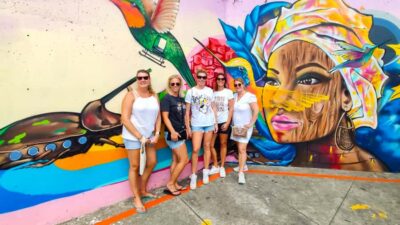
Comuna 13 Graffiti Tour, Cable Car & Street Food
What we made of it →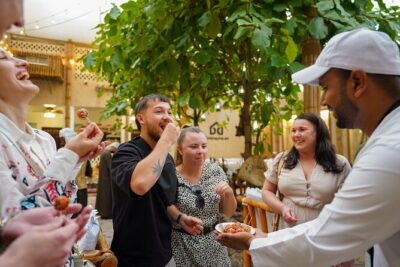
Old Town, Souks, Street Food, Guided Tour & Abra Ride
What we made of it →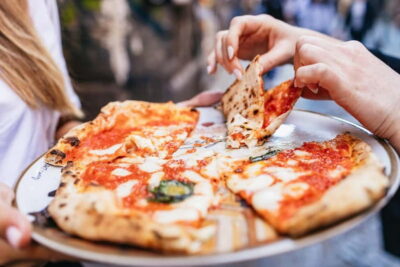
Small Group Hanoi Street Food Tour with a Real Foodie
What we made of it →
Saigon By Night and Street Food By Motorbike | Opt: Ao Dai Riders
What we made of it →Where this tour turns up