
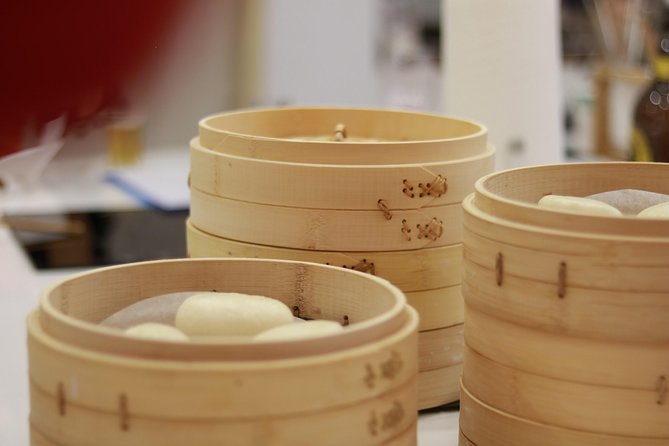
Review · TAIPEI
Street Food Cooking Class in Taipei : Gua Bao/Lu Rou Fan/Boba Tea
Taiwanese comfort food starts in your own hands. This two-hour Taipei class gives you a practical taste of xiao chi, the small eats found across Taiwan, while teaching you to make gua bao, braised pork, and bubble tea. I especially like the small maximum group of eight, which should leave room for real guidance, and the fact that you eat the meal you prepare instead of simply watching a demonstration. I also like the recipe book, a useful souvenir for anyone who wants to keep cooking after returning home.
The main consideration is time. Two hours moves quickly when you are making steamed buns, braising pork, and forming tapioca pearls from scratch. The boba process can be tricky, and the class may suit you better if you enjoy hands-on work rather than a relaxed food tasting.
Key details before you book
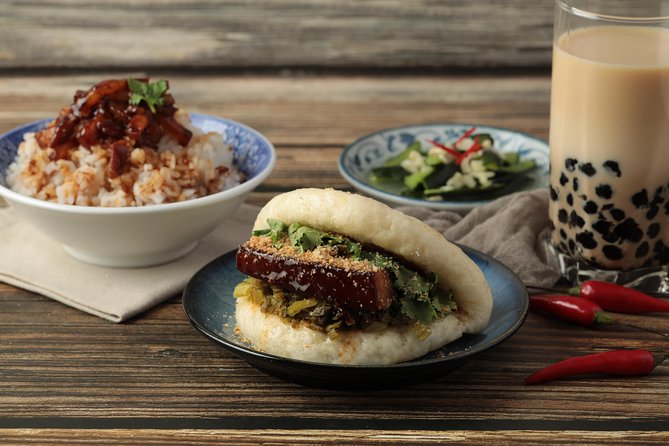
- Three Taiwanese classics: Prepare gua bao, lu rou fan, and bubble milk tea, including chewy tapioca pearls made from scratch.
- Small class size: The maximum is eight people, allowing more personal help than a large demonstration.
- Central Taipei meeting point: Meet at CookInn Taiwan’s Zhongshan classroom at 2:30 pm, at 66 Section 1, Chengde Road, second floor, in Datong District.
- A meal at the end: You sit down and eat the food prepared during class, so come hungry.
- Family-friendly instruction: Children aged 8, 10, and 11 were successfully included in the cooking activities.
- Practical takeaway: A recipe book gives you a way to repeat the dishes at home.
Why Taiwanese small eats make a good cooking lesson
Taiwanese street food is often served in modest portions, but the flavors are not modest. The term xiao chi means small eats, and these dishes are central to everyday food culture. A short class can introduce that culture more clearly than simply ordering from one stall after another.
Gua bao is a good example. The soft steamed bun folds around braised pork belly and is often treated as a Taiwanese hamburger. The dish looks simple, but the bun and pork each require different skills. You learn how dough becomes light and pillowy, then how slow braising turns pork belly into a tender, savory filling.
Lu rou fan gives you another view of Taiwanese home cooking. This rice dish centers on pork cooked with seasoning until the sauce becomes deeply flavored. It is less showy than gua bao, but it is one of the dishes that helps explain why Taiwanese food feels both comforting and full of character.
Bubble milk tea adds a playful finish. Instead of using bought pearls, you make tapioca pearls yourself, then shake the drink. That means the class is not just about assembling familiar foods. You get to see how one of Taiwan’s most famous drinks is built from basic ingredients.
More Cooking Classes in Taipei:
- Athens: Food Market Visit and Cooking Class with Wine
★ 4.9 · 1,087 reviews - Mexican Cooking Class with Food Market Visit in Mexico City
★ 5.0 · 506 reviews - Florence: Cooking Class with Local Food Market Tour
★ 4.9 · 407 reviews
Arriving at CookInn Taiwan’s Zhongshan classroom
The class begins at 2:30 pm at CookInn Taiwan, located at 66 Section 1, Chengde Road, on the second floor, in Taipei’s Datong District. The experience starts and ends at this same classroom, which keeps the afternoon simple and avoids a series of meeting-point changes.
You receive confirmation when booking, and the mobile ticket is convenient if you are already carrying your plans on your phone. I would still allow enough time to reach the address, since the provided meeting details are specific but do not include a separate transport plan.
The group can have up to eight people. That number matters in a cooking class. You need to see what the instructor is doing, reach the work area, and ask questions without waiting behind a crowd. A class of eight is still social, but it should feel more manageable than a large commercial kitchen session.
The teaching style is another strength. Angela is described as friendly, patient, and clear, and she has worked effectively with both adults and children. If you are nervous about cooking in front of strangers, that kind of calm instruction makes a difference.
Making gua bao from dough to dinner
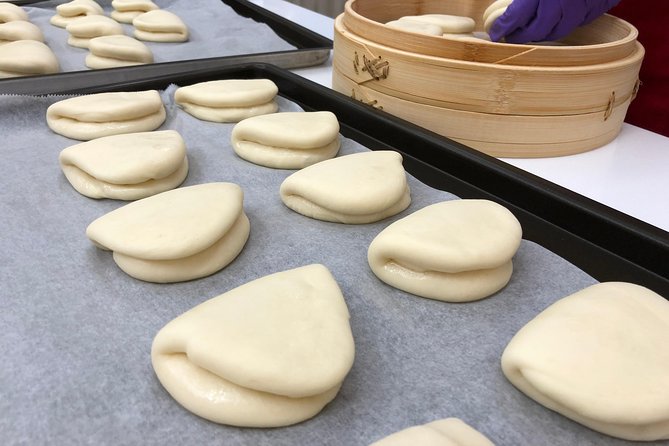
Gua bao is likely to be the star of the afternoon. You make the steamed buns from scratch, then learn the tips behind braising the pork belly that fills them. This is the part of the class where you get the clearest sense of how a street-food favorite is made.
Making the dough gives you a useful lesson in texture. The finished bun must be soft enough to fold but sturdy enough to hold the pork. That is a small detail, yet it is the difference between a proper gua bao and a bun that tears or feels heavy.
The pork preparation takes the other side of the dish. Braising is not just about adding sauce. You learn how seasoning works with pork belly and why slow cooking produces the tender texture associated with this dish. The class does not simply hand you a finished filling and ask you to assemble it.
The final result is meant to be eaten during the class, not packed away for later. That makes gua bao a satisfying payoff after the dough work. If you have eaten gua bao at Taipei food stalls, making one yourself helps you notice the bun, sauce, and pork as separate parts instead of one quick bite.
One practical point: the gua bao process appears to receive the strongest praise, so give it your attention. Follow the instructor’s handling advice carefully, especially when shaping the dough. The class is short, and you may not get time for a second attempt.
Lu rou fan and the lesson of braised pork
Lu rou fan is prepared as part of the same street-food lesson. The dish is served over rice, with braised pork providing the main flavor. One useful detail is that the rice may be prepared in advance, allowing the class to focus its hands-on time on the pork and other elements.
That arrangement has a tradeoff. You may not be learning every part of the meal from the first step, but you do spend your limited class time on the technique that gives lu rou fan its identity. In a two-hour session, that is a sensible choice.
The dish also adds balance to the class. Gua bao is handheld and visually appealing, while lu rou fan is a bowl of simple, comforting food. Together, they show two ways Taiwanese cooks use pork: tucked into a steamed bun or served with rice and sauce.
If your main goal is to learn a recipe you can repeat at home, pay close attention to the braising guidance. The recipe book should help afterward, but the instructor’s tips during the cooking are likely to be just as useful as the written instructions.
More Street Food Tours in Taipei:
- Taipei: Street Food & Hidden Eats Night Market Food Tour
★ 4.8 · 112 reviews - Taipei Hidden Eats, Market & Street Food Tour with 8+ Tastings
★ 5.0 · 109 reviews - Taipei Food Tour: Night Market & Convenience Store(Food Included)
★ 4.5 · 100 reviews - Backstreet Food Tour: Food, Culture, and Fun
★ 5.0 · 63 reviews
Making chewy boba pearls from scratch
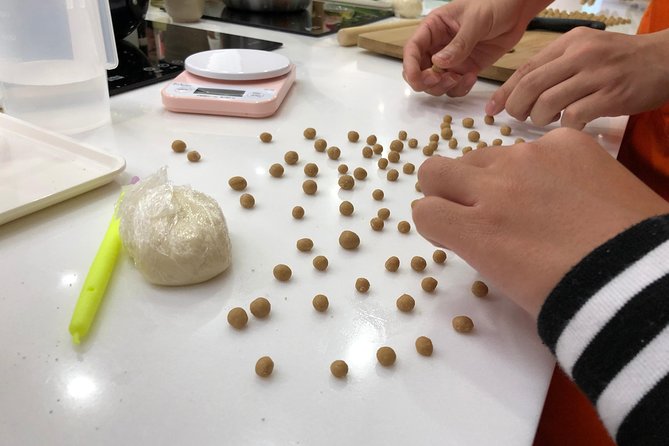
The bubble tea portion is more involved than simply pouring milk tea over purchased pearls. You make the tapioca pearls yourself, then prepare and shake the drink. It is a hands-on process with a satisfying result, but it may be the trickiest part of the afternoon.
The dough needs to reach the right texture before it can become pearls. Small pieces must be formed consistently, and the cooking process affects the final chew. The class gives you a chance to see why boba has its distinctive bite, rather than treating the pearls as a mystery ingredient.
This is also where patience matters. The process can be hard, especially if you are trying to work quickly or make perfectly even pearls. I would treat that challenge as part of the lesson, not as a flaw. The point is to understand the process and enjoy the drink you make, not to produce factory-perfect tapioca.
Children can take part, although younger cooks may need close help with shaping and handling. The class has already worked well with children aged 8, 10, and 11, with the instructor involving them in the activities. Families should still expect a real cooking session, not a craft workshop with no waiting or tricky steps.
Eating the meal you prepared
At the end, you sit down with the dishes made during the class. This meal is an important part of the value. You are not paying only for a demonstration or a few samples. You get instruction, food, and the pleasure of seeing the separate steps come together.
Come hungry. The class covers several substantial items, including pork, steamed buns, rice, and bubble tea. The exact portion size is not specified, so I would think of the meal as a generous tasting and lunch or early dinner component rather than assume it will replace every meal for the day.
Eating immediately also helps you judge your work. You can see whether the bun has the right texture, whether the pork is tender enough, and how the boba feels in the drink. Those observations are useful when you try the recipes at home.
The recipe book adds long-term value. A cooking class can fade into a pleasant afternoon memory, but written instructions give you a real chance to repeat the dishes. For someone who has enjoyed Taipei food and wants to recreate it later, that souvenir may be more useful than another small gift from a shop.
Is $79 a fair price?
At $79 per person, this is not the cheapest way to eat Taiwanese street food. You can buy gua bao, rice dishes, and drinks from food stalls for far less. The price makes more sense if you value instruction, a small group, the ingredients, and the chance to eat what you make.
You are paying for a two-hour activity rather than a simple meal. The class covers three recognizable Taiwanese favorites and includes several labor-intensive steps, especially the steamed buns and tapioca pearls. The maximum of eight also supports a more personal format.
The value is strongest for curious eaters, home cooks, and visitors who want to understand the food they are ordering. It is weaker for anyone who only wants a quick meal or has little interest in cooking. If you would rather spend two hours moving between Taipei food stalls, that may be a better use of your budget.
I would also compare this class with the cost of a cooking lesson in your own city. You get a meal, instruction, a recipe book, and a food memory tied directly to Taipei. For many visitors, that is a fair exchange, especially if the recipes will be used again.
Who will enjoy this class most?
This experience fits first-time visitors who want more context for Taiwanese food. It also works well for returning visitors who have already eaten gua bao or lu rou fan and now want to understand how the dishes are made.
Families are a good match, provided children are comfortable following instructions and taking part in food preparation. The instructor’s patient approach has worked with children from 8 to 11, which is useful evidence for parents planning a family afternoon.
The class also suits couples, friends, and solo visitors who like a social activity with a clear result. The small group gives you a chance to cook alongside other people without the scale of a large workshop.
You may want to skip it if you dislike pork, since pork is central to the gua bao and lu rou fan. You may also find the pace demanding if you want a slow, highly detailed lesson on every ingredient. Two hours is enough for a taste of several techniques, but not enough for a full culinary course.
Timing, cancellation, and practical planning
The scheduled start is 2:30 pm, and the class lasts about two hours. That makes it easy to pair with other Taipei plans before or after, but leave enough time to reach the Zhongshan classroom without rushing.
The activity requires a minimum number of participants. If that minimum is not met and the class is canceled, you are offered another date or experience, or a full refund. You can also cancel for a full refund if you do so at least 24 hours before the local start time. Cancellations or changes made inside that window are not refunded or accepted.
The mobile ticket keeps check-in straightforward. Since the address is on the second floor, check the full meeting details before setting out and keep the booking confirmation available on your phone.
Should you book this Taipei cooking class?
I would book it if you want more than a food tasting. The strongest reasons are the small class size, the chance to make gua bao buns and boba pearls from scratch, the patient instruction, and the recipe book you can use later.
I would be more cautious if your main aim is a relaxed afternoon with no hands-on effort. The boba pearls can be difficult, and the two-hour schedule leaves little room for dawdling. Still, that bit of work is exactly what gives the class its value.
For families, home cooks, and food-focused visitors, CookInn Taiwan offers a compact and useful introduction to Taiwanese street food. Come hungry, arrive ready to work, and give the gua bao your full attention. That is where this class appears to deliver its best reward.
FAQ
Where does the cooking class meet?
It meets at CookInn Taiwan’s Zhongshan classroom, located at 66 Section 1, Chengde Road, second floor, in Datong District, Taipei.
What time does the class start?
The class starts at 2:30 pm.
How long does the experience last?
The cooking class lasts approximately two hours.
What dishes will I make?
You will learn to make gua bao, lu rou fan, and bubble milk tea. The class includes making the gua bao steamed buns and tapioca pearls from scratch.
Is the class suitable for children?
Yes. Children aged 8, 10, and 11 have taken part successfully, with the instructor involving them in the cooking activities.
How many people can join the class?
The class has a maximum of eight participants.
Can I cancel for a refund?
Yes. You can receive a full refund if you cancel at least 24 hours before the experience start time. Changes or cancellations made less than 24 hours before the start are not accepted or refunded.
Just added around Taipei
- Yansan Night Market Food Tour★ 5.0 · 30 reviews
- Backstreet Food Tour: Food, Culture, and Fun★ 5.0 · 63 reviews
- Private Keelung Food Tour with Local Markets & Tastings★ 5.0 · 11 reviews
- N113 Jingtong Station Pingxi Old Street Jiufen Old Street Keelung Miaokou Night Market Day Tour (10h)★ 5.0 · 2 reviews
- Jiufen, Heping Island Park & Keelung Night Market Day Tour★ 4.5 · 10 reviews
- Taipei Street Food & Night Market Tour with a Local: Private & Custom★ 4.5 · 35 reviews
- Local Favorites: Taiwan Night Market Food Tour in 2 hours★ 5.0 · 5 reviews
- Taipei: 2-Hour Raohe Night Market Walking Tour★ 4.6 · 69 reviews
Cooking Classes, compared.
Food Market Visit and Cooking Class with Wine
What we made of it →
Mexican Cooking Class with Food Market Visit in Mexico City
What we made of it →
Food Market Shopping and Cooking Workshop in A Coruña
What we made of it →
Eat Osaka: Street Food Cooking in an Authentic Kitchen!
What we made of it →
Sicilian Street Food Hands-On Cooking Class
What we made of it →Where this tour turns up