
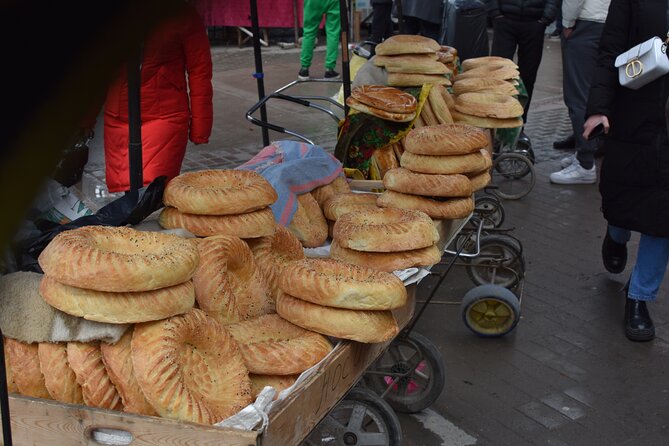
Review · TASHKENT
Tashkent Vegan Street Food Tour
Come hungry, leave better oriented. This four-hour Tashkent Vegan Street Food Tour links Chorsu Bazaar, the old Khadra neighborhood, Alay Bazaar, and a local restaurant near the National Library. I like its focus on food that locals actually eat, and I like that guide Akmal uses meals to explain Tashkent’s customs, history, and daily life. The main drawback is that the tour runs in the morning and depends on good weather, so it may not suit every schedule.
You will not simply move from plate to plate. The route includes walks, market visits, photographs, stories, and time to notice ordinary city life. The food is fully plant-based, but you do not need to be vegan to enjoy it. Just arrive hungry: the portions and number of tastings can add up quickly.
Key things to know before booking
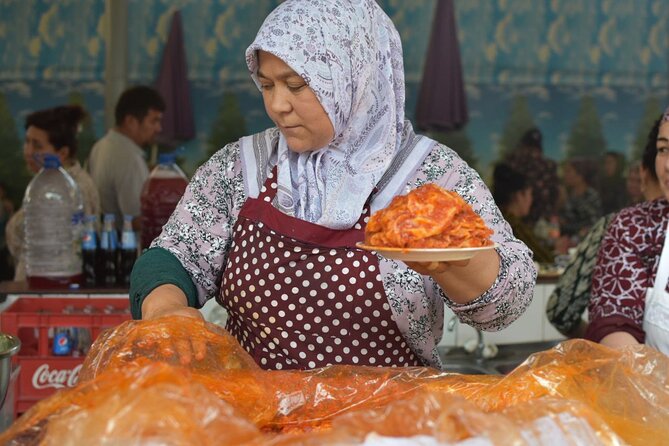
- Chorsu Bazaar opens the story: You start among Tashkent’s oldest market lanes and try potato-filled khanum in tomato sauce.
- Two very different markets: Chorsu shows the old town side of the city, while Alay Bazaar offers a more central market setting.
- Akmal is part of the appeal: He grew up in Tashkent, speaks excellent English, and brings personal knowledge of the city to the walk.
- The food goes beyond familiar salads: Expect Uzbek round bread with Korean salads, plus a vegan version of beshbarmak.
- Small groups help: The maximum group size is seven, which suits a food walk that includes conversation and questions.
- A useful first-day activity: The tour can help you understand what plant-based eating looks like in Uzbekistan before you continue elsewhere in the country.
Why this four-hour food walk works so well in Tashkent
Tashkent is not a city where plant-based food always announces itself. Uzbek cooking is often associated with meat, so a visitor who avoids animal products can face a fair amount of guesswork. This tour solves part of that problem by showing you specific dishes, markets, and places where vegan food is possible.
I like the way the experience treats food as an entry point rather than the whole event. You visit markets, walk through an old neighborhood, look at local life, and hear stories about the city. That makes the tour useful even if you normally eat meat. You are learning how Tashkent works through the things people buy, share, and eat.
The morning schedule runs from 9 a.m. to 1 p.m. and takes about four hours. Pickup is offered, though the provided details do not specify the exact pickup area or whether it is included in the price. Ask when booking if hotel pickup matters to you.
The group limit is seven people. That is a sensible size for narrow market lanes and informal tastings. It also gives you a better chance to ask Akmal about ingredients, customs, and other places to eat during your stay.
More Vegan and Vegetarian Street Food in the world:
- Vegan Street Food & Stories of Hanoi
★ 5.0 · 282 reviews - Hanoi: Vegan Street Food & Stories
★ 4.9 · 201 reviews - Mexico City Vegan & Vegetarian Street Food Adventure
★ 5.0 · 176 reviews
Chorsu Bazaar and the potato pastry in tomato sauce
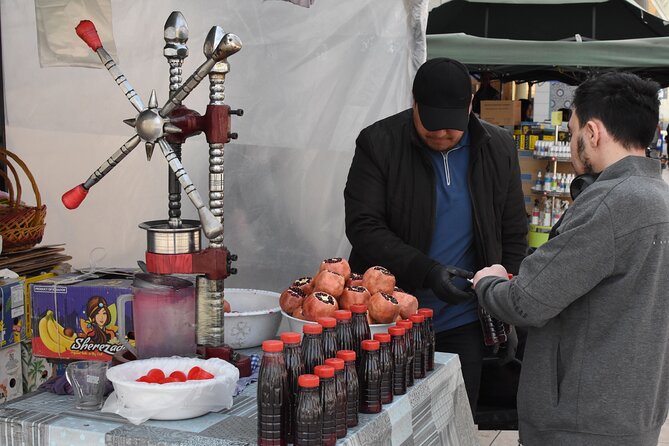
The first stop is Chorsu Bazaar, the oldest and most picturesque bazaar on the route. This is a strong starting point because it places you in Tashkent’s old town before the tour moves toward the city centre.
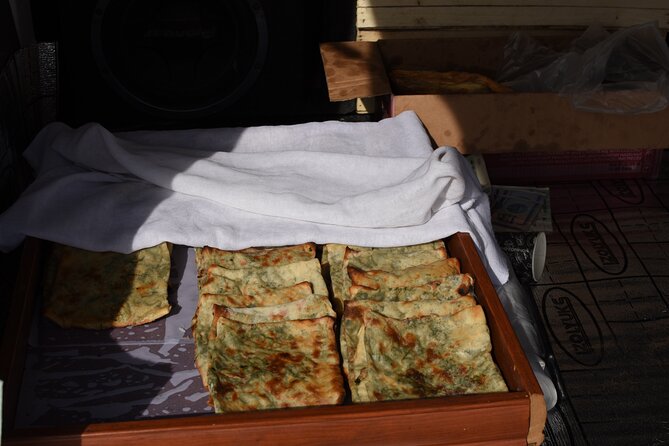
The food focus is Gluttony Lane, where you try khanum made with potatoes and served in a generous tomato sauce. For a vegan visitor, this is exactly the sort of information that can be hard to find alone. You are not just being told that a market has plant-based options. You are being taken to a specific place for a specific local dish.
The one-hour stop gives you time to look around as well as eat. Chorsu is a market experience, not a quiet café meal, so expect movement, sellers, and a setting shaped by everyday shopping. If you prefer polished restaurants and carefully arranged plates, the market may feel rough around the edges. That is also its value.
Go with room in your appetite. The tour includes several food stops, and the first one is not a token sample. The amount of food is one reason the tour works best as a morning activity rather than something squeezed between breakfast and lunch.
Khadra, where the pace changes
After Chorsu, the route turns toward Khadra and the narrow lanes of Tashkent’s Old City. This 40-minute walk gives the food a pause and lets you see a quieter side of the capital.
The emphasis here is ordinary local life. You might notice children playing and people moving through the neighborhood at an unhurried pace. That matters because a market can show you what people buy, but a residential walk gives you a better sense of how the city feels away from the main attractions.
This is also where the tour’s flexible format becomes useful. The guides describe the experience as adaptable, with walks, pictures, stories, and people included rather than a rigid sequence of tastings. If you want to ask about Tashkent’s customs or the city’s past, this is a natural stretch of the route for questions.
The drawback is simple: if your only goal is eating, 40 minutes without a major tasting may feel like a delay. I see it differently. Without this neighborhood walk, the tour would be just a list of dishes. Khadra gives the food a setting.
Alay Bazaar and the Uzbek bread with Korean salads
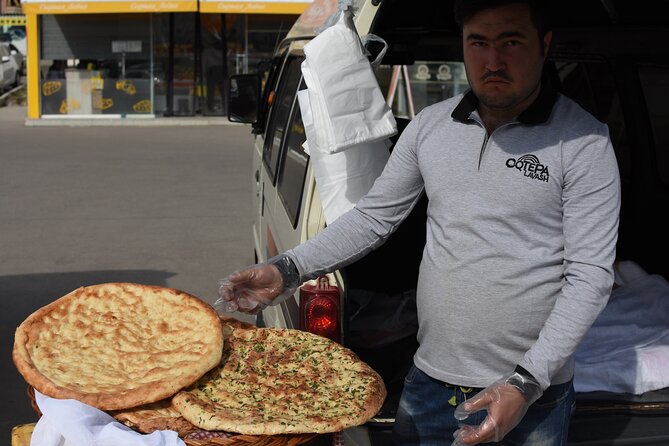
The next market is Alay Bazaar, also called Oloy market. Its location in the city centre gives you a contrast with Chorsu and the old town. Seeing both markets helps you compare two parts of Tashkent instead of treating the city as one large food district.
Here, the tour includes Uzbek round bread stuffed with traditional Korean salads. The combination tells you something useful about local food culture. It is not a standard Western idea of vegan cuisine, and it is not presented as a special diet meal. It is a local pairing shaped by the food already available in Tashkent.
The Korean salads are especially relevant for visitors who may expect every Uzbek meal to revolve around meat. They show how plant-based choices can appear through side dishes, market foods, bread, and regional influences. You may also find this stop useful if you want ideas for buying simple food later in your trip.
The Alay stop lasts about an hour. As at Chorsu, the market setting is part of the experience. You should expect a public food environment rather than a private tasting room. The precise selection can change with availability, so keep your expectations focused on the kind of food and local setting rather than a fixed restaurant menu.
More Street Food Tours in the world:
- Dubai: Old Town, Creek, Museums, Souks, & Street Food Tour
★ 4.8 · 10,816 reviews - Ho Chi Minh City Street Food Tour & Sightseeing By Motorbike
★ 5.0 · 9,413 reviews - Medellin: Comuna 13 Graffiti Tour, Cable Car & Street Food
★ 4.8 · 9,046 reviews - Dubai: Old Town, Souks, Street Food, Guided Tour & Abra Ride
★ 4.9 · 7,170 reviews
Vegan beshbarmak near the National Library
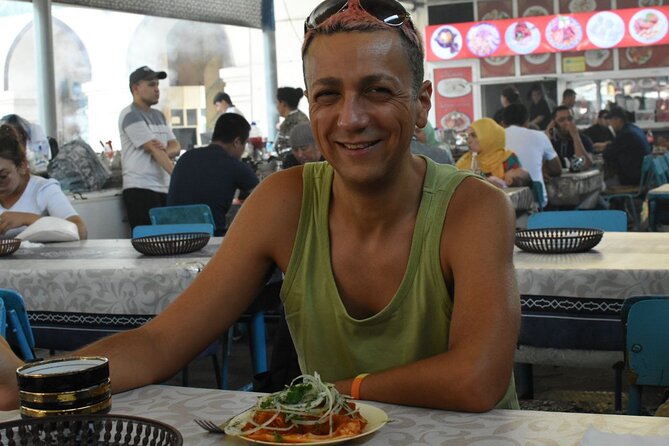
The final stop is a local restaurant near the National Library of Uzbekistan, named after Alisher Navoi. This is where the tour tackles one of the more surprising dishes of the day: vegan beshbarmak.
Beshbarmak is strongly associated with Central Asian meat cooking, so a plant-based version is an unusual adaptation. The tour presents it as a local restaurant’s attempt to reshape a familiar dish without animal ingredients. That makes the meal more than a final course. It raises a practical question about how traditional food changes when cooks respond to new diets.
The restaurant also gives the tour a proper finish after two markets and a neighborhood walk. You can sit down, eat, and think about the foods you have tried rather than rushing directly from one stall to another.
This stop may matter most to vegan visitors who worry that plant-based food in Uzbekistan will mean little more than bread and raw vegetables. The meal shows that adaptation is possible. At the same time, you should not expect every classic Uzbek dish to be available in vegan form during the rest of your trip. The value here is the introduction to one place that has made the effort.
Akmal’s role in making the tour personal
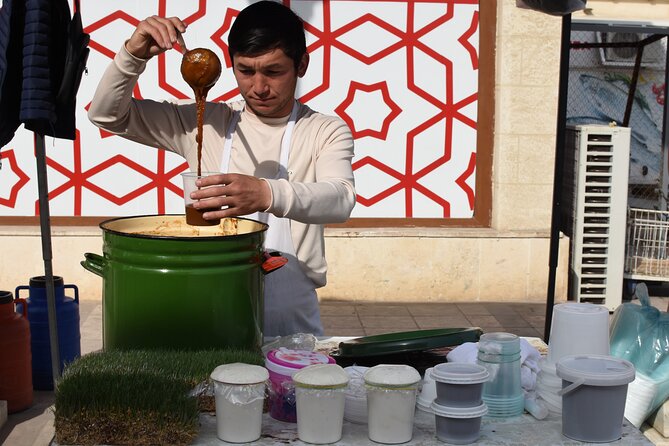
Akmal is the owner and guide, and the experience benefits from his connection to Tashkent. He was born and raised in the city, then lived and traveled in Europe before returning. That background helps him explain both local customs and the questions a foreign visitor may have about finding food.
His English is described as excellent, and the strongest praise focuses on his friendliness, humor, and ability to talk about more than vegan eating. That matters on a four-hour tour. A guide who only names dishes would leave you with a full stomach but little sense of place. Akmal’s role is broader: he connects the food to the city, culture, and everyday habits.
Solo visitors may find the small-group format especially appealing. One person has even taken the tour alone and found the experience personal. The group size can be as large as seven, but the format still leaves room for conversation.
The tour is also suitable for people who eat meat. The food offers a different view of Uzbek cooking, and the city walks do not depend on following a vegan diet. If you want to understand local food culture rather than simply confirm your existing preferences, this is a good reason to book.
Is $72 a fair price?
At $72 per person, this is not the cheapest way to buy street food in Tashkent. You could spend far less by visiting a market on your own. The price needs to be judged as a guided experience, not as the cost of four hours of food alone.
You are paying for a small-group route across two markets, a neighborhood walk, several tastings, guidance in English, local interpretation, and a restaurant meal. For a vegan visitor, the practical value is higher because the guide has already identified suitable foods in a meat-heavy food culture.
I would see the tour as good value if you are new to Tashkent, want help ordering plant-based food, or prefer a personal introduction instead of researching each meal yourself. It is less compelling if you already know the city well, speak the local language, and mainly want the lowest possible food cost.
The tour also gives you information you can use after it ends. Once you know what Uzbek bread, Korean salads, khanum, and vegan beshbarmak look like, eating elsewhere becomes less uncertain. Several people use it as one of their first activities in Uzbekistan for exactly that reason.
Timing, comfort, and practical points
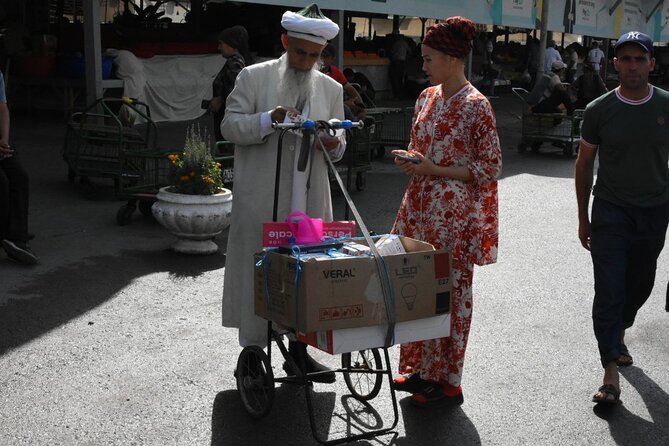
The four-hour route involves walking through markets and old neighborhood lanes. Wear comfortable shoes and keep your schedule open until roughly 1 p.m. The tour is listed for every day from Monday through Sunday, with departures between 9 a.m. and 1 p.m., subject to availability.
The experience requires good weather. If poor weather forces a cancellation, you can receive a different date or a full refund. You can also cancel for a full refund if you do so at least 24 hours before the start time. Changes or cancellations made inside that window are not accepted for a refund.
Service animals are allowed, and most people can take part. The information provided does not give detailed accessibility notes for the market lanes, so contact Uzveg Tours if you need specific help with walking surfaces, transport, or pickup.
Part of the tour money supports imprisoned vegan activists. That contribution may matter to people who want their spending to support a cause connected to the tour’s plant-based focus. You may want to ask the operator for current details if this is an important part of your booking decision.
Who should book this Tashkent experience?
I would recommend it first to vegan and vegetarian visitors who want a safe, practical introduction to eating in Uzbekistan. It is also a good choice for solo visitors, first-time arrivals, and anyone who wants a guide rather than a self-guided market hunt.
You should also consider it if you are curious about how local food changes across communities. The potato pastry, Korean salads, Uzbek bread, and vegan beshbarmak show several different ways plant-based food appears in Tashkent.
I would be more cautious if you dislike walking, have a very small appetite, or want a formal restaurant tour. The experience is built around markets, lanes, conversation, and flexible stops. It is social and informal, not polished or tightly scripted.
Should you book the Tashkent Vegan Street Food Tour?
Book it if you want your first taste of Tashkent to include both food and context. The strongest reasons are the two contrasting markets, the old-town walk, and Akmal’s personal connection to the city. You will also finish with useful knowledge about where and how vegan food appears in local cooking.
Skip it if you are focused only on cheap meals or already have a detailed food plan. For most visitors, though, the $72 price is reasonable for a four-hour introduction that removes much of the guesswork from plant-based eating. Arrive hungry, choose a morning when the weather looks reliable, and treat the walk between dishes as part of the meal.
FAQ
How long does the Tashkent Vegan Street Food Tour last?
The tour lasts approximately four hours. The listed morning hours are from 9 a.m. to 1 p.m.
What places does the tour visit?
The route includes Chorsu Bazaar, Khadra in Tashkent’s Old City, Alay Bazaar, and a local restaurant near the National Library of Uzbekistan named after Alisher Navoi.
What food is included?
The food includes potato khanum in tomato sauce, Uzbek round bread stuffed with traditional Korean salads, and a vegan version of beshbarmak. The tour also includes other local plant-based street food.
Is the tour suitable for people who are not vegan?
Yes. The experience is open to people who eat meat as well as vegans and vegetarians. Its focus is local food, city life, and culture through plant-based dishes.
How many people can join the tour?
The maximum group size is seven people. Pickup is offered, and a mobile ticket is available.
What happens if the weather is poor or I need to cancel?
The tour may be canceled because of poor weather, in which case you can receive a different date or a full refund. You can cancel at least 24 hours before the start time for a full refund.
Just added around the world
- Zanzibar:Stone town Street food market walking tour,transfer★ 4.5 · 9 reviews
- Vienna Food Tour: Dishes, Wine, Street Food & Culture★ 4.7 · 12 reviews
- Verona: Street Food Tour and City Guided Sightseeing★ 4.9 · 11 reviews
- Xi’an: Gourmet & Street Food Tour★ 4.8 · 22 reviews
- Verona: City Highlights & Street Food Walking Tour★ 5.0 · 3 reviews
- Verona: Street Food and History Tour with Local Guide★ 4.7 · 6 reviews
- Xi’an Muslim Quarter Night Market Foodie Walking Tour★ 4.2 · 22 reviews
- Verona: street food walking tour near the historical center★ 5.0 · 2 reviews
Vegan and Vegetarian Street Food, compared.
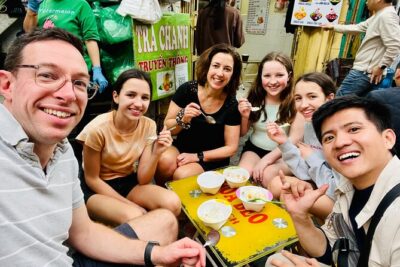
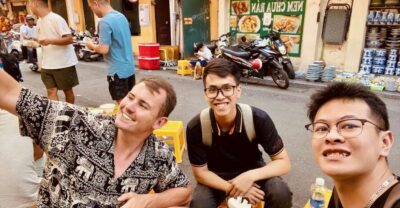
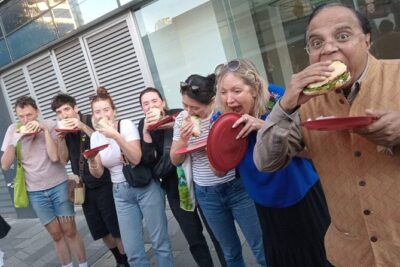
Mexico City Vegan & Vegetarian Street Food Adventure
What we made of it →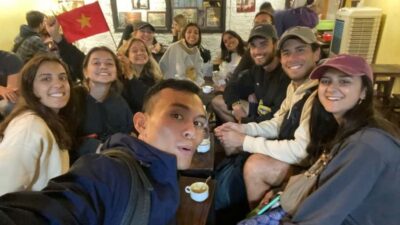

Hanoi Vegan Street Food Tour and Train Street
What we made of it →
Where this tour turns up