
Review · CATANIA
Catania: Underground and Street Food Walking Tour
Catania keeps its oldest secrets underground. I like the way this 2.5-hour walking tour connects Roman ruins, lava caves, buried churches, and the Amenano river instead of treating each sight as a separate stop. I also like the market break, where local food and a mandarino e limone bring the city’s daily life into the tour. The main drawback is practical: you’ll climb irregular steps, enter enclosed spaces, and walk through busy streets, so this is not a good fit for wheelchair users or anyone with claustrophobia.
The small group, limited to 10 people, gives the guide room to answer questions. Guides such as Oreste, an archaeologist, and Matilde have been praised for clear explanations and strong local knowledge. Still, access to underground sites can change, especially around holidays or in poor weather, so keep a little flexibility in your expectations.
Key points to know before you book
- Start beneath the Roman Amphitheater: Meet at Piazza Stesicoro, by the entrance with two columns, where the guide waits with a nameplate.
- Catania’s layers are the main attraction: Roman remains, prehistoric lava, churches, wartime damage, and later buildings all appear during the walk.
- The market stop is part of the experience: You taste local street food at Piazza Carlo Alberto rather than simply hearing about Sicilian cooking.
- The Amenano river leads toward ancient baths: The underground route gives you a glimpse of water, volcanic stone, and buried Roman Catania.
- The final drink is distinctly local: You finish with a mandarino e limone at a kiosk, a familiar Catanian refreshment.
- Expect steps and tight spaces: The tour is unsuitable for wheelchair users, people with mobility impairments, and people with claustrophobia.
Why Catania makes a good underground tour city
Catania is a city built in layers. Volcanic eruptions, earthquakes, Roman construction, war damage, and later rebuilding have left older pieces below the streets and buildings you see today.
That makes this tour more than a standard stroll from one church to another. You get a sense of how the city was repeatedly buried, altered, and rebuilt. A street may look thoroughly modern at ground level, yet below it you can find a Roman structure, a lava cave, or a water channel.
I especially like this approach for a first visit. The route gives you a working picture of Catania: its black lava stone, Roman past, underground water, religious sites, market culture, and grand Baroque center. You are not simply collecting photo stops. You are learning why the city looks the way it does.
The tour is guided in Italian, French, Spanish, or English. The group size is capped at 10, which matters underground. Narrow stairs and small chambers are easier to manage when you are not moving in a large crowd.
More Street Food Tours in Catania:
- The Original Catania Street Food and Market Tour by Streaty
★ 5.0 · 345 reviews - Catania: Street Food Guided Walking Tour
★ 4.9 · 326 reviews - Catania: Guided Street Food Walking Tour
★ 4.7 · 300 reviews
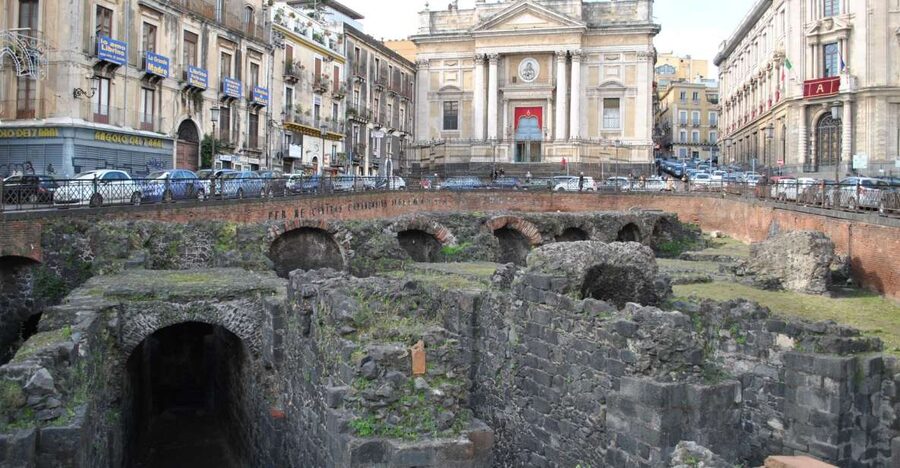
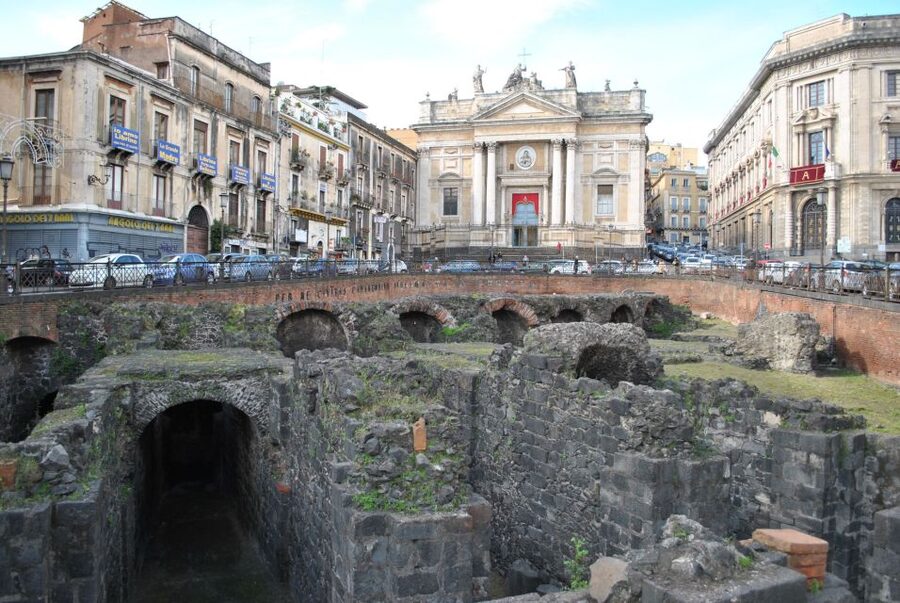
Meeting the guide at the Roman Amphitheater
The meeting point is Piazza Stesicoro, beside the Roman Amphitheater of Catania. Look for the entrance marked by two columns and a guide holding a nameplate. The listed coordinates are 37.50728988647461, 15.086018562316895.
Allow a few minutes to find the correct side of the square. Piazza Stesicoro is an active part of central Catania, and the amphitheater entrance can be easy to overlook if you are watching the surrounding traffic and shops.
The opening photo stop lasts about 15 minutes. This is a useful start because the amphitheater sets up the central idea of the tour: Catania’s Roman past is still here, but much of it sits below the modern city.
Your guide can also explain how the Roman remains relate to the later city. Guides with an archaeology background, especially Oreste, have made this part especially useful for people who want more than a quick identification of ancient stones.
Entering the underground city
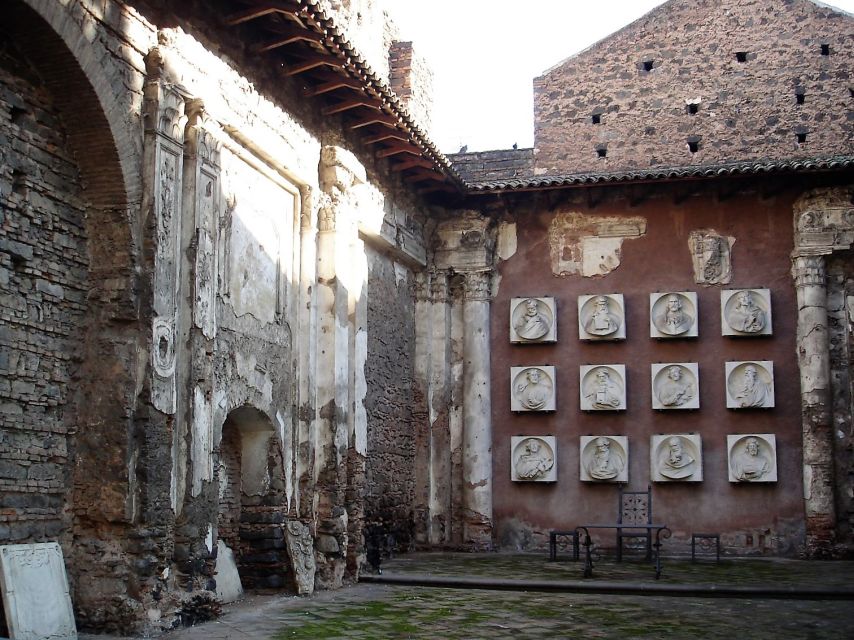
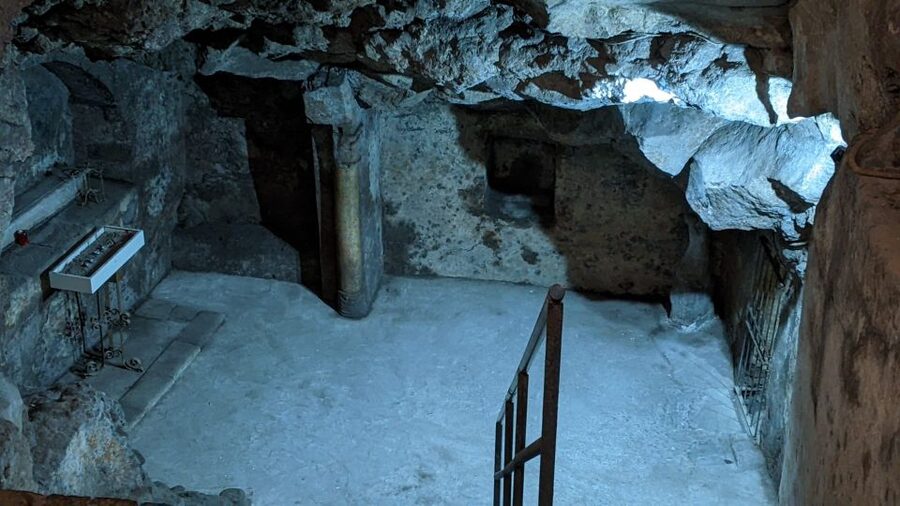
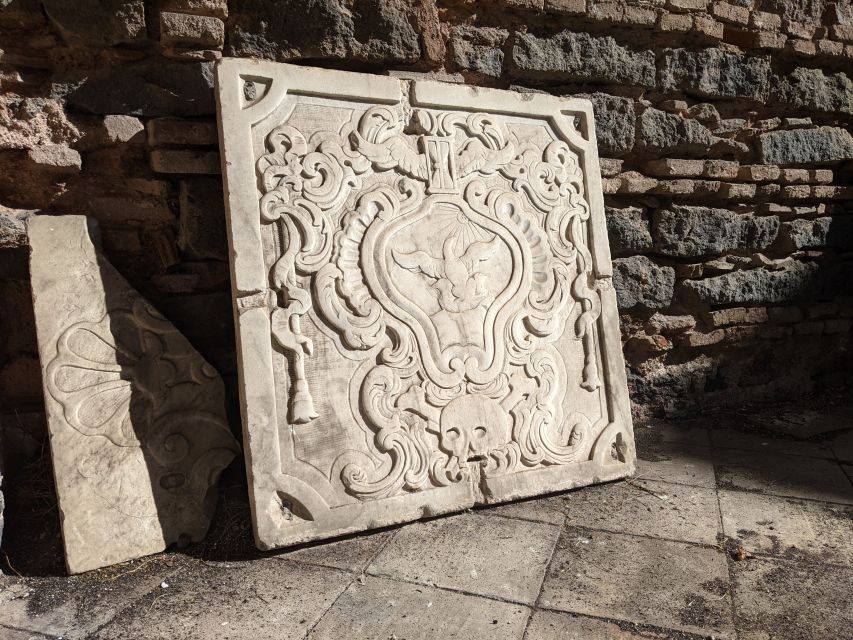
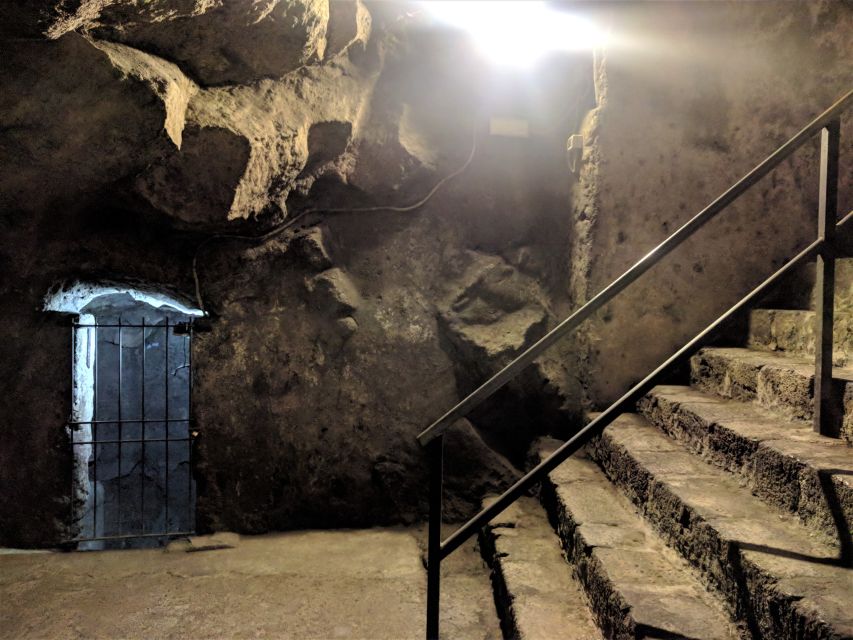
The first proper underground visit lasts around 30 minutes. Here you may see spaces shaped by both human construction and volcanic activity, including a prehistoric cave formed or affected by Etna’s eruptions.
That combination is one of the tour’s best features. You are not looking only at archaeology, and you are not looking only at geology. The cave helps explain the power of Etna in a direct way. The mountain is not just a distant backdrop around Catania. Its eruptions helped form the ground beneath the city and repeatedly changed life above it.
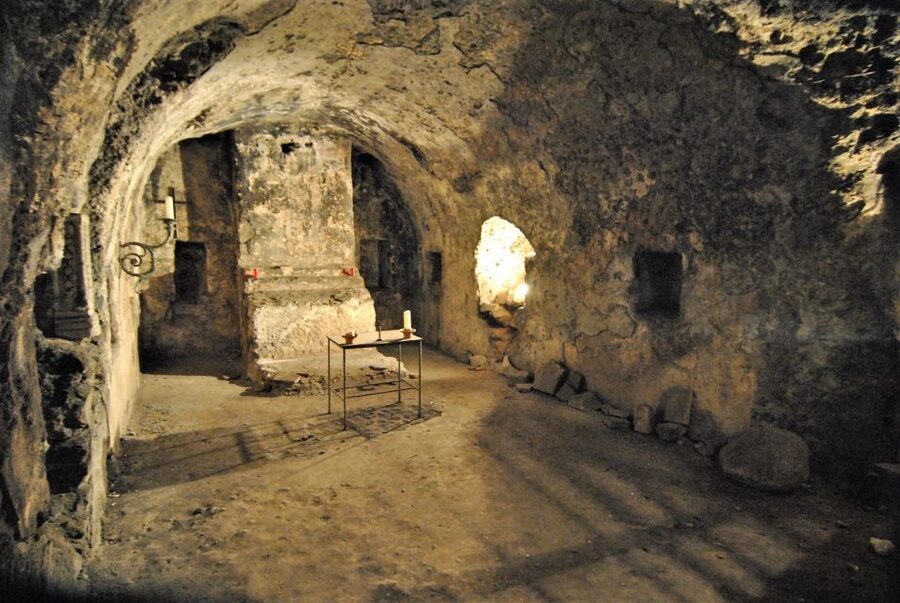
The route also includes ancient religious spaces and areas connected with bombed churches. These places help explain how Catania’s story reaches beyond the Roman period. The underground sites are not polished museum rooms in the usual sense. Their rough surfaces, uneven steps, and low passages are part of the experience.
You should wear shoes with a firm sole. The tour information warns that some steps are irregular, and you may need to climb a few stairs to reach different sites. Large bags and oversize luggage are not allowed, which is sensible in confined spaces.
Eating your way through Piazza Carlo Alberto
After the first underground section, the group heads to Piazza Carlo Alberto and its open-air market. This is where the tour changes pace. Instead of standing quietly in an archaeological site, you move through a noisy food market with stalls, shoppers, vendors, and the smell of prepared food.
The food portion lasts about 30 minutes and includes local snacks and street food. The exact items can vary, so do not book this expecting a fixed tasting menu. That flexibility is part of the appeal. You get a taste of the market as it is operating rather than a staged food presentation.
I like this stop because it keeps the tour connected to present-day Catania. Ancient sites can sometimes make a city feel like a display case. The market does the opposite. It shows you where people shop, eat, and meet in the middle of the city.
Several people have singled out the street food as one of the strongest parts of the experience. One dish was described as among the best meals eaten during a two-week trip, although the name was forgotten. That is a useful reminder to ask your guide what you are eating and how locals usually order it.
The market can be crowded and loud. If you prefer slow, quiet meals, this may feel rushed. If you want a quick and genuine taste of Catania’s food culture, the setting works well.
Same place, a different plate:
- Catania Sicilian Street Food Tour: Small Group by Do Eat Better
★ 5.0 · 293 reviews - Catania Street Food Tour: Fish Market & City Centre
★ 4.9 · 104 reviews - Catania: Street Food Walking Tour
★ 4.7 · 60 reviews - The Original Fish Market and Street Food Tour of Catania
★ 4.8 · 36 reviews
A second underground stop and the city’s grand center
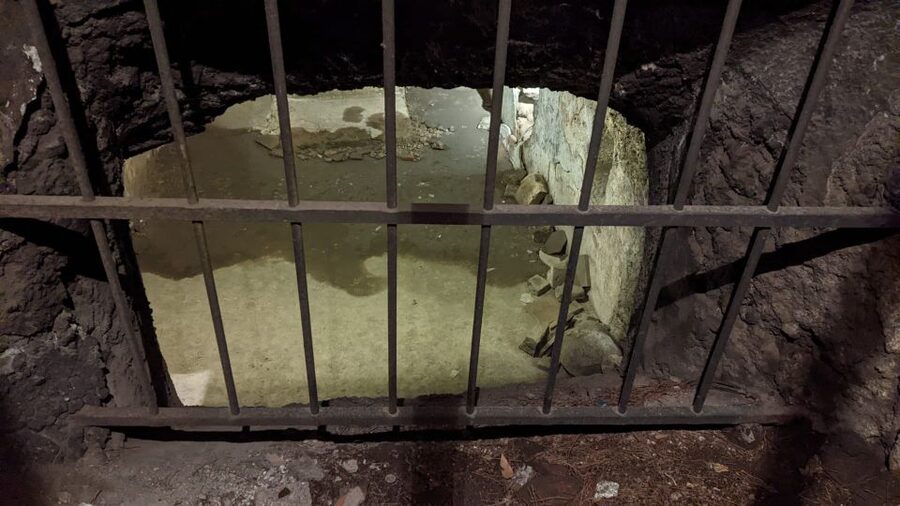
After the food break, the route returns to another lesser-seen site. This visit lasts about 25 minutes and may include a location that is not normally open for casual public access.
The exact underground stop can change. If a site is closed or unavailable, the operator replaces it with another underground location. That is worth understanding before booking. The tour’s subject is consistent, but the precise rooms you enter are not guaranteed every day.
The route then moves along Via Etnea, Catania’s main street. The walk brings you past aristocratic palaces and late Baroque churches before reaching Piazza del Duomo. This above-ground section gives your eyes a break from the darker underground spaces and lets you see how later architecture sits over the older city.
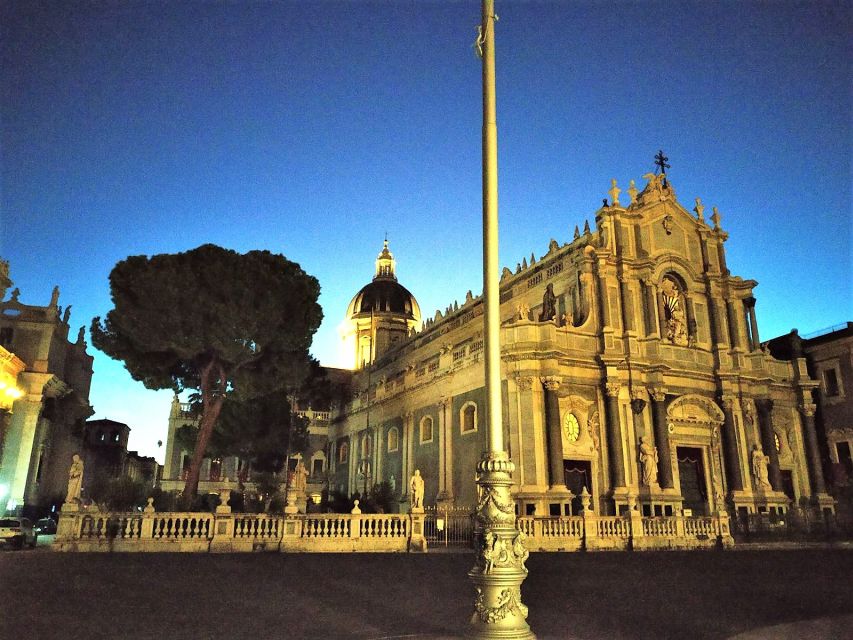
Piazza del Duomo is one of Catania’s key public spaces. The black lava stone elephant at its center is the city’s famous symbol, and the square provides a clear contrast with the rough caves and buried ruins seen earlier.
The sequence works well. You first learn that Catania lies over older layers, then you see the grand streets built on top of them. The tour makes the city center easier to read during the rest of your stay.
The Amenano river and ancient thermal baths
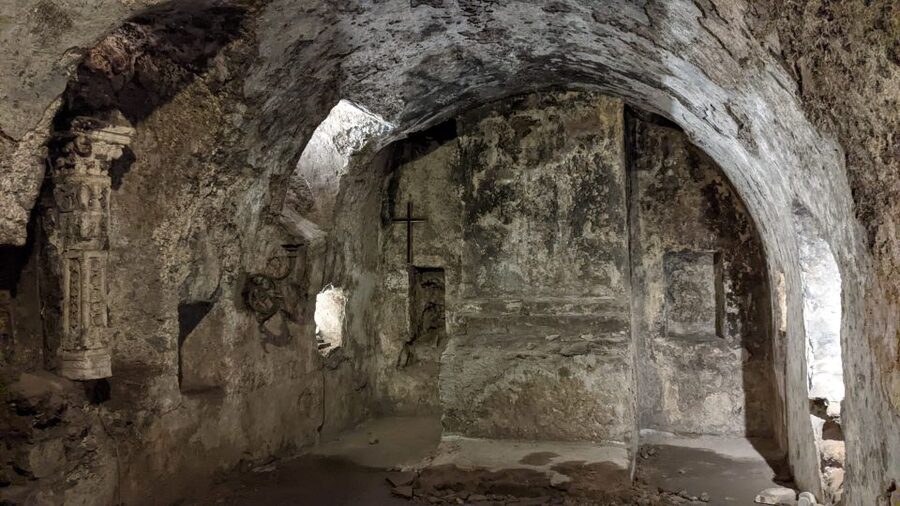
The final major visit follows the underground river Amenano toward the thermal baths. This section lasts around 30 minutes and is one of the most memorable parts of the route for anyone interested in how water shaped Roman Catania.
The Amenano is not simply a historical name on a map. Underground, it helps explain why certain sites were built where they were and why parts of the Roman city remain below the modern street level. Your guide connects the river, volcanic ground, and ancient bathing spaces into one story.
The thermal baths are especially rewarding because they show Roman life in practical terms. You are not only looking at walls or foundations. You are seeing the remains of a place built around water, heat, and public use.
The itinerary also refers to the basement of the cathedral. Access can depend on site conditions, but this is another example of the city’s unusual vertical structure. At ground level you have the cathedral and the grand square. Below, older structures and water systems tell a different story.
The final walk ends at Piazza del Duomo. That makes the tour convenient if you want to continue sightseeing in the historic center, stop for a meal, or use the square as a reference point for the rest of your day.
Finishing with mandarino e limone
The tour includes a short stop at a kiosk on Via San Gaetano alla Grotta, number 5, for a typical drink. The drink is mandarino e limone, a citrus refreshment made with mandarin and lemon flavors.
This is a small detail, but it gives the tour a local finish. You have spent the morning or afternoon looking at buried churches and Roman baths. Then you sit or stand with a familiar Catanian drink, as locals do, before continuing to Piazza del Duomo.
The drink stop lasts about 10 minutes. It is not a full café break, so do not expect a long rest. Think of it as a simple goodbye and a final bit of local color.
The guides make a real difference
The strongest part of this experience is the guide. Oreste has an archaeology background and has been praised for explaining the city in a clear, lively way. His approach seems particularly useful when a site is hard to understand at first glance. Underground spaces often need context, or they can look like disconnected walls and dark rooms.
Matilde has also received strong praise for making the walk interesting and enjoyable. Guides have helped people identify places, choose food, and decide what else to see in Catania after the tour.
You should expect an interpretive tour, not just directions from one stop to the next. The guide explains the effects of Roman occupation, volcanic eruptions, World War II damage, and later rebuilding. That range gives the city a human scale.
The experience may be less satisfying if you want a tightly scripted route with every site guaranteed. Underground access can change, and the quality of the tour depends heavily on the guide assigned that day. The small group helps, but it does not remove that element of uncertainty.
Timing, pace, and physical demands
The full experience lasts 2.5 hours. That is enough time to visit several underground sites, stop at the market, sample food, walk along Via Etnea, and finish near the cathedral without taking up an entire day.
The pace is fairly active. You walk between locations, spend time standing in archaeological spaces, and climb some steps. The route includes about 15 minutes of walking between one stage and another, in addition to the other city streets.
This is not suitable for wheelchair users or people with significant mobility limitations. It is also unsuitable for people with claustrophobia, motion sickness, or a body weight over 280 pounds, or 127 kilograms, according to the activity information.
The tour operates in rain or shine. Only severe conditions that make sites unusable are expected to lead to cancellation. Bring practical clothing and shoes, and remember that underground areas may feel different from the streets above.
What the tour is worth
No price is provided here, so I cannot judge the exact cost. The better question is what you are paying for. This is not just a food walk and not just an archaeology visit. It combines several small admissions or access points, a guide, market tastings, a drink, and a compact lesson in Catania’s past.
The value is strongest if you have limited time in the city. In 2.5 hours, you get an orientation to the main center, a look at places you might not find on your own, and enough food to introduce local flavors.
The value is weaker if you already have a full plan for underground Catania or if you prefer to explore at your own pace. You may also find the price harder to justify if you are traveling alone and do not care much about guided interpretation.
For most first-time visitors, the guide is the key part of the calculation. A well-informed archaeology guide can make a cave, a buried wall, or an old bath much easier to understand. Without that explanation, some of these sites would be quick photo stops.
Who should book this Catania walk?
I would choose this tour if you want to:
- See Catania’s Roman, volcanic, religious, and wartime layers in one compact outing
- Eat local street food without planning a separate market visit
- Learn from a guide who can explain archaeology in plain language
- Visit lesser-known underground places that may not be obvious from street level
- Finish near Piazza del Duomo for easy onward sightseeing
- Make good use of a short stay in Catania
I would skip it if you dislike enclosed rooms, uneven stairs, noisy markets, or a walking route with several changes of setting. It is also not the right choice if you need step-free access or want a quiet food tasting in a seated restaurant.
Book with an open mind about the exact underground sites. The operator may substitute another location if access changes. That is a reasonable trade-off for a tour built around working archaeological spaces rather than a single fixed museum route.
Should you book it?
Yes, if you want Catania explained from below the pavement upward. The mix of lava cave, Roman remains, underground water, market food, Baroque streets, and citrus drink gives you a fuller picture than a standard city walk.
The best reason to book is the guide-led interpretation, especially if Oreste or another archaeology-trained guide is leading your group. The main caution is physical comfort. If you can manage irregular steps and enclosed spaces, this is a focused and worthwhile introduction to Catania’s unusual underground world.
FAQ
How long does the Catania Underground and Street Food Walking Tour last?
The tour lasts 2.5 hours. It includes underground visits, a food market stop, walking along Via Etnea, a drink stop, and a final visit connected with the Amenano river and thermal baths.
Where does the tour meet?
Meet at Piazza Stesicoro, at the entrance with two columns beside the Roman Amphitheater of Catania. The guide waits with a nameplate.
Where does the tour finish?
The tour finishes at Piazza del Duomo in central Catania.
What languages are available?
The tour is offered in Italian, French, Spanish, and English.
Is the tour suitable for wheelchair users?
No. The tour is not suitable for wheelchair users or people with mobility impairments because you climb some steps, including irregular ones, to reach the sites.
What happens if an underground site is closed?
If one of the planned sites is not accessible or available, the organization replaces it with another underground site. The tour operates in rain or shine unless conditions make a site unusable.
Just added around Catania
- Street food tour of Catania by night★ 4.5 · 31 reviews
- Catania Street Food Tour★ 4.6 · 26 reviews
- Catania: Street Food Walking Tour★ 4.7 · 60 reviews
- The Original Fish Market and Street Food Tour of Catania★ 4.8 · 36 reviews
- Catania Street food tour by night★ 5.0 · 11 reviews
- Catania: Guided Street Food Tour with Tastings★ 5.0 · 3 reviews
- Catania Night Street Food & Backstreet Tour with a Local★ 4.6 · 14 reviews
- Catania Street Food Tour: Fish Market & City Centre★ 4.9 · 104 reviews
Street Food Tours, compared.
Old Town, Creek, Museums, Souks, & Street Food Tour
What we made of it →
Ho Chi Minh City Street Food Tour & Sightseeing By Motorbike
What we made of it →
Comuna 13 Graffiti Tour, Cable Car & Street Food
What we made of it →
Old Town, Souks, Street Food, Guided Tour & Abra Ride
What we made of it →
Small Group Hanoi Street Food Tour with a Real Foodie
What we made of it →
Saigon By Night and Street Food By Motorbike | Opt: Ao Dai Riders
What we made of it →Where this tour turns up