
Review · JAIPUR
Heritage Walk & Street Food Tasting in Jaipur
Come hungry and leave better oriented. This three-hour walk through Jaipur’s old city pairs samosas, kachoris, sweets, and masala chai with stories about architecture, religion, craft, and daily life. I like the no-pressure approach and the way the guides, including Vivek, Raj, Kumar, and Pushpendra, lead you into side lanes most first-time visitors would miss.
I also like the small group limit of 10 people. It keeps the walk personal and makes it easier to ask questions or adjust food choices. The main drawback is simple: this is a walking tour through crowded lanes, so it is not suitable for wheelchair users, and anyone expecting a sit-down meal or a quiet museum-style visit may find it hectic.
What makes this Jaipur walk worth your time
- About 15 food tastings are possible: You may sample several savory snacks, sweets, tea, and regional specialties at multiple local stops.
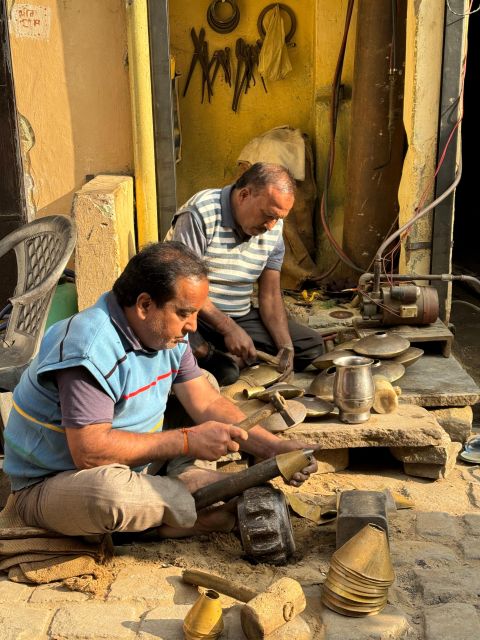
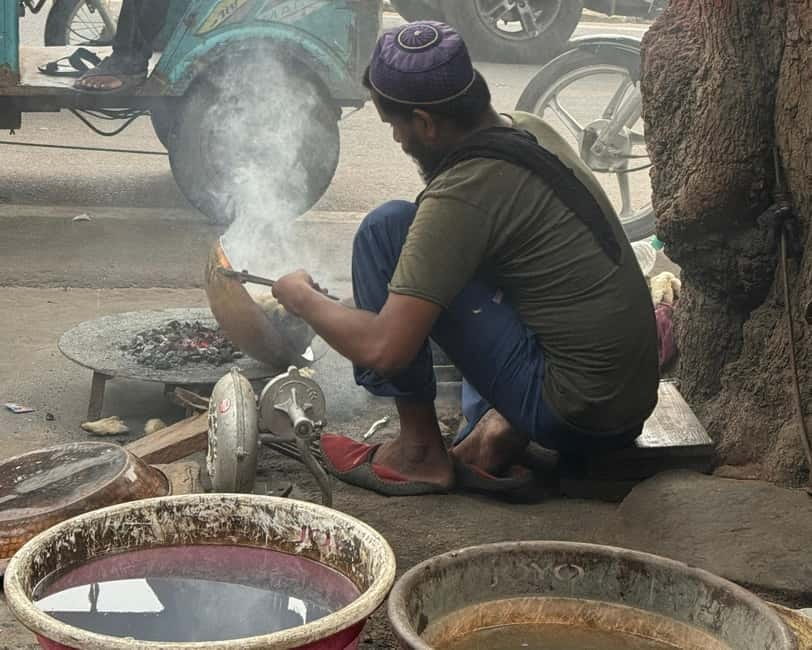
- The route reaches beyond the main bazaar: You enter smaller gullies, visit a metalworking street, and see local craft traditions.
- Jaipur’s design gets explained on foot: The walk covers the city’s geometric planning, entry gates, painted houses, markets, and old neighborhoods.
- Local guides add practical help: Guides such as Vivek and Raj are praised for clear explanations, gentle manners, and help with navigating the old city.
- It combines food with culture: You are not simply moving from stall to stall. Temples, wells, artisans, and community life are part of the experience.
- The $21 price is strong value: Food, water, a cultural guide, and three hours of walking are included, with no shopping stop or sales pitch built into the experience.
Starting at Golcha Cinema
The meeting point is the entry gate of Golcha Cinema. This is a useful place to begin because you are entering the old city on foot rather than being dropped beside one isolated attraction.
The first few minutes are about finding your guide and getting comfortable with the group. Since the maximum is 10 participants, you should have a reasonable chance to hear the commentary and ask questions. The guide may also learn what you eat, how much spice you prefer, and whether you have any food concerns.
The tour is led in English. Guides named in the feedback include Vivek, Raj, Kumar, Pushpendra, and Sam. The exact guide can vary, but the repeated praise is for friendly conversation, clear explanations, and a strong sense of Jaipur’s streets.
There is no hotel pickup or drop-off, so you need to reach Golcha Cinema yourself. Bring comfortable shoes, modest clothing for temple visits, sunscreen, a hat, personal medication, and a passport or other identification. A bottle of water is included, but carrying your own extra water is sensible in hot weather.
More History Walks in India:
- Jaipur: History Street Food Tour with Local Guide
★ 4.4 · 50 reviews - Spice & Stories: 3-Hour Old Delhi Heritage Food Walk Guided Tour
★ 4.5 · 36 reviews - Evening Mumbai by Foot Street Food and Heritage
★ 5.0 · 22 reviews
Chaura Rasta: tea, snacks, and the first look at old Jaipur
The first major section takes around 45 minutes around Chaura Rasta. You can expect an early food stop, tea, street scenes, and an introduction to Jaipur’s old-city layout.
This is a good place for the guide to explain how the city’s planned design works. Jaipur is known for its straight avenues, precise geometry, painted buildings, and formal entry gates. Walking through the area helps you see those ideas at street level, where the grand plan meets shopfronts, traffic, shrines, workshops, and ordinary errands.
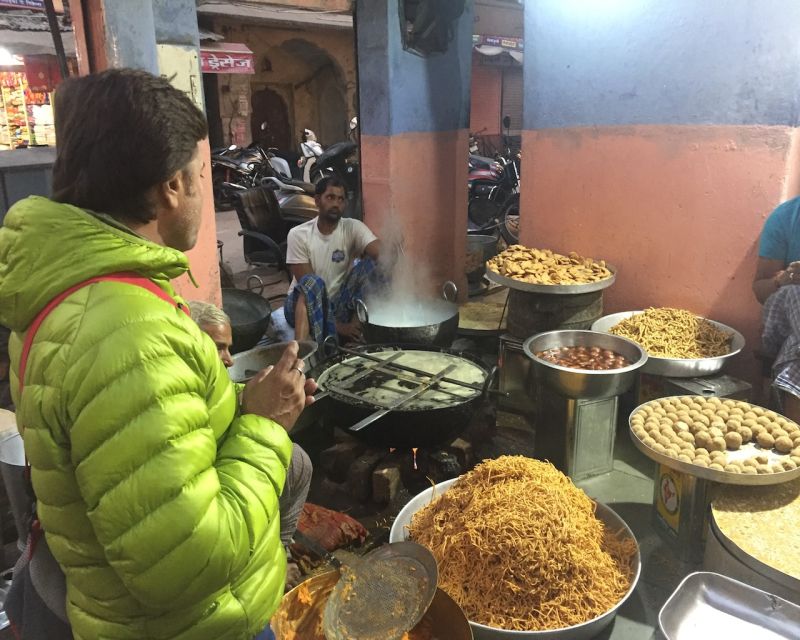
The food begins with familiar local favorites such as samosa and kachori. These are filling fried snacks, so pace yourself. The point is to taste several things, not to treat the first stop as breakfast for the entire day.
Your guide should explain what you are eating, how it is prepared, and what makes one local snack different from another. That context matters. A kachori is not just another fried pastry when you understand its place in regional cooking and see it being served in the neighborhood where people actually buy it.
Chaura Rasta can also be one of the busier parts of the walk. Keep your belongings close, watch your footing, and stay aware when crossing lanes. The crowds are part of the experience, but they can make conversation and photography slower.
Badi Chaupar: local snacks beside Jaipur’s grand old crossroads
The route continues toward Badi Chaupar, with another 45-minute section of walking, tasting, and sightseeing. This is one of the better points to connect Jaipur’s public spaces with its food culture.
Badi Chaupar is a major old-city square, so the surroundings feel more open than the narrow lanes. From here, you can get a stronger sense of the scale of Jaipur’s planned center before turning back into smaller streets.
Expect more tea, local snacks, and regional food. Masala chai is part of the tasting, usually at a local tea shop. It is a small but useful cultural stop because tea in India is often a social pause, not simply a drink grabbed on the way to the next attraction.
The guide may also point out painted facades, architectural details, or views that are easy to miss from a car. One of the most useful features of a walking tour is its pace. You can stop, look upward, ask why a building is painted in a certain style, and notice the working city around it.
There is a practical issue here: food arrives in stages, and the portions can add up quickly. If you are joining in the morning, eat lightly beforehand. If you are sensitive to spice, ask the guide to help choose milder items. One cautious diner with little spice tolerance and digestive concerns managed the full tasting comfortably, but that is not a guarantee for everyone. Your own diet and medical needs should guide your choices.
Tripolia Bazar: architecture, crafts, and working streets
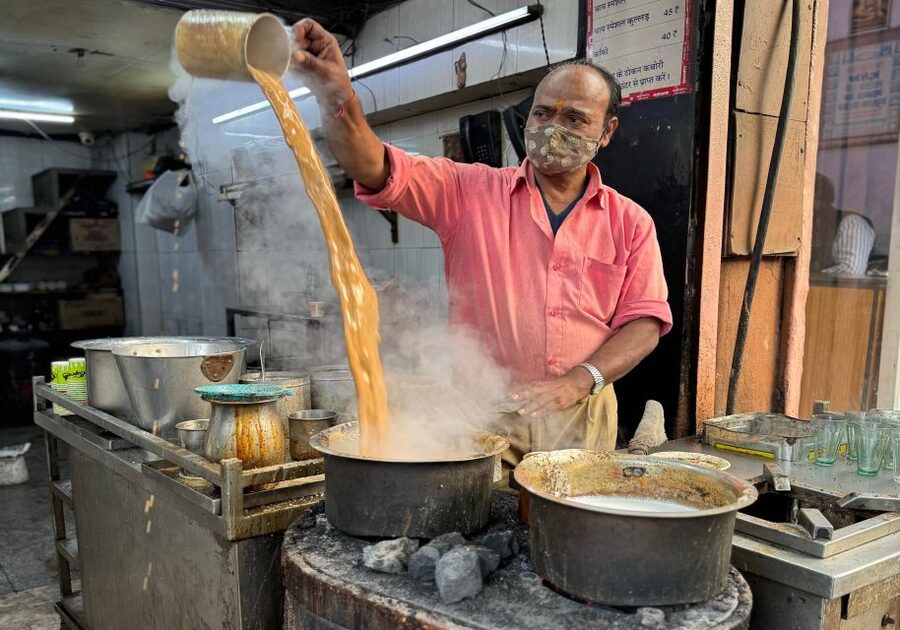
The third 45-minute section takes you through Tripolia Bazar. Here, the emphasis shifts from eating to observing the old city at work.
You may leave the broad lanes and enter the gullies of Jaipur’s famous quadrants. These smaller passages are where the tour earns much of its price. They are not arranged for sightseeing, and without a local guide you could easily walk past the details or hesitate before entering.
A notable stop is a street associated with the Thatheras, a community of metal beaters. The visit gives you a look at an old craft tradition and the physical work behind handmade metal goods. This is not a polished demonstration staged for tourists. The value comes from seeing craft as part of a living neighborhood.
The walk also includes the chance to meet local artisans and see their work. Another distinctive craft is bangle making with sealing wax. Watching the process adds texture to the tour, especially if you have already seen Jaipur’s finished handicrafts in shops. You get a better idea of the labor, skill, and patience behind the objects.
This section is also where the guide’s local connections matter most. Several people who took the walk later chose to spend additional time with guides such as Vivek visiting the City Palace, Jantar Mantar, and other parts of the Pink City. That extra arrangement is not part of the three-hour booking, but the response suggests that the guide can be a useful source of follow-up ideas.
More Street Food Tours in India:
- Mumbai: Street Food and Night Markets Tour
★ 4.9 · 719 reviews - Old Delhi Street Food Tour
★ 5.0 · 497 reviews - Delhi: Old Delhi Street Food Tour with Rickshaw Ride
★ 4.9 · 403 reviews - Mumbai Street Food Tour
★ 5.0 · 269 reviews
Choti Chaupar: sweets, savory bites, and the final stretch
The final 45-minute section leads to Choti Chaupar, also written as Chhoti Chopad, where more street food and local snacks complete the walk.
You may taste famous Jaipur sweets as well as additional savory foods. Some people have sampled roughly 15 items across six stops, while others have described a smaller but still generous selection. The exact number depends on the day, the group, the shops open, and how much you choose to eat.
This is the point where many people feel very full. If sweets appear before the final savory dishes, the order may not suit everyone. One useful tip is to save room and avoid eating a large breakfast or lunch before the tour.
The guide can also help you understand how to judge a food stall. You are not simply told what tastes good. The walk gives you a local filter for choosing busy, fresh, well-prepared food in a city where a first-time visitor may not know which stalls to trust.
The tour finishes at Chhoti Chopad. There is no return transfer, so plan your next step from there. The end point is useful for continuing around the old city, but you should arrange your own transport if you are heading back to a hotel elsewhere in Jaipur.
What the cultural part adds
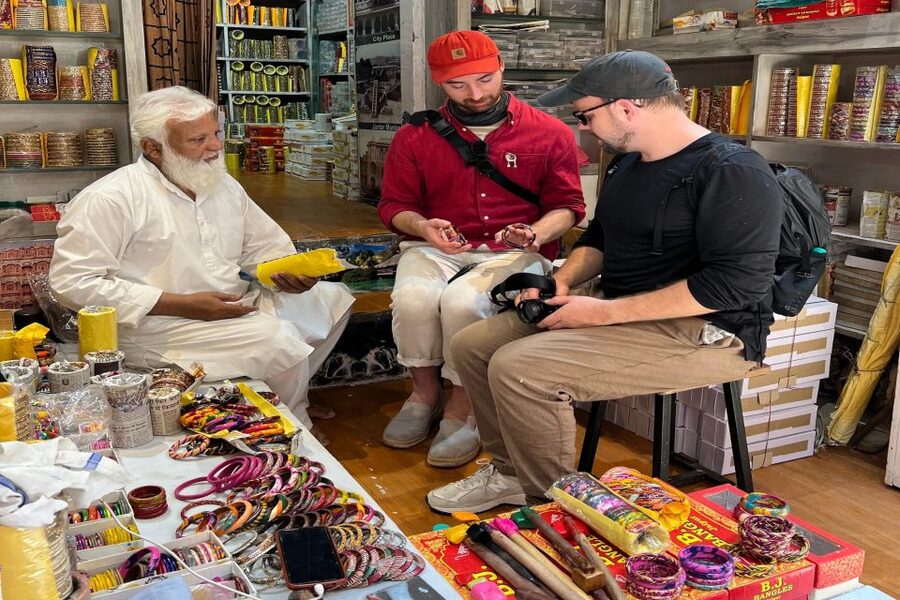
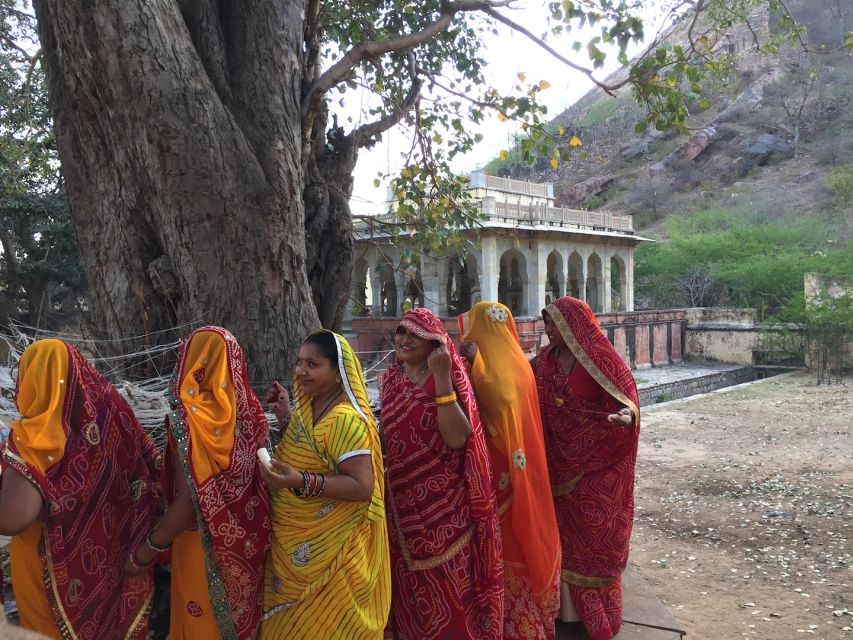
The food is the easy headline, but the cultural commentary is what gives the tour staying power. You visit a Hindu temple, see a community well, observe traditional crafts, and learn how the old quarters function.
The temple visit comes with a reminder to dress modestly and avoid flash photography inside. Respectful behavior matters here. Wear clothing that covers shoulders and knees, and follow the guide’s directions about shoes and photography.
The community well is another small but meaningful stop. It shows how shared infrastructure shaped neighborhood life. Details like this can be more revealing than another quick pass by a palace wall because they connect the city to the people who live in it.
The guide also explains Jaipur’s royal past, entry gates, markets, painted homes, and geometric planning. You will not get the same depth as a full-day heritage tour, but you do get a practical framework for understanding the old city before exploring it on your own.
How much food do you really get?
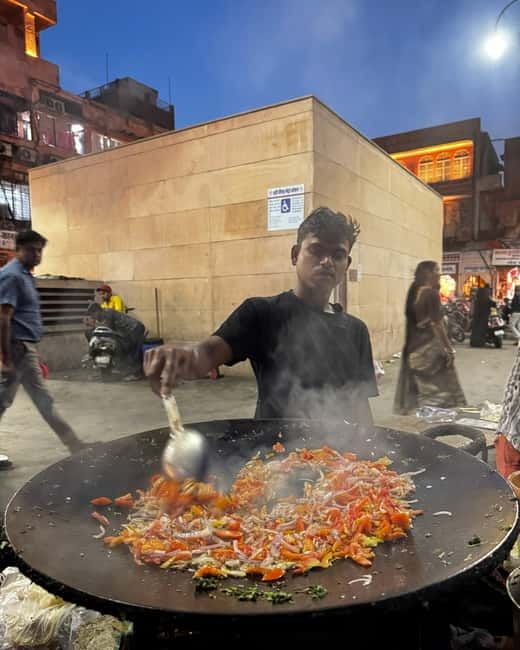
You should expect a full tasting, not a token bite at one or two stalls. The listed foods include samosa, kachori, sweets, and masala chai, with additional local dishes depending on the route.
The strongest praise centers on both quality and quantity. People have described leaving well fed after visiting several stops. That makes the $21 price especially appealing because the fee covers the food itself, bottled water, the guide, and the heritage walk.
Still, do not treat the possible 15-item count as a fixed promise. Portions, food availability, group preferences, and the guide’s choices can change. The fair expectation is a generous series of tastings rather than 15 full meals.
Food allergies, dietary restrictions, and spice tolerance deserve a conversation with the guide before eating. The tour can adjust choices to personal tastes, but the provided information does not promise vegetarian, vegan, gluten-free, allergy-free, or medically tailored food.
Is the $21 price good value?
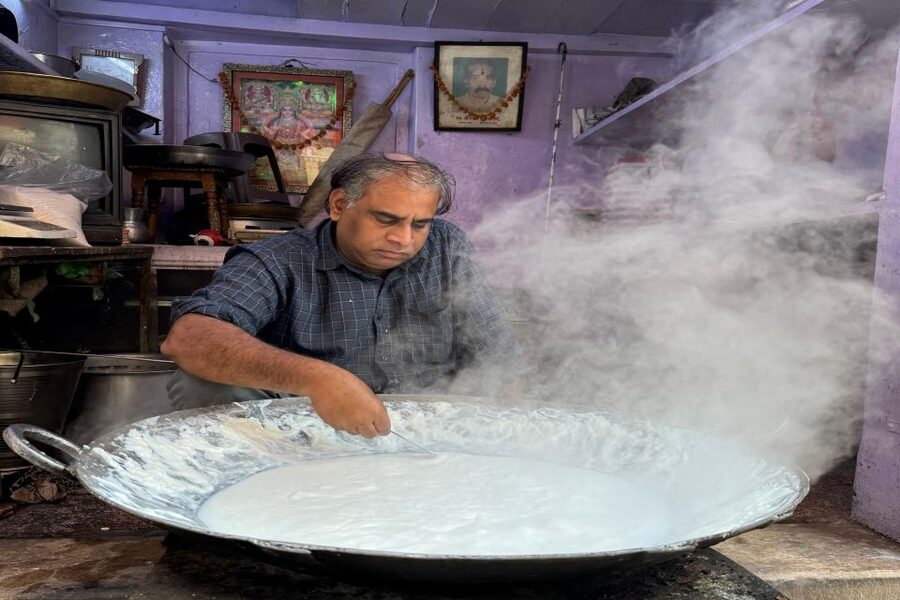
Yes, particularly if you value local access and explanation more than grand monuments. For $21, you receive three hours with an English-speaking cultural guide, street food at local shops, tea, sweets, savory snacks, and a bottle of water.
You are also paying for navigation. Jaipur’s old lanes can be confusing, and a guide can lead you into craft streets, temples, and food stops you might not find comfortably alone. Several people appreciated feeling safe and supported, including solo women and first-time visitors to Jaipur.
The experience is less useful if you only want major sights. City Palace and Jantar Mantar are not the main stops here. You pass through the old city and learn about its architecture, but this is not a ticketed monument tour.
There is also no shopping requirement or hidden sales agenda. That matters in a market city where some tours steer people toward commission-based stores. The stated approach is focused on food, local life, and culture.
Who should book this walk?
I would choose it early in a Jaipur visit. It gives you a map in your head, introduces foods you can recognize later, and shows how the old city works beyond its famous facades.
It suits:
- First-time visitors who want help navigating the Pink City
- People who enjoy food and local history in equal measure
- Solo visitors who prefer a guide in unfamiliar lanes
- Couples and families comfortable with three hours of walking
- Anyone interested in crafts, temples, markets, and neighborhood life
- Visitors who want a small group instead of a large coach tour
It may not suit you if you use a wheelchair, dislike crowded streets, cannot walk for extended periods, or want a calm, formal sightseeing experience. Picky eaters can still enjoy it, but you should tell the guide about your limits before the tastings begin.
Practical advice before you go
Wear shoes that can handle uneven streets and a lot of walking. Loose, comfortable clothing is sensible, especially in warm weather.
Carry sunscreen and a hat, and bring personal medication. A water bottle is included, but extra water is a good idea.
Photography is allowed, but do not use flash inside temples. Ask before photographing people, artisans, or private spaces. A guide can often explain what is appropriate.
The activity has a live English-speaking guide and a maximum group size of 10. You can cancel up to 24 hours ahead for a full refund, and the reserve-now, pay-later option keeps your plans flexible.
Should you book the Jaipur heritage food walk?
Book it if you want Jaipur explained through its food, streets, crafts, and people rather than only through major monuments. The strongest part is the combination of generous tastings and local guidance, especially with guides such as Vivek, Raj, Kumar, and Pushpendra, who are praised for patience, clear storytelling, and making solo participants feel at ease.
Skip it if you need step-free access or have little interest in food. For most able-bodied visitors who want an affordable introduction to the old city, $21 is a sensible spend. Just arrive hungry, wear good shoes, and leave room for one more sweet.
FAQ
How long does the Heritage Walk and Street Food Tasting in Jaipur last?
The experience lasts three hours.
Where does the tour start?
The meeting point is at the entry gate of Golcha Cinema.
Where does the tour finish?
The walk finishes at Chhoti Chopad, also written as Choti Chaupar.
What food is included?
The tasting includes samosa, kachori, famous sweets, masala chai, and additional local food from nearby shops.
Is bottled water included?
Yes, one bottle of water is included.
Is hotel pickup included?
No. You need to reach Golcha Cinema yourself, and hotel drop-off is not included.
What language is the tour conducted in?
The live tour guide speaks English.
How many people can join the group?
The group is limited to 10 participants.
Is the tour suitable for wheelchair users?
No. The experience is not suitable for wheelchair users and involves extensive walking through old-city streets.
Can I cancel the booking?
Yes. You can cancel up to 24 hours in advance for a full refund.
Just added around India
- Varanasi: Night Tour with Aarti Ceremony and Street Food★ 4.7 · 2 reviews
- Varanasi Street Food Crawl (2 Hours Guided Tour)★ 4.5 · 9 reviews
- Udaipur: Street Food Crawl (2 Hours Local Food Tasting Tour)★ 4.1 · 3 reviews
- Udaipur: Street Food adventure l Eat Just like a local★ 4.6 · 2 reviews
- Udaipur: Guided Street Food Tour with Tastings★ 4.2 · 6 reviews
- Trivandrum Street Food Crawl Guided Food Tasting Tour★ 4.5 · 6 reviews
- Ganga Arati with Street Food Tour of Banaras★ 5.0 · 7 reviews
- Varanasi Street Food Crawl (2 Hours Guided Food Tasting Tour)★ 4.5 · 69 reviews
Street Food Tours, compared.

Old Town, Creek, Museums, Souks, & Street Food Tour
What we made of it →
Ho Chi Minh City Street Food Tour & Sightseeing By Motorbike
What we made of it →
Comuna 13 Graffiti Tour, Cable Car & Street Food
What we made of it →
Old Town, Souks, Street Food, Guided Tour & Abra Ride
What we made of it →

Small Group Hanoi Street Food Tour with a Real Foodie
What we made of it →
Saigon By Night and Street Food By Motorbike | Opt: Ao Dai Riders
What we made of it →Where this tour turns up