
Review · KENYA
Diani: Market and Street Food Walking Tour
Eat Diani one bite at a time. This 90-minute walk links Ibiza Market with local food and palm wine, giving you a useful look at daily life beyond the beach resorts. I like the small group, limited to 10 people, and the chance to try several dishes rather than one token snack. I also like that guide Tina has earned warm praise for her clear explanations and friendly manner. The main drawback is the heat, plus the very local restaurant and bar may feel basic if you expect polished tourist facilities.
At $30 per person, the tour offers fair value if you want food, conversation, and a market visit in one short outing. It is less suited to anyone with food allergies, limited mobility, or a strong preference for air-conditioned comfort. Come ready for a hot walk, simple surroundings, and flavors you may not have tried before.
Key points to know before you go
- Ibiza Market gives the tour its local focus: You walk through a working food market and learn how people trade there.
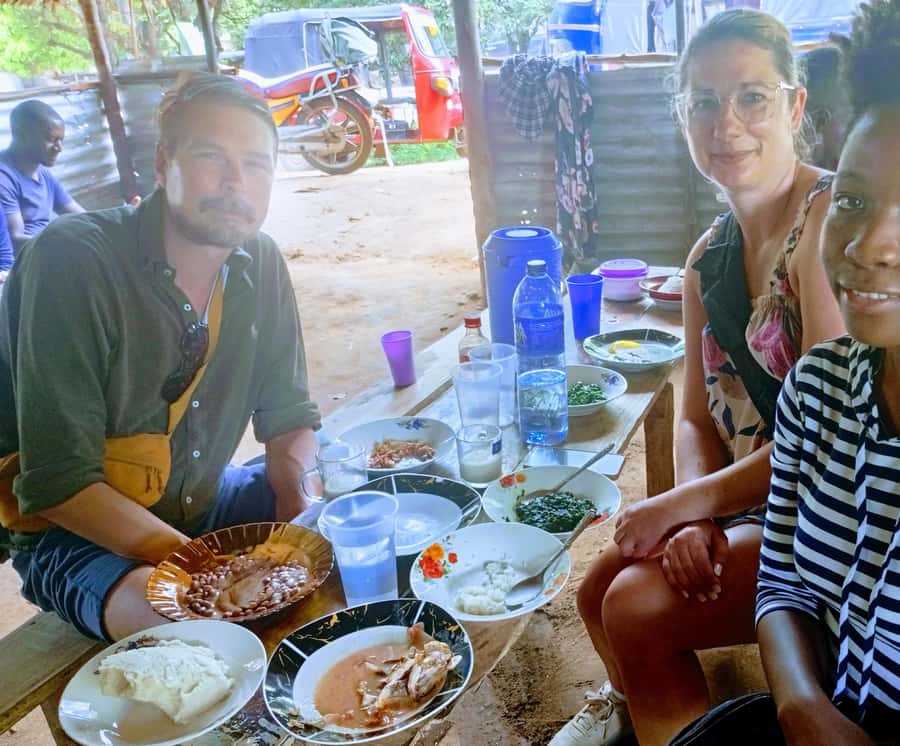
- The tasting covers several Kenyan and Swahili staples: Expect wheat, cardamom, coconut milk, chapati, coconut rice, beans, ugali, sukumawiki, and Viazi Karai.
- The palm wine stop is a real local bar: It is not a formal wine tasting room, and you can buy more if you want to stay longer.
- The tailoring stop adds cultural context: You can try on a dera, a female Swahili dress, and hear how the shop began its work.
- The group stays small: A maximum of 10 people makes it easier to ask questions and keep up with the guide.
- Plan for sun and uneven comfort: Wear walking shoes, carry water, and bring a hat. This is a street-level outing, not a resort-style excursion.
Why this short Diani walk is worth your time
Diani is best known for its broad beach and hotel life, but that is only one part of the area. This outing shifts your attention toward the market, local cooking, clothing, and a neighborhood bar. I like that combination because it gives you several windows into ordinary life without taking up a full day.
The tour lasts 90 minutes, divided into roughly 30 minutes at the market, 30 minutes for food, and 30 minutes for palm wine. That pace keeps the experience manageable, though it also means each stop is fairly brief. You will get an introduction rather than a long market study or a slow meal.
A guide makes a real difference here. At the meeting point, a woman waits in front of Tsunami Garden Cafe and greets you by name. After a short briefing, you walk together to the market. Guide Tina has received especially strong praise for being kind and explaining things clearly, so if she leads your outing, expect a personal touch rather than a rushed handoff between stops.
More Street Food Tours in the world:
- Dubai: Old Town, Creek, Museums, Souks, & Street Food Tour
★ 4.8 · 10,816 reviews - Ho Chi Minh City Street Food Tour & Sightseeing By Motorbike
★ 5.0 · 9,413 reviews - Medellin: Comuna 13 Graffiti Tour, Cable Car & Street Food
★ 4.8 · 9,046 reviews
Starting at Tsunami Garden Cafe
Your meeting point is Tsunami Garden Cafe. The guide should be standing outside and will identify you by name, which helps in a busy or unfamiliar setting. You do not receive hotel pickup or drop-off, so you need to make your own way to the cafe.
The briefing is a useful moment to ask about the order of the stops and the food ahead. Since the tour includes several dishes, tell the guide early if you have concerns about ingredients. The experience is specifically not suitable for people with food allergies, so this is not the right activity for testing your limits with unknown foods.
From the cafe, you walk to the market. Comfortable shoes matter more than stylish beach sandals here. Bring water and a sun hat, and keep your camera ready if you want to record the sights. Smoking, alcohol, and drugs are not allowed during the experience, although palm wine is served as part of the planned tasting at the local bar.
Walking through Ibiza Market
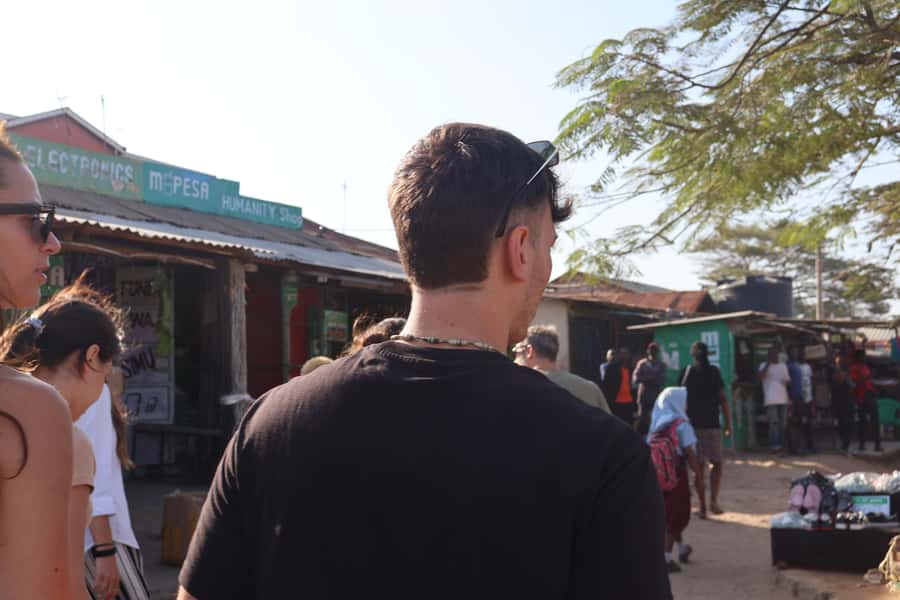
The market is the tour’s best chance to see how local buying and selling works. Your guide explains how people trade and provides background on the market and the local people who work there. That context helps turn a simple walk past stalls into a better understanding of how food and goods move through the community.
Do not expect a staged cultural display. The appeal is that the market is part of everyday life. You may find the pace and surroundings more raw than what you see around Diani’s hotels, and that is precisely why the stop has value. You are seeing a working place rather than a set built for sightseeing.
The market portion lasts about 30 minutes. That is enough time to get oriented and ask questions, but not enough for a detailed look at every stall. Keep your expectations realistic. This is a compact introduction, not a shopping expedition or a full market photography session.
The guide also helps you understand what you are seeing. A market can seem confusing when you do not know the names of foods, the purpose of a stall, or the difference between everyday trade and souvenirs. Having someone explain those details gives the walk more meaning.
A quick stop for souvenirs and Swahili tailoring
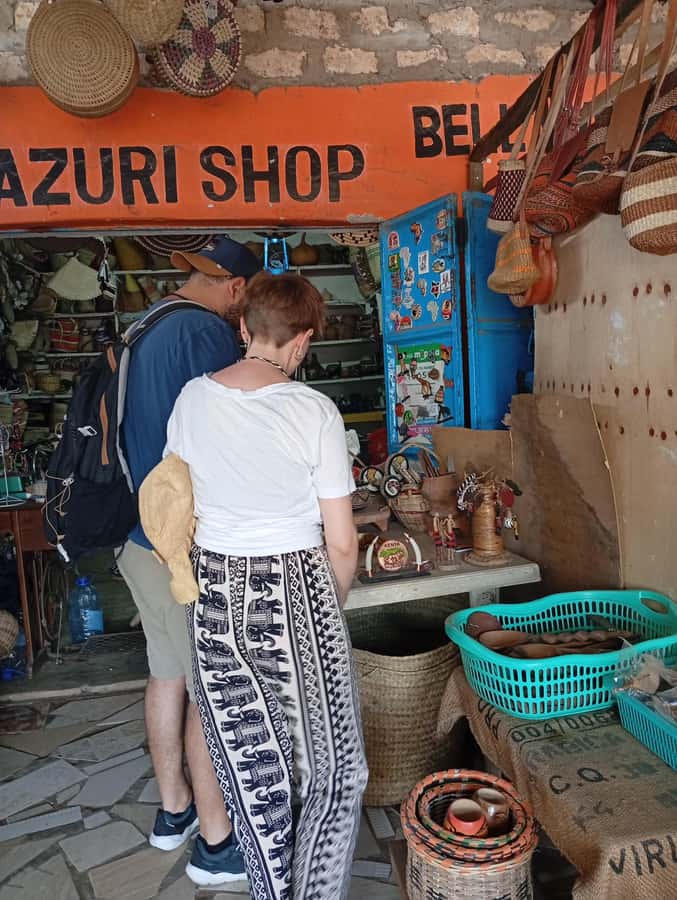
Along the way, you pass a souvenir shop and a tailoring shop. The souvenir stop gives you a chance to browse and possibly buy something, but shopping is not included in the $30 price. Bring money only if you are interested in personal purchases.
The tailoring visit is more distinctive. You can try on a dera, described as a female Swahili dress, and learn about the tailoring process. You also hear how the people at the shop began their work. That makes this more than a clothing stop. It connects a familiar item of dress with the people who make and sell it.
I like this part because it adds a human story to the market walk. Food often gets all the attention on a tasting tour, while clothing can tell you just as much about local life. You do not need to buy anything to benefit from the explanation, and the chance to sample a dera gives the stop a light, hands-on quality.
Same place, a different plate:
- Dubai: Old Town, Souks, Street Food, Guided Tour & Abra Ride
★ 4.9 · 7,170 reviews - Naples: Street Food Walking Tour with Local Guide
★ 4.9 · 4,976 reviews - Small Group Hanoi Street Food Tour with a Real Foodie
★ 5.0 · 4,682 reviews - Rome: Street Food Tour with Local Guide
★ 4.8 · 4,077 reviews
The local restaurant and a full tasting plate

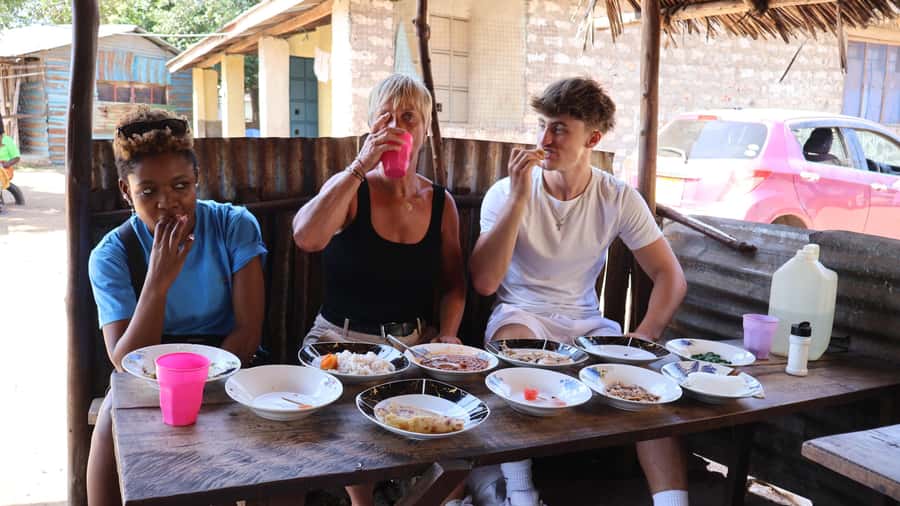
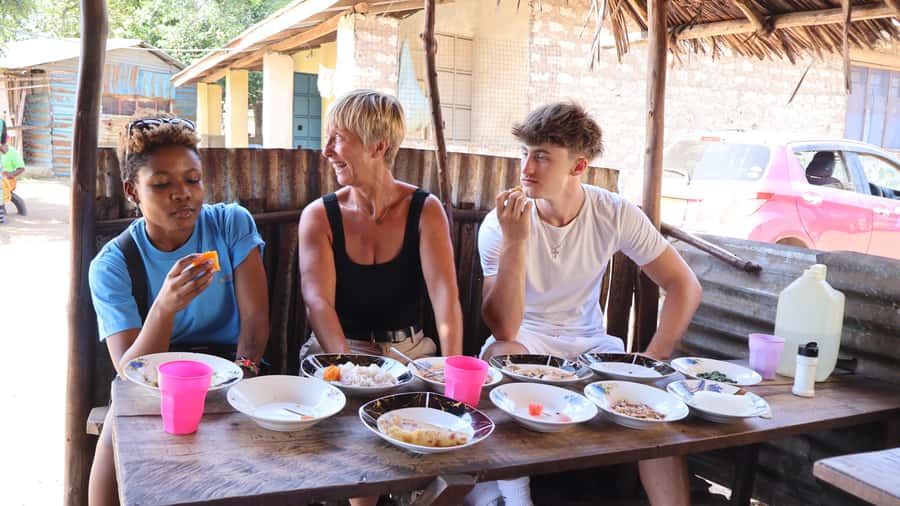
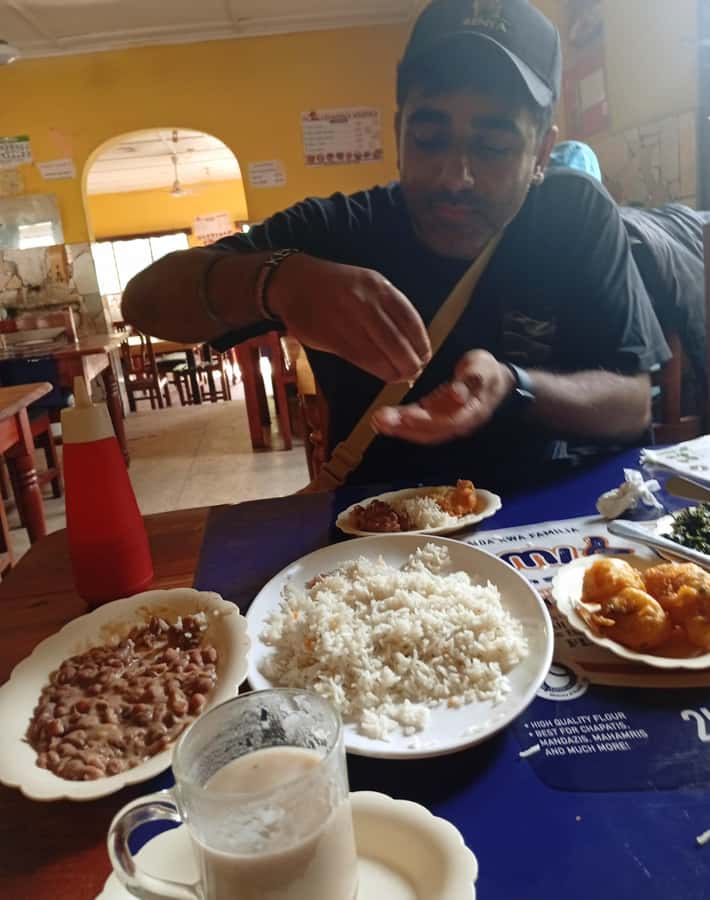
The food stop lasts around 30 minutes and takes place at a local restaurant. The setting is intentionally simple. One review advises you to expect a very local restaurant, so this is not the place to look for polished service or a resort menu. You are there to try familiar local staples in a direct, practical way.
The meal begins with Swahili porridge made from wheat, cardamom, and coconut milk. The cardamom gives it a fragrant note, while the coconut milk adds softness. It is a gentle opening before the heavier main dishes and offers a clear example of how common ingredients can be combined into a filling starter.
The main tasting includes chapati or coconut rice with coconut beans. Chapati gives you a soft, flat bread option, while coconut rice brings a sweeter, more fragrant note. Coconut beans show how coconut appears in savory cooking as well as in drinks and sweets.
You also try ugali with sukumawiki. Ugali is a firm staple made from grain, while sukumawiki is cooked greens. Together, they provide a hearty contrast to the porridge and rice. If these foods are new to you, ask the guide about the best way to combine them.
The final bite is Viazi Karai, a snack made from fried potatoes. It is a fitting finish to a meal built around simple, filling foods. Because the tasting includes several courses and not just one sample, I consider the food portion a strong part of the tour’s value.
Additional food and drinks are not included. The dishes listed for the tasting are included, but anything extra comes at your own cost. If you have dietary restrictions, approach this stop cautiously. The activity is not suitable for people with food allergies, and there is no promise of substitutions.
Palm wine at a local bar
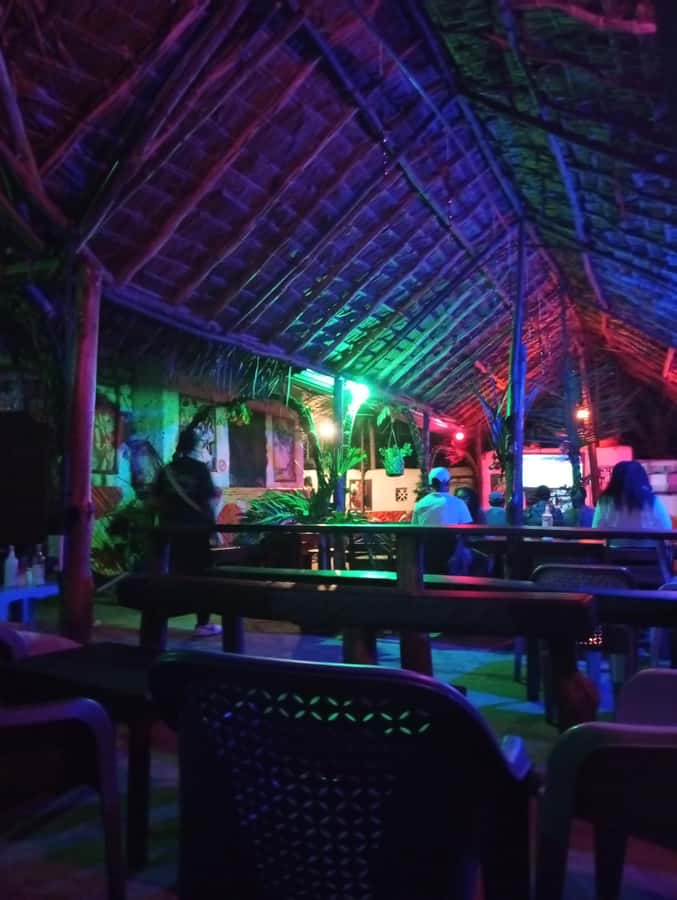
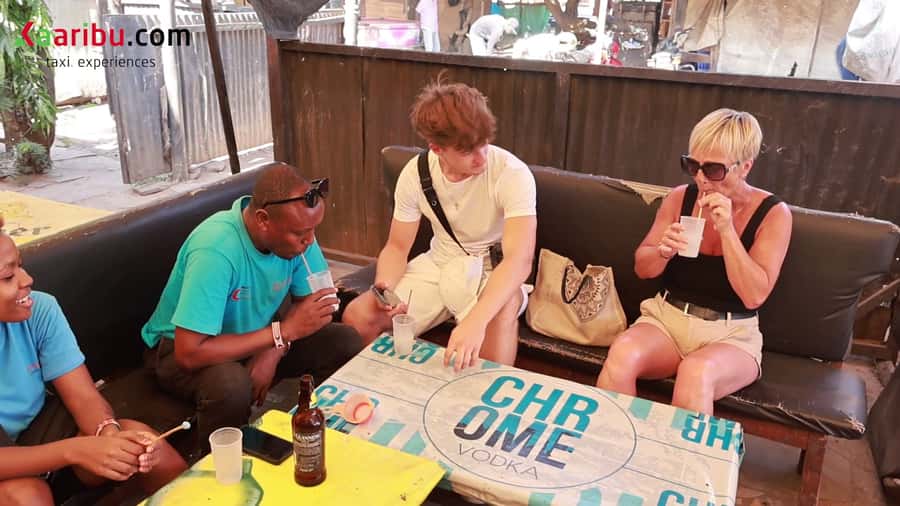
The final 30-minute stop takes you to a local bar for palm wine tasting. This is a chance to try a drink tied to local social life rather than a carefully presented beverage in a hotel lounge. The bar is described as extremely local, so you should expect an ordinary neighborhood setting.
You receive a taste of palm wine as part of the tour. If you enjoy it and want more, you can purchase additional quantities for yourself. Extra drinks are not included in the price, and responsible behavior matters. The experience rules prohibit alcohol and drugs generally, which appears to mean you should not bring or misuse substances during the activity. The planned palm wine tasting is the included exception.
This stop may be the most revealing part of the outing for some people. A market shows how people buy and sell, while a local bar shows where people relax and socialize. Still, it may not suit everyone. If you prefer quiet cafes or formal tasting rooms, the simple surroundings could feel uncomfortable.
The 30-minute schedule gives you time to sample the drink and talk with the guide, but not necessarily time for a long evening out. If you want to stay and buy more, you should treat that as extra time beyond the structured tour.
What $30 gets you
The price is $30 per person. Included in that amount are the local guide, street food tasting, palm wine tasting, the Ibiza Market visit, and the chance to browse for souvenirs. For a 90-minute experience with several food samples and a small group, that is a reasonable price.
The value depends on what you want from Diani. If you want a quick introduction to local food and everyday life, you receive several useful pieces in one booking. You avoid having to find the market, choose a restaurant, and work out how to sample palm wine on your own.
The price does not cover hotel transport, extra dishes, extra drinks, or personal purchases. That keeps the basic cost clear, but you should budget for your own transport to Tsunami Garden Cafe and any shopping or additional palm wine.
The small group also supports the price. With no more than 10 people, you can ask questions without trying to catch a guide’s attention across a large crowd. A bigger group would make the market and tailoring portions less personal.
Heat, walking, and practical comfort
The biggest practical issue is the weather. One assessment specifically advises you to prepare for a hot walk, and that is good advice. Diani’s sun can make even a short outing feel demanding, especially when you are walking between stops and eating in simple local settings.
Wear comfortable walking shoes, carry water, and use a sun hat. Bring a camera if you want photos, but follow the guide’s lead around people and market stalls. Respect for local customs matters more than getting the perfect picture.
The experience is not suitable for wheelchair users, children under 3, or babies under 1 year. The walking route and local venues may not provide the space or access needed for wheelchairs. The tour is conducted in English, so you should be comfortable following explanations in English.
You can cancel up to 24 hours ahead for a full refund, and the reserve-now, pay-later option lets you hold a place without paying immediately. Check the available starting times before booking because the tour runs for 90 minutes, not as a flexible all-day activity.
Who will enjoy this tour most
I would recommend this experience to you if you want a short, social introduction to Diani away from the beach. It suits curious eaters, first-time visitors who want local context, and anyone who enjoys asking questions while walking through ordinary neighborhoods.
It is also a good choice if you have limited time. In 90 minutes, you get a market visit, a food tasting, a tailoring encounter, and palm wine. That is a lot of variety for a compact morning or afternoon.
The tour may not suit you if you have food allergies, dislike warm weather, or need wheelchair access. It is also not ideal if you want a luxurious meal, a long restaurant stay, or a carefully controlled tasting menu. The food and bar stops are local and simple by design.
The reviews give the experience an overall rating of 4.2 from six reviews. The strongest praise centers on Tina’s friendly explanations, the enjoyable food, and the chance to see how local people live day to day. One review gave the lowest possible rating without adding any detail, so the overall score should be read with a little caution rather than treated as a guarantee.
Should you book the Diani market and street food walk?
Book it if you want an affordable, small-group taste of Diani’s local side and you are happy with basic surroundings. The food variety, the market walk, and the palm wine stop make this more than a quick snack break.
Skip it if heat, walking, unfamiliar ingredients, or informal venues will spoil your day. If you do book, arrive ready for the local restaurant and bar to be exactly that: local, straightforward, and less polished than a resort. For the right person, that honesty is the point.
FAQ
How long does the Diani market and street food tour last?
The experience lasts 90 minutes. The schedule includes about 30 minutes at the food market, 30 minutes for food tasting, and 30 minutes for palm wine tasting.
Where does the tour start and finish?
It starts and finishes at Tsunami Garden Cafe. A woman waits in front of the cafe and greets you by name.
Is hotel pickup included?
No. Hotel pickup and drop-off are not included, so you need to arrange your own transport to and from Tsunami Garden Cafe.
What food is included?
The tasting includes Swahili porridge made with wheat, cardamom, and coconut milk, plus chapati or coconut rice with coconut beans, ugali with sukumawiki, and Viazi Karai.
Is palm wine included?
Yes. Palm wine tasting is included at a local bar. You can purchase more if you want, but additional drinks are not included in the price.
What language is the tour conducted in?
The live guide speaks English, and the tour is offered in English.
Is this suitable for people with food allergies?
No. The experience is listed as unsuitable for people with food allergies.
What should I bring?
Bring comfortable walking shoes, a sun hat, water, and a camera. Be prepared for changing weather conditions and follow local customs and regulations.
Just added around the world
- Zanzibar:Stone town Street food market walking tour,transfer★ 4.5 · 9 reviews
- Vienna Food Tour: Dishes, Wine, Street Food & Culture★ 4.7 · 12 reviews
- Verona: Street Food Tour and City Guided Sightseeing★ 4.9 · 11 reviews
- Xi’an: Gourmet & Street Food Tour★ 4.8 · 22 reviews
- Verona: City Highlights & Street Food Walking Tour★ 5.0 · 3 reviews
- Verona: Street Food and History Tour with Local Guide★ 4.7 · 6 reviews
- Xi’an Muslim Quarter Night Market Foodie Walking Tour★ 4.2 · 22 reviews
- Verona: street food walking tour near the historical center★ 5.0 · 2 reviews
Street Food Tours, compared.

Old Town, Creek, Museums, Souks, & Street Food Tour
What we made of it →
Ho Chi Minh City Street Food Tour & Sightseeing By Motorbike
What we made of it →
Comuna 13 Graffiti Tour, Cable Car & Street Food
What we made of it →
Old Town, Souks, Street Food, Guided Tour & Abra Ride
What we made of it →
Small Group Hanoi Street Food Tour with a Real Foodie
What we made of it →
Saigon By Night and Street Food By Motorbike | Opt: Ao Dai Riders
What we made of it →Where this tour turns up