
Review · SICILY
DISCOVER THE SECRET OF PALERMO Walking Tour Combining Art and best street food
Palermo rewards curious walkers. This private morning tour brings together Arab-Norman art, old-city streets, church mosaics, and market food in a compact three to four hours. I like the clear focus: you see major sights while also getting a taste of daily Palermo at one of its oldest open-air markets. I also like that the group is limited to your party, with room for direct questions and a guide’s personal touch.
The main consideration is cost. At $300.77 for up to eight people, the tour can be good value for a full group, but it is less attractive for one or two people. Food and drinks are extra, and admission is not included for Santa Maria dell’Ammiraglio, also called La Martorana. You should also expect steady walking over old streets.
Key points to know before booking
- Private format: Your group alone joins the professional guide, which makes it easier to set the pace and ask about Palermo’s art, food, and past.
- Two strong themes: The tour links church mosaics and Arab-Norman design with street food in an old Palermo market.
- Morning timing: The 9:30 a.m. start leaves much of the afternoon free for museums, more food, or a slower look at the city.
- Main sights in a short window: La Martorana, San Giovanni degli Eremiti, Quattro Canti, Pretoria Square, Bellini Square, the Royal Palace, and Cappella Palatina are all part of the experience.
- Extra costs matter: Food, drinks, and at least the admission fee for La Martorana are not included in the listed price.
- Guide detail: Roberta Teresi is named as the experience provider, and one past booking praised her for explaining the city and showing the main streets.
Why this Palermo walk works well as a first look
Palermo can feel like several cities placed on top of one another. Greek, Roman, Arab, Norman, Spanish, and later Italian influences appear in churches, squares, food, and street plans. You will not study every period in a half-day, but this route gives you useful signposts.
The tour is built for orientation. You walk through the old center rather than viewing Palermo through a vehicle window. That matters here, because the charm is often in the change from one block to the next: a formal church front, a narrow lane, a market stall, then a broad square framed by historic buildings.
I like the balance between grand sights and ordinary city life. The churches supply the art and architecture. The market supplies the smells, sounds, and quick bites that make Palermo feel lived-in rather than preserved for visitors.
The private format is another advantage. If you are traveling with family or friends, the guide can spend more time on the parts that interest you. You can ask about a mosaic technique, a church’s mixed design, or the food you are seeing. With a maximum of eight people, the walk should feel more personal than a large group outing.
The tradeoff is that a private tour is not automatically cheap. The full $300.77 price makes the most sense when divided among several people. A group of eight pays far less per person than a couple, though each person will still need to pay for food and any required admission separately.
More Hidden Food Spots in Sicily:
- Hanoi: Street Food Tour with Train Street & Hidden Alleyways
★ 5.0 · 2,831 reviews - Hanoi: Guided Street Food Tour with Train Street Experience
★ 4.9 · 2,479 reviews - Hanoi: 7 Tastings Street Food Tour with Train Street
★ 4.9 · 541 reviews
La Martorana and its remarkable mosaics
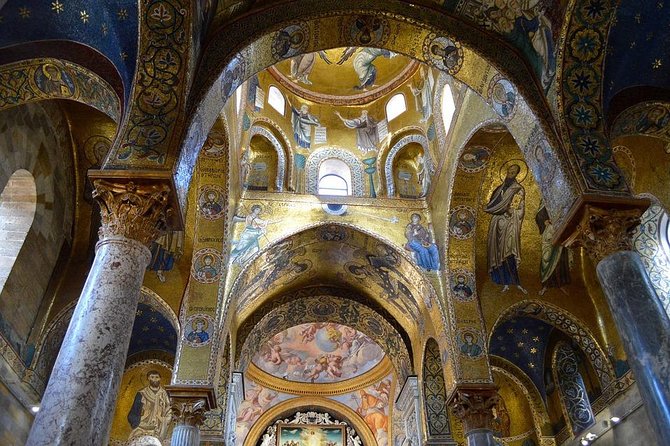
The first major stop is Santa Maria dell’Ammiraglio, widely known as La Martorana. You are given about 40 minutes here, enough time to look carefully rather than make a quick entrance and exit.
The church is known for mosaics of exceptional elegance, with subtle changes in color and light. That description points you toward the right way to see the interior. Do not only look for the biggest image. Notice how the colors shift across the surface and how the mosaic work changes the feeling of the space as light reaches it.
La Martorana is also valuable because it brings different artistic styles together. Palermo’s Arab-Norman culture was not a simple blend with clear borders. Buildings could carry Byzantine, Arab, Norman, and local influences at the same time. Inside this church, that mixture becomes visible in a way that is easier to understand with a guide beside you.
Your guide can help connect what you see overhead and around the walls with the broader story of Palermo. That is a major reason to choose a private walk rather than simply checking the church off a list. You are not just looking at glittering surfaces. You are learning why the city produced such unusual combinations.
Admission is not included here, so plan for an additional ticket cost. The supplied details do not state the exact fee, so check the current price before you go. If you are watching your budget closely, this is one of the charges to factor into the total.
San Giovanni degli Eremiti and its red domes
San Giovanni degli Eremiti gives the walk a different visual note. The church is especially known for its red domes, a clear reminder of Arab influence in Sicily during its 12th-century rebuilding.
The domes are easy to understand at a glance, but their importance goes beyond appearance. They show how architectural ideas continued after political and cultural changes in Palermo. This is one of the places where the term Arab-Norman becomes more than a label. You can see Arab design influence in a Christian religious building connected to the Norman period.
The stop should appeal to anyone who likes architecture that carries more than one story. It also gives you a useful contrast with La Martorana. At La Martorana, the interior mosaics draw your eye. At San Giovanni degli Eremiti, the exterior form and domes make the strongest first impression.
The exact time allocated to this church is not specified, so your guide will shape the visit within the wider route. That flexibility is useful, but it also means the depth of the stop may depend on the day and the group’s pace.
Walking through Palermo’s old center
Between the churches, you walk through Palermo’s old streets toward Quattro Canti. This is where the tour’s practical value grows. You begin to understand the city by moving through it, not just by arriving at isolated monuments.
Quattro Canti is one of Palermo’s best-known urban meeting points. From there, the route continues toward Pretoria Square and Bellini Square, with a photo stop that includes views of La Martorana and San Cataldo. These pauses help you place the churches within the city rather than treating them as separate attractions.
Pretoria Square is a good example of why a guide helps. A quick photo may capture the scene, but an explanation gives the square context and helps you recognize what you are seeing later. Bellini Square adds another pause among Palermo’s old religious and civic buildings.
The walking itself requires moderate physical fitness. You should be comfortable spending much of the morning on foot and moving through old streets. The experience is not designed for sitting back. That is part of its strength, but anyone who needs frequent rest should discuss the pace with the provider in advance.
The starting point is Piazza Giuseppe Verdi, and the listed end point is the same square. The start time is 9:30 a.m. Pickup is offered, but because a specific central meeting point is also provided, confirm the exact arrangement when booking. A mobile ticket and booking confirmation make the practical side simple.
More Street Food Tours in Sicily:
- Gastronomic Street Food Tour of Catania
★ 4.5 · 154 reviews - Palermo Street Food tour: art, history and ancient markets
★ 5.0 · 78 reviews - Palermo Street Food & Market Tour by Eating Europe
★ 5.0 · 72 reviews - Last minute Palermo Walking Tour and Street Food
★ 5.0 · 46 reviews
Street food at one of Palermo’s old markets
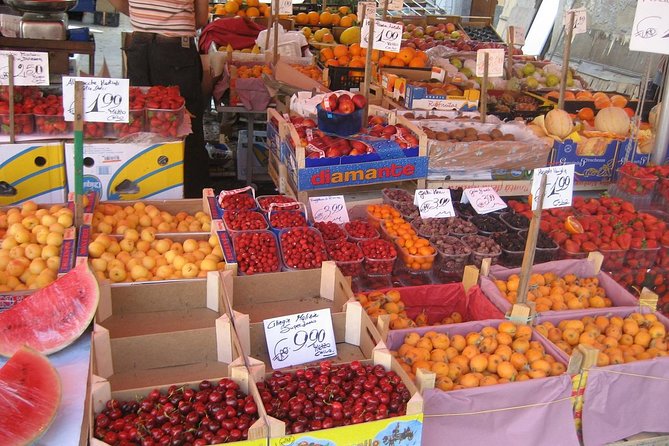
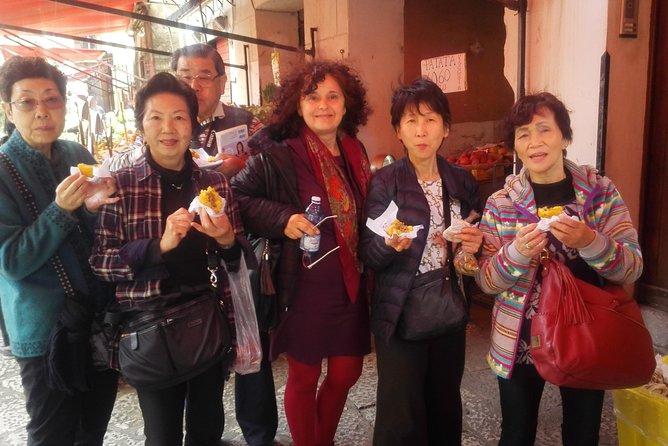
The food stop brings the city down to street level. You visit one of Palermo’s oldest open markets and sample local street food with the guide’s help.
Food is not included in the tour price, so you pay for what you choose. That is not necessarily a weakness. It lets you decide how much to eat and avoids paying for items you do not want. Still, you should bring a little extra money and allow room in your budget.
The market is also a useful place to ask questions. You can learn what is being sold, how locals use the food, and which items fit your appetite. The available details do not promise a fixed tasting menu or a set number of samples, so do not book this expecting a formal food crawl with every bite prepaid.
I like this part because it keeps the art stops from becoming too polished. Palermo’s food culture is not displayed behind glass. It appears in stalls, counters, smells, and quick choices. The market visit gives you a chance to see how the city eats, not just how its churches look.
One past booking praised the tour itself and the food market, noting that the guide pointed out things that would have been easy to miss. That is the sort of benefit you should expect from a private guide: not endless facts, but small observations that make the street easier to read.
The Royal Palace and Cappella Palatina
The overview also includes the Royal Palace and Cappella Palatina, two of Palermo’s central sights. The Cappella Palatina is especially important for its mosaics, placing it naturally alongside La Martorana in a tour focused on art and the Arab-Norman period.
Because the published stop-by-stop details give more time to La Martorana and the old-city walk than to the palace complex, confirm exactly how much time is planned inside the Royal Palace and chapel. Admission arrangements are also worth checking, since ticket inclusion is not clearly stated for every site.
Even with limited time, the palace and chapel add weight to the route. They show how the same cultural mixture appeared in a royal setting, not only in a neighborhood church. If you care most about interiors and mosaics, pay close attention to this portion when you confirm your booking.
The half-day format means you should expect an overview rather than an exhaustive visit. That is fine for a first day in Palermo. You get the main framework, then you can return later if one place deserves more time.
What the private price really buys you
The price is $300.77 per group of up to eight people. Divided among eight, that is a reasonable way to secure a private guide for a morning. Divided between two people, it becomes a much more expensive introduction.
The value rests mainly in the guide, not in included meals or transportation. A professional guide leads the walk, explains the major sights, and helps you make sense of the market and old streets. You also get the convenience of a private group rather than sharing the route with strangers.
You should add three possible costs to your planning:
- Food and drinks at the market
- Admission to La Martorana
- Any other site admission not covered by the provider
The route covers a lot in three to four hours, so I see it as an orientation tour rather than a low-cost sightseeing pass. It is a good choice when you want a guide to connect the city’s art, architecture, and food. It is less suitable if you prefer to enter every site slowly or keep spending tightly controlled.
Who will get the most from this tour
I would recommend this walk to first-time visitors who want a strong introduction before exploring Palermo on their own. The morning schedule leaves time afterward for a longer museum visit, another meal, or a return to one of the churches.
It also suits families and small groups who want private attention. A group of up to eight can share the fixed price, making the cost easier to justify. The walk is especially useful if your group has different interests, since a private guide can answer questions instead of following a set lecture.
Art lovers should appreciate the focus on mosaics and church interiors. Food-minded visitors get a market visit, though you should see it as one part of the tour rather than a full food tour.
I would hesitate if you want a slow, specialized study of Palermo’s churches. The route covers many places, and its strength is range. I would also hesitate if walking for several hours is difficult or if you are traveling as only one or two people and find the private price too high.
The experience has a five-star average from three ratings, including praise for the food market, the information provided, and guide Roberta Teresi. That is encouraging, though the number of ratings is small. Treat it as a positive sign, not proof that every group will have the same experience.
Booking details and cancellation timing
The tour begins at 9:30 a.m. and lasts about three to four hours. Confirmation arrives at booking, and the activity is private for your group only.
Free cancellation is available up to 24 hours before the start time for a full refund. Inside that 24-hour window, cancellations and changes are not accepted for a refund. The cut-off follows Palermo’s local time, so do not leave changes until the last morning.
Should you book the Palermo art and food walk?
Book it if you want a private introduction to Palermo that links major churches with old streets and a real market. The strongest features are the direct attention of a local guide, the focus on Arab-Norman art, and the chance to see details you might miss while walking alone.
Before paying, make sure the group size makes the $300.77 price worthwhile. Confirm pickup, ask about palace and chapel admission, and set aside money for food. If those points fit your plans, this is a useful first morning in Palermo, with enough structure to orient you and enough free time afterward to follow your own interests.
FAQ
How long does the Palermo walking tour last?
The tour lasts approximately three to four hours.
What time does the tour start?
The scheduled start time is 9:30 a.m.
Where does the tour begin and end?
The listed meeting point and end point are both Piazza Giuseppe Verdi in Palermo.
Is this a private tour?
Yes. Only your group participates, with a maximum group size of eight people.
Is food included in the price?
No. Food and drinks are not included, so you should budget separately for market purchases.
Which major sights are included?
The route includes Santa Maria dell’Ammiraglio, also called La Martorana, San Giovanni degli Eremiti, the old center, Quattro Canti, Pretoria Square, Bellini Square, the Royal Palace, and Cappella Palatina.
Can I cancel for a full refund?
Yes. You can cancel at least 24 hours before the start time for a full refund. Cancellations or changes made within 24 hours are not refunded or accepted.
Just added around Sicily
- Taormina Cultural Walk and Street Food Experience★ 5.0 · 3 reviews
- Street food and Cooking class in Syracuse★ 4.5 · 11 reviews
- Tour of Villa Palagonia and Street Food itinerary in Bagheria★ 4.5 · 9 reviews
- The Complete Street Food Walking Tour – History & Tasty Bites in Palermo★ 4.0 · 4 reviews
- Sicilian Food tour and wine tasting in Ortigia in Syracuse★ 5.0 · 14 reviews
- Palermo Food Tour: Discover the typical Street Food with a Chef★ 5.0 · 29 reviews
- TOUR PALERMO ARABA “A dip in the historical markets and Street Food”★ 5.0 · 3 reviews
- Small-group Street food tour in Messina★ 5.0 · 6 reviews
Hidden Food Spots, compared.
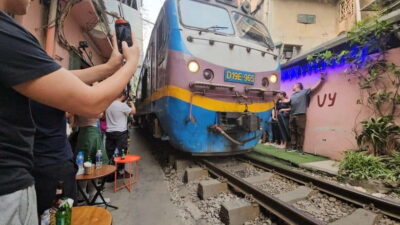
Street Food Tour with Train Street & Hidden Alleyways
What we made of it →
Guided Street Food Tour with Train Street Experience
What we made of it →
7 Tastings Street Food Tour with Train Street
What we made of it →
Walking Street Food Tour in Hanoi and Train Street
What we made of it →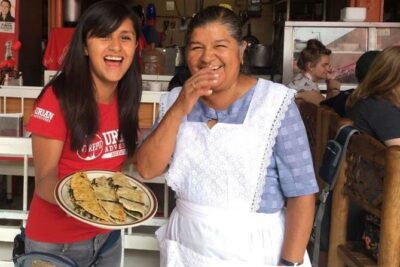
Hidden Markets, Street Food & Salsa-Making Tour
What we made of it →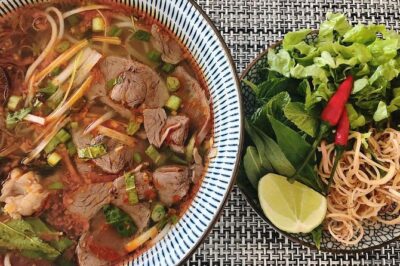
Saigon’s Hidden Flavors – Private Street Food Walk with Local Students
What we made of it →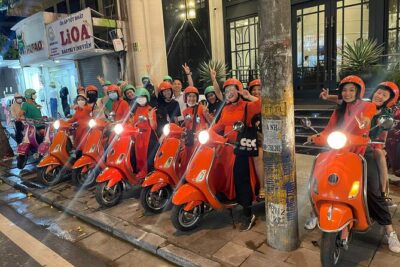
Vespa Female Ao Dai riders Night Street Food + See Train Street
What we made of it →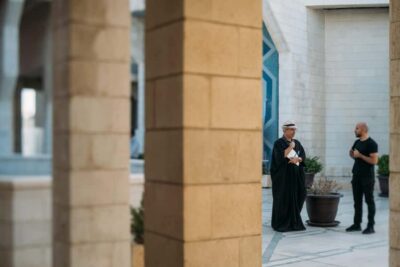
Amman Walking Tour: Hidden Gems, Culture & Street Food
What we made of it →Where this tour turns up