
Review · JAIPUR
Jaipur: Spice Market and Street Food Walking Tour
Jaipur’s best stories may be hiding in its spice dust. This $21 experience takes you through the Pink City’s oldest and biggest spice market, where locals grind and sell spices, then leads you to chai and vegetarian street food at five or six small food shops. I like the mix of market life and local cooking knowledge, and I like that the short tuk-tuk rides help you cover more ground without turning the tour into a long roadside march. The main thing to consider is the crowding: this is not a gentle stroll, and people with mobility limits may find the uneven, busy streets difficult.
The tour begins outside Shri Chandpol Hanuman Ji Temple and ends near Raj Mandir Cinema, around Chaura Rasta Street and Tripolia Gate. Guides such as Harshit, Harshita, and Lacey have been praised for clear English, good timing, friendly manner, and useful explanations of spices, cooking, and Ayurveda. Come ready to walk, taste, and stay alert in Jaipur’s organized chaos.
Key points at a glance
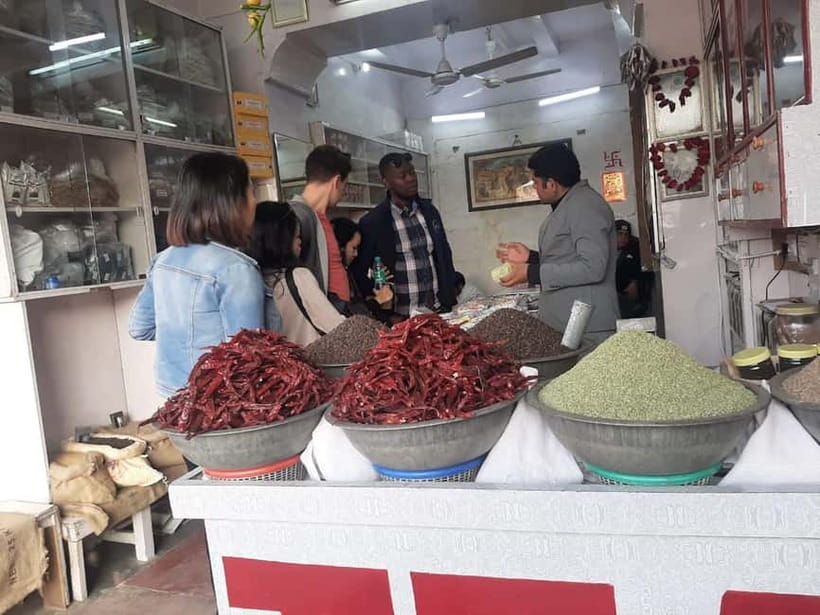
- The spice market is the main event: See local spice grinding and learn how different spices are used in cooking and traditional health practices.
- Five or six food stops add real value: You taste vegetarian snacks and chai at small local shops rather than simply hearing about Jaipur’s food.
- Two short tuk-tuk rides break up the walking: One listed ride takes about 10 minutes and connects parts of the old city.
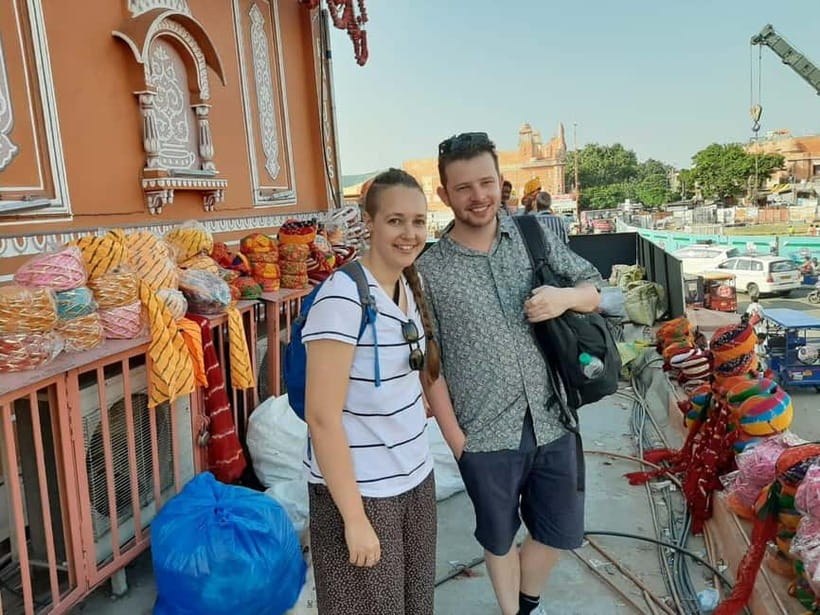
- The route shows everyday Jaipur: You pass historic sites while moving through noise, smells, color, traffic, shopkeepers, and market activity.
- This is a photographer’s tour: Photography is encouraged, but you should ask permission and avoid treating people as scenery.
- The outing suits food lovers and curious walkers: Comfortable shoes matter, and wheelchair users or people with mobility impairments should choose another activity.
Starting at Shri Chandpol Hanuman Ji Temple
Your meeting point is just outside Shri Chandpol Hanuman Ji Temple in Jaipur’s Pink City. That detail matters because the tour does not include hotel pickup, so you need to make your own way there and arrive ready to find the guide in a busy area.
The temple gives you a clear landmark, but the surrounding streets can be crowded. Guides have shown good punctuality, even during difficult conditions such as the Diwali festival, when the old city becomes especially packed. If your guide is not immediately obvious, stay just outside the temple rather than wandering into nearby lanes.
From here, the walking portion begins. The route takes about two hours, with a short tuk-tuk ride included along the way. You should expect a steady stream of visual and sensory detail: grinding spices, colorful displays, pungent smells, food aromas, traffic, conversation, and the constant movement of people and vehicles.
This is not a polished museum tour. Its value comes from seeing Jaipur as a working city. You will pass historic sites, but the focus stays on daily commerce and food rather than formal sightseeing commentary.
More Street Food Tours in India:
- Mumbai: Street Food and Night Markets Tour
★ 4.9 · 719 reviews - Old Delhi Street Food Tour
★ 5.0 · 497 reviews - Delhi: Old Delhi Street Food Tour with Rickshaw Ride
★ 4.9 · 403 reviews
Inside Jaipur’s oldest and biggest spice market
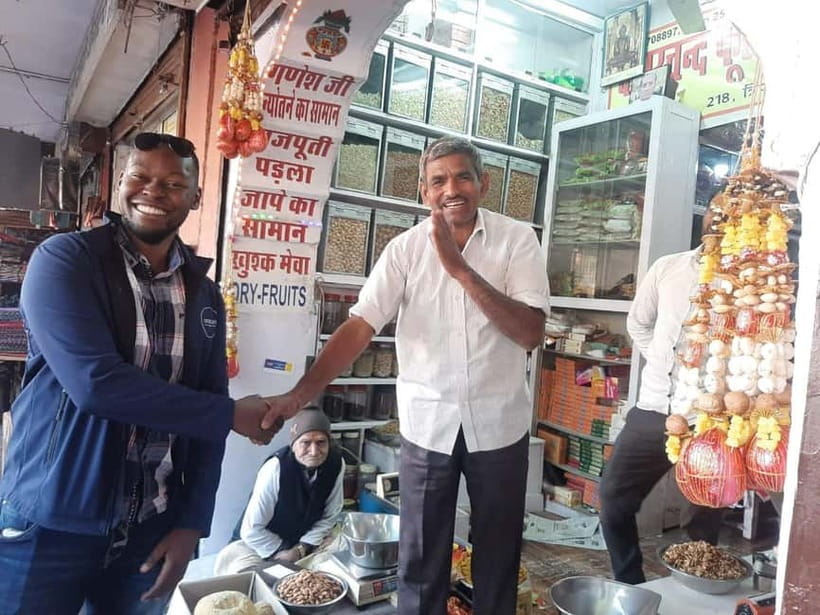
The spice market gives this tour its purpose. You will see locals grinding spices and learn about the ingredients on display, including their use in cooking and their reported medicinal or Ayurvedic roles.
The guides have been especially praised for explaining the differences among spices and how they fit into Indian food. One particularly useful detail from the guiding style is the attention to variety. You may hear about different kinds of rice as well as the more familiar spice names, which helps you see that Indian cooking is not built around a short list of curry powders.
Expect a market that works at full speed. The sounds, smells, faces, and colors come at you without much pause. For photographers, this can be a rewarding setting, especially if you enjoy close details such as sacks, grinding equipment, hands at work, and displays of ingredients.
Still, you need to be considerate. Photography is encouraged, but ask before photographing individuals, particularly people working in stalls. A guide can help you understand when a quick picture is acceptable and when it is better to put the camera away.
The market is also a good place to ask questions. You might want to know how a spice is used at home, whether it is added whole or ground, or why two similar-looking ingredients are sold separately. The tour is more useful when you treat the guide as a translator of local food habits, not just someone leading you from one stop to another.
Walking through the Pink City’s organized chaos
The streets between stops are part of the experience, not empty time. You will walk past historic places while dealing with the practical realities of an old city: narrow passages, crowded lanes, traffic, changing smells, and people moving in every direction.
The phrase organized chaos fits well here. There is plenty to notice, but not always much room to stop. Keep your belongings secure, watch where you step, and follow your guide closely when the group crosses busy areas.
This portion will appeal to you if you like street-level sightseeing. It gives you a better sense of how the old city functions than a series of photo stops from a vehicle. You see shops, food preparation, religious activity, and market trade in the same stretch of Jaipur.
It may not suit you if you want a quiet walk or a slow architectural tour. The tour description specifically warns you to expect crowded places, and the experience depends on moving through them. Wear comfortable walking shoes, not sandals that are hard to keep secure or formal footwear that will become tiring.
Two short tuk-tuk rides through old Jaipur
The tuk-tuk rides are brief, but they serve a useful purpose. Instead of walking every section between the spice market, Tripolia Gate, and the food stops, you get short rides through the Pink City.
One ride is listed at about 10 minutes. The transport is not presented as a sightseeing circuit, so do not book this expecting a long scenic drive or a private vehicle. Think of it as a practical local transfer that adds another way to experience the old city.
For some people, these rides will be a welcome break from walking. They also let you watch Jaipur’s traffic from a different angle, though the crowded roads may feel hectic rather than relaxing. If you dislike tight traffic or have difficulty getting into and out of a tuk-tuk, this is worth considering before booking.
The short rides also keep the tour compact. At 2.5 hours, the experience gives you a focused taste of the market and food scene without taking up half a day.
Same place, a different plate:
- Mumbai Street Food Tour
★ 5.0 · 269 reviews - Mumbai Street Food & Night Markets
★ 5.0 · 225 reviews - Winner Mumbai Street Food Tour in the World Top 20 by Guardian
★ 5.0 · 216 reviews - Mumbai Street Food and Evening Bazaar Tour
★ 5.0 · 172 reviews
Five or six food stops, with chai at the finish
The food section is where the tour becomes more than a market walk. You will stop at five or six authentic food shops and taste vegetarian dishes in the old city, ending with chai and snacks at a famous street food stall.
The exact dishes are not specified, so you should not book this expecting a fixed menu. That flexibility can be a benefit because the stops reflect local shops and the guide’s food knowledge. It also means the experience may be less predictable than a restaurant tasting with a printed course list.
Several guides have received strong praise for choosing places that visitors might not find easily on their own. The food is described as delicious, authentic, and served in a local Indian cafe or food stall setting. You get time to sit, eat, and talk after the busy walking section, which gives the tour a pleasant change of pace.
Chai and snacks are an important part of the ending. Chai is not just a drink here. It gives you a chance to pause, compare what you have tasted, and ask the guide about the food traditions behind it.
If you have dietary concerns, ask the provider before booking because the tour is described as vegetarian, but no detailed allergy or ingredient information is supplied. Personal expenses are not included, so carry some money if you want to buy anything beyond the included tastings.
Ending near Raj Mandir Cinema
The tour finishes at Raj Mandir Cinema, near Chaura Rasta Street and Tripolia Gate. This is useful if you want to continue exploring Jaipur’s old city afterward, although the tour does not include a return to your hotel.
The ending is practical rather than ceremonial. After the final chai and snack stop, you are left in an active part of Jaipur with access to more streets, shops, and sights. Make sure you know how you will return to your accommodation before you start, especially if you are unfamiliar with the city.
The finish also makes the tour easy to pair with another Jaipur plan. Since the total duration is only 2.5 hours, you can schedule it in a morning or afternoon and still have time for a larger attraction later in the day. Check the available start times when booking, since the exact departure schedule can vary.
What the guides add
The guide is central to the value of this experience. Without explanations, a spice market can become a blur of sacks, smells, and unfamiliar ingredients. With a good guide, you learn what you are seeing and why it matters in Indian cooking.
Harshit has been praised for his clear English, punctuality, professional manner, and explanations of spices, their uses, and food traditions. Harshita has been described as friendly, informative, and helpful, particularly when showing how spices are prepared and sold. Lacey has also been praised for being personable and guiding the experience well.
Guide assignments can change, so you should not assume that you will meet one particular person. The consistent qualities to look for are the ability to explain food clearly, keep the group together, and help you feel comfortable in busy streets.
The positive feedback is strongest around spice education and food recommendations. If you enjoy learning how ingredients are used in cooking or hearing about traditional health practices, you will get more from this than someone who simply wants a quick snack crawl.
Is $21 good value?
At $21 per person, this is a fair price for a 2.5-hour guided experience that includes the market walk, five or six food tastings, two short tuk-tuk rides, and a water bottle.
The value comes from access and interpretation. You could walk through parts of Jaipur’s old city without a guide, but you might miss the meaning behind the spices, struggle to identify suitable food shops, or spend time choosing places without knowing what to order. The guide brings the stops together into one compact route.
It is not the cheapest way to eat in Jaipur, since local snacks alone can cost very little. You are paying for the guide’s time, route planning, translation, food choices, and help in a crowded market. For a first visit, that can be money well spent.
The price is less attractive if you are already confident navigating Jaipur, know the local food scene, and prefer to eat independently. In that case, the main benefit is the spice market explanation rather than the food itself.
The reserve-now, pay-later option and free cancellation up to 24 hours before departure make it easier to fit into a changing itinerary. Those policies are useful, but the real decision should rest on whether you enjoy crowded walking tours and shared food stops.
Who should book this Jaipur food tour?
I would recommend it to food lovers, photographers, chefs, writers, bloggers, and anyone who wants a direct look at everyday Jaipur. It is also a good first activity in the city because the guide can help you understand ingredients and food customs before you order meals on your own.
You should be comfortable walking for about two hours in crowded areas. The tour is not suitable for wheelchair users or people with mobility impairments, and no hotel pickup or drop-off is provided.
Families with older children may enjoy the colors and snacks, but the crowding and traffic require attention. The tour is also a good fit for solo visitors who want a guided introduction to the old city and would rather not search for local food stalls alone.
You may want to skip it if you prefer quiet museums, fixed restaurant menus, private transportation, or a tour built around major monuments. Historic sites appear along the route, but the focus is the market, food, and local street life.
Final verdict: book it for food, not monuments
Book this tour if you want to taste Jaipur while learning what is behind the ingredients. The strongest parts are the spice market, the guide’s explanations, the carefully chosen food stops, and the chance to finish with chai in a genuine old-city setting.
Skip it if crowded streets, tuk-tuk rides, or uncertain food selections sound stressful. For the right person, $21 buys a lively, useful introduction to Jaipur’s food culture and a side of the city that is difficult to understand from a palace visit alone.
FAQ
How long does the Jaipur spice market and street food tour last?
The tour lasts 2.5 hours. The guided walking portion is listed as two hours, with short tuk-tuk rides included.
Where does the tour begin?
It begins just outside Shri Chandpol Hanuman Ji Temple in Jaipur’s Pink City. You must arrange your own way to the meeting point.
Where does the tour finish?
The tour ends at Raj Mandir Cinema, near Chaura Rasta Street and Tripolia Gate.
How many food stops are included?
You will visit five or six authentic food shops and finish with chai and snacks at a famous street food stall.
Is the food vegetarian?
Yes. The food portion focuses on vegetarian food in Jaipur’s old city.
Are tuk-tuk rides included?
Yes. Two short tuk-tuk rides are included. One listed ride takes about 10 minutes.
What language does the guide speak?
The live tour guide speaks English.
What should I bring?
Bring comfortable walking shoes and a water bottle if you prefer your own. A water bottle is included, and photography is encouraged when you are respectful of local people.
Is the tour suitable for wheelchair users?
No. The tour is not suitable for wheelchair users or people with mobility impairments. It also takes place in crowded areas, so you should be comfortable walking through busy streets.
Just added around India
- Varanasi: Night Tour with Aarti Ceremony and Street Food★ 4.7 · 2 reviews
- Varanasi Street Food Crawl (2 Hours Guided Tour)★ 4.5 · 9 reviews
- Udaipur: Street Food Crawl (2 Hours Local Food Tasting Tour)★ 4.1 · 3 reviews
- Udaipur: Street Food adventure l Eat Just like a local★ 4.6 · 2 reviews
- Udaipur: Guided Street Food Tour with Tastings★ 4.2 · 6 reviews
- Trivandrum Street Food Crawl Guided Food Tasting Tour★ 4.5 · 6 reviews
- Ganga Arati with Street Food Tour of Banaras★ 5.0 · 7 reviews
- Varanasi Street Food Crawl (2 Hours Guided Food Tasting Tour)★ 4.5 · 69 reviews
Street Food Tours, compared.

Old Town, Creek, Museums, Souks, & Street Food Tour
What we made of it →
Ho Chi Minh City Street Food Tour & Sightseeing By Motorbike
What we made of it →
Comuna 13 Graffiti Tour, Cable Car & Street Food
What we made of it →
Old Town, Souks, Street Food, Guided Tour & Abra Ride
What we made of it →

Small Group Hanoi Street Food Tour with a Real Foodie
What we made of it →
Saigon By Night and Street Food By Motorbike | Opt: Ao Dai Riders
What we made of it →Where this tour turns up