
Review · KRAKOW
Krakow: Street Food Walking Tour
Krakow tastes better on foot. This 90-minute tour combines traditional Polish snacks with short stories about the city, taking you from famous obwarzanek and zapiekanka to pierogi, sausage, mountain cheese, sweets, and a small glass of Polish alcohol. I like the compact route and the chance to visit a local market rather than simply eat at one restaurant. The main consideration is pace: an hour and a half goes quickly, and some people may want more time at each stop.
I also like the small maximum group of 15, which makes it easier to ask questions and compare reactions over the food. Guides such as Joanna, Olga, Alicja, Anna, and Mateusz have been praised for mixing food knowledge with Krakow history in a friendly way. You should arrive 10 minutes early, though, since latecomers cannot join once the group has left.
Key points at a glance
- A proper introduction to Krakow street food: Try obwarzanek, zapiekanka, pierogi, kiełbasa, pickles, oscypek, bundz, sweets, and Polish alcohol.
- A useful first-day activity: The tour covers the city center while giving you food ideas for the rest of your stay.
- Market tasting included: The final market stop lets you sample regional products and browse beyond the usual restaurant menu.
- Small-group format: The group can include up to 15 people, and some departures have been much smaller.
- Short, active, and central: The 90-minute walk is easy to fit into a busy Krakow schedule, though it can feel quick.
- Important food warning: The tastings may include gluten, wheat, dairy, eggs, meat, sesame, nuts, and alcohol.
Why a Krakow food walk makes sense
Food is one of the fastest ways to understand a place. On this tour, you are not only handed samples. You get a basic guide to how Polish food fits into daily life, local customs, and the city’s past.
That makes the experience useful at the start of a Krakow visit. You can learn what obwarzanek really is, decide how you feel about Polish pickled foods, and discover the difference between familiar-sounding dishes and the versions served in Poland. I like tours that give you practical food confidence, and this one is built around that idea.
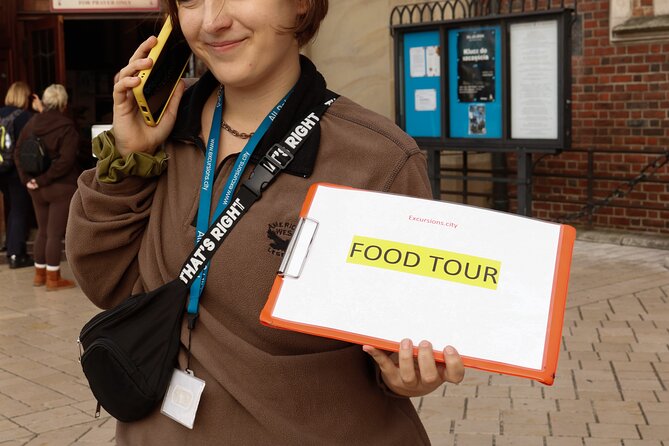
The meeting point is easy to find: stand in front of Saint Mary’s Church on Krakow’s Main Square and look for the guide holding an excursions.city sign. This central location puts you in the middle of Krakow’s most visited area, so you can continue sightseeing afterward without arranging transport.
The tour is offered in English, Italian, or French. Select one language when you book, since each group tour operates in only one language.
More Street Food Tours in the world:
- Dubai: Old Town, Creek, Museums, Souks, & Street Food Tour
★ 4.8 · 10,816 reviews - Ho Chi Minh City Street Food Tour & Sightseeing By Motorbike
★ 5.0 · 9,413 reviews - Medellin: Comuna 13 Graffiti Tour, Cable Car & Street Food
★ 4.8 · 9,046 reviews
Starting with obwarzanek near Saint Mary’s Church
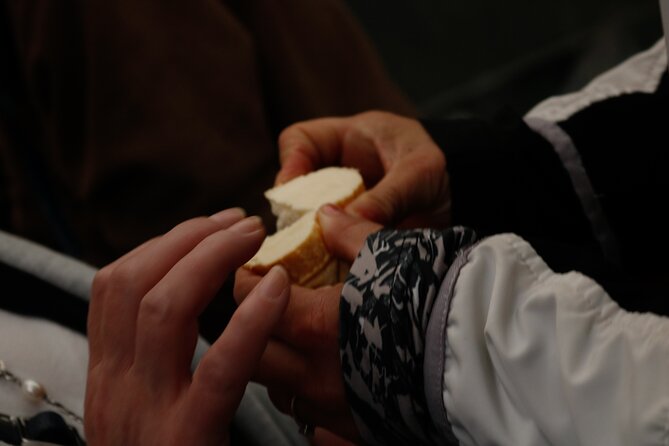
The first food to look for is obwarzanek, Krakow’s traditional ring-shaped bread snack. It is often compared with a bagel, but the name and preparation are distinctly local. The tour uses it as an entry point into Krakow’s food culture and as a reminder that the city’s best-known street foods are often simple, portable, and inexpensive.
This is a good first taste because it is not heavy. You are likely to appreciate having a light snack early in the walk, especially with several more tastings ahead.
The early section also connects food with Krakow itself. The guides have been praised for explaining how dishes and eating habits relate to Polish customs, rather than rattling off a list of ingredients. Joanna, Olga, and Mateusz were singled out for making these explanations clear and entertaining, but the guide changes by departure.
You should expect some standing and walking while the guide talks. One person found the pace a little quick for taking photographs, while another described the pace as relaxed. That difference probably depends on the guide, group size, and day. If you want pictures, tell the guide early and stay near the front or side of the group.
Zapiekanka and the everyday Polish snack scene
The next major taste is zapiekanka, an open-faced baguette topped with savory ingredients. It is one of the clearest examples of Polish street food because it is casual, filling, and designed to be eaten without ceremony.
For you, this stop is useful because it shows a different side of Polish food from the better-known pierogi. It is not a formal regional dish served at a long dinner. It is quick city food, the kind of thing that helps explain how locals eat between activities.
The tour description does not promise one fixed topping or portion size, so you should think of this as a tasting rather than a full meal. The full set of samples can add up to a substantial amount of food, but the exact selection may vary.
That variety is part of the appeal. You may find yourself noting a few places to return to later. Several people used the tour as a scouting trip for the rest of their stay, and one couple went back to three of the places they visited.
Pierogi, pickles, and the Polish comfort-food lesson
Pierogi are the most famous dish on the list, and they are included as a traditional Polish dumpling tasting. The food matters here, but the explanation matters too. A good guide can help you understand why pierogi are so central to Polish cooking and how they fit into the country’s wider home-food tradition.
The tour also includes pickled treats. If your experience with pickles is limited to cucumber slices, this is a chance to try a broader range of tangy Polish flavors. Pickling is an important part of the food selection, and the sharp taste provides a useful contrast to bread, dumplings, cheese, and sweets.
I like this middle section because it gives you both familiar and unfamiliar choices. Pierogi may feel approachable. The pickled samples and regional products can push you a little further.
Food restrictions need attention here. The tour is not recommended for vegans or people with allergies and intolerances to gluten, wheat, dairy, eggs, meat, sesame, or nuts, since offered foods may contain these ingredients or traces of them. One person found the tour suitable as a vegetarian, but the listed tastings include sausage and other meat products, so vegetarians should confirm what they can skip before booking.
Same place, a different plate:
- Dubai: Old Town, Souks, Street Food, Guided Tour & Abra Ride
★ 4.9 · 7,170 reviews - Naples: Street Food Walking Tour with Local Guide
★ 4.9 · 4,976 reviews - Small Group Hanoi Street Food Tour with a Real Foodie
★ 5.0 · 4,682 reviews - Rome: Street Food Tour with Local Guide
★ 4.8 · 4,077 reviews
Kiełbasa and the flavor of Polish street food
Polish sausage, or kiełbasa, is another central tasting. It brings a smoky, savory note to a route that also includes bread, dumplings, cheese, and sweets.
The value of tasting it with a guide is simple. You can ask what you are eating, how it is served, and where to find a good version later. The tour is not meant to be a specialist sausage course, but it gives you a useful first sample and a point of comparison for Krakow menus.
This is also where the tour can feel less suitable for people looking for a plant-based experience. Meat appears in the tasting list, and Polish alcohol is included as well. You can ask questions about ingredients, but the experience is designed around sampling the standard local spread rather than customizing every stop.
The guides are a major part of how well this works. Anna, Carolina, Kinga, Pauline, and Peter have all been praised for being friendly and clear, while Joanna was especially appreciated for linking each food stop to local history. You are not simply moving from counter to counter. The guide’s commentary gives the walk its shape.
Oscypek, bundz, and mountain flavors in Krakow
The tour includes two traditional highlander cheeses, oscypek and bundz. This widens the food map beyond Krakow itself and introduces products associated with Poland’s mountain regions.
Oscypek is the more famous name, while bundz may be less familiar to first-time visitors. Tasting both lets you compare regional cheese traditions instead of treating Polish cuisine as only pierogi, sausage, and cabbage.
This stop is especially useful if you enjoy trying foods that are hard to identify from a menu. The guide can explain what makes the cheeses different and may be able to point you toward other regional products at the market.
Dairy is a clear issue for anyone with an intolerance or allergy. The same caution applies to some of the other tastings, and you should not rely on the guide to remove every trace of an allergen.
The market finale and a closer look at regional products
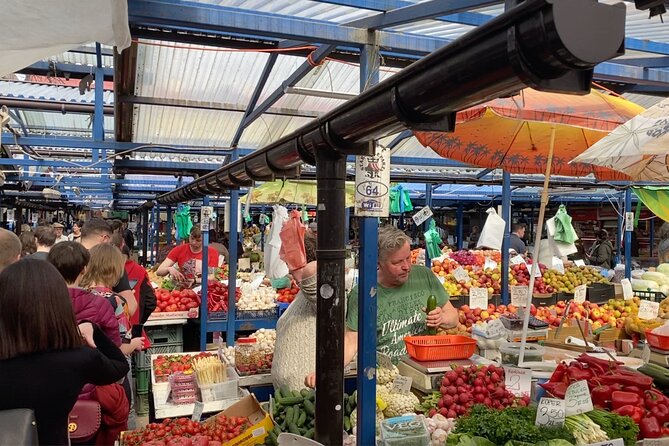
The market is one of the strongest parts of the experience. Instead of ending after a few bites in the city center, the group visits a place where you can sample an array of regional products and see more of the food sold in Poland.
Several people considered this their favorite section. It offers a chance to taste foods in a setting that feels more connected to everyday shopping than a standard restaurant stop. One person described it as a market they would not have found on their own, which is exactly the sort of practical discovery that makes a short tour worthwhile.
The market also changes the rhythm of the walk. Earlier stops introduce individual snacks. Here, you get a broader look at Polish food, with the guide helping you decide what deserves a second try.
This is the point where you can ask for recipes or preparation ideas for the foods you liked most. The tour specifically invites those questions, so do not wait until the final minutes if you want details about a particular dish.
Sweets, vodka, and the final Polish note
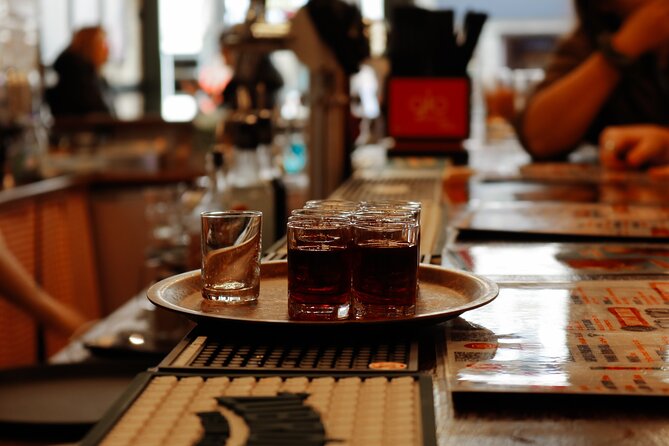
The tasting list includes sweets and Polish alcohol. The alcohol may be a traditional vodka or a flavored homemade-style shot, depending on the stop. A lemon vodka was especially well remembered, and one person returned to the bar later for a beer.
The drink is part of Polish hospitality and food culture, but it is not compulsory fun for everyone. If you do not drink, tell the guide. The important point is that the tour includes alcohol as part of its tasting program, so this is not the best choice if you want an entirely alcohol-free food walk.
The sweet course gives the tasting a gentler finish after savory snacks, pickles, meat, and cheese. One participant particularly liked a rose-flavored doughnut, showing how the final samples may include more distinctive Polish flavors than the headline dishes suggest.
Because the walk lasts only 90 minutes, the ending may feel brisk. One person called it a whistle-stop tour and wanted more time to explore. Others liked the length and felt it offered plenty of food without becoming tiring. I would treat this as a focused introduction, not a full afternoon food crawl.
Is $35 good value for this Krakow experience?
At $35 per person, the tour offers strong value if you plan to eat most of the included samples and use the information afterward. You get a guide, several food tastings, a market visit, city-center walking, history, and suggestions for places to return to.
The value is not only in the quantity of food. You are paying to avoid guesswork. In a short visit, it can be hard to know which Polish snacks are worth trying or where to begin. The tour gives you a broad first look, then leaves you with ideas for later meals.
It is less useful if you already have a detailed Krakow food plan or prefer to sit down for one long meal. The route is active, the portions are tasting-sized, and the group must keep moving to fit everything into 90 minutes.
The maximum group size is 15, which is reasonable for a walking food tour. Smaller departures can feel almost private and allow more conversation. Larger groups may require you to stay close to the guide, especially on busy streets.
Who should book this food tour?
I would suggest this experience to first-time visitors, short-stay visitors, couples, families with older children, and anyone who wants a quick introduction to Polish cuisine. It also suits people who enjoy learning a little history while eating rather than separating sightseeing and meals into different activities.
It is a particularly good choice for the first day of your Krakow visit. You can use the route to get your bearings in the center, learn the names of foods, and collect dinner ideas.
You should think twice if you use a wheelchair, since the tour is not suitable for wheelchair users. It is also a poor fit for vegans and for anyone with the listed food allergies or intolerances. People who dislike walking, standing, or eating at a quick pace may prefer a longer seated food experience.
Arrive 10 minutes before the start at Saint Mary’s Church. The group cannot wait for late arrivals, and missed tours cannot be refunded. Free cancellation is available up to 24 hours before departure, and you can reserve now and pay later.
Should you book it?
Book this tour if you want many Polish flavors in a short time, plus enough history to make the food meaningful. The best reasons are the market visit, the range of samples, the central meeting point, and the consistently warm guide style seen from people led by Joanna, Olga, Alicja, Anna, Carolina, and others.
Skip it if you need a fully allergy-safe menu, a vegan route, wheelchair access, or a slow sit-down meal. For everyone else, $35 is a fair price for a compact Krakow introduction, especially when taken early enough in your stay to guide the meals that follow.
FAQ
Where does the Krakow street food tour meet?
Meet in front of Saint Mary’s Church, or Kościół Mariacki, on Krakow’s Main Square. The guide will hold an excursions.city sign.
How long does the tour last?
The tour lasts 90 minutes. Starting times vary, so check availability when booking.
What foods are included?
The tastings include obwarzanek, zapiekanka, pierogi, pickled treats, kiełbasa, oscypek, bundz, sweets, and Polish alcohol.
Is alcohol included?
Yes. Traditional Polish alcohol is part of the tasting selection. A vodka shot may be included.
What languages are available?
The tour is offered in English, Italian, and French. Each group tour operates in one language, selected at booking.
How many people can join?
The maximum group size is 15 participants. Some departures may be smaller.
Is the tour suitable for people with food allergies?
It is not recommended for people with allergies or intolerances to gluten, wheat, dairy, eggs, meat, sesame, or nuts. Offered foods may contain these ingredients or traces of them.
Can I cancel the booking?
You can cancel up to 24 hours before the tour for a full refund. Reserve now and pay later is also available.
Just added around the world
- Zanzibar:Stone town Street food market walking tour,transfer★ 4.5 · 9 reviews
- Vienna Food Tour: Dishes, Wine, Street Food & Culture★ 4.7 · 12 reviews
- Verona: Street Food Tour and City Guided Sightseeing★ 4.9 · 11 reviews
- Xi’an: Gourmet & Street Food Tour★ 4.8 · 22 reviews
- Verona: City Highlights & Street Food Walking Tour★ 5.0 · 3 reviews
- Verona: Street Food and History Tour with Local Guide★ 4.7 · 6 reviews
- Xi’an Muslim Quarter Night Market Foodie Walking Tour★ 4.2 · 22 reviews
- Verona: street food walking tour near the historical center★ 5.0 · 2 reviews
Street Food Tours, compared.

Old Town, Creek, Museums, Souks, & Street Food Tour
What we made of it →
Ho Chi Minh City Street Food Tour & Sightseeing By Motorbike
What we made of it →
Comuna 13 Graffiti Tour, Cable Car & Street Food
What we made of it →
Old Town, Souks, Street Food, Guided Tour & Abra Ride
What we made of it →
Small Group Hanoi Street Food Tour with a Real Foodie
What we made of it →
Saigon By Night and Street Food By Motorbike | Opt: Ao Dai Riders
What we made of it →Where this tour turns up