Review · LA PAZ DEPARTMENT
La Paz: Street Food Walking Tour
La Paz tastes better on foot. This four-hour walk links food with the city’s main sights, taking you from Riosinho Square through Lanza Market, Murillo Square, San Pedro, the Rodríguez Market, the Witches Market, and San Francisco Church. I like the market-to-market route and the chance to try several Bolivian foods rather than sit down for one formal meal. I also like that guides such as Christian, Chris, and Erwin have been praised for friendly explanations and personal help. The serious drawback is provider reliability: two recent bookings recorded no guide at all, so I would confirm the meeting details before setting out.
The tour costs $19 per person, including the guide and tastings, which is good value if every stop runs as planned. It suits meat eaters who want a lively introduction to La Paz, but it is not designed for vegetarians, and the altitude, changing weather, and four hours of walking call for sensible preparation.
Key points at a glance
- Meet at 2:00 p.m. at Riosinho Square: Look for the guide with the green umbrella, near Jaén Street.
- Taste your way through several markets: Lanza, Rodríguez, and the Witches Market each give the walk a different local setting.
- See central La Paz while you eat: Murillo Square, San Pedro, and San Francisco Church add context beyond the food.
- Expect an English-speaking guide: The tour is offered in English, with guides including Christian, Chris, and Erwin receiving especially warm praise.
- Plan for changing mountain weather: Bring layers, sunscreen, water, comfortable shoes, and an umbrella.
- Best for carnivores: The experience is intended for people who eat meat, with limited suitability for vegetarians.
Why this $19 walk can be useful in La Paz
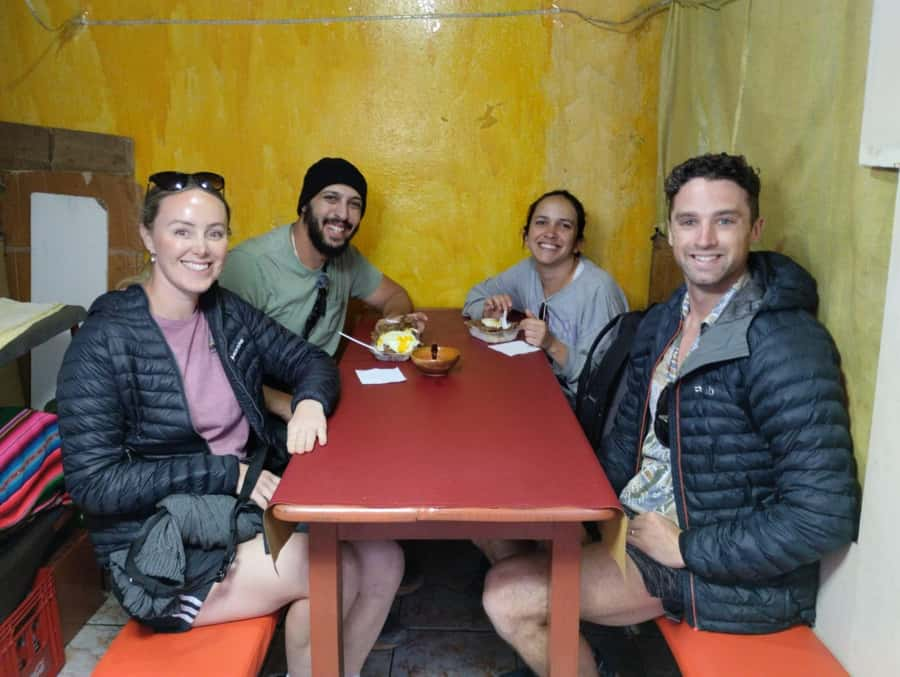
La Paz can feel confusing at first. Streets climb, markets spill into sidewalks, and the city’s sights do not always announce themselves with neat museum labels. A food walk gives you a reason to move through the center while someone explains what you are seeing.
At $19, the price is modest for four hours of guiding and multiple tastings. You are not paying for a polished dining room. You are paying for a local route, explanations, and small portions of food along the way. That makes the value depend heavily on the guide and on the tour actually operating as scheduled.
The food is the main attraction, but the city setting gives it meaning. A drink at Lanza Market feels different from a dish near San Pedro or a final taste beside San Francisco Church. You get an introduction to daily life, old streets, public squares, shopping habits, and local customs around food.
I would not book this as a quiet culinary lesson. It is a walking tour through busy central areas, with several stops and a fair amount of time on your feet. If you want a relaxed restaurant meal with careful descriptions of every ingredient, this is not the right format.
More Street Food Tours in the world:
- Dubai: Old Town, Creek, Museums, Souks, & Street Food Tour
★ 4.8 · 10,816 reviews - Ho Chi Minh City Street Food Tour & Sightseeing By Motorbike
★ 5.0 · 9,413 reviews - Medellin: Comuna 13 Graffiti Tour, Cable Car & Street Food
★ 4.8 · 9,046 reviews
Starting at Riosinho Square beside Jaén Street
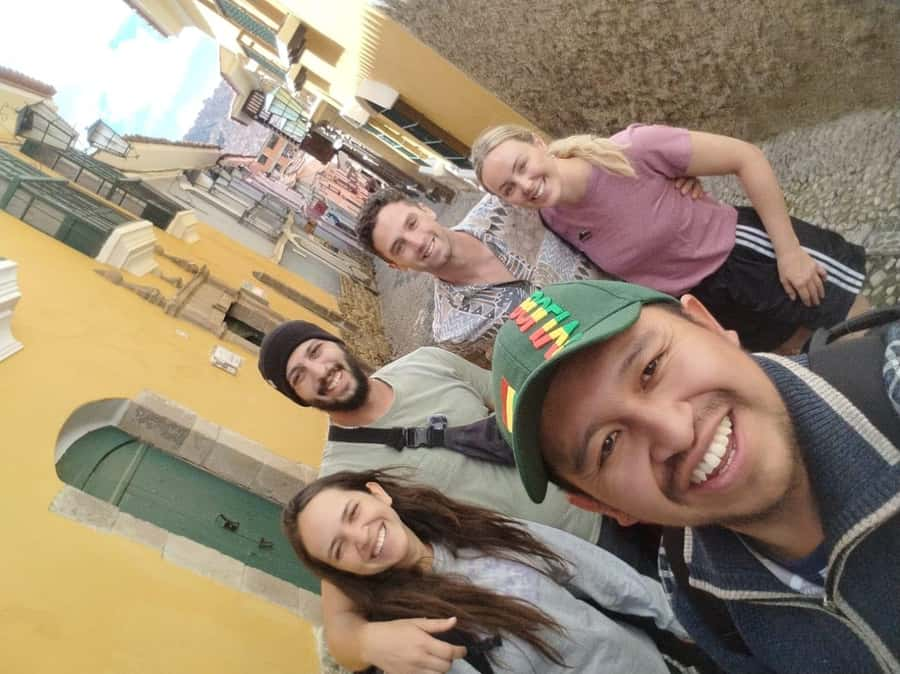
The meeting point is Riosinho Square at 2:00 p.m. for the English tour. It is close to Jaén Street, one of La Paz’s best-known colonial streets, so you can pair the start with a look at that area before or after the walk.
The green umbrella is the key visual marker. Do not simply wait in the square and hope the group finds you. Look for the guide carrying it, especially if several groups are gathering nearby.
The afternoon start is practical for a food walk. You avoid an early morning departure, and the four-hour schedule should bring you to the final stop around early evening. Still, La Paz weather can shift quickly. A jacket, pullover, umbrella, and clothing suitable for warmer sun all make sense.
Wear shoes you can comfortably use for four hours. Add sunscreen and sunglasses, since strong sun can catch you even when the air feels cool. Water is important, and the tour information also suggests snacks, which may help if you are sensitive to altitude or need food between tastings.
Lanza Market and the first taste of La Paz
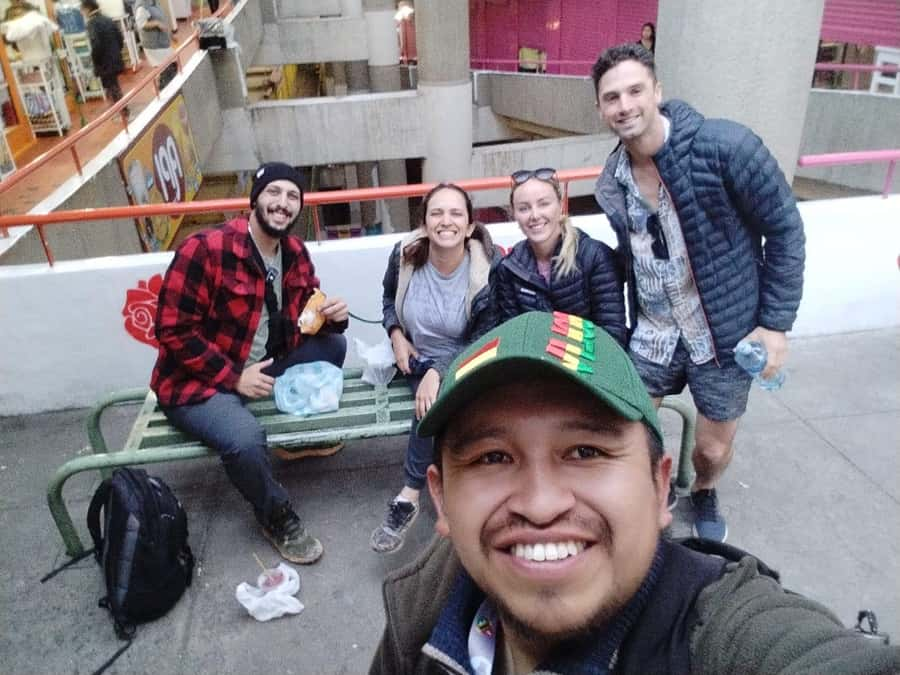
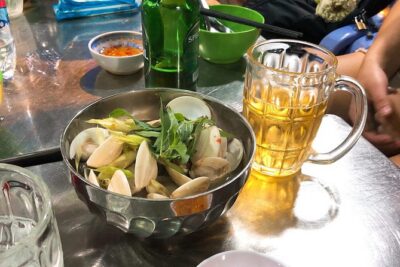
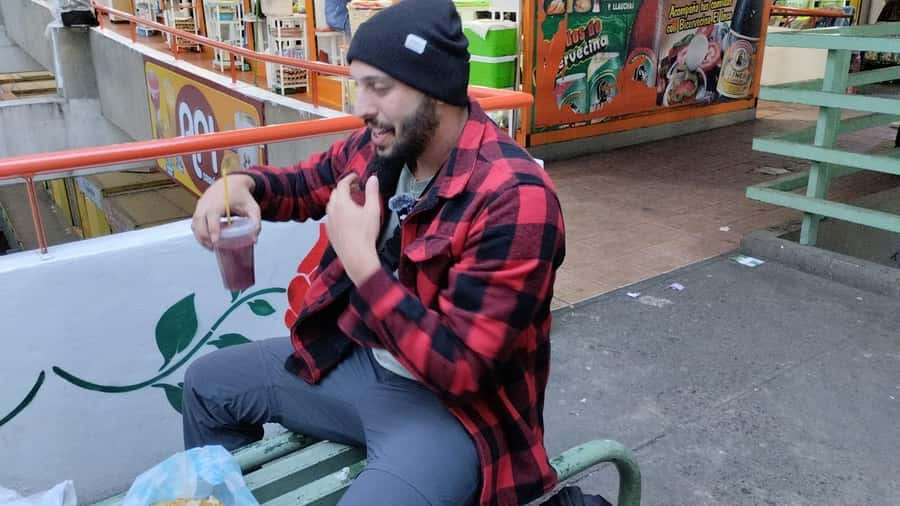
The route moves through Lanza Market, one of the city’s best-known markets, where you try a traditional Bolivian drink. This is a strong opening because markets show you La Paz in motion rather than as a collection of monuments.
You might find the market crowded, noisy, and visually intense. That is part of the appeal, but it also means you should keep your belongings secure and stay close to the guide. The point is not only to swallow a drink and move on. Listen for the explanation of how the market fits into city life and why the drink matters locally.
The first tasting also sets expectations for the rest of the afternoon. Portions are meant to be sampled across several places, not treated as a single large lunch. If you have a big appetite, eat a light meal beforehand rather than arriving extremely hungry.
Food sensitivity is worth considering. The tour is specifically intended for carnivorous people, and the description warns that many local food places are meat-focused. If you do not eat meat, this is probably a poor match. If you do eat meat but have allergies or strict dietary needs, ask the provider before booking because the available tastings are not fully described.
Murillo Square and the city story between bites
From the market, the walk continues to Murillo Square, the main square. This is where the historical side of the tour becomes more visible.
A guide can help connect the square to the city around it, rather than leaving you to admire buildings without context. The experience promises information about La Paz, and the strongest feedback describes guides explaining the city’s history, everyday life, customs, and main sights during the route.
This is also a good place to pause and catch your breath. La Paz’s altitude can make a normal walking pace feel harder than expected, especially during the first days of a visit. One customer specifically praised Christian for being patient when altitude sickness became a problem and for helping find medication at a pharmacy.
That account is useful advice, not a guarantee. The tour guide may be helpful, but you should still take altitude symptoms seriously and avoid pushing yourself. Move at a comfortable pace, drink water, and tell the guide early if you feel unwell.
Same place, a different plate:
- Dubai: Old Town, Souks, Street Food, Guided Tour & Abra Ride
★ 4.9 · 7,170 reviews - Naples: Street Food Walking Tour with Local Guide
★ 4.9 · 4,976 reviews - Small Group Hanoi Street Food Tour with a Real Foodie
★ 5.0 · 4,682 reviews - Rome: Street Food Tour with Local Guide
★ 4.8 · 4,077 reviews
San Pedro and a more unusual stop
The next part of the route visits San Pedro, described as a particularly notable prison, followed by another traditional Bolivian dish. This is one of the more unusual elements of the walk because it moves beyond the standard central sightseeing circuit.
You should understand the wording carefully. The tour visits the area connected with San Pedro, but the information does not promise entry inside the prison. Treat it as an outside visit and a chance to hear about the place from the guide.
The food stop after San Pedro keeps the route from becoming a simple history walk. You taste another local specialty, then continue through the city. This rhythm is one of the experience’s better ideas: a sight, an explanation, a tasting, and then more walking.
Food descriptions are limited, so you should not book this expecting a fixed menu. The tastings can vary, and the supplied details do not name every dish or guarantee exact portions. That uncertainty is normal for street food, but it matters if you want to plan around particular Bolivian foods.
Rodríguez Market and the everyday shopping route
The Rodríguez Market focuses on vegetables and fruit. It gives the tour a useful change of pace after the meat-focused tasting stops.
Here, I would pay attention to the ordinary details: what is being sold, how the market is arranged, and how the guide explains local shopping habits. A market devoted to produce can tell you as much about daily life as a major monument, especially when you are moving through it with someone who knows the city.
This is also the point when tired feet may start to matter. The tour lasts about four hours, and the route includes several markets and central sights. If you have just arrived in La Paz, the combination of altitude, walking, and food may feel demanding. Comfortable footwear and a steady pace are not optional extras.
The market stop should appeal to anyone who likes seeing places where residents shop, not just places prepared for sightseeing. If you prefer a tidy, quiet environment, you may find the market atmosphere a bit much. The experience is strongest when you accept that it is informal and local rather than polished.
The Witches Market and a memorable food stop
The route then reaches the famous Witches Market, where you try another local food. This is likely to be one of the most memorable stops because the market is associated with distinctive Andean beliefs and unusual goods.
The information does not specify exactly what you will eat or how long you will spend there. That is worth keeping in mind. You are getting a guided introduction and a tasting, not a full lecture or a shopping appointment.
A guide adds real value here. Without context, the market can become a quick photo stop. With a good explanation, you can better understand why its items matter and how the market fits into La Paz culture. The strongest guide feedback describes Christian, Chris, and Erwin as friendly, patient, and good at connecting food with customs and local life.
The market also gives you a chance to ask questions. If you are curious about table manners, local ingredients, or everyday traditions, speak up. One account praised Chris for explaining Bolivian dishes as well as customs and manners at the table. That kind of personal exchange is exactly what can turn a basic food walk into a useful introduction to the city.
Finishing near San Francisco Church
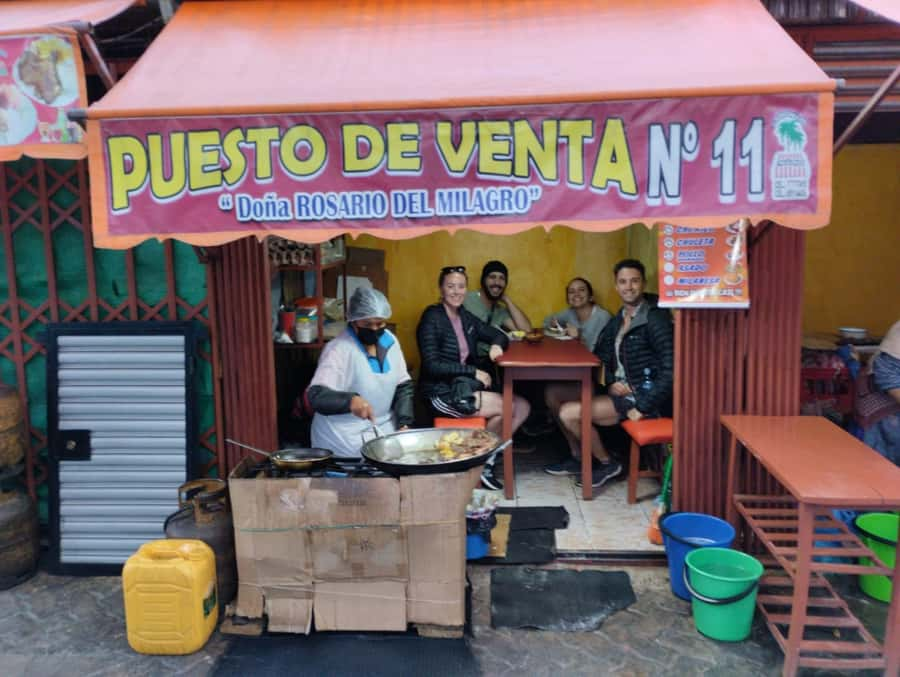
The final stop is the famous San Francisco Church, where you receive another Bolivian food tasting. Ending at a major landmark gives the route a clear finish and leaves you in a central part of La Paz.
You may want to allow extra time afterward to look at the church and surrounding area on your own, though the tour information does not specify an interior visit. Do not assume entrance is included. The listed inclusions are the guide and the tastings.
The final tasting also means this tour can function as a late lunch or early dinner, but I would not count on it as a full meal. Bring a small snack if you need regular food, particularly if altitude affects your appetite or energy.
The walk’s sequence is sensible. You begin near Jaén Street, pass through markets and major public places, then end beside one of the city’s best-known churches. You see several different sides of central La Paz without spending the afternoon inside a vehicle.
The guides make the difference
This experience depends more on the guide than on any single food stop. English is the offered language, and the most praised guides are Christian, Chris, and Erwin.
Christian received especially strong praise for explaining La Paz’s main sights, showing patience with altitude sickness, and helping locate medicine at a pharmacy. Chris was praised for being friendly, explaining local food and table customs, and making two solo women feel comfortable during the walk. Erwin was praised for sharing information about city life and adapting to personal wishes.
These details suggest the best version of the tour is conversational rather than scripted. You get more from it if you ask questions and tell the guide about your pace, food preferences, and energy level.
There is also an important warning. Two recent bookings recorded that the guide did not arrive, and one account described a double charge that later needed a refund. Because of that, I would confirm the appointment close to the tour date and keep the provider’s contact information handy. The free cancellation policy allows cancellation up to 24 hours in advance for a full refund, and the reserve-now, pay-later option lets you avoid paying immediately, but neither policy makes a missed afternoon convenient.
Who should book this food walk?
I would recommend it to you if you:
- Eat meat and want to try several local specialties.
- Like markets, street scenes, and informal food stops.
- Want city history mixed into a food experience.
- Are comfortable walking for about four hours.
- Prefer an English-speaking guide who can answer questions along the way.
- Have enough flexibility to confirm the appointment and deal with a possible scheduling problem.
I would hesitate if you are vegetarian, need a guaranteed menu, dislike changing weather, or want a fully reliable fixed schedule. The route includes public markets and street food, so it is not aimed at people seeking a controlled dining environment.
The tour may also suit first-time visitors who want quick orientation. You see central sights while learning where markets, churches, squares, and unusual city landmarks fit together. For a short stay, that combination can save you from spending your first day wandering without context.
Should you book the La Paz Street Food Walking Tour?
Book it if the food, markets, and city stories appeal to you more than polished service. At $19, the price is attractive, and the best guide experiences sound personal, generous, and genuinely useful. Christian, Chris, and Erwin each helped turn the route into more than a list of tastings.
I would make the booking only after checking that the tour is confirmed. The two no-show accounts are too serious to ignore, especially when you have limited time in La Paz. If the provider confirms and you eat meat, this can be a good-value way to meet the city through its markets and everyday food.
FAQ
Where does the tour meet?
The tour meets at Riosinho Square, close to Jaén Street in La Paz.
What time does the English tour start?
The English tour starts at 2:00 p.m.
How long does the walking tour last?
The tour lasts approximately four hours.
What language is the tour offered in?
The tour is offered in English with a live English-speaking guide.
What is included in the price?
The price includes the guide and the different food tastings.
Is this tour suitable for vegetarians?
The tour information says it is available only for carnivorous people because many of the food places in Bolivia serve meat-focused dishes.
What should I bring?
Bring comfortable walking shoes, water, sunscreen, sunglasses, a camera, snacks, and clothing for changing weather. A jacket, pullover, and umbrella are suggested for cooler or wet conditions.
Just added around the world
- Zanzibar:Stone town Street food market walking tour,transfer★ 4.5 · 9 reviews
- Vienna Food Tour: Dishes, Wine, Street Food & Culture★ 4.7 · 12 reviews
- Verona: Street Food Tour and City Guided Sightseeing★ 4.9 · 11 reviews
- Xi’an: Gourmet & Street Food Tour★ 4.8 · 22 reviews
- Verona: City Highlights & Street Food Walking Tour★ 5.0 · 3 reviews
- Verona: Street Food and History Tour with Local Guide★ 4.7 · 6 reviews
- Xi’an Muslim Quarter Night Market Foodie Walking Tour★ 4.2 · 22 reviews
- Verona: street food walking tour near the historical center★ 5.0 · 2 reviews
Street Food Tours, compared.

Old Town, Creek, Museums, Souks, & Street Food Tour
What we made of it →
Ho Chi Minh City Street Food Tour & Sightseeing By Motorbike
What we made of it →
Comuna 13 Graffiti Tour, Cable Car & Street Food
What we made of it →
Old Town, Souks, Street Food, Guided Tour & Abra Ride
What we made of it →
Small Group Hanoi Street Food Tour with a Real Foodie
What we made of it →