
Review · USA
Little Havana Street Food Tour with Enthusiastic Guide
Come hungry, leave well fed. This $69 Little Havana food tour combines Cuban snacks, local history, family-run shops, and a cigar-making demonstration along Calle Ocho. You might taste a beef empanada, Cuban sandwich, seafood, guava pastry, churro, Cuban coffee, and a mojito, while an English-speaking guide explains the neighborhood’s Cuban-American traditions.
I like the tour’s small group size of up to 12 people, which should make it easier to hear the guide and ask questions. I also like the short walking route, less than a mile, making this a practical choice for older visitors and anyone who would rather spend more time tasting than marching between sights. The main drawback is that some food stops are right on the main street, so you should not expect a totally secret food crawl.
Key points at a glance
- Five substantial food tastings make up the equivalent of a full lunch or dinner, with drinks included.
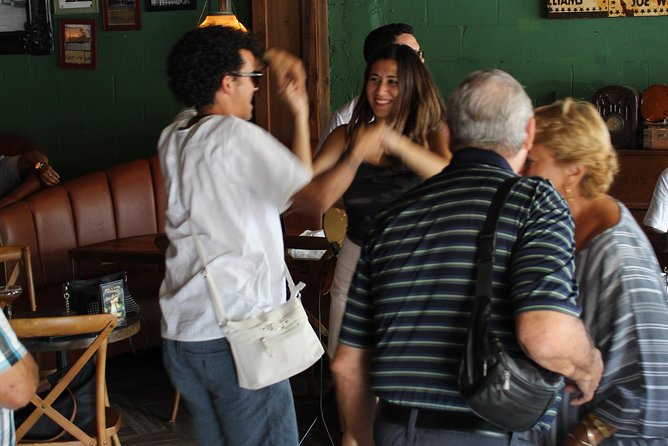
- Danny and Faruk have earned especially warm praise for their humor, local knowledge, and easy conversation.
- Casa del Tabaco offers a close look at cigar rollers making cigars inside a family-run shop.
- Domino Park and the Bay of Pigs Monument add important Cuban-American history beyond the food.
- Less than a mile of walking suits many ages and fitness levels, and wheelchairs and strollers can be accommodated.
- Street parking costs about $2 per hour, paid through a mobile app, and the tour ends two blocks from its starting point.
Starting on Calle Ocho with a mojito
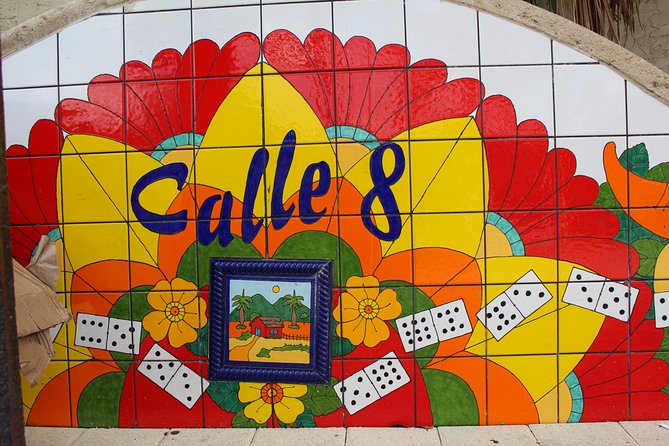
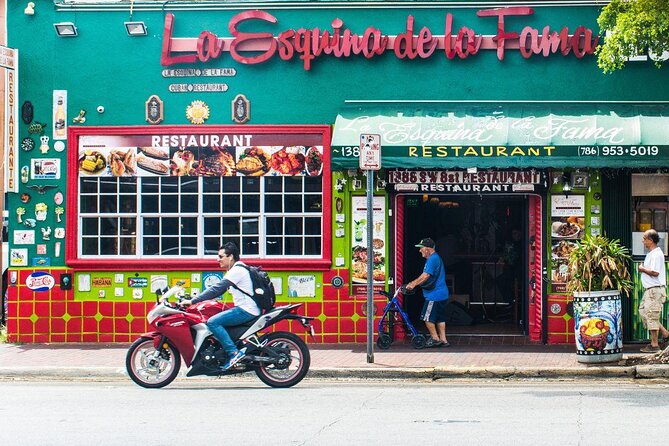
The tour begins at Tumbao, at 1652 SW 8th Street, the main commercial spine of Little Havana. From there, the route moves through nearby shops, food counters, monuments, and gathering places before ending at Churromania, at 1417 SW 8th Street.
The start and finish are only about two blocks apart, which is handy if you park nearby. Public buses also serve the area, and a rideshare or taxi avoids the need to deal with parking. If you drive, use the PayByPhone app and read the street signs carefully. The tour operator specifically warns against parking in restaurant lots.
The first taste is a mojito from one of Little Havana’s well-known spots. Later drinks may include sugarcane juice or mango juice, depending on the day and season. Cuban coffee is served at a local ventanita, or walk-up window, where you share a colada in the local style. These drinks are not minor extras. They help you understand how people eat and socialize in the neighborhood.
The food is divided among five tasting stops, but the portions together are meant to equal a full lunch or dinner. Plan accordingly. If you eat a large meal just before meeting the group, you may find the final churro harder to appreciate.
More Street Food Tours in the USA:
- Charleston Upper King Street Food Tour
★ 4.5 · 200 reviews - Mexican Street Food: Tijuana Day Trip from San Diego
★ 4.5 · 158 reviews - Street Food Tour of South Lake Union- Area of Amazon Spheres
★ 5.0 · 60 reviews
RC Gallery and Little Havana’s local artists
After the first tasting, the guide takes you to RC Gallery Miami. The shop is connected to a Cuban-born Miami artist and sells pieces made by family members. This stop gives the food tour a useful change of pace and shows how Cuban artists build a life and business in Miami.
I like this kind of stop because it puts a face on the neighborhood. You are not only passing colorful storefronts. You are meeting people who make and sell their own work. The gallery can also be a good place to buy a small gift or an original piece after the tour.
The visit lasts about 10 minutes, so do not expect a full gallery lecture. Think of it as a brief introduction to Cuban art in Miami and a chance to see work that is tied directly to one local family.
Big Papa and the story of the guayabera
At The Havana Shirt Store, you meet Big Papa, a well-known local vendor of Cuban-style clothing. He gives a short presentation on the guayabera, the lightweight shirt associated with Cuba, and explains how it is worn and used.
This stop works because it is personal rather than academic. Big Papa’s presentation adds character to the walk, and the shirt itself offers a simple way to understand how Cuban identity appears in daily dress. You may also find something to take home, though shopping is not required.
The stop lasts about 10 minutes. If you prefer food to retail visits, this will be less important than the tastings. Still, it helps break up the eating and gives you contact with one of the neighborhood’s local personalities.
Casa del Tabaco and the cigar rollers
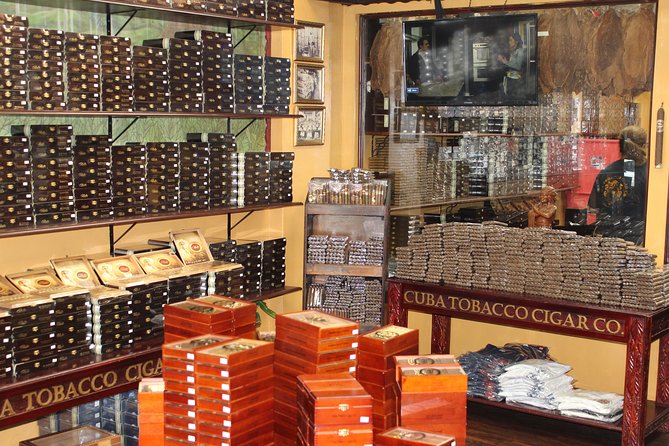
Casa del Tabaco is one of the strongest stops on the route. It is a family-owned cigar factory where you can watch rollers make Cuban-style cigars by hand. The shop is described as the only lady-owned cigar factory in Little Havana, and the cigars sold there are made on site.
You can take photos and video of the rollers at work. The guide explains how the tobacco trade developed and how to select cigars if you are considering a purchase. The store and its rollers have also appeared in films and music videos, including projects connected with Pitbull.
Even if you do not smoke, the stop is worth your time. Hand-rolling turns a familiar souvenir into a visible craft, and you get a better sense of the skill involved. If you are sensitive to cigar smoke, this is the stop where you may want to step back or spend less time indoors.
The cigar factory visit takes about 15 minutes. It is enough time for a demonstration and a few questions, but not a long workshop.
Same place, a different plate:
- Portland Food Carts, Pods & Patios Tour
★ 5.0 · 166 reviews - New York City Food Cart Walking Tour
★ 5.0 · 68 reviews - Food Carts of Portland Bike Tour: local flavors and stories
★ 5.0 · 67 reviews - The Ultimate New York City Street Food Tour
★ 5.0 · 43 reviews
Tower Theater, a 1926 landmark
The Tower Theater is a quick architectural pause on Calle Ocho. Built in 1926, the Art Deco theater recalls an earlier period in Miami’s development and remains one of Little Havana’s recognizable landmarks.
The tour allows roughly 10 minutes here. You will not get a full theater visit, but the stop adds visual variety to a route otherwise focused on food, shops, and street life. Bring a camera. The building works well as a quick photo stop, especially for visitors interested in Miami architecture.
Domino Park and the sound of community life
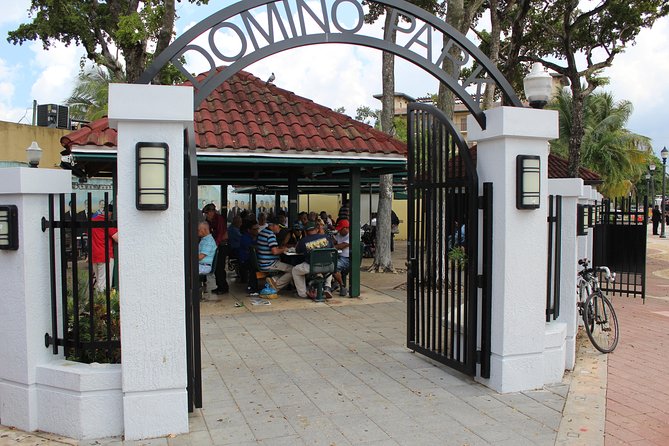
At Domino Park, the guide explains the importance of dominoes to Cuban-American life. Local elders play the game here, and the tour includes a chance to learn about the game and its place in the neighborhood.
The name can sound like a simple tourist attraction, but the cultural point is more useful. Public gathering spaces help show how Cuban traditions remain part of daily life in Miami. You are seeing a social custom, not just a decorated park.
The stop lasts about 10 minutes. The group may not get a long game or a formal lesson, so treat this as an introduction. It is one of the tour’s best moments for understanding community life beyond restaurants and souvenir shops.
The Bay of Pigs Monument and Cuban-American memory
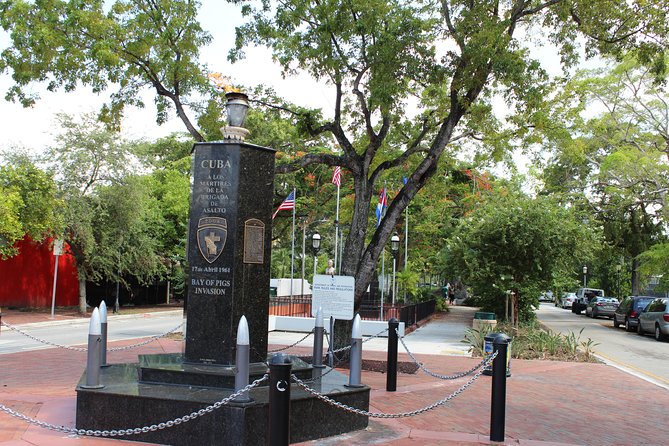
The Bay of Pigs Monument gives the tour its most serious historical moment. Here, the guide explains the 1961 invasion attempt and the people who fought and died trying to change Cuba’s government. You may also encounter veterans in the area, although that cannot be guaranteed on every departure.
This stop matters because Little Havana is not only about coffee, music, cigars, and bright colors. Cuban exile stories and political memory remain central to the neighborhood. A good guide can connect the monument to the larger story of Cuban migration and Miami’s Cuban-American community.
The subject can be emotionally and politically charged. The tour presents the story as part of the community’s experience, so listen carefully and ask questions if you want more context. The visit takes about 10 minutes, which gives you an introduction rather than a full political history.
Rooster Alley and neighborhood artwork
Near the end, the group visits Rooster Alley, also called the Havana Rooster area. Roosters appear throughout Cuban and Latin American culture, and Little Havana has many rooster sculptures and artworks made by local artists.
The alley was created through a local entrepreneur’s donation of a backyard and passageway to more than 25 artists. Their work helps brighten the neighborhood and gives you another look at how residents use art in public spaces.
This is a photogenic stop and a pleasant way to finish the cultural portion of the route. It is also a reminder that Little Havana’s visual style comes from many local contributors, not from one single design plan.
The food stops, from empanada to churro
The tasting menu covers savory dishes, sweets, fruit drinks, coffee, and alcohol. You may receive:
- A beef empanada from a small local spot
- A tapas-size seafood tasting called salpicon de mariscos
- A Miami-style Cuban sandwich
- Guava and cheese pastry from a family bakery
- Cuban coffee or colada
- A mojito
- Sugarcane or mango juice
- A churro dessert
The beef empanada is served at a small place described as known mainly to locals. The pastry offers a crisp, portable introduction to Cuban comfort food. The seafood tasting provides a different texture and flavor from the heavier sandwich and pastry stops.
The Cuban sandwich is a local Miami version rather than a claim to one perfect national recipe. That distinction is useful. Food traditions change as communities settle in new places, and the sandwich reflects Miami’s own Cuban influence.
Guava and cheese pastry brings the sweet-salty combination that appears often in Cuban baking. The tour finishes with a churro, which is a smart choice after the savory stops. Cuban coffee arrives from a ventanita, an important part of the neighborhood’s everyday food culture.
The portions are not described as tiny samples. Together, they are intended to replace a full meal. The food is one of the tour’s strongest values, especially since alcoholic and nonalcoholic drinks are included.
How much walking and time should you expect?
The advertised experience lasts about two hours and 30 minutes. The stop descriptions list several individual time estimates, including three hours for Little Havana and two hours and 30 minutes for Calle Ocho, but those figures are not meant to be added together. The practical expectation is a roughly two-and-a-half-hour guided route.
You will walk less than a mile, with frequent pauses for food, conversation, and sightseeing. That makes the tour suitable for many ages and fitness levels. Wheelchairs and baby strollers can be accommodated, though it is still wise to mention your needs when booking.
The short route is a real advantage in Miami’s heat. You get a neighborhood introduction without spending half the day under the sun. Wear comfortable shoes, bring water, and carry an umbrella if rain is forecast. The tour generally operates in wet weather unless conditions become unsafe.
The guides make the biggest difference
The most praised part of this experience is the guide. Danny is described as upbeat, conversational, funny, and good at explaining the area without making the walk feel like a lecture. Faruk has also been singled out for being entertaining, prepared, and connected to the neighborhood.
That personal connection matters here. Little Havana is easy to walk through on your own, but a local guide can explain why a domino table, guayabera, cigar shop, or monument matters. The guide also helps the food stops feel connected rather than random.
The experience is conducted in English. Some guides speak intermediate Spanish, but the tour cannot run in both languages at the same event. If you want a relaxed introduction with room for questions, the group limit of 12 is useful.
Dietary needs, price, and practical value
At $69 per person, the tour is not the cheapest way to walk Calle Ocho. You are paying for the guide, five food tastings, a mojito, juice, coffee, and the structure of a small group. If you planned to eat lunch and sample drinks anyway, the price can be fair.
The value is strongest for first-time visitors. You get food, orientation, neighborhood stories, several local businesses, and suggestions for places to return to later. It is less valuable if you already know Little Havana well or mainly want a self-guided restaurant crawl.
Vegetarian and dairy-free diets can be accommodated if you list them at checkout. Gluten-free needs, including celiac disease, cannot be handled. The tour is otherwise suitable for any age, and service animals are allowed.
A tip for the guide is not included. Budget for gratuity if Danny, Faruk, or another guide gives you the friendly, informative service that makes the experience work.
Should you book the Little Havana food tour?
I would book this tour if you want an easy first look at Little Havana, especially at the beginning of your Miami stay. The food is plentiful, the walking is light, and the mix of snacks, art, cigars, dominoes, and Cuban-American history gives you more than a basic restaurant visit.
You may want to skip it if you dislike group tours, need a fully gluten-free menu, or want food stops far from the main tourist street. Also check your email and phone messages before departure, since the operator has had to cancel tours for illness in the past. Standard cancellation allows a full refund up to 24 hours before the start time, while weather or minimum-group cancellations offer a new date or refund.
For most first-time visitors, the combination of full-meal tastings and local storytelling makes this a useful, good-value introduction to Little Havana.
FAQ
How much food is included on the tour?
The tastings together are intended to equal a full-size lunch or dinner. You may receive five food tastings, including an empanada, seafood, Cuban sandwich, guava and cheese pastry, and churro.
Are drinks included?
Yes. The tour includes a mojito, Cuban coffee or colada, and sugarcane or mango juice depending on availability and season.
Where does the tour begin?
The meeting point is Tumbao, at 1652 SW 8th Street, Miami, Florida 33135.
Where does the tour end?
The tour ends at Churromania Little Havana, at 1417 SW 8th Street. This is about two blocks from the starting point.
How much walking is involved?
The route involves less than one mile of walking. It is described as suitable for people who cannot walk long distances, and wheelchairs and baby strollers can be accommodated.
Is parking available?
Street parking is available near the departure point and typically costs about $2 per hour. Payment is made through a mobile app, and you should follow the current street signs.
Can dietary restrictions be accommodated?
Vegetarian and dairy-free diets can be accommodated if you provide the information at checkout. Gluten-free menus and accommodations for celiac disease are not available.
Can I cancel for a refund?
You can cancel at least 24 hours before the start time for a full refund. Cancellations or changes made within 24 hours are not refunded.
Just added around the USA
- Tampa Riverwalk Street Food by the Bay 3 Hour Walking Food Tour★ 5.0 · 17 reviews
- Street Food Tour of South Lake Union- Area of Amazon Spheres★ 5.0 · 60 reviews
- Downtown Sarasota Street Food -Casual Lunchtime Walking/Food Tour★ 3.5 · 3 reviews
- Tijuana Walking Street Food Tour for Foodies★ 5.0 · 10 reviews
- The Ultimate New York City Street Food Tour★ 5.0 · 43 reviews
- Food Carts of Portland Bike Tour: local flavors and stories★ 5.0 · 67 reviews
- Taste of Little Havana: Miami Cuban Food & Culture Tour★ 5.0 · 3 reviews
- Key West Street Food Private Local Guided Tour★ 3.5 · 2 reviews
Street Food Tours, compared.

Old Town, Creek, Museums, Souks, & Street Food Tour
What we made of it →
Ho Chi Minh City Street Food Tour & Sightseeing By Motorbike
What we made of it →
Comuna 13 Graffiti Tour, Cable Car & Street Food
What we made of it →
Old Town, Souks, Street Food, Guided Tour & Abra Ride
What we made of it →
Small Group Hanoi Street Food Tour with a Real Foodie
What we made of it →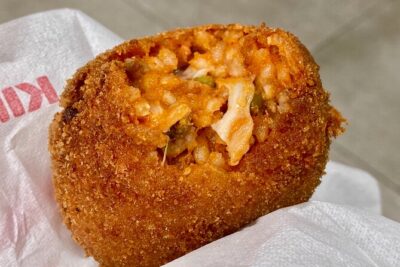
Saigon By Night and Street Food By Motorbike | Opt: Ao Dai Riders
What we made of it →Where this tour turns up