Review · GEORGIA
Tbilisi Street Food Tour (All-inclusive)
Come hungry, then let Tbilisi feed you. This $39 food tour pairs seven or more Georgian tastings with street art, old courtyards, cafés, and stories about local customs. I like the generous range of food, from cornbread with cheese to khinkali and churchkhela, and I like that a guide such as Giorgi or Nodahri can add city history to the meal. The main thing to consider is that some dishes are heavy, salty, or fatty, and the one-to-three-hour schedule may feel quick if you want to linger.
The tour works especially well near the start of a Tbilisi stay. You get an introduction to Georgian wine, find bakeries you might otherwise miss, and receive practical advice on where to eat next. Tastings are included, along with a glass of local wine or beer, but extra food and drinks cost more. Dietary needs should be shared ahead of time.
Five things to know before you book
- Seven or more tastings fill the route: Expect a proper sampling of Georgian staples, not just one snack and a drink.
- The food tells the city’s story: Wine traditions, mountain baking, street art, courtyards, and café culture all appear along the way.
- A local bakery is a major stop: You taste pastries such as lobiani and khachapuri made in a traditional style.
- The tour is short but full: The experience lasts from one to three hours, depending on the selected time and route.
- It suits small groups and private bookings: Hotel pickup and drop-off are available, and private tours are the only option that allows children under 18.
Why this Tbilisi food tour works well
Tbilisi is an easy city to explore on foot, but Georgian food can be less familiar than the country’s famous wine. This tour gives you a guided first taste without asking you to decode a menu or guess which bakery is worth entering.
I especially like the balance between eating and looking around. You are not placed in one restaurant for a long meal. Instead, the route moves through yards, cafés, parks, a bakery, and parts of the city known for street art. The result feels closer to a food walk than a formal sit-down meal.
The price is $39 per person. That is good value if the promised seven or more tastings are served in full, since the cost covers food at each stop, a professional English-speaking guide, and a glass of wine or beer. Hotel pickup and drop-off are also included where selected. You should remember that the tour is not an unlimited restaurant crawl. Extra food and drinks are not included, so the value depends on how much is offered during your particular time slot.
The duration is listed as one to three hours. That is a wide range, so check the available starting time and expected length when you book. A one-hour version may feel like a concentrated tasting, while a longer route gives more room for stories, walking, and street scenes.
More Street Food Tours in the world:
- Dubai: Old Town, Creek, Museums, Souks, & Street Food Tour
★ 4.8 · 10,816 reviews - Ho Chi Minh City Street Food Tour & Sightseeing By Motorbike
★ 5.0 · 9,413 reviews - Medellin: Comuna 13 Graffiti Tour, Cable Car & Street Food
★ 4.8 · 9,046 reviews
Starting with cornbread, cheese, and Georgian wine
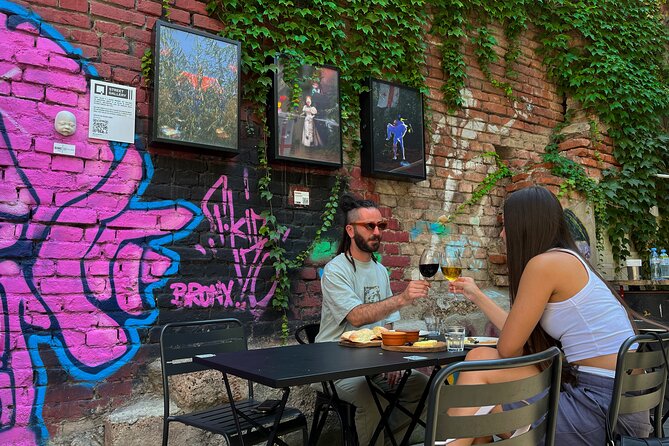
The food begins in an authentic courtyard setting, with traditional cornbread, cheese, and local flavors. This is a smart opening because it introduces several basic Georgian tastes at once: warm bread, dairy, grain, salt, and the kind of shared-table food that appears throughout the country.
You also receive local wine or beer here. Wine matters in Georgia far beyond the glass itself, and the guide explains local winemaking methods while you raise a toast. You do not need to be a wine expert to enjoy this part. The point is to connect the drink with Georgian customs and hospitality.
The courtyard setting adds something a restaurant cannot. Tbilisi has many attractive old yards tucked behind street fronts, and this stop lets you see how daily life can sit just beyond the main road. The setting may change with the season, holidays, or time slot, so treat the courtyard as part of the intended character rather than a fixed guarantee.
This first tasting also sets the pace. Since several more foods follow, avoid arriving after a large meal. At the same time, do not assume that every stop will be light. Cornbread, cheese, pastries, dumplings, and sweets can add up quickly.
Fabrika and the modern face of Tbilisi
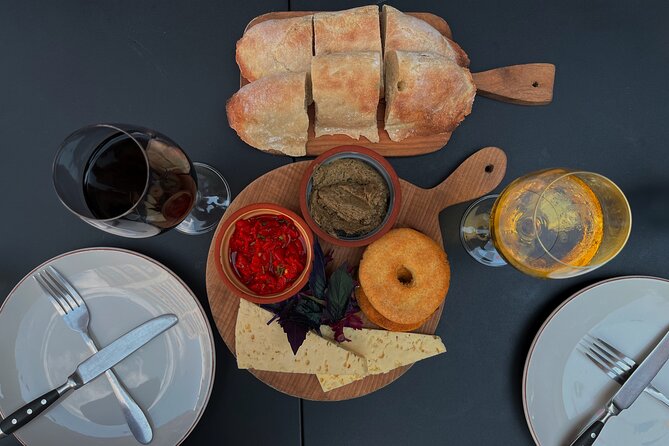
Fabrika Tbilisi appears early in the route and gives the experience a more contemporary setting. Here, the focus can include beer, wine, cheese, local snacks, and regional food, along with sightseeing.
That contrast is useful. Georgian cuisine is often presented through old recipes, but Tbilisi is also a young, social city with cafés, creative spaces, and modern meeting places. Fabrika helps show how traditional food fits into present-day city life.
The stop may include tasting and conversation rather than a single named dish. You might sample cheese or small snacks while your guide explains what you are eating and how it fits into Georgian food culture. Because the route uses several venues, the exact order and selection can vary.
I would not book this tour expecting every stop to be a quiet, carefully plated meal. The appeal is movement and variety. You get a sense of how people eat across different settings, from a courtyard to a bakery to a café.
The bakery stop and Georgia’s warm pastries

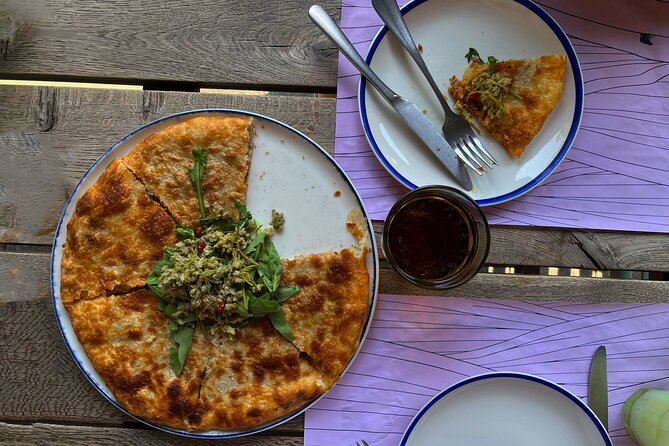
The local bakery is one of the strongest parts of the route. You are introduced to traditional pastries such as lobiani and khachapuri, served warm and made in a style connected with Georgian home cooking.
Lobiani is bread filled with seasoned beans. Khachapuri is the better-known cheese-filled bread, with many regional versions across Georgia. Tasting them side by side helps you understand why Georgian bread is more than a side dish. It can be a snack, breakfast, lunch, or a meal shared at a table.
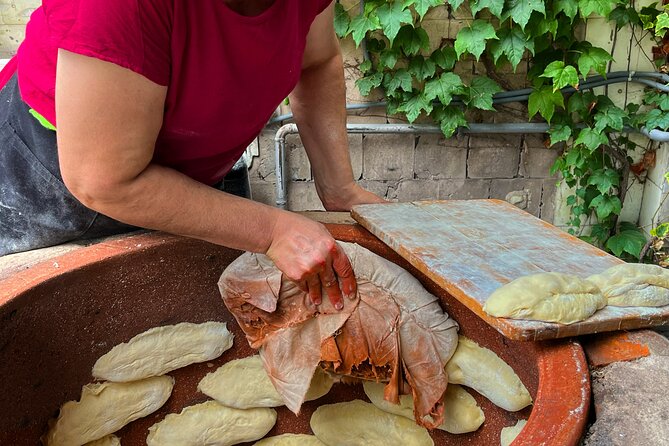
The pastry maker is described as a local woman from Georgia’s highest mountains. That detail gives the stop a human touch and links the baking to regional traditions. You are not simply sampling dough from an anonymous counter. The guide can explain the connection between mountain food, home recipes, and the bakery in front of you.
This is also a place where timing matters. Warm pastries are best eaten soon after they come out, and the schedule may influence what is available. The tour description does not promise a specific baking time or a particular filling beyond lobiani and khachapuri, so keep your expectations flexible.
If you have dietary restrictions, send the details in advance. The provider will try to accommodate them, but Georgian food often relies on wheat, cheese, meat, and shared preparation areas. Advance notice gives the guide a fair chance to help.
Same place, a different plate:
- Dubai: Old Town, Souks, Street Food, Guided Tour & Abra Ride
★ 4.9 · 7,170 reviews - Naples: Street Food Walking Tour with Local Guide
★ 4.9 · 4,976 reviews - Small Group Hanoi Street Food Tour with a Real Foodie
★ 5.0 · 4,682 reviews - Rome: Street Food Tour with Local Guide
★ 4.8 · 4,077 reviews
Street art, parks, and the search for khinkali
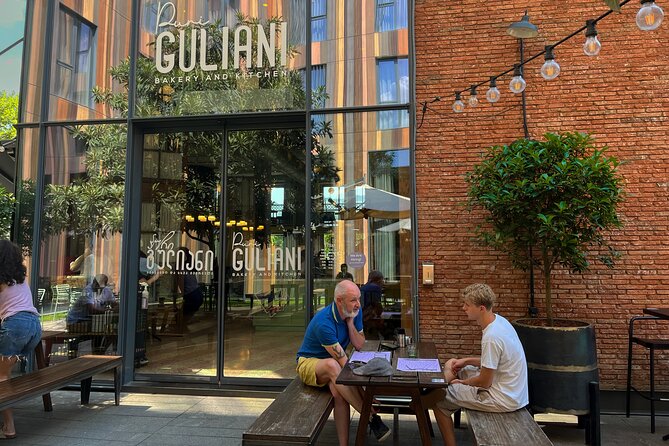
Between food stops, the guide takes you through parts of Tbilisi with street art, parks, cafés, and tucked-away yards. This walking time keeps the experience from feeling like a series of unrelated bites.
It also gives you a chance to see the city through food. You learn how a bakery fits into its neighborhood, why certain cafés attract local attention, and where the old and new parts of Tbilisi overlap. The route is not presented as a major historical tour, but the guides add some history and city context along the way.
Khinkali is the dish many people most want to try. These Georgian dumplings are associated with communal eating and are often approached with a bit of ceremony. The filling sits inside a pleated dough pouch, and eating one neatly takes some practice.
Your guide explains why Georgians are so fond of khinkali and shows you where to taste them. Exact fillings and preparation can vary, and the food may be served at a local café rather than a dedicated dumpling restaurant. That is part of the route’s practical value: you are introduced to a food and also shown the kind of place where you can seek it out again.
Khinkali can be filling, especially after bread and cheese. If you are pacing yourself, take smaller portions at earlier stops rather than trying to eat everything at full size. The tour promises many tastings, not that you must finish every bite.
Café stops bring the meal together

The route includes local café stops that may serve beer, wine, lunch, dinner, brunch, regional food, and local snacks. The exact meal label depends on the selected time and route, so a morning booking may feel different from an afternoon or evening booking.
These cafés provide the most substantial part of the food walk. You may receive several dishes or shared plates rather than a single main course. The menu can change, and the provider notes that locations may shift because of holidays, seasons, and time slots.
A guide is particularly useful here. Georgian dishes do not always explain themselves to first-time diners, and a good guide can point out what to try first, how a dish is normally eaten, and which flavors are typical of the region. Giorgi has been praised for combining city history and street art with the food, while Nodahri has been noted for choosing attractive restaurants and serving generous appetizers and lunch.
The final café stop can function as a brunch, lunch, dinner, or dessert stop. One specific piece of feedback considered the dessert stop merely okay, so I would keep expectations focused on the full route rather than expecting every venue to be equally memorable. The food variety and guide are the stronger reasons to book.
Churchkhela and tklapi for the sweet finish
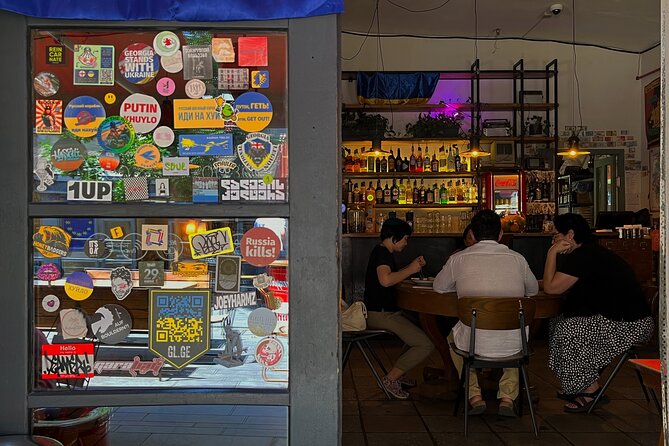
The tour closes with traditional sweets such as churchkhela and tklapi. These are useful choices because they show a side of Georgian food that visitors can easily miss if they focus only on khachapuri and khinkali.
Churchkhela is made by coating nuts with thickened fruit mixture, then drying it into a chewy sweet. Tklapi is a fruit-based sheet, also dried and often eaten as a snack. Both reflect older preservation methods and travel well, which makes them practical foods as well as desserts.
The guide shares the stories behind these treats and points out how they are made by hand using long-held methods. You may find the flavors less sugary than familiar Western desserts, with fruit, nuts, and a chewy texture taking center stage.
This final stop is also where you can decide what to buy later. Shopping is included at the bakery part of the route, but additional food and drinks are not part of the price. If a sweet catches your attention, ask the guide where to find a good version after the tour.
What the food quantity and pace are really like

The most consistent praise for this experience is its food selection and generous quantity. You are told to expect seven or more Georgian foods, with tastings at every location. That makes $39 a reasonable price for anyone who wants a broad first look at the cuisine.
The tradeoff is fullness. Several dishes may be dense, salty, fatty, or cheese-based. This is not a delicate tasting menu where each portion is tiny and carefully spaced. It is closer to a generous local introduction, and you may leave with more food than expected.
The one-to-three-hour range matters here. A short version could move quickly between stops, while a longer version may allow more time for conversation and walking. You will get more from the tour if you treat it as a sampler rather than a leisurely dinner.
I also like the practical advice promised at the end. The guide can recommend places to visit again and warn you away from weaker choices. That information may be worth as much as one extra tasting, especially if Tbilisi is your first stop in Georgia.
Who will get the most from this experience
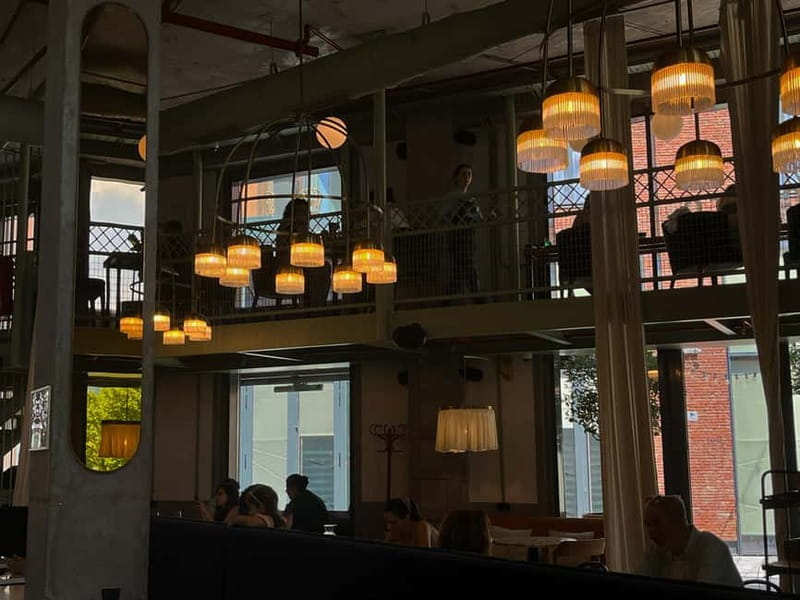
This tour fits first-time visitors who want an easy introduction to Georgian food and city life. It is also useful for people who prefer a local guide to explain menus, customs, and neighborhood details as they walk.
You should consider it if you enjoy:
- Trying several foods instead of ordering one full meal
- Learning about Georgian wine and local eating habits
- Walking through cafés, yards, parks, and street-art areas
- Getting food recommendations for the rest of your stay
- Choosing a private tour or a small group
It may not suit you if you need a long, relaxed meal, dislike rich food, or want a tightly fixed menu. The route can change with seasons, holidays, and time slots. The tour also does not allow children under 18 in shared formats, since minors are allowed only on private tours.
Wear comfortable shoes. You will be walking between stops, and large bags or luggage are not allowed. Hotel pickup and drop-off are available, with a central meeting point at PQ6P+XJ9 in Dzveli Tbilisi also listed. If you choose pickup, wait in the hotel lobby five minutes before the scheduled time because the car will wait no longer than five minutes.
Should you book the Tbilisi Street Food Tour?
Book it if you want a generous first taste of Georgia with a guide who can connect food, neighborhoods, and city culture. The range is the main advantage: cornbread, cheese, pastries, khinkali, local drinks, and traditional sweets give you a broad introduction in a short time.
I would choose a longer available time slot if you want conversation and a more relaxed pace. I would also avoid scheduling it immediately after a large meal. The tour is best near the beginning of your Tbilisi visit, when the food guidance and restaurant recommendations can shape the rest of your stay.
Skip it if you want full control over every dish or need a strictly planned route. For most people who want to eat well, learn the basics, and see more than a restaurant dining room, $39 is a fair price.
FAQ
How much does the Tbilisi Street Food Tour cost?
The tour costs $39 per person. Food tastings at each location and one glass of local wine or beer are included. Additional food and drinks cost extra.
How long does the tour last?
The stated duration is one to three hours. Available start times and the selected route determine the exact length.
What food will I taste?
The tour includes seven or more Georgian street-food tastings. Examples include cornbread with cheese, lobiani, khachapuri, khinkali, churchkhela, and tklapi. The exact stops can change by season, holiday, and time slot.
Is hotel pickup available?
Yes. Hotel pickup and drop-off are included where selected. A central pickup and drop-off point is also listed at PQ6P+XJ9 in Dzveli Tbilisi.
Are children allowed on the tour?
Children under 18 are allowed only on private tours. Shared tour options are not available for children under 18.
Which languages are available?
The live guide is available in English or Russian.
Just added around the world
- Zanzibar:Stone town Street food market walking tour,transfer★ 4.5 · 9 reviews
- Vienna Food Tour: Dishes, Wine, Street Food & Culture★ 4.7 · 12 reviews
- Verona: Street Food Tour and City Guided Sightseeing★ 4.9 · 11 reviews
- Xi’an: Gourmet & Street Food Tour★ 4.8 · 22 reviews
- Verona: City Highlights & Street Food Walking Tour★ 5.0 · 3 reviews
- Verona: Street Food and History Tour with Local Guide★ 4.7 · 6 reviews
- Xi’an Muslim Quarter Night Market Foodie Walking Tour★ 4.2 · 22 reviews
- Verona: street food walking tour near the historical center★ 5.0 · 2 reviews
Street Food Tours, compared.

Old Town, Creek, Museums, Souks, & Street Food Tour
What we made of it →
Ho Chi Minh City Street Food Tour & Sightseeing By Motorbike
What we made of it →
Comuna 13 Graffiti Tour, Cable Car & Street Food
What we made of it →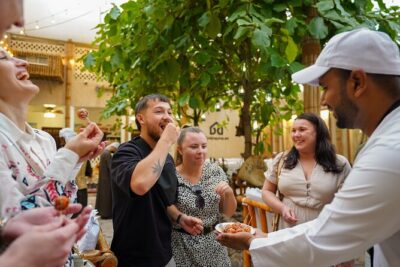
Old Town, Souks, Street Food, Guided Tour & Abra Ride
What we made of it →
Small Group Hanoi Street Food Tour with a Real Foodie
What we made of it →