
Review · LISBON
Lisbon: Portuguese street food cooking class with Drinks
Come hungry, leave with recipes. This two-hour Lisbon cooking class turns familiar Portuguese street food into a hands-on meal, with local chefs guiding you through bifana pork sandwiches, caldo verde, and peixinhos da horta. I like the practical menu and the relaxed setting with drinks included. The main consideration is that the class costs $60.21, so it makes most sense if you value both lunch and a useful cooking lesson.
I also like the small maximum of 12 people. That gives you a better chance to ask questions and receive personal help than you would in a large demonstration class. Marta and Anna are praised for making the food and Portuguese traditions easy to understand. Just note that bottled water and soft drinks are not included, and the experience returns to its starting point rather than taking you onward to another Lisbon sight.
Key Points to Know Before You Book
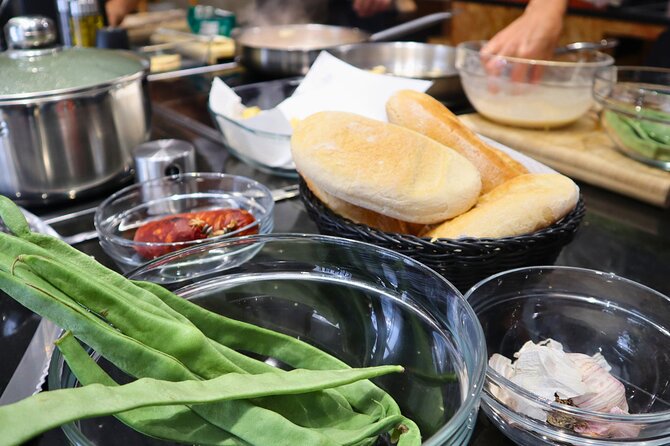
- Three classic dishes in two hours: You prepare caldo verde, bifana, and peixinhos da horta rather than simply watching a chef cook.
- The menu tells several Portuguese food stories: You get a comfort-food soup, a famous pork sandwich, and the green-bean fritters linked to the origins of tempura.
- A small group of up to 12: The format suits solo visitors, couples, families, and groups who want room to take part.
- Wine and ginginha are included: The package provides one glass of red or white wine and a taste of Portuguese cherry liqueur.
- Simple recipes for home cooking: The dishes are chosen because you can make them again in your own kitchen.
- A central Lisbon starting point: Meet at R. Heliodoro Salgado 14, near public transportation, then finish at the same address.
What You Cook in Two Hours
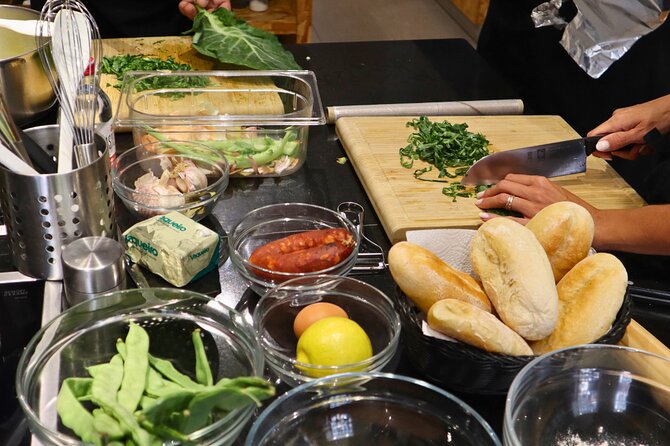
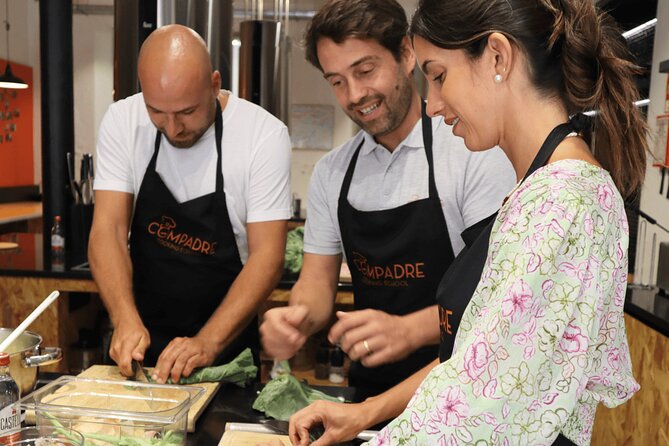
This is not a class built around a long list of complicated dishes. The menu is short, familiar, and useful. In roughly two hours, you work through three Portuguese staples and then eat the food made during the session as a light lunch.
The class begins with a welcome and a short introduction to the dishes. This matters because each recipe has a different place in Portuguese life. You are not just chopping ingredients for a meal. You are learning why caldo verde feels like comfort food, why bifana is a beloved quick bite, and how peixinhos da horta connects Portuguese cooking with tempura.
The instructors speak English and Portuguese, and a licensed or certified guide leads the activity. The English option makes the class practical for international visitors who want more than a recipe card. You can ask about ingredients, preparation, and the role each dish plays in daily meals.
The small-group setup should help keep the class active. Instead of standing at the back of a large room, you can expect a format designed for participation and personal guidance. Cooking ability is not a concern. The class is aimed at all skill levels, including people who are more comfortable eating than cooking.
More Street Food and Drinks Crawls in the world:
- Hungry Osaka Street Food Tour:15 Tastings & 3 Drinks with a Local
★ 5.0 · 1,727 reviews - Florence: Street Food Tour with Wine & Local Guide
★ 4.9 · 1,443 reviews - Budapest Centre Food Tour with 10+ Tastings, Wine & Street Food
★ 5.0 · 810 reviews
Caldo Verde: Portugal’s Comforting First Course
The first dish is caldo verde, a soup made with collard greens. It is a useful choice for a class because the ingredients are straightforward, but the result is strongly tied to Portuguese home cooking.
You learn how a few basic ingredients can become a filling, recognizable dish. The recipe also gives the chef a chance to explain Portuguese comfort food without turning the class into a formal lecture. The short cultural introduction is part of the value here. It helps you understand why this soup is more than a starter on a menu.
For you, the best part is likely the recipe’s repeat value. Caldo verde does not require specialist equipment or hard-to-find techniques based on the information provided. Once you return home, it should be one of the easier dishes to make again.
The menu labels caldo verde as a starter, although the class also describes it as a light lunch. Expect the dishes to be served as the food is prepared, not as a large restaurant-style feast. If you arrive very hungry, keep that distinction in mind.
Bifana: The Sandwich Worth Learning
The bifana is the main event for many people. This traditional sandwich uses pork loin and is one of Portugal’s best-known quick meals. The class presents it as a dish you can recreate at home, which makes the hands-on work more useful than a simple tasting.
You get to see how a modest sandwich becomes a local favorite. The appeal is not luxury. It is the combination of seasoned pork and bread in a format that is easy to eat and easy to remember. This is the kind of food that gives you a better feel for everyday Portugal than a highly polished tasting menu would.
The bifana also gives the class a clear practical payoff. A recipe you love at lunch is far more likely to make it into your home kitchen. One family attending the class ranked the sandwich among its top three sandwiches ever, which is strong praise for a dish that begins with such simple ingredients.
Still, your experience will depend partly on the group and the pace of the class. With 12 people possible, some cooking tasks may be shared rather than done entirely by each person. If you want a private lesson where every step is yours alone, this is not that format.
Peixinhos da Horta and the Portuguese Link to Tempura
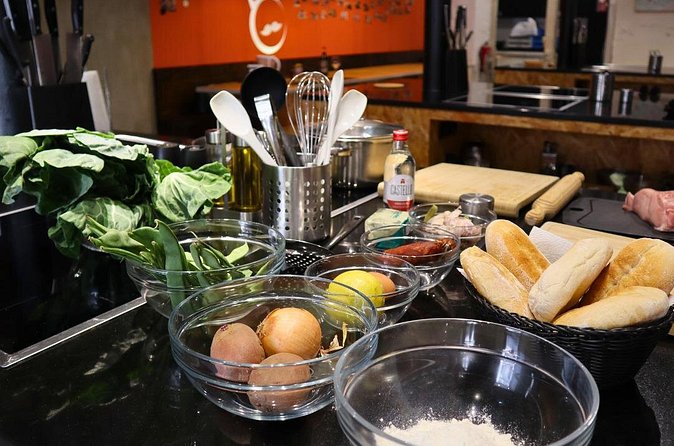
Peixinhos da horta means little fish of the garden, though the dish contains green beans rather than fish. Here, the vegetables are coated and fried in a style often compared with tempura. The class presents this Portuguese specialty as the dish that inspired the world-famous Japanese preparation.
That connection gives the menu an appealing twist. You are not only learning a snack. You are learning how a humble Portuguese vegetable dish relates to a cooking style known around the world. It is a good example of how food traditions travel and change.
The fritters also balance the meal. Caldo verde is a soup, bifana is a pork sandwich, and peixinhos da horta brings a crisp vegetable element. The three dishes feel different enough to keep the class interesting without making the session too ambitious.
For a home cook, this may be the most playful recipe of the three. It offers a way to serve green beans that feels less ordinary, and the instructors are said to focus on keeping the recipes simple enough for your own kitchen.
More Cooking Classes in the world:
- Street Food Cooking Class
★ 5.0 · 125 reviews - Eat Osaka: Street Food Cooking in an Authentic Kitchen!
★ 5.0 · 87 reviews - Syracuse: Sicilian Street Food Hands-On Cooking Class
★ 4.9 · 38 reviews - Lisbon: Portuguese street food cooking class with Drinks
★ 4.9 · 37 reviews
Drinks Make the Meal More Social
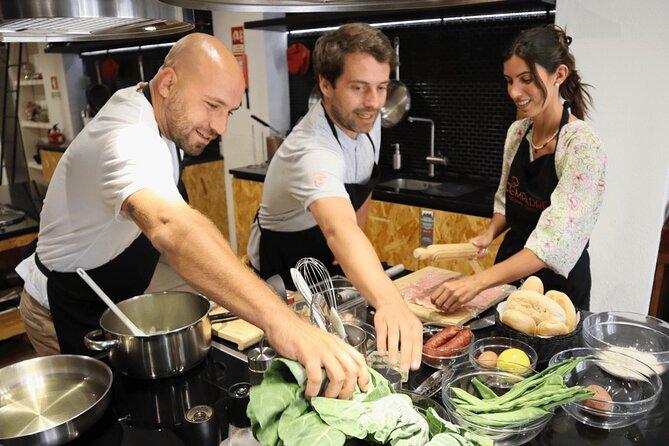
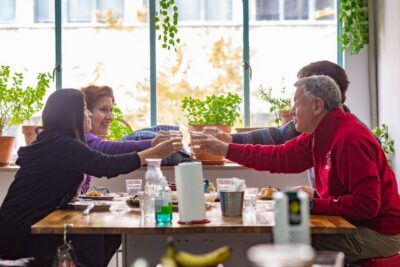
The class includes one glass of white or red wine and a taste of ginginha, Portugal’s cherry liqueur. Coffee or tea is also included. These drinks are not a full bar package, but they add a pleasant social touch to the cooking and meal.
Ginginha is especially useful as a small introduction to Portuguese drinking culture. A taste is enough to try it without committing to a full serving of a sweet liqueur. The wine gives you a natural pairing with the food and helps the class feel like a shared lunch rather than a technical workshop.
Soft drinks and bottled water are not included. You should plan around that, especially on a warm day or if you do not drink alcohol. The supplied details do not say that extra drinks are available for purchase, so do not assume the package covers them.
The Teaching Style and Group Size
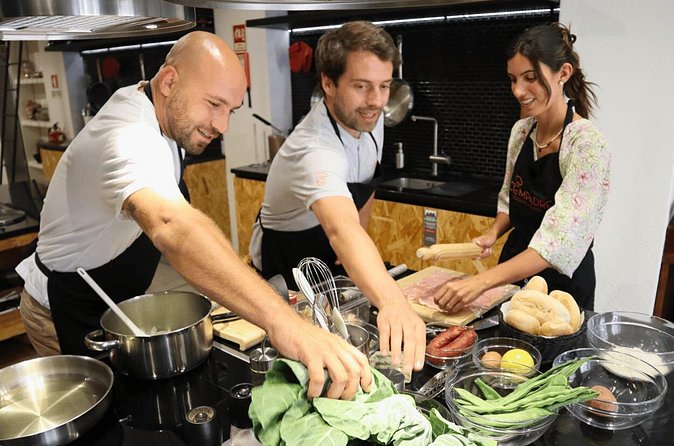
The class is built for interaction. A maximum of 12 people is small enough to encourage conversation, while still giving the school a lively group atmosphere. That balance works well for solo visitors who want to meet people, couples looking for a shared activity, and families with teenagers.
Families can be a particularly good fit. One detailed account describes a whole family, including teenagers, rating the cooking class as the best activity of a three-week trip. That suggests the food preparation is approachable enough to keep younger participants involved, rather than turning into a long talk aimed only at serious food lovers.
The instructors Marta and Anna receive strong praise for explaining both the recipes and the cultural meaning of the food. Their role is important because a class like this can easily become either too basic or too academic. The available feedback points to a friendly middle ground: useful cooking guidance, local context, and a relaxed mood.
The class is offered in English and Portuguese. You should select the language that suits you when booking. Confirmation is provided at booking, and the activity requires a minimum number of participants. If that minimum is not reached, you are offered another date or experience, or a full refund.
Price, Timing, and What the Package Is Worth
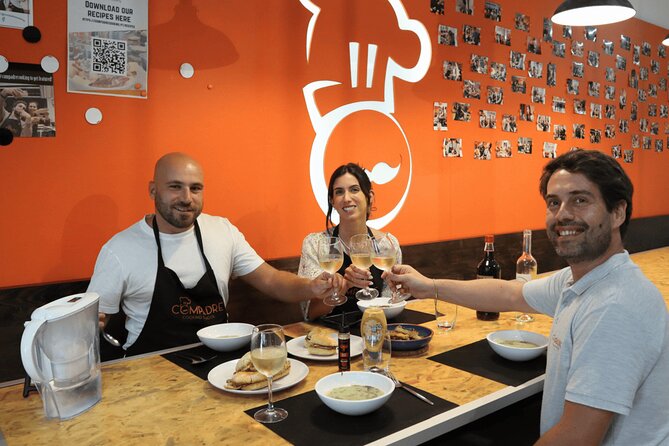
At $60.21 per person, the price includes about two hours of instruction, the food you prepare, a light lunch, coffee or tea, one glass of wine, and a taste of ginginha. The value is strongest if you count the class as both a meal and an activity.
You are not paying only for three small plates. You are paying for instruction, cultural explanation, a social setting, and recipes you can use after Lisbon. Compared with a standard lunch, the price is higher. Compared with a private cooking lesson, it offers a more affordable way to learn several local dishes.
The meal is described as light. That phrase matters. You should expect to eat the recipes made during the class, but not necessarily a long, multi-course feast. If you have a big appetite, consider this part of a full day of eating rather than your only substantial meal.
The class is usually booked about 19 days ahead. That is a useful planning clue, especially if your Lisbon dates are fixed. You can cancel for a full refund up to 24 hours before the start time. Changes or cancellations inside that 24-hour window are not accepted for a refund.
Getting to R. Heliodoro Salgado 14
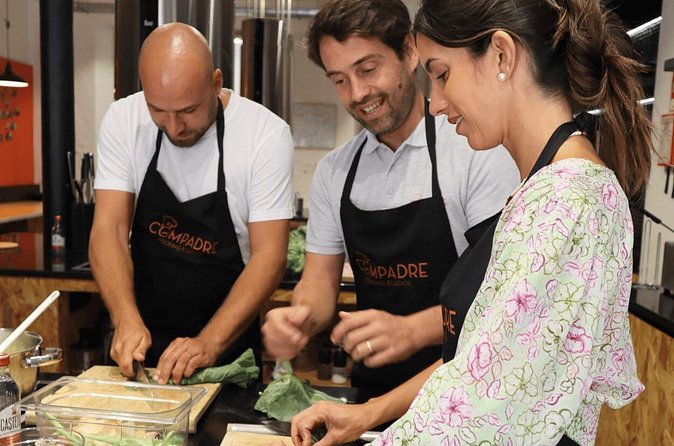
The meeting point is R. Heliodoro Salgado 14, 1170-374 Lisboa, Portugal. The location is near public transportation, which makes it easier to reach without arranging private transport.
The activity starts and ends at the same address. That is convenient if you are fitting the class between other plans, since you do not need to work out a second pickup point. Private transportation is not included, so you handle your own journey to the school.
Allow enough time to find the address and arrive ready for a prompt start. The supplied details do not give a walking route, exact nearest station, or instructions for late arrival. Check the meeting point carefully after booking rather than relying only on a general Lisbon map pin.
Who Will Enjoy This Lisbon Cooking Class
I would choose this for you if you want a food experience with something to take home beyond photographs. The recipes are familiar enough to enjoy immediately and simple enough to try again later.
It is also a good pick for a rainy afternoon. The short format gives you a useful indoor plan without taking over an entire day. The hands-on work keeps the activity moving, and the meal provides a clear finish.
Families with teenagers, couples, solo visitors, and small groups should all fit the format. You do not need advanced cooking skills, and the group size gives the class a more personal feel than a large school demonstration.
You may want to skip it if you are looking for a full restaurant lunch, a private lesson, or a tour that carries you around Lisbon. There is no private transportation, no city sightseeing built into the stated itinerary, and no promise of a large meal or unlimited drinks.
Should You Book It?
Yes, if you want to understand Lisbon through food and learn three recipes that make sense outside the classroom. The bifana, in particular, gives you a memorable taste of Portuguese street food, while caldo verde and peixinhos da horta broaden the meal with soup and vegetable fritters.
The perfect 5 rating from 11 published ratings matches the strongest features of the experience: friendly instruction, tasty food, cultural context, and a format that works for mixed ages. I would book ahead, especially since it is often reserved nearly three weeks in advance.
Book it as a relaxed cooking lunch, not as a grand feast or a sightseeing tour. Bring an appetite, arrange your own water if needed, and leave room for the wine and ginginha. For the right kind of food-minded visitor, this is a practical souvenir you can cook long after your Lisbon trip ends.
FAQ
How long does the Lisbon cooking class last?
The experience lasts approximately two hours.
Where does the cooking class begin?
It begins at R. Heliodoro Salgado 14, 1170-374 Lisboa, Portugal.
Does the class end at the same place?
Yes. The activity ends back at the meeting point.
What dishes will I prepare?
You will prepare caldo verde, bifana, and peixinhos da horta.
Is lunch included?
Yes. A light lunch made from the recipes prepared during the class is included.
Are drinks included?
Yes. The package includes coffee or tea, one glass of white or red wine, and a taste of ginginha. Soda and bottled water are not included.
Is the class suitable for beginners?
Yes. The hands-on format is suitable for all cooking skill levels.
What language is the class offered in?
The class is offered in English and Portuguese.
How many people can join the class?
The maximum group size is 12 people.
Just added around the world
- Zanzibar:Stone town Street food market walking tour,transfer★ 4.5 · 9 reviews
- Vienna Food Tour: Dishes, Wine, Street Food & Culture★ 4.7 · 12 reviews
- Verona: Street Food Tour and City Guided Sightseeing★ 4.9 · 11 reviews
- Xi’an: Gourmet & Street Food Tour★ 4.8 · 22 reviews
- Verona: City Highlights & Street Food Walking Tour★ 5.0 · 3 reviews
- Verona: Street Food and History Tour with Local Guide★ 4.7 · 6 reviews
- Xi’an Muslim Quarter Night Market Foodie Walking Tour★ 4.2 · 22 reviews
- Verona: street food walking tour near the historical center★ 5.0 · 2 reviews
Cooking Classes, compared.
Food Market Visit and Cooking Class with Wine
What we made of it →
Mexican Cooking Class with Food Market Visit in Mexico City
What we made of it →
Food Market Shopping and Cooking Workshop in A Coruña
What we made of it →
Eat Osaka: Street Food Cooking in an Authentic Kitchen!
What we made of it →
Sicilian Street Food Hands-On Cooking Class
What we made of it →Where this tour turns up