
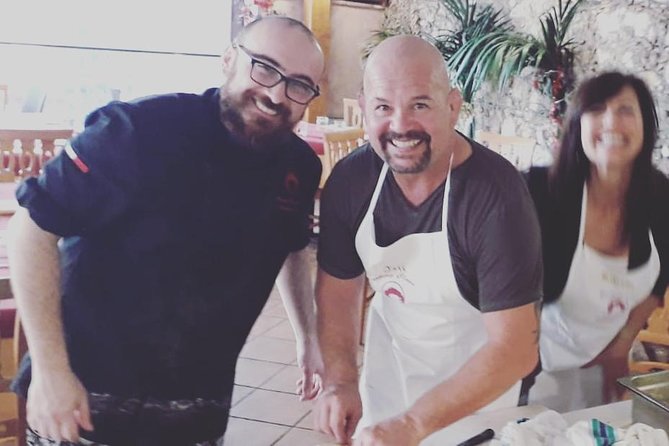
Review · SICILY
Sicilian Cooking Class in Taormina
Fresh food makes Sicily easier to understand. This Taormina cooking class combines a local market visit with hands-on preparation, so you learn not only what goes into Sicilian dishes but why fresh ingredients matter. I especially like the shared meal of four to six dishes and the chance to taste bread, cheese, salami, and Sicilian wine along the way. The main consideration is that much of the preparation happens in a restaurant setting, so you may do less cooking over a hot stove than you expect.
The class is also a friendly fit for solo visitors, couples, families, and people who rarely cook. I like that the staff gives you an embroidered apron and an official certificate, turning a three-hour lesson into a useful holiday memory. Just note that the group can be as large as 40 people, even though some sessions have been much smaller, around 10 or 11 participants.
Key points to know before you book
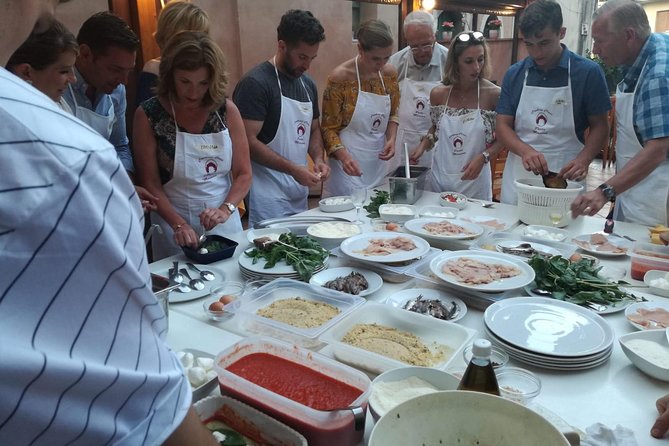
- The market visit comes first: You choose fresh vegetables and fish before preparing the meal.
- Bread and pasta are part of the work: The class includes homemade bread, pasta, and other Sicilian preparations.
- Lunch is the main reward: You eat roughly four to six dishes prepared by the group with the chef’s help.
- Wine is part of the lesson: Bread, cheese, salami, and Sicilian wines are served during the class.
- The group size can vary: The maximum is 40, but some sessions have been organized for only 10 or 11 people.
- Dietary needs need advance notice: Vegetarian and gluten-free options are available if requested when you book.
What this Taormina cooking class feels like
This is more than a recipe demonstration, but it is not a private chef lesson either. You work with the chef and restaurant staff, prepare food as part of a group, and then sit down to eat what you made. That mix makes the class social and relaxed.
The advertised duration is about three hours. The morning begins at 10:00 a.m. at Porta Messina Restaurant, with the meeting point listed at Largo Giove Serapide 4 in Taormina. A coffee break helps everyone settle in before the apron ceremony and the first kitchen tasks.
I would think of this as a practical introduction to Sicilian food rather than a formal culinary school session. You should expect clear instruction, shared preparation, conversation, and plenty to eat. You should not expect every minute to be spent cooking individually at a separate workstation.
The experience is offered in English, which makes it easy to follow if you do not speak Italian. Staff assistance is part of the class, and the chef helps guide the preparation from the first dough to the final dishes.
More Cooking Classes in Sicily:
- Street food and Cooking class in Syracuse
★ 4.5 · 11 reviews - Authentic Sicilian Street Food: Fried Pizza Catania Cooking Class
★ 4.5 · 5 reviews - Athens: Food Market Visit and Cooking Class with Wine
★ 4.9 · 1,087 reviews
Starting at Porta Messina Restaurant
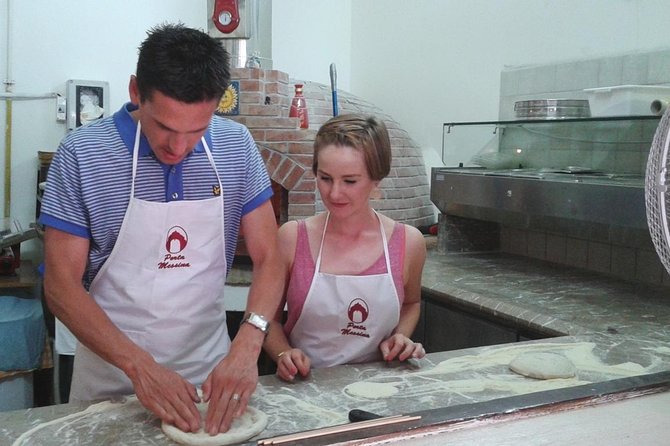
The class starts at Porta Messina Restaurant, a useful reference point in Taormina. You should arrive ready for a morning activity, not a quick tasting. The planned start is 10:00 a.m., and the activity returns to the same meeting point when it ends.
A coffee break comes early. This sounds minor, but it gives the group time to meet and gives the staff a chance to organize the cooking session. You then receive an apron embroidered with the restaurant’s logo. It is a small souvenir, but a more useful one than a paper handout.
The restaurant setting has both strengths and limits. You get access to staff, tables, sinks, and proper food preparation areas. The tradeoff is that the lesson may involve more preparation, shaping, mixing, and assembling than cooking directly over heat. One participant specifically found the class informative and fun but noted that it was not as hands-on over the burners as other cooking experiences.
That distinction matters. If you want to learn how to make pasta dough, bread, and Sicilian recipes with guidance, this should suit you. If your main goal is to practice sautéing, frying, or managing several pans at once, you may find the cooking portion less intense.
Choosing ingredients at the Taormina market
The market visit gives the class a strong local-food angle. Rather than beginning with ingredients already laid out, you go out to choose fresh produce and, in some sessions, fish. The market is where the class connects Sicilian cooking to the food actually sold and eaten in the area.
This part is especially helpful if you are curious about unfamiliar vegetables or seafood. Maurizio, named by one participant, explained the different vegetables and fish and then helped the group use them in the meal. The guide or chef may vary, but the market visit is designed to give context before the cooking starts.
I like this format because it gives you something to remember after the meal. You are not simply handed a plate and told it is traditional. You see some of the ingredients, learn what the chef selects, and then watch those choices become lunch.
The market stop is also a good reason to bring questions. Ask about the ingredients you could find outside Sicily, what needs to be especially fresh, and which substitutions might work at home. The supplied information confirms that recipes are provided, and several participants appreciated having them to recreate the food later.
Making bread, pasta, and Sicilian dishes
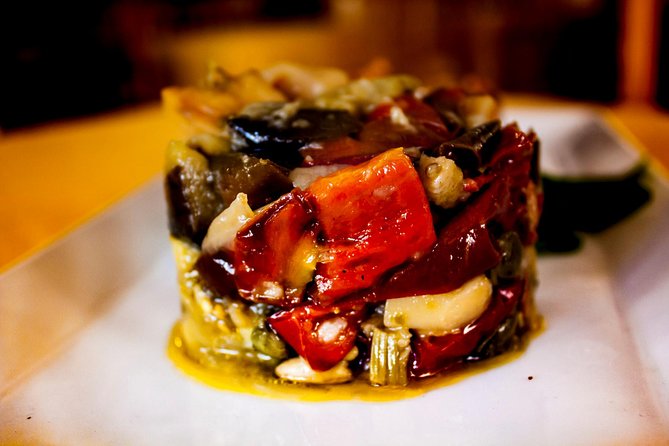
After the market and coffee break, the group begins preparing food. Homemade bread is one of the first featured tasks, followed by pasta and other preparations. The chef and staff help the group as you work through the recipes.
Bread is a smart starting point. It gives you a basic task that is easy to share and helps you get used to the pace of the kitchen. Once the bread is ready, the class includes a tasting of different breads, cheeses, and salami paired with Sicilian wines.
That tasting breaks up the work and makes the morning feel generous. You are not waiting until the final course to eat. It also gives you a chance to compare simple ingredients, which is often where Sicilian cooking makes its point. Good bread, good cheese, cured meat, and local wine need little decoration.
The class then moves to typical Sicilian dishes. The exact menu can vary, but the meal is described as roughly four to six dishes cooked by the participants with the chef’s help. The supplied sample menu lists homemade bread as the starter, followed by the bread, cheese, salami, and wine tasting.
Do not assume you will prepare every dish alone. This is group cooking, so tasks are shared. That can be a plus if you like conversation and teamwork. It can be a drawback if you want to personally handle every recipe from start to finish.
One useful detail is that the class is not limited to experienced cooks. The instruction is personalized, and participants with different cooking abilities can take part. If you are traveling alone, the group format also gives you an easy way to meet people without forcing a separate social activity into your schedule.
Same place, a different plate:
- Gastronomic Street Food Tour of Catania
★ 4.5 · 154 reviews - Palermo Street Food tour: art, history and ancient markets
★ 5.0 · 78 reviews - Palermo Street Food & Market Tour by Eating Europe
★ 5.0 · 72 reviews - Last minute Palermo Walking Tour and Street Food
★ 5.0 · 46 reviews
The lunch: four to six dishes made by the group
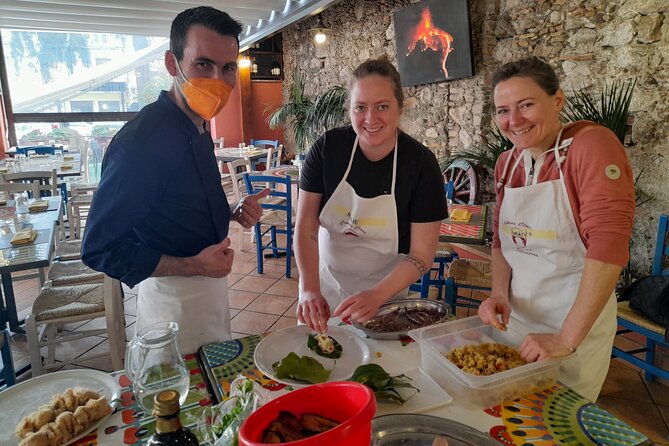
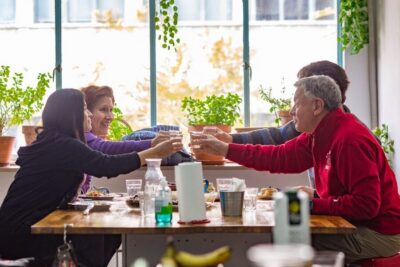
Lunch is the heart of the experience. After the preparation, you sit down to eat a meal made by the group, with help from the chef and restaurant staff. Four to six dishes is a substantial meal for a three-hour class, especially with the bread, cheese, salami, wine, and other drinks served along the way.
The food is not just a final reward. It shows you what the techniques are meant to produce. A recipe can seem abstract while you are kneading dough or preparing vegetables. The shared meal lets you taste the result and judge what worked.
Several details make the lunch appealing. The food is made during your session, the ingredients are chosen fresh, and the meal is paired with local Sicilian wine. Some sessions also have views of the sea while cooking and eating, adding a memorable setting to the meal.
Still, the class should not be treated as a restaurant lunch with a cooking demonstration attached. Your meal depends partly on the group’s work. That is the point, but it also means the pace and finish may vary depending on the people at your table.
I would book this for the pleasure of making and eating food together, not for a perfectly controlled tasting menu. The result is likely to feel more personal because you helped create it.
Group size, teaching style, and the human side
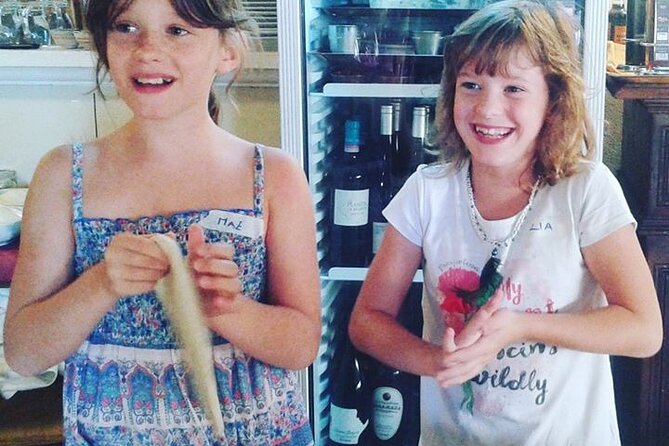
The maximum group size is 40, which is the biggest practical concern for anyone seeking close instruction. A group that large can make individual attention harder, particularly during the most active preparation.
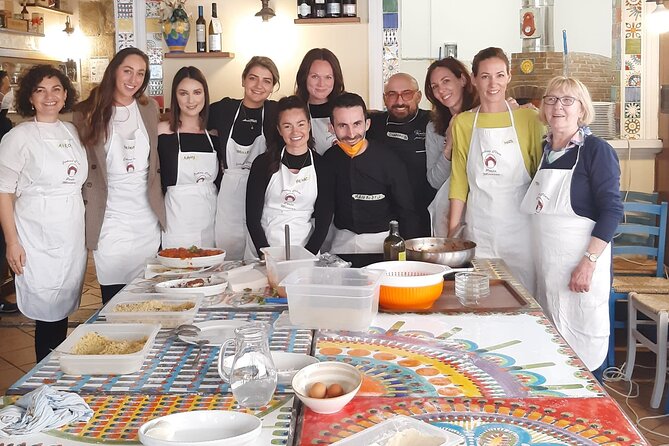
The actual sessions described in the supplied information have sometimes been much smaller, around 10 or 11 people, with two sinks serving a group of about 12. That sounds more comfortable for hands-on work, but you should not assume every date will be that intimate.
The staff receives strong praise for organization, clear instruction, and a cheerful atmosphere. Giovanni and his restaurant team are named in one account, while Maurizio is praised for the market and cooking guidance in another. Since staff assignments can differ, treat those names as possible hosts rather than a guarantee.
The tone seems to be one of the class’s strongest features. People describe good conversation, shared laughs, and a welcoming environment. That makes the class a good choice for a couple wanting a special activity, a solo visitor hoping to meet others, or a family looking for something more active than sightseeing.
The class is also suitable for a range of ages and cooking abilities. You do not need to arrive with professional skills. You do need to be willing to work as part of a group and accept that the chef may divide tasks among participants.
Price and what you receive for $127.03

At $127.03 per person, this is not a low-cost meal. The value comes from the number of parts packed into the morning: a market visit, coffee, the apron, bread and pasta preparation, ingredient tasting, Sicilian wine, help from the chef, a substantial lunch, and a certificate.
If you simply want to eat Sicilian food, a restaurant meal may cost less and require less time. You are paying here for instruction, participation, ingredients, drinks, and the social setting. The apron and certificate add modest souvenir value, while the recipes are the most useful take-home item because you can try the dishes again.
I think the price is fair for someone who values an activity as much as a meal. It is also a stronger deal if you would otherwise book a market tour and a separate food tasting. It is less attractive if you want a highly technical cooking lesson with individual stove time.
The class is booked an average of 30 days ahead, and the 98 percent recommendation rate with a 4.9 rating from 186 ratings points to steady demand. If your Taormina dates are fixed, booking early is sensible, especially during busy periods.
Dietary needs and practical details
You should advise the provider of dietary requirements when booking. Vegetarian and gluten-free options are available, but they need to be requested in advance so the kitchen can plan.
Service animals are allowed, and the meeting point is near public transportation. The activity begins and ends at the same meeting point, which keeps the morning simple to fit into a Taormina schedule.
A mobile ticket is provided, and the class is offered in English. Confirmation arrives at booking. Free cancellation is available if you cancel at least 24 hours before the start time. Cancellations or changes made inside that window are not refunded or accepted.
Bring an appetite and arrive ready to take part. Since the class includes food preparation, wine, and a full lunch, avoid scheduling another major meal immediately afterward.
Who should book this experience
I would recommend this class to:
- Couples looking for a shared Sicilian activity
- Solo visitors who enjoy meeting people through food
- Families with an interest in cooking
- Beginners who want clear help rather than a demanding technical lesson
- Food lovers who want market context before eating
- Visitors who would like recipes, an apron, and a certificate to take home
I would be more cautious if you want a small private class, intensive knife or stove training, or a fixed menu with every detail known in advance. The group can be large, and the exact dishes may depend on the fresh ingredients selected and the session’s plan.
Should you book the Taormina cooking class?
You should book it if you want a social, filling, and practical introduction to Sicilian food. The market visit, fresh ingredients, wine tasting, shared lunch, and friendly staff give the experience more substance than a simple cooking demonstration.
Go in knowing that this is restaurant-based group cooking. You may spend more time preparing and tasting than working over heat, and a large group could limit personal attention. For most people, though, the combination of food, scenery, local products, and recipes makes $127.03 reasonable.
If your dates are firm, reserve ahead. This is the kind of activity that works best when you arrive hungry, curious, and happy to share the kitchen.
FAQ
Where does the cooking class begin?
The class begins at Porta Messina Restaurant, at Largo Giove Serapide 4, 98039 Taormina, Italy.
What time does the class start?
The scheduled meeting time is 10:00 a.m.
How long does the experience last?
The cooking class lasts approximately three hours.
Is the class offered in English?
Yes, the experience is offered in English.
Does the class include a market visit?
Yes. You visit a local market to choose fresh ingredients, including vegetables and, in some sessions, fish.
What food will I prepare?
The class includes homemade bread, pasta, and typical Sicilian dishes. Lunch generally includes about four to six dishes prepared by participants with the chef’s help.
Are vegetarian and gluten-free options available?
Yes. Vegetarian and gluten-free options are available, but you should advise the provider of your needs when booking.
What happens if I need to cancel?
You can receive a full refund if you cancel at least 24 hours before the experience start time. Cancellations or changes made less than 24 hours before the start time are not accepted or refunded.
Just added around Sicily
- Taormina Cultural Walk and Street Food Experience★ 5.0 · 3 reviews
- Street food and Cooking class in Syracuse★ 4.5 · 11 reviews
- Tour of Villa Palagonia and Street Food itinerary in Bagheria★ 4.5 · 9 reviews
- The Complete Street Food Walking Tour – History & Tasty Bites in Palermo★ 4.0 · 4 reviews
- Sicilian Food tour and wine tasting in Ortigia in Syracuse★ 5.0 · 14 reviews
- Palermo Food Tour: Discover the typical Street Food with a Chef★ 5.0 · 29 reviews
- TOUR PALERMO ARABA “A dip in the historical markets and Street Food”★ 5.0 · 3 reviews
- Small-group Street food tour in Messina★ 5.0 · 6 reviews
Cooking Classes, compared.
Food Market Visit and Cooking Class with Wine
What we made of it →
Mexican Cooking Class with Food Market Visit in Mexico City
What we made of it →
Food Market Shopping and Cooking Workshop in A Coruña
What we made of it →
Eat Osaka: Street Food Cooking in an Authentic Kitchen!
What we made of it →
Sicilian Street Food Hands-On Cooking Class
What we made of it →
Lisbon: Portuguese street food cooking class with Drinks
What we made of it →Where this tour turns up