
Review · SINGAPORE
Singapore Street Food Join-In Tour
Singapore tastes best one stall at a time. This 3.5-hour Chinatown food walk combines seven to eight street foods and drinks with stops at major cultural sites, making it an easy way to connect Singapore’s food traditions with its Chinese, Indian, and colonial-era past. I especially like the mix of eating and short heritage walks, plus the small group limit of 15 people.
The tour also gets strong praise for friendly guiding, good food, and stories about local dishes. The main consideration is the fixed menu: pork, lard, and other ingredients may be present, and the food cannot be adjusted for personal preferences or dietary restrictions.
Key points to know before booking
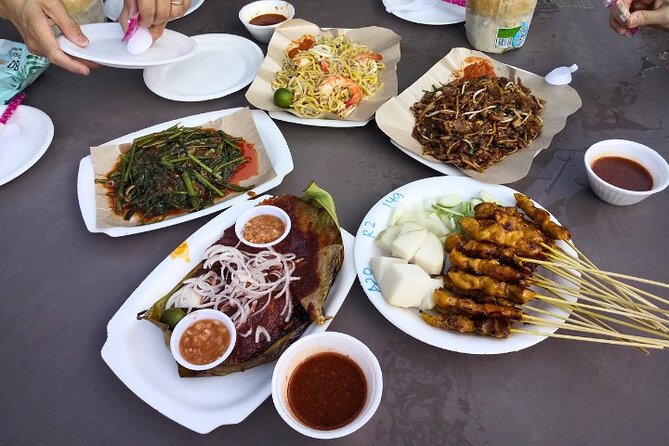
- Seven to eight tastings are included: Expect a set selection of Singaporean street foods and drinks, including hawker favorites such as laksa and satay.
- Hong Lim Market & Food Centre is the main food stop: About two hours are devoted to eating, with the exact food-centre arrangements subject to cleaning closures.
- Chinatown’s past is part of the meal: The route includes Sri Mariamman Temple, Pagoda Street, Sago Street, and the Buddha Tooth Relic Temple.
- The group is capped at 15 people: That is small enough for a more personal walking tour without the cost of a private guide.
- The tour begins at 9:00 a.m.: Meet at Chinatown MRT Station and finish at Chinatown Complex on Smith Street.
- Food restrictions need careful thought: The menu is set, alcohol is not included, and gratuities are separate.
Why this Singapore food tour works well
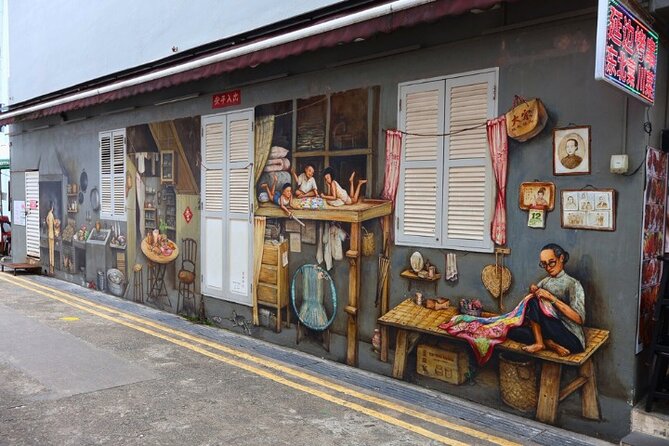
Singapore’s food culture makes more sense when you see where people eat it. This experience does not simply take you to a restaurant for a meal. It leads you through Chinatown’s hawker culture, temples, old streets, and immigrant history, then ties those sights to the food on your plate.
I like that the tour spends about two hours at a food centre. That gives the meal enough time to feel like the main event instead of a quick sample squeezed between sightseeing stops. You get the chance to try several dishes while your English-speaking licensed guide explains where they came from and why they matter.
The two remaining hours are not quite all walking time at the landmarks, since the listed stops add up to about 45 minutes. Still, the route creates a useful change of pace. You eat, walk, look around, and return to the city’s food culture with a clearer sense of place.
The group limit of 15 is another plus. It is not an intimate private tour, but it should feel more manageable than a large coach group. You can expect a shared experience, with enough structure to keep the morning moving.
More Street Food Tours in Singapore:
- Small Group: Michelin and Local Hawker Food Tour with 9 tastings
★ 5.0 · 1,890 reviews - Small Group: Singapore Street Food & Night Tour with 9 tastings
★ 5.0 · 1,240 reviews - Singapore: UNESCO Street Food & Cultural Experience
★ 5.0 · 524 reviews
Meeting at Chinatown MRT at 9:00 a.m.
The tour starts at Chinatown MRT Station, at 91 Upper Cross Street. Starting at an MRT station is practical, especially if you are staying elsewhere in Singapore. The meeting point is near public transportation, so you do not need to arrange a private transfer just to reach the group.
You should arrive ready to walk and eat soon after the 9:00 a.m. start. The tour ends at Chinatown Complex, 335 Smith Street, which gives you a useful place to continue your own food exploration or make your way to another part of the city.
The mobile ticket is convenient. Confirmation is provided at booking, so you can keep the reservation on your phone rather than dealing with printed paperwork.
The early start is worth noting. Singapore can be hot and humid, and a morning food walk is generally easier than the same route later in the day. The timing also suits visitors who want to keep the afternoon free for museums, shopping, or another neighborhood.
Hong Lim Market & Food Centre: the main tasting stop
Hong Lim Market & Food Centre is the heart of the experience. You spend around two hours at a food centre, tasting the set selection of local foods and drinks while learning about the stalls and dishes from your guide.
This is the kind of setting where Singapore’s food culture feels most direct. Hawker centres bring many independent food stalls under one roof, making it possible to sample several traditions without spending the morning traveling between restaurants.
The tour includes at least seven or eight types of street food and drinks. The exact menu is set, but the supplied food examples include laksa and satay. These are useful introductions to Singaporean flavor: laksa is a spicy noodle dish with a coconut-based character, while satay is grilled meat served with a peanut sauce. The menu may include other local favorites as well.
I like the built-in variety here. A first-time visitor may recognize the names of Singaporean dishes but have little idea how they fit into daily life. Eating several items in one food centre helps you compare textures, spices, sauces, and cooking styles in a single sitting.
The guide also explains the stories behind the dishes and the hawker stalls that have served local families over generations. That context adds value to the food. You are not only asking what something tastes like. You are learning why it is eaten, how it became part of Singapore’s identity, and how hawker cooking connects different communities.
There is one important practical catch. Food-centre arrangements can change if the National Environment Agency closes a centre for cleaning. Because of that, the exact location or food sequence may vary. You should view the food-centre portion as fixed in purpose, but not assume every detail will remain identical on every date.
Sri Mariamman Temple in Chinatown
Sri Mariamman Temple receives about 10 minutes on the walking route. Founded in 1827 by Naraina Pillai, an early South Indian pioneer, it is Singapore’s oldest Hindu temple.
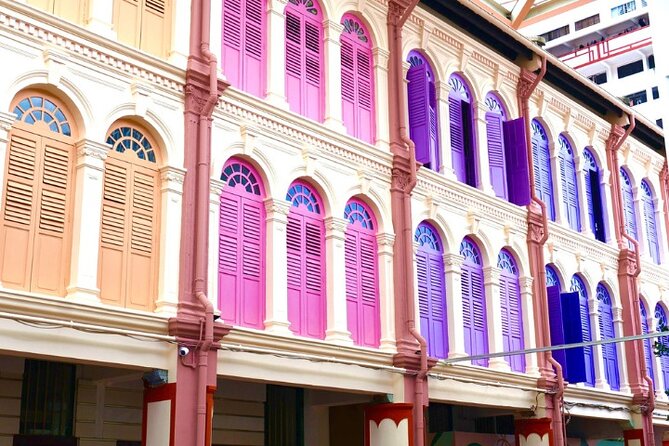
The temple adds an important layer to the Chinatown route. The neighborhood is strongly associated with Chinese heritage, yet this landmark shows how several communities shaped the area. Its Dravidian architecture and colorful exterior provide a sharp visual contrast to the surrounding streets.
Ten minutes is enough for a short exterior look and a compact introduction, but not enough for a full temple visit. If you want to explore religious details at a slow pace, you may need to return on your own after the tour. The short stop works best as part of a wider story rather than as a stand-alone attraction.
I find this pairing of food and architecture useful. Singapore’s cuisine is often described through separate cultural categories, but the route shows those communities existing close together in the same urban district.
Same place, a different plate:
- Small-Group Food Tour With Hawker Center: Eat Like A Local
★ 5.0 · 420 reviews - Singapore: Guided Street Food Tour at Night
★ 4.5 · 393 reviews - Singapore: Local Hawker Food Tour with Tastings
★ 4.7 · 181 reviews - Singapore Street Food Tour with a Local: A Feast for Foodies 100% Personalized
★ 5.0 · 169 reviews
Pagoda Street and the old working Chinatown
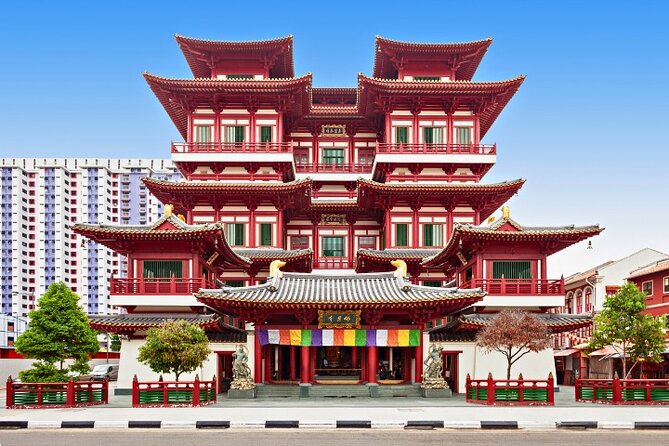
Pagoda Street is another short stop, lasting about 10 minutes. The street is associated with former coolie houses and opium dens, places connected to the Chinese laborers who arrived in Singapore during the 19th century.
That past gives the street more weight than its present-day appearance might suggest. A quick walk here can help you picture Chinatown as a working immigrant district, not only as a shopping and sightseeing area.
The tour does not promise a long museum-style presentation, so expect a concise explanation from the guide. You will get context about the buildings and the people who once lived or worked there, then continue along the route.
This is one reason I prefer the tour’s format to a food-only outing. The dishes become part of a larger account of migration, labor, religion, and city life. You get enough history to make the streets more meaningful without spending the entire morning indoors.
Sago Street and the Street of the Dead
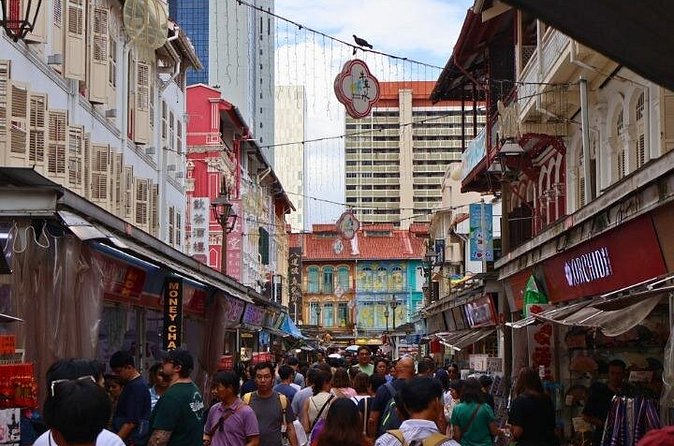
Sago Street has one of the route’s most striking stories. It was once called the Street of the Dead because impoverished Chinese migrants went to late-19th-century death houses there to spend their final days. Much of the original lane was later cleared.
This is not a cheerful sightseeing stop, but it is an important one. It shows the harsh side of early migrant life and reminds you that Chinatown’s past included poverty, illness, and isolation as well as trade and community.
The stop lasts about 10 minutes. That is enough to hear the basic story and understand the location, but it will not provide a full historical study. I would treat it as a short piece of context that gives the food walk more depth.
The contrast with the cheerful energy of a hawker centre is useful. Singapore’s food culture did not appear in a vacuum. It grew alongside crowded housing, demanding work, migration, and the need for inexpensive meals.
Buddha Tooth Relic Temple and Museum
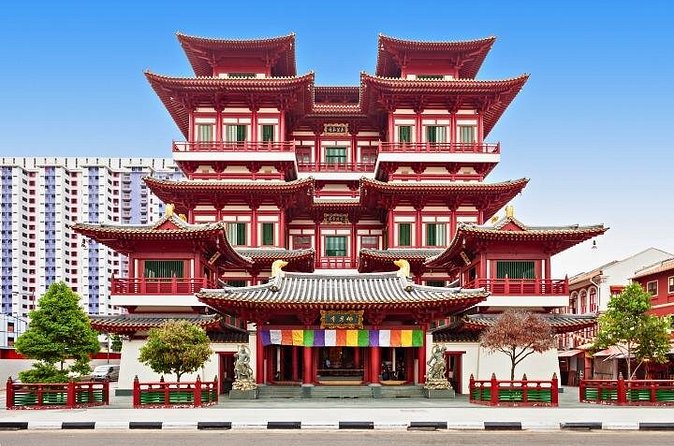
The Buddha Tooth Relic Temple and Museum receives about 15 minutes. Built in 2007 in a Tang dynasty-inspired style, it was created to enshrine what is believed to be a canine tooth relic of the Buddha.
Its scale and design make it one of the route’s easiest landmarks to recognize. The stop also shifts the focus from Hindu heritage to Chinese Buddhist tradition, reinforcing the cultural variety packed into Chinatown.
Fifteen minutes allows for a brief visit and explanation, but you should not expect to see every part of the complex in detail. If the temple interests you, save its fuller exploration for another visit. On this tour, it functions as a strong visual and cultural stop between food-centre time and the final destination.
The temple also helps explain why Chinatown is more than a collection of old façades. It remains a place where religious buildings, food businesses, and heritage streets sit close together.
How much food do you really get for $94.19?
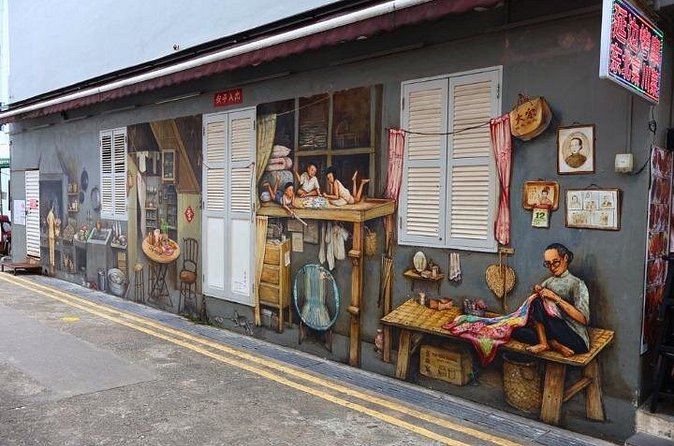
The price is $94.19 per person. That is not the cheapest way to eat at a Singapore hawker centre, where you can choose individual dishes for yourself at a lower total cost.
The value comes from the guide, the planned tastings, and the cultural route. You are paying for a 3.5-hour walking experience with at least seven or eight food and drink samples, plus explanations of the dishes and stops at four Chinatown landmarks.
For a first visit, that structure can save time and guesswork. You do not have to research which stalls to try, worry about ordering unfamiliar food, or build your own route through Chinatown. The guide provides a clear introduction, and the group setting lets you sample more than you might choose alone.
The value is weaker if you already know Singapore’s hawker centres well or prefer to order only what suits your diet. Since the food is fixed and alcohol is excluded, this is not a flexible tasting tour. It is a guided introduction with a set menu.
Tips are not included, and anything outside the listed inclusions is your responsibility. Plan for gratuity if you feel the guide provided good service, and do not assume extra drinks or personal purchases are covered.
Food restrictions and the fixed menu
This is the most important booking issue. The dishes cannot be adjusted for personal preferences or dietary restrictions, and some may contain pork or lard.
If you avoid pork, lard, or other ingredients for religious, medical, or personal reasons, contact the provider before booking. The supplied details do not promise substitutions, vegetarian alternatives, allergy accommodations, or a modified menu.
Alcoholic drinks are also not included. That is a minor issue for most people on a morning food walk, but it is still useful to know what the price covers.
The fixed menu has one advantage: it lets the guide manage the timing and ensures the group receives a planned range of foods. The tradeoff is less control for you. Come hungry, but come prepared to eat only what fits your needs.
Who will enjoy this 3.5-hour Chinatown walk?
I would recommend this experience most strongly to first-time visitors who want a guided introduction to Singaporean food and Chinatown. It suits people who enjoy trying several small portions, listening to local stories, and walking between stops rather than sitting in one restaurant.
It is also a good fit for families with children aged five and above, provided the set food menu works for them. The relatively short landmark stops may help younger participants, since the morning alternates between eating and walking.
You will likely get the most from it if you are comfortable with shared group pacing. The group can include up to 15 people, so the route will not be tailored entirely to your speed or interests.
I would be cautious about booking if you have strict dietary restrictions, dislike guided tours, or want to choose every dish yourself. The food plan is not adjustable, and the experience is designed around the guide’s route and selections.
The two existing ratings are both perfect, with particular praise for the friendly guide, local food knowledge, hidden stall selections, and stories connecting dishes to the city. The strongest theme is simple: people enjoyed the combination of delicious food and cultural context. That is the tour’s real selling point.
Should you book the Singapore Street Food Join-In Tour?
Book it if you want an organized first taste of Singapore’s hawker culture, with enough history to explain what you are seeing. The $94.19 price is reasonable for a guided 3.5-hour route with seven to eight tastings and a maximum group of 15, though it is more expensive than eating independently.
Before paying, check the fixed menu issue carefully. If pork or lard could be a problem, this may not be the right tour unless Haloo Tours confirms suitable options. If the menu works for you, arrive hungry at Chinatown MRT, expect plenty of walking, and use the afternoon to revisit any food or temple that caught your attention.
Free cancellation is available up to 24 hours before the 9:00 a.m. start time. Changes or cancellations inside that window are not accepted for a refund, so keep the deadline in mind when your plans are still shifting.
FAQ
Where does the tour start?
It starts at Chinatown MRT Station, DT19, at 91 Upper Cross Street, Singapore 058362.
What time does the tour begin?
The tour begins at 9:00 a.m.
Where does the tour end?
It ends at Chinatown Complex, 335 Smith Street, Singapore 050335.
How long does the experience last?
The walking tour lasts approximately 3 hours and 30 minutes.
How many foods and drinks are included?
At least seven to eight types of street foods and drinks are included.
Can the food be changed for dietary restrictions?
No. The food items are set and cannot be adjusted for personal preferences or dietary restrictions. Some dishes may contain pork or lard.
What is the cancellation policy?
You can cancel at least 24 hours before the experience starts for a full refund. Cancellations or changes made less than 24 hours before the start time are not accepted for a refund.
Just added around Singapore
- UNESCO Hawker Culture: Chinatown Food Tasting Tour★ 4.9 · 43 reviews
- UNESCO Hawker Culture: Chinatown Food Tasting Tour★ 5.0 · 47 reviews
- Singapore Street Food and Ethnic Quarters Kick Scooter Tour★ 5.0 · 8 reviews
- Signature Urban Night Tour: Sunset Street Food in Singapore★ 5.0 · 4 reviews
- Singapore Chinatown Local Hawker Food Tour★ 5.0 · 2 reviews
- Singapore: Little India Hawker Food Tasting Tour★ 5.0 · 21 reviews
- Singapore Nightlife: Street Food, Night Views and Drinks★ 5.0 · 19 reviews
- Michelin Premium Food Tour with Hawker Centre & Chinatown Tour★ 4.5 · 50 reviews
Street Food Tours, compared.
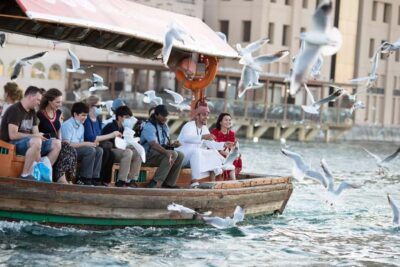
Old Town, Creek, Museums, Souks, & Street Food Tour
What we made of it →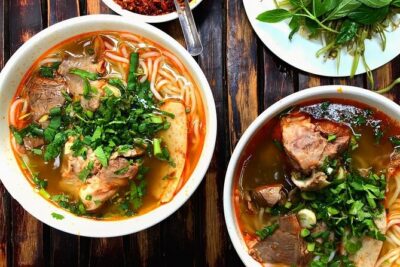
Ho Chi Minh City Street Food Tour & Sightseeing By Motorbike
What we made of it →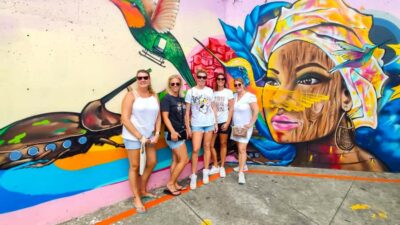
Comuna 13 Graffiti Tour, Cable Car & Street Food
What we made of it →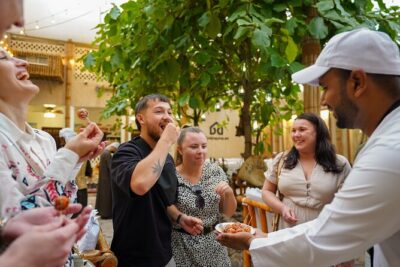
Old Town, Souks, Street Food, Guided Tour & Abra Ride
What we made of it →
Small Group Hanoi Street Food Tour with a Real Foodie
What we made of it →
Saigon By Night and Street Food By Motorbike | Opt: Ao Dai Riders
What we made of it →Where this tour turns up