Review · SINGAPORE
UNESCO Hawker Culture: Chinatown Food Tasting Tour
Come hungry, leave better oriented. This three-hour walk through Singapore’s Chinatown combines 9 to 10 hawker dishes with temples, murals, shophouses, and stories about the city’s Chinese, Indian, and Malay communities. It gives you a useful first look at Singapore’s food culture without asking you to solve the hawker-centre puzzle alone.
I especially like the smart mix of eating and walking, plus the chance to try dishes you might skip when faced with a long menu. The guides also add real local color. Jeanette, Ronnie, Liang, Kelvin, Silvia, and others have been praised for making the tour friendly and personal. The main drawback is that the pace and food selection can vary, and three hours is a short window for several major stops.
What makes this Chinatown food walk worth considering
- Up to 10 local tastes: Expect a handpicked range of hawker dishes and drinks, including Hainanese chicken rice and a traditional coffeehouse drink.
- Food with context: Your guide explains how Chinese, Indian, and Malay cooking shaped Singapore’s dining culture.
- Six distinct Chinatown stops: The route links Sri Mariamman Temple, Ann Siang Hill, Maxwell Food Centre, the Buddha Tooth Relic Temple, Chinatown Complex, and Smith Street.
- Small-group setting: The maximum group size is 10 people, with a private upgrade available for more flexible timing.
- Good guide-based orientation: Guides such as Jeanette and Ronnie have been praised for answering questions about Singapore’s history, economy, government, and daily life.
- A practical first-day activity: The walk helps you get your bearings while giving you a list of foods and places to revisit later.
Why Singapore hawker food needs a guide
Singapore’s hawker centres are easy to enter and surprisingly hard to navigate. A single hall can contain dozens of stalls, each with its own specialty, queue, and local following. If you do not know what to order, you can spend your whole meal making safe choices.
This tour removes much of that guesswork. You taste several small portions rather than committing to one large meal, and the guide chooses the food for the group. That matters most if you are new to Singapore, traveling solo, or eating with children who may not want a full serving of an unfamiliar dish.
The food also has a larger cultural story. Singapore’s hawker culture brings together Chinese, Malay, Indian, and other culinary traditions in an everyday setting. UNESCO recognizes this food culture as part of the intangible heritage of humanity, but the real value is not the label. It is the chance to see how ordinary meals reflect migration, trade, family habits, and the city’s mixed population.
Do not expect a restaurant tasting menu. This is hawker food, served in public food centres, with the noise, movement, and practical feel that go with them. That is precisely the point.
More Night Market Food Tours in Singapore
- Small Group: Michelin and Local Hawker Food Tour with 9 tastings
★ 5.0 · 1,890 reviews - Small-Group Food Tour With Hawker Center: Eat Like A Local
★ 5.0 · 420 reviews - Singapore: Local Hawker Food Tour with Tastings
★ 4.7 · 181 reviews
Sri Mariamman Temple begins the cultural story
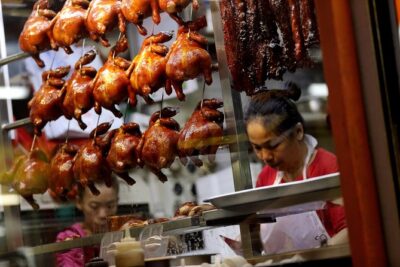
The tour starts at Bee Cheng Hiang on Pagoda Street, then moves to Sri Mariamman Temple. Founded in 1827 by Naraina Pillai, an important figure in Singapore’s Indian community, the temple is Singapore’s oldest Hindu temple and a National Monument.
You get about 10 minutes here, so this is an introduction rather than a full temple visit. The short stop helps explain that Chinatown is not only Chinese in character. Indian religious and commercial life has long been part of the district, and the temple makes that mix visible almost immediately.
Dress and behavior still matter at any active place of worship. The tour data does not specify a dress code or whether you enter the interior on every departure, so treat this as a guided exterior and cultural stop unless your guide says otherwise.
Ann Siang Hill reveals the older Chinatown
From the temple, the walk continues to Ann Siang Hill Park for roughly 15 minutes. This area once served as a business centre for Chinese immigrants, and its restored shophouses preserve much of the district’s older appearance.
This is one of the better places to slow down and look above street level. Singapore’s shophouses combine narrow frontages, decorative details, and practical layouts shaped by the city’s trading past. Your guide can connect the architecture to the people who lived and worked here, rather than leaving you with a quick photo stop.
The hill also adds a little physical effort. The tour is not a difficult hike, but you should expect steady walking between food and heritage stops. Comfortable shoes will help, especially in Singapore’s warm weather.
Maxwell Food Centre is the main eating stop
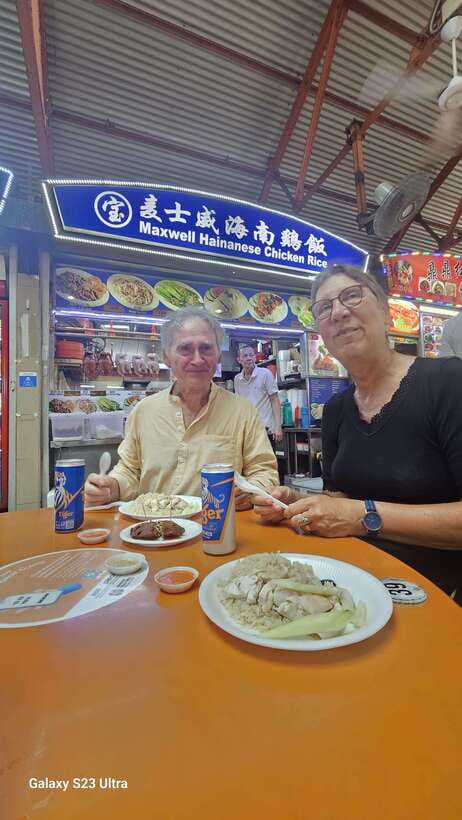
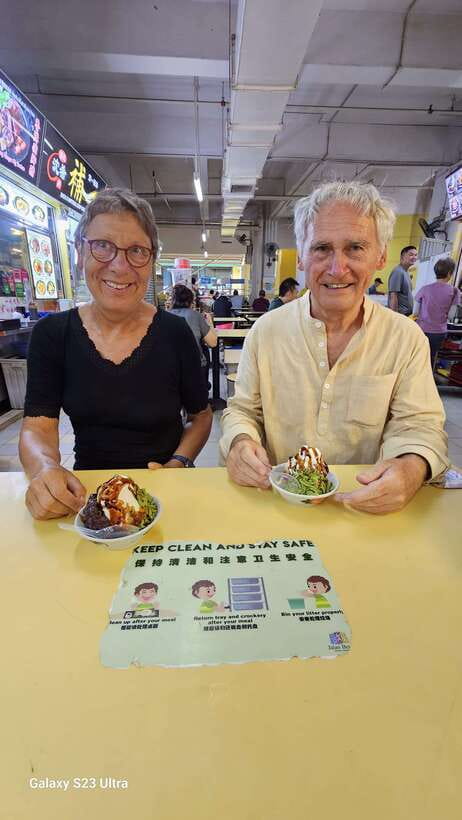
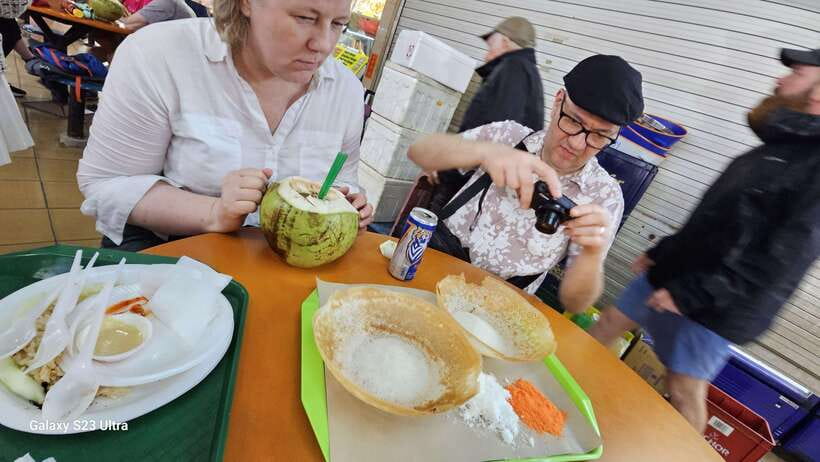
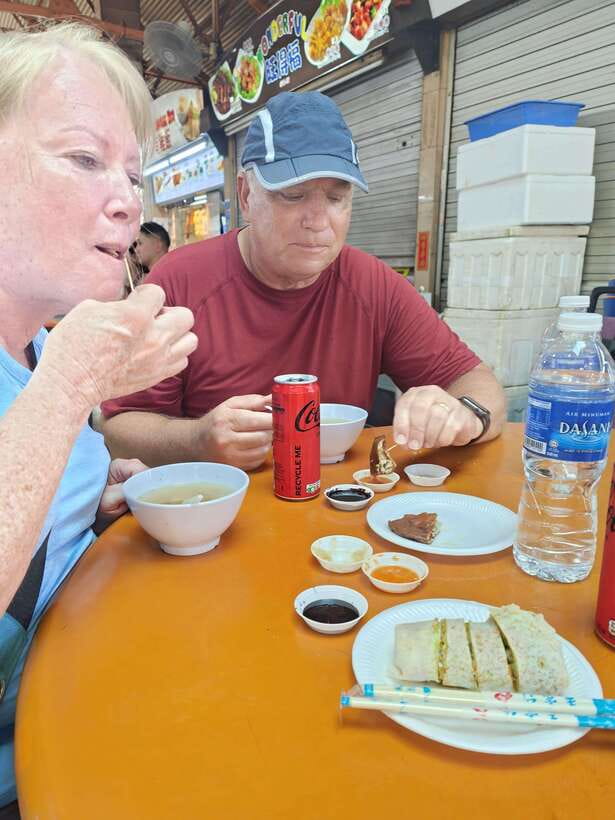
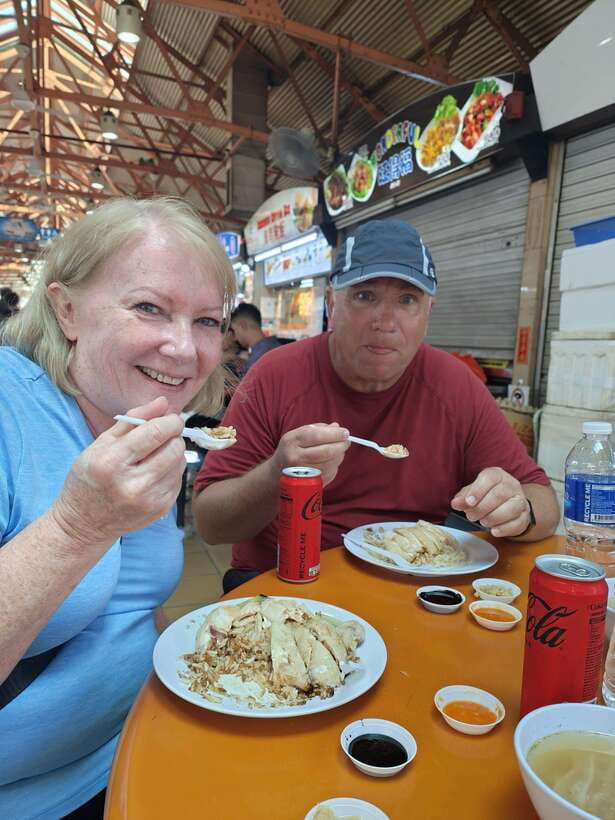
The biggest food stop is Maxwell Food Centre, where you spend about 35 minutes. This is where the tour’s food promise becomes most useful. You may taste Singaporean favorites such as Hainanese chicken rice, Fuzhou pancakes, and other hawker dishes selected by the guide.
Chicken rice is the key introduction. It looks simple, but its appeal comes from the balance of rice, chicken, sauce, and seasoning. A guide can point out what makes the dish different from a generic rice-and-chicken meal and help you understand why it is so closely tied to Singapore’s food identity.
The tour includes 9 to 10 handpicked foods and drinks across famous hawker centres. Some may come from stalls associated with Michelin recognition, including Bib Gourmand-level food. The exact dishes are not fixed in the supplied details, so do not book expecting a guaranteed menu beyond the stated chicken rice and examples.
Thirty-five minutes is enough for sampling, but not for a long, relaxed meal. That is a fair trade if your goal is variety. If you prefer to order one dish and eat slowly, you may find this part rushed.
The food is also shared in the social spirit of a hawker centre. You are tasting several things as part of a group, not receiving a private plate at every stop. Food preferences, allergies, and dietary restrictions are not detailed, so contact the operator before booking if those issues are important to you.
More Chinatown Food Tours in Singapore:
- Singapore: Chinatown Hawker Food Tasting Tour
★ 5.0 · 96 reviews - Michelin Premium Food Tour with Hawker Centre & Chinatown Tour
★ 4.5 · 50 reviews - UNESCO Hawker Culture: Chinatown Food Tasting Tour
★ 4.9 · 43 reviews - Singapore: Chinatown Hawker Guided 8-Dish Tasting Tour
★ 4.9 · 41 reviews
Buddha Tooth Relic Temple adds a quiet pause
The Buddha Tooth Relic Temple and Museum takes about 10 minutes. Its Tang-style design, ornate interior, Buddhist art, and historical displays offer a change of mood after the food centre.
The temple is said to house a tooth relic, and the building tells stories connected with Buddhist history and practice. The brief visit works well because it gives the tour a calm cultural pause without turning the afternoon into a long museum visit.
Again, the timing is compact. You are getting a guided introduction, not an exhaustive museum tour. If the temple is especially important to you, plan to return independently when you have more time.
Chinatown Complex shows the district’s everyday side
The route then reaches Chinatown Complex for about 20 minutes. Its architecture includes shophouses decorated with Chinese-style tile ornaments and motifs. The site also connects to the older tradition of street hawkers, who once sold food directly along the roads.
This is a useful contrast with the more polished heritage sights. You see how preserved architecture and daily food life sit next to one another. Singapore’s Chinatown is not a frozen historical display. It is a working district, and the tour does a good job of linking its past to the places people still eat today.
The end point is Chinatown Complex at 335 Smith Street, near Maxwell Station. That location is handy if you want to continue eating, explore nearby streets, or return to your hotel by MRT.
Smith Street finishes with murals and coffee
The final stretch lasts about 30 minutes and takes you through Smith Street and nearby alleys. Look for murals by local artist Yip Yew Chong, whose scenes show Chinese heritage and family life in a direct, storybook style.
This is also the part aimed at fans of Crazy Rich Asians. You can recreate scenes and photograph the shophouses, but the better reason to stop is the visual record of ordinary life. The murals give the area a human scale that grand buildings cannot.
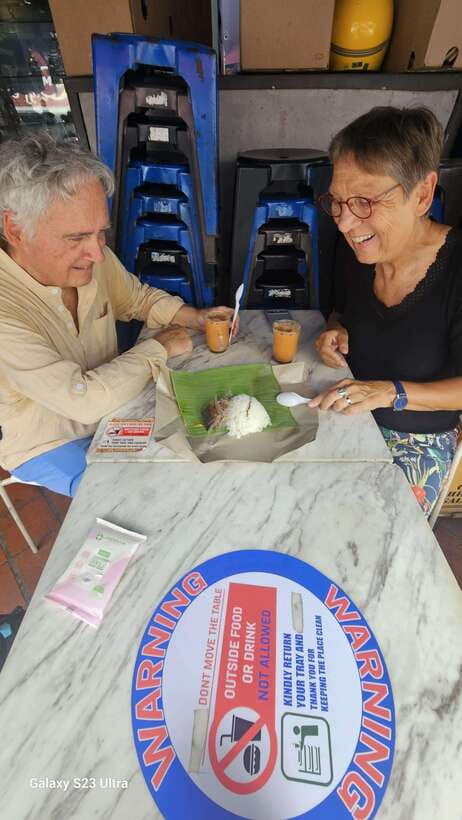
The tour ends with a rest stop at a traditional Singapore coffeehouse. You sit down for a hot drink and get a taste of the old coffeehouse tradition, including the aroma of freshly roasted and ground beans. After a series of tastings and walks, this pause is well placed.
The coffeehouse stop may be the most comfortable moment of the tour, especially if Singapore’s heat has caught up with you. It also gives your guide time to answer questions and tie together the food, migration, and neighborhood stories.
Guides make the difference
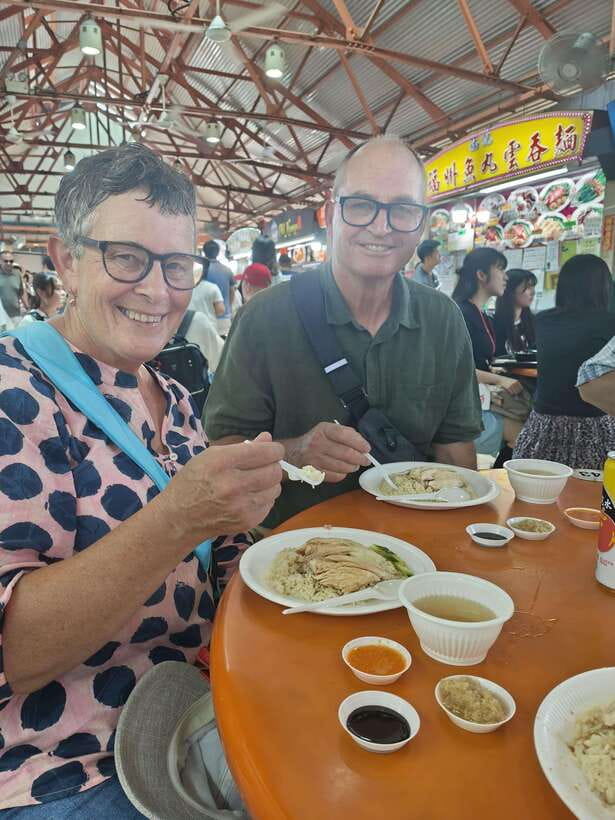
The strongest part of this experience is the guide-led storytelling. Jeanette is repeatedly praised for making solo participants feel comfortable and for helping them try foods they would not have ordered alone. She is also described as warm, clear, and good at connecting food with Singapore’s past and present.
Ronnie has been praised for his humor and background on Singapore and its food. One account highlights his care with a disabled companion, though the tour information only confirms that most people can participate. Do not assume every mobility need can be met without checking first.
Liang brings family connections into his storytelling, including stories about his grandparents and the Chinese immigrant experience. Kelvin, Kelvyn, Silvia, Pauline, Edwin, and Ron are also named in positive feedback for their explanations, friendly manner, and ability to adapt to group interests.
Guide quality can never be guaranteed from one departure to the next, but the pattern here is encouraging. You are not simply being led from stall to stall. The best guides use the food as a way into questions about culture, government, economics, religion, and family life.
Is $88.81 a fair price?
At $88.81 per person, this is not the cheapest way to eat in Chinatown. You could spend far less by choosing a few dishes yourself.
The value comes from the combination. The fee includes a licensed local guide for about three hours, 9 to 10 selected foods at famous hawker centres or Michelin-recognized stalls, and a bottle of mineral water. You are paying for access to local judgment, explanation, and a route that combines food with six cultural stops.
I would consider it good value if you are visiting Singapore for the first time, want to sample broadly, or feel unsure about hawker-centre etiquette and menus. It is less compelling if you already know Chinatown well, are comfortable ordering on your own, or mainly want one unhurried meal.
Group discounts may help reduce the cost, and a private option is available if you prefer flexible timing and a more personal format. The standard tour has a maximum of 10 people, which keeps it smaller than a large coach outing.
Who should book this tour?
This experience suits you if you:
- Want a first taste of Singapore’s food culture without planning every dish.
- Enjoy walking tours that mix architecture, religion, history, and food.
- Are traveling solo and would like an easy social setting.
- Have children who may enjoy trying small portions instead of ordering full meals.
- Want a guide to explain dishes and customs as you go.
- Need a useful introduction to Chinatown early in your visit.
It may not suit you if you want a fixed menu, a slow restaurant meal, or a tour focused only on food. The route is compact and active, and the food choices can change.
The tour requires a minimum number of participants. If that number is not met, the operator offers another date or experience, or a full refund. Standard cancellation is free up to 24 hours before the start time. Cancel later and the payment is not refunded.
My verdict: book it for orientation and variety
I would book this tour near the start of a Singapore visit. The food gives you immediate pleasure, while the temples, shophouses, murals, and guide stories help you understand where you are.
The strongest reason to go is not a single dish. It is the combination of many small tastes with a clear sense of place. Book it if you want someone to take you past the obvious choices and explain why Chinatown looks, eats, and feels the way it does. Skip it if you prefer to explore independently and have the patience to make your own hawker discoveries.
FAQ
How long is the UNESCO Hawker Culture Chinatown food tour?
The tour lasts approximately three hours.
How many foods and drinks are included?
The tour includes 9 to 10 handpicked foods at famous hawker centres or dishes associated with Michelin recognition, along with drinks. Hainanese chicken rice is among the featured examples.
Where does the tour start?
The meeting point is Bee Cheng Hiang at 69 Pagoda Street, Singapore 059228.
Where does the tour end?
The tour ends at Chinatown Complex, 335 Smith Street, Singapore 050335. The nearest MRT station to the end point is Maxwell Station.
How many people can join the group?
The tour has a maximum of 10 participants. A private tour option is also available.
Can I cancel for a full refund?
Yes. You can cancel at least 24 hours before the experience start time for a full refund. Cancellations or changes made less than 24 hours before the start time are not refunded or accepted.
Just added around Singapore
- UNESCO Hawker Culture: Chinatown Food Tasting Tour★ 4.9 · 43 reviews
- Singapore Street Food Join-In Tour★ 5.0 · 2 reviews
- Singapore Street Food and Ethnic Quarters Kick Scooter Tour★ 5.0 · 8 reviews
- Signature Urban Night Tour: Sunset Street Food in Singapore★ 5.0 · 4 reviews
- Singapore Chinatown Local Hawker Food Tour★ 5.0 · 2 reviews
- Singapore: Little India Hawker Food Tasting Tour★ 5.0 · 21 reviews
- Singapore Nightlife: Street Food, Night Views and Drinks★ 5.0 · 19 reviews
- Best Ever Street Foods with Local Foodie – PRIVATE TOUR★ 5.0 · 4 reviews
Chinatown Food Tours, compared.
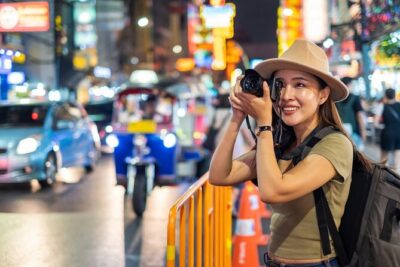
Bangkok Tuk-Tuk Tour by Night with Chinatown Street Food Meal
What we made of it →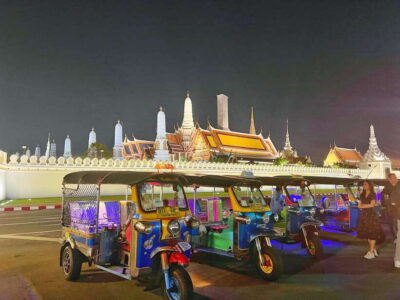
Bangkok Tuk-Tuk by Night with Chinatown Street Food Meal
What we made of it →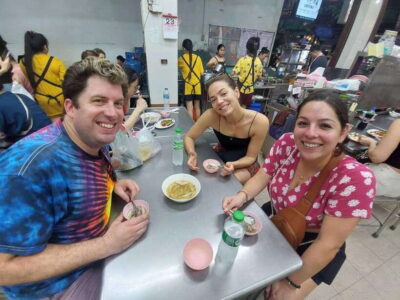
Chinatown Food Tour with Michelin Food Stalls
What we made of it →
Night Street Food Tour of Bangkok’s Chinatown
What we made of it →
Sydney’s Chinatown Street Food and Stories Walking Tour
What we made of it →
Bangkok Hidden Gems: Talad Noi, Chinatown & Street Food Tour
What we made of it →