
Review · BANGKOK
Bangkok Hidden Gems: Talad Noi, Chinatown & Street Food Tour
Bangkok reveals itself one alley at a time. This 2.5-hour walk links Talad Noi’s old Chinese quarter with Chinatown, mixing street art, churches, shrines, riverside coffee, and generous food samples. I like the personal feel of a group capped at 12, and I like that the guide helps you try dishes you might otherwise pass by. The main catch is that you will walk about 2 kilometers through crowded lanes, with some standing and uneven urban footing.
I also appreciate the 4 p.m. start. The afternoon light suits Talad Noi, and the route carries you toward Chinatown as the city begins its evening rhythm. Guides such as Pam, Nana, Gof, Dong, and Joe have been praised for their warmth and care, though English ability can vary by guide.
Key points to know before booking
- Four p.m. timing: Begin in daylight at River City, then reach Chinatown as the streets grow busier.
- Food is included: Try turnip cake, chwee kueh, duck noodle soup, and pad Thai, with substitutions available for vegetarians who advise the operator at least 24 hours ahead.
- A compact historic route: See Holy Rosary Church, Chow Sue Kong Shrine, Sol Heng Tai Mansion, Hong Sieng Kong, and Chinatown.
- Small-group format: The maximum group size is 12, and some departures have only a handful of people.
- Riverside and alley atmosphere: The walk balances old Chinese homes and shrines with galleries, cafes, street art, and market lanes.
- Value at $42.48: The price makes sense if you want a guide, several food tastings, and local context in one outing.
Starting at River City and Si Phraya Pier
Your meeting point is River City Bangkok, at Gate 1 in front of Starbucks on the first floor. It is at 23 Soi Charoen Krung 24, near Si Phraya Pier, and the tour begins at 4 p.m.
This location matters. You are starting beside the Chao Phraya River rather than being dropped directly into the center of Chinatown. The setting gives the walk a useful sense of place: river trade, old neighborhoods, and Chinese communities all meet around this part of Bangkok.
Allow extra time to reach River City. One person had trouble getting there by taxi, and a late start has also occurred. Public transportation is available nearby, but the meeting instructions are specific, so check the route before leaving your hotel.
From River City, your guide leads you into Talad Noi. The group size can make a big difference here. In a group of four or five, it is easier to hear stories, ask about food, and keep moving through narrow lanes without feeling like part of a parade.
More Chinatown Food Tours in Bangkok:
- Bangkok Tuk-Tuk Tour by Night with Chinatown Street Food Meal
★ 5.0 · 635 reviews - Bangkok Tuk-Tuk by Night with Chinatown Street Food Meal
★ 4.6 · 263 reviews - Bangkok: Chinatown Food Tour with Michelin Food Stalls
★ 4.8 · 226 reviews
Talad Noi: Bangkok’s old Chinese quarter
Talad Noi has been home to Chinese communities for more than 300 years. Its narrow lanes feel far removed from Bangkok’s main tourist roads, even though the neighborhood sits close to the river and major transport links.
This is one of the strongest parts of the experience. You are not simply passing through a market with a guide pointing out shops. The route uses older homes, religious sites, local art, and food to explain how the neighborhood developed.
Keep your eyes up and down. Street art appears along walls and older buildings, while small shops and market stalls fill the ground level. The mix is part of Talad Noi’s appeal. It is not preserved as a museum district. Daily life continues around the historic buildings.
The guide is especially useful here because the lanes can look similar at first. You may notice repair shops, cooking ingredients, household goods, and modest residential spaces, but the guide gives those details a place in the neighborhood’s story.
The walk is not physically extreme, but it is still a walking tour in a warm city. You will cover about 2 kilometers, with periods of standing and movement through busy streets. Anyone who has difficulty walking for several hours should think carefully before booking, even though the stated route distance is fairly modest.
Holy Rosary Church and a reminder of Bangkok’s mixed past
The first major stop is Holy Rosary Church, founded in 1787. The current church is associated with Portuguese settlers and uses a European Gothic Revival design.
Its presence is a useful reminder that Bangkok’s old river districts were shaped by more than one community. Chinese residents, Portuguese settlers, Thai traditions, and commercial links along the Chao Phraya all form part of the area’s past.
You are scheduled to spend about 15 minutes here. That is enough for a look at the exterior and a short explanation, but not a long church visit or a detailed architectural tour. If churches are your main interest, keep expectations modest. The value comes from seeing how this building fits into the wider Talad Noi story.
The route’s strength is this kind of contrast. A church, a Chinese shrine, a riverside cafe, and street art all appear within a short walk. Bangkok’s older neighborhoods rarely offer their history in a tidy package, and that is precisely why a local guide helps.
Street food with turnip cake, chwee kueh, and noodles
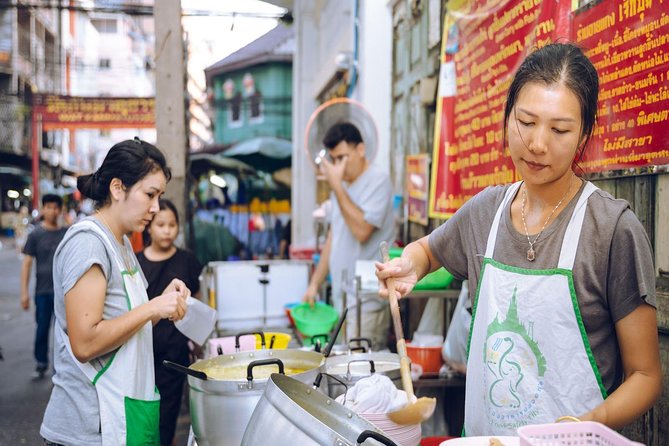
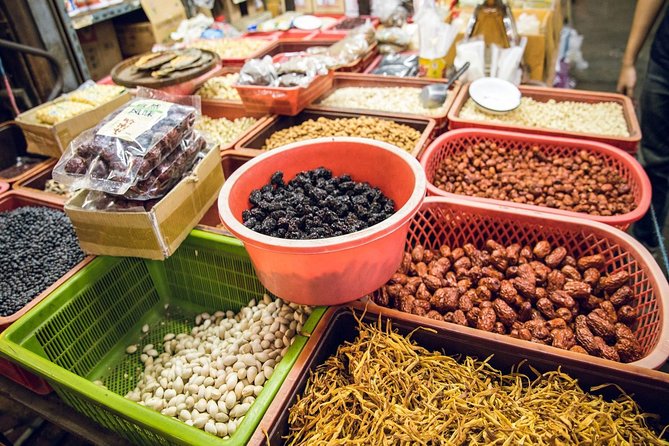
Food is included, and it is not limited to one sit-down meal. The tasting selection can include turnip cake, chwee kueh, duck noodle soup, and pad Thai from Uncle Pom.
Turnip cake is a Chinese dim sum dish with a soft interior and savory flavor. Chwee kueh is a steamed rice cake served with preserved radish. These are useful introductions if your usual Bangkok food routine centers on pad Thai, mango sticky rice, or curry.
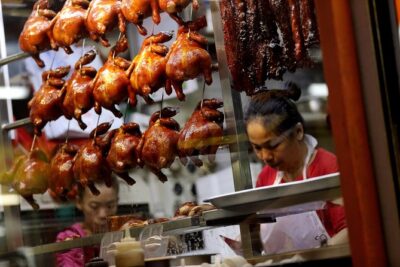
The food also shows the Chinese influence on Bangkok’s cooking. You are not just stopping at a famous restaurant. The guide takes you to local stalls and food stops, including a cafe near the river, where you may also have coffee or tea.
I like the way the food is built into the walk rather than postponed until the end. Small portions let you sample several things without committing to a full plate each time. Still, appetite levels vary, and not every person will want every dish. A few people have skipped certain foods, especially when unfamiliar ingredients were involved.
Vegetarian requirements can be accommodated, but you must provide that information at least 24 hours before the tour. Other dietary needs are not listed as supported, so this is not the right food tour for anyone requiring strict allergy management or several special substitutions.
More Hidden Food Spots in Bangkok:
- Bangkok: Talad Noi Hidden Gems & Street Food Adventure
★ 4.6 · 29 reviews - 4-Hour Hidden Bangkok TukTuk Street Food Guided Tour
★ 5.0 · 23 reviews - Hanoi: Street Food Tour with Train Street & Hidden Alleyways
★ 5.0 · 2,831 reviews - Hanoi: Guided Street Food Tour with Train Street Experience
★ 4.9 · 2,479 reviews
Chow Sue Kong Shrine and Sol Heng Tai Mansion
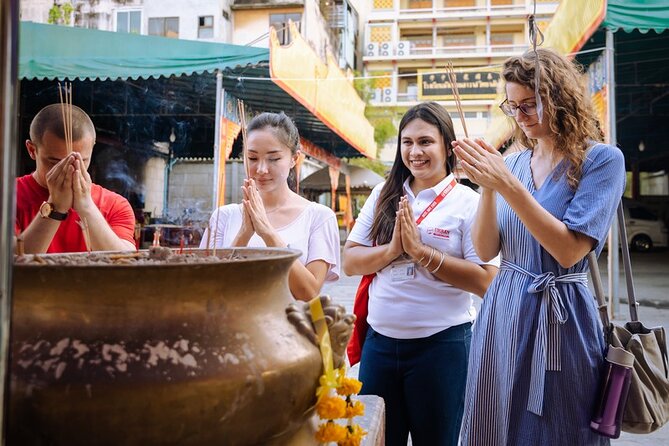
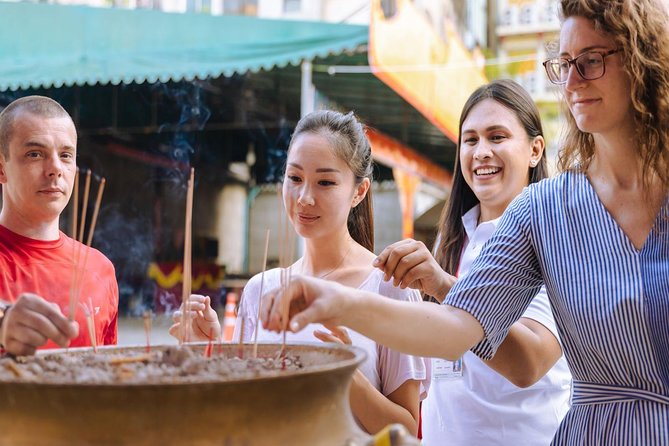
After eating, the route reaches Chow Sue Kong Shrine, a Hokkien shrine more than 200 years old. It is a place to ask for blessings relating to well-being, protection, and guidance.
The shrine gives the tour a quieter pause. Chinatown can be loud and crowded, while this stop offers a chance to observe local religious practice in a more contained setting. Your guide can explain what you are seeing, which is more useful than simply walking in, taking a photograph, and leaving.
The itinerary also includes Sol Heng Tai Mansion, one of the last traditional Chinese houses in Bangkok. This stop helps connect the religious sites with residential history. The old Chinese quarter was not built only around temples and shops. Families lived, worked, traded, and passed through these lanes for generations.
Not every stop receives the same amount of time. The listed schedule gives 15 minutes at the shrine, while Sol Heng Tai Mansion is described as another historic stop along the route. If you want long interior visits at every site, this tour may feel brisk. If you prefer a broad introduction, the pace works better.
Hong Sieng Kong and the riverside pause
Hong Sieng Kong brings the route into a more modern, creative setting. It includes a local artist’s gallery and a cafe beside the Chao Phraya River, housed in a building dating from the reign of King Rama II and the Rattanakosin era.
The listed visit lasts about 30 minutes, making it one of the longer stops. This is where the tour changes pace. After narrow lanes, shrine visits, and food tastings, you can sit with coffee or tea and look at the river.
I consider this pause one of the better details in the route. A walking tour that never stops can become a blur of alleys and explanations. The cafe gives you time to absorb the neighborhood, ask questions, and rest your feet.
The gallery and cafe also show how older properties are being used today. You are not looking at a purely historic district frozen in time. New creative uses are appearing alongside long-established businesses and homes.
Crossing into Chinatown as the city wakes up
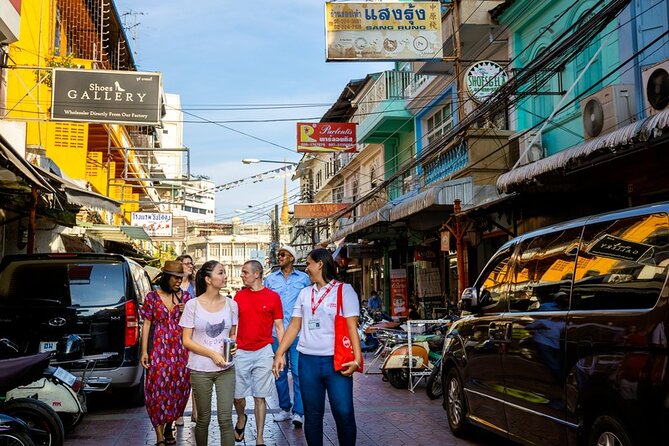
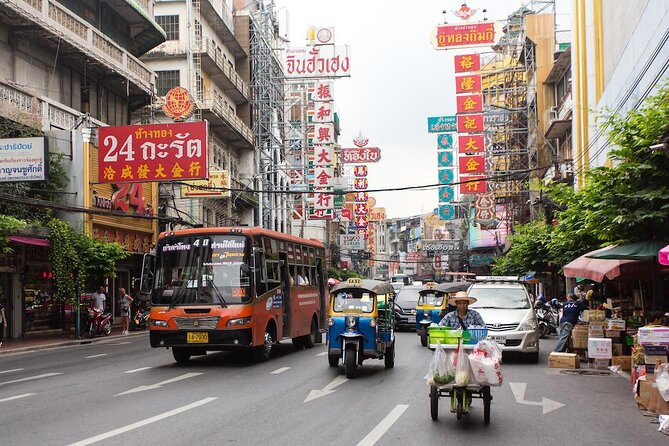
The final major section takes you into Bangkok’s Chinatown. This is where the mood changes. Talad Noi feels intimate and residential in places, while Chinatown brings more shops, signs, food stalls, movement, and commercial energy.
Your guide helps you understand the modern Chinese influence in the city rather than treating Chinatown as a simple shopping stop. The route may include market stalls, bargains, and everyday goods. You should have time to look around, but this is not designed as a dedicated shopping expedition.
Crowds can affect the experience. During Chinese New Year, one guide had to steer the group through heavy foot traffic and keep everyone together. On other busy evenings, you may need to stay close to the guide and accept that you will not be able to stop at every stall.
The tour ends near Wat Mangkon Kamalawat, with the guide helping you return toward the city center. The end point is described as either River City or Chinatown with access toward MRT Wat Mangkon, so confirm the exact finishing arrangement with your guide on the day.
What the guides add to the experience
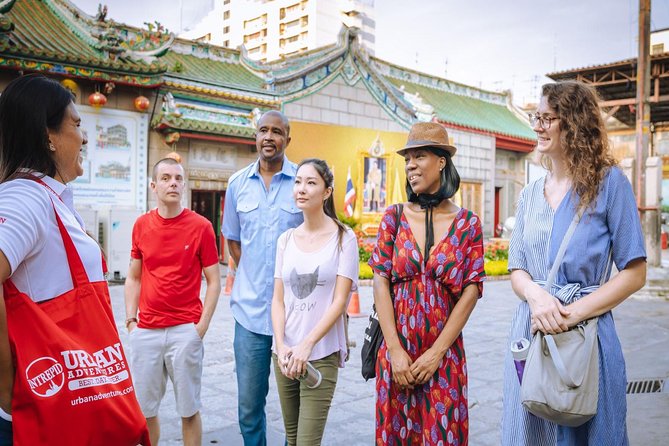
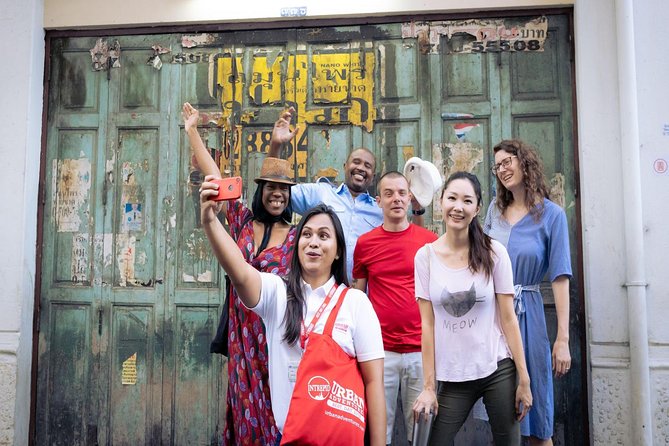
The guide is the main reason to book this rather than simply wandering Chinatown on your own. The route itself is accessible, but the meaning of a shrine, church, old mansion, or unfamiliar snack is not always obvious when you pass alone.
Pam has been especially praised for clear English, care with food choices, and strong local explanations. Nana is known for an entertaining manner and for answering questions. Gof has helped people try drinks and foods from places they might not have entered alone.
Other guides have shown practical kindness. Dong continued the tour after heavy rain, while Joe made sure someone reached home safely. One guide bought plastic raincoats during a downpour rather than letting the group struggle unprotected.
English fluency is not identical with every guide. A few people found communication harder than expected. That does not erase the value of the tour, but it is worth remembering if you want a detailed academic lecture. The best experience comes when you stay engaged, ask questions, and let the guide shape the walk around the group.
Is $42.48 a fair price?
At $42.48 per person, the cost is reasonable for a small-group walking tour that includes food samples, a local English-speaking guide, and several historic sites.
You are paying for more than a plate of street food. The fee covers a guided route through a district that can be confusing to navigate, plus tastings that may otherwise require several separate purchases. It also gives you a practical introduction to Talad Noi before you explore more of Bangkok on your own.
The value drops if you only want to shop or eat. Chinatown’s streets are free to enter, and independent visitors can certainly find food without a guide. The tour earns its price through context, access to less obvious lanes, and help ordering or choosing unfamiliar dishes.
A small group improves the calculation. The maximum is 12 people, but departures can be much smaller, sometimes only one or four guests. That gives you a better chance to ask questions and receive food guidance. Group size is not guaranteed, so book for the planned format rather than expecting a private tour.
Weather, crowds, and practical planning
Bangkok heat and sudden rain can shape the outing. The tour begins at 4 p.m., which avoids the hottest part of the day, but you should still expect warm conditions and outdoor walking.
Rain has interrupted routes before. The operator may replace a closed site with another stop, and if a food stall is unavailable, the guide can choose another local option. That flexibility is useful, but it also means the exact experience can shift.
The tour is suitable for most people aged 8 and above. It is not ideal if you cannot walk or stand comfortably for extended periods. Wear practical shoes, stay close in crowded Chinatown, and bring a small umbrella if the forecast looks uncertain.
You can cancel for a full refund up to 24 hours before the 4 p.m. start time. Changes or cancellations inside that window are not accepted for a refund.
Should you book this Bangkok food walk?
Book it if you want a friendly introduction to Talad Noi and Chinatown, especially on your first Bangkok visit. The strongest reasons are the small group, the mix of Thai and Chinese food, the Holy Rosary Church and Chow Sue Kong Shrine, and the chance to see a quieter side of the city before entering Chinatown’s busy streets.
Skip it if you dislike walking, want a tightly controlled schedule, or need extensive dietary accommodations. It is also less useful if you have already explored Talad Noi and Chinatown with a local guide.
For most visitors, I would book this early in a Bangkok stay. You will leave with a better sense of where to eat, how the neighborhoods connect, and which lanes deserve another look after dark.
FAQ
How long does the Bangkok Hidden Gems tour last?
The tour lasts approximately 2 hours and 30 minutes.
What time does the tour begin?
The tour starts at 4 p.m.
Where does the tour meet?
The meeting point is River City Bangkok, Gate 1, in front of Starbucks on the first floor, at 23 Soi Charoen Krung 24 near Si Phraya Pier.
Where does the tour end?
The listed end point is River City Bangkok, with the guide also able to finish in Chinatown near MRT Wat Mangkon for connection toward the city center.
How much walking is involved?
The tour covers about 2 kilometers, or 1.2 miles, through Talad Noi and Chinatown.
What food is included?
Samples can include Chinese turnip cake, chwee kueh, duck noodle soup, and pad Thai from Uncle Pom. Coffee or tea is also included at a riverside cafe.
Can vegetarians join the food tour?
Yes. Vegetarian requirements can be accommodated if you provide the information at least 24 hours before the tour.
What is the maximum group size?
The tour has a maximum of 12 travelers.
What is the cancellation policy?
You can cancel at least 24 hours before the local start time for a full refund. Cancellations or changes made less than 24 hours before the start time are not accepted for a refund.
Just added around Bangkok
- Street Food at China Town★ 4.5 · 4 reviews
- LR-01 TaLad NangLerng, ride along the old town and try local street foods★ 4.5 · 13 reviews
- Famous Thai Street Food Tasting Experience!★ 5.0 · 4 reviews
- Private – STREET FOOD TOUR THONBURI incl. dinner★ 4.5 · 5 reviews
- Bangkok 3-in-1 Tour: Longtail Boat,TukTuk & Street Food Adventure★ 5.0 · 73 reviews
- 4-Hour Hidden Bangkok TukTuk Street Food Guided Tour★ 5.0 · 23 reviews
- Private Tour : Bangkok Night Private Tuk Tuk Tour and Street food★ 4.5 · 5 reviews
- The 10 Tastings of Bangkok: Private Street Food Tour★ 4.5 · 49 reviews
Chinatown Food Tours, compared.
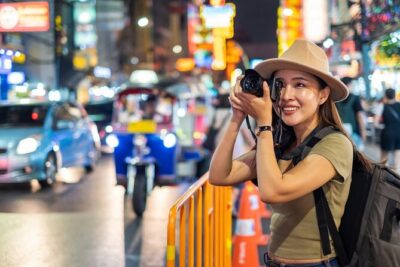
Bangkok Tuk-Tuk Tour by Night with Chinatown Street Food Meal
What we made of it →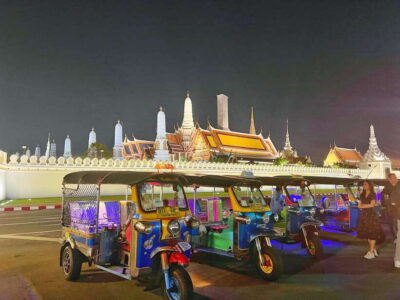
Bangkok Tuk-Tuk by Night with Chinatown Street Food Meal
What we made of it →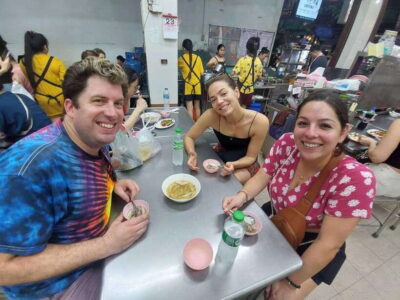
Chinatown Food Tour with Michelin Food Stalls
What we made of it →
Night Street Food Tour of Bangkok’s Chinatown
What we made of it →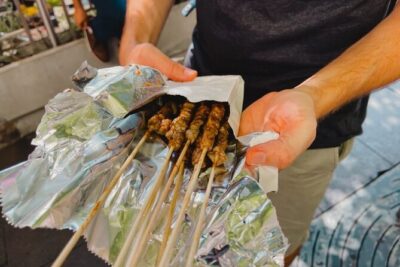
Sydney’s Chinatown Street Food and Stories Walking Tour
What we made of it →
Michelin Premium Food Tour with Hawker Centre & Chinatown Tour
What we made of it →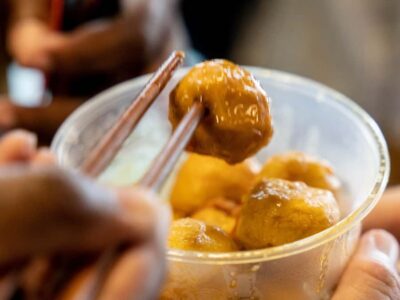
Sydney: Chinatown Street Food & Culture Guided Walking Tour
What we made of it →Where this tour turns up