
Review · AUSTRALIA
Sydney’s Chinatown Street Food and Stories Walking Tour
Chinatown tells its story through food. This two-hour walk pairs Chinese-Australian history with four or five regional snacks, making it a useful way to see Sydney’s Haymarket area beyond restaurant menus. I especially like the small maximum group of 12 and the chance to learn from guides such as Justin, Bruce, Bunny, or Eddie, who bring different voices to the walk. The main drawback is that drinks are not included, and the Chinese Garden of Friendship is discussed from outside rather than visited.
I also like the practical restaurant guide and shared photos you receive after the tour. They help you keep exploring after the final stop at Darling Square. Bring water, and tell the operator about dietary needs directly, since food preferences may not always be passed along through third-party booking sites.
Key points at a glance
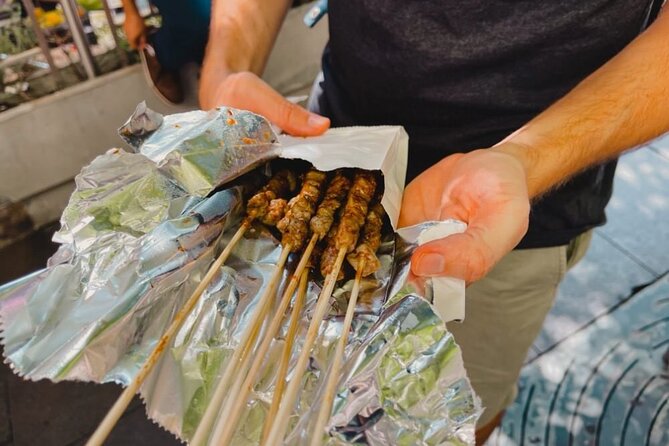
- Four or five Chinese snacks: The tasting stops cover several regional foods, rather than one large meal at a single restaurant.
- A serious look at Chinese-Australian history: Stories about immigration, discrimination, family businesses, and community life are central to the walk.
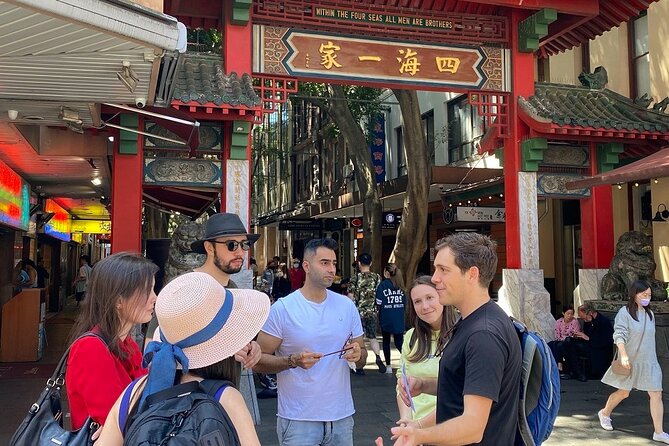
- Maximum of 12 people: The small group makes it easier to hear the guide in busy Chinatown streets.
- Paddy’s Markets starting point: You begin at 17 Hay Street, close to an important early Chinatown location.
- Chinese Garden clarification: The tour explains the garden from outside, but does not include entry into the garden itself.
- $60.97 for about two hours: The price is fair if you value the tastings, local guidance, photos, and restaurant recommendations.
Why this Chinatown walk is more than a food crawl
Sydney’s Chinatown can be easy to reduce to glowing signs, crowded restaurants, and quick meals. This tour gives the district a human story. You learn how Chinese communities formed in Sydney, how businesses and markets shaped Haymarket, and how the area changed over time.
That focus is one of the tour’s strongest features. The food gives you something immediate to taste, but the stories explain why the neighborhood looks and feels the way it does. You are not simply handed a dumpling and sent down Dixon Street. You are shown how food, migration, work, family, and public attitudes connect.
The history also includes difficult subjects, including racism and discrimination. That is important context, but it affects the tone. If you want a light, purely culinary outing, this may feel more serious than expected. If you want to understand the Chinese-Australian experience as well as sample food, the subject matter adds real value.
The guides appear to shape the mood. Justin is praised for combining food knowledge with personal energy and clear historical storytelling. Bruce is noted for adding depth to the discussion of Chinese communities in Australia. Bunny is described as warm and entertaining, while Eddie has been attentive to the comfort of the group, including offering soup on a cold day.
More Chinatown Food Tours in the world:
- Bangkok Tuk-Tuk Tour by Night with Chinatown Street Food Meal
★ 5.0 · 635 reviews - Bangkok Tuk-Tuk by Night with Chinatown Street Food Meal
★ 4.6 · 263 reviews - Bangkok: Chinatown Food Tour with Michelin Food Stalls
★ 4.8 · 226 reviews
Starting at Paddy’s Markets on Hay Street
The tour begins outside Paddy’s Markets at 17 Hay Street in Haymarket. This is not just a convenient meeting point. Paddy’s helped mark the early development of Sydney’s Chinatown, so the first 15 minutes set up the story of the district.
Allow extra time to find the exact meeting spot. Paddy’s Markets covers a large block, and one person had trouble locating the group. The operator sends reminders and has used WhatsApp to share a photo of the meeting place, but the safest plan is to check your messages before leaving and keep your phone available.
The start is near public transport, which makes it practical if you are staying elsewhere in central Sydney. The mobile ticket is also useful for a city walk, since you do not need to print anything.
At this first stop, expect context rather than a long market visit. The point is to understand how commerce helped establish the area and how Chinatown grew around changing patterns of work, trade, and migration.
Walking Dixon Street and the heart of Chinatown
Most of the tour takes place around Dixon Street and the surrounding Chinatown streets. This section lasts about an hour and a half, including food stops, storytelling, and pauses.
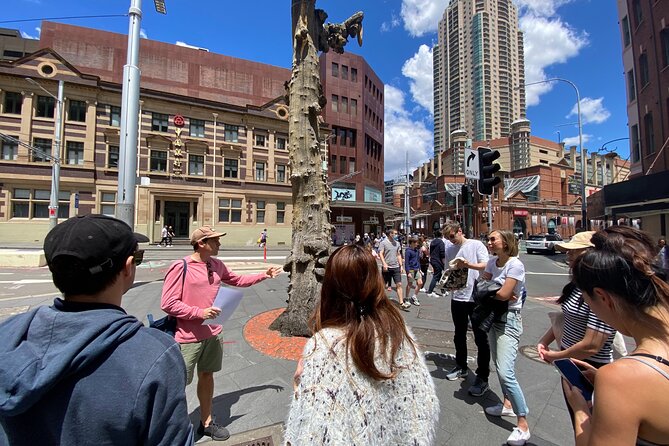
The guide points out how the district has changed over the decades. You may hear about Chinese community life, the role of family-run businesses, public art, restaurants, and the forces that have reshaped Haymarket. The best part is the connection between ordinary streets and larger events. A restaurant frontage or market building becomes part of a much longer story.
The walk is described as gentle, but it is not completely flat. There are some easy hills, along with several chances to sit for a few minutes. Comfortable shoes are sensible, though you do not need hiking footwear. Since the group moves through active dining streets, a smaller party is helpful. With no more than 12 people, you should have a better chance of hearing the guide than on a large city walk.
The food stops are not presented as a full dinner. Think of them as a series of tastings spread across the route. Four or five Chinese regional street food snacks are included, with the exact selection depending on the route and the day.
That format has two benefits. First, you can try foods you might not order alone. Second, you get a reason to visit several small businesses instead of spending the entire evening in one restaurant. The tour encourages support for family-owned establishments, which gives your later dining choices a more local connection.
The food has received especially strong praise. Buns, rice cakes, and other snacks have been mentioned positively, and tasting food from five different vendors can make the $60.97 price feel reasonable. Still, tastes differ. Lamb has been included on at least one route, and not everyone enjoys it. The operator says dietary needs can be accommodated, but you should explain your requirements directly and as early as possible.
The food stops: useful tastings, not a full meal

Four or five snacks sound generous for a two-hour walk, but you should set your expectations correctly. These are small samples designed to introduce different foods and vendors. They are not a substitute for a substantial dinner.
That is part of the appeal. You can use the tour as an introduction, then return to the places that suit you best. The restaurant guide supplied afterward adds value here, since it includes suggestions for what to order around Chinatown.
The range is more important than portion size. You may try foods from different Chinese regions and notice differences in texture, flavor, and preparation. The tour is a good fit for curious eaters who want a nudge beyond familiar dishes.
The main food-related weakness is the lack of an included beverage. Water is not provided, so bring your own bottle. A drink stop is included partway through the walk, but you should not assume the ticket covers a drink. This small detail matters on a warm afternoon or after several salty snacks.
Dietary planning deserves attention. Vegetarian and vegan adaptations are possible, along with other dietary requirements, but the operator has noted that some booking platforms do not pass this information on. Send your needs directly to Local Sauce Tours rather than assuming the reservation system has done it for you.
If you are a very selective eater, ask for details before the tour. The operator can adapt the route or food choices, but late notice may limit the options.
More Street Food Tours in the world:
- Dubai: Old Town, Creek, Museums, Souks, & Street Food Tour
★ 4.8 · 10,816 reviews - Ho Chi Minh City Street Food Tour & Sightseeing By Motorbike
★ 5.0 · 9,413 reviews - Medellin: Comuna 13 Graffiti Tour, Cable Car & Street Food
★ 4.8 · 9,046 reviews - Dubai: Old Town, Souks, Street Food, Guided Tour & Abra Ride
★ 4.9 · 7,170 reviews
The Chinese Garden of Friendship: what you will and will not see

The Chinese Garden of Friendship is one point that needs clear explanation. The tour discusses the garden from outside, and the supplied route describes a pause there to explain its design and history. You should not expect to enter the garden or receive a garden admission ticket.
This distinction matters because some descriptions can make it sound like the garden is a visited attraction. It is not. The tour operator has stated that the walk has never included entry, so book this experience for the Chinatown stories and food tastings, not for a garden visit.
Even from outside, the stop can help connect Sydney’s Chinese heritage with a major public attraction nearby. Just keep the scope in mind. If you want time inside the garden, arrange that separately.
Darling Square brings the walk into present-day Sydney
The final stop is Darling Square, a newer precinct with restaurants, cafes, and places to see. The tour spends about 15 minutes here before returning to the starting point.
This ending works because it shows a more recent side of the area. You begin with Paddy’s Markets and the early foundations of Chinatown, walk through Dixon Street, then finish among newer development and dining spaces. The route gives you a sense of change rather than presenting Chinatown as frozen in the past.
Darling Square is also a practical place to continue your evening. You finish back at the meeting point, but the restaurant guide can help you decide where to eat next. Since the included food consists of tastings, you may want a proper meal afterward.
Guides, group size, and the tone of the storytelling
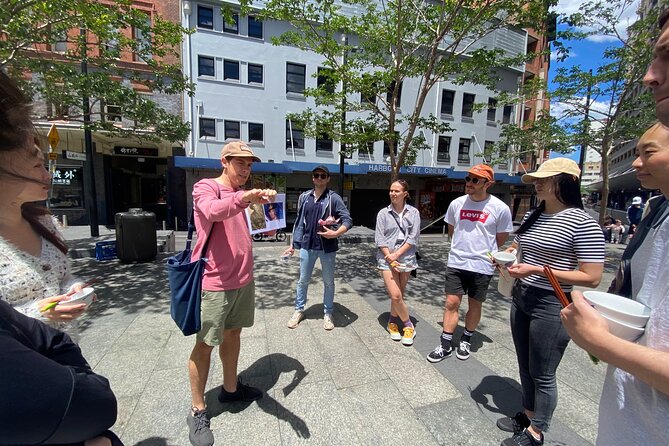
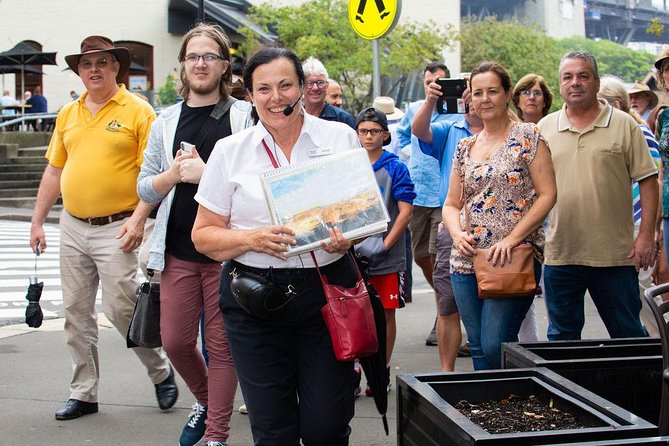
The guide is central to this experience. Food alone would not justify a two-hour walking tour through streets that you can explore independently. The value comes from knowing where to stop, what to taste, and how to connect each place to the story of Chinese Australians in Sydney.
Justin is frequently praised for his combination of historical detail and enthusiasm for food. Bruce is noted for giving the tour a thoughtful account of Chinese communities in Australia. Bunny brings a more playful tone, while Eddie has been praised for being attentive and helpful.
You may not receive the same guide on every departure, so expect some variation in style. The core themes should remain similar: Chinatown’s development, Chinese-Australian history, food, public art, small businesses, and the area’s changing identity.
The small group is a real advantage. A maximum of 12 people keeps the walk personal and makes questions easier. It also helps in crowded streets, where a large group can become slow and hard to manage.
The tone is not entirely casual. Stories of racism and exclusion form a meaningful part of the tour. That can be powerful and necessary, but it may not suit someone who wants only restaurant tips and cheerful food sampling. I would choose this tour if you want both pleasure and context.
Is $60.97 good value?
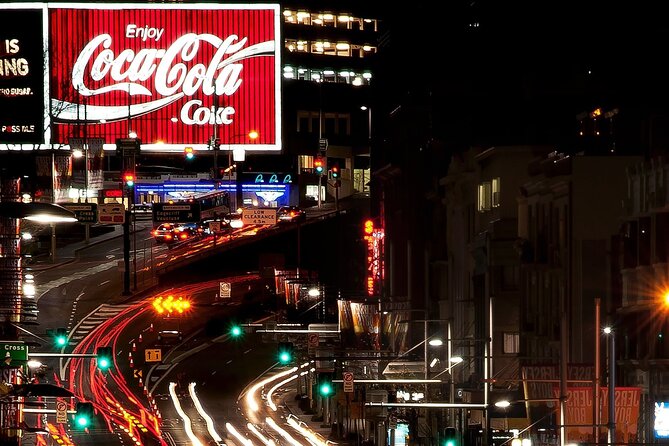
At $60.97 per person, this is not the cheapest way to walk through Chinatown. You could explore Dixon Street independently and spend the same money on a meal.
The comparison changes once you count what is included. You receive four or five tastings, a guide for about two hours, historical interpretation, photos afterward, and a restaurant guide. You also avoid the guesswork of choosing unfamiliar dishes and vendors on your own.
I consider the price fair for first-time visitors who want an organized introduction. It is also useful for Sydney residents who have eaten in Chinatown but never learned much about its past. One local participant had visited many times without knowing the area’s history or where to find some of its best food options.
The value is weaker if you already know Chinatown well, dislike group walks, or want a full meal rather than samples. It is also less appealing if you are uncomfortable with historical discussion about discrimination and immigrant hardship.
Who should book this two-hour experience?
I would recommend it to first-time Sydney visitors, food lovers, curious locals, and anyone who enjoys learning the story behind a neighborhood. It suits solo visitors particularly well because the small group creates an easy social setting without making the walk feel crowded.
Families and mixed-age groups may also find the gentle pace manageable, since there are stops and chances to sit. Most people can participate, and service animals are allowed.
I would be more cautious if you have strict food restrictions, a strong dislike of lamb, or a very narrow diet. The operator can accommodate dietary requirements, but direct communication is important. Bring water, wear comfortable shoes, and do not count on the Chinese Garden of Friendship being an included visit.
The weather policy also matters. The experience requires good weather. If poor conditions cancel the walk, you are offered another date or a full refund. For a firm evening schedule, keep that possibility in mind.
Should you book Sydney’s Chinatown Street Food and Stories Walking Tour?
Book it if you want food with context, not just a list of places to eat. The strongest parts are the small group, the four or five tastings, the restaurant advice, and the thoughtful account of Chinese-Australian life in Sydney.
Skip it if your main goal is a full dinner, a visit inside the Chinese Garden of Friendship, or a purely lighthearted food crawl. For most people who want an informed introduction to Haymarket, $60.97 is a reasonable price for two hours of tasting, walking, and storytelling. Tell the operator your dietary needs directly, bring water, and arrive early at Paddy’s Markets so the only surprise is on your plate.
FAQ
How long does the Sydney Chinatown Street Food and Stories Walking Tour last?
The tour lasts approximately two hours.
Where does the tour start?
It starts outside Paddy’s Markets at 17 Hay Street, Haymarket, New South Wales 2000, Australia.
Where does the tour finish?
The tour ends back at the meeting point.
How many food tastings are included?
Four or five Chinese regional street food snacks are included, depending on the route.
Are drinks included?
No. Drinks are not included, so bring water. A drink stop is included partway through the tour.
Can vegetarian or vegan food be arranged?
Yes. Vegetarian, vegan, and other dietary requirements can be accommodated. Contact the operator directly with your needs.
Does the tour enter the Chinese Garden of Friendship?
No. The tour discusses the garden from outside but does not include entry.
What happens if bad weather cancels the tour?
You will be offered a different date or a full refund if poor weather causes the experience to be canceled. You can also cancel for a full refund if you do so at least 24 hours before the start time.
Just added around the world
- Zanzibar:Stone town Street food market walking tour,transfer★ 4.5 · 9 reviews
- Vienna Food Tour: Dishes, Wine, Street Food & Culture★ 4.7 · 12 reviews
- Verona: Street Food Tour and City Guided Sightseeing★ 4.9 · 11 reviews
- Xi’an: Gourmet & Street Food Tour★ 4.8 · 22 reviews
- Verona: City Highlights & Street Food Walking Tour★ 5.0 · 3 reviews
- Verona: Street Food and History Tour with Local Guide★ 4.7 · 6 reviews
- Xi’an Muslim Quarter Night Market Foodie Walking Tour★ 4.2 · 22 reviews
- Verona: street food walking tour near the historical center★ 5.0 · 2 reviews
Chinatown Food Tours, compared.
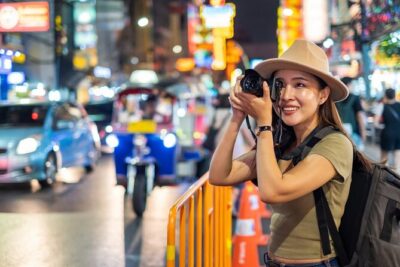
Bangkok Tuk-Tuk Tour by Night with Chinatown Street Food Meal
What we made of it →
Bangkok Tuk-Tuk by Night with Chinatown Street Food Meal
What we made of it →
Chinatown Food Tour with Michelin Food Stalls
What we made of it →
Night Street Food Tour of Bangkok’s Chinatown
What we made of it →
Bangkok Hidden Gems: Talad Noi, Chinatown & Street Food Tour
What we made of it →
Michelin Premium Food Tour with Hawker Centre & Chinatown Tour
What we made of it →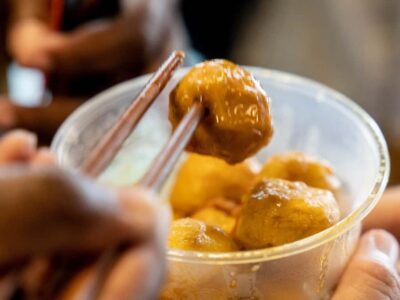
Sydney: Chinatown Street Food & Culture Guided Walking Tour
What we made of it →Where this tour turns up