Review · BANGKOK
Night Street Food Tour of Bangkok’s Chinatown
Chinatown tastes better after dark. This three-hour walking tour gives you a guided way into Yaowarat’s famous food scene, with 12 tastings ranging from dim sum and pepper soup to seafood, herbal drinks, and Thai ice cream. I like the wide food range, and I like that a local guide adds stories about Chinese-Thai culture instead of simply pointing at plates.
The tour also includes bottled water, a licensed guide, and enough food for a full dinner. The main drawback is its narrow menu: seafood is central, and there is no vegetarian or halal option. You should also check the exact meeting point before setting out, since the tour information refers to both Hua Lamphong MRT station and Bangkok Centre Hotel.
Key points before you book
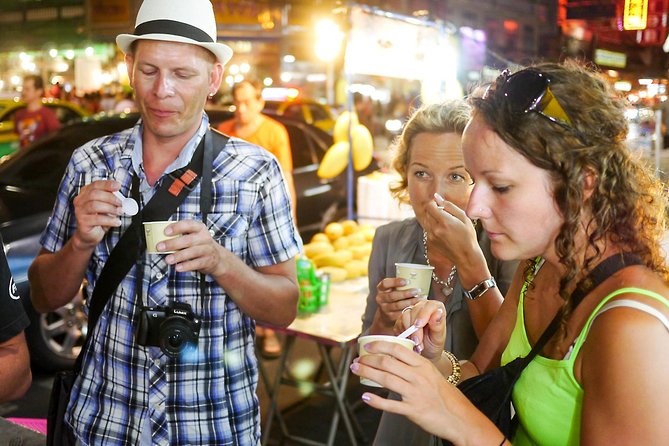
- Twelve tastings make this a full dinner: You will sample several small dishes rather than stop at one famous stall.
- The menu mixes Thai and Chinese cooking: Dim sum, fish balls, pepper soup, crispy pork, seafood, ginger soup, and bitter tea all appear in the plan.
- A guide helps with Chinatown’s busy streets: Guides such as G, Nudi, and Alice have been praised for explaining food, culture, and local history.
- The evening begins at 6:00 pm: The advertised meeting details point to Bangkok Centre Hotel near Hua Lamphong, while the walking route begins around the MRT station.
- The tour is private for your group: Group discounts are available, but only your own party participates in the activity.
- Dietary limits matter: Seafood is not optional, and vegetarian and halal choices are not offered.
Why Chinatown works best at night
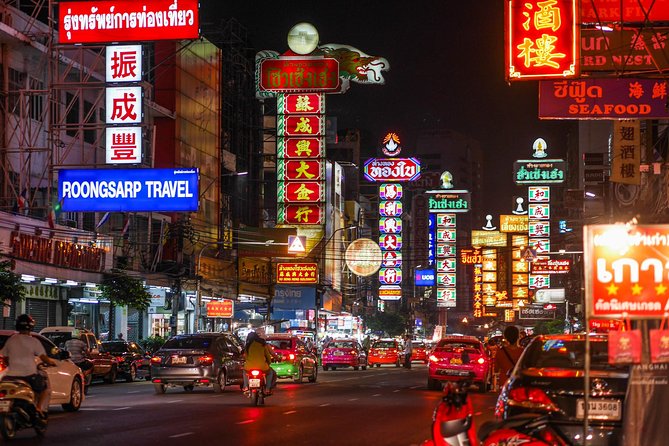
Bangkok’s Chinatown, known locally as Yaowarat, was founded by Chinese merchants in the late 18th century. At night, its streets turn into a food corridor, with restaurants, carts, signs, temples, and streams of people sharing the same narrow urban space.
You get more than a meal here. The food reflects the long connection between Chinese and Thai cooking. A dish may use Chinese noodles or dumplings, then bring in Thai herbs, seafood, spicy sauces, or local sweets. That mixture gives the tour its real purpose: you are not just eating dishes, you are learning how Chinatown’s food developed.
I particularly like the format for a first evening in Bangkok. Finding good street food alone can be rewarding, but it can also mean guessing at menus, ordering too much of one thing, or walking past a worthwhile stall because you cannot tell what it serves. A guide removes much of that guesswork.
The pace is also useful. Stops last roughly 10 to 30 minutes, so you keep moving through the neighborhood instead of sitting in one restaurant for the whole night. The tradeoff is that you will not have much control over the menu or the length of each stop.
More Evening and Night Food Tours in Thailand
- Bangkok Tuk-Tuk Tour by Night with Chinatown Street Food Meal
★ 5.0 · 635 reviews - Bangkok: E-Scooter Night Tour with Local Street Food
★ 4.8 · 488 reviews - Bangkok Tuk-Tuk by Night with Chinatown Street Food Meal
★ 4.6 · 263 reviews
Meeting at 6:00 pm near Hua Lamphong
The listed start time is 6:00 pm. The tour information identifies Bangkok Centre Hotel, at 328 Thanon Rama IV, as the meeting point, while the route description says you meet the guide at Hua Lamphong MRT station. These locations are close to one another, but you should not treat them as interchangeable without checking your confirmation.
This is especially important because one booking account expected hotel pickup and drop-off, but that service is not included. You make your own way to the start, and the walking tour finishes back at Hua Lamphong MRT station. Plan your route before the evening begins.
The location near the MRT is practical. You can reach the area by public transport, and the guide can help you continue by subway afterward. One guest specifically praised G for helping with the MRT, while Nudi was also praised for answering questions about using Grab. That kind of help is valuable on your first night in Bangkok, when the food is easier to understand than the transport system.
Wear comfortable shoes and arrive ready to walk. The tour lasts about three hours, and the stops are spread through Chinatown rather than packed into one food hall.
Stop one: noodles in tomato soup with fish balls
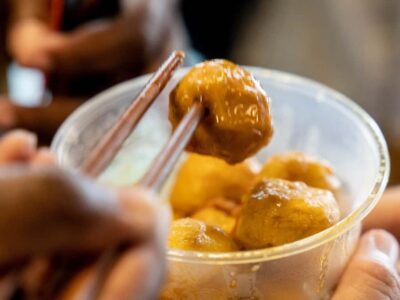
The first food stop is listed as Pa’jin Cockle Texas Yaowarat, where you try noodles in tomato soup with fish balls. This is a sensible opening dish because it gives you a warm, familiar bowl before the menu becomes more varied.
Fish balls are common in Chinese-influenced noodle cooking, while the tomato-based soup brings a different note from the richer pepper soup later in the evening. The portion is one of several tastings, so you should not expect a large restaurant bowl.
The 30-minute stop gives the guide time to explain what you are eating and how the dish fits into Chinatown’s food culture. If you are not used to seafood-based ingredients, ask questions early. This tour is not designed around avoiding them.
Stop two: small dim sum plates
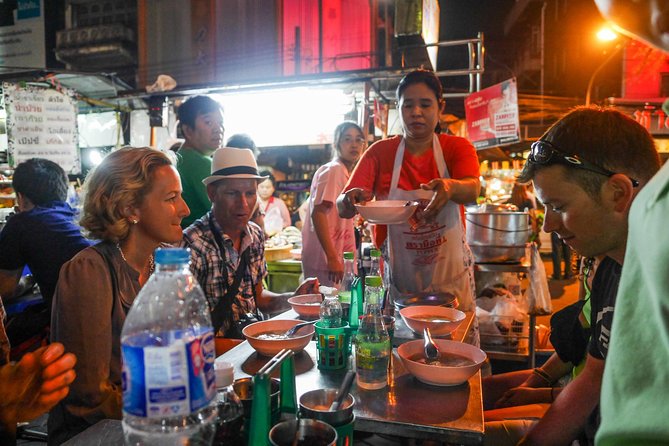
Next come several dim sum dishes in Chinatown. This is one of the clearest links between Yaowarat and its Chinese roots, though the exact items can vary.
The value here is variety. You are likely to get several small bites rather than one oversized serving, allowing you to compare textures and fillings without filling up too soon. Dim sum also works well in a guided tour because a local can identify each piece and explain how it is normally eaten.
You have about 30 minutes at this stop. That should feel less rushed than a quick cart-side tasting, but the tour still keeps moving. If you have a favorite dim sum style, you should mention it to the guide, though the included menu is set by the tour.
More Chinatown Food Tours in Bangkok:
- Bangkok: Chinatown Food Tour with Michelin Food Stalls
★ 4.8 · 226 reviews - Bangkok Hidden Gems: Talad Noi, Chinatown & Street Food Tour
★ 4.5 · 53 reviews - Bangkok: Chinatown Street Food Tour with 8+ Local Dishes
★ 4.6 · 27 reviews - Authentic Street Food Tour in China Town Bangkok
★ 5.0 · 25 reviews
Stop three: Chinese herbal drink and bitter tea
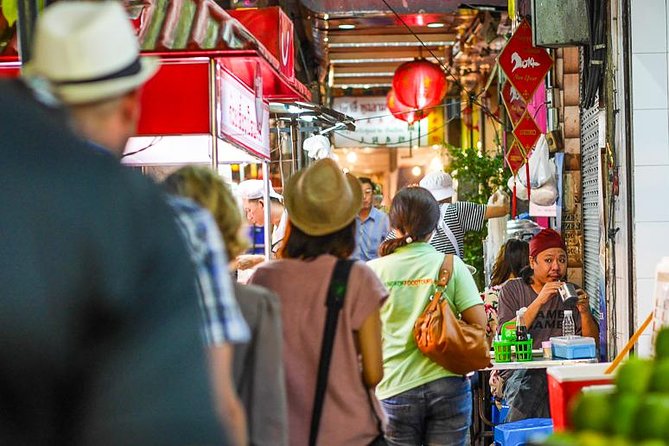
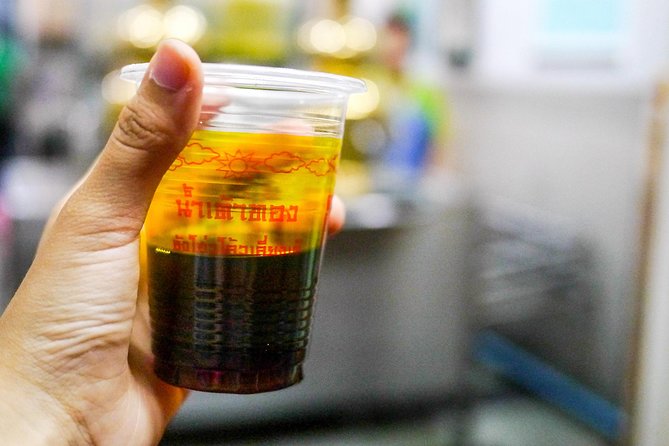
A short 10-minute stop introduces a Chinese herbal drink. The tour description also includes bitter tea, which many local people drink for its perceived health benefits.
This is a useful break from the heavier food. The flavor may be challenging, especially after sweet or salty dishes, but that is part of the point. Street food tours are most useful when they show you something you might skip on your own.
You should approach this as a cultural tasting, not as a medical product. The tour explains the local habit, but the drink should not be treated as a cure or a health guarantee.
Stop four: seafood with Thai killer sauce
Seafood is one of the evening’s major stops. You will try several seafood dishes with a Thai sauce described as a killer sauce, a name that signals heat and intensity rather than a mild dipping condiment.
This is likely to be one of the more memorable parts of the meal, especially if you enjoy strong Thai flavors. It also shows how Chinatown’s Chinese food traditions meet Thailand’s love of chili, herbs, and sharp sauces.
This stop is where the dietary warning becomes most important. The tour is not suitable for anyone who cannot eat seafood, and there is no vegetarian or halal alternative. If you have allergies or specific dietary needs, you must report them when booking, but you should not assume the menu can be fully changed.
Stop five: rolled noodles, pepper soup, and crispy pork
The peppery soup with crispy pork is the dish I would most look forward to. The itinerary describes rolled noodles in peppery soup with crispy pork, combining a soft noodle texture, a warming broth, and salty crunch.
One person singled out the pepper soup as the dish they would happily eat again. I can see why it receives attention: after several small tastings, a hot, peppery bowl gives the evening a more substantial center.
The stop lasts about 25 minutes. Because this is already a full dinner, pace yourself earlier in the tour. It is easy to enjoy the first few tastings and then discover that the most distinctive dish arrives when you are already full.
Stop six: Thai ice cream
Thai ice cream provides a cooler, sweeter pause after the savory dishes. The flavor is not specified, so you should think of this as a changing local treat rather than a guaranteed flavor.
A short 10-minute stop keeps the dessert from taking over the night. It also gives you a chance to reset before the final sweet dish. The inclusion of dessert helps the tour feel like a complete meal rather than a series of savory samples.
Stop seven: black sesame dumpling in ginger soup
The final listed stop is black sesame dumpling in ginger soup, served over about 20 minutes. This is a classic-feeling finish for a Chinatown food walk: a soft dumpling, nutty sesame filling, and warming ginger broth.
It is different from the Thai ice cream, so the dessert course does not feel repetitive. The ginger soup also brings the evening back toward Chinese-style flavors after the spicy Thai seafood and pepper soup.
The tour advertises 12 tastings across the evening, while the itinerary groups them into seven named stops. In practical terms, you should expect multiple dishes at several locations, not necessarily 12 separate restaurants.
What the guides add beyond the food
The strongest part of this experience is the guide’s role. You are not simply handed food and sent onward. The guide explains Chinatown’s background, points out landmarks, and connects the dishes to Thai and Chinese culture.
G has been praised for knowing Thailand’s history, handling crowded streets, choosing strong dishes, and helping with the subway. Nudi received similar praise for explaining Thai culture and Chinatown’s past, then helping with practical questions about Grab. Alice was singled out for leading a varied food tour and for the pepper soup.
Of course, the guide you receive may be different. Still, these examples show what to expect from a good evening: food explanations, local context, directions, and answers to ordinary questions that arise while walking around Bangkok.
The tour also passes Wat Tri Mitr, the Temple of the Golden Buddha. This landmark adds some visual and cultural interest to a night otherwise centered on eating. You should not expect a full temple visit or an extended sightseeing program, but seeing the area gives the food route a stronger sense of place.
Walking, timing, and group arrangements
The tour runs for about three hours and ends back at Hua Lamphong MRT station. That makes it easier to continue your evening, provided you have planned your onward transport.
The activity is described as private, meaning only your group participates. That is a useful advantage if you want to ask questions, move at your own pace within reason, or avoid being folded into a large mixed party. Group discounts are also available, which can improve the per-person value for a family or small group.
The route is active but not presented as physically extreme. Most people can participate, and the area is near public transportation. Still, you should expect time on your feet, street crossings, and the need to keep up with the guide.
Bottled water is included. Hotel pickup and drop-off are not, so you pay for your own transport to and from the meeting area. That is not a serious flaw, but it affects the total cost and should be part of your planning.
Is $58.70 a fair price?
At $58.70 per person, this is more expensive than simply buying street food dish by dish. You are paying for the food, but also for a private walking route, a professional licensed guide, local taxes, bottled water, and the time saved by not having to research stalls or decode every menu.
The value is strongest if this is your first visit to Bangkok’s Chinatown or if you want a structured introduction on your first evening. Twelve tastings can cover a lot of ground in three hours, and the guide helps you avoid spending your entire dinner on one safe dish.
The price is less attractive if you already know Yaowarat well, prefer choosing your own food, or want a cheap meal rather than a guided experience. You should also remember that the booking is non-refundable and cannot be amended after purchase, so confirm your timing, meeting point, and dietary needs before paying.
With 96 percent recommending the experience and an average rating of 4.8 from 173 ratings, the overall record is strong. The most praised features are the guides, the food variety, the history and cultural explanations, and the help with Bangkok transport.
Who should book this Chinatown food walk?
I would recommend it to first-time visitors who want a full dinner and an easy introduction to Yaowarat. It suits people who enjoy trying several dishes, asking questions, and walking through a busy night district rather than sitting in one restaurant.
It is also a good fit for anyone nervous about ordering street food alone. The guide handles the route and food choices, while you concentrate on tasting and taking in the neighborhood.
I would not choose it for a vegetarian or halal meal, or for anyone who cannot eat seafood. It is also a poor match if you need hotel transportation included or want a flexible, self-directed night.
FAQ
How long does the Chinatown food tour last?
The tour lasts approximately three hours and finishes back at Hua Lamphong MRT station.
What time does the tour start?
The listed start time is 6:00 pm.
Where do I meet the guide?
The information gives Bangkok Centre Hotel at 328 Thanon Rama IV as the meeting point, while the route description refers to meeting at Hua Lamphong MRT station. Check your booking confirmation for the exact location.
How many tastings are included?
The experience includes 12 tastings, served across several stops in Chinatown. The named itinerary groups the food into seven main stops.
Are vegetarian or halal options available?
No. The tour does not offer vegetarian or halal options, and it is not suitable for people who cannot have seafood.
Is hotel pickup and drop-off included?
No. You make your own way to the meeting point, and hotel pickup and drop-off are not included.
Should you book it?
Book this tour if you want a guided, seafood-heavy dinner with Thai-Chinese dishes, local stories, and help navigating Yaowarat at night. The private format, broad tasting menu, and guides who assist with transport make it a useful first-night orientation.
Skip it if your diet rules out seafood, if you want to choose every dish yourself, or if the non-refundable booking terms make your plans feel uncertain. For the right eater, $58.70 buys more than dinner: it buys a clear route through one of Bangkok’s most distinctive food districts.
More Evening and Night Food Tours in Bangkok
- Chinatown Street Food Night Tour by Tuk Tuk in Bangkok
★ 4.0 · 12 reviews - Private Tour : Bangkok Night Tour and Street food By Tuk Tuk and Boat
★ 4.5 · 3 reviews - Saigon By Night and Street Food By Motorbike | Opt: Ao Dai Riders
★ 5.0 · 4,066 reviews - Private Street Food Evening Walking Tour in Ho Chi Minh City
★ 5.0 · 3,175 reviews
Just added around Bangkok
- Street Food at China Town★ 4.5 · 4 reviews
- LR-01 TaLad NangLerng, ride along the old town and try local street foods★ 4.5 · 13 reviews
- Famous Thai Street Food Tasting Experience!★ 5.0 · 4 reviews
- Private – STREET FOOD TOUR THONBURI incl. dinner★ 4.5 · 5 reviews
- Bangkok 3-in-1 Tour: Longtail Boat,TukTuk & Street Food Adventure★ 5.0 · 73 reviews
- 4-Hour Hidden Bangkok TukTuk Street Food Guided Tour★ 5.0 · 23 reviews
- Private Tour : Bangkok Night Private Tuk Tuk Tour and Street food★ 4.5 · 5 reviews
- The 10 Tastings of Bangkok: Private Street Food Tour★ 4.5 · 49 reviews
Chinatown Food Tours, compared.
Bangkok Tuk-Tuk Tour by Night with Chinatown Street Food Meal
What we made of it →
Bangkok Tuk-Tuk by Night with Chinatown Street Food Meal
What we made of it →
Chinatown Food Tour with Michelin Food Stalls
What we made of it →
Sydney’s Chinatown Street Food and Stories Walking Tour
What we made of it →
Bangkok Hidden Gems: Talad Noi, Chinatown & Street Food Tour
What we made of it →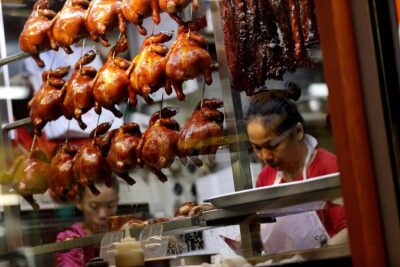
Michelin Premium Food Tour with Hawker Centre & Chinatown Tour
What we made of it →