
Review · MALAYSIA
Penang Island: Street Food Walking Tour
Come hungry, leave with stories. This 210-minute walk through George Town brings you to Chowrasta Market, family-run food stalls, a popiah-making workshop, and the Peranakan treats of Moh Teng Pheow. I especially like the small-group limit of nine people, which should make it easier to hear the guide and ask questions, and I like that the food comes with context about the families and communities behind it.
The strongest appeal is the mix of well-known dishes and less familiar tastes, from nutmeg pickles to durian dodol and Ngor Ka Sai coffee. The main consideration is pace and mobility: this is a walking tour through markets and heritage streets, and the information says it is not suitable for people with mobility impairments, despite also describing it as wheelchair accessible. Confirm your needs before booking.
Key points at a glance
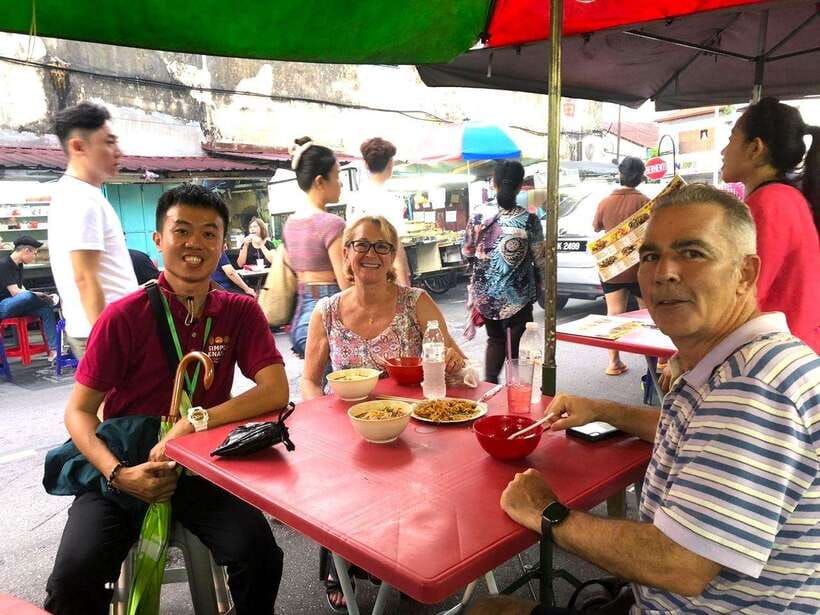
- Chowrasta Market since the 1890s: Begin where Malay, Chinese, and Indian communities have traded for generations.
- Ngor Ka Sai coffee: Try Penang kopitiam coffee mixed with Milo, an unusual local drink with a sweet, malty edge.
- Fifty years of popiah craft: Watch a maker from a family with five decades of experience producing handmade popiah skins.
- Moh Teng Pheow Nyonya Koay: Learn about Peranakan food and sample cakes, dumplings, puddings, and pastries at a Michelin-listed cafe.
- George Town in one walk: Pass Harmony Street, street art, iron-rod sculptures, temples, mosques, churches, and the town’s oldest fire station.
- $75 for a small food tour: The price makes the most sense if you value a local guide, several tastings, and cultural explanation in one compact outing.
Starting at Chowrasta Market in George Town
The tour begins at Chowrasta Market, George Town’s oldest market, dating from the 1890s. That gives the morning a useful sense of place. You are not starting at a polished restaurant or a food court designed for sightseeing. You begin where everyday buying and selling helped bring Malay, Chinese, and Indian communities together.
Expect a working market atmosphere, with vendors talking in a mix of Hokkien, Malay, and Tamil. Families have operated here for decades, and that long connection is part of what makes the stop worthwhile. Your guide can help you read the market as more than a collection of stalls, pointing out how food, language, and trade overlap in Penang.
This is also a good opening for a walking food tour because it sets up the rest of the experience. You see where ingredients and habits belong before tasting the finished dishes. If you prefer a quiet, slow breakfast, the market may feel busy and noisy. If you like food with a local setting, it is a strong first stop.
More Street Food Tours in Malaysia:
- Kuala Lumpur: Sambal Street Food Tour with 15+ Tastings
★ 4.9 · 1,657 reviews - The 10 Tastings of Kuala Lumpur With Locals: Private Street Food Tour
★ 5.0 · 249 reviews - Kuala Lumpur Local Street Food Private Walking Tour by Night
★ 4.5 · 224 reviews
Kopitiam coffee with an unexpected twist
A kopitiam is more than a place to grab caffeine. It is part of Penang’s coffee shop culture, where drinks and simple foods have long been part of daily life. Here you try Ngor Ka Sai, local coffee mixed with Milo.
The combination may sound odd at first. Coffee gives it a roasted bitterness, while Milo adds chocolate and malt. I like this kind of tasting because it asks you to try something you may not order on your own. It is a small detail, but it gives you a better feel for local habits than another standard cup of coffee would.
The drink is also a reminder that Penang food is not locked into strict categories. Chinese coffee shop customs, Malay ingredients, colonial influences, and modern preferences all meet here. You do not need to love sweet drinks to enjoy the explanation, but you should expect flavors that are more playful than a plain black coffee.
Nutmeg pickles and durian dodol
Two early tastings offer a quick lesson in Penang’s more distinctive flavors. The first is nutmeg jeruk, or nutmeg pickle. Its sharp, sour quality is meant to wake up your appetite, and it gives your mouth a brisk change from the coffee.
The nutmeg pickle is one of the tour’s more useful introductions because it is tied to Penang’s food identity rather than being a generic snack. It may be unfamiliar if you usually associate nutmeg only with baking. Here, it appears in a preserved form with a bright, punchy taste.
Then comes durian dodol, a sticky-sweet confection made with the flavor of durian, often called the king of fruits. Dodol has a dense, chewy texture, so this is not a quick bite that disappears unnoticed. The durian flavor can be intense, but the sweet mixture gives it a different character from eating fresh durian.
This stop works best if you are open to strong tastes and unusual textures. If durian is a firm no for you, tell the guide early so expectations are clear. The tour is designed around shared food, and the provider says portions are judged according to the group’s appetite to avoid waste.
Watching a fifty-year popiah tradition
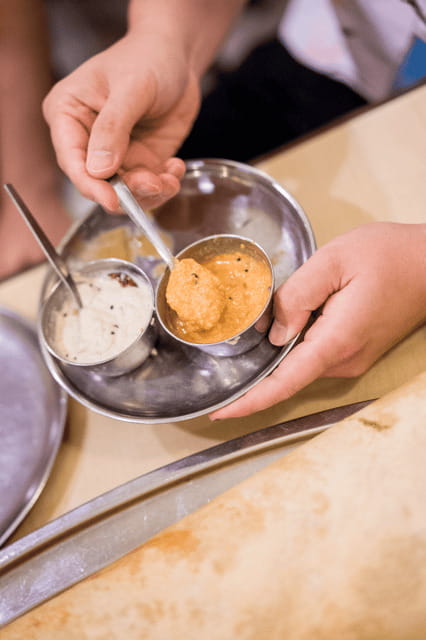
One of the most distinctive parts of the walk is the handmade popiah demonstration. You watch a master whose family has produced popiah skins by hand for 50 years. That detail matters because you are seeing a skill passed through a family, not just being shown a finished snack.
Popiah is closely linked to Chinese food traditions in Southeast Asia, but the value here is in watching the process and hearing how the family keeps it going. A thin wrapper can look simple once it is on your plate. Seeing the handwork gives you a better sense of the patience and precision behind it.
This may be the strongest stop for anyone interested in food craft. It also brings an honest point into view: older methods can disappear when faster commercial production takes over. The experience does not promise a museum performance. It gives you a chance to see a living family practice while it is still part of the local food scene.
Same place, a different plate:
- Eat Like a Local: Kuala Lumpur Hawker Center and Street Food Tour by Night
★ 5.0 · 198 reviews - Kuala Lumpur: Local Street Food Night Tour
★ 4.5 · 162 reviews - Eat Like A Local: Penang Street Food Tour
★ 5.0 · 93 reviews - Kuala Lumpur: Nightlife Street Food Tour with 6 Tastings
★ 4.6 · 73 reviews
Moh Teng Pheow and the Peranakan table
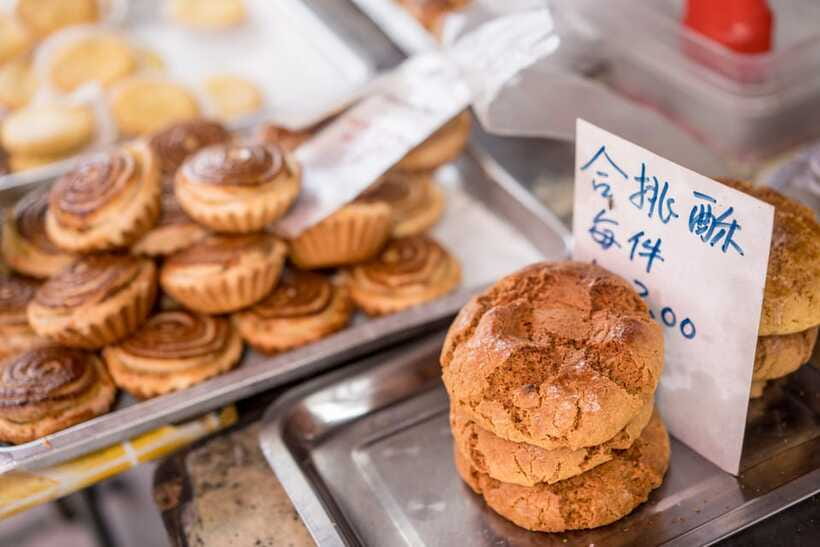
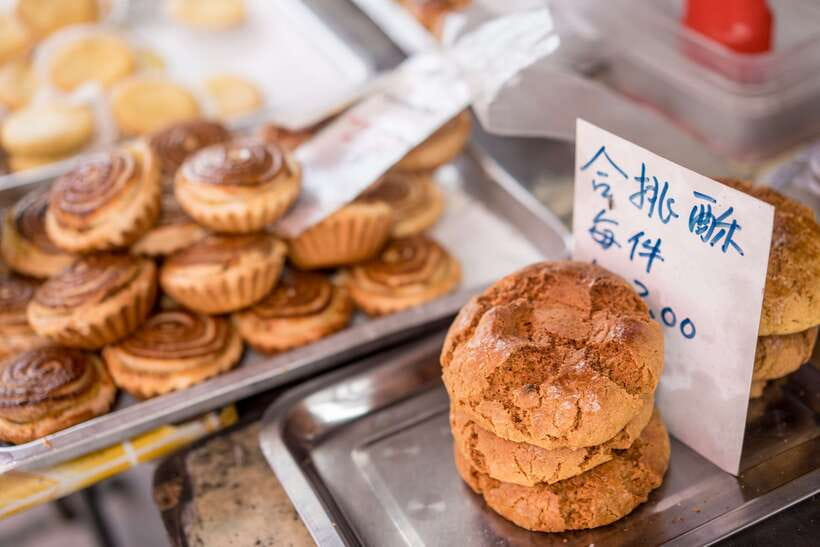
The tour then turns to Peranakan Nyonya culture at Moh Teng Pheow Nyonya Koay, a Michelin-listed cafe. The focus here is not one famous dish. It is the range of Nyonya kuey, including cakes, dumplings, puddings, and pastries.
Your guide explains how Baba and Nyonya communities developed through Chinese and Malay cultural fusion. That background helps the food make sense. Recipes, techniques, and ingredients reflect more than one culinary tradition, and the tasting gives you a way to notice those links rather than simply eating colorful sweets.
The family recipes are described as unchanged since 1933. That does not mean every item will suit every palate. Some Nyonya sweets may be sticky, dense, or sweet in ways you are not used to. The point is variety and understanding, not a carefully controlled restaurant tasting where every bite has broad appeal.
I also like the way this stop adds balance to the market food. Chowrasta shows daily trade and street life. Moh Teng Pheow gives you a more focused look at a food culture with its own vocabulary, recipes, and family story.
Asam laksa in George Town’s Heritage Zone
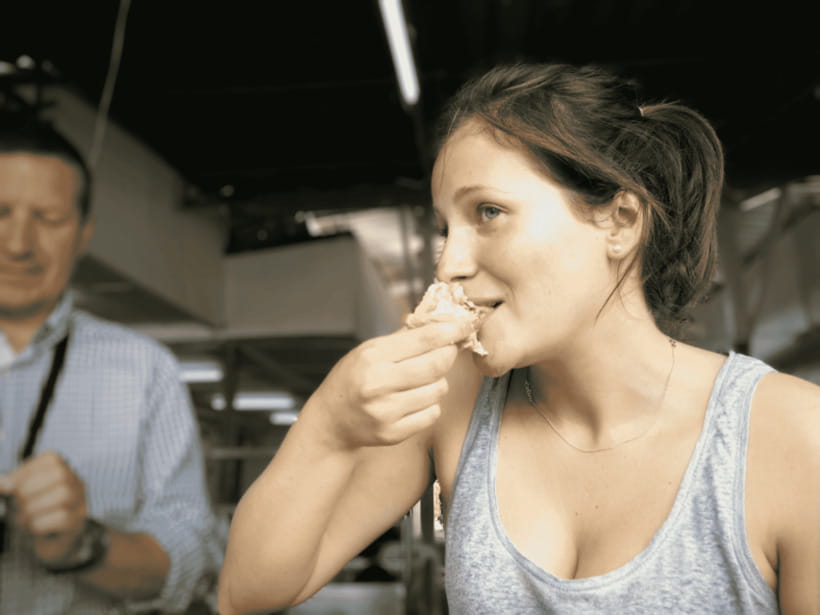
The walk includes Penang asam laksa, a dish known for its sweet, sour, and savory balance. You are also told how the Penang version differs from the one associated with Kuala Lumpur. That comparison is useful if you have already tasted laksa elsewhere in Malaysia.
Asam laksa is not simply a bowl of noodles with a strong broth. The appeal is the push and pull between sourness, sweetness, savory depth, and spice. For some people, the sour fish-based flavor will be the highlight. For others, it may be the most challenging dish on the route.
The setting matters. You eat it while moving through George Town’s Heritage Zone, where the food is part of a wider mix of buildings, streets, and communities. This is not a cooking class, so you will not learn every step of the recipe. You will, however, leave with a clearer idea of why Penang’s version deserves its own place in Malaysia’s food map.
Harmony Street, murals, and George Town details
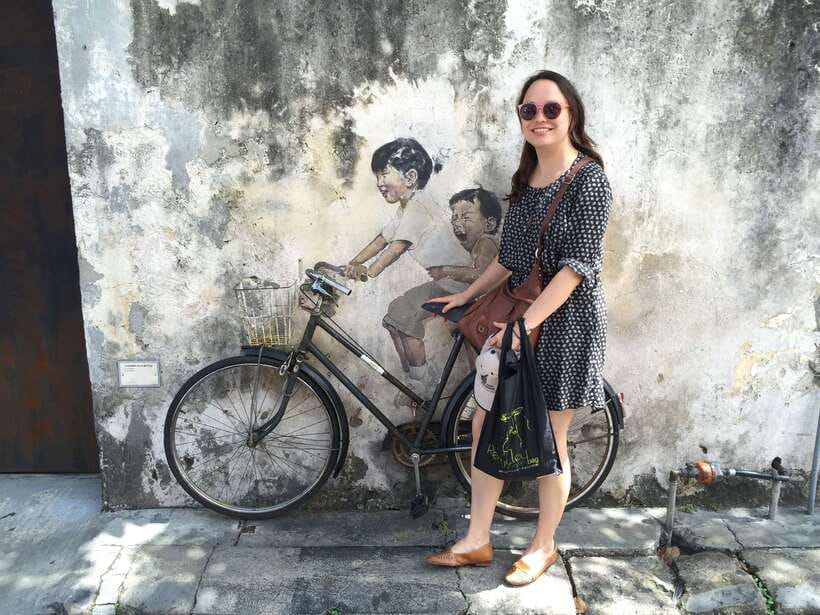
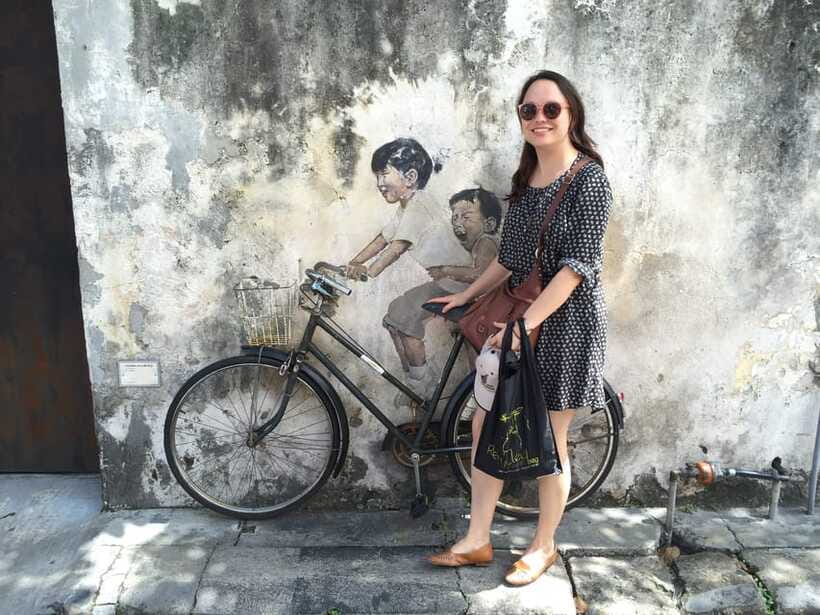
Between tastings, the guide connects the food to George Town itself. You pass temples, mosques, and churches on Harmony Street, a visible reminder of the different communities that shaped the city. The route also includes Ernest Zacharevic’s well-known street art murals and iron-rod sculptures by local artists.
These sights prevent the tour from becoming a series of snack stops with no sense of place. You get short walks between foods, but those walks are used to explain the city. The oldest fire station in town is another small landmark along the way.
I would not book this experience mainly for the art. The tour is food first, and the mural and architecture stops support that purpose. Still, they make the route more rewarding for a first visit to George Town, especially if you want an introduction to the Heritage Zone without spending the whole day on a formal city tour.
What the small group changes
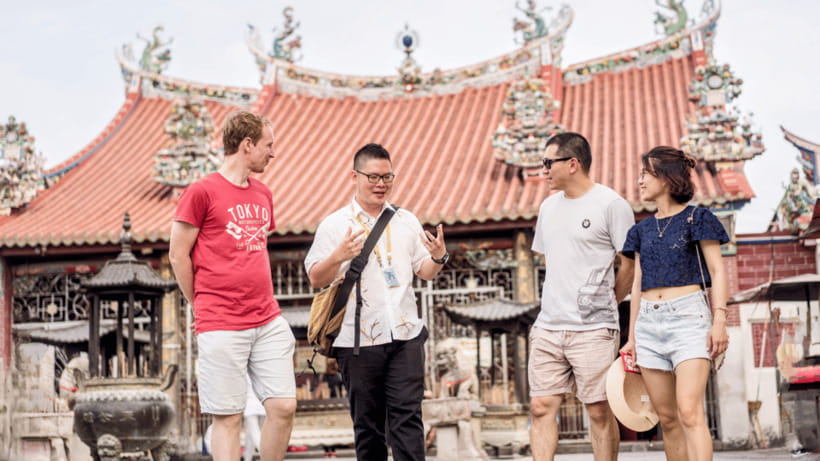
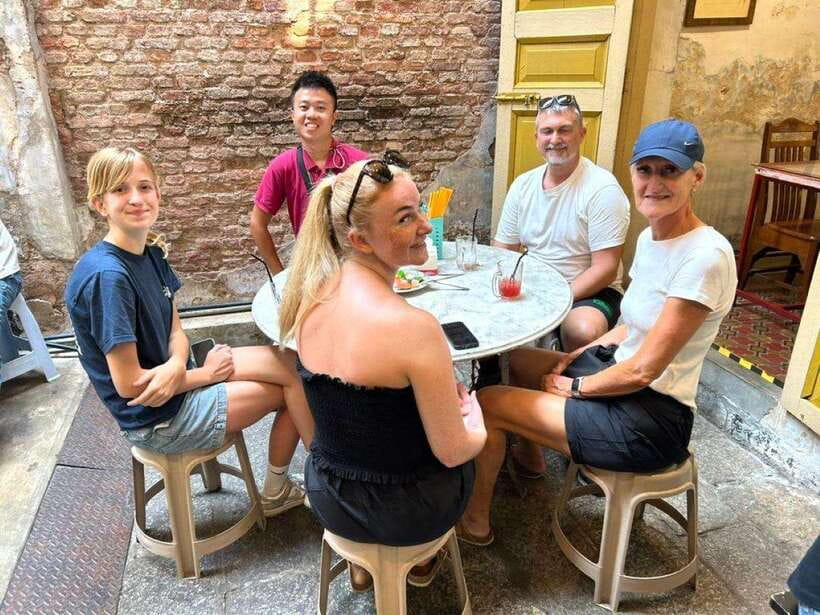
The group is limited to nine people, and that is one of the best practical features. Small groups make market stops less awkward. You are more likely to hear the guide, stay together in crowded areas, and ask about a food you do not recognize.
The provider also emphasizes long relationships with the vendors. That can make a real difference. A guide who visits the same stalls over many years can explain what to order, adjust the amount of food, and introduce the people who prepare it. The experience is built around these personal connections rather than a fixed list of anonymous stops.
The group size does not mean the walk will be private. You still share tastings and move at the group’s pace. If you want complete control over what you eat or need long breaks, a private food guide may suit you better.
Is $75 good value?
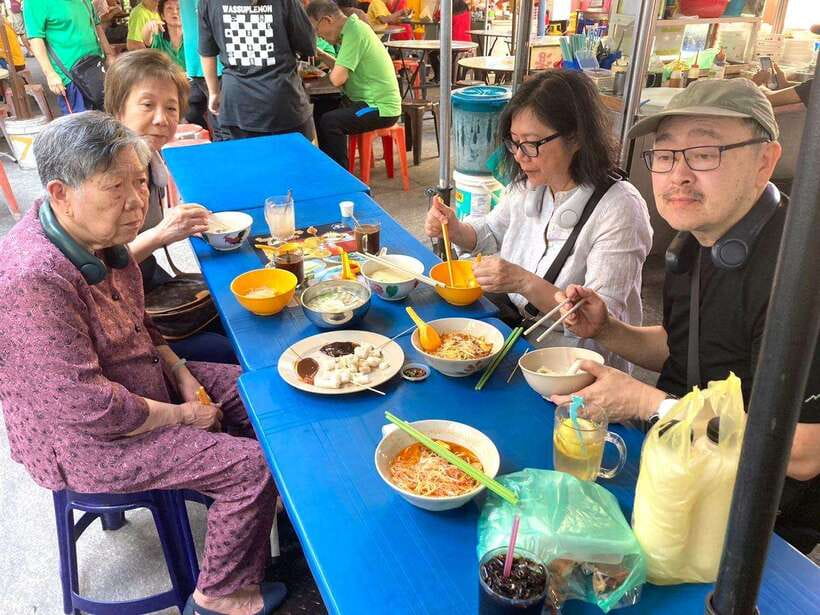
At $75 per person, this is not the cheapest way to eat in Penang. You can find individual street foods for a small amount, and an independent visitor can explore Chowrasta Market and George Town without paying for a guide.
The value comes from what is bundled into the walk. You receive food and drinks at selected family-run stalls, a licensed English-speaking guide, historical and cultural explanation, a popiah demonstration, and access to a planned sequence of tastings. You are paying to understand what you are eating, not just to fill up.
The price makes the most sense for a first visit, a short stay, or anyone who wants a reliable introduction without researching every stall. It is less compelling if you already know Penang’s food scene well and prefer to choose each meal yourself.
Food portions are adjusted to the group’s appetite, which is a positive sign. You should not expect a giant banquet. The purpose is to try several tastes without wasting food or ending the walk uncomfortably full.
Practical details before you book
Plan on 210 minutes, or three and a half hours. Wear comfortable shoes, light breathable clothing, and bring water and an umbrella. Penang weather can change quickly, and the tour includes outdoor walking between food stops.
Do not bring luggage or large bags. That is especially important for a market walk, where narrow passages and crowded areas can make bulky items frustrating.
You need to arrange your own transport to and from the meeting point. Arrive 15 minutes early. The guide will wear either a white polo shirt marked Simply Enak or a white batik shirt, which should make the meeting easier.
The tour is conducted in English, and all guides are licensed. It is listed as wheelchair accessible, but it is also marked as not suitable for people with mobility impairments. Those details do not fully agree, so contact the provider before booking if you use a wheelchair, walk slowly, or need step-free access.
Free cancellation is available up to 24 hours before the activity for a full refund, and you can reserve now and pay later. Those terms are helpful if your George Town plans are not fixed.
Who will enjoy this food walk most?
I would recommend it to first-time visitors who want a strong introduction to Penang food and George Town culture in one outing. It also suits curious eaters who want to try nutmeg pickle, durian dodol, unusual coffee, Nyonya kuey, and Penang asam laksa without guessing where to start.
It is a good fit for people who enjoy stories about families, food techniques, and local communities. The popiah maker and the long-running Nyonya recipes give the tour more substance than a simple food crawl.
You may want to skip it if you dislike sour, sweet, sticky, or durian-flavored foods. It is also a poor match if you have a cold, since the activity specifically excludes people who are unwell, or if extended walking is difficult for you.
Should you book the Penang street food walking tour?
Book it if you want a small, guided introduction to George Town that combines food with local history. The best reasons are the nine-person group, the family-run food stops, the 50-year popiah tradition, and the clear attention to Peranakan Nyonya culture.
I would not choose it purely for quantity or bargain pricing. You are paying for access, explanation, and connections as much as for the tastings. For many first-time visitors, that is a fair trade, especially during a short stay.
Come with comfortable shoes, an open mind, and room for strong flavors. If you do, this tour should give you more than a list of dishes. It should help you understand why Penang’s food culture feels tied so closely to its markets, streets, languages, and families.
FAQ
How long does the Penang street food walking tour last?
The tour lasts 210 minutes, or three and a half hours.
How much does the tour cost?
The listed price is $75 per person.
Where does the tour start?
The tour starts at Chowrasta Market in George Town, Penang.
What food and drinks are included?
Included tastings and drinks feature Ngor Ka Sai coffee, nutmeg pickles, durian dodol, handmade popiah, Penang asam laksa, and Nyonya kuey at Moh Teng Pheow. Food is served at selected family-run stalls.
Is the tour conducted in English?
Yes. The tour has a live English-speaking guide.
How large is the group?
The tour is limited to nine participants.
What should I bring?
Bring comfortable shoes, an umbrella, water, and breathable clothing.
Can I bring luggage?
No. Luggage and large bags are not allowed.
Is the tour wheelchair accessible?
The activity is listed as wheelchair accessible, but it is also marked as not suitable for people with mobility impairments. Contact the provider before booking to confirm that the route meets your needs.
Just added around Malaysia
- Eat Like A Local: Penang Street Food Tour★ 5.0 · 93 reviews
- Yummy Yummy Street Food Tasting + Night City Tour(Private Guided)★ 5.0 · 8 reviews
- Kuala Lumpur’s Nightlife Secrets and Street Food★ 5.0 · 18 reviews
- Private Tour : “Lepak-Lepak” at Local Night Market & Mamak Stall★ 4.5 · 4 reviews
- 3-Hour Private Street Food Walking Tour in Kuala Lumpur★ 4.5 · 6 reviews
- Private Kuala Lumpur Night Market And Food Tour★ 5.0 · 13 reviews
- Authentic Malaysian Street Food Tour With 15+ Tastings Near KLCC★ 5.0 · 68 reviews
- Back of the Bike Street Food Experience – Real Penang!★ 5.0 · 27 reviews
Street Food Tours, compared.
Old Town, Creek, Museums, Souks, & Street Food Tour
What we made of it →
Ho Chi Minh City Street Food Tour & Sightseeing By Motorbike
What we made of it →
Comuna 13 Graffiti Tour, Cable Car & Street Food
What we made of it →
Old Town, Souks, Street Food, Guided Tour & Abra Ride
What we made of it →
Small Group Hanoi Street Food Tour with a Real Foodie
What we made of it →
Saigon By Night and Street Food By Motorbike | Opt: Ao Dai Riders
What we made of it →Where this tour turns up