
Review · SINGAPORE
Street Food, Cultural & Historical Tour of 3 Ethnic Quarters
Singapore tastes better on foot. This six-hour tour links Chinatown, Little India, and Kampong Glam through hawker stalls, markets, old stories, and local food. I like the small group of up to eight, which gives guide Gerry room to answer questions and adjust the pace. I also like that food, drinks, and public transport are included, so the $148 price is easier to judge from the start. The main drawback is that this is a long walking day, with roughly 6,000 steps, and it is not suitable for people with low fitness, mobility problems, or several dietary restrictions.
Gerry is a Singapore native and Chinese Peranakan whose great-grandparents arrived from Fujian in 1910. That personal link gives the tour a useful human angle. You are not only looking at restored buildings; you are hearing about immigrant families, crowded living conditions, old trades, colonial planning, and the government decisions that shaped modern Singapore. Just keep in mind that the final neighborhood focuses on dessert rather than a full meal, which may leave some serious eaters wishing for one more savory stop.
Four things to know before you book
- Three historic quarters in one day: Chinatown, Little India, and Kampong Glam each show a different part of Singapore’s Chinese, Indian, and Malay heritage.
- Food is part of the history: You visit UNESCO-recognized hawker centres, markets, family-run eateries, and food stalls, with some dishes and drinks connected to the Michelin Guide.
- Gerry’s personal storytelling: He uses old images, family background, humor, and local knowledge to explain how Singapore changed from the 19th century to today.
- Public transport is built into the route: Short MRT or public transport journeys connect the districts, with tickets included.
- Come hungry: The day includes local food, snacks, drinks, beer, coffee, tea, lunch, and dessert.
- Walking matters: Comfortable shoes and clothing are essential, and large bags, luggage, strollers, mobility scooters, and non-folding wheelchairs are not allowed.
Why this tour works better than a quick neighborhood visit
Singapore’s ethnic quarters are easy to visit on your own. You can walk through Chinatown, photograph the temples, browse Haji Lane, and stop at a hawker centre without a guide. The challenge is understanding how these places fit together.
This experience gives you that connecting thread. The three neighborhoods were established as part of the British colonial plan in 1822. That simple fact changes how you look at them. They are not three random sightseeing districts. They reflect the way Singapore organized different immigrant communities, trades, religions, and forms of housing.
Gerry’s role is to add the human detail. He shares old pictures showing hardship, changing streets, and the lives of earlier immigrants. You get more than dates and building names. You hear about the working families, traders, cooks, shopkeepers, and small businesses that helped shape the island.
I especially like the way food is used as evidence. A market stall tells you what people cooked. A spice shop points to trade links. A hawker centre shows how government housing and urban planning changed daily life. An old shophouse used by Muslim pilgrims tells a different story from a Chinese temple or an Indian produce market.
The group size matters, too. With no more than eight people, you should have a better chance to ask questions without holding up a large coach group. Gerry’s humor is another strong point. The day is information-heavy, but the relaxed tone keeps it from feeling like a school lecture.
More History Walks in Singapore:
- Chinatown Heritage Walk & Street Food Tasting (Small Group)
★ 5.0 · 16 reviews - Chinatown Heritage and Local Street Food Small Group Tour
★ 5.0 · 10 reviews - Palermo: Street Food and History Walking Tour
★ 4.9 · 1,486 reviews
Chinatown: food, faith, and the old streets of survival
The tour begins at one of two central pickup points, City Hall MRT or Raffles City, unless a city-area hotel pickup has been arranged. Chinatown is the first major stop, with about an hour for food, walking, sightseeing, and stories.
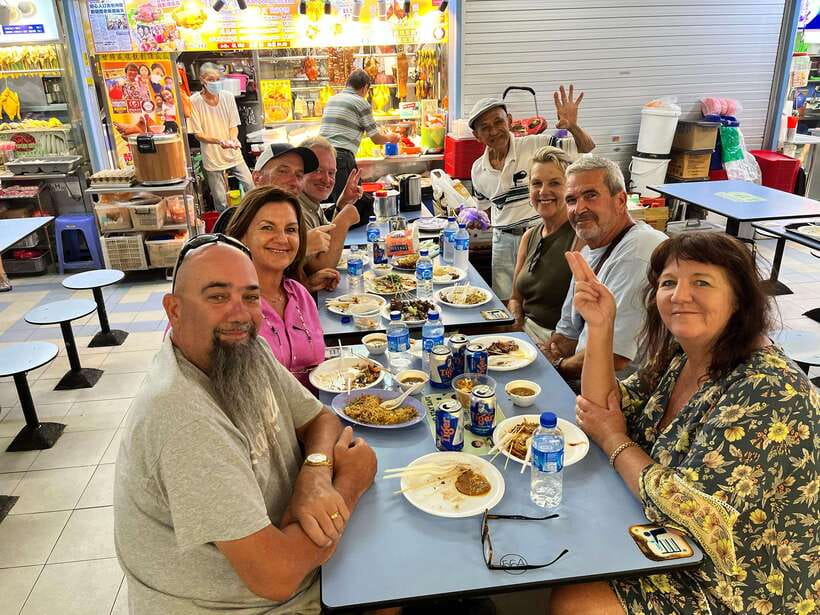
The Chinatown portion combines a hawker centre, a Buddhist temple, and lively market stalls. The food is not an afterthought. You sample Chinese dishes and drinks in a setting that reflects Singapore’s hawker culture, rather than stopping at a restaurant designed mainly for tourists.
Singapore’s hawker centres are especially important because they bring affordable food and working life together under one roof. You can see how small food businesses serve local residents, how family-run stalls survive, and how the hawker tradition became part of Singapore’s cultural identity. Some food and drink served during the day are associated with Michelin-listed stalls, though the exact dishes can vary.
The historical side of Chinatown is darker. Gerry explains places linked to the Street of the Dead, red lanterns and private chambers, and opium dens. These subjects show the difficult conditions faced by early immigrants. Chinatown was not simply a picturesque collection of shophouses. It was also a place of poverty, vice, crowded accommodation, and hard work.
That contrast is one of the best parts of the tour. You might be eating something simple and delicious beside a polished heritage building, then hear how the same area once served people living under very different conditions. Old photographs help bridge the gap between the modern streets and their earlier form.
The Buddhist temple adds another layer. You receive context for the religious life of the Chinese community, rather than only taking photographs and moving on. The market stalls bring the visit back to everyday commerce, with the sights and smells of a working neighborhood.
One hour is not enough for every corner of Chinatown. You will not get a slow museum visit or a long independent shopping period. That is the tradeoff for seeing three districts in one day. I see this stop as a strong introduction, especially for a first visit, but not as a complete Chinatown tour.
Riding public transport between the districts
After Chinatown, the group uses public transport for roughly ten minutes to reach Little India. Tickets are included, and the same arrangement applies when moving on to Kampong Glam.
This is a practical choice. Singapore’s public transport system is clean, efficient, and well connected, and using it puts you into the rhythm of local life. You are not sealed inside a tour vehicle while the city passes outside. The short rides also give your feet a break.
There is a small practical point here: wear shoes that can handle repeated walking, standing, and station transfers. The total route covers about 6,000 steps, and Singapore’s heat can make a moderate walking distance feel longer.
Little India: produce markets and the spices of daily life
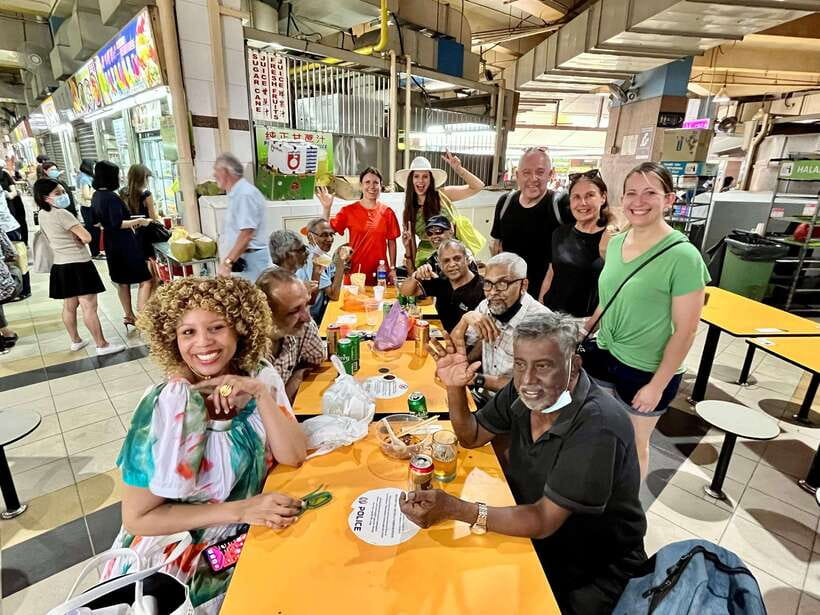
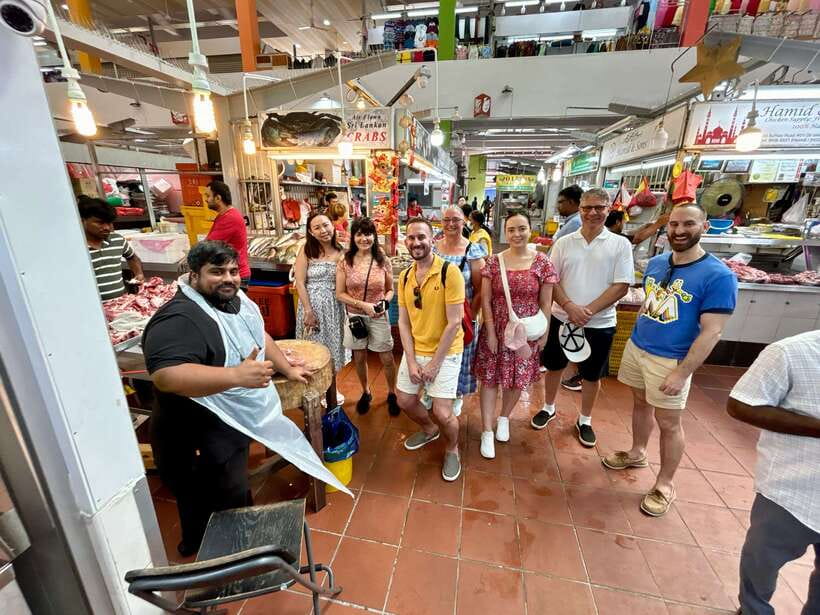
Little India receives about an hour, though the food and sightseeing here form one of the fuller parts of the day. You visit a wet and dry produce market, seafood and meat stalls, fruit and vegetable sellers, spice stalls, Indian clothing shops, and street stalls.
This is where the tour does a good job of connecting ingredients with finished food. Instead of only eating an Indian dish, you see the raw materials and the places where local cooks and households shop. Seafood, spices, vegetables, fabrics, and prepared foods create a more complete picture of the neighborhood.
The market can be sensory and crowded, so this is not a quiet sightseeing stop. That is part of its value, but it also means you should be comfortable with strong smells, active stalls, and a busy setting. Anyone who prefers a slow, polished food tasting may find the market experience more demanding.
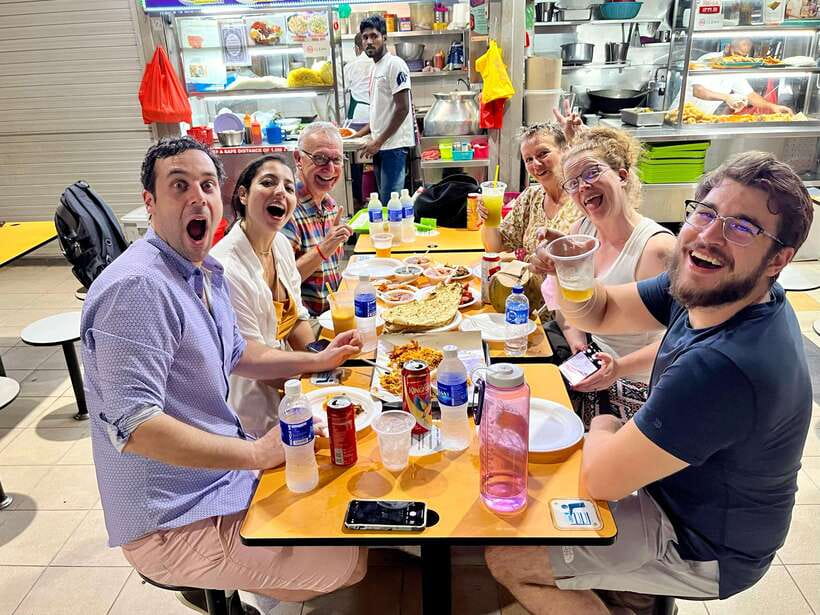
Food and drink continue at a family-run eatery, with local Indian and Malay choices. The schedule includes lunch, local snacks, coffee, tea, beer, and welcome refreshments. The food is varied enough that you should not need breakfast beforehand, but I would still avoid arriving dehydrated or overly full.
Diet is the biggest limitation. The experience is not suitable for vegans or people with gluten intolerance, and the tour description does not promise custom menus for other restrictions. If you have allergies or serious dietary needs, contact the provider before booking and ask exactly what can be changed.
The Indian clothing market and street stalls make the stop more than a meal. You see textiles and daily commerce alongside food. Gerry’s stories help explain how the district developed and how different communities contributed to Singapore’s growth.
More Street Food Tours in Singapore:
- Small Group: Michelin and Local Hawker Food Tour with 9 tastings
★ 5.0 · 1,890 reviews - Small Group: Singapore Street Food & Night Tour with 9 tastings
★ 5.0 · 1,240 reviews - Singapore: UNESCO Street Food & Cultural Experience
★ 5.0 · 524 reviews - Small-Group Food Tour With Hawker Center: Eat Like A Local
★ 5.0 · 420 reviews
Kampong Glam: Haji Lane, Arab Street, and a sweet finish
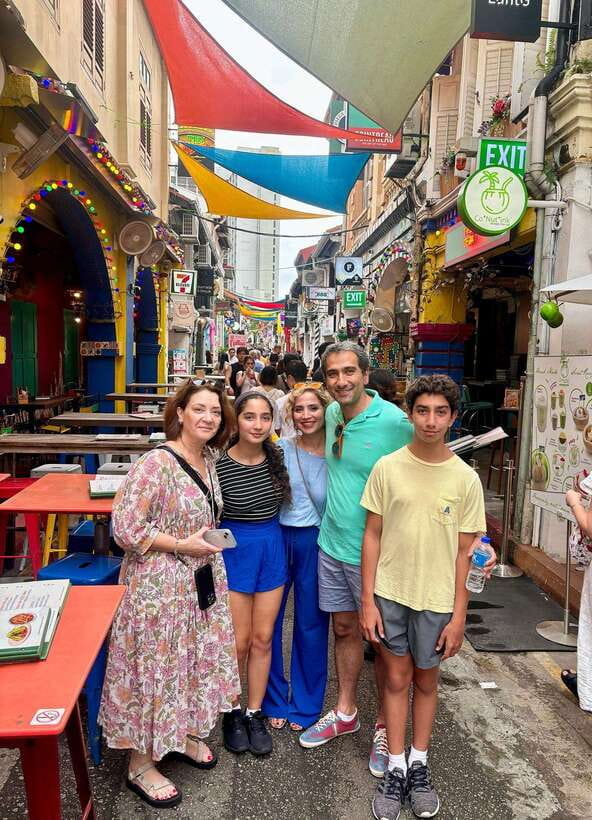
The final neighborhood is Kampong Glam, with about an hour and a half for walking and sightseeing. This is the longest neighborhood visit, and it has a different feel from Chinatown and Little India.
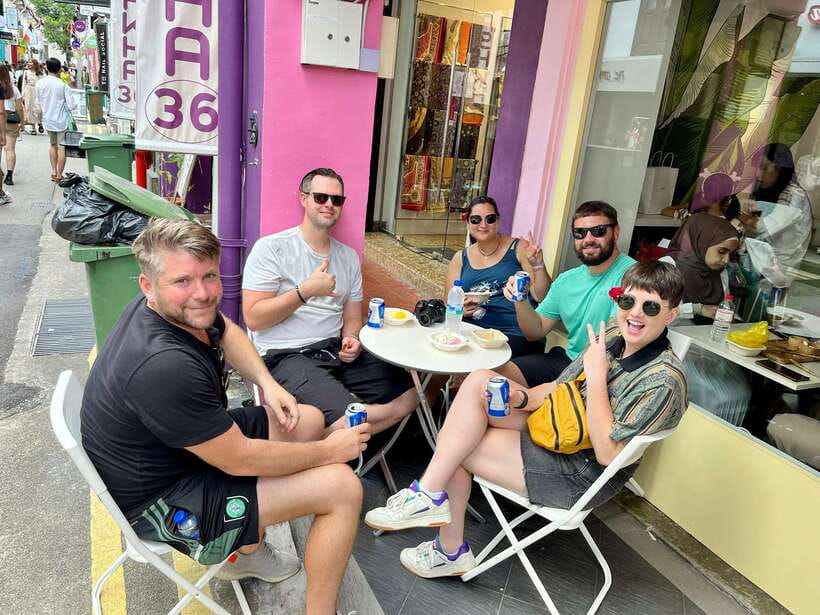
You visit Haji Lane, known for its colorful walls and small shops, then continue through the neighborhood’s graffiti-covered lanes and Arab Street textile shops. The district has a more playful visual character, but the tour does not stop at photographs. Gerry introduces Singapore’s first Sultan Mosque and explains the Malay and Muslim roots of the area.
The textile shops are a useful reminder that Kampong Glam was a trading and religious quarter, not merely a fashionable shopping lane. You can browse fabrics and see how older businesses sit beside newer cafés and creative shops. Personal purchases are not included, so bring only the spending money you plan to use.
Dessert is served in an old shophouse accommodation once used by Muslim pilgrims during the 19th century. That setting gives the final food stop a strong historical link. It also offers a chance to sit down after hours of walking.
The one weakness is clear: Kampong Glam includes dessert, but not a full final meal. If you expect three substantial food stops, plan your dinner afterward. One of the strongest food-focused experiences reported a preference for another savory dish in the last neighborhood, even though the dessert itself was enjoyable.
The food value at $148 per person
At $148 per person, this is not a cheap walk. The value depends on how much you want from the day.
The price includes food and drinks, beer, public transport tickets, and hotel pickup and drop-off when your location qualifies. You also receive six hours with a local guide in a small group. If you visited the three districts independently, you would spend less on transport, but you would need to research the history, choose reliable food stops, manage the transfers, and pay for each dish yourself.
The tour makes the most financial sense if you are happy to sample many small portions rather than order three large meals. The food is spread across hawker centres, family eateries, markets, snacks, drinks, and dessert. Several people find there is so much to eat that breakfast is unnecessary.
I would not book it solely for Michelin-listed food. The precise stalls and dishes can change, and the real value is the combination of eating and explanation. You are paying for access to local context, a planned route, transport help, and Gerry’s ability to connect ordinary food with Singapore’s past and present.
Walking, comfort, and who should skip it
This is an active day. You walk through markets, streets, temple areas, shopping lanes, and hawker centres, then use public transport between districts. Comfortable shoes and light, comfortable clothes are essential.
The experience is not suitable for pregnant people, those with back problems, vertigo, respiratory issues, mobility impairments, wheelchair users, people with low fitness, babies under one year, or anyone bringing a baby stroller or large luggage. Non-folding wheelchairs, strollers, walking frames, mobility scooters, and large bags are also not permitted.
That list is important. Do not assume that a six-hour food tour means six hours of sitting and eating. You need to manage walking, standing, heat, market conditions, and public transport.
The tour suits couples, solo visitors, families with older children, and anyone who wants history with lunch. A 15-year-old joined one successful outing, and the mix of food, stories, and movement should work well for teenagers who enjoy trying unfamiliar dishes. It is also a good choice if you are in Singapore for a short stay and want a broad introduction in one day.
It is less suitable if you want a specialist food tour focused on one cuisine, a relaxed shopping day, or a fully accessible route.
Gerry’s biggest contribution
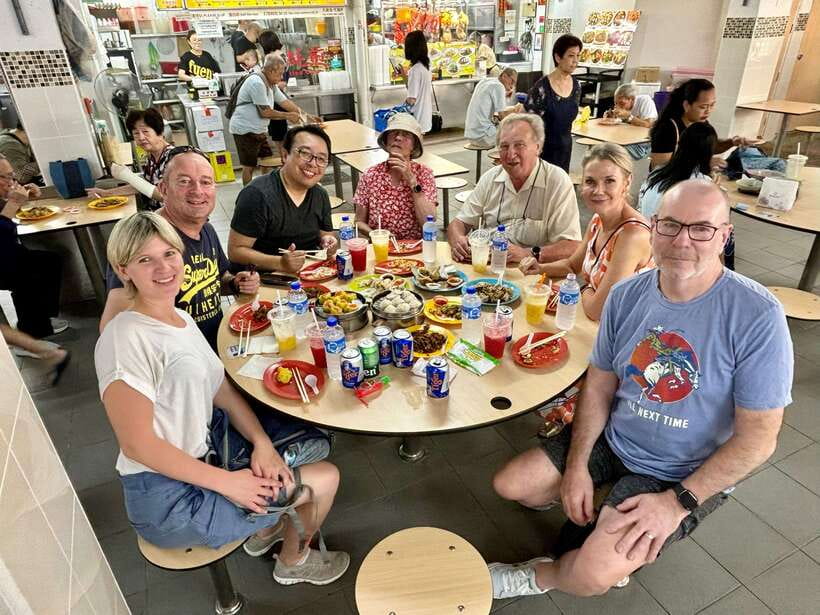
The strongest part of this experience is Gerry. He is a Singapore native, born six years after independence in 1965, and his family connection reaches back to Fujian immigrants who arrived in 1910.
His approach combines humor, old photographs, and a willingness to answer questions. The result is more personal than a standard script. You can ask about a building, a food, a neighborhood, or a change in Singapore’s society and get an explanation tied to the streets around you.
His interest in small businesses also matters. The tour brings you to hardworking family enterprises, hawkers, market traders, clothing sellers, and local eateries. You are not only consuming food and taking pictures. You are seeing the people and businesses that keep these areas active.
The best guide-led tours make you notice details you would otherwise walk past. This one appears designed around that idea, with stories placed between food stops rather than saved for a long lecture.
Should you book this Singapore food tour?
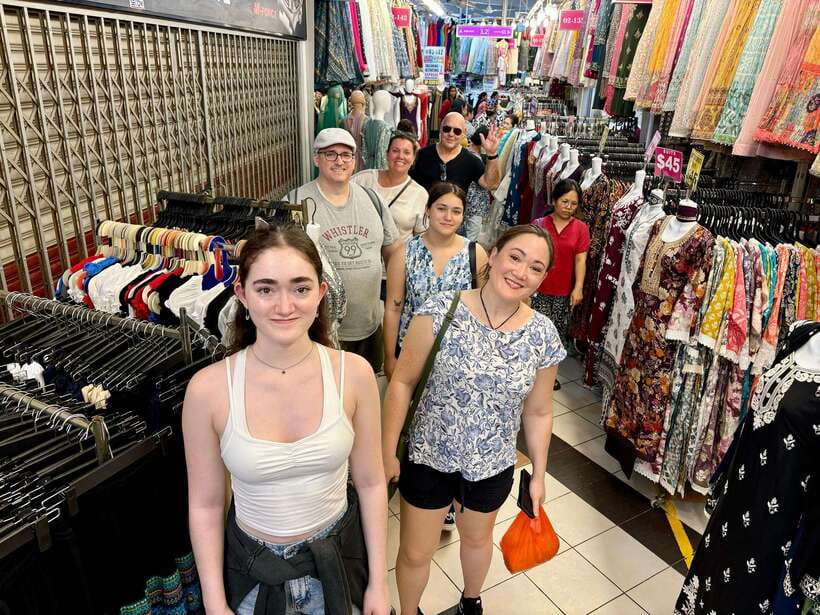
Book it if you want a full day of eating, walking, public transport, and local history in a small group. It is especially useful for a first Singapore visit, a short stay, or anyone who wants Chinatown, Little India, and Kampong Glam explained as parts of one larger story.
Skip it if you have strict dietary needs, limited mobility, low stamina, or want a quiet day with one long meal. Also remember that the last food stop is dessert, not a second full lunch.
For most suitable participants, the combination is strong: a personal guide, UNESCO-recognized hawker food, family-run businesses, old photographs, three ethnic quarters, and included transport. With free cancellation up to 24 hours before the start and reserve-now, pay-later booking, it is also a fairly flexible choice. I would book it near the beginning of a Singapore trip, then use Gerry’s food and neighborhood tips for the rest of your stay.
FAQ
How long does the Singapore ethnic quarters tour last?
The tour lasts six hours.
Which neighborhoods are included?
The route visits Chinatown, Little India, and Kampong Glam.
Where does the tour start and finish?
Pickup and drop-off may be available from city-area hotels, depending on location. You can also meet at City Hall MRT, Raffles City, the first stop in Chinatown or Little India, or a nearby MRT station arranged through the booking.
Is food and drink included?
Yes. Food and drink are included, including beer. The day includes local meals, snacks, coffee, tea, refreshments, and dessert.
Are public transport tickets included?
Yes. Public transport tickets for travel between the three quarters are included.
How large is the group?
The group is limited to eight participants.
What language is the tour conducted in?
The live tour guide speaks English.
Is the tour suitable for vegans or people with gluten intolerance?
No. The experience is listed as unsuitable for vegans and people with gluten intolerance. If you have another dietary restriction, contact the provider before booking to ask what options are available.
Just added around Singapore
- UNESCO Hawker Culture: Chinatown Food Tasting Tour★ 4.9 · 43 reviews
- UNESCO Hawker Culture: Chinatown Food Tasting Tour★ 5.0 · 47 reviews
- Singapore Street Food Join-In Tour★ 5.0 · 2 reviews
- Singapore Street Food and Ethnic Quarters Kick Scooter Tour★ 5.0 · 8 reviews
- Signature Urban Night Tour: Sunset Street Food in Singapore★ 5.0 · 4 reviews
- Singapore Chinatown Local Hawker Food Tour★ 5.0 · 2 reviews
- Singapore: Little India Hawker Food Tasting Tour★ 5.0 · 21 reviews
- Singapore Nightlife: Street Food, Night Views and Drinks★ 5.0 · 19 reviews
Street Food Tours, compared.
Old Town, Creek, Museums, Souks, & Street Food Tour
What we made of it →
Ho Chi Minh City Street Food Tour & Sightseeing By Motorbike
What we made of it →
Comuna 13 Graffiti Tour, Cable Car & Street Food
What we made of it →
Old Town, Souks, Street Food, Guided Tour & Abra Ride
What we made of it →
Small Group Hanoi Street Food Tour with a Real Foodie
What we made of it →
Saigon By Night and Street Food By Motorbike | Opt: Ao Dai Riders
What we made of it →Where this tour turns up