
Review · DUBAI
Dubai: Old Town, Souks, Street Food, Guided Tour & Abra Ride
Old Dubai tells a different story. This three to four hour walking tour links Al Fahidi’s wind towers, Al Seef’s waterfront, Dubai Creek, the Spice Souk, and the Gold Souk, giving you a useful counterpoint to the city’s glass towers. I especially like the included abra ride and the chance to try small Emirati treats such as luqaimat and ragag. The main caution is that the experience depends heavily on your guide and group size, and a few unhappy guests found the restaurant stop too long or the market visits too rushed.
At about $17.86 per person, this is an inexpensive way to get your bearings in Old Dubai. Guides such as Maaz Khan, Abdul, Hassan, and Khan have earned praise for explaining local customs, religion, trade, and history in clear English. Still, you should check which food option you book, since the broader street-food selection is tied to the premium option.
The five details that shape this Dubai tour
- Arabic coffee and dates begin the experience at Al Khayma Heritage Restaurant in Al Fahidi.
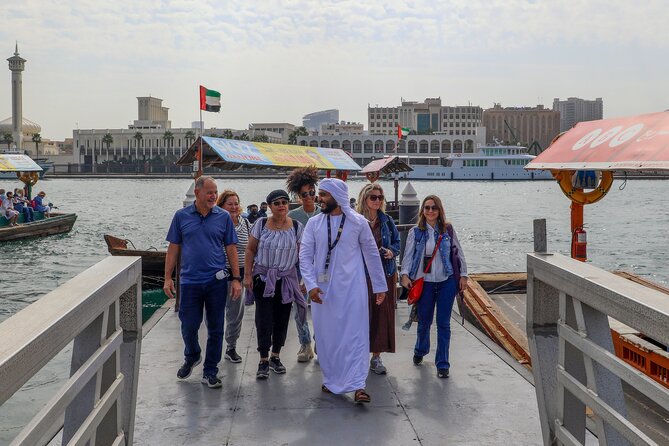
- An abra crosses Dubai Creek, offering views of trading boats and the modern skyline.
- The route ends at the Gold Souk, so you can keep shopping after the guided portion.
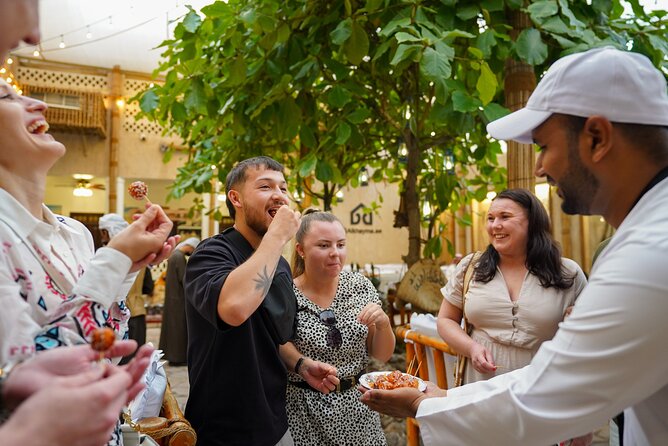
- Premium food inclusions can add real value, with ragag, luqaimat, shawarma, falafel, camel milk ice cream, and fresh juice listed among the possible tastings.
- The group may reach 15 people, and the tour can run in two languages at once.
- The strongest guide praise centers on clear explanations and haggling help, especially from Maaz Khan, Abdul, Hassan, and Khan.
Starting with coffee, dates, and Al Fahidi stories
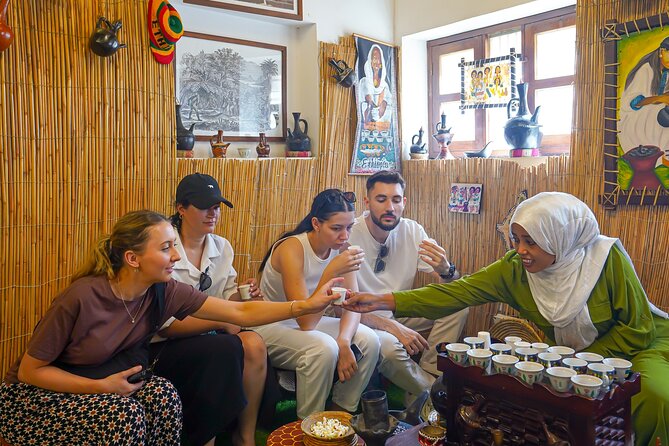
Your meeting point is Al Khayma Heritage Restaurant on Al Mussallah Road in the Al Fahidi Historic District. The tour opens with Arabic coffee, tea, and dates, followed by an introduction to the heritage house and its cultural displays.
This is more than a practical meeting point. Al Khayma gives the tour a gentle start, with food and local customs introduced before you head into the lanes. If you choose the premium option, the food program may include karak tea, samosa, ragag, luqaimat, shawarma, falafel, camel milk ice cream, lemon mint juice, and camel milk chocolate. The exact combination matters, so check your selected package rather than assuming every item comes with the lowest price.
The listed timing allows about an hour here. That can be useful if your guide uses the setting to explain Emirati life, coffee traditions, and the history of Dubai before oil wealth changed the city. But it is also the point where the tour can lose its rhythm. Some poor experiences involved nearly an hour indoors, with too much attention given to photographs and not enough time outside. You should expect a cultural introduction, not a quick snack stop.
The best guides turn this opening into a conversation. Maaz Khan has been praised for answering questions about geography, religion, history, and customs. Abdul has been singled out for his patience with families, while Hassan has been praised for making the UAE’s past and Islamic traditions easy to understand. Your experience may vary by guide, but the guide is clearly the main ingredient here.
More Old Quarter and Medina Food Walks in Dubai:
- Dubai: Old Town, Creek, Museums, Souks, & Street Food Tour
★ 4.8 · 10,816 reviews - Dubai: Old Town, Souks, Street Food, Guided Tour & Abra Ride
★ 4.9 · 7,170 reviews - Dubai: Old Town, Street Food, Creek, Souks, & Emirati House
★ 4.9 · 1,496 reviews
Walking Al Fahidi beside modern Dubai
From the restaurant, you move through Al Fahidi and toward Al Seef. This is where Dubai’s older architectural language begins to make sense: narrow lanes, restored buildings, shaded passages, and wind-tower forms sit close to newer construction.
The route includes a photo stop at Al Seef Mosque and about 30 minutes along the Al Seef promenade. It is a pleasant contrast. One moment you are among heritage-style buildings, and the next you are looking toward a polished waterfront district designed with old Dubai in mind.
I like this portion because it helps you see that Old Dubai is not a single preserved quarter. Some areas are genuinely historic, while others recreate an older visual style for modern use. That distinction is worth noticing. If you expect an untouched medieval town, you may find Al Fahidi tidy and newly restored rather than rough-edged or ancient.
Wear shoes suited to walking and bring water, even though a bottle is included. The tour includes time outdoors, and you will be moving between stops rather than sitting in one place. Large bags and luggage are not allowed, which is important if you are coming directly from an airport or changing hotels.
Crossing Dubai Creek by abra
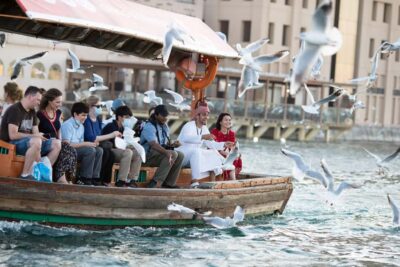
Near the Grand Souk in Bur Dubai, you board a traditional abra for the ride across Dubai Creek. This is the tour’s most memorable practical link, not just a photo opportunity.
The crossing gives you a different view of the city. You can see trading vessels, the waterway that helped Dubai grow as a port, and the sharp outline of newer buildings beyond the older waterfront. The ride is short, with roughly 30 minutes allocated to this section along with the move toward the souks, but it changes the pace nicely after the walking and indoor introduction.
I particularly like the abra because it connects the two halves of the tour. You begin in the older neighborhood of Bur Dubai, cross the creek, and finish in Deira at the Spice and Gold Souks. This route reflects how Dubai’s trade developed around the water rather than around its later highways and towers.
The boat is not a private cruise. It is a traditional water taxi, and the experience is simple. That is part of its appeal. You are not paying for a long sightseeing voyage, but you do get a useful piece of local transport and a fine view for a modest tour price.
Smelling your way through the Spice Souk
After the crossing, the Spice Souk brings color and scent into the itinerary. Stalls display spices and cooking ingredients, and you have a chance to browse and bargain.
This is where a good guide adds practical value. A guide can point out what you are seeing, explain how the market works, and help you judge a price. Maaz Khan has been praised for helping with negotiations, and that kind of assistance can be more useful than another round of general facts.
Give yourself room to make your own choices. The tour includes about 30 minutes here, which is enough for an introduction but may feel short if you want to shop seriously. Some people have enjoyed buying spices and spending extra time in the market after the tour. Others have found that a rushed group moved through too quickly, with little chance to browse.
The ending location gives you flexibility. Since the tour finishes at the Gold Souk, you can return to the Spice Souk afterward if you want more time. That makes the experience work better as an orientation walk than as a full shopping excursion.
More Street Food Tours in Dubai:
- Old Dubai: Premium Guided Tour with Street Food & Abra Ride
★ 4.9 · 416 reviews - Dubai Top Highlights: Frame Entry, Souks, Abra & Street Food
★ 4.8 · 344 reviews - Dubai: Premium Old Town, Street Food, Souks & Boat Ride Tour
★ 4.9 · 262 reviews - Dubai: City Highlights Tour with Blue Mosque & Street Food
★ 4.6 · 247 reviews
The Gold Souk finale in Deira
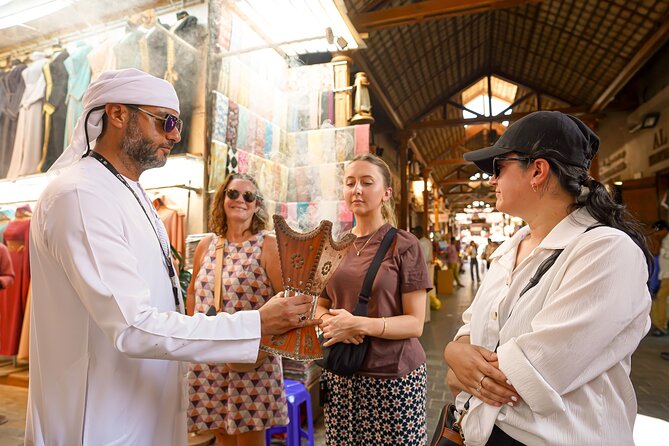
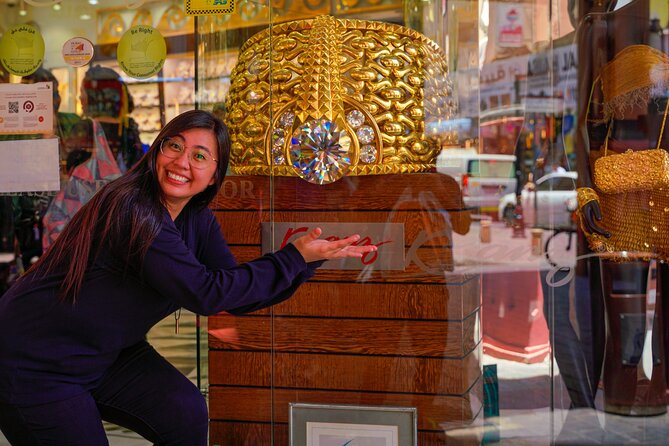
The final stop is the Gold Souk, where jewelry, silver, and precious stones take center stage. The market is known for its dramatic displays, including oversized gold pieces and elaborate jewelry that are more spectacle than likely purchase for most people.
This is a strong ending because the Gold Souk feels distinctly different from the heritage lanes at the beginning. You move from restored homes and coffee traditions to a commercial district built around precious metals. The contrast helps explain Dubai’s long connection with trade and luxury without reducing the city to skyscrapers and shopping malls.
The guided portion ends here, and you are free to continue shopping. That arrangement is practical. You get an introduction, some context, and a clear place to continue independently. Ask your guide for help with directions before saying goodbye, especially if you plan to return to the Spice Souk or arrange a taxi.
The main weakness is time. Thirty minutes is enough to see the market, but not enough for relaxed shopping if the group arrives late or spends too long at earlier stops. If shopping is your main goal, treat the tour as a primer and plan extra time afterward.
Food: small portions, useful cultural clues
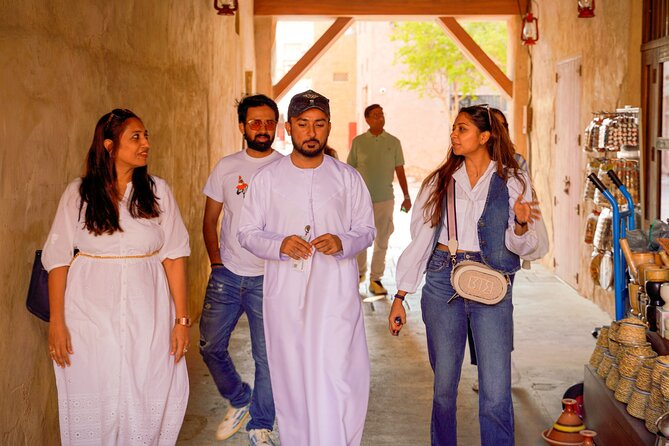
The food is best understood as a series of tastes rather than a full meal. Dates, Arabic tea, coffee, samosas, and karak tea offer an easy introduction to local hospitality. Ragag and luqaimat are more distinctive: ragag is a thin traditional bread, while luqaimat are small sweet dumplings.
The premium option may include a broader set of snacks and drinks. Shawarma and falafel make the food more substantial, while camel milk ice cream, camel milk chocolate, and lemon mint juice add novelty. These extras can make the higher-priced option worthwhile if you want to sample several items without arranging separate stops.
Do not expect a restaurant meal or a long food tour. The experience is primarily a history and walking tour with food along the way. One poor experience described the premium food as packaged and disappointing, while many positive accounts praised the refreshments. That difference suggests you should book it for the route, guide, and abra ride first, and treat the food as a bonus.
Guide quality and group size matter
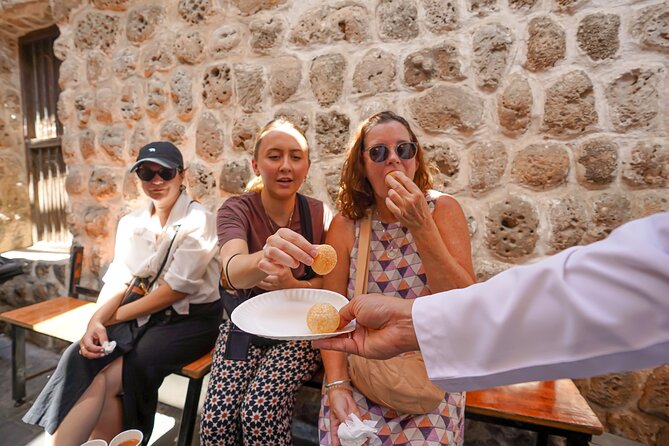
The tour allows up to 15 people and may operate in two languages at once. That is not an enormous group, but it is large enough for explanations to become hard to hear in narrow lanes or busy market areas.
The guide names most often praised are Khan, Maaz Khan, Abdul, and Hassan. Khan has received repeated praise for patience, clear English, and answers about history, religion, and commerce. Abdul has been described as especially good with families and group questions. Hassan has been praised for his cultural explanations and friendly manner.
There are also serious warnings about inconsistent delivery. A few people found a guide unfriendly, said the tour began late, missed the Spice Souk, or offered little explanation in the markets. One account described a group larger than expected and a route that moved directly to the Gold Souk. These are not minor differences, since the guide controls the pace and content.
The practical lesson is simple: arrive early, keep your WhatsApp number available for meeting-point contact, and tell the guide early if you need a slower pace or have children with you. If the group is split by language, make sure you are following the English explanation before leaving each stop.
Price, transport, and who gets the best value
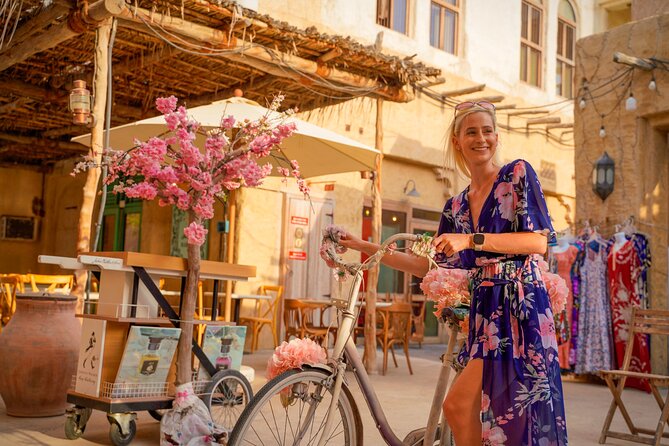
At $17.86 per person, the basic tour is priced well for a three to four hour experience that includes a guide, heritage-house entry, dates, Arabic tea, water, an abra ride, and visits to both souks. You are paying for an introduction to several districts rather than a private, slow-paced tour.
The value improves if you want your first look at Old Dubai organized for you. The route begins in Al Fahidi and ends in Deira, so you do not waste time working out how to connect the historic quarter, creek, and markets. The end point also lets you keep exploring on your own.
Pickup and drop-off are included only if you select that option. Otherwise, you meet at Al Khayma Heritage Restaurant. The nearest metro station is listed as DG Sharaf Metro Station on the Green Line, though you should use the supplied meeting instructions and confirm the exact route before setting out.
Most people can take part, but the walking, outdoor heat, market crowds, and no-large-bag rule are worth considering. The tour is not designed for anyone who wants a private vehicle, a long sit-down meal, or a slow shopping day.
Who should book this Old Dubai walk?
I would choose this tour if you have a short stay in Dubai and want one organized introduction to the older districts. It also suits families, first-time visitors, and anyone who wants a guide to explain local customs rather than simply point out buildings.
It is a good fit for you if:
- You want an inexpensive orientation to Al Fahidi, Al Seef, Dubai Creek, and Deira.
- You enjoy short food tastings more than a full meal.
- You want help understanding souk etiquette and bargaining.
- You like a clear route with a definite ending point.
- You are happy to continue exploring independently after the guide says goodbye.
I would hesitate if you dislike group tours or want long, quiet time in each market. I would also be cautious if the premium food package is the main reason you are booking. The strongest value comes from the guide, route, and abra ride, not from expecting a grand feast.
Should you book it?
Yes, if you see it as a low-cost introduction to Old Dubai rather than a polished private cultural tour. The combination of Al Fahidi, Emirati snacks, Dubai Creek, Spice Souk, and Gold Souk covers a lot of ground in a few hours, and the best guides make the history and customs genuinely useful.
Book it with realistic expectations. The quality can depend on the assigned guide, the language mix, and how tightly the group keeps to schedule. Choose the premium food option only if the extra tastings appeal to you, arrive ready to walk, and save time after the tour for more shopping in Deira.
Free cancellation is available up to 24 hours before the start time. Within 24 hours, changes and refunds are not accepted.
FAQ
How long does the Dubai Old Town tour last?
The tour lasts approximately three to four hours.
Where does the tour begin?
It begins at Al Khayma Heritage Restaurant in the Al Fahidi Historic District, at 79 Al Mussallah Road, Dubai.
Where does the tour end?
The tour ends at the Dubai Gold Souk in Deira. You may continue shopping at the Gold Souk or return to the Spice Souk afterward.
Is the abra ride included?
Yes. A traditional abra ride along Dubai Creek is included.
Which food and drinks are included?
The experience includes dates and Arabic tea. The premium option lists karak tea, samosa, ragag, luqaimat, shawarma, falafel, camel milk ice cream, lemon mint juice, camel milk chocolate, and other refreshments.
Is hotel pickup included?
Pickup and drop-off are included only if you select that option when booking.
How large is the group?
The activity has a maximum group size of 15 people.
Can the tour be conducted in more than one language?
Yes. The tour may be conducted in two different languages at the same time.
What is the cancellation policy?
You can cancel at least 24 hours before the start time for a full refund. Cancellations or changes made within 24 hours are not refunded or accepted.
Just added around Dubai
- Original Street Food Tour of Dubai★ 4.5 · 41 reviews
- Dubai Street Food Tour★ 5.0 · 5 reviews
- Old Dubai Walk, Souk, Street Foods, Al Fahidi and Al Seef Tales★ 4.0 · 9 reviews
- Private Dubai Street Food Tour .★ 4.5 · 7 reviews
- Dubai Souks, Museum, Street Food Walking Tour with Hotel Transfer★ 4.5 · 7 reviews
- Local Street Food and Guided Walking Tour of Dubai Old Town★ 5.0 · 37 reviews
- Private Dubai Old Town Tour,street food,Boat & Museums★ 5.0 · 6 reviews
- Old Dubai Guided Tour With Photographer: Souks & Street Food★ 4.9 · 74 reviews
Old Quarter and Medina Food Walks, compared.
Old Town, Creek, Museums, Souks, & Street Food Tour
What we made of it →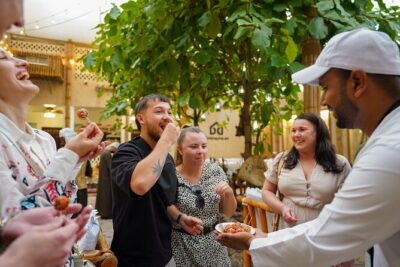
Old Town, Souks, Street Food, Guided Tour & Abra Ride
What we made of it →![[HOT] Hanoi Old Quarter Walking Street Food – Small Group Tour](https://cdn.streetfooddays.com/wp-content/uploads/hot-hanoi-old-quarter-walking-street-food-small-group-tour-400x267.jpg)
[HOT] Hanoi Old Quarter Walking Street Food – Small Group Tour
What we made of it →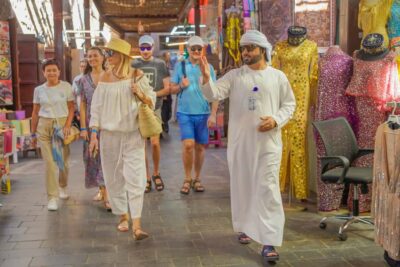
Old Town, Street Food, Creek, Souks, & Emirati House
What we made of it →
Chania: Old Town Highlights Guided Tour with Street Food
What we made of it →
Old Delhi Street Food Tour with Rickshaw Ride
What we made of it →Where this tour turns up