
Review · DUBAI
Dubai: Old Town, Street Food, Creek, Souks, & Emirati House
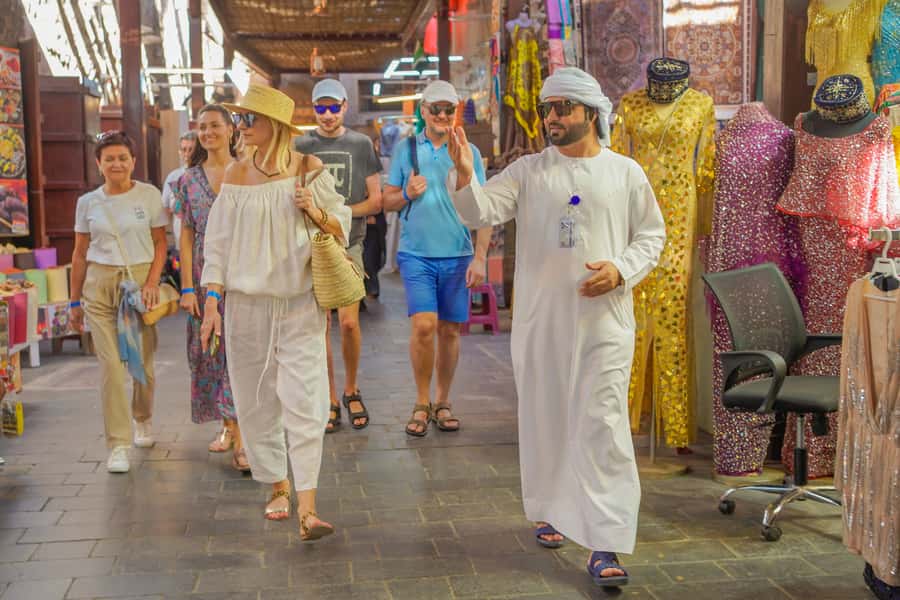
Old Dubai still knows how to slow you down. This three-hour walking tour links Al Fahidi’s old lanes with Creek crossings, souks, snacks, and stories about Emirati life. I like the easy mix of sights and tastes, and I especially like that the abra ride is part of the route rather than an optional extra. The main thing to consider is the heat: much of the experience is on foot, and the tour is not suitable for children under five, infants, or wheelchair users.
At $6 per person, this is an unusually generous introduction to Dubai’s older side. Guides such as Khan, Fesal, Mustafa, Nasser, Ibrahim, and Hossam have been praised for clear explanations, humor, patience, and practical help in the markets. The street food option adds Karak tea and samosas, while the heritage-house visit brings dates, Arabic coffee, tea, and a taste of local hospitality.
What makes this Old Dubai tour worth your time
- A useful three-hour route: You see Al Fahidi, Al Seef, the Creek, Bur Dubai Souk, the Spice Souk, and the Gold Souk without having to plan the connections yourself.
- A real abra crossing: The traditional wooden boat gives you a simple but memorable link between the two sides of Dubai Creek.
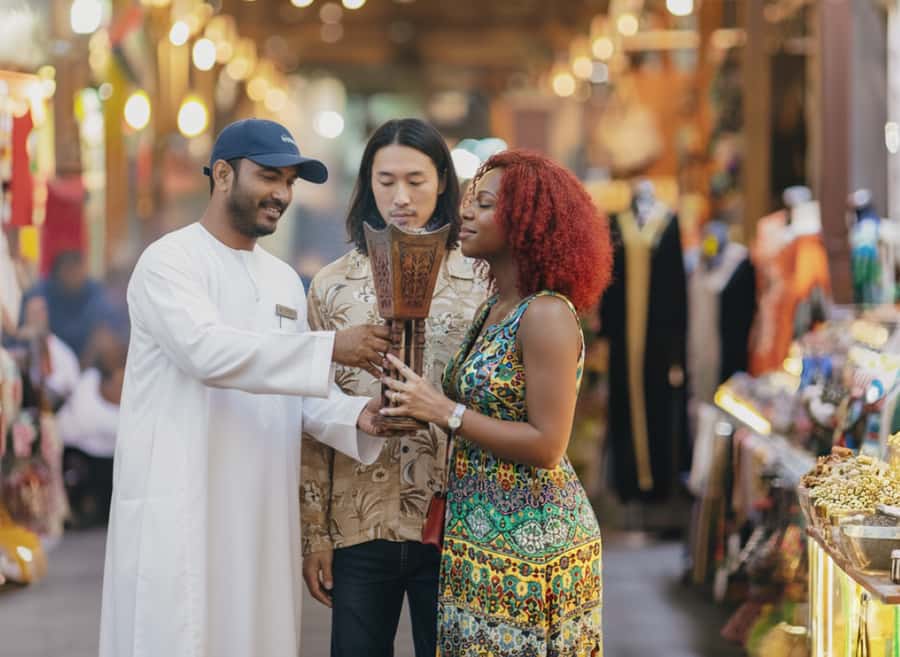
- Food is part of the lesson: Karak tea, samosas, dates, Arabic coffee, camel milk chocolate, and other treats help explain local habits through taste.
- Guides add the value: The strongest part of the experience is the person leading it, with repeated praise for guides who explain culture clearly and answer questions.
- Good for first-time visitors: If Dubai’s skyscrapers are all you have seen, this gives you a useful sense of where the city began.
- The souks are practical, not staged: You can browse spices, textiles, gold, and gifts, though shopping time is limited and sales talk can be persistent.
Starting at Al Khayma Heritage Restaurant
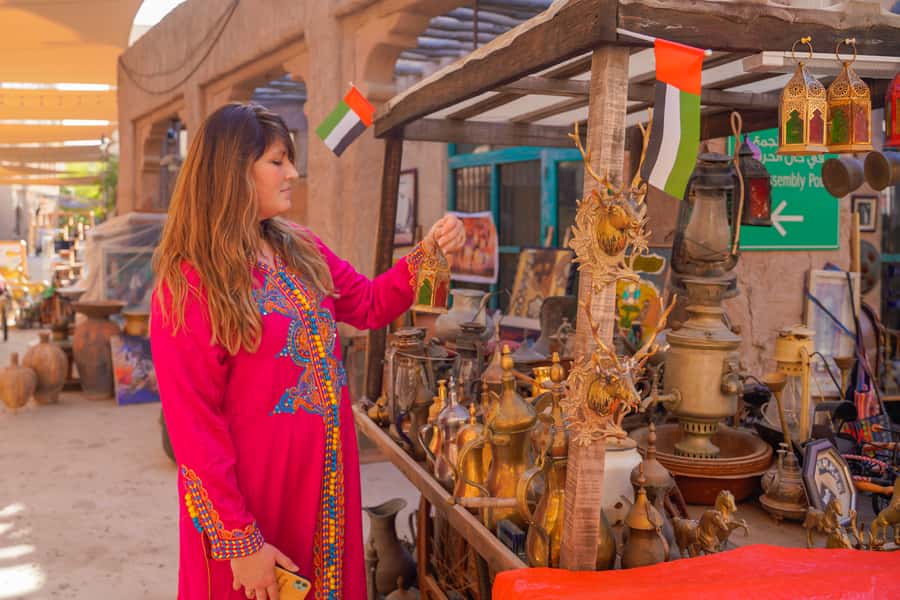
The meeting point is the entrance of Al Khayma Heritage Restaurant in the Al Fahidi Historical Neighborhood. This is a sensible place to begin because the surroundings immediately feel different from modern Dubai. You are near older buildings, narrow lanes, shaded courtyards, and the Creek rather than towers and shopping malls.
The tour starts with your guide gathering the group and setting the tone. Guide quality matters here more than polished scenery. The best guides mentioned by name include Khan, Fesal, Ibrahim, Mustafa, Nasser, Iqbal, Hossam, Ahmed, and others. Names can vary by departure, but the pattern is clear: an engaging guide can turn a simple walk into a useful introduction to Dubai’s customs, development, and daily life.
The meeting area is close to a metro station, which makes it practical for many people staying in central Dubai. You should arrive ready to walk. Large bags and luggage are not allowed, and comfortable shoes, modest clothing, sun protection, and water are sensible choices even though a bottle of water is included.
More Old Quarter and Medina Food Walks in Dubai:
- Dubai: Old Town, Creek, Museums, Souks, & Street Food Tour
★ 4.8 · 10,816 reviews - Dubai: Old Town, Souks, Street Food, Guided Tour & Abra Ride
★ 4.9 · 7,170 reviews - Dubai: Old Town, Souks, Street Food, Guided Tour & Abra Ride
★ 5.0 · 1,664 reviews
Al Fahidi and the story before skyscrapers
The first major stop is Al Fahidi Fort, with about 15 minutes for a guided visit and sightseeing. The fort gives the tour a firm starting point for understanding Dubai before oil wealth and large-scale construction changed the city.
Do not expect a long museum visit. Dubai Museum is temporarily closed, so this stop is best understood as an exterior and heritage-focused introduction rather than a full museum experience. Your guide supplies much of the context, explaining how the old settlement developed and how trade, fishing, transport, and family life shaped the city.
That personal explanation is one reason this tour works better with a guide than as a quick self-guided walk. You can look at old walls and buildings on your own, but a guide connects them to the wider story. Several guides have been praised for explaining the links between traditional Emirati life and modern Dubai without making the talk too formal.
Al Seef, the mosque, and old city walls
The walk continues toward Al Seef, where you get roughly 15 minutes for views, photos, and an introduction from the guide. The promenade sits beside the Creek and combines restored traditional-looking architecture with a modern visitor area.
This is a good place to get your bearings. You can see how Dubai uses the Creek as both a historic route and a present-day public space. The mosque stop adds a quieter cultural pause, with time for photos and an explanation of local traditions. Dress respectfully, especially around religious sites, and follow your guide’s instructions about where photography is appropriate.
The Wall of Old Dubai provides another short stop, with sightseeing, photographs, and some free time. These stops are brief, so you will not study every building at length. That is both a strength and a limitation. You cover several types of place in one morning or afternoon, but anyone wanting detailed architecture or long photo sessions may find the pace brisk.
Bur Dubai Souk and the first tastes
At Bur Dubai Souk, the tour slows down for around 30 minutes. This is where the walking, shopping, and food elements come together. You can browse textiles, small gifts, spices, and other goods while your guide explains how to approach the market.
The souk is a working commercial area, not a quiet historic display. Shopkeepers may invite you inside, and prices may be open to discussion. The guide can help you understand the setting and, according to several accounts, may offer useful support while you shop. Still, you should feel no pressure to buy. If you do shop, compare prices and remember that bargaining is part of the experience.
The street-food portion includes Karak tea and samosas if you select that option. Karak is a sweet, spiced tea that reflects South Asian influence in Dubai’s food culture. The samosa adds a savory bite and keeps the tasting simple rather than turning the tour into a full meal.
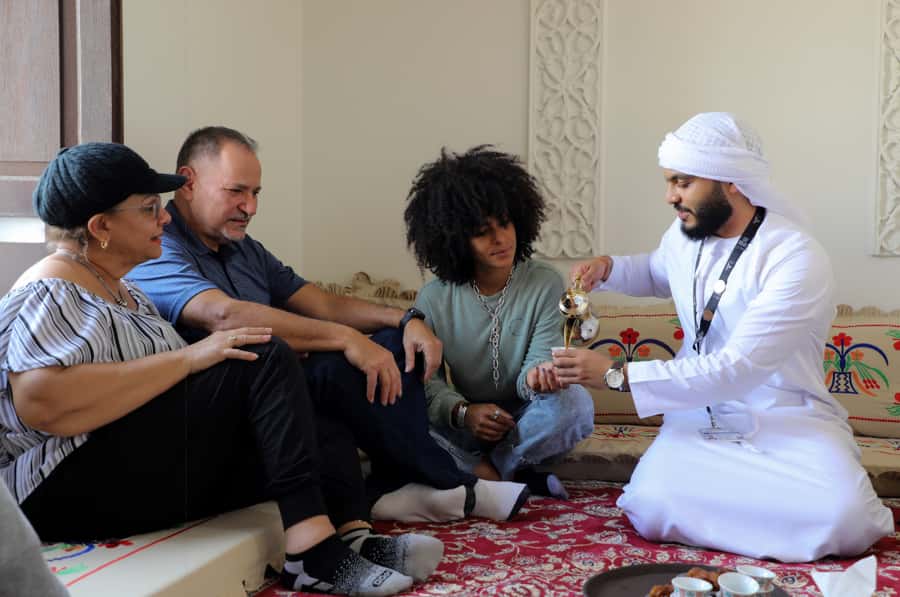
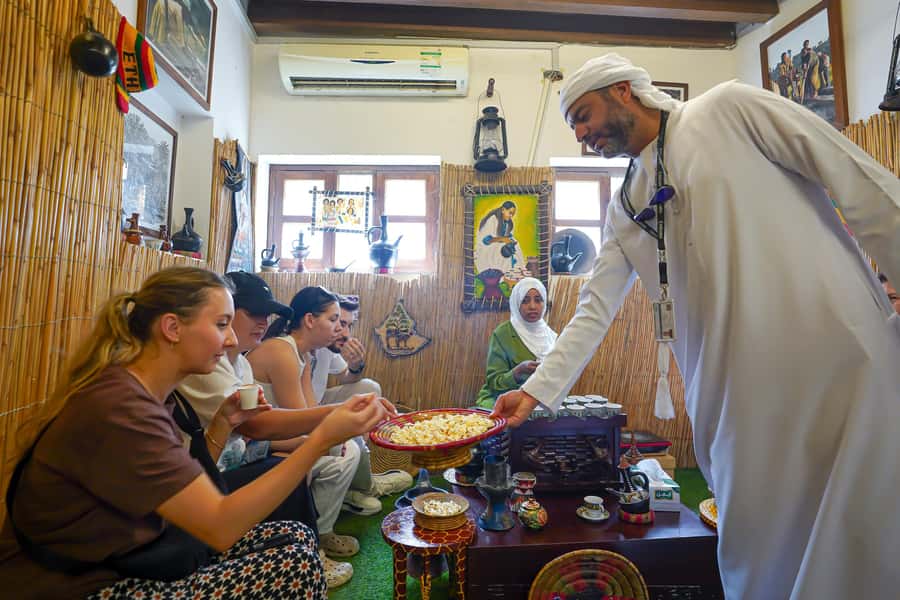
The tour also includes Arabic tea or coffee, dates, camel milk chocolate, and bottled water. At the Emirati heritage house, hospitality becomes the main focus. You can expect dates, tea, and Arabic coffee served in a welcoming setting. These tastings are small, but they give you something concrete to remember and help explain why serving coffee and dates is such an important part of social customs.
One practical point: this is a tasting tour, not lunch. If you need a substantial meal, eat beforehand or plan one afterward.
More Street Food Tours in Dubai:
- Old Dubai: Premium Guided Tour with Street Food & Abra Ride
★ 4.9 · 416 reviews - Dubai Top Highlights: Frame Entry, Souks, Abra & Street Food
★ 4.8 · 344 reviews - Dubai: Premium Old Town, Street Food, Souks & Boat Ride Tour
★ 4.9 · 262 reviews - Dubai: City Highlights Tour with Blue Mosque & Street Food
★ 4.6 · 247 reviews
Crossing Dubai Creek by abra
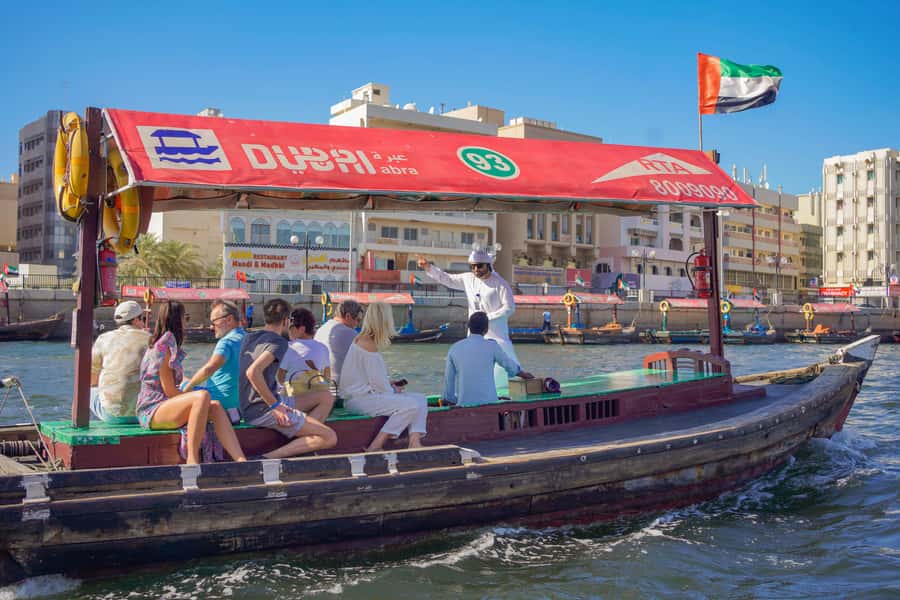
The Bur Dubai Abra Dock comes after the first market section. You have about 15 minutes for the dock, the boat ride, and the views along the way. An abra is a traditional open boat used to cross the Creek, and this short ride is one of the most appealing parts of the route.
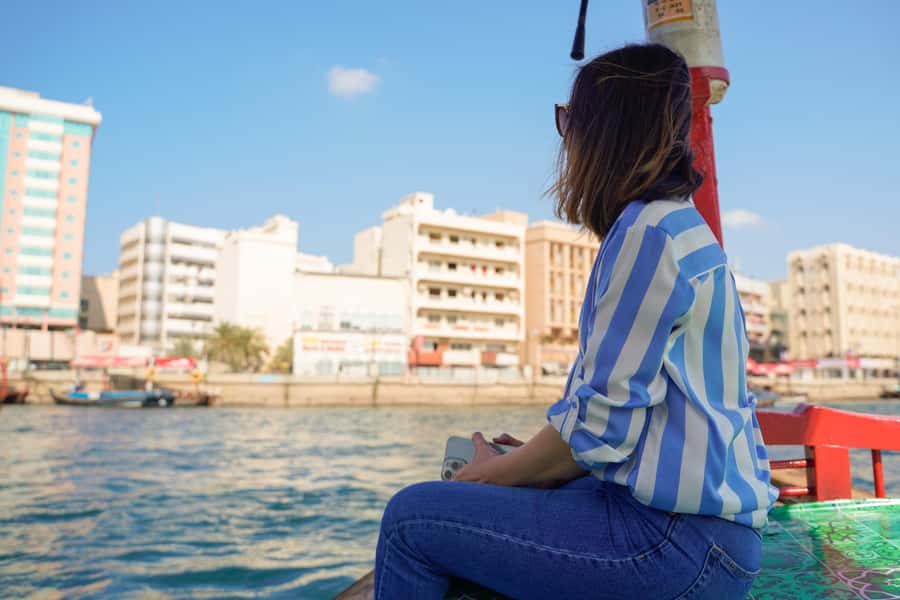
The crossing gives you a different view of Old Dubai. From the water, the two shores, passing boats, and busy docks make more sense than they do from a narrow lane. It is also a useful break from walking, particularly during a hot part of the day.
The ride is short, so do not expect a cruise or a long sightseeing voyage. Its value is in the transition. You move from Bur Dubai to Deira in the same practical way people have crossed the Creek for generations, then continue on foot toward the traditional markets.
If you are uneasy about organizing an abra yourself, having a guide handle the route can make the crossing easier. One useful part of a guided visit is not just the commentary, but knowing when and where to go next.
Spice Souk: scents, shopping, and sales talk
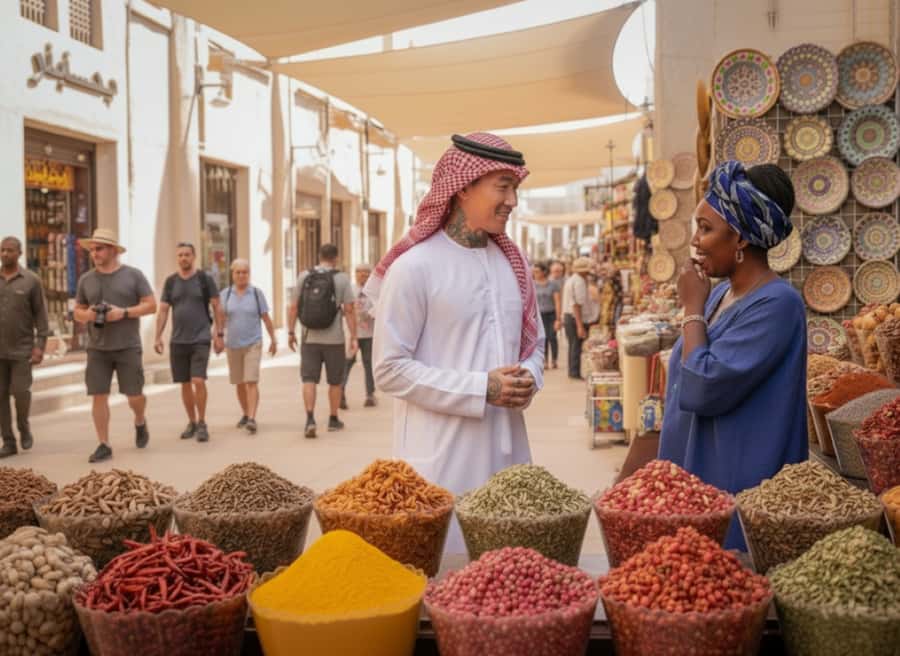
On the Deira side, the Spice Souk gets around 30 minutes. This is the longest single sightseeing stop, and it is where the tour’s food theme makes the most sense. You can look at sacks and displays of spices, herbs, dried goods, teas, and other market products while your guide explains what you are seeing.
The smells are a major part of the appeal, but the experience is still commercial. Some vendors may offer samples or encourage you to buy. Ask about prices before agreeing to anything, and keep your purchase plans flexible. You may find good gifts here, but do not assume every product is priced for a bargain.
This stop is also a good place to ask questions about ingredients and cooking. The guide can help turn a visual market visit into something more useful, especially if you have already tasted Karak tea or samosas and want to understand the food traditions behind them.
Thirty minutes passes quickly. If you love markets and want to shop at length, you may want to return independently after the tour. The guided visit gives you an introduction, not enough time to inspect every stall.
Gold Souk and the tour’s final stretch
The Gold Souk receives about 15 minutes before the tour ends. Even if you have no interest in buying jewelry, the displays offer a striking final stop. The scale of the shop windows and the concentration of gold make this market very different from the Spice Souk.
Your guide can explain how to walk through the area and may help you understand the shopping process. You do not need to buy anything. A short visit is enough to see the main character of the market, take photographs where permitted, and finish the route at the Gold Souk.
Ending here is convenient if you want to continue exploring Deira, return to the Creek, or arrange your own transport. It also means the tour does not return you to Al Fahidi, so plan your next move before the final stop.
How the pace and guide quality affect the experience
The tour runs for three hours and covers a lot of ground. It is generally described as well paced, with regular opportunities to pause, eat, take photographs, or step into a shaded or air-conditioned place. Even so, it is not a lazy stroll.
Your guide is the key variable. The most praised qualities are clear English, warmth, humor, patience, and a willingness to answer questions. Khan was praised for keeping people comfortable in hot weather, including making room for shade and air-conditioning stops. Fesal was appreciated for making the tour engaging and easy to follow. Mustafa, Ibrahim, Nasser, Hossam, Iqbal, and Ahmed were also singled out for friendly explanations and practical help.
Multilingual departures are available in English, German, Spanish, French, and Italian. The quality of your experience may depend partly on how well the guide’s style fits your group, but the repeated praise for individual guides is encouraging.
The biggest drawback is the amount of ground covered in a short time. You get a broad introduction rather than a specialist study of one neighborhood. The heat, uneven walking surfaces, market crowds, and short stops may be tiring for some people. The tour is not suitable for wheelchair users, children under five, or infants.
Is $6 a good value?
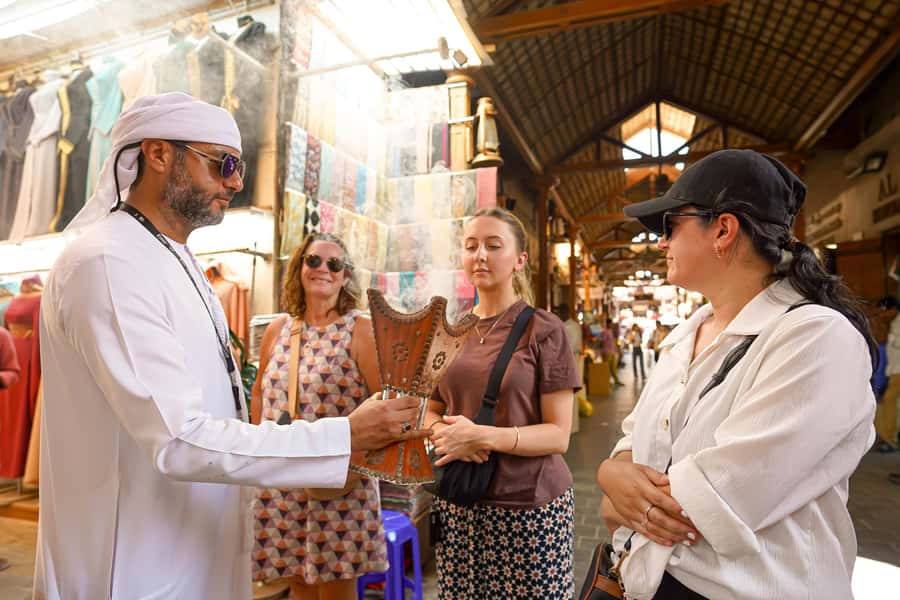
At $6, the price is excellent if your chosen option includes the listed food tastings. You receive a guide, heritage-site entry, the abra ride, tea or coffee, dates, camel milk chocolate, bottled water, and the Emirati heritage-house visit. The street-food option adds Karak tea and a samosa.
The cost is especially strong because the tour combines several activities that could be awkward to arrange separately. You would need to find Al Fahidi, understand the route to the abra dock, cross the Creek, locate the Spice Souk, and decide how much time to give the Gold Souk. The tour removes that planning work while adding context.
The low price does not mean you should expect a private tour, a full meal, or unlimited time in each market. Treat it as a compact orientation. If it helps you understand where you want to return later, it has done its job well.
Who should book this tour?
I would choose this experience if you are visiting Dubai for the first time, have already seen the modern districts, or want a practical introduction to Emirati customs. It also suits solo visitors who want a structured route and families with older children who can manage three hours of walking.
It is a good fit for shoppers who want to see the Spice and Gold Souks, but less suitable if shopping is your only goal. The guide-led route gives you an overview, while independent return visits allow more time to compare goods and bargain.
You may want another activity if you dislike heat, market attention, short walking stops, or group tours. Anyone needing step-free access should also look elsewhere because the experience is not suitable for wheelchair users.
My verdict: book it for context, not luxury
I recommend this tour for the price, route, and mix of local tastes, heritage sites, and transport. The abra crossing and Emirati hospitality make it feel more connected to Dubai’s past than a standard city sightseeing drive.
Book it if you want to understand the city beyond its towers and shopping malls, especially on a short visit. Skip it only if you need a private, slow-paced tour, a substantial meal, or extensive time for shopping. For most first-time visitors who can walk comfortably, this is a smart three-hour introduction to Old Dubai.
FAQ
How long does the Dubai Old Town tour last?
The tour lasts three hours.
Where does the tour begin?
Meet your guide at the entrance of Al Khayma Heritage Restaurant in the Al Fahidi Historical Neighborhood in Dubai.
Where does the tour finish?
The tour finishes at the Dubai Gold Souk.
Is the abra ride included?
Yes. A traditional abra ride across Dubai Creek is included.
What food and drinks are included?
The experience includes Arabic tea or coffee, dates, camel milk chocolate, and bottled water. If you select the street-food option, it also includes Karak tea and a samosa.
Which places are visited?
The route includes Al Fahidi Fort, Al Seef, a mosque photo stop, the Wall of Old Dubai, Bur Dubai Souk, the Bur Dubai Abra Dock, Dubai Creek, the Spice Souk, and the Gold Souk.
Is Dubai Museum open during the tour?
Dubai Museum is temporarily closed. The tour still includes a visit to Al Fahidi Fort and other heritage areas.
Which languages are available?
Guided tours are available in English, German, Spanish, French, and Italian.
Is the tour suitable for young children or wheelchair users?
The tour is not recommended for infants or children under five, and it is not suitable for wheelchair users.
Just added around Dubai
- Original Street Food Tour of Dubai★ 4.5 · 41 reviews
- Dubai Street Food Tour★ 5.0 · 5 reviews
- Old Dubai Walk, Souk, Street Foods, Al Fahidi and Al Seef Tales★ 4.0 · 9 reviews
- Private Dubai Street Food Tour .★ 4.5 · 7 reviews
- Dubai Souks, Museum, Street Food Walking Tour with Hotel Transfer★ 4.5 · 7 reviews
- Local Street Food and Guided Walking Tour of Dubai Old Town★ 5.0 · 37 reviews
- Private Dubai Old Town Tour,street food,Boat & Museums★ 5.0 · 6 reviews
- Old Dubai Guided Tour With Photographer: Souks & Street Food★ 4.9 · 74 reviews
Old Quarter and Medina Food Walks, compared.
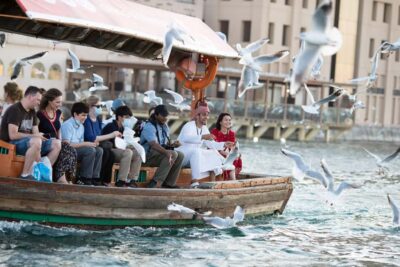
Old Town, Creek, Museums, Souks, & Street Food Tour
What we made of it →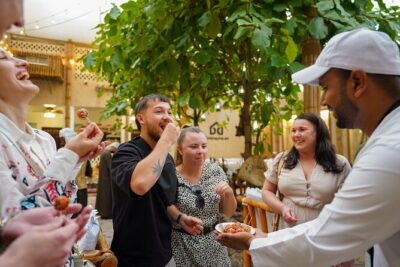
Old Town, Souks, Street Food, Guided Tour & Abra Ride
What we made of it →![[HOT] Hanoi Old Quarter Walking Street Food – Small Group Tour](https://cdn.streetfooddays.com/wp-content/uploads/hot-hanoi-old-quarter-walking-street-food-small-group-tour-400x267.jpg)
[HOT] Hanoi Old Quarter Walking Street Food – Small Group Tour
What we made of it →Old Town, Souks, Street Food, Guided Tour & Abra Ride
What we made of it →
Chania: Old Town Highlights Guided Tour with Street Food
What we made of it →
Old Delhi Street Food Tour with Rickshaw Ride
What we made of it →Where this tour turns up