Review · HANOI
(Private/Motor/Cutural) Street food experience in Hanoi old quarter
Come hungry and wear comfortable shoes. This four-hour private outing pairs six to eight Hanoi dishes with Old Quarter sights, from bun cha and pho to egg coffee and Dong Xuan Market. I like the flexible, one-group format and the chance to ask a local student guide about food, customs, and daily life. I also like that hotel pickup and drop-off are available within Hanoi’s Old Quarter.
The main consideration is that the food and drinks are not included in the $29 booking price. You should also expect a volunteer student guide rather than a fully licensed professional guide. That can make the experience friendly and personal, but communication may vary, as one guest found with a guide who was still building confidence in English.
Key points at a glance
- Six to eight Hanoi specialties: Possible tastings include bun cha, banh cuon, pho, banh mi, banh goi, banh xeo, bun rieu cua, and egg coffee.
- Private group format: Only your group participates, with a maximum of 15 people.
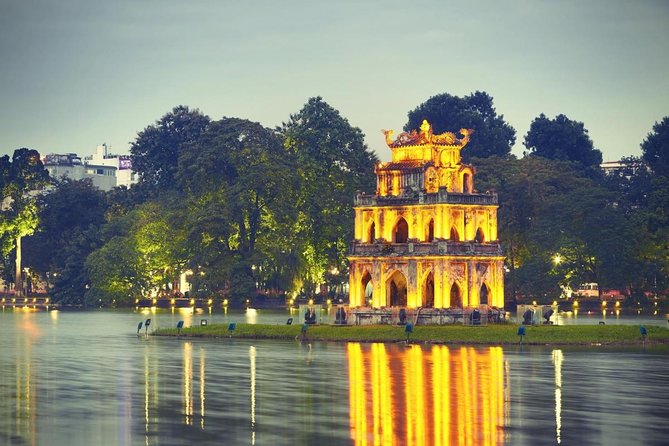
- Old Quarter landmarks included: The route can include Hoan Kiem Lake, Ngoc Son Temple, The Huc Bridge, the Opera House, St. Joseph’s Cathedral, Train Street, and Dong Xuan Market.
- Student guides bring local context: Guides such as Sophie and Tam have helped with food choices, market visits, local customs, and price negotiations.
- Extra food budget required: The $29 covers the arranged experience, but you pay for food, drinks, and any transport separately. The supplied estimate is about $10 for two to four people.
- Pickup is limited to the Old Quarter: Hotel pickup and drop-off are offered there, while the stated meeting point is the Thang Long Water Puppet Theatre.
Why this food walk works in Hanoi
Hanoi’s food is not presented behind glass. It arrives in bowls, on small plates, or wrapped in paper, often at street-side spots where the cooking is part of the scene. This experience gives you a guide to help choose what to try and explain what is on your plate.
I like that the food list reaches beyond pho. Pho is the dish most people know, but bun cha, banh cuon, bun rieu cua, and banh goi show different sides of northern Vietnamese cooking. Egg coffee adds a sweet finish and gives you a taste of a Hanoi specialty that many first-time visitors would otherwise miss.
The private format matters here. With only your own group, you can ask for help with unfamiliar ingredients, explain allergies, or spend more time on a dish you enjoy. The group limit is 15, but a smaller party will likely find it easier to move through narrow Old Quarter streets and talk with the guide.
The setup is also a little different from a standard paid food tour. The guide service is described as free and provided by local student volunteers, while you cover the cost of food, drinks, and transport. That keeps the formal price low, but you should think of the $29 as an arrangement and guiding fee, not the total cost of the evening.
More Old Quarter and Medina Food Walks in Hanoi
- [HOT] Hanoi Old Quarter Walking Street Food – Small Group Tour
★ 5.0 · 2,163 reviews - Hanoi Old Quarter Walking Street Food Tour
★ 5.0 · 423 reviews - Hanoi old quarter sightseeing & street food eating by Motorcycle
★ 5.0 · 333 reviews
Starting at the Old Quarter
The tour begins with hotel or hostel pickup in Hanoi’s Old Quarter, or at the Thang Long Water Puppet Theatre on Dinh Tien Hoang Street. After meeting, you spend about five minutes discussing allergies, vegetarian needs, and the planned route.
That short briefing is useful. Vietnamese food often includes fish sauce, meat-based broth, shrimp paste, peanuts, or other ingredients that are not always obvious from a dish’s name. Tell the guide your needs at the start, not after the first plate arrives.
The route is listed as about four hours, although the named sightseeing stops add up to less than that. The remaining time is meant for walking, ordering, eating, and conversation. That is a sensible pace for a food outing, but do not expect every stop to receive a long guided visit.
The description uses the words private, motor, and cultural, yet the detailed plan centers on walking through the Old Quarter. Pickup and drop-off are included only within that district. If you expect a motorbike ride or private vehicle between every stop, confirm the transport arrangement before booking.
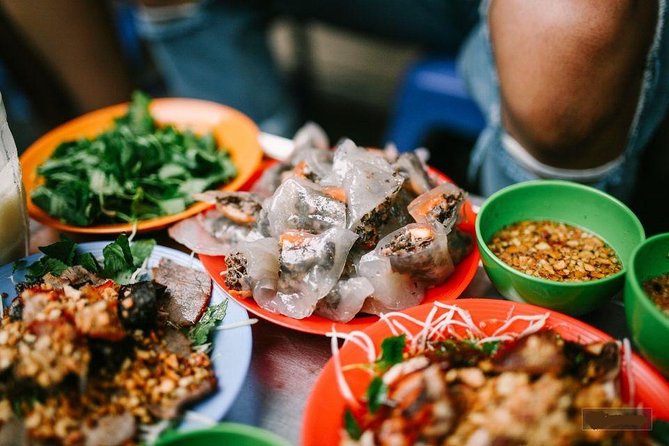
Bun cha, banh cuon, and Hanoi’s savory side
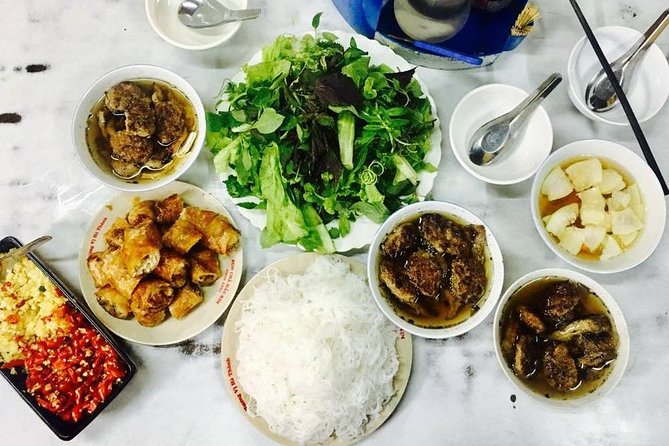
Bun cha is one of the strongest reasons to book a food walk in Hanoi. It combines grilled pork, rice noodles, fresh herbs, and a dipping broth. The dish is filling without being heavy, and the balance of smoky meat, herbs, noodles, and sweet-sour seasoning gives you a quick lesson in how Vietnamese meals are built.
Banh cuon offers a different texture. These steamed rice rolls are soft and delicate, with a savory filling and accompanying herbs or sauce. Because the dish is less familiar to many international visitors, having a guide explain how it is eaten can make the first taste easier to understand.
The food list may also include banh xeo, a crisp Vietnamese pancake, and bun rieu cua, a noodle soup made with crab. These dishes should not be treated as guaranteed stops, since the exact food selection may change. The guide is expected to choose six to eight items from the available options and consider what you have already tasted.
That flexibility earned praise from one guest who was traveling with previous Vietnamese food experience. Guide Sophie asked what had already been tried, then selected dishes that added something new rather than repeating familiar choices. That is a useful approach for anyone who has already eaten pho or banh mi but wants a broader introduction.
Pho, banh mi, and familiar favorites
Pho gives you a chance to compare the everyday version with the dish you may have eaten outside Vietnam. The tour description lists beef pho, though the exact preparation and serving location are not specified. Ask the guide about the broth, herbs, condiments, and regional differences as you eat.
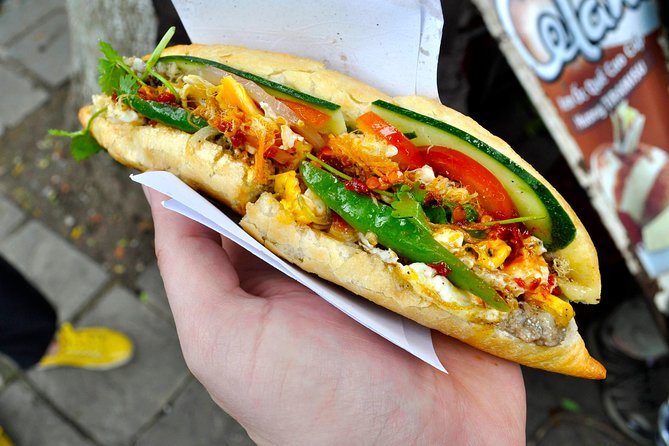
Banh mi is another practical stop. The Vietnamese sandwich reflects the country’s French colonial influence while using local meats, pickles, herbs, and sauces. It is quick to eat and usually easy to share, which helps when you are sampling several dishes in one outing.
Banh goi, a fried dumpling, adds crunch to the route. It is the kind of snack that works well between larger bowls and noodle dishes. Since you cover the food bill directly, you can ask the guide about portion sizes and avoid ordering more than your group can manage.
One important point: the included items are the English-speaking guide, Old Quarter hotel pickup, and Old Quarter hotel drop-off. Food and drinks are separate. The supplied estimate is approximately $10 for two to four people for those expenses, but your actual cost can vary with the number of dishes, drinks, and any transport used.
More Old Quarter and Medina Food Walks in Vietnam
- Private Street Food Tour – Walking Hanoi Old Quarter
★ 5.0 · 294 reviews - Hanoi: Old Quarter Street Food Tour with 12+ Tastings
★ 4.9 · 133 reviews - Old Quarter Hanoi Street Foods and Heritage Road Tour by Walking
★ 5.0 · 117 reviews - Hanoi’s Old Quarter Street Food Experience and Train Street
★ 5.0 · 22 reviews
Egg coffee and the sweet finish
Ca phe trung, or egg coffee, is one of Hanoi’s signature drinks. It is usually rich and dessert-like, with a creamy egg mixture over coffee. If you prefer unsweetened coffee, tell the guide before ordering, but this is still a worthwhile taste if you want to understand Hanoi’s cafe culture.
The drink also gives the food tour a change of pace. After grilled pork, noodles, fried snacks, and broth, a small coffee provides a natural pause before the sightseeing portion continues. The experience is not only about filling up. It is about noticing how Hanoi’s food culture moves between tiny meals, snacks, and drinks throughout the day.
The exact cafe is not named, so you should not book this expecting a particular famous coffee shop. The value is in having someone explain the drink and help you order it, rather than in a promised venue.
Hoan Kiem Lake, Ngoc Son Temple, and The Huc Bridge
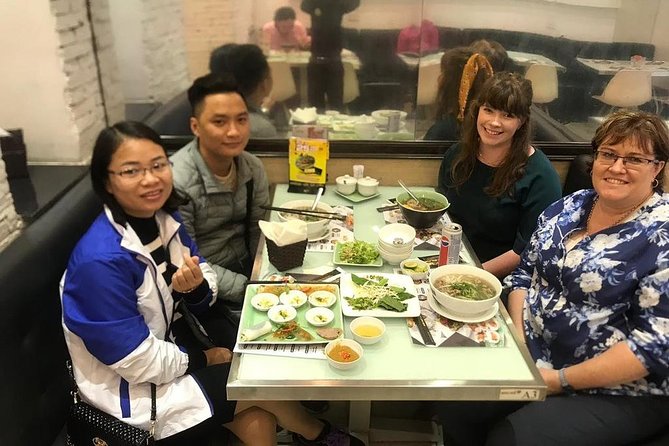
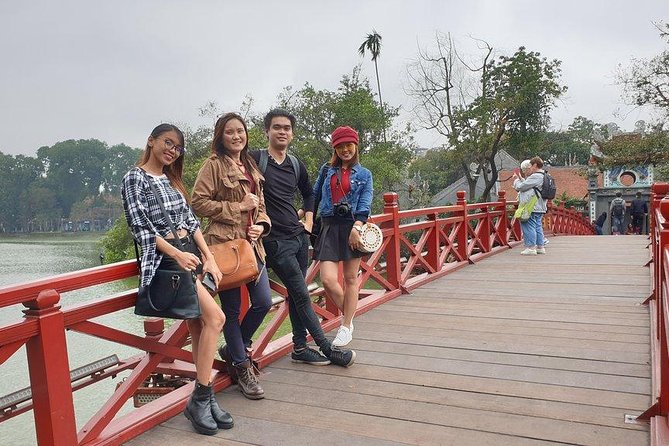
Hoan Kiem Lake is the central meeting point for the route and one of the easiest places in Hanoi to connect food with local life. The planned stop lasts about 30 minutes and includes views of the lake, Ngoc Son Temple, and The Huc Bridge.
The lake is especially useful as a reset between food stops. You can watch people crossing the surrounding streets, see local routines, and get a sense of how the Old Quarter connects to Hanoi’s central public spaces. Ngoc Son Temple adds a cultural layer, although admission to the lake stop is listed as free and the temple entry details are not specified.
The Old Quarter walking street operates on Friday, Saturday, and Sunday. If your visit falls on one of those days, the atmosphere around Hoan Kiem Lake may differ from a weekday route. The tour description specifically mentions the walking street on those days, so ask how much time will be spent there if that is important to you.
Opera House and St. Joseph’s Cathedral
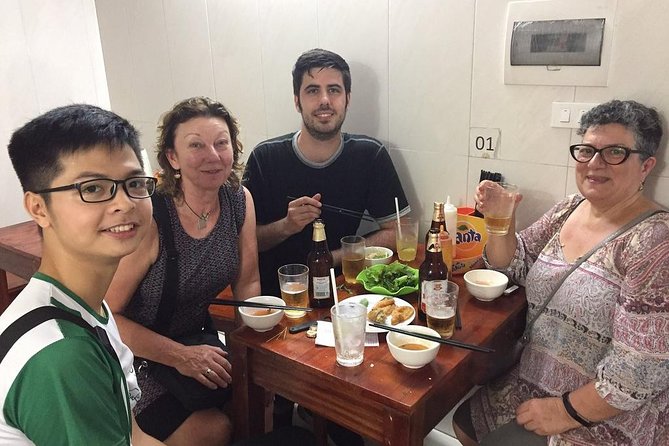
The Hanoi Opera House is an optional walking sight rather than the main purpose of the outing. Built between 1901 and 1911 under the French colonial administration, it is one of Hanoi’s major colonial-era buildings. You may see it as part of the route, but admission is not included.
St. Joseph’s Cathedral is another optional stop. Construction began in 1886, and its Neo-Gothic design was modeled in part on European cathedral architecture. It is described as the oldest church in Hanoi and remains an important part of the city’s French-era architectural story.
These stops add useful context, but they are not full museum visits. The listed time is about 30 minutes, and the focus remains on moving through the city and eating. If you want an in-depth architectural tour, this experience will probably feel too food-centered.
Train Street, with an important practical caveat
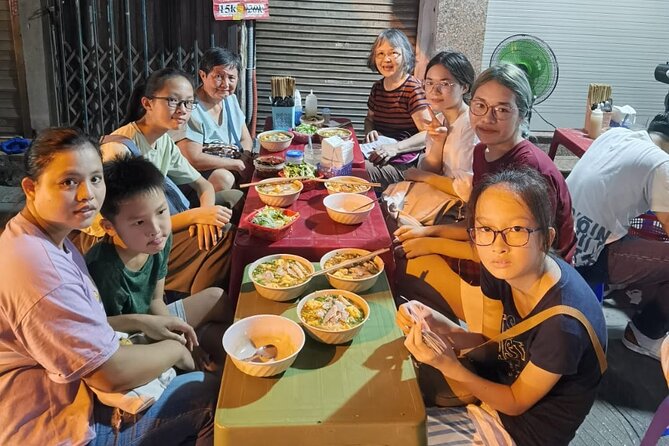
The route also includes Hanoi Train Street, locally called Duong Tau. It is a narrow residential lane where the railway passes directly through the community. The description notes that trains pass twice daily and that residents move bicycles, belongings, and children indoors before the train arrives.
The listed stop is about 30 minutes and admission is free. You may see the narrow track area and residential setting, but the supplied details do not promise that a train will pass during your visit. Do not book this solely for a train photograph.
The site can also be sensitive because it is a working residential area. Follow the guide’s instructions and respect household entrances and safety limits. The value here is seeing how ordinary homes and railway infrastructure share an unusually tight space, not simply checking off a photo stop.
Dong Xuan Market and the wholesale side of Hanoi
Dong Xuan Market is the largest covered market in Hanoi. It began under French administration in 1889 and was rebuilt several times, most recently after a major fire in 1994. Today it sells everything from clothing and household goods to food supplies, with wholesale trade forming a major part of its character.
This may be the most useful sightseeing stop for understanding how goods move through the city. You are not just looking at souvenirs. You might see the practical, commercial side of Hanoi, where shopkeepers and traders buy supplies for their own businesses.
One guide, Tam, was praised for taking a group to a wholesale marketplace and explaining Communist history and its influence. That detail suggests the better guides can connect a simple market visit with wider questions about Hanoi’s economy and recent past. Ask for this context directly, especially if the market is a major reason you are booking.
The market stop is listed as about 30 minutes. That is enough for an introduction, but not enough for a careful look at every section. Keep your expectations focused: this is a guided taste of the market, not a long shopping expedition.
The student guide experience
The guides are local students who volunteer their time, and that shapes the experience. You may get an enthusiastic companion who knows food stalls, explains customs clearly, and is happy to answer basic questions about Hanoi.
Sophie was described as helpful, polite, and good at selecting unfamiliar dishes. Tam was praised for being engaging, funny, and well informed, as well as helping with vendor prices. These are strong signs that the right guide can add much more than translation.
The service is not uniform, though. One guest found communication difficult with a guide who was leading an English-language tour for the first time. That is the clearest limitation in the arrangement. If you need detailed historical interpretation or highly polished English, a professional paid guide may be a safer choice.
If the guide’s English is less confident, you can still improve the experience by showing food preferences in writing and asking short, direct questions. Share allergies clearly before leaving the meeting point. A private tour gives you room to slow down and clarify.
Is $29 good value?
At $29 per group of up to 15, the advertised price is low for a four-hour private outing. The value becomes especially good for a small group that wants a custom food introduction, since the price is not charged per person in the information provided.
You must add the cost of food, drinks, and transport. The supplied estimate of about $10 for two to four people makes the total still modest, but treat it as a rough guide rather than a fixed food allowance. Ordering six to eight dishes for a larger party could cost more.
The strongest value is the combination of local guidance and flexibility. You are not paying only to be led from one famous dish to another. You are also paying for help choosing food, understanding customs, navigating the Old Quarter, and possibly negotiating prices at vendors.
The weakest value appears if you want guaranteed professional guiding, fixed restaurants, or a precise menu. Those details are not promised. This experience works best when you accept some local variation.
Who should book this Hanoi food tour?
I would recommend it to first-time visitors who want a quick introduction to Hanoi’s food and central sights. It also suits people who prefer a private outing, families or friends who want to set their own pace, and anyone curious about dishes beyond pho.
It is a good choice for budget-conscious groups, especially two to four people who can share food costs. You will get more from it if you are open to street food, walking, small local venues, and a guide whose strengths may be personal knowledge rather than formal training.
I would be more cautious if you have strict dietary requirements, need flawless English interpretation, or want a fully planned motor vehicle itinerary. The allergy briefing helps, but the description does not provide a detailed vegetarian menu or guarantee that every listed dish will be available.
Free cancellation is available up to 24 hours before the start time. Changes made within 24 hours are not accepted, and poor weather or failure to meet a minimum group size can lead to a new date or a full refund.
Should you book it?
Book this experience if your priority is food, conversation, and local orientation rather than polished tourism. The combination of bun cha, banh cuon, pho, banh mi, egg coffee, Hoan Kiem Lake, and Dong Xuan Market gives you a useful first look at Hanoi in one afternoon or evening.
Go in with realistic expectations. Bring extra money for food and drinks, confirm whether transport beyond Old Quarter pickup is needed, and understand that the guide is a student volunteer. If that sounds like a fair trade for a personal introduction to Hanoi, the $29 group price offers good value.
FAQ
How long does the Hanoi street food experience last?
The experience lasts approximately four hours.
How much does the experience cost?
The listed price is $29 per group, with up to 15 people.
Are food and drinks included?
No. You pay separately for food, drinks, and any transport. The supplied estimate is approximately $10 for two to four people.
What foods might I try?
Possible dishes include bun cha, banh cuon, pho with beef, banh mi, banh goi, banh xeo, bun rieu cua, and ca phe trung, also known as egg coffee.
Is hotel pickup available?
Yes. Free hotel pickup and drop-off are available for hotels and hostels in Hanoi’s Old Quarter.
Where does the tour meet?
The stated meeting point is the Thang Long Water Puppet Theatre at 57B Dinh Tien Hoang Street in Hanoi.
Is this a private tour?
Yes. Only your group participates, with a maximum group size of 15 people.
Can I cancel for a full refund?
Yes, if you cancel at least 24 hours before the experience start time. Cancellations made less than 24 hours in advance are not refunded.
More Dining Experiences in Hanoi
- Hanoi: Street Food Experience with 5 Food Stops
★ 4.8 · 63 reviews - Hanoi Street Food Experience by Walking
★ 5.0 · 31 reviews - Hanoi Street Food Experience
★ 5.0 · 3 reviews - Hanoi The Best Street Food Experience | VEGETARIAN OPTION
★ 5.0 · 3 reviews
Just added around Hanoi
- Hanoi Street Food Tour and MORE★ 5.0 · 18 reviews
- Walking Street Food Tour and Hidden Music★ 4.5 · 19 reviews
- Hanoi Vespa After Dark Street food + Train Street+ Live Music★ 5.0 · 18 reviews
- Street food on foot with a local-Asian Promise★ 5.0 · 19 reviews
- TASTE OF HANOI – walking street food adventure★ 5.0 · 94 reviews
- Street Food by Walking Tour for 3 hours in Hanoi, Vietnam★ 5.0 · 26 reviews
- Street Food Tour Hanoi By Walking★ 5.0 · 3 reviews
- Street Food Tour in Hanoi★ 5.0 · 3 reviews
Old Quarter and Medina Food Walks, compared.
Old Town, Creek, Museums, Souks, & Street Food Tour
What we made of it →
Old Town, Souks, Street Food, Guided Tour & Abra Ride
What we made of it →
[HOT] Hanoi Old Quarter Walking Street Food – Small Group Tour
What we made of it →Old Town, Souks, Street Food, Guided Tour & Abra Ride
What we made of it →
Old Town, Street Food, Creek, Souks, & Emirati House
What we made of it →