
Review · MARRAKECH
Marrakech Street Food with +10Tasting & Tanjia Dinner|Guided Walk
Come hungry, leave happily confused. This evening food walk takes you through Marrakech’s Medina for more than 10 Moroccan tastings, from Harira soup and olives to Sfenj donuts, Msamen pancakes, and a slow-cooked Tanjia dinner. I like the mix of familiar market snacks and dishes that are harder to find without local help. I also like that the walk keeps you moving through Jemaa el-Fnaa and the souks instead of confining the meal to one restaurant.
The main consideration is pace. The experience lasts about two to three hours and includes several stops, so you will be eating small portions rather than sitting down for a long, leisurely dinner. The 6:00 pm start also means you should plan your evening around it, and the many tastings make the advice to arrive hungry very practical.
Key things to know before booking
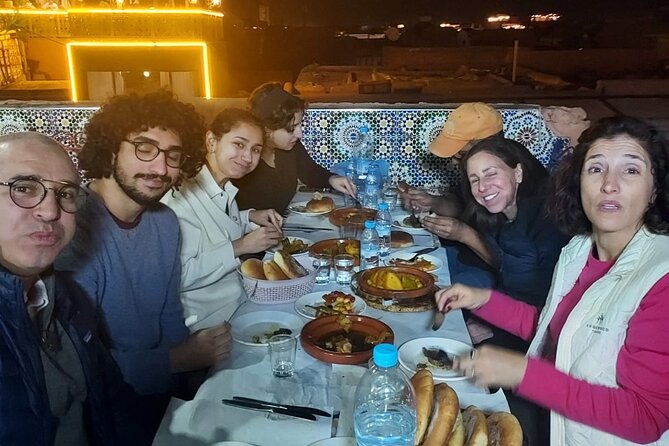
- More than 10 tastings in one evening: Expect Harira, olives, Sfenj, Moroccan donuts, Msamen, pastries, Tanjia, mint tea, and other small bites.
- The route begins at Jemaa el-Fnaa: You meet at the famous square and finish back at the same meeting point.
- Tanjia is the main event: The final dish is slow-cooked meat prepared with saffron, garlic, cumin, and preserved lemon.
- You see food being made: Sfenj dough is shaped and fried in front of you, while Msamen is prepared at a traditional bakery.
- A useful introduction to the Medina: A local guide leads the way through the souks, which is helpful in an area where it is easy to lose your bearings.
- Small enough to stay social: The maximum group size is 16 people, a reasonable number for narrow Medina lanes.
What this Marrakech food walk does well
Marrakech food tours can easily become a string of restaurant samples. This one has a better idea: use the city itself as the dining room. You begin in Jemaa el-Fnaa, pass through Souk Semmarine, enter Medina lanes around Derb Dabachi, and finish with Tanjia. Each stop gives you a taste, but also puts that food in its local setting.
I especially like the balance between prepared dishes and food made while you watch. Harira and Tanjia show the slower, more traditional side of Moroccan cooking. Sfenj and Msamen offer the quick street-food side, with dough shaped, fried, folded, or griddled right in front of you.
The route also solves a common Marrakech problem. The souks are rewarding, but their lanes can be confusing, and food stalls are not always easy to judge from a quick glance. With a licensed local food guide, you have someone organizing the route and explaining what you are eating. That matters more here than a long list of historical facts.
The tour has a five-out-of-five rating from 21 reviews and a 100 percent recommendation rate. The most useful practical point is simple: do not eat a full meal beforehand. There is enough food here to make a normal pre-tour dinner a mistake.
More Dinner Experiences in Morocco:
- Bangkok Food Tour by Tuk Tuk – Hotel-pickup & Dinner
★ 5.0 · 113 reviews - Da Nang By Night: Seafood dinner, night market and cruise trip
★ 5.0 · 38 reviews - Street Food Tasting Tour including Dinner
★ 4.5 · 26 reviews
Starting with Harira at Jemaa el-Fnaa
The tour begins at Jemaa el-Fnaa at 6:00 pm, a good time for a food walk. The square is one of Marrakech’s central meeting places, and beginning there gives you an immediate sense of the city’s evening rhythm.
Your first tasting is Harira, a tomato-based soup with lentils, chickpeas, fragrant spices, and other ingredients. It is filling without being heavy in the way a large meat dish can be. The soup is especially associated with Ramadan, when it is commonly served to break the daily fast.
This first stop lasts about 30 minutes. That gives you time to taste the soup and hear about its place in Moroccan cooking rather than gulping it down while walking. Harira is also a sensible opening dish because it introduces the spice blends used in the country’s food without pushing straight into sweets or fried snacks.
If you dislike legumes or tomato-based soups, this may not be your favorite opening. Still, it gives you a useful reference point for the flavors that appear later, especially cumin, garlic, and warm spices.
Sampling olives in Souk Semmarine
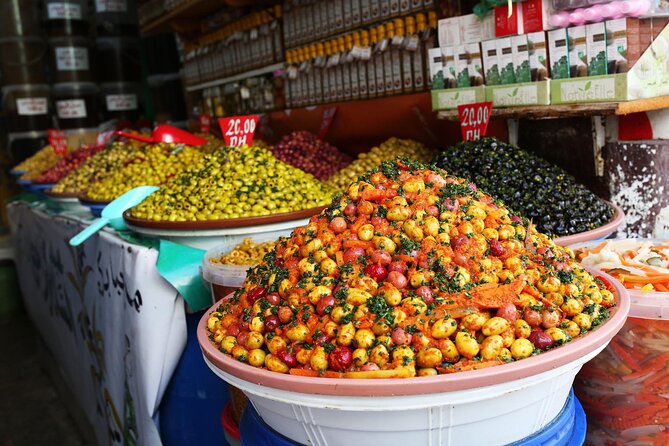
From the square, the route moves into Souk Semmarine for an olive and tapenade tasting. This is a short 20-minute stop, but it adds something important to the meal: not every Moroccan snack is fried, sweet, or meat-based.
You sample spiced, preserved, and oil-cured olives while learning about olive farming and artisanal olive oils. The range of preparation is the point. A plain green olive, a seasoned olive, and an oil-cured olive can taste like three different products, even though they begin with the same fruit.
I like this stop because it connects food with everyday shopping in the souks. You are not simply being handed a dish in a dining room. You are seeing one of the ingredients that appears across Moroccan tables, salads, tagines, and snacks.
The practical drawback is that olive tasting can be salty. Since the tour continues through several sweet and savory stops, take your time and drink the mint tea later in the evening. If you want to buy olive products, ask the guide about the samples and the places you pass, but keep in mind that shopping is not listed as part of the tour.
Watching Sfenj take shape in Derb Dabachi
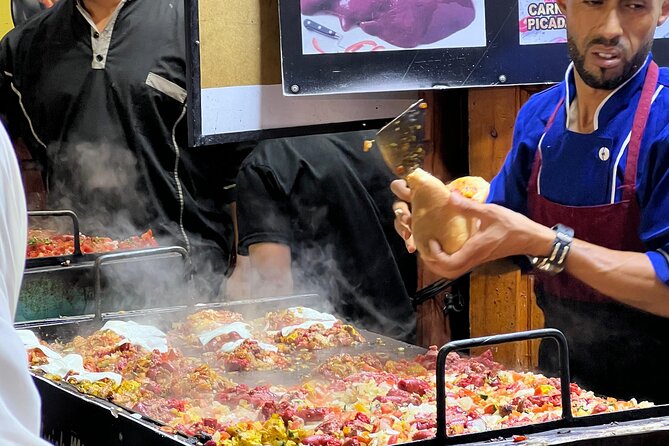
At Derb Dabachi, you stop for fresh Sfenj. These are Moroccan donuts made from dough that is shaped and deep-fried on the spot. You may try them plain or with honey.
This is one of the most appealing parts of the route because the preparation is part of the experience. You see the dough being handled, shaped, and dropped into hot oil before tasting the result. The food is at its best when fresh, and the contrast between a crisp outside and soft interior is what makes Sfenj worth seeking out.
The stop lasts about 20 minutes. That is enough time to watch and eat, though not enough for a detailed cooking lesson. The guide can explain the dish and its place in Moroccan street food, while the vendor handles the quick work.
Sfenj is a fried food, so it can feel rich when combined with later pastries and another donut tasting. I would treat this as a sample rather than a full serving. The tour works best when you pace yourself, take small bites, and remember that Tanjia is still waiting at the end.
More Dining Experiences in Morocco:
- Naples: Street Food Experience With 6 Stops
★ 4.7 · 392 reviews - Siem Reap: Street Food Experience by Tuk-Tuk
★ 4.9 · 310 reviews - Saigon at Sunset: Ultimate Street Food Experience
★ 4.7 · 153 reviews - Siem Reap: Local Street Food Experience by Tuk-Tuk
★ 5.0 · 141 reviews
Learning the folds of Msamen at Riad Sidi Ayoub
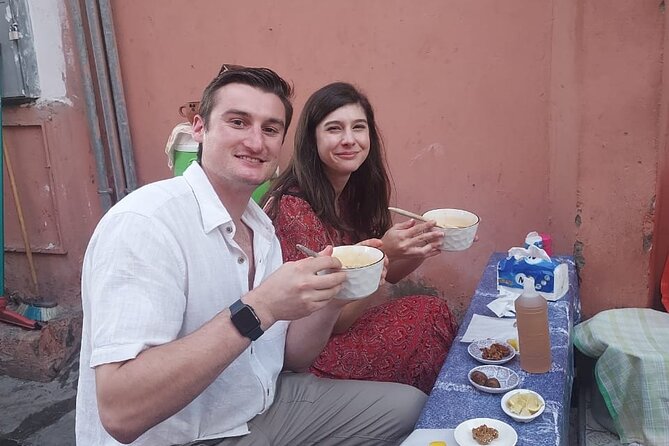
The next stop is at Riad Sidi Ayoub, where you try Msamen, a layered Moroccan pancake. It can be served sweet with honey or savory with soft cheese.
Msamen gets its character from the way the dough is folded into layers before it reaches the griddle. The result is flaky, buttery, and more substantial than a thin crepe. Seeing it prepared at a traditional bakery helps explain why the texture matters. This is not just bread with a topping. The folding and cooking method create the dish.
I like the change of pace here. After soup, olives, and fried dough, Msamen brings a warm, layered bite that can go either sweet or savory. It also shows how Moroccan food uses simple dough in several different ways.
The stop lasts roughly 20 minutes. If you have a strong sweet tooth, choose the honey. If you already expect several pastries, the cheese option may help keep the tasting balanced. The tour description does not specify which version every group receives, so the exact serving may depend on the guide and the bakery.
A second Moroccan donut stop at Rahba Kedima Square
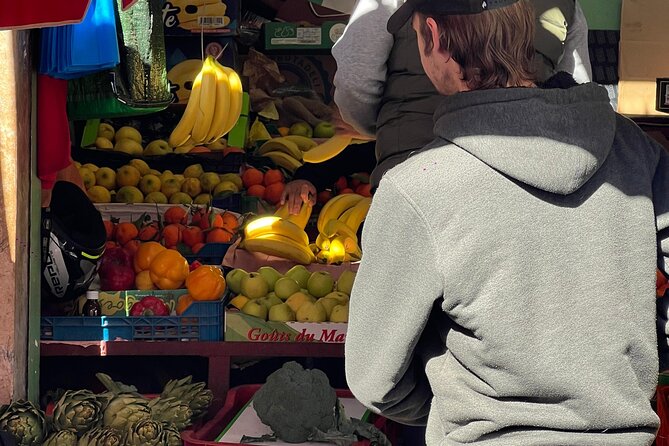
At Rahba Kedima Square, the food focus returns to Moroccan donuts, described as Sfenj or Beignets. You can expect a relaxed tasting of sweet treats, including plain and honey-drenched versions.
At first glance, this may sound too similar to the Derb Dabachi stop. That is the clearest weakness in the route. If you are hoping for ten completely different dishes, two donut-focused stops may feel repetitive. On the other hand, the two locations may offer different preparations, textures, or serving styles, and the second stop gives you another chance to try the sweet version.
I would ask the guide how this stop differs from the earlier Sfenj tasting. That simple question can turn a repeat item into a useful comparison. You may notice differences in frying, size, texture, or toppings, though the tour details do not promise specific variations.
The square itself helps keep the stop connected to the Medina rather than turning the route into a series of indoor tastings. You get another pause to look around, finish a small sweet, and prepare for the final savory dish.
Ending with Tanjia Marakcheya
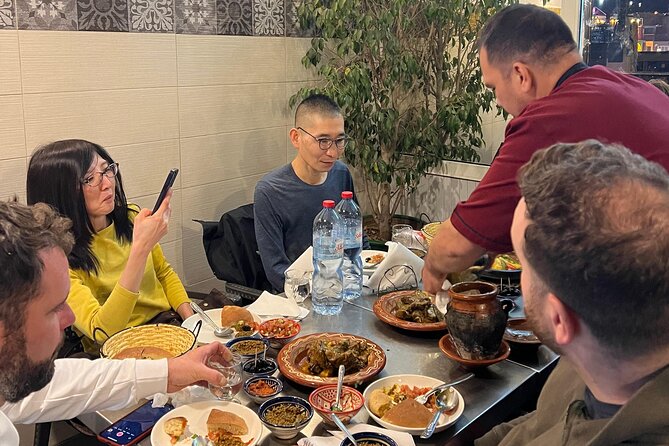
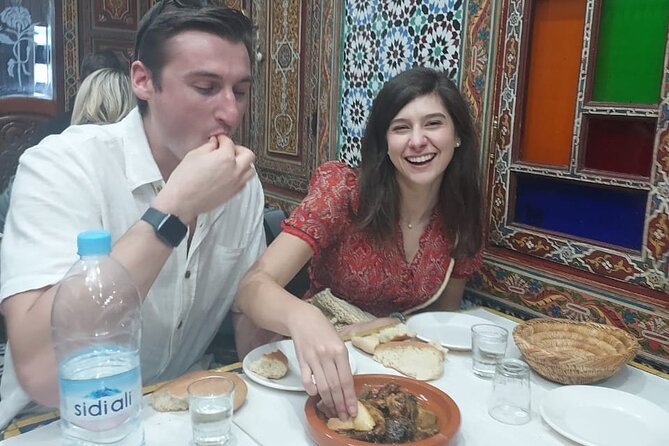
The tour ends with Tanjia Marakcheya, a signature Marrakech dish cooked slowly in a traditional clay pot. The meat is seasoned with saffron, garlic, cumin, and preserved lemon, then cooked underground until tender and full of flavor.
This is the dish that gives the experience its local focus. Tanjia is closely tied to Marrakech, and its preparation is different from the tagines commonly associated with Moroccan food. A tagine is cooked in a distinctive conical vessel, while Tanjia is traditionally prepared in a clay pot and cooked slowly, often in the heat of an underground oven.
You receive Tanjia as the final dinner course after the earlier tastings. The stop lasts about 30 minutes, making it the longest individual food stop after Harira. It is a satisfying finish, but the amount you receive is not stated, so do not assume it replaces a large restaurant dinner for two people.
The preserved lemon and cumin should give the meat a savory, aromatic character, while saffron and garlic add depth. If you have eaten only sweet snacks and bread-based foods during the walk, Tanjia provides the needed change. It is also the most distinctly Marrakchi item on the route, so I would pay close attention to the guide’s explanation here.
Mint tea and the value of local explanation
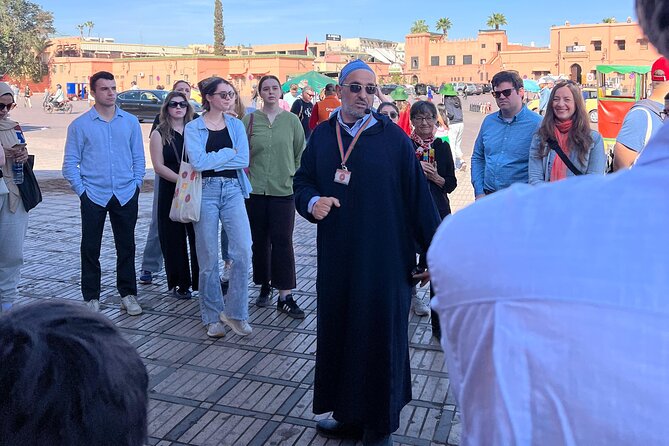
Moroccan mint tea is included and served in a traditional setting. The tea is more than a drink between tastings. It gives you a calm pause after walking through the Medina and helps tie the meal together.
The tour includes a licensed local food guide, which is important for the context. You learn not only what each food is, but also how it fits into Moroccan eating habits. Harira connects to Ramadan, olives connect to farming and preservation, and Tanjia connects to Marrakech cooking.
The guide also helps with the route. One of the strongest practical benefits is walking through the souks without getting lost. That does not mean the Medina becomes quiet or simple, but you can focus on the food instead of constantly checking which lane you entered.
No guide name is provided, so you should not book this expecting a particular host. The experience depends on the assigned local guide, the food stalls available that evening, and the size of your group.
Is the $62.72 price fair?
At $62.72 per person, the price is not cheap for a two-to-three-hour walk in Marrakech. The value depends on what you would otherwise do with the same evening.
You are paying for a licensed local guide, more than 10 tastings, a full route through the Medina and souks, mint tea, and a Tanjia dinner. You also avoid the guesswork of choosing food stalls on your own. If you tried to recreate the same evening independently, the food itself might cost less, but you would not get the organized route or explanations.
The price makes the most sense for a first visit to Marrakech, for food-focused visitors, and for anyone who wants a guided introduction before eating independently for the rest of the trip. It is less compelling if you already know the Medina well, speak with local vendors comfortably, and prefer choosing every dish yourself.
Group size is capped at 16 people. That is not a private tour, but it is small enough to be manageable in narrow lanes. Larger groups can make street-food stops awkward, especially when everyone needs to hear the guide and receive a sample.
Timing, meeting point, and practical planning
You meet at Jemaa el-Fnaa and return there when the activity ends. Hotel pickup and drop-off are not included, so you need to make your own way to the square and arrange your own return.
The activity has a mobile ticket, and confirmation is provided at booking. It is near public transportation, and most people can participate. Since the route is a walking tour through the Medina and souks, wear comfortable shoes and arrive ready to walk, though the supplied information does not give a precise distance or accessibility specification.
Because the start time is 6:00 pm, check your arrival plans carefully. If you have a late airport transfer, a long day trip, or a dinner reservation soon afterward, this tour may not fit comfortably. I would leave the rest of the evening open. The end time is approximate because the total duration is listed as two to three hours.
Free cancellation is available up to 24 hours before the start time for a full refund. Changes or cancellations inside that window are not accepted for a refund, so keep the cutoff in mind before booking.
Who should book this experience?
I would recommend this walk to you if you want a guided introduction to Moroccan food without committing to a formal restaurant meal. It suits curious eaters, first-time visitors, and people who enjoy seeing food prepared in front of them.
It is also a good choice if the souks make you uneasy. The guide gives you a set route and takes away the pressure of deciding where to stop. You can focus on tasting Harira, olives, fresh Sfenj, Msamen, pastries, and Tanjia rather than navigating every turn yourself.
You may want to skip it if you dislike fried food, do not eat meat, or prefer a single long dinner. The route contains several fried and sweet items, and Tanjia is a meat dish. The tour details do not provide substitutions, so ask before booking if you have dietary restrictions.
Should you book the Marrakech street-food walk?
Book it if you want a lively first taste of Marrakech, you enjoy small portions, and you would like a local guide to lead you through the Medina. The combination of food preparation, souk walking, mint tea, and Tanjia gives the evening a clear sense of place.
The best tip is the simplest one: arrive hungry. Do not eat a full meal beforehand, and keep your schedule open after the 6:00 pm start. The repeated donut stops are worth noting, but the route still offers enough range to make the price reasonable for many first-time visitors.
FAQ
Where does the tour begin?
The tour begins at Jemaa el-Fnaa in Marrakech.
What time does the experience start?
The start time is 6:00 pm.
How long does the food walk last?
The experience lasts approximately two to three hours.
Where does the tour finish?
The activity ends back at the meeting point at Jemaa el-Fnaa.
What foods are included?
The tastings include Tanjia, Harira soup, Sfenj, Moroccan donuts, olives, Msamen pancakes, pastries, juice, salad, and other street foods.
Is Moroccan mint tea included?
Yes, Moroccan mint tea served in a traditional setting is included.
Is hotel pickup included?
No. Hotel pickup and drop-off are not included.
What is the cancellation policy?
You can cancel up to 24 hours before the start time for a full refund. Cancellations or changes made less than 24 hours before the start time are not accepted for a refund.
Just added around Morocco
- Marrakech Street food Tours★ 4.5 · 15 reviews
- Local Hidden Spots Street Food Tour in Medina Marrakech★ 5.0 · 30 reviews
- Marrakech Tasting Tour: Experience Local Street Food & Culture!★ 5.0 · 5 reviews
- 3 Hours Private Tour Marrakech Night Market★ 5.0 · 2 reviews
- Taste Marrakech Street food tour from Medina★ 5.0 · 34 reviews
- Essaouira Guided Tour: 3 on 1 – Nightlife tour, Live like a local & Street food★ 4.5 · 32 reviews
- Fez Street Food Tour★ 4.5 · 33 reviews
- Casablanca Food Tour – Moroccan Street Food Tour★ 5.0 · 86 reviews
Street Food Tours, compared.
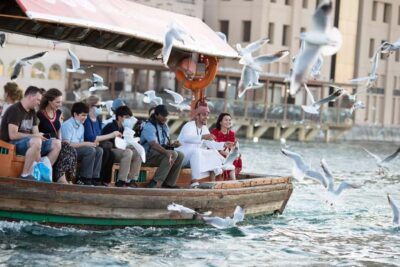
Old Town, Creek, Museums, Souks, & Street Food Tour
What we made of it →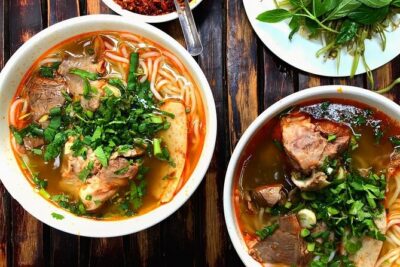
Ho Chi Minh City Street Food Tour & Sightseeing By Motorbike
What we made of it →
Comuna 13 Graffiti Tour, Cable Car & Street Food
What we made of it →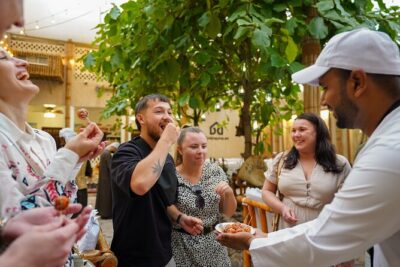
Old Town, Souks, Street Food, Guided Tour & Abra Ride
What we made of it →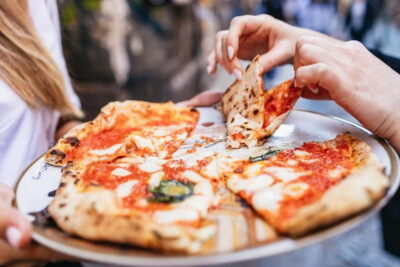
Small Group Hanoi Street Food Tour with a Real Foodie
What we made of it →
Saigon By Night and Street Food By Motorbike | Opt: Ao Dai Riders
What we made of it →Where this tour turns up