
Review · MARRAKECH
Marrakech Street food Tours
Come hungry, the medina cooks in public. This 3.5-hour Marrakech street food tour takes you from Jemaa el-Fnaa into olive stalls, lamb ovens, local eateries, and souk lanes. I like the generous range of food and the chance to follow a guide such as Hamza, who knows where locals eat. I also like that the small group is capped at 10 people.
The main consideration is the meat-heavy setting. You may see offal, sheep’s eyes, testicles, and other cuts on display, so this is not the best choice if you are uneasy around those sights. A vegetarian option is available, but you should discuss your needs before booking.
Key things to know before you book
- The lamb is served early: Mashoui Alley’s underground-oven lamb can sell out within about two hours, so the tour’s timing matters.
- It is a full meal, not just a snack walk: Expect generous tastings, drinks, sweets, and enough food to replace dinner for many people.
- The souks are part of the meal: Walking between stops helps you see more of the Medina without trying to navigate every lane alone.
- The guide adds real value: Hamza is praised for explaining Moroccan food and culture while steering people toward local places.
- Families can join: Children under 10 may attend without a ticket, but children must be accompanied by an adult.
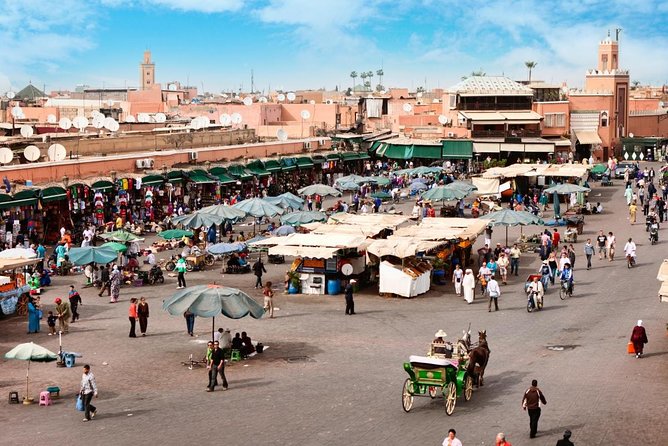
- The meeting point is central: You begin at Jemaa el-Fnaa outside Argana Cafe at 6:00 pm and return there at the end.
Why this Marrakech food walk works so well
Marrakech is easy to admire from a rooftop terrace. It is harder to understand from a menu. Food gives you a quicker route into daily life, especially when you are eating at small stalls and local restaurants instead of simply ordering a familiar tagine in a tourist dining room.
That is the strength of this tour. You move through the Medina on foot, stopping often enough to taste rather than just look. The route brings together olives, lamb, sardine kefta, organ meats, couscous, breads, mint tea, smoothies, and Moroccan pastries. Some foods are gentle introductions. Others ask you to be game.
I especially like the way the meal unfolds across different settings. You may eat at an old restaurant, stand near an olive market, sit at a simple street-side table, and browse the souks between courses. That makes the evening feel less like a restaurant reservation and more like an edible tour of the city.
The price is $69.69 per person. That is fair if you arrive hungry and take advantage of the many included tastings, beverages, bottled water, and guide commentary. It is less attractive if you eat lightly or mainly want a cooking lesson, since the focus is tasting and walking rather than hands-on preparation.
More Street Food Tours in Morocco:
- Marrakech: Street Food Tour with a Local Guide
★ 4.9 · 3,119 reviews - Marrakech: Street Food Tour by Night
★ 4.8 · 2,838 reviews - The Original Marrakech Street Food Tour
★ 5.0 · 248 reviews
Meeting at Jemaa el-Fnaa at 6:00 pm
The tour starts outside Argana Cafe on the main square, Jemaa el-Fnaa. This is a useful place to begin because it is central, easy to identify, and close to the evening food activity.
Starting at 6:00 pm also makes sense. Marrakech changes character as the day cools and food sellers prepare for the night. If your visit falls during Ramadan, the timing can bring a special cultural moment, with families and locals gathering to break the fast. One evening included food similar to what local people were eating at that time, which made the meal feel especially connected to the place.
You should arrive with comfortable shoes and a flexible appetite. The walk covers market lanes and souk streets, and the pace depends on the size of the group, food preparation, and how crowded the Medina feels. The maximum group size is 10, small enough for questions and personal attention without making every stop slow.
The tour ends back at the same meeting point. Hotel pickup and drop-off are not included, so plan your route to Jemaa el-Fnaa before the evening begins.
The old restaurant and Marrakech’s first bites
After introductions, the route goes to a local restaurant that has served food for more than 80 years. That detail gives the first stop some weight. You are not simply sampling a dish chosen for visitors. You are entering a place tied to the city’s everyday food culture.
The exact dishes can vary, but the wider tasting may include Moroccan meat preparations, bread, fried potatoes, olives, and other small portions. The servings are reported to be generous, so do not treat the first stop as a quick warm-up. It is possible to feel full before the main lamb course arrives.
I like this kind of opening because it gives your guide room to explain how food is served and eaten in Morocco. One useful criticism is that the tour may explain ingredients and local customs more than cooking technique. If you want to know how long a tagine cooks or how a particular spice blend is made, ask directly. A curious question can turn a good food walk into a more useful lesson.
The olive market and the taste of variety
The nearby olive market is a short but worthwhile stop. You taste several varieties rather than treating olives as a garnish on a plate. That small change matters. It lets you compare salt, texture, bitterness, and seasoning in a way that is difficult to do at a standard meal.
The stop also shows how Moroccan food often begins with simple ingredients handled well. Olives are inexpensive, familiar, and central to the daily table, yet the range can surprise you. They may be seasoned differently or have very different textures.
This is one of the easier parts of the tour for cautious eaters. It gives you time to adjust to the format before the more unusual foods appear. If you are traveling with children, olives, nuts, fried potatoes, sweets, and fruit drinks may be more approachable than organ meats.
Same place, a different plate:
- Marrakech Street Food Tour
★ 5.0 · 220 reviews - Marrakech Night Street Food Tour / Taste The Real Marrakech
★ 4.9 · 200 reviews - Casablanca Food Tour – Moroccan Street Food Tour
★ 5.0 · 86 reviews - Marrakech street food tour with a local
★ 5.0 · 55 reviews
Mashoui Alley and lamb from an underground oven
The main food event is Mashoui Alley, where lamb is cooked in an underground oven and served on the spot. The cooking method is part of the appeal. You are eating meat prepared in a traditional setting, close to the place where it was cooked, rather than receiving a polished restaurant version.
The lamb is one of the most praised parts of the evening. Expect tender meat with a straightforward, savory flavor. Depending on what is available, you may taste lamb shoulder, lamb liver, or other cuts. Some people consider this the finest dish of the tour.
Timing is important here. You have about two hours before the lamb is gone, which explains the early placement of this stop. Do not assume you can return later in the evening and find the same food. If lamb is a major reason for booking, make sure you are ready to eat when the guide brings you there.
This is also where the tour may test your comfort level. Marrakech food markets can display whole animals and less familiar cuts in plain view. That is part of the setting, not a surprise hidden from you. I would choose another activity if you want a quiet, polished food experience with no visible meat preparation.
Walking the souks between courses
After the heavier early tastings, the route moves through the souks. This walking stretch gives you time to digest and makes room for more food later. It also solves a practical problem for first-time visitors: the Medina can be confusing, with lanes that bend, narrow, and change character quickly.
A guide can help you move through the souks without spending the whole evening checking a map. The food walk is therefore useful even if you are not a serious eater. You see small passages and food corners that you might pass without noticing, while the guide provides a reason for each turn.
The souks are active and crowded, so stay close to the group. Keep bags secure and wear shoes that handle uneven walking. The tour is described as suitable for most people, but it is still a walking activity in a dense old city, not a seated tasting menu.
A spice-market stop may focus partly on herbal medicine rather than cooking spices alone. That can be interesting if you want to understand how Moroccan plants and remedies are presented, but it may disappoint you if you expect a formal spice lesson.
Local restaurant food and the taste of home
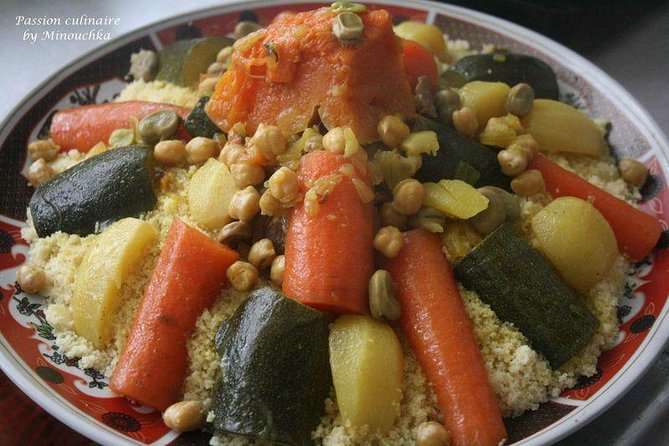
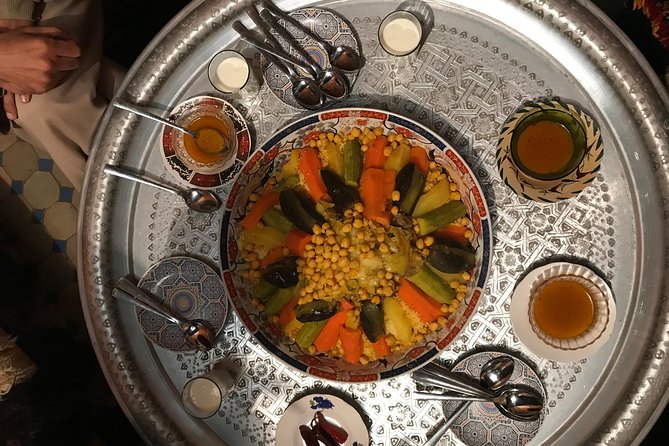
The next stop is a small restaurant popular with local people. This is where the evening moves away from individual bites and toward a more complete Moroccan meal. Handmade couscous, tagine, sardine kefta, scallion-like msemmen bread, beans, and vegetables may appear depending on the day and the group.
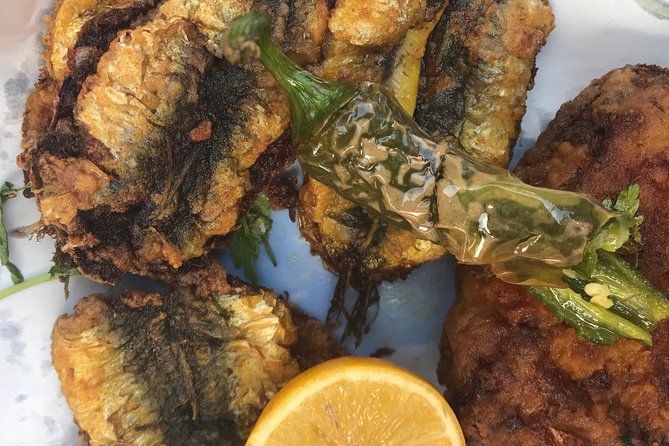
The sardine kefta is a particularly useful taste for anyone wanting something beyond the standard lamb and chicken menu. It shows how coastal ingredients are shaped into a strongly seasoned Moroccan dish. Couscous and tagine offer a softer introduction, with warm spices and slow-cooked textures.
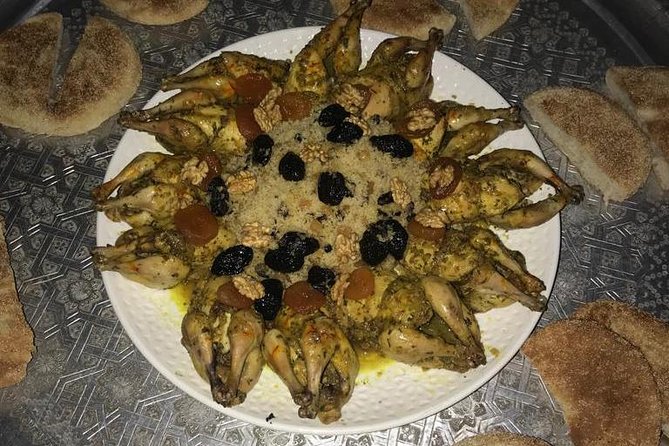
The tour can also include meat infused with saffron and preserved lemons, charcoal-baked tagine with argan oil, and other dishes that are difficult to identify from a restaurant menu alone. You do not need to know what to order in advance. The guide can explain what is being served and how to approach it.
Portions matter here. The food is not a token sample at every stop. Several people found the quantity more than sufficient, so I would eat a light lunch if you book the evening tour. You will get more from the experience if you can keep tasting through the final stops.
Mint tea, smoothies, sweets, and the final sugar rush
Moroccan mint tea is part of the experience, and it gives the evening a slower pause after the savory food. Tea is not just a drink to wash down dinner. The pouring, sweetness, and time spent sharing it are part of Moroccan hospitality.
Later tastings can include fresh smoothies, honeyed pastries, handmade sweets, and freshly prepared desserts. These are good counterpoints to the lamb and organ meats. If you have a sweet tooth, the final section may be as enjoyable as the famous meat stops.
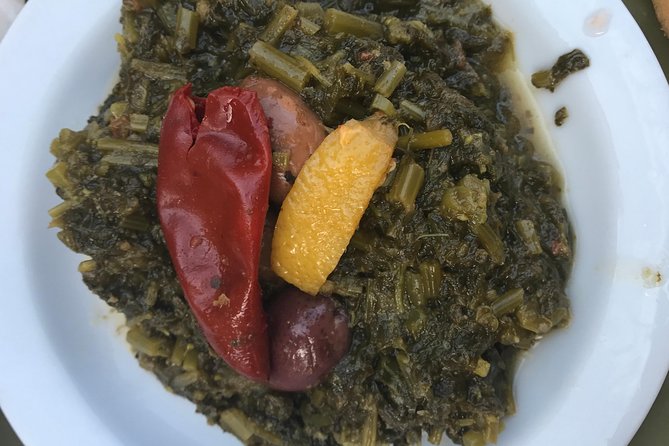
The tour may also include snails, nuts, fried potatoes, and other small bites. Snails are optional in spirit, even if they are offered as part of the route. You can ask the guide what each item is before tasting it, which is especially helpful if you have allergies or strong food preferences.
Vegetarians should speak up early. The tour provider says a vegetarian meal option is available, and one guide accommodated a vegetarian guest without difficulty. Still, the route passes butcher stalls and visible animal products, and the food focus is heavily meat based. A vegetarian who wants vegetable dishes and sweets may enjoy the cultural side, but someone seeking a fully vegetarian food tour should confirm the menu first.
How the guide affects the evening
The guide is the hinge of this experience. The strongest guide praised by name is Hamza, sometimes spelled Hamsa. His value is not limited to finding food. He is described as warm, generous, and able to explain Moroccan culture while leading people through the Medina.
A good guide changes the quality of a street food tour. You need someone who can explain what you are eating, decide which stall is worth your time, manage the group, and keep the evening moving. Hamza is also credited with taking people to places they would not easily find alone, including small eateries and tucked-away parts of the souks.
The guide may also offer broader cultural context. One account described commentary that covered the city beyond food, including a palace with detailed tile work. That suggests the walk can offer more than a meal, though food remains the central purpose.
Do not expect a formal cooking course. The guide can answer questions about Moroccan dishes and traditions, but the activity is built around tasting, walking, and conversation. If you want detailed instruction on recipes and cooking methods, a dedicated cooking class would be a better match.
Families, food limits, and group comfort
Families are welcome, and children under 10 can join without a ticket. Children must be accompanied by an adult. The range of familiar items, such as bread, potatoes, sweets, fruit drinks, and lamb, gives families some flexibility.
The setting may still be intense for young children. There are crowds, narrow souk lanes, unfamiliar smells, and visible animal products. Parents should decide if their children will find that exciting or upsetting.
The tour is best for an open-minded eater who wants to try local food without having to make every decision alone. It is also a smart first activity in Marrakech because you gain an early sense of the Medina, local eating habits, and dishes you can look for later.
It is a weaker choice for anyone wanting fine dining, a quiet evening, a strictly vegetarian menu, or a lesson centered on kitchen technique. The tour is social and sensory. You will walk, stop, taste, and keep moving.
The practical value of $69.69
At $69.69, the fee includes a local guide, food tastings, beverages, bottled water, and gratuities. Hotel transportation is not included, but the central meeting point keeps that extra cost simple if you are already staying near the Medina.
The small group limit improves the value. With no more than 10 people, you should have a better chance of hearing the guide and asking questions than on a large bus-style food excursion. You are also paying for local judgment: knowing which food stalls to use and how to combine several stops into one evening.
The best value comes if you eat most of what is offered. If you sample only a few items, the price may feel high. If you arrive hungry and treat the tour as dinner plus a guided walk through the Medina, it is easier to justify.
Booking well ahead is sensible because the tour is often reserved around 39 days in advance. You receive confirmation at booking, and free cancellation is available if you cancel at least 24 hours before the 6:00 pm start. Cancellations or changes inside that window are not refunded.
Should you book the Marrakech street food tour?
I would book this tour if you want a generous, meat-forward introduction to Marrakech food and prefer small local places to polished restaurants. The strongest reasons are the underground-oven lamb, varied tastings, souk navigation, and a guide such as Hamza who can connect food with Moroccan culture.
I would skip it if visible animal products will spoil your evening, or if you need a fully vegetarian route. For everyone else, schedule it near the start of your Marrakech stay. You will learn what to eat, where the locals gather, and how to find your way through the souks, all while getting a substantial dinner.
FAQ
Where does the Marrakech street food tour start?
It starts at Jemaa el-Fnaa in Marrakech, outside Argana Cafe.
What time does the tour begin?
The start time is 6:00 pm.
How long does the tour last?
The tour lasts approximately 3 hours and 30 minutes. One itinerary description lists a three-hour stop, so the exact finish can vary.
Where does the tour end?
The activity ends back at the starting meeting point in Jemaa el-Fnaa.
Is hotel pickup included?
No. Hotel pickup and drop-off are not included.
What food is included?
Included tastings may feature olives, lamb, organ meats, couscous, tagine, sardine kefta, msemmen, mint tea, smoothies, Moroccan sweets, pastries, and other local snacks. Beverages and bottled water are also included.
Is a vegetarian option available?
Yes, a vegetarian meal option is available. The route still passes visible meat and animal products, so vegetarians should confirm their needs before booking.
Can children join the tour?
Yes. Children must be accompanied by an adult, and children under 10 are allowed without a ticket.
What is the cancellation policy?
You receive a full refund if you cancel at least 24 hours before the local start time. Cancellations or changes made less than 24 hours before the tour are not refunded.
Just added around Morocco
- Local Hidden Spots Street Food Tour in Medina Marrakech★ 5.0 · 30 reviews
- Marrakech Tasting Tour: Experience Local Street Food & Culture!★ 5.0 · 5 reviews
- Marrakech Street Food with +10Tasting & Tanjia Dinner|Guided Walk★ 5.0 · 21 reviews
- 3 Hours Private Tour Marrakech Night Market★ 5.0 · 2 reviews
- Taste Marrakech Street food tour from Medina★ 5.0 · 34 reviews
- Essaouira Guided Tour: 3 on 1 – Nightlife tour, Live like a local & Street food★ 4.5 · 32 reviews
- Fez Street Food Tour★ 4.5 · 33 reviews
- Casablanca Food Tour – Moroccan Street Food Tour★ 5.0 · 86 reviews
Street Food Tours, compared.
Old Town, Creek, Museums, Souks, & Street Food Tour
What we made of it →
Ho Chi Minh City Street Food Tour & Sightseeing By Motorbike
What we made of it →
Comuna 13 Graffiti Tour, Cable Car & Street Food
What we made of it →
Old Town, Souks, Street Food, Guided Tour & Abra Ride
What we made of it →
Small Group Hanoi Street Food Tour with a Real Foodie
What we made of it →
Saigon By Night and Street Food By Motorbike | Opt: Ao Dai Riders
What we made of it →Where this tour turns up