
Review · MARRAKESH
Marrakech: Street Food Tour by Night
Marrakech tastes better after dark. This 2 to 3 hour walking tour takes you through Jemaa el-Fnaa, the Medina, and the souks, stopping for Moroccan snacks, sweets, drinks, and a full meal. I like the generous amount of food, and I like how guides such as Yaya, Ali, Mohammed, and Omar connect each dish to local customs. The main caution is simple: you may eat far more than you expect.
You meet near Jemaa el-Fnaa, then walk through market lanes toward the Mellah and Souk Semmarine. Along the way, you may try olives, dates, pastries, harira soup, snails, flatbreads, salads, tangia, kofte, and other local specialties. The exact selection can change, but the evening is built around variety rather than one sit-down dinner.
The tour costs $43 per person and includes food, drinks, and a guide. That is strong value if you arrive hungry, especially since the evening often ends with a substantial three-course meal on a rooftop or in a traditional restaurant. You should bring comfortable shoes and leave room in your stomach.
Key points at a glance
- Expect a full evening of food: This is not just a few sample bites. Many tours include several market stops followed by a three-course meal.
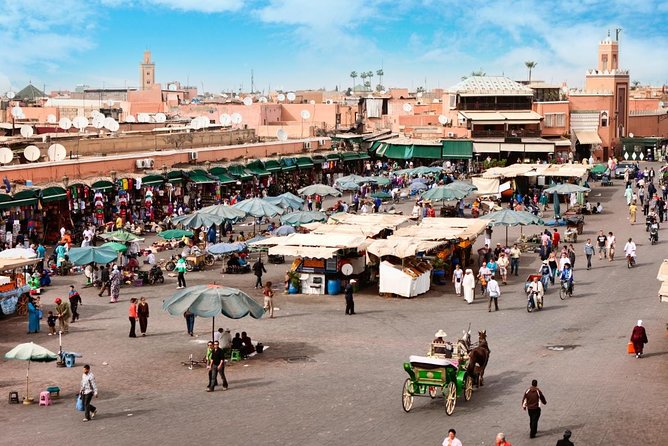
- Start at Jemaa el-Fnaa: The famous square gives you an immediate look at Marrakech’s night-time energy and food culture.
- Go beyond the main tourist path: Your guide leads you through side streets, food stalls, bakeries, and places you might not try alone.
- Try adventurous Moroccan flavors: Snails, prickly pear, roasted lamb, tangia, almond drinks, dates, and olives may all appear.
- Guides make the difference: Yaya, Ali, Mohammed, Omar, and others are praised for humor, local contacts, food knowledge, and care with dietary needs.
- Finish with mint tea: The final stop is usually a cozy café or rooftop setting with Moroccan décor, a courtyard, rugs, lamps, and fountains.
Why this is a smart first night in Marrakech
I like food tours as a first activity because they give you a working map of a new city. This one does more than point out restaurants. It helps you understand how Marrakech eats, shops, bargains, cooks, and gathers after sunset.
The route begins at or near Jemaa el-Fnaa, usually by the Hôtel Restaurant Café de France. The exact meeting point depends on the option you book, so check the confirmation carefully. Hotel pickup and drop-off are not included, which matters if your accommodation sits outside the Medina.
From the square, you move into the old city on foot. The walk is not described as strenuous, and one group completed about three hours with plenty of food stops rather than a long march. Still, Medina lanes can be uneven, crowded, and confusing. Comfortable shoes are a must.
A shared group lets you swap reactions with people from different countries. A private option is available if you prefer a more personal pace or need more control over conversation and food choices. Group sizes can vary, with one reported group numbering 18 people, so do not assume every departure will feel intimate.
More Evening and Night Food Tours in Morocco:
- Marrakech Night Street Food Tour / Taste The Real Marrakech
★ 4.9 · 200 reviews - Marrakech: Street Food Tour by Night
★ 4.5 · 42 reviews - Saigon By Night and Street Food By Motorbike | Opt: Ao Dai Riders
★ 5.0 · 4,066 reviews
Jemaa el-Fnaa after sunset
Jemaa el-Fnaa is the natural opening scene. In daylight, it is a major city square. At night, it becomes a meeting place filled with food stalls, movement, aromas, and people heading into the souks.
Your guide uses the square as more than a photo stop. You get an introduction to the way Marrakech’s public life works, then begin tasting your way through it. This is a useful moment to ask questions about ingredients, meal customs, and the difference between a dish made for a market stall and one served in a restaurant.
The square can feel intense. You may see crowds, vendors calling for attention, and plenty of visual noise. A guide gives you a clear point of contact and helps you focus on the food rather than trying to work out where to go next.
Do not fill up before meeting the group. Several accounts of the evening describe far more food than expected, with some groups trying 12 to 15 dishes before sitting down to dinner.
The Mellah market and the cooking behind Moroccan food
The route continues toward the Mellah and the city’s main market. Here you see stalls piled with fruit, vegetables, meat, and poultry. This section gives the food a useful setting. You are not just tasting finished dishes. You are seeing the ingredients that supply Marrakech kitchens.
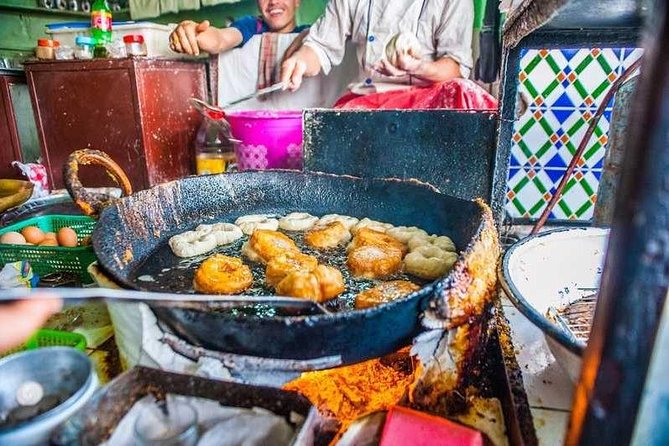
You may watch a local pastry being made and see how shoppers bargain. That small exchange matters because food in Marrakech is tied to daily commerce. Your guide can explain what you are seeing and help you understand why the market is an important part of the city’s eating culture.
The cooking lesson often centers on tagine. Moroccan tagine is both a dish and the cone-shaped cooking vessel used to prepare it. The guide may explain different types of tagine and the slow cooking method behind the familiar flavors. A charcoal-baked tagine can be one of the evening’s memorable tastings.
You also receive a local recipe to take home. It is a modest souvenir, but a useful one. It gives you something practical to do after the trip, instead of another decorative object that gathers dust.
An almond drink may appear between stops. It refreshes your mouth before the next tasting and gives you a chance to try a local drink that is less familiar than mint tea.
Souk Semmarine and the side streets
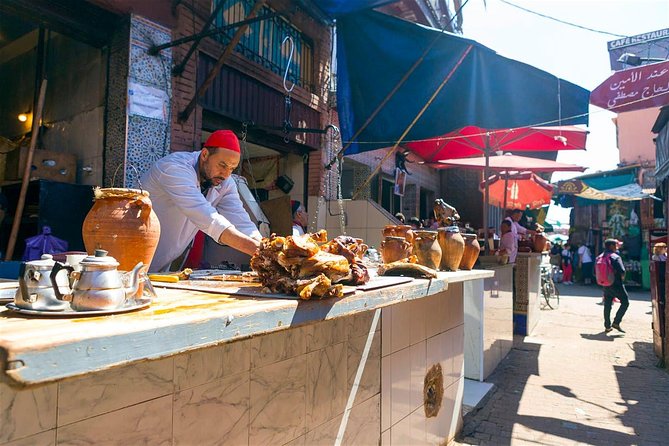
Souk Semmarine brings you into one of the Medina’s main shopping corridors. This is where the evening becomes less like a simple market visit and more like a guided food walk through a maze.
You may turn away from the busiest lanes and follow your guide down smaller streets. These side routes are valuable because they let you see food sellers serving local customers, not only stalls arranged for sightseeing. You might find juicy olives, sweet dates, seasonal fruit, or small pastries along the way.
The tasting pace is usually steady. You stop, learn what you are eating, try it, and continue. This is not a formal cooking class, and you will not spend long at any one station. The reward is range.
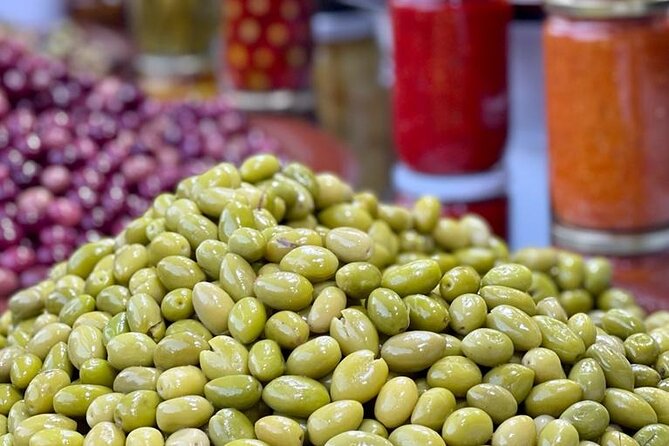
Some foods are easy introductions. Olives, dates, nuts, sweets, and flatbreads require no explanation beyond a good appetite. Other foods are more unusual. Snails have appeared on several tours, and one guide showed participants how to eat them. Prickly pear may also be offered.
You are not pressured to try everything. That is important if you are cautious about unfamiliar foods. You can ask your guide for advice, and you can decide how adventurous you want to be.
More Street Food Tours in Morocco:
- Marrakech: Street Food Tour with a Local Guide
★ 4.9 · 3,119 reviews - The Original Marrakech Street Food Tour
★ 5.0 · 248 reviews - Marrakech Street Food Tour
★ 5.0 · 220 reviews - Casablanca Food Tour – Moroccan Street Food Tour
★ 5.0 · 86 reviews
Harira, pastries, salads, and the savory stops
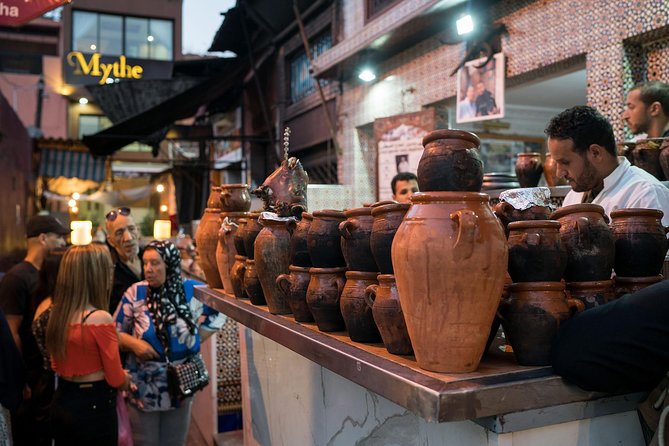
The food is not limited to snacks. You may taste harira, a traditional Moroccan soup, along with sweet pastries and several kinds of salad made from fresh local ingredients.
The three salads are useful for understanding Moroccan seasoning. Fresh herbs, cumin, saffron, and other spices appear across Moroccan cooking, but not every dish is heavy or hot. The flavors can be bright, earthy, sweet, or smoky, often within the same meal.
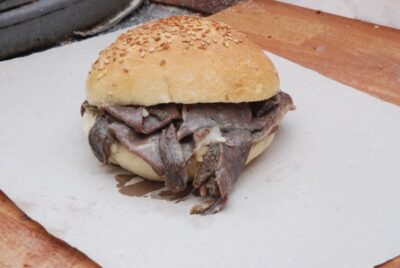
You may also encounter a Moroccan version of a sloppy Joe, which one visitor singled out as a favorite. It is a good reminder that street food is not always served in a famous traditional form. Local cooks adapt familiar ingredients into quick, filling food for people on the move.
This part of the tour is especially good for you if you want explanations with your meal. Guides such as Yaya and Ali are praised for giving background on the dishes and adding jokes and stories without turning the walk into a lecture.
Dietary needs deserve a direct conversation before you eat. One guide, Yahya, checked each vendor carefully for gluten-free choices for a participant with celiac disease. That is encouraging, but you should still explain your restriction clearly when you book and again at the start.
Roasted lamb, tangia, and the final meal
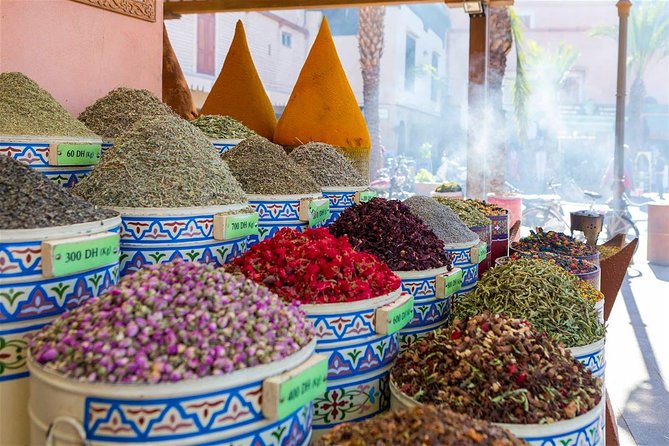
One of the more striking stops is a méchoui maker. You may see a whole lamb or sheep roasted in a traditional pit oven. It is a strong example of how Moroccan food can be tied to technique, patience, and communal eating.
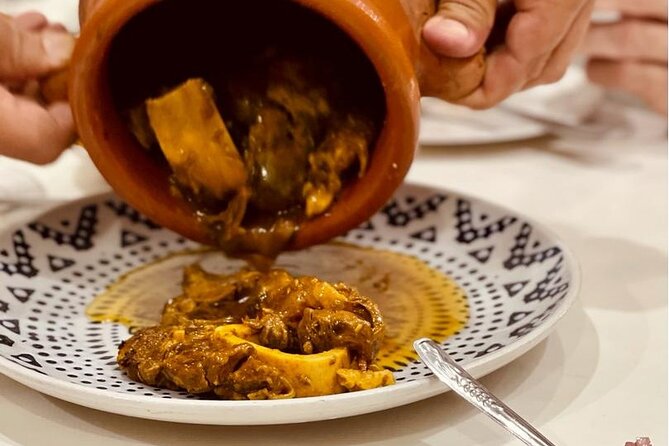
Later, you may visit a less obvious restaurant for tangia and kofte with freshly baked bread. Tangia is strongly associated with Marrakech and is usually slow-cooked until tender. Kofte gives you a more familiar grilled or seasoned meat option, though the precise preparation can vary.
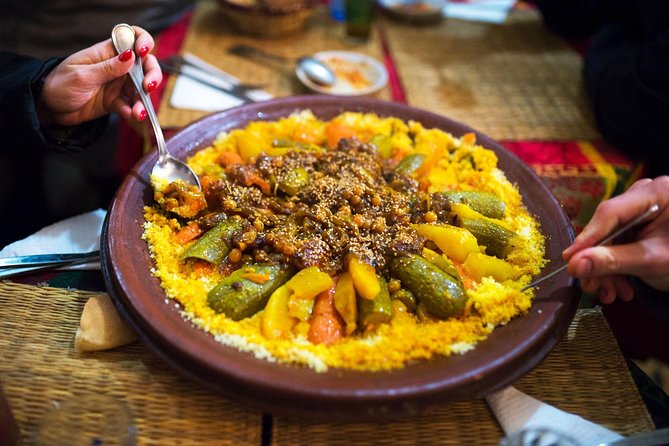
The biggest surprise for many people is the final meal. The experience is promoted as a food tasting walk, but the evening often ends with a full three-course Moroccan dinner. Reports describe a rooftop restaurant, a sit-down meal, or a traditional restaurant with several dishes.
This changes how you should plan your day. You are not booking a light pre-dinner nibble. You are booking dinner plus a long sequence of tastings. Eat lightly beforehand, or you may find yourself admiring the final course more than eating it.
The rooftop finish gives the evening a calmer rhythm. After narrow lanes and quick bites, you sit down with bread, Moroccan dishes, and time to talk. It is a satisfying close, especially if this is your first night in the city.
Mint tea, courtyards, and Moroccan atmosphere
The final tea stop is designed for lingering. You may sit at a cozy café or on a rooftop overlooking a courtyard, surrounded by rugs, mosaic lamps, fountains, and painted or tiled decoration.
Mint tea is more than a drink here. It is part of Moroccan hospitality and a natural way to end a social evening. You get a chance to slow down, ask final questions, and let the flavors settle.
This last stop also balances the noisy parts of the tour. The Medina can be loud and crowded, while the café offers a quieter look at Moroccan interiors. If you are taking photographs, this may be one of the prettiest settings of the night.
The guides and the group experience
The guide is the key variable. Names associated with this experience include Mohammed, Omar, Yaya, Yahya, Ali, Mo, and Ousamma. The strongest feedback centers on guides who explain food clearly, keep the group moving, and make nervous eaters feel comfortable.
Yaya is praised for knowing vendors throughout the Medina and for arranging the tastings in a sensible order. Ali is described as energetic, funny, and good at linking food with Moroccan culture. Mohammed and Omar receive similar praise for friendliness and local insight.
A shared tour can be lively. You may taste unfamiliar foods alongside people who react very differently from you. That social element is part of the fun, though a group of 18 will not offer the same attention as a private booking.
The private option makes more sense for families, couples, or anyone with food restrictions. It may also suit you if you dislike waiting for a large group at each stop. The shared tour is likely better value if you enjoy meeting people and do not mind a little group management.
Price, timing, and practical value
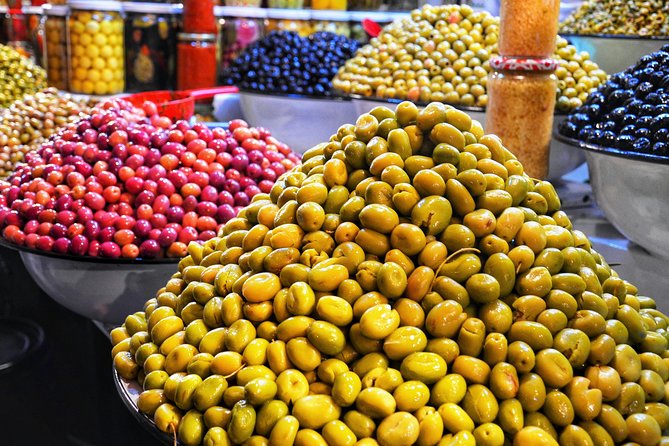
At $43 per person, the price is reasonable for what is included. You receive a guided Medina walk, multiple food tastings, drinks, cultural explanations, and often a three-course dinner. If you paid separately for a meal, several snacks, and a local guide, the tour could quickly cost more.
The strongest value comes from the range. You are not simply paying for dinner at a restaurant. You are paying for access to food stops you might not locate on your own, plus help understanding what to order and how to eat it.
The advertised duration is 2 to 3 hours, but the evening can run longer when the group stops often or the guide gives extra time to eat. Build some flexibility into your plans. Do not schedule a show or timed attraction immediately afterward.
Starting times vary, so check availability for your date. The meeting point may vary by booking option, and there is no hotel pickup or drop-off. Most of the experience is on foot in the Medina, and the tour is listed as wheelchair accessible, but you should confirm that the route and your specific meeting point suit your mobility needs.
Cancellation is free up to 24 hours before the tour, and you can reserve now and pay later. Those terms are useful if your Marrakech schedule is still moving around.
Who should book this food tour?
I would choose this tour if you want a practical introduction to Marrakech’s food culture, especially on your first evening. It gives you landmarks, market orientation, local dishes, and a guide who can help you return to good food stops later.
It suits adventurous eaters, curious first-time visitors, couples, families, and solo travelers who like a social evening. Vegetarian choices are available, but you should state your needs when booking so the guide can plan around them.
I would hesitate if you want a quiet, small-scale food experience with long conversations at every stop. The Medina is busy, the group may be large, and the route includes quick tastings rather than a leisurely seat at each vendor.
You should also skip a large lunch or dinner beforehand. The tour can include soup, sweets, snacks, several savory dishes, drinks, and a complete meal. Marrakech is generous, and so is this itinerary.
Should you book it?
Yes, if you want an easy and filling first look at Marrakech after dark. The combination of market food, side streets, local stories, and a proper final dinner gives you far more than a basic walking tour.
Book the shared option for the best price and a sociable evening. Choose private if dietary needs, family pacing, or personal attention matter more. Bring comfortable shoes, arrive hungry, and treat the advertised two hours as a minimum rather than a promise.
FAQ
How long does the Marrakech street food tour last?
The tour lasts 2 to 3 hours, though the exact timing can vary depending on the number of food stops and how long the group spends eating.
What is the price per person?
The listed price is $43 per person.
Where does the tour begin?
The tour has two listed starting options at the Hôtel Restaurant Café de France, near Jemaa el-Fnaa. The exact meeting point may vary depending on the option you book.
Is hotel pickup included?
No. Hotel pickup and drop-off are not included.
What food might I try?
Possible tastings include tagine, dates, olives, pastries, almond drink, harira, snails, prickly pear, tangia, kofte, flatbreads, salads, nuts, sweets, and freshly baked bread. The exact selection can vary.
Does the tour include a full meal?
Food and drinks are included, and the evening often finishes with a full three-course Moroccan meal at a restaurant or rooftop venue.
What languages are available?
Live guides are available in English, Arabic, French, German, and Spanish.
Can I book a private tour?
Yes. You can choose between a shared group tour and a private group option.
Can I cancel the booking?
Yes. You can cancel up to 24 hours in advance for a full refund. You can also reserve now and pay later.
Just added around Morocco
- Marrakech Street food Tours★ 4.5 · 15 reviews
- Local Hidden Spots Street Food Tour in Medina Marrakech★ 5.0 · 30 reviews
- Marrakech Tasting Tour: Experience Local Street Food & Culture!★ 5.0 · 5 reviews
- 3 Hours Private Tour Marrakech Night Market★ 5.0 · 2 reviews
- Marrakech Street Food with +10Tasting & Tanjia Dinner|Guided Walk★ 5.0 · 21 reviews
- Taste Marrakech Street food tour from Medina★ 5.0 · 34 reviews
- Essaouira Guided Tour: 3 on 1 – Nightlife tour, Live like a local & Street food★ 4.5 · 32 reviews
- Fez Street Food Tour★ 4.5 · 33 reviews
Evening and Night Food Tours, compared.
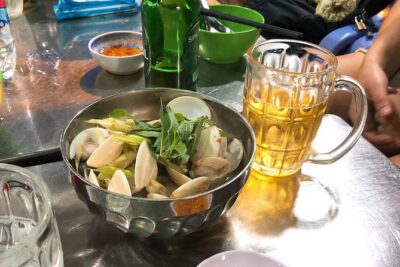
Saigon By Night and Street Food By Motorbike | Opt: Ao Dai Riders
What we made of it →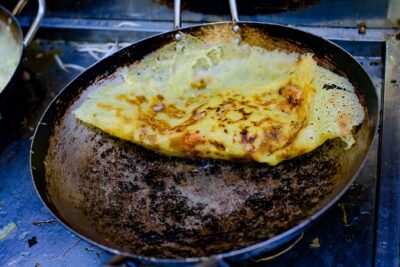
Private Street Food Evening Walking Tour in Ho Chi Minh City
What we made of it →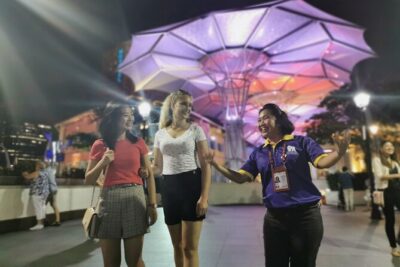
Small Group: Singapore Street Food & Night Tour with 9 tastings
What we made of it →
Tasting 8 Different Street Foods + Local Drink at Evening Time by Walking
What we made of it →
Small-Group Chiang Mai Evening Street Food Tour
What we made of it →
Bangkok Tuk-Tuk Tour by Night with Chinatown Street Food Meal
What we made of it →
Where this tour turns up