
Review · NEW DELHI
Old Delhi Heritage and Street Food Walk with a Local
Old Delhi rewards the curious. This small-group walk with Akshay Jain links Mughal forts, Jain and Sikh landmarks, a British-era church, and local food in about two and a half hours. I like the personal angle: Akshay grew up in Chandni Chowk and brings childhood memories to the streets. I also like the unusual range of stories, from Begum Samru to the 1857 uprising.
The main consideration is pace. You cover six stops in a short time, and the lanes of Old Delhi can be crowded and distracting. Admission to the Red Fort and Jama Masjid is not included, so budget for those separately if you want to enter or climb the Jama Masjid minaret.
What makes this Old Delhi walk special
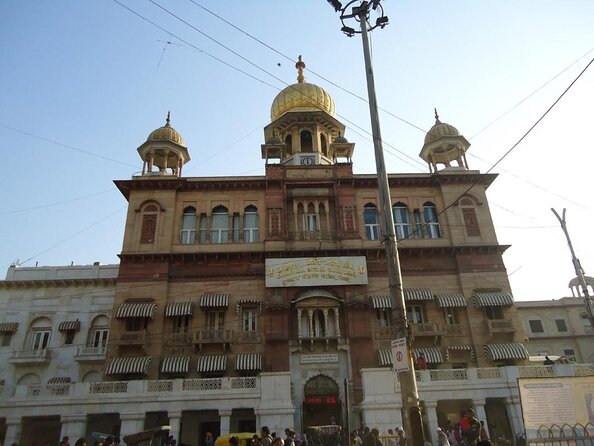
- Akshay Jain’s childhood connection: The guide grew up in Chandni Chowk and left Delhi at 14 for an academic scholarship in Singapore.
- Six faiths and eras in one route: The walk connects Mughal, Jain, Sikh, Christian, and British stories without treating Old Delhi as a single-period monument zone.
- Begum Samru’s remarkable rise: Her mansion introduces one of northern India’s most unusual political figures, a former nautch performer who became a ruler and diplomat.
- Street food with local context: The food element is tied to Chandni Chowk memories, with malai sandwiches singled out as a favorite.
- A practical finish at Jama Masjid: The tour ends near Jama Masjid Metro Station, with time to admire the mosque and possibly climb its minarets.
- A group capped at 12 people: This is intimate enough for questions, though the narrow streets still require patience and attention.
Why Akshay’s personal story changes the walk
Old Delhi can feel like a wall of noise, traffic, wires, shops, temples, mosques, and food stalls. A guide gives that apparent chaos a sequence. Akshay adds something more unusual: he is not simply explaining Chandni Chowk from a distance. He spent part of his childhood there.
That background matters because the walk is framed as a recollection of tastes, sounds, and smells from his early life. He later studied in Singapore and traveled through almost 20 countries across three continents, giving him a broad interest in cultural exchange. The result is a walk that aims to explain Delhi to outsiders while also reflecting on the city from within.
His strongest skill appears to be storytelling. He links historical facts with poetry and memories of growing up in the area. That style appeals to me because Old Delhi is not best understood as a checklist of buildings. Its meaning comes from the way people, religions, rulers, and businesses have occupied the same streets over centuries.
The group size helps. With a maximum of 12 people, you have a better chance to hear the guide and ask questions than you would on a large coach tour. Still, this is Old Delhi, not a quiet museum. You should expect interruptions from traffic, pedestrians, and the ordinary business of the neighborhood.
More Old Quarter and Medina Food Walks in India
- Old Delhi Street Food Tour
★ 5.0 · 497 reviews - Delhi: Old Delhi Street Food Tour with Rickshaw Ride
★ 4.9 · 403 reviews - Delhi: Old Delhi City Tour with Tuk-Tuk Ride & Street Food
★ 4.8 · 88 reviews
Meeting the Red Fort and Jain temple
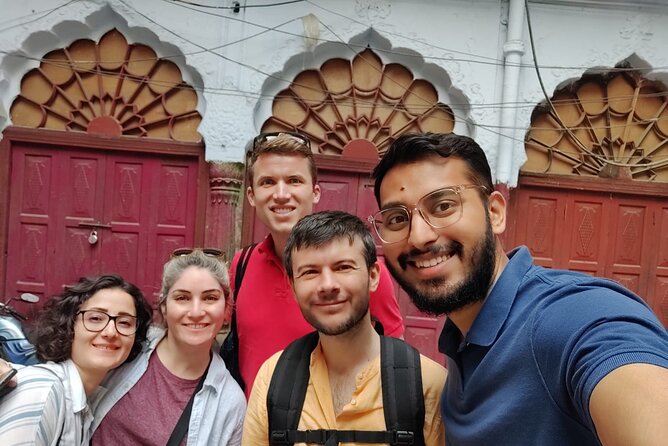
The meeting point is Shri Digambar Jain Atishay Kshetra Lal Mandir, also called Sri Digambar Jain Lal Mandir, on Netaji Subhash Marg opposite the Red Fort. This is a useful starting place because the red sandstone walls immediately give you a sense of Mughal power.
Akshay introduces Shah Jahan, the emperor who built the Taj Mahal and moved his capital from Agra to Delhi. The Red Fort was completed in 1648, and its location beside a Jain temple sets up one of the walk’s key ideas: Old Delhi has long been shaped by different communities living, worshipping, trading, and governing close together.
The opening Red Fort discussion lasts about 15 minutes. Admission to the fort is not included, so you should not expect an interior visit as part of this walk. Instead, the fort works as a dramatic historical backdrop and a way to understand why Shah Jahan built a new imperial center here.
The Jain temple discussion lasts around 10 minutes. Akshay’s own Jain background gives this stop a personal edge, especially when he explains how a Jain temple came to sit beside a Mughal fort ruled by a Muslim emperor. You get more than a quick religious label. The stop also introduces Jainism as a way of life and connects it with his childhood.
Begum Samru’s palace and an unlikely power story
Begum Samru’s Palace is one of the most distinctive stops because it moves beyond the usual emperor-and-battle account of Delhi. Begum Samru began life as a nautch performer, became a mercenary warrior, ruled a province near Delhi, and served as a diplomat at the Mughal court.
The mansion was given to her by the Mughal emperor. That fact alone makes the stop useful: it shows that power in 18th-century northern India was not held only by royal men sitting on thrones. Military skill, political judgment, alliances, and personal ambition could carry someone into the highest circles.
You spend about 15 minutes here. Do not expect a long palace visit based on the information provided. The value lies in the story and in seeing how the fading Mughal order created space for figures such as Begum Samru.
I especially like this stop for people who have already seen Delhi’s major imperial monuments. It supplies a human-scale story and a strong female figure. It also keeps the walk from becoming a straight march through famous buildings.
Gurudwara Sis Ganj Sahib and the Mughal decline
At Gurudwara Sis Ganj Sahib, the focus shifts to Sikh history and religious persecution. Akshay explains why a Sikh guru and his followers were executed at this location and connects that martyrdom with the later weakening of Mughal authority.
This is a serious part of the walk. The site is not presented simply as another attractive building. You are asked to think about the relationship between imperial power, religious conviction, and resistance. The stop also answers a useful political question: who followed Shah Jahan on the Mughal throne after the capital moved to Delhi?
The visit lasts roughly 10 minutes. That is enough for a focused explanation, but not enough for a long discussion of Sikh history. If this subject matters greatly to you, write down questions as you go and raise them with Akshay when there is a natural pause.
The location also reinforces the walk’s central theme. A Sikh shrine, a Jain temple, a Mughal fort, and later Christian institutions all sit within the same broad Old Delhi setting. You see how the city’s identity was shaped by contact, conflict, and continued coexistence.
More Old Quarter and Medina Food Walks in New Delhi
- Old Delhi Street Food and Spice Market Tour
★ 5.0 · 81 reviews - Old Delhi: Guided Street Food Tour w/ Private Transportation
★ 5.0 · 49 reviews - Delhi: Old Delhi City Tour with Tuk Tuk Ride & Street Food
★ 4.9 · 46 reviews - Old Delhi Street Food Tour
★ 4.8 · 40 reviews
Central Baptist Church and the year 1857
The Central Baptist Church adds the British chapter to the route. By this point, the Mughal Empire is losing power and the East India Company is gaining political control. Akshay uses the church to explain the 1857 uprising, when the foundations of British rule were shaken before the Company eventually prevailed.
The story then moves to the transfer of power to the British Crown under Queen Victoria. That makes this a compact lesson in how Delhi changed from Mughal capital to British colony.
This stop lasts about 10 minutes and gives the walk a clear historical arc. You begin with Shah Jahan’s imperial city, pass through religious and political changes, and arrive at the colonial period. The church may not have the immediate visual impact of the Red Fort or Jama Masjid, but its historical role makes it worthwhile.
I appreciate the balance here. The tour does not treat British rule as an isolated chapter. It places the East India Company’s rise within the weakening of Mughal authority and shows how political control changed hands.
Jama Masjid brings the walk to a grand close
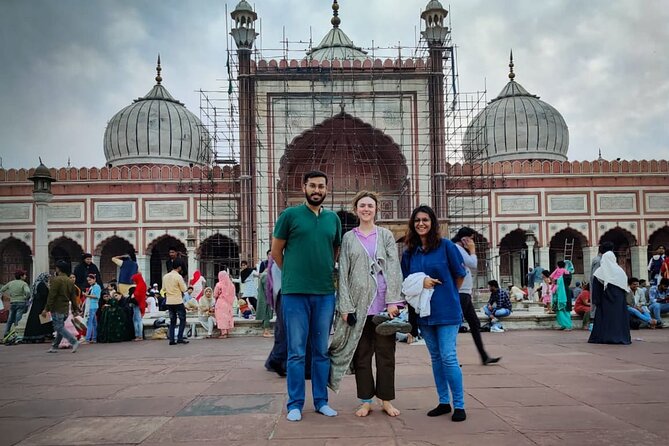
The final stop is Jama Masjid, one of Old Delhi’s great landmarks. The guide describes it as a peaceful place to finish, which provides a useful contrast to the crowded lanes outside.
You have about 30 minutes here, the longest stop on the route. Admission is not included. The adventurous can climb the minarets for panoramic views over the Old City, though the supplied details do not specify the separate fee or current access conditions.
That possible climb is one of the strongest practical features of the ending. After walking through tight streets, you get the chance to look back over the district from above. If you prefer to stay at ground level, the mosque still gives the tour a calm and visually powerful finish.
The end point is near Jama Masjid Metro Station, which makes it easier to continue your day by public transport. The tour does not return you to the Red Fort, so plan your next stop from the Jama Masjid side of Old Delhi.
What the food component adds

The experience is billed as a heritage and street food walk, and the food element is part of its appeal. Chandni Chowk is famous for local culinary traditions, but the available details do not provide a fixed tasting menu or a complete list of what is included.
That uncertainty matters if you are booking mainly for food. The strongest specific clue is the mention of malai sandwiches, which one participant especially enjoyed. The walk also connects food with Akshay’s childhood memories, so you are getting local context rather than a detached tasting session.
I would approach the food portion as part of the neighborhood experience, not as a full meal replacement. If you have allergies, dietary restrictions, or a strict food plan, ask for details before booking. The walk is especially appealing if you want to connect what you eat with the lanes and traditions of Chandni Chowk.
Food also makes the historical material easier to absorb. A story about emperors and colonial rule can become abstract. A taste, smell, or familiar local snack gives the place a more immediate identity.
Pace, comfort, and practical planning
The duration is about 2 hours and 30 minutes. That is long enough for a meaningful introduction to Old Delhi, but short enough to fit before or after another Delhi activity.
Wear comfortable shoes. The route passes through narrow bylanes, and the walk includes several stops with standing and listening. You should also expect a lively urban setting rather than a controlled historic park.
The tour is near public transportation, begins opposite the Red Fort, and ends near Jama Masjid Metro Station. Those locations make it practical for people staying elsewhere in New Delhi, provided you allow enough time to reach the starting point.
The experience uses a mobile ticket, and confirmation is provided at booking. Most people can participate. The group limit is 12, which is a useful middle ground: small enough for a personal feel, but not a private tour.
The two major cost details are easy to miss. The price is $28.80 per person, but Red Fort and Jama Masjid admission are not included. If you only want exterior explanations and the guided route, the price represents solid value. If you want to enter both monuments and climb the Jama Masjid minaret, your total cost will be higher.
Free cancellation is available if you cancel at least 24 hours before the start time. Cancellations within 24 hours are not refunded, and changes within that window are not accepted.
What the strongest praise tells you
The most consistent praise centers on Akshay’s storytelling and personal connection to Old Delhi. His history explanations are remembered long after the walk, and his use of poetry and stories from his youth gives the route an emotional quality.
The food also leaves a strong impression, especially the malai sandwiches. The experience is praised not only by people new to Delhi, but also by people who have lived in the city or visited Old Delhi before. That is a useful sign: the route is not aimed only at first-time sightseers.
The walk also reaches less familiar material, including Begum Samru’s story and the lesser-known corners of Chandni Chowk. If you already know Delhi’s headline monuments, this is a reason to consider it.
Still, praise should not hide the limits. The tour is short, the food details are not fully specified, and the Red Fort and Jama Masjid interiors require extra payment. You are buying a guided introduction with a personal voice, not an all-day archaeological tour.
Who should book this Old Delhi experience?
I would recommend it to you if you want:
- A compact introduction to Old Delhi’s major religious and political layers
- A guide with a personal connection to Chandni Chowk
- Stories about Mughal, Sikh, Jain, Christian, and British history
- Street food tied to local memories
- A small group rather than a large sightseeing vehicle
- A route that ends at Jama Masjid and public transportation
It is less suitable if your main goal is extended time inside the Red Fort, detailed architectural study, or a clearly specified food itinerary. In those cases, you may want a separate fort visit or a food tour with a published tasting list.
Should you book it?
Book this walk if you want Old Delhi explained through people, faiths, food, and political change. Akshay Jain’s childhood connection gives the route a personal center, while the six stops create a useful timeline from Shah Jahan to British rule.
At $28.80, it is good value for a two-and-a-half-hour small-group experience, especially if you care more about stories and local context than checking off monument interiors. Just remember to budget separately for Red Fort and Jama Masjid admission, and choose this with realistic expectations about pace, crowds, and the food portion.
FAQ
Where does the Old Delhi walk begin?
It begins at Shri Digambar Jain Atishay Kshetra Lal Mandir, also known as Sri Digambar Jain Lal Mandir, on Netaji Subhash Marg opposite the Red Fort in Chandni Chowk.
Where does the tour end?
The walk ends at Jama Masjid in Old Delhi, near Jama Masjid Metro Station.
How long does the experience last?
The tour lasts approximately 2 hours and 30 minutes.
How much does the tour cost?
The listed price is $28.80 per person.
Are Red Fort and Jama Masjid admission fees included?
No. Admission tickets for the Red Fort and Jama Masjid are not included.
Can you climb the Jama Masjid minarets?
The itinerary says adventurous participants can climb the minarets for panoramic views of Old Delhi. Any separate admission cost is not specified.
Who leads the walk?
The experience is provided by Akshay Jain, who grew up in Chandni Chowk and has a personal connection to the area.
How large is the group?
The group can include a maximum of 12 people.
Can you cancel for a full refund?
Yes, if you cancel at least 24 hours before the experience start time. Cancellations within 24 hours are not refunded, and changes within that period are not accepted.
More History Walks in New Delhi
- Spice & Stories: 3-Hour Old Delhi Heritage Food Walk Guided Tour
★ 4.5 · 36 reviews - Palermo: Street Food and History Walking Tour
★ 4.9 · 1,486 reviews - Lecce History and Street Food Tasting Small Group Tour
★ 5.0 · 288 reviews - Lima: Historic Center Street Food, Market, and Eateries Tour
★ 4.9 · 216 reviews
Just added around New Delhi
- Old and New Delhi Street Food Sampling★ 5.0 · 3 reviews
- Delhi: Street Food Crawl (2 Hours Guided Food Tasting Tour)★ 3.5 · 18 reviews
- Old Delhi Street Food Tour with TUK-TUK Adventures★ 5.0 · 4 reviews
- Old Delhi Tour by Tuk-Tuk Street Food and Shopping Experience★ 5.0 · 12 reviews
- Taste Famous & Best Street Food of Old Delhi (Jama Masjid)★ 3.0 · 2 reviews
- DBC Street Food Safari★ 5.0 · 13 reviews
- Spice & Stories: 3-Hour Old Delhi Heritage Food Walk Guided Tour★ 4.5 · 36 reviews
- Old Delhi Street Food Tour With Spice Market On Tuk Tuk★ 5.0 · 12 reviews
Old Quarter and Medina Food Walks, compared.

Old Town, Creek, Museums, Souks, & Street Food Tour
What we made of it →
Old Town, Souks, Street Food, Guided Tour & Abra Ride
What we made of it →
[HOT] Hanoi Old Quarter Walking Street Food – Small Group Tour
What we made of it →Old Town, Souks, Street Food, Guided Tour & Abra Ride
What we made of it →
Old Town, Street Food, Creek, Souks, & Emirati House
What we made of it →