
Review · TOKYO
Historic Kamakura: Temples, Shrines and Street Food Private Walking Tour
Kamakura rewards slow walking. This six-hour private outing links quiet temples, a major Shinto shrine, bamboo, street food, and the Great Buddha in one well-paced day. I especially like the private format, which lets your guide adjust the pace for your family or group, and the way food and drink are included, so the day feels like more than a string of entrance tickets.
I also like the route itself. You begin at Kita-Kamakura Station, where the mood is calmer, then finish at Kamakura Station after moving through temples, shrine grounds, Komachi dori, and local food stalls. The main consideration is physical effort: you walk for much of six hours, and the climb behind Engaku-ji may be tiring for some people. Transportation costs are also separate.
Key points to know before you book
- Start at 9:00 am at Kita-Kamakura Station: The early start gives you a full day in Kamakura and begins in one of the town’s quieter temple areas.
- Five distinct Kamakura stops: The route covers Engaku-ji, Tsurugaoka Hachimangu, Komachi dori, Hokoku-ji, and the Great Buddha.
- Street food is part of lunch: You sample several sweet and savory local foods rather than stopping for one standard restaurant meal.
- Tea in a bamboo grove: Hokoku-ji includes time at a teahouse with traditional green tea.
- A genuinely private experience: Only your group participates, with a guide who can respond to your interests and walking pace.
- Guide support is a major strength: Simon and Chuck are praised for being friendly, attentive, and good at helping families and first-time visitors feel at ease.
Why Kamakura works so well as a day trip from Tokyo
Kamakura packs a remarkable amount into a compact area. Within a few hours, you can move from Zen temple grounds to a Shinto shrine, then from a food-filled shopping street to a bamboo grove and one of Japan’s best-known Buddha statues.
That variety is the main reason I like this tour. It does not treat Kamakura as only a temple town. You get architecture, religion, scenery, food, and everyday street life in the same outing. The route also ends at Kamakura Station, which makes sense after a full day on foot rather than returning you to the place where you started.
The guide adds useful context as you go. Kamakura’s religious sites can blur together when you visit several in one day, especially if you are not familiar with the difference between Buddhist temples and Shinto shrines. A good guide helps you notice the difference in gates, halls, statues, rituals, and layout without turning the walk into a lecture.
This is a private activity, so the day should feel more personal than a large group excursion. Simon is praised for taking care of the details, helping with a young child, and paying attention to the interests of each group. Chuck is described as fun and informed, with a good sense of when to move on without rushing. Those qualities matter here because Kamakura is best enjoyed at a measured pace.
More History Walks in Tokyo:
- Palermo: Street Food and History Walking Tour
★ 4.9 · 1,486 reviews - Lecce History and Street Food Tasting Small Group Tour
★ 5.0 · 288 reviews - Lima: Historic Center Street Food, Market, and Eateries Tour
★ 4.9 · 216 reviews
Engaku-ji begins the day with quiet temple grounds
Your first stop is Engaku-ji, a major temple complex near Kita-Kamakura Station. You have about 45 minutes here, including admission.
The complex includes the Busudan hall, which houses a wooden Buddha statue. You also climb the slopes behind the temple for views and to see the many tengu statues. That uphill section gives the first stop some physical bite, but it also keeps the visit from being limited to the most accessible buildings near the entrance.
Engaku-ji is a strong opening because it eases you into Kamakura’s religious setting. The grounds offer historic architecture and wooded slopes rather than the crowds and shops that come later. I would pay attention to the transitions between the buildings, not only the central hall. In Japanese temple complexes, the arrangement of gates, paths, halls, and natural features often tells you as much as any single object.
The climb is worth noting if you have limited stamina. The tour requires a moderate level of physical fitness, and this is one of the clearest reasons why. Ask your guide about the pace if the uphill walk is a concern. Since the activity is private, your group has more room to discuss what is comfortable than it would on a fixed large-group schedule.
Tsurugaoka Hachimangu shows Kamakura’s public face
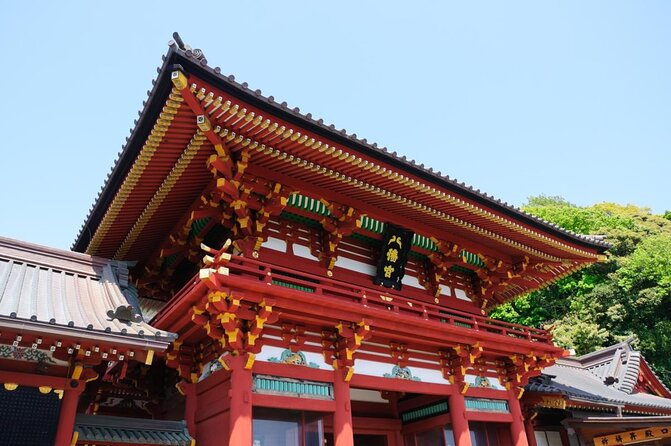
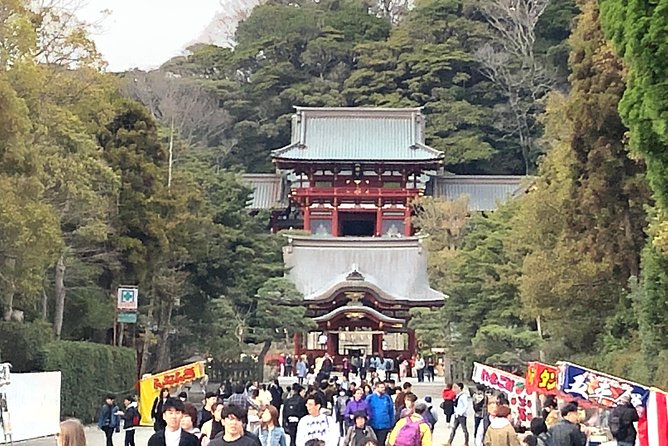
Next comes Tsurugaoka Hachimangu, Kamakura’s most important Shinto shrine. You have about 30 minutes to see the main hall, the torii gates, and the small museum of treasures.
This stop contrasts nicely with Engaku-ji. The temple visit feels more enclosed and contemplative, while the shrine presents a larger ceremonial approach. The torii gates help mark the shift from ordinary streets into sacred space, and the main hall gives you a clear focal point even during a short visit.
Thirty minutes is enough for an introduction, but not for a slow, detailed examination of every corner. That is not necessarily a problem. The tour has several major stops, and the guide can help you focus on the parts that best fit your interests. If you care about religious architecture or Japanese history, this is a good time to ask questions rather than trying to see everything on your own.
The small museum of treasures adds another layer, though the visit is brief. I would see this stop as a well-chosen overview rather than a full museum experience. The value comes from placing the shrine within the larger story of Kamakura before you head into the food district.
Komachi dori turns lunch into a tasting walk
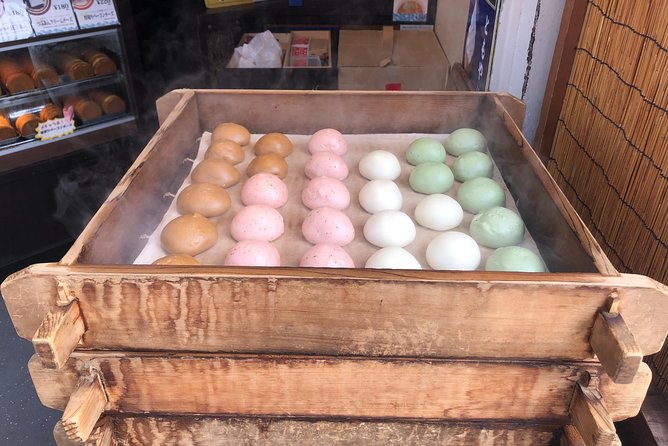
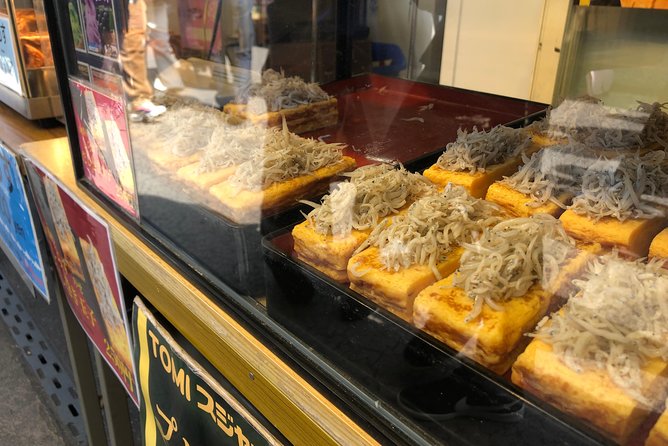
Komachi dori is where the tour changes character. This famous street is lined with eateries and stalls selling sweet and savory foods, and you spend about an hour sampling local dishes and drinks.
I like this approach to lunch. Instead of spending the middle of the day at one restaurant, you can try several small portions and get a better sense of what Kamakura’s food scene offers. The exact items can vary, but the tour description points to local delicacies and a broad selection of snacks. Your guide can also help you decide what to try, which is useful if you are unsure about unfamiliar foods.
This is where the personal nature of the tour has real value. One family specifically credited Simon with encouraging them to try street food they might otherwise have skipped. That is the sort of small guidance that can make a food stop more rewarding. You can ask what an item is, how it is eaten, and whether it is sweet, savory, light, or filling.
Lunch, snacks, bottled water, soda, and alcoholic drinks are included. The alcohol inclusion explains why one group described the day as a balance of culture, history, and drinks. Still, you should not expect a bar crawl. The focus remains sightseeing, with food and drink woven into the walk.
Komachi dori can be busy, and the street is built around browsing rather than sitting quietly. Keep your expectations practical. This is not a private cooking class or a carefully arranged restaurant meal. It is a chance to taste several local foods while walking through one of Kamakura’s best-known commercial areas.
More Street Food Tours in Tokyo:
- Tsukiji Fish Market: Street Food & Culture Walking Tour
★ 5.0 · 669 reviews - Tsukiji Fish Market: Street Food & Culture Walking Tour
★ 4.8 · 259 reviews - Tokyo: Togoshi Ginza Street Food Tour
★ 5.0 · 34 reviews - Tokyo Street Food Tour – 7 Japanese Foods
★ 5.0 · 16 reviews
Hokoku-ji pairs bamboo with a quiet cup of tea
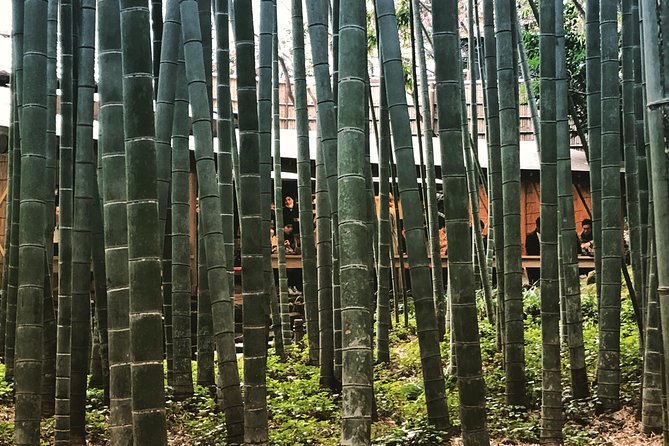
Hokoku-ji, often called the bamboo temple, is one of the most atmospheric stops on the route. You spend about an hour here, including time in the bamboo grove and a traditional cup of green tea at the teahouse.
The contrast with Komachi dori is immediate. After food stalls and shopping, the bamboo grove offers a cooler, quieter setting. The tea house gives you a reason to pause instead of treating the grove as a quick photo stop.
This is one of the tour’s strongest details because it combines scenery with a small cultural experience. You are not simply looking at bamboo. You are also sitting down with tea in a setting designed for calm. If you have already spent the morning walking, that pause should feel welcome.
The hour allows more breathing room than the 30-minute shrine stop. Use it to notice the sound, light, and narrow paths among the bamboo rather than rushing straight to the next sight. I would not treat this as a substitute for a full tea ceremony, since the experience is described as enjoying a traditional cup of green tea at the teahouse. It is a shorter and simpler introduction.
Hokoku-ji is also a useful reason to choose this tour instead of a basic Kamakura highlights walk. The bamboo grove gives the day a clear change of mood and offers something visually different from the temples and shrine.
The Great Buddha provides a memorable final sight
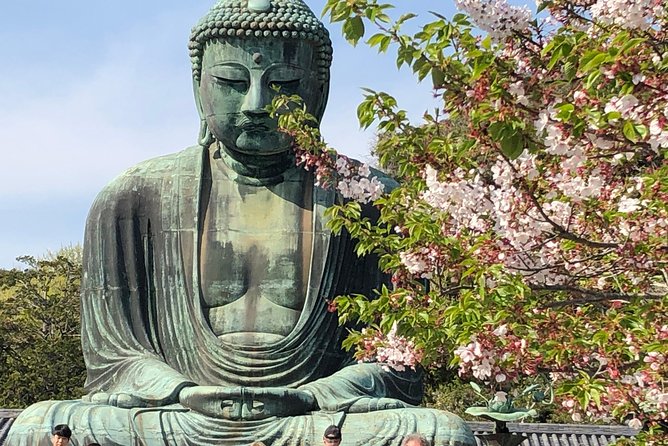
The final listed stop is Daibutsukiritoshi, where you see the Great Buddha of Kamakura, described as Japan’s second-largest bronze Buddha. You have about 30 minutes here.
The Great Buddha is an obvious Kamakura landmark, but it works best after the earlier temple and shrine visits. By this point, you have already seen smaller religious spaces and learned something about the town’s sacred character. The statue then serves as a strong final image, large in scale and easy to remember.
Thirty minutes is enough for a focused visit and photographs, though it is not a long period for exploring the surrounding area. The tour is designed to show you several parts of Kamakura in one day, not to give every site an unlimited amount of time.
The supplied details do not specify a separate admission charge for the Great Buddha, so you should rely on the included entrance information at booking rather than assume every optional area is covered. The important point is that the tour includes the sight as part of the walking route and ends later at Kamakura Station.
The walking pace and route need honest consideration
The tour lasts about six hours, beginning at 9:00 am and ending at Kamakura Station. You start at Kita-Kamakura Station and finish at Kamakura Station, so the route is not a simple return trip. That is convenient if you plan to continue exploring or return from Kamakura by train, but you need to arrange your own transportation to the starting point and onward from the finish.
Transportation costs are not included. The tour covers admissions, lunch, snacks, drinks, and guiding, but you pay separately for getting to and from the stations. For a private tour priced at $220.22 per person, that distinction matters.
The price is easier to justify for a group that values personal attention. Six hours of guiding, multiple admissions, lunch, snacks, bottled water, soda, and alcoholic drinks add up, and a private guide can make the day more flexible. It is less compelling if you prefer to move quickly, choose your own food, and use public transport independently.
You should also plan for a full walking day. The route includes temple and shrine grounds, street walking, and a slope behind Engaku-ji. Comfortable shoes are a sensible choice, even though the tour information does not set a specific dress requirement. The activity calls for moderate physical fitness, so it may not suit anyone who struggles with extended walking or uphill sections.
Who will get the most from this private Kamakura tour
I would recommend this experience to first-time visitors who want Kamakura explained rather than simply photographed. The guide helps connect the temples, shrine, food street, bamboo grove, and Buddha into one understandable day.
It also suits families. Simon is specifically praised for being helpful with a young child, and another group appreciated the care shown to older parents. A private setting gives your group more room to set a sensible pace than a large fixed group would.
Food-curious visitors should also enjoy it. Komachi dori becomes more useful when someone can point out local specialties and help you decide what to sample. If you rarely try street food because menus feel unfamiliar, the guide can make that part of the day less intimidating.
The tour may be less suitable if you want a deep museum visit, long meditation time, or extensive independent shopping. The stops are varied, but each has a time limit. You see a lot, yet you do not spend an entire morning at one temple or shrine.
Six published ratings give the experience a perfect five-star result, and the strongest praise focuses on the guides rather than on one single attraction. Simon is repeatedly described as kind, helpful, professional, and attentive. Chuck is praised for his timing and good humor. That pattern suggests the human side of the tour is its main selling point.
Booking details, cancellation, and weather
The tour is often booked about 95 days ahead, so early planning is sensible if your Tokyo dates are fixed. Group discounts are available, and the ticket can be used on a mobile device.
Confirmation is provided at booking, and the meeting point is near public transportation. You meet at Kita-Kamakura Station at 9:00 am, and the drop-off point is Kamakura Station.
Free cancellation is available up to 24 hours before the start time for a full refund. Changes or cancellations made less than 24 hours before the start time are not accepted for a refund. The activity requires good weather, and if poor weather cancels it, you are offered another date or a full refund.
Should you book this Kamakura walking tour?
Book it if you want a personal guide, included tasting stops, and a varied six-hour route rather than a do-it-yourself temple checklist. The mix of Engaku-ji, Tsurugaoka Hachimangu, Komachi dori, Hokoku-ji, and the Great Buddha gives you a broad look at Kamakura without making you plan every transfer and meal.
I would be especially inclined to book it for a family, a first visit to Japan, or a group with mixed interests. The guides’ reported care with children, older parents, and different sightseeing preferences is a real advantage.
Skip it if you dislike walking, prefer long visits at one attraction, or want transportation folded into the price. For everyone else, the combination of temples, shrine architecture, bamboo, street food, tea, and a private guide makes this a strong use of one day outside Tokyo.
FAQ
How long does the Kamakura tour last?
The tour lasts approximately six hours.
Where does the tour begin?
It begins at Kita-Kamakura Station, at Yamanouchi, Kamakura, Kanagawa 247-0062, Japan.
What time does the tour start?
The start time is 9:00 am.
Where does the tour end?
The tour ends at Kamakura Station, at 1-chōme-1-15 Onarimachi, Kamakura.
Is this a private tour?
Yes. Only your group participates in the private activity.
What is included in the price?
Lunch, snacks, alcoholic beverages, bottled water, soda, entrance fees, and a guided tour are included.
Are transportation costs included?
No. Transportation costs are not included.
What happens if bad weather cancels the tour?
If poor weather causes cancellation, you are offered a different date or a full refund.
Just added around Tokyo
- Tsukiji Fish Market Street Food & Culture Walking Tour★ 5.0 · 8 reviews
- Tokyo Fish Market Food Tour: Street Food & Friendly Guide★ 3.0 · 2 reviews
- Ueno Park and Ameyoko Street Food Market Half Day Walking Tour★ 5.0 · 3 reviews
- Tokyo:Enjoy street food & Japanese food culture at Tsukiji Market★ 5.0 · 6 reviews
- Tokyo Street Food Tour – 7 Japanese Foods★ 5.0 · 16 reviews
- Tsukiji Fish Market: Street Food Tour with Tasting★ 5.0 · 4 reviews
- Matsushima Bay, Islands and Seafood Market day tour from Tokyo★ 5.0 · 2 reviews
- Tokyo: Private Tsukiji Fish Market Tour with 3 Food Stops★ 5.0 · 9 reviews
Street Food Tours, compared.
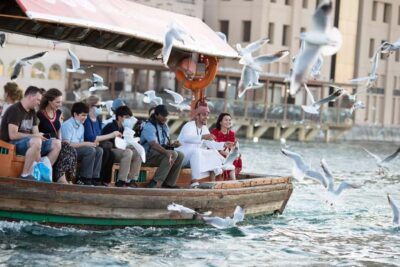
Old Town, Creek, Museums, Souks, & Street Food Tour
What we made of it →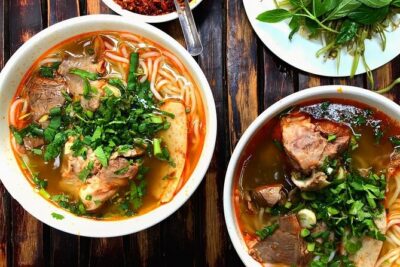
Ho Chi Minh City Street Food Tour & Sightseeing By Motorbike
What we made of it →
Comuna 13 Graffiti Tour, Cable Car & Street Food
What we made of it →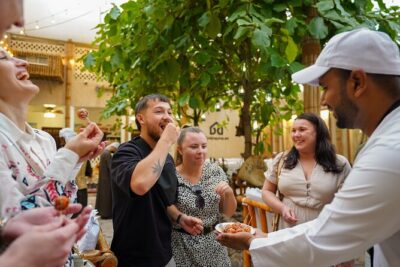
Old Town, Souks, Street Food, Guided Tour & Abra Ride
What we made of it →
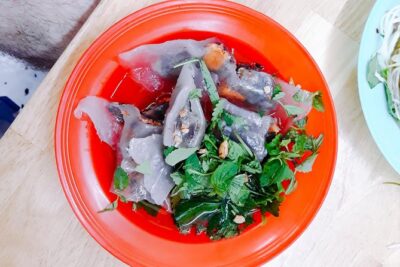
Small Group Hanoi Street Food Tour with a Real Foodie
What we made of it →
Saigon By Night and Street Food By Motorbike | Opt: Ao Dai Riders
What we made of it →Where this tour turns up