
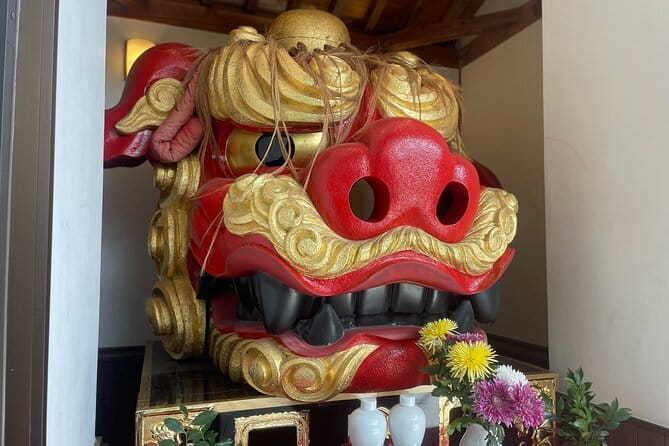
Review · TOKYO
Tokyo:Enjoy street food & Japanese food culture at Tsukiji Market
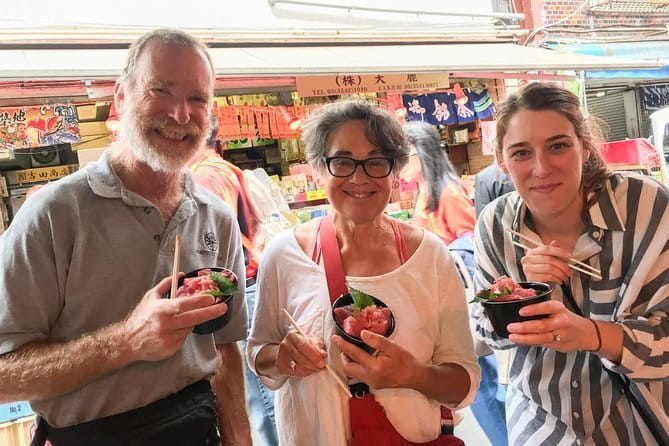
Come hungry and ready to learn. This three-hour Tsukiji tour gives you more than seafood samples, with an English-speaking guide explaining Japanese food customs, market traditions, religion, and daily life as you walk through the Outer Market. I like the small group size of six, which should make it easier to ask questions and move through crowded lanes. I also like that tastings may include unusual bites such as seasoned seaweed, dried fish, oysters, sashimi, roast beef sushi, and bean snacks.
The main drawback is cost. At about $100.34 per person, lunch is still extra, and you will pay separately for anything you want to buy beyond the tour’s included snacks. The experience makes the most sense if you value a guide’s explanations and want help choosing food, rather than simply browsing Tsukiji on your own.
Key points to know before you book
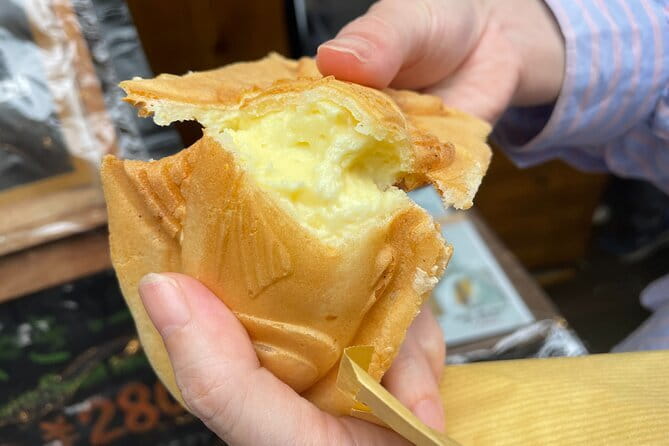
- Three hours in Tsukiji: The route combines food tastings, a temple, a market walk, lunch shopping, and a shrine.
- Small group, maximum six people: A useful setup for questions and for navigating narrow market lanes.
- Seafood is central: Tastings may include oysters, sashimi, dried fish, and other seafood, along with meat and bean snacks.
- Lunch is not included: You choose and purchase your own lunch at Tsukiji Uogashi.
- The guide adds cultural context: The tour covers dashi, Japanese food customs, market history, religion, and local life.
- The route ends at Namiyoke Shrine: You start at Tsukiji Hongwanji Temple and finish near the market’s traditional guardian shrine.
What this Tsukiji tour is really about
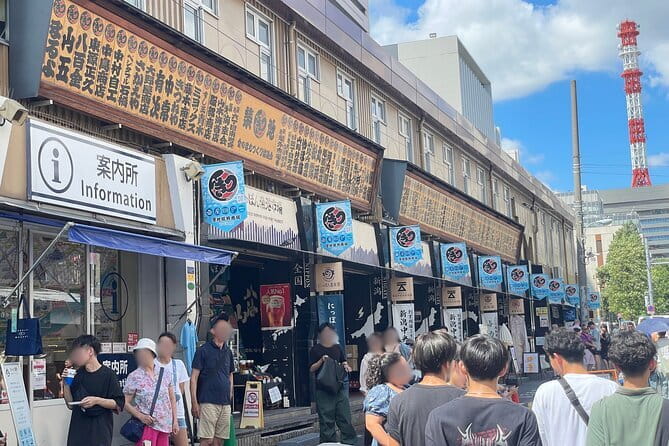
Tsukiji is no longer Tokyo’s main wholesale fish market. That operation moved away from the old site, but the Tsukiji Outer Market remains a major place to shop, eat, and see Japanese food culture in action.
That distinction matters. If you arrive expecting the old wholesale market, you may be disappointed. This experience focuses on the Outer Market, where shops sell seafood, dried ingredients, prepared food, kitchen goods, and snacks. You are not simply walking past stalls while a guide recites facts. You are shown what to taste and why certain ingredients matter.
The guide also helps with the part that can be difficult on your own: deciding what is worth trying. Tsukiji can feel confusing because many shops are packed close together and the food choices change from one counter to the next. A guide can point you toward recommended stores and explain unfamiliar items before you spend your money.
The strongest reason to book is the human element. Guides such as Yoshi, Yuki, Haruka, and Hiro have been praised for friendly explanations and personal attention. The comments about these guides repeatedly focus on food culture, market history, and the way they helped people understand more than they could from online videos alone.
More Street Food Tours in Tokyo:
- Tsukiji Fish Market: Street Food & Culture Walking Tour
★ 5.0 · 669 reviews - Tsukiji Fish Market: Street Food & Culture Walking Tour
★ 4.8 · 259 reviews - Tokyo: Togoshi Ginza Street Food Tour
★ 5.0 · 34 reviews
Starting at Tsukiji Hongwanji Temple
The tour begins at the main gate of Tsukiji Hongwanji Temple, at 3-chome-15-1 Tsukiji. Set aside about 20 minutes for this opening stop.
The temple is a useful introduction because it does not look like a typical Japanese temple. Its building and decorative details draw from several Asian architectural traditions, including Indian styles. That gives the site a different visual character from the wooden temple buildings many people expect to see in Tokyo.
Your guide uses the temple to introduce the religious and cultural setting around Tsukiji. This is a good choice of starting point. Food in Japan is closely tied to custom, season, ceremony, and daily practice, so the temple helps place the market in a wider setting before you begin sampling.
The stop is short, which suits the tour. You will not spend most of your food tour inside a temple, but you get enough time to look at the exterior and hear why it matters. Admission is free.
Meet carefully at the main gate rather than assuming you can find the group somewhere inside. The tour confirmation is provided at booking, and the temple is near public transportation.
One hour among the Tsukiji Outer Market stalls
The main food portion takes about one hour in the Tsukiji Outer Market. This is where the tour earns its keep, especially if you are new to Japanese ingredients or unsure how to order from small specialty shops.
Included tastings may feature:
- Seasoned seaweed
- Dried fish
- Roast beef sushi
- Oysters
- Sashimi
- Bean snacks
The exact selection can vary, so you should think of this as a guided tasting rather than a fixed menu. Some of the most memorable possibilities are the less familiar ones. Dried fish and seasoned seaweed may look simple, but they connect to the basic flavors used in Japanese cooking. The tour also introduces you to the range of food sold at Tsukiji, from ready-to-eat seafood to ingredients meant for home kitchens.
The food is not limited to seafood. Meat appears in the snack selection, and roast beef sushi provides a change from raw fish. That is helpful if someone in your group likes Japanese food but is not eager to eat only seafood.
Still, seafood is a major part of the experience. You should tell the guide about allergies before the tour, especially because the included snacks can contain seafood and meat. This is not a suitable outing for someone who cannot safely handle cross-contact concerns in a market setting unless the operator confirms that arrangements can be made.
The small group limit of six is important here. Market lanes can be tight, and a large group would make the food stops slower and less personal. With fewer people, you should have a better chance to ask what an ingredient is, how it is eaten, and why it is sold in that form.
The tour is also a sensible choice for first-time market visitors who want a starting point. You may recognize Tsukiji from videos, but seeing stalls online does not tell you which items are easy to eat, which foods are seasonal, or how the market fits into Japanese life. The guide fills in those gaps.
Choosing lunch at Tsukiji Uogashi
After the snack walk, the group heads to Tsukiji Uogashi, specifically the Kaiko Bridge building. This part lasts about one hour and 10 minutes, including time to choose and eat lunch.
Lunch is not included in the price. You purchase the meal yourself, selecting from boxed lunches and other available foods. The guide points out the choices, then you buy what suits your appetite and budget.
This arrangement has both an advantage and a drawback. The advantage is freedom. You are not locked into a set lunch, so you can choose a boxed meal, another prepared dish, or something that appeals to you after the earlier tastings. The drawback is that the final cost is open-ended. At $100.34, the tour price already requires thought, and you should allow extra money for lunch and any additional shopping.
Eating lunch with the snacks purchased during the market walk gives the tour a natural finish. You get to compare the small tastes with a fuller meal, and the guide can continue explaining the ingredients and customs around the food.
You should arrive hungry but not empty-stomached. The tour includes several tastings, and the meal comes later. If you want to buy extra items for yourself, those purchases are also separate. This is not an all-inclusive food package.
Same place, a different plate:
- Tokyo: Tsukiji Fish Market Food and Culture Walking Tour
★ 4.7 · 757 reviews - Tokyo Street Food Tour – 7 Japanese Foods
★ 5.0 · 16 reviews - Tokyo: Private Tsukiji Fish Market Tour with 3 Food Stops
★ 5.0 · 9 reviews - Private Tokyo food scene 6 hour experience: Depatika, street food, izakaya
★ 5.0 · 9 reviews
Ending at Namiyoke Shrine
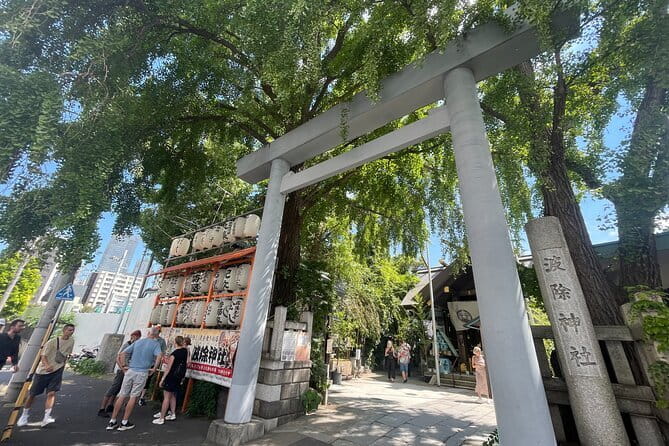
The final stop is Namiyoke Shrine, with about 30 minutes set aside. The shrine has been worshipped by Tsukiji’s market community since the market was established in the area.
Its role is closely tied to the people who worked around the market. The shrine has long been associated with prayers for safety at sea, making it a fitting final stop after a food-focused walk through Tsukiji. It connects the seafood trade to the religious customs that supported the people working in it.
Ending here also gives the tour a clear sense of place. You begin at a major temple, spend the central portion among food shops, and finish at a shrine linked to the market community. The route is not only about eating. It shows how food, work, faith, and neighborhood life overlap in Tsukiji.
The tour ends at Namiyoke Shrine, at 6-chome-20-37 Tsukiji. That is useful if you want to continue exploring the area afterward, though the supplied details do not specify onward directions or additional stops.
How the guides shape the experience
The guides are the main reason this tour can offer more than a self-guided market visit. Yoshi and Yuki have been praised for explaining both food and culture while offering many different tastes. Haruka has been singled out for helping a group that felt lost among the market’s many restaurants and for giving useful recommendations.
Hiro has been praised for explaining the depth of Japanese food culture, including the different types and uses of dashi. That detail matters. Dashi is not just another soup ingredient. It is a foundation for many Japanese dishes, and understanding it gives you a clearer idea of why certain foods taste the way they do.
The guides also explain the history of Tsukiji, Japanese life, and religion. That broader approach is a strength. You are not left with a list of shop names and snack photos. You gain a framework for understanding why ingredients are prepared, sold, and eaten in particular ways.
Because the group is capped at six, the tour should feel more like a guided conversation than a procession. I would use the small size to ask direct questions, especially about dashi, dried fish, seaweed, seafood preparation, and the difference between a food meant for immediate eating and one meant for a home kitchen.
Is $100.34 a fair price?
The price is high for a three-hour outing when lunch and personal purchases are excluded. If you only want to eat a few market snacks, you can likely spend less by visiting Tsukiji without a guide.
The value improves if you want interpretation. The fee includes a guide and a set of snacks, plus visits to two important religious sites and assistance choosing lunch. You are paying for access to local explanation and for a smoother introduction to a complicated food district.
I would compare this tour with the cost of making several uninformed purchases on your own. A guide can help you avoid ordering something unsuitable, show you foods you might overlook, and explain ingredients you would otherwise identify only by appearance. That will not matter equally to every visitor, but it matters a great deal if Japanese food culture is one of your main interests.
The six-person maximum also supports the price. A private tour would cost more, while a large group tour would likely offer less time for questions. This sits between those two options.
Book it if you want a guided food lesson with tastings. Skip it if you prefer wandering freely, already know Tsukiji well, or mainly want a cheap lunch.
Practical details that affect your day
The experience lasts approximately three hours, with the market and lunch portion taking most of the time. You need a moderate level of physical fitness, since the tour involves walking through the market and moving between several stops.
It is not wheelchair accessible. That is an important limitation, particularly because the market environment can be tight and crowded. Anyone with mobility concerns should contact the provider before booking rather than assume the route can be adjusted.
The tour uses a mobile ticket, and confirmation is sent when you book. It is usually booked about seven days ahead, so I would not leave it until the last minute if your Tokyo schedule is fixed.
Free cancellation is available until 24 hours before the start time. Changes or cancellations made inside that window are not accepted for a refund.
Who should book this Tsukiji experience?
I would recommend it to first-time visitors who want context along with food. It suits people who are curious about seafood, dashi, dried ingredients, Japanese religion, and the way a traditional market fits into city life.
It is also a good match for small groups who want personal guidance. The maximum of six gives the guide room to explain unfamiliar food and answer questions without turning every stop into a long wait.
Families and mixed groups may appreciate the variety. Not everyone has to eat raw seafood, since the possible tastings include seaweed, bean snacks, dried fish, and roast beef sushi. Still, seafood and meat are part of the experience, so allergies must be discussed with the guide.
I would be more cautious about recommending it to budget-conscious eaters. The price is not trivial, and lunch plus extra shopping adds to the total. You should also choose another activity if you need step-free access or a wheelchair-friendly route.
Should you book it?
Book this tour if you want Tsukiji explained rather than simply photographed. The combination of guided tastings, dashi and food-culture lessons, the unusual architecture of Hongwanji Temple, and the market connection of Namiyoke Shrine gives the outing more substance than a snack crawl.
The strongest reason to go is the guide. Yoshi, Yuki, Haruka, and Hiro have all been associated with friendly, personal explanations, and that is exactly what makes a market tour useful. You should book if you want help making sense of the stalls and are happy to pay extra for that help.
Skip it if your main goal is a low-cost meal, independent shopping, or a wheelchair-accessible route. For everyone else, this is a well-shaped introduction to Tsukiji, with enough tasting and cultural context to make the market easier to understand on the rest of your Tokyo visit.
FAQ
Where does the tour start?
It starts at the main gate of Tsukiji Hongwanji Temple, at 3-chome-15-1 Tsukiji, Chuo City, Tokyo.
Where does the tour end?
It ends at Namiyoke Shrine, at 6-chome-20-37 Tsukiji, Chuo City, Tokyo.
How long does the experience last?
The tour lasts approximately three hours.
Is lunch included?
No. Lunch is purchased separately at Tsukiji Uogashi, where the guide points out boxed lunches and other available foods.
What snacks are included?
Possible included snacks include seasoned seaweed, dried fish, roast beef sushi, oysters, sashimi, and bean snacks.
Are shopping costs included?
No. Personal purchases at the market are paid for separately, and the cost depends on what you choose to buy.
Is the tour wheelchair accessible?
No. The tour is not wheelchair accessible.
What is the cancellation policy?
You can cancel up to 24 hours before the experience starts for a full refund. Cancellations or changes made less than 24 hours before the start time are not accepted.
Just added around Tokyo
- Tsukiji Fish Market Street Food & Culture Walking Tour★ 5.0 · 8 reviews
- Ueno Park and Ameyoko Street Food Market Half Day Walking Tour★ 5.0 · 3 reviews
- Tokyo Fish Market Food Tour: Street Food & Friendly Guide★ 3.0 · 2 reviews
- Tokyo Street Food Tour – 7 Japanese Foods★ 5.0 · 16 reviews
- Tsukiji Fish Market: Street Food Tour with Tasting★ 5.0 · 4 reviews
- Matsushima Bay, Islands and Seafood Market day tour from Tokyo★ 5.0 · 2 reviews
- Tokyo: Private Tsukiji Fish Market Tour with 3 Food Stops★ 5.0 · 9 reviews
- Historic Kamakura: Temples, Shrines and Street Food Private Walking Tour★ 5.0 · 6 reviews
Street Food Tours, compared.

Old Town, Creek, Museums, Souks, & Street Food Tour
What we made of it →
Ho Chi Minh City Street Food Tour & Sightseeing By Motorbike
What we made of it →
Comuna 13 Graffiti Tour, Cable Car & Street Food
What we made of it →
Old Town, Souks, Street Food, Guided Tour & Abra Ride
What we made of it →
Small Group Hanoi Street Food Tour with a Real Foodie
What we made of it →
Saigon By Night and Street Food By Motorbike | Opt: Ao Dai Riders
What we made of it →Where this tour turns up