
Review · TOKYO
Tsukiji Fish Market: Street Food & Culture Walking Tour
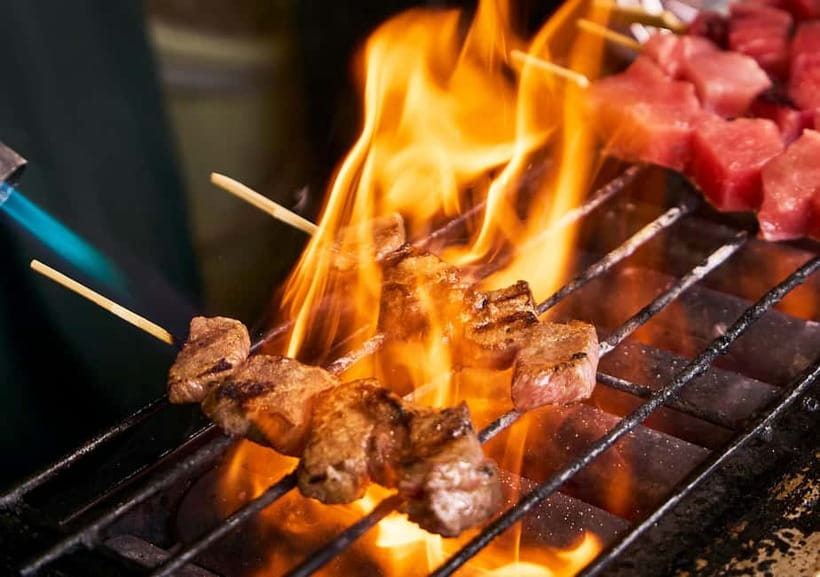
Tsukiji rewards an early appetite. This two-hour walk lets you see Japanese food culture up close, with street-food stops, a fish-cutting demonstration, and a fresh seafood bowl. I like that a local guide explains what you are eating instead of leaving you to guess at unfamiliar stalls.
I also like the small-group format, which can give you more time to ask questions and keep the pace manageable. The main drawback is that Tsukiji can become crowded and hectic, and some people may find there is too much stopping, waiting, or pressure to sample food for a tour that offers only a short history lesson.
Key points to know before you go
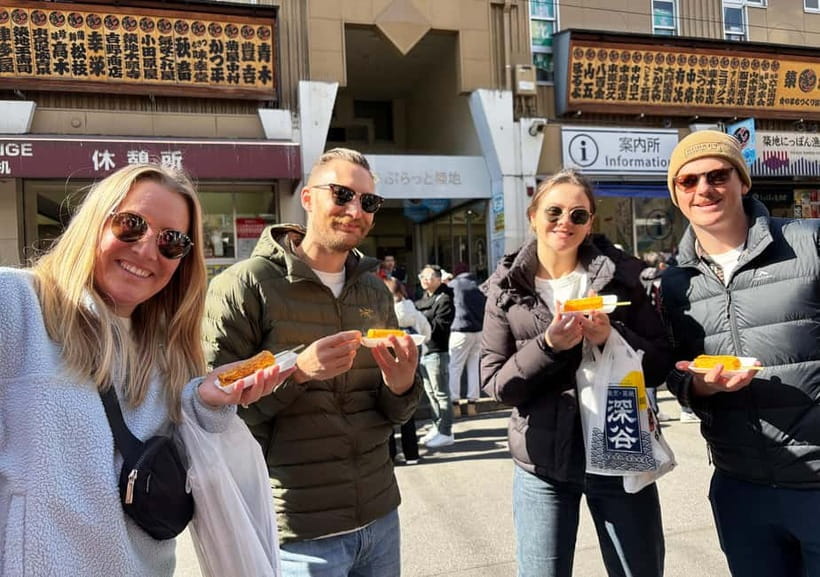
- A food-first look at Tsukiji: Most of the time centers on street food, ingredients, cooking methods, and local eating customs.
- Fish-cutting demonstration included: You watch a skilled chef fillet a whole fish using traditional techniques, then enjoy a fresh seafood bowl.
- Four stops in about two hours: The route includes Tsukiji Hongwanji Temple, Tsukiji Jogai Market, the working fish market, and another market segment for food tasting.
- Small-group setting: The maximum group size is 30, though the experience may feel crowded around busy stalls and during holiday periods.
- Wheelchair and stroller accessible: This makes the tour easier for families and visitors with mobility needs, though dense crowds can still affect movement.
- Strong overall satisfaction: The experience carries a 5 out of 5 rating from 669 ratings, with 99 percent recommending it.
Why Tsukiji still matters after the wholesale market moved
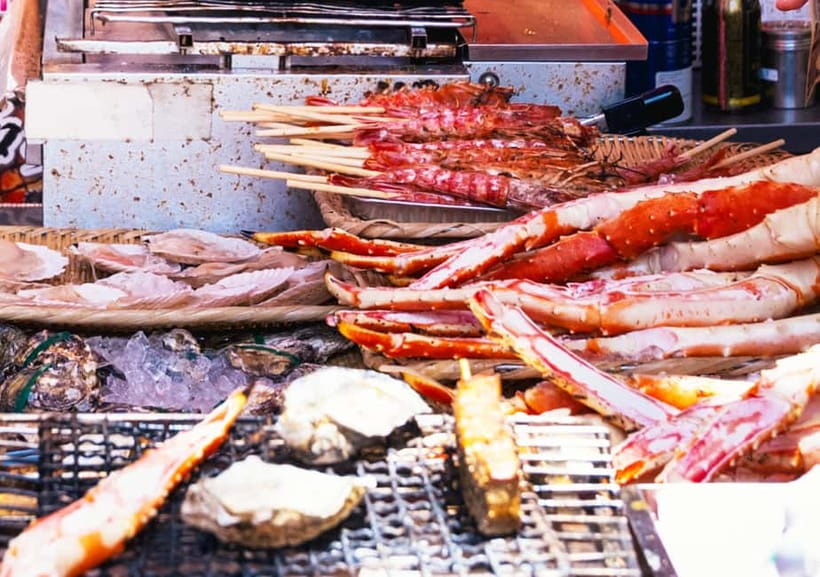
Tsukiji is often called Tokyo’s fish market, but you need to understand the layout before arriving. The famous wholesale fish auctions moved to Toyosu, while Tsukiji’s outer market, known as Tsukiji Jogai Market, remains open to shoppers, cooks, restaurants, and curious visitors.
That outer market is the heart of this tour. It is a maze of food stalls and small shops selling seafood, Japanese ingredients, kitchen goods, and ready-to-eat bites. The attraction is not a single grand sight. It is the close view of food being selected, prepared, cut, and served.
I think a guide helps most here because the market can feel like a wall of unfamiliar choices. You may see ingredients you cannot identify, hear cooking terms you do not understand, or hesitate over how to eat something at a crowded counter. A local guide can point out what matters and explain how the food fits into daily Japanese life.
The tour is also useful if you want a gentle introduction to Japanese cooking. Instead of treating the market as a photo stop, it links ingredients with traditional methods and local customs. That connection gives the tasting a purpose.
Still, you should arrive with the right expectations. This is not a behind-the-scenes tour of the Toyosu wholesale auction, and it is not primarily a long lesson in Tokyo history. Food is the main event.
More Street Food Tours in Tokyo:
- Tsukiji Fish Market: Street Food & Culture Walking Tour
★ 4.8 · 259 reviews - Tokyo: Togoshi Ginza Street Food Tour
★ 5.0 · 34 reviews - Tokyo Street Food Tour – 7 Japanese Foods
★ 5.0 · 16 reviews
Starting at Tsukiji Hongwanji Temple
The meeting point is outside Tsukiji Hongwanji Temple at 3-chome-15-1 Tsukiji. The temple visit takes about 15 minutes and comes either at the beginning or as part of the opening section of the route, depending on how the guide organizes the morning.
Hongwanji gives the tour a useful cultural frame before you begin sampling food. A local guide explains the temple’s appeal and introduces aspects of Buddhism and Japanese culture. For someone visiting Japan for the first time, this can help you read the neighborhood as more than a collection of market stalls.
I would not book this tour solely for the temple. The stop is brief, and the temple portion does not appear to be the main focus. Some people find it adds welcome context, while others feel the short visit does not add much value compared with the food stops.
That difference matters. If you want a serious temple tour, you will likely want more time and a dedicated guide. If you appreciate a short cultural introduction before breakfast, the stop works well.
The meeting location is near public transportation, which makes it practical for visitors staying in central Tokyo. You return to the same meeting point at the end, so you do not need to plan a separate pickup.
Eating your way through Tsukiji Jogai Market
The first main market section lasts about 45 minutes. Here, the guide leads you through Tsukiji Jogai Market and helps you explore its street-food culture.
The value of this part depends heavily on your guide. A strong guide does more than point toward food. The best experience comes when the guide explains ingredients, traditional cooking, local habits, and the history of the neighborhood while helping you find worthwhile places to eat.
George received especially warm praise for taking his group to good food stops, while Tomo was appreciated for explaining history and culture clearly. Those comments point to the two things you should want from this tour: practical food guidance and enough explanation to make the market meaningful.
Expect this section to be active rather than formal. You may stop at food counters, inspect ingredients, and decide what looks appealing. The exact food choices are not listed, and meals are officially not included, so you should not assume every tasting is covered in the price.
That is an important money detail. The tour costs $33.16 per person, which is reasonable for a two-hour guided walk if the explanations and food access are useful to you. You should also budget separately for anything you buy at the market.
The guide can make unfamiliar food less intimidating. If you are unsure about raw seafood, Japanese seasonings, or market-style snacks, you can ask before buying. If you already know Tsukiji well, you may find the guided tasting less valuable because you can walk the same market on your own.
Crowds are another concern. Around New Year and other busy periods, the narrow market lanes can become difficult to navigate. One account describes missed stalls and a guide who did not always wait for the full group. Stay close, listen for meeting instructions, and avoid wandering ahead for a better photo.
Watching a whole fish become a meal
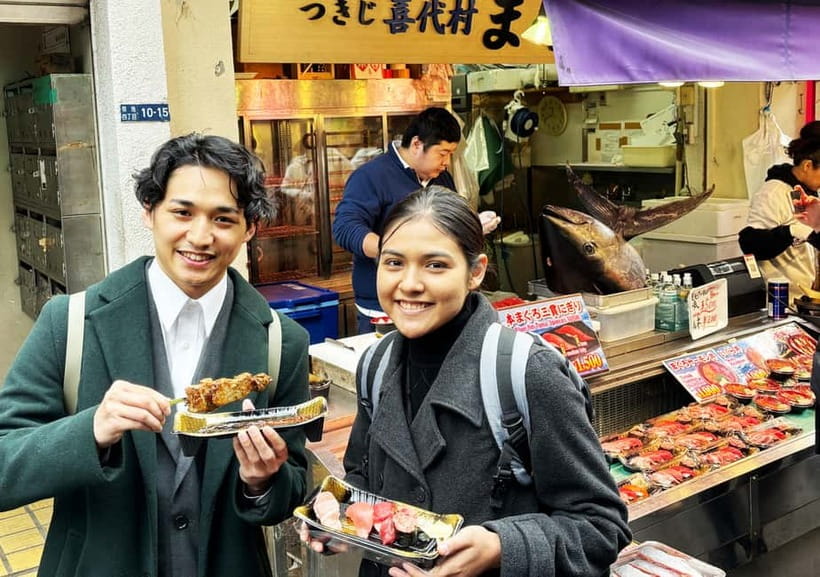
The 30-minute fish-cutting demonstration is the most distinctive part of the experience. A skilled chef fillets a whole fish using traditional techniques, giving you a close look at the accuracy and control involved.
This is more than a quick knife trick. Fish preparation requires careful cuts, an understanding of the bones, and respect for the ingredient. Watching the process helps explain why Japanese cuisine places such importance on freshness, presentation, and precise handling.
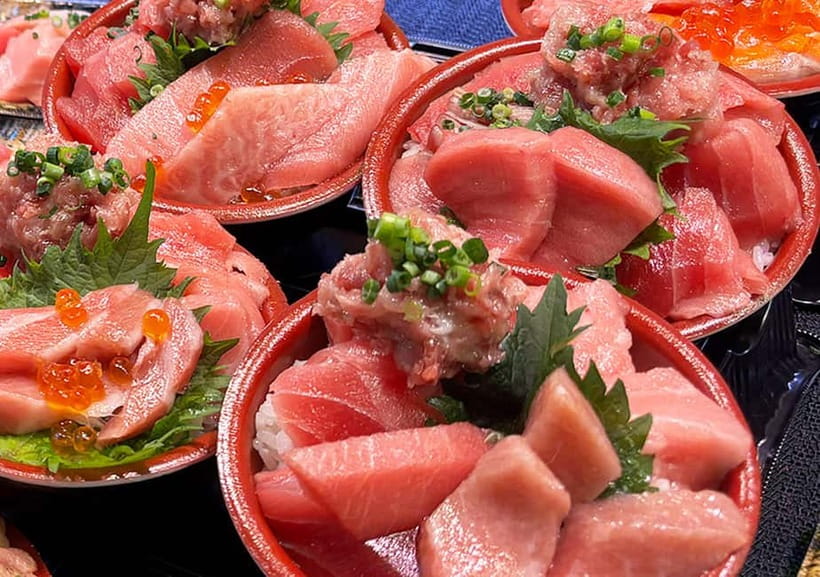
Afterward, you enjoy a fresh seafood bowl. This creates a clear connection between the demonstration and the meal. You see the preparation, then get to appreciate the finished food.
The meal is listed as an included part of this stop, but the general tour information also says meals are not included. I would confirm the exact food arrangement at booking so you know what is covered and what extra purchases you may need to make. That small check can prevent confusion at the market.
For many people, this demonstration justifies much of the tour price. You could walk through Tsukiji alone, but you might not find a fish-cutting presentation or understand what you are seeing without help.
On the other hand, you should not expect a full cooking class. You watch the chef work, learn about traditional techniques, and eat the result. The available information does not indicate that you prepare the dish yourself.
Same place, a different plate:
- Tokyo: Tsukiji Fish Market Food and Culture Walking Tour
★ 4.7 · 757 reviews - Tokyo: Private Tsukiji Fish Market Tour with 3 Food Stops
★ 5.0 · 9 reviews - Private Tokyo food scene 6 hour experience: Depatika, street food, izakaya
★ 5.0 · 9 reviews - Tsukiji Fish Market Street Food & Culture Walking Tour
★ 5.0 · 8 reviews
Seeing the working side of the fish market
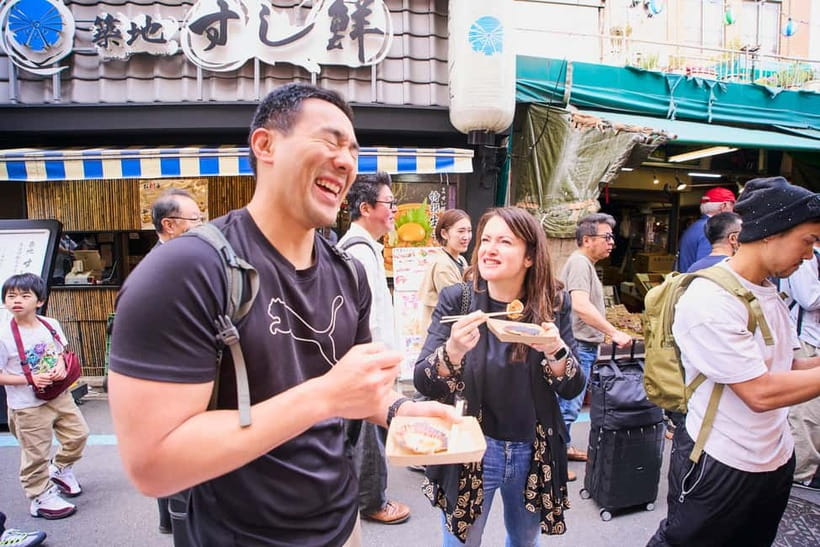
Another 30-minute section takes you into the fish market atmosphere where professional traders operate. This is useful because it shifts your view from prepared snacks to the commercial side of food distribution.
You can see how different the working market feels from a tourist food lane. Professionals are there to do business, not perform for visitors, so your guide’s role is important. You need to stay aware of your surroundings, avoid blocking activity, and follow instructions closely.
This part may appeal most to anyone interested in food supply, Japanese commerce, or the daily work behind a restaurant meal. It adds substance to the tasting stops by showing that Tsukiji is still a place of trade, not just a sightseeing district.
The timing is short, about 30 minutes, so treat it as an introduction rather than a full market study. The tour gives you a quick look at the setting and explains what you are seeing, but it does not promise extended access to every working area.
Because the market can be noisy and crowded, hearing the guide may become difficult. One person found a guide’s quiet voice hard to follow, especially with activity around the group. If you have trouble hearing, tell the guide early and position yourself close enough to follow the explanation.
How the two-hour pace feels
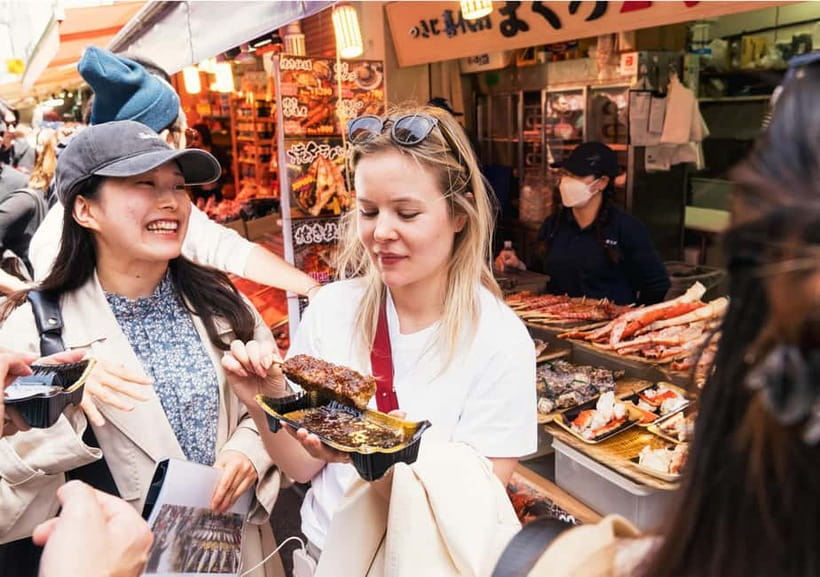
The full experience lasts approximately two hours and includes four parts:
- About 45 minutes exploring Tsukiji Jogai Market and its food stalls
- About 30 minutes for the fish-cutting demonstration and seafood bowl
- About 30 minutes seeing the working fish market
- About 15 minutes at Tsukiji Hongwanji Temple
That schedule is compact. You get several different views of Tsukiji without giving up half a day, which makes the tour easy to fit into a Tokyo itinerary.
The tradeoff is that the route may feel hurried in some places and slow in others. Crowds can force the group to stop and wait, while busy stalls may make it hard to hear or stay together. Some people found the organization hectic, especially when the guide moved ahead.
I would treat the schedule as flexible rather than exact. The listed times show the intended balance, but market conditions will affect how smoothly the tour runs.
A morning booking may also work well if you want to continue sightseeing afterward, though the exact start time is not provided. Since you meet and finish at the temple, you can plan another activity nearby or use public transportation to continue across Tokyo.
Accessibility, group size, and comfort
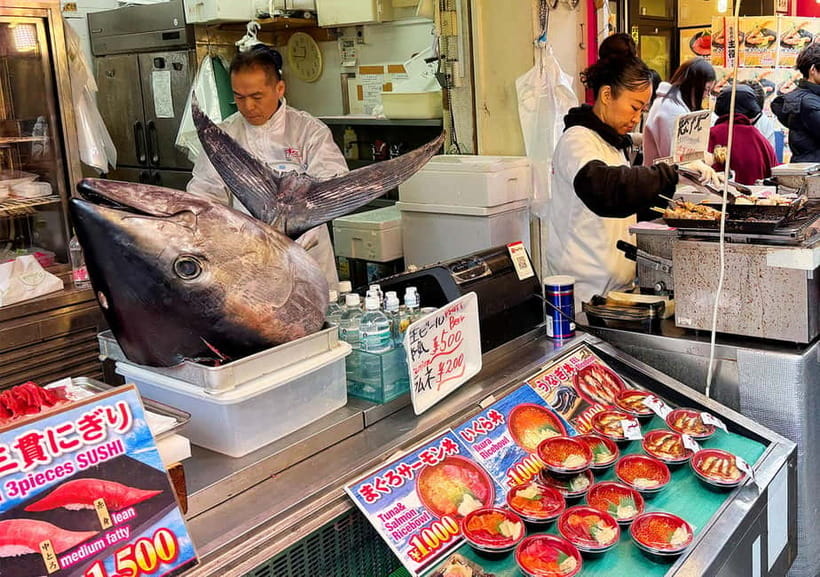
The tour is wheelchair and stroller accessible, and most people can participate. That is a meaningful advantage for families and visitors who need an easier route through Tokyo.
Still, accessible does not mean effortless. Market lanes may be crowded, and food stalls can create tight spaces. If you use a wheelchair or stroller, give yourself extra time and stay close to the guide when the group moves between stops.
The maximum group size is 30 people. That is called a small-group tour in the experience description, but 30 is large enough to affect the feel, especially in narrow market areas. A smaller actual group may allow more questions and easier movement, while a full group may make the guide harder to hear.
The tour requires good weather. If poor weather causes cancellation, you are offered another date or a full refund. You can cancel for a full refund up to 24 hours before the start time, but changes or cancellations inside that window are not accepted.
Is $33.16 good value?
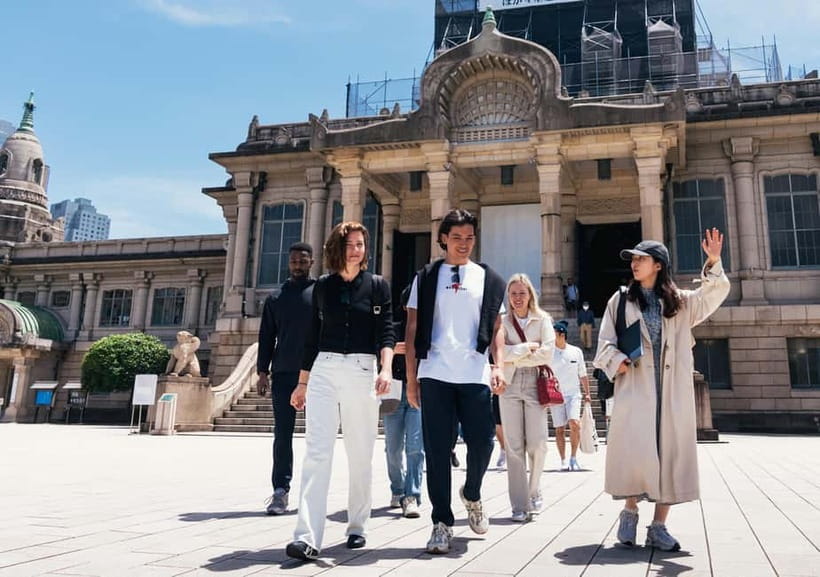
At $33.16, this is not an expensive Tokyo activity, but its value depends on what you want help with.
I think the price is fair if you want three things together: a local guide, organized food exploration, and the fish-cutting demonstration. The tour saves you from making every decision alone in a busy market, and it gives you cultural explanations while you eat.
The value is weaker if you mainly want to stroll through Tsukiji. The market is accessible without a tour, and the experience does not cover every food purchase. You may prefer to walk independently, choose your own stalls, and spend as much time as you like at the temple or market.
The strongest part of the price is the guided interpretation. You are paying for context, not just entry. If your guide explains the ingredients clearly, keeps the group together, and manages the crowded lanes well, the fee feels sensible.
The weakest point is inconsistency. A quiet guide, poor crowd control, or too much waiting can make the experience feel like a costly walk between stalls. Your enjoyment will depend greatly on communication and group conditions.
Who should book this Tsukiji tour?
I would recommend it to first-time visitors who want an easy introduction to Tokyo food culture. It suits you if you like tasting local food but want someone to explain what you are seeing and eating.
It also fits families, casual food lovers, and visitors who prefer a short organized outing. The accessible route and return to the starting point make the logistics simple.
You may also enjoy it if you are interested in traditional food skills. The fish-cutting demonstration gives the tour a clear feature beyond ordinary market browsing.
I would hesitate if you want a detailed history tour, a private experience, or a calm visit during a major holiday period. I would also think twice if you dislike crowds, do not want to buy food separately, or prefer complete freedom over where and when you eat.
Book with realistic expectations. You are getting a compact food and culture walk, not a private culinary lesson or a deep study of Tokyo’s market system.
Final call: a useful first taste of Tsukiji
I would book this tour if you want help making sense of Tsukiji and value the fish-cutting demonstration. The combination of street food, a seafood bowl, market activity, and a brief temple visit gives you a lively two-hour introduction.
I would skip it if you are comfortable exploring markets alone or want extensive historical commentary. The $33.16 fee pays off when the guide is clear, attentive, and good at choosing stops. Stay close in the crowds, confirm what food is included, and treat the temple as a short cultural extra rather than the main attraction.
FAQ
Where does the Tsukiji Fish Market tour start?
The tour starts at Tsukiji Hongwanji Temple, located at 3-chōme-15-1 Tsukiji, Chuo City, Tokyo 104-0045, Japan.
Where does the tour end?
The experience ends back at the meeting point at Tsukiji Hongwanji Temple.
How long does the experience last?
The tour lasts approximately two hours.
Is the tour wheelchair and stroller accessible?
Yes. The experience is described as wheelchair and stroller accessible.
What is included in the tour?
The tour includes a guided visit to Tsukiji Fish Market and insights into Japanese cooking and ingredients. The fish-cutting demonstration and seafood bowl are also part of the scheduled experience.
Are meals included?
The general tour information states that meals are not included. Because the itinerary also includes a seafood bowl after the fish-cutting demonstration, confirm the exact food inclusions before booking.
How many people can join the tour?
The activity has a maximum of 30 travelers.
Can I cancel for a full refund?
Yes. You can cancel at least 24 hours before the experience start time for a full refund. Cancellations or changes made less than 24 hours before the start time are not accepted.
What happens if bad weather cancels the tour?
If poor weather causes cancellation, you will be offered a different date or a full refund.
Just added around Tokyo
- Tsukiji Fish Market Street Food & Culture Walking Tour★ 5.0 · 8 reviews
- Tokyo Fish Market Food Tour: Street Food & Friendly Guide★ 3.0 · 2 reviews
- Ueno Park and Ameyoko Street Food Market Half Day Walking Tour★ 5.0 · 3 reviews
- Tokyo:Enjoy street food & Japanese food culture at Tsukiji Market★ 5.0 · 6 reviews
- Tokyo Street Food Tour – 7 Japanese Foods★ 5.0 · 16 reviews
- Tsukiji Fish Market: Street Food Tour with Tasting★ 5.0 · 4 reviews
- Matsushima Bay, Islands and Seafood Market day tour from Tokyo★ 5.0 · 2 reviews
- Tokyo: Private Tsukiji Fish Market Tour with 3 Food Stops★ 5.0 · 9 reviews
Street Food Tours, compared.

Old Town, Creek, Museums, Souks, & Street Food Tour
What we made of it →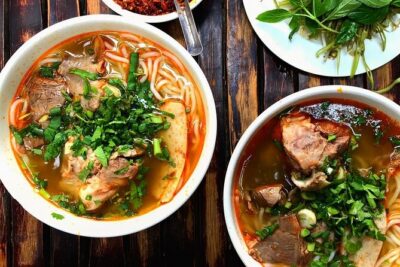
Ho Chi Minh City Street Food Tour & Sightseeing By Motorbike
What we made of it →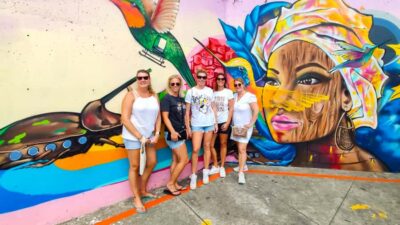
Comuna 13 Graffiti Tour, Cable Car & Street Food
What we made of it →
Old Town, Souks, Street Food, Guided Tour & Abra Ride
What we made of it →
Small Group Hanoi Street Food Tour with a Real Foodie
What we made of it →
Saigon By Night and Street Food By Motorbike | Opt: Ao Dai Riders
What we made of it →Where this tour turns up