Review · NEW DELHI
Delhi: Old Delhi’s Street Food, Temples & Spice Market Tour
Old Delhi gets loud fast. This three-hour tour gives you a friendly way into its food, faith, and market life, with guide JD leading you through streets that can feel confusing on your own. I especially like the careful choice of street-food stops and the visit to the Sikh gurdwara kitchen, where free meals are prepared for thousands each day. The main drawback is the pace: you will walk a lot, eat several dishes, and face noise, crowds, spice dust, and traffic in a short time.
I also like that the tour is not just a food crawl. You visit a Jain temple, a Sikh gurdwara, a mosque area, Chandni Chowk, Khari Baoli spice market, and the exterior of the Red Fort. Comfortable shoes and conservative clothing are essential, and temple visits require you to remove both shoes and socks and go barefoot.
Key points at a glance
- Safe, tested food stops: JD selects Indian snacks and drinks from places he knows, with explanations of ingredients and local food traditions.
- The Sikh gurdwara kitchen: You can see a working community kitchen that feeds more than 15,000 people for free each day.
- Khari Baoli spice market: Asia’s largest spice market brings powerful aromas, dust, color, and a rooftop view over Old Delhi.
- Rickshaw through Chandni Chowk: The ride saves your legs and gives you a close look at the market’s wonderful disorder.
- Religious variety in one walk: A Jain temple, Sikh gurdwara, and mosque area show how many traditions meet in Old Delhi.
- Practical local help: JD offers advice on bargaining, saving money, food choices, and getting around India.
Why this three-hour Old Delhi tour works
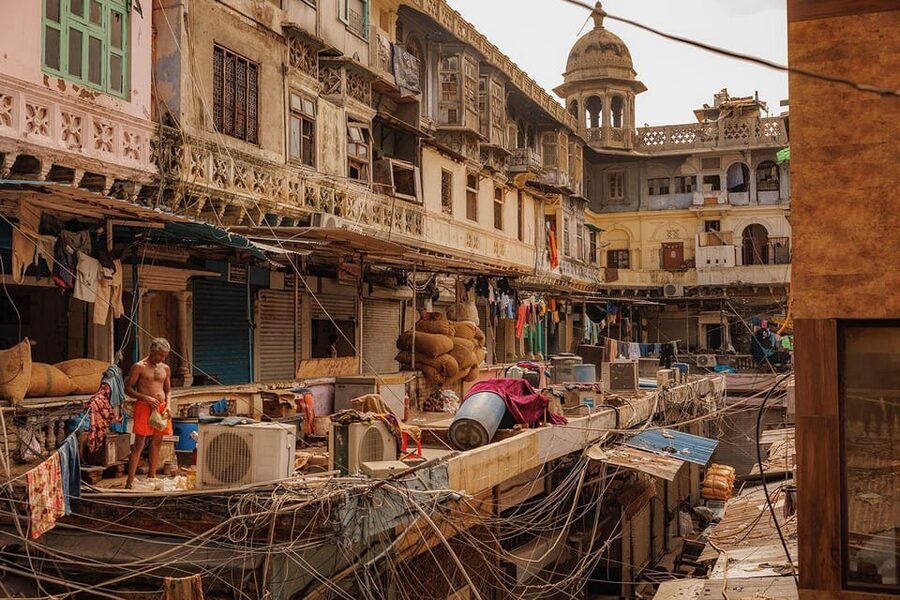
Old Delhi can be thrilling, but it can also be a lot to take in during your first day in India. The roads twist, pedestrians compete with rickshaws, shopkeepers call from every direction, and unfamiliar food smells fill the air. I like having a local guide here because you can pay attention to what you are seeing instead of constantly checking where to turn.
The tour costs $42 per person. That includes the guide, all food tastings, drinks such as lassi, tea, and water, plus the rickshaw ride. You still pay for personal shopping, metro tickets, taxis, extra snacks, and insurance, but the included food and transport make the price fair for a three-hour introduction to Old Delhi.
This is not a quiet museum visit. It is an active walk through working markets and places of worship. You may cough in the spice market, squeeze through busy lanes, and need to watch your footing. That is part of the appeal, but I would not choose this outing if you want a slow, polished sightseeing experience.
More Night Market Food Tours in India
- Old Delhi Street Food and Spice Market Tour
★ 5.0 · 81 reviews - Old Delhi Street Food and Spice Market Tour
★ 5.0 · 12 reviews - Mumbai: Street Food and Night Markets Tour
★ 4.9 · 719 reviews
Meeting JD at Lal Quila Metro Station
The meeting point is Gate No. 1 of Lal Quila Metro Station, close to the Red Fort. The supplied map coordinates are 28.656378, 77.236511. If you arrive at Gate No. 4, cross to Gate No. 1 and use the underpass.
This detail matters because Old Delhi has several busy entrances, and a first meeting in the area can feel harder than expected. One person had trouble finding the guide after arriving without Wi-Fi, so I recommend arranging your mobile connection before you set out and saving the meeting details offline.
JD is the guide named most often in the feedback. His style is informal, funny, and conversational rather than stiff or lecture-heavy. He explains the city while you move, and he is also known for taking photographs during the outing. That is useful when you want pictures of the experience without handing your phone to a stranger.
The tour is offered in English or Hindi. The exact starting time depends on availability, so check before booking. Free cancellation is available up to 24 hours ahead, and you can reserve without paying at once.
Sri Digambar Jain Lal Mandir and the rules for worship
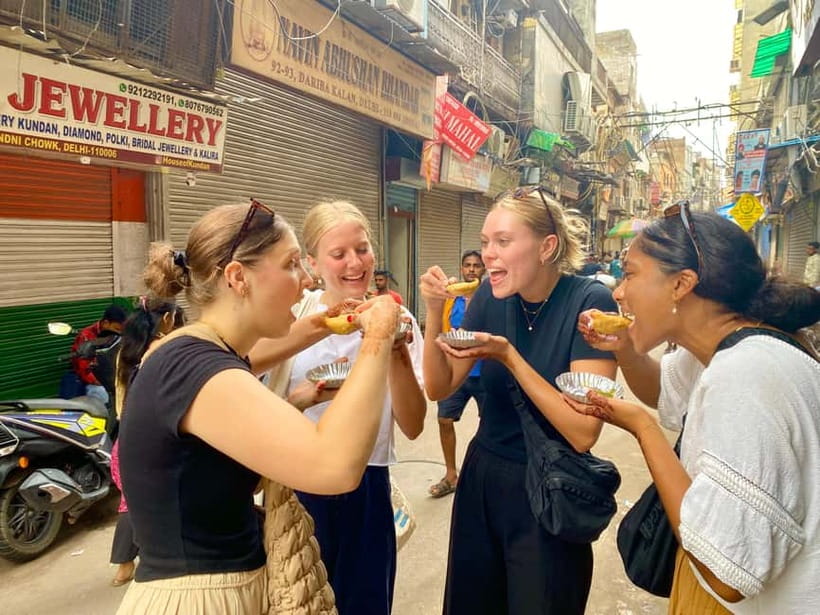
The first major stop is Sri Digambar Jain Lal Mandir, a historic Jain temple near the Red Fort and Chandni Chowk area. The guided visit lasts about 16 minutes, so expect a short introduction rather than a long temple study.
The value here comes from seeing a religious tradition that many first-time visitors to Delhi may not encounter on their own. JD explains the temple and its place in local life, giving you useful context before the food and market sections begin.
You need to dress modestly. Shorts are not suitable for men or women, and long pants with a covered upper body are the safest choice. When entering a temple, you must remove your shoes and socks and walk barefoot. Bring a scarf or stole, and carry tissues or hand sanitizer for after the visit.
A long-sleeved shirt, long pants, and comfortable clothing are recommended. The instructions also suggest an optional N95 or N99 mask, which may help in dusty market lanes or around spice powders. This is practical advice, not overpacking.
Chandni Chowk, where the food begins
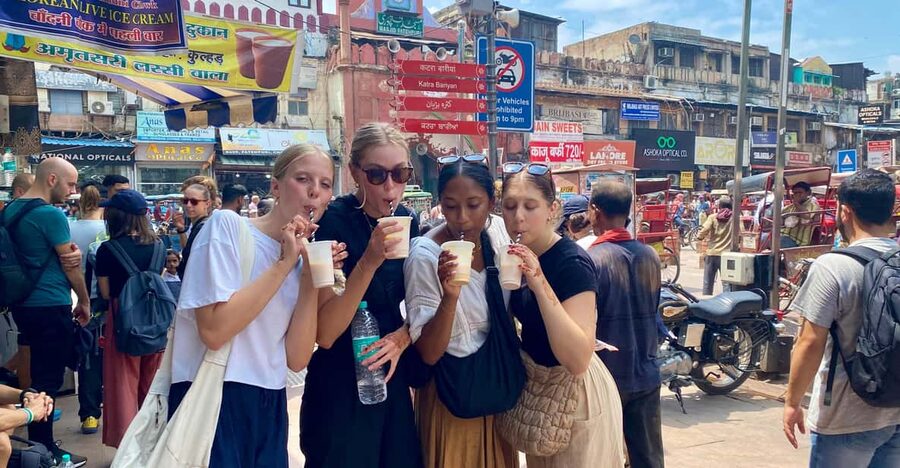
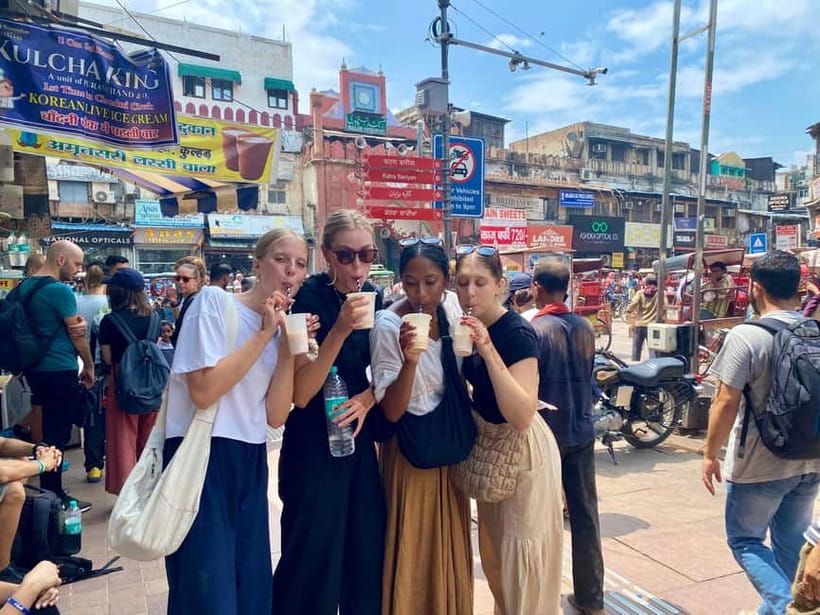
From the temple, you walk toward Chandni Chowk, with about nine minutes listed for this section before the tastings begin. Chandni Chowk is not one single attraction. It is a working bazaar, filled with shops, food counters, religious buildings, delivery carts, bicycles, rickshaws, and people moving with purpose.
You are likely to notice how quickly the scene changes. A narrow lane may open into a packed market, then turn into a row of food stalls or a passage toward a temple. JD’s role is especially useful here because he knows where to pause and where to keep moving.
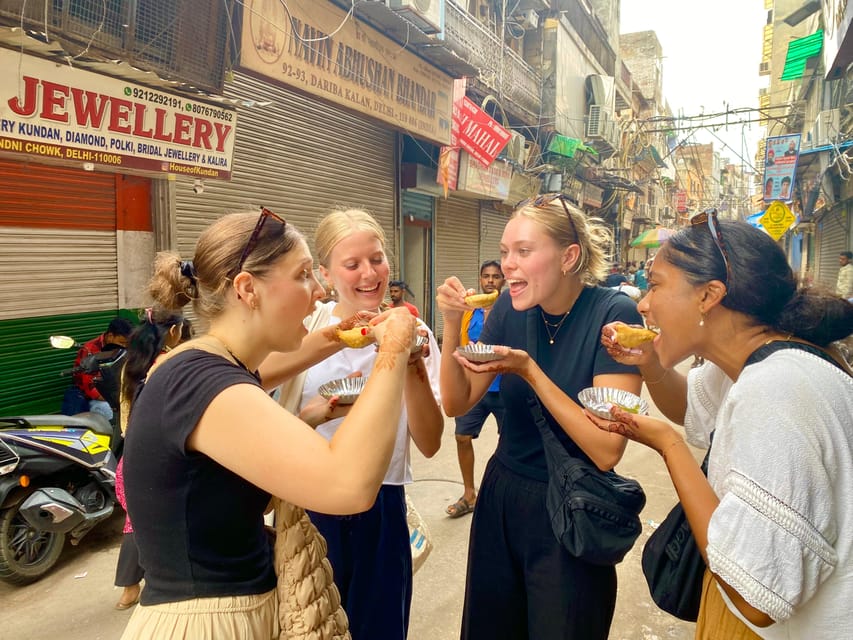
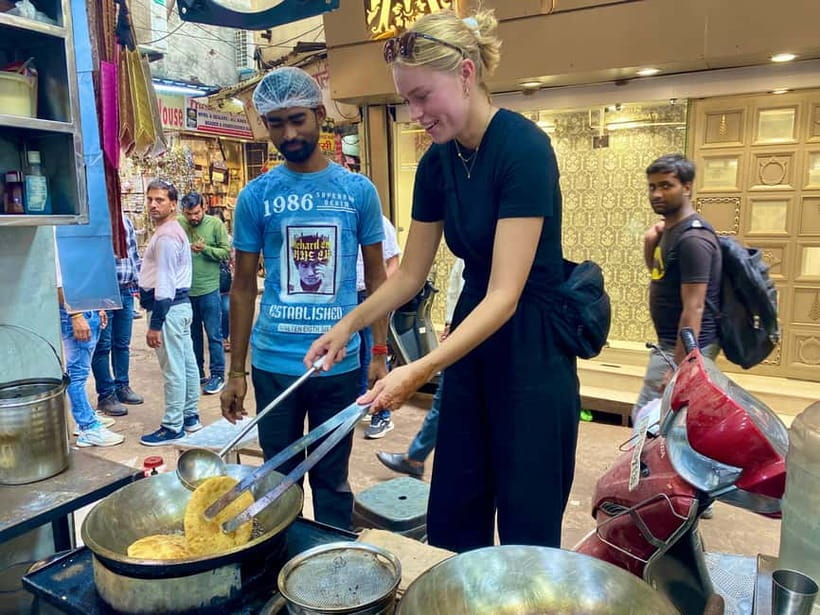
The food is the heart of the tour. The tastings cover sweet, savory, mildly spicy, and chilled items, along with lassi, tea, and water. The point is not simply to fill you up. JD explains ingredients, preparation, and the story behind the foods, including why particular stalls are known for particular dishes.
Food safety is a clear priority. The stops are described as tried and tested, and multiple people were comfortable eating the selections without later problems. Still, no street-food tour can promise that every stomach will react the same way. If you have allergies, dietary limits, or a very sensitive stomach, tell the guide before eating.
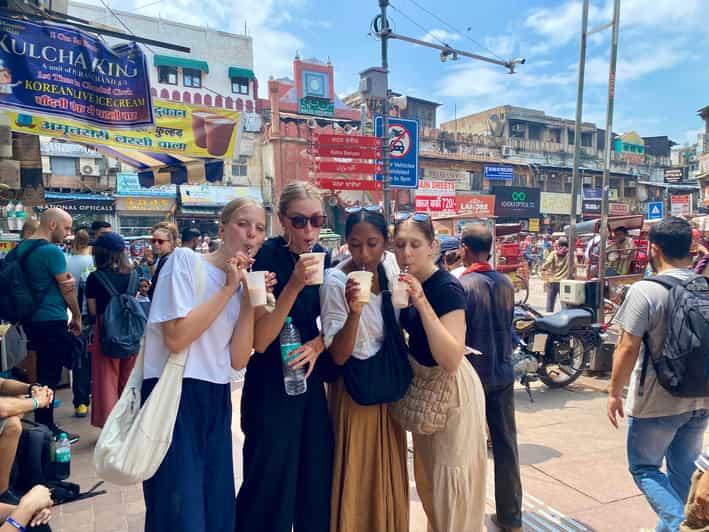
The portions are spread across many stops, so pace yourself. It is easy to say yes to everything in the first half hour and then regret it when the later dishes arrive. Lassi and tea are included, and one particularly enthusiastic assessment singled out the lassi as a highlight.
More Old Quarter and Medina Food Walks in India
- Old Delhi Street Food Tour
★ 5.0 · 497 reviews - Delhi: Old Delhi Street Food Tour with Rickshaw Ride
★ 4.9 · 403 reviews - Delhi: Old Delhi City Tour with Tuk-Tuk Ride & Street Food
★ 4.8 · 88 reviews - Old Delhi: Guided Street Food Tour w/ Private Transportation
★ 5.0 · 49 reviews
The rickshaw ride through Old Delhi
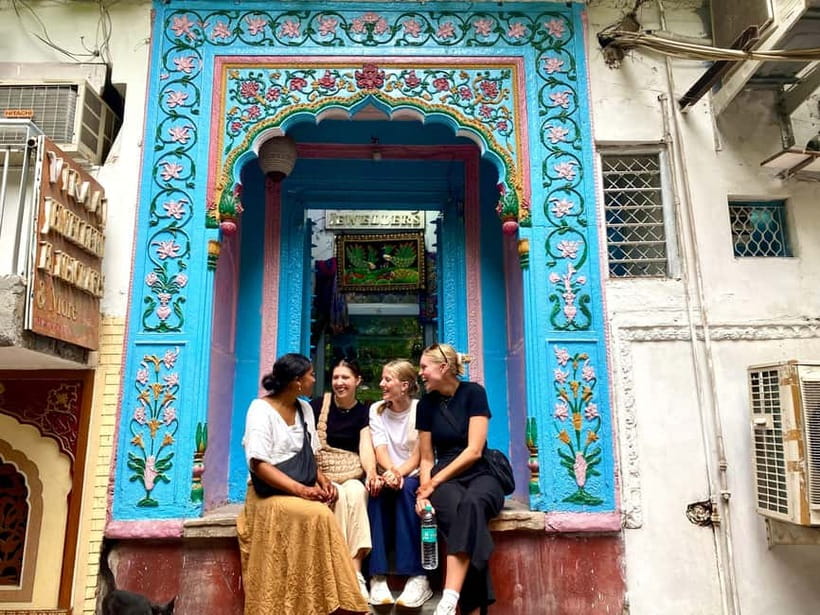
The rickshaw ride is more than a convenient transfer. It gives you a brief front-row view of Old Delhi’s traffic and market movement while sparing your feet some of the walking. The ride takes place in the crowded Chandni Chowk area, where space is shared by pedestrians, bicycles, carts, scooters, and other rickshaws.
You will not get a calm scenic cruise. This is a short, lively ride through a working district, and traffic conditions shape the experience. Keep your belongings secure and be ready for sudden stops.
For many people, the rickshaw is one of the most memorable parts because it makes the market feel immediate. You are close to shopfronts and street activity, but you can watch without having to navigate every step yourself.
The Sikh gurdwara and its enormous kitchen
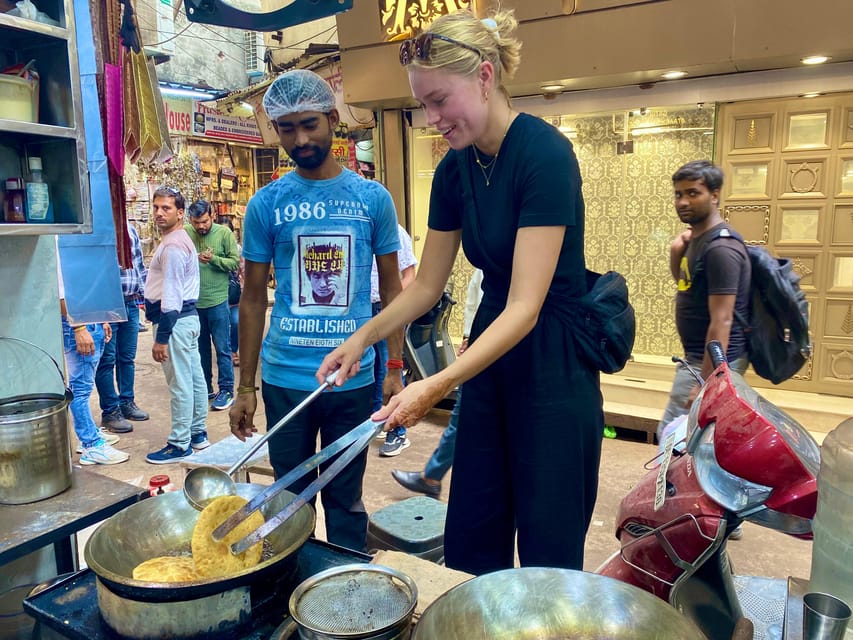
The visit to the Sikh gurdwara is the tour’s most meaningful cultural stop. Sikh places of worship welcome people from all backgrounds, and the community kitchen offers free food to anyone who comes. The kitchen connected with this visit serves more than 15,000 people each day.
You may see volunteers preparing food and, depending on the conditions that day, help with simple work such as making chapati. That hands-on possibility gives the stop a human scale. You are not just looking at architecture. You are seeing service organized on a huge level.
The gurdwara also gives the tour a useful pause from the market noise. JD explains the Sikh tradition and the role of the kitchen, while you observe people working together without a shopping transaction attached.
Temple etiquette matters here as well. Dress conservatively, follow the guide’s instructions, and be ready to cover your head with a scarf if required. Remove footwear when asked. Carrying a small bag for shoes may be useful, though the supplied information does not promise storage arrangements.
The mosque and Red Fort views
The tour also brings you past a 370-year-old mosque described as the second largest mosque. The exact visit length is not given, so think of this as one part of a moving Old Delhi route rather than a full architectural tour.
You see the Red Fort from outside. That is important to understand before booking. The fort is a landmark backdrop and a useful point of orientation, but entry is not listed as part of this experience. If you want a detailed fort visit, you will need separate time and a separate ticket.
Together, the mosque and Red Fort add historical depth to an outing that could otherwise focus only on food. You get a sense of how trade, faith, imperial power, and daily life overlap in this part of Delhi.
Khari Baoli and the spice market
The route continues toward Khari Baoli, with about 28 minutes of walking listed for this part. That is a serious distance in Delhi heat, traffic, and uneven market conditions, so wear shoes that can handle a long walk and do not plan this immediately after a tiring activity.
Khari Baoli is known as Asia’s largest spice market. The market is not presented as a neat display for tourists. It is a working wholesale area where strong smells and loose spice dust are part of the setting.
Bring a handkerchief, wet wipes, or a mask. One suggested response to the spice air is an N95 or N99 mask, especially if you are sensitive to dust. You may sneeze, cough, or feel your eyes react. That discomfort is temporary for many people, but anyone with breathing concerns should take it seriously.
A particularly good feature is the chance to see the market from upper floors and a rooftop viewpoint. From there, you can take photos across the tightly packed district and better understand the scale of the market. This is one of the tour’s best photo opportunities, and JD is also happy to take pictures for you during the outing.
The tour includes a visit to a secret spice mansion. Since the details are not fully specified, I would treat it as an unusual stop rather than expect a formal museum or grand residence. Its appeal is the sense of being shown places you might miss while wandering alone.
What the food and cultural mix means for you
Many food tours leave you with a list of dishes but little sense of place. This one tries to connect the food to religion, trade, ingredients, and local custom. A snack in Chandni Chowk, a free meal kitchen at the gurdwara, and the spice market all point to different parts of life in Old Delhi.
I like that the religious stops are not treated as quick photo backgrounds. The Jain temple and Sikh gurdwara give you reasons to ask questions and notice how people use these places. The mosque visit adds another layer, though the short duration means you should not expect detailed religious instruction at every site.
The guide’s practical advice is another strength. JD offers tips on negotiating and saving money in India, and the route avoids pressure to shop at particular stores, restaurants, or sales stops. That makes the $42 easier to justify, especially if this is your first day in Delhi and you want help making sense of the city.
Walking, clothing, and comfort
Three hours sounds brief, but this is an active three hours. You walk between sites, move through packed markets, sample several foods, remove shoes at religious sites, and spend time around spice dust and traffic.
Wear comfortable shoes for the streets, but remember that you may need to remove them. Long pants, covered shoulders, and a scarf are the sensible choice for everyone. Pack tissues, wet wipes, hand sanitizer, and water if you prefer to carry your own, though water is included.
The activity is not designed for babies under one year or people over 95. No other accessibility details are provided, so anyone with limited mobility should ask before booking. The route includes walking and a crowded market environment, and the pace may not suit every physical condition.
Who should book this Old Delhi experience?
I would recommend it most strongly to first-time visitors who want food and culture together. Solo women may also appreciate having a local guide in the crowded lanes. Several people found JD reassuring and easy to talk with, and the conversational style helps reduce the shock of a first day in India.
Food lovers will get the most from the tasting route, especially if you are curious about ingredients and regional snacks rather than looking for a single large meal. Photographers will enjoy the rooftop spice-market view, the market streets, temple details, and the rickshaw ride.
You may want a different plan if you dislike barefoot temple visits, spicy food smells, crowded streets, or uncertain meal portions. It is also not the right choice if your main goal is to tour the inside of the Red Fort, since the fort is viewed from outside.
Should you book it?
Book this tour if you want a lively first taste of Old Delhi and prefer a local guide to help you handle the noise, food choices, religious customs, and market routes. The best reasons are the tested food stops, the gurdwara kitchen, the rickshaw ride, and JD’s practical, personable approach.
Skip it if you want a slow itinerary with long visits at each monument. For everyone else, $42 is a sensible price for a food-filled introduction that includes drinks, transport within the route, and access to cultural places you might struggle to understand alone.
FAQ
Where does the tour begin?
It begins at Gate No. 1 of Lal Quila Metro Station in Old Delhi, near the Red Fort. If you arrive at Gate No. 4, cross to Gate No. 1 using the underpass.
How long does the experience last?
The tour lasts three hours. Starting times depend on availability.
What is included in the price?
The price includes all food tastings, drinks such as lassi, tea, and water, the rickshaw ride, and the guide fee.
Is the Red Fort entry ticket included?
No. The experience includes seeing the Red Fort from outside. Entry is not listed as included.
What languages are available?
The live guide service is available in English and Hindi.
What should I wear?
Wear comfortable clothing with long pants and covered shoulders. Shorts are not suitable. Bring a scarf or stole, and be prepared to remove shoes and socks and walk barefoot when visiting a temple.
Can I cancel the booking?
You can cancel up to 24 hours in advance for a full refund. You can also reserve now and pay later, subject to the booking terms.
More Night Market Food Tours in New Delhi
- Small Group: Michelin and Local Hawker Food Tour with 9 tastings
★ 5.0 · 1,890 reviews - Seoul Street Food Market Tour
★ 5.0 · 1,226 reviews - Athens: Food Market Visit and Cooking Class with Wine
★ 4.9 · 1,087 reviews - Seoul: Night Market Food Tour with Local Guide
★ 4.9 · 943 reviews
More Old Quarter and Medina Food Walks in New Delhi
- Delhi: Old Delhi City Tour with Tuk Tuk Ride & Street Food
★ 4.9 · 46 reviews - Old Delhi Street Food Tour
★ 4.8 · 40 reviews - Old Delhi: 3-hour Street Food Tour
★ 4.6 · 37 reviews - Spice & Stories: 3-Hour Old Delhi Heritage Food Walk Guided Tour
★ 4.5 · 36 reviews
Just added around New Delhi
- Old and New Delhi Street Food Sampling★ 5.0 · 3 reviews
- Delhi: Street Food Crawl (2 Hours Guided Food Tasting Tour)★ 3.5 · 18 reviews
- Old Delhi Street Food Tour with TUK-TUK Adventures★ 5.0 · 4 reviews
- Old Delhi Heritage and Street Food Walk with a Local★ 5.0 · 8 reviews
- Old Delhi Tour by Tuk-Tuk Street Food and Shopping Experience★ 5.0 · 12 reviews
- Taste Famous & Best Street Food of Old Delhi (Jama Masjid)★ 3.0 · 2 reviews
- DBC Street Food Safari★ 5.0 · 13 reviews
- Spice & Stories: 3-Hour Old Delhi Heritage Food Walk Guided Tour★ 4.5 · 36 reviews
Old Quarter and Medina Food Walks, compared.

Old Town, Creek, Museums, Souks, & Street Food Tour
What we made of it →
Old Town, Souks, Street Food, Guided Tour & Abra Ride
What we made of it →
[HOT] Hanoi Old Quarter Walking Street Food – Small Group Tour
What we made of it →Old Town, Souks, Street Food, Guided Tour & Abra Ride
What we made of it →
Old Town, Street Food, Creek, Souks, & Emirati House
What we made of it →