
Review · JAPAN
Takoyaki making experience ~Japan’s popular street food~
Little balls, plenty of skill. In central Shinjuku, you can make and eat Japan’s famous takoyaki with family or friends, using a hot griddle and classic toppings. I like the small group size of up to six people, and I like that the activity is short, focused, and easy to fit into a day in Tokyo. The main caution is that staff explanations may be limited in English, with a translation machine used when needed.
The price is $26.43 per person, which is fair if you value a hands-on food activity rather than just a snack. You can make up to 12 takoyaki per person, and two people share one cooker. Still, extra drinks cost more, and one participant found the instruction less personal than expected.
Key things to know before booking
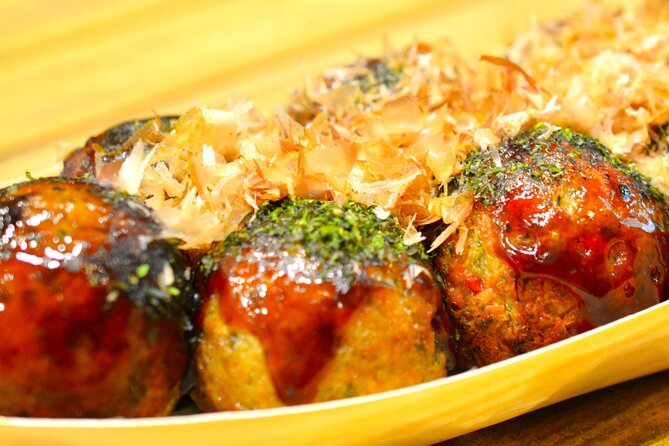
- Make up to 12 takoyaki per person: You get more than a quick demonstration. You cook your own batch and eat it hot.
- Two people share one cooker: This works well for couples, friends, or a parent and child, but it means you will not each have a separate griddle.
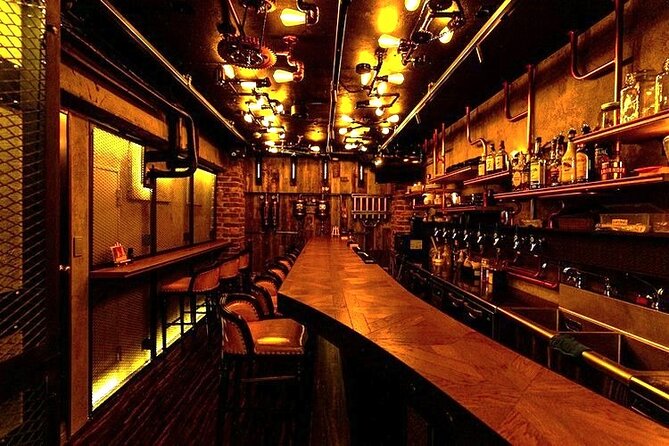
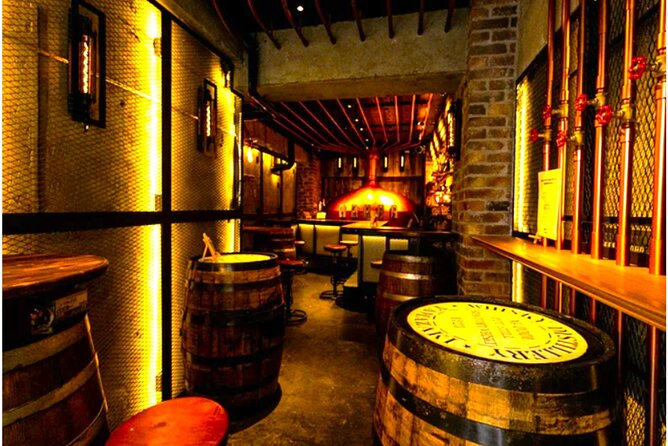
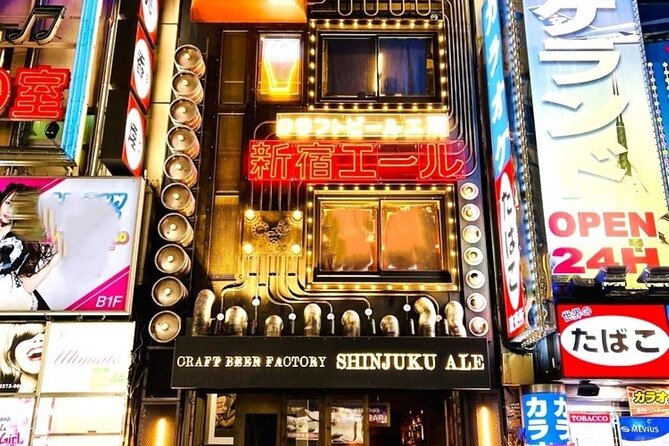
- Located in Kabukicho: The meeting point is Shinjuku Ale, on the first and second floors at 1-chōme-14-5 Kabukichō.
- A compact one-hour activity: The session ends after you finish eating, making it easy to place before dinner or between Tokyo sightseeing stops.
- English support can be limited: Some staff use a translation machine, so visual instructions and patience may be part of the experience.
- A well-liked family activity: The experience has a 4.9 rating from 102 ratings, with 99 percent recommending it.
What you actually do with the takoyaki cooker
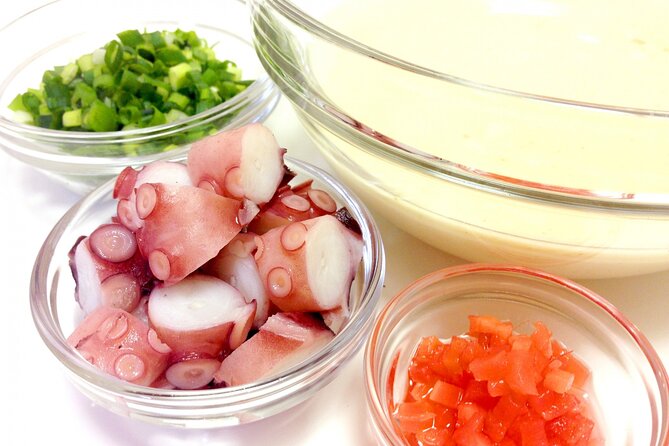
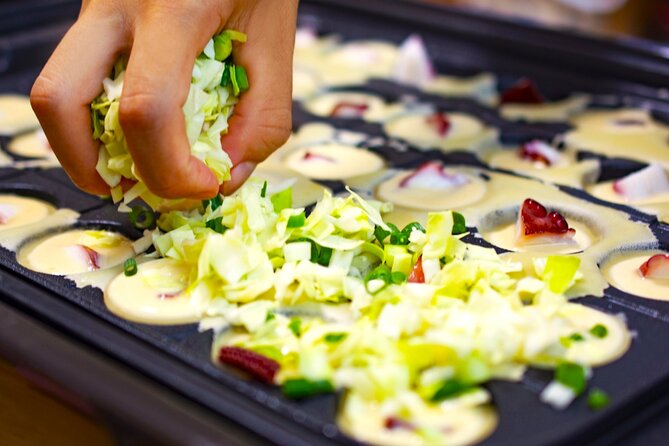
Takoyaki is one of Japan’s best-known street foods. The dish begins with a thin batter made from flour, water, and eggs. You pour it into the round holes of a takoyaki griddle, add chopped octopus, and cook the mixture until each piece can be turned into a ball.
That turning step is the heart of the activity. At first, the batter may look loose and uneven. With a small pick or stick, you work around the edge and rotate each piece as it cooks. The goal is a round outside with a soft, fluffy center.
It sounds simple. It is not entirely simple. One person who enjoyed the class noted that flipping the balls takes real finesse, which is useful advice for setting your expectations. You are not just pressing a button and waiting for food. You have to watch the heat, turn the pieces, and give them time to cook.
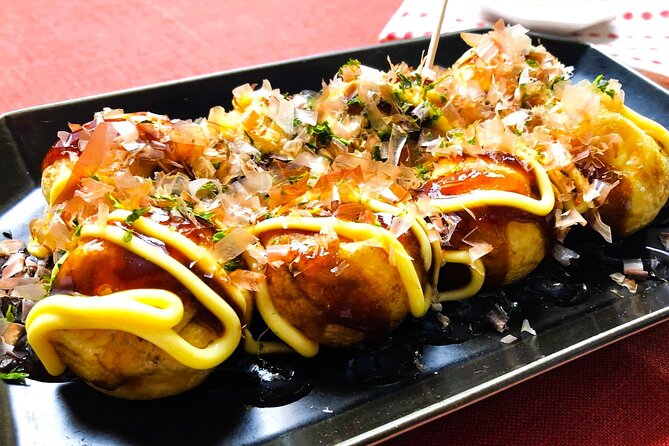
The food is served hot once you finish. Traditional toppings include takoyaki sauce, mayonnaise, dried bonito flakes, and aonori, or green laver. The contrast is part of the fun: a crisp outside, a soft inside, savory sauce, creamy mayonnaise, and flakes of bonito moving slightly from the heat.
You can make up to 12 takoyaki per person. That gives you enough pieces to get better as you go. Your first few may be irregular. By the end, you should have a better feel for when to turn them and how to shape them.
More Street Food Tours in Japan:
- Hungry Osaka Street Food Tour:15 Tastings & 3 Drinks with a Local
★ 5.0 · 1,727 reviews - Hungry Osaka Street Food Tour: 15 Dishes & 3 Drinks
★ 4.9 · 694 reviews - Tsukiji Fish Market: Street Food & Culture Walking Tour
★ 5.0 · 669 reviews
A simple Shinjuku activity with a clear rhythm
The experience begins at Shinjuku Ale 1F 2F, at 1-chōme-14-5 Kabukichō, Shinjuku City. You need to tell the staff that you have a reservation when you arrive. The activity ends at the same place, so there is no separate return point to find.
The exact teaching sequence is not described in detail, but the food process is straightforward:
- You receive the ingredients and use the takoyaki cooker.
- You pour the flour, water, and egg batter into the round cooking spaces.
- You add chopped octopus.
- You cook and turn the pieces until they form balls.
- You add sauce, mayonnaise, bonito flakes, and aonori.
- You eat the finished takoyaki at the restaurant.
The one-hour duration keeps the experience from taking over your day. You can schedule it during a Shinjuku visit, then continue to another meal, shopping area, or evening activity. Since the activity takes place in Kabukicho, it is especially convenient if you are already staying nearby or visiting the area.
The compact format also has a tradeoff. This is a food-making session, not a broad introduction to Japanese cuisine. You will learn the basic preparation of takoyaki, but you should not expect a long cultural lecture or a full meal with several dishes.
Why the small group matters
The maximum group size is six people. That is a useful number for a cooking activity because the instructor can potentially keep an eye on several cookers without the room feeling crowded.
Two people share one takoyaki cooker. For a couple or two friends, that creates a natural team activity. One person can work on the batter and fillings while the other starts turning the pieces. You can also take turns, which is helpful because the cooker requires attention during the cooking stage.
For a family, the shared cooker can work well too. A parent can help with the hotter or trickier parts while a child handles safer steps under supervision. One family account praised the activity as suitable for children, including tween boys who enjoyed both making and eating the food.
The shared setup may feel less ideal if you want complete control over your own batch. You are not promised a separate cooker for every person. If that matters, ask at the venue before starting.
The best part is learning the difficult turn
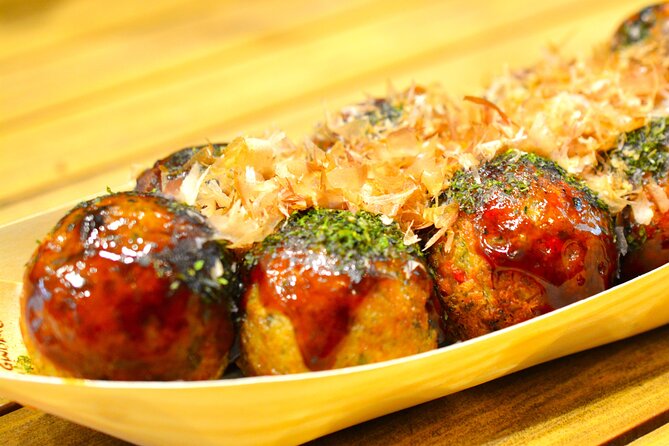
Many people know takoyaki as a finished snack. Fewer realize how much control is needed to make neat round pieces. The cooker gives you the basic shape, but you still need to rotate the batter as it firms up.
That hands-on challenge gives the activity its value. You can eat takoyaki at many restaurants in Japan, often for less than the cost of this session. Here, you pay for the chance to handle the cooker, make mistakes, and improve within one batch.
The experience can also change how you eat takoyaki afterward. You will understand why the outside can become crisp while the middle stays soft. You will also see why timing matters. Turn too early and the piece may break apart. Turn too late and it may stick or cook unevenly.
Staff may assist as you work, but the level of verbal instruction can vary. One participant felt the steps were mostly indicated through written instructions rather than explained in detail. That is the most important limitation to keep in mind.
If you want a strongly guided cooking lesson with constant commentary, this may feel light. If you are happy to follow visual directions, ask questions, and learn by trying, the format can be enjoyable.
Same place, a different plate:
- Tokyo: Tsukiji Fish Market Food and Culture Walking Tour
★ 4.7 · 757 reviews - Tsukiji Fish Market: Street Food & Culture Walking Tour
★ 4.8 · 259 reviews - [1 Group Only] Osaka Street Food Tour for Family
★ 5.0 · 208 reviews - Umami Town Street Food Tour
★ 5.0 · 120 reviews
English support and what to expect
Some staff are not fluent in English, and a translation machine may be used. This is stated clearly in the activity information, so it should not come as a surprise.
The cooking process itself is visual, which helps. The ingredients, round holes, and turning motion are easy to understand once shown. Still, food safety, timing, and technique are easier when communication is clear. If you need an explanation repeated, ask directly and use short questions.
The name Mai comes up positively in the feedback. She was described as patient and helpful with a family group, and as part of a team that helped a takoyaki fan improve at home. Staff members may vary by date, so Mai should not be assumed to lead every session.
The difference between the strongest and weakest impressions seems to come down to instruction. Some people receive the support they need and enjoy the challenge. Others may find the experience too dependent on printed steps or gestures. That makes this activity a better fit for flexible, hands-on learners than for people who want a formal English-language lesson.
Toppings, drinks, and the final plate
Once the takoyaki is cooked, the classic finish is generous and familiar. You can use sauce and mayonnaise, then add dried bonito flakes and aonori. These toppings bring salt, sweetness, creaminess, sea flavor, and a pleasant visual touch.
The takoyaki is served hot. Be careful with the center, since the inside can remain very warm even when the outside looks ready. The soft interior is part of the dish, but it also means you should take a small first bite.
Takoyaki pairs well with beer, and the activity information notes that connection. Drinks are not included in the $26.43 price. One family found the added drinks somewhat expensive, though entirely optional. Another account referred to a problem with optional alcoholic beverages being handled smoothly.
You do not need to order alcohol to enjoy the activity. Additional meals and drinks are separate purchases, and bottled water is not included. If you are watching your budget, stick with the included food-making session and treat the takoyaki as your snack or light meal.
Is $26.43 a good value?
The price makes sense if you want participation, not simply food. The included fee covers the activity and taxes, and the portion is up to 12 takoyaki per person. You also receive a convenient one-hour event in central Shinjuku.
Compared with buying ready-made takoyaki from a street stand or restaurant, this costs more. That is expected. You are paying for use of the cooker, the ingredients, the cooking space, and staff support.
The value is strongest for:
- Families looking for a short activity that children can take part in
- Couples or friends who enjoy making food together
- First-time visitors who want a simple introduction to a familiar Japanese dish
- People staying near Shinjuku and wanting an activity that requires little travel
- Food lovers who want to learn why takoyaki takes skill to shape
The value is weaker if you want a large meal, a private class, a long lesson, or detailed English instruction throughout. Extra drinks can also push up the total cost.
The activity is booked an average of 29 days ahead, so planning early is sensible if your Tokyo schedule is fixed. Confirmation is provided at booking, and the ticket is mobile, which keeps the arrival process simple.
Who should book this experience?
I would choose this for families, especially with older children who can follow instructions and enjoy a little kitchen challenge. The family feedback is encouraging, and the activity does not require advanced cooking ability.
It also suits couples and friends who want something more interactive than sitting down for another meal. The shared cooker gives you a small task to solve together, and the food is ready within the same session.
First-time visitors may appreciate the easy introduction to takoyaki. You do not need to know the dish beforehand. The activity explains, through the cooking process, what gives takoyaki its round shape, crisp surface, and soft middle.
I would be more cautious for solo participants. Two people share one cooker, and the social setup seems better suited to a pair or small group. The information does not explain how a solo booking is arranged, so ask before reserving if you are traveling alone.
You should also consider your language needs. If you need detailed instruction in English, the possible use of translation software is important. The activity can still work, but it may require more patience and self-guided effort than you expect.
Timing, arrival, and cancellation details
Plan to arrive at Shinjuku Ale and tell the staff about your reservation. The meeting point is near public transportation, but transportation costs are not included.
The session lasts about one hour and ends at the meeting point after you finish eating. It is a useful choice before another booking because the stated duration is short, though you should still allow extra time to find the building and check in.
Participants under 20 must be accompanied by a parent or guardian. Alcohol is not allowed for minors under Japan’s Minors’ Alcoholic Beverage Law.
You can cancel for a full refund if you do so at least 24 hours before the experience start time. Cancellations or changes made within 24 hours are not accepted for a refund. The deadline follows local Tokyo time.
Should you book the Shinjuku takoyaki class?
Book it if you want a friendly, hands-on food activity with a family member, partner, or friend. The small group limit, generous portion, central location, and strong overall rating make it an appealing break from sightseeing. The chance to learn the tricky flipping technique is more memorable than simply ordering a plate of finished takoyaki.
Skip it if you expect a polished cooking school, a full meal, or detailed English commentary at every step. The $26.43 cost is reasonable for the activity, but not for the food alone. For most people who enjoy trying something practical and a little messy, this is a good-value hour in Shinjuku.
FAQ
Where does the takoyaki experience take place?
It takes place at Shinjuku Ale 1F 2F, 1-chōme-14-5 Kabukichō, Shinjuku City, Tokyo 160-0021, Japan.
How long does the experience last?
The activity takes about one hour. It ends after you finish eating the takoyaki.
How many takoyaki can each person make?
Each person can make up to 12 takoyaki.
How many people use one takoyaki cooker?
Two people can use one takoyaki cooker.
What is included in the price?
All fees and taxes are included.
Are drinks included?
No. Bottled water, additional meals, and drinks are not included.
Is the activity available in English?
Some staff are not fluent in English. A translation machine may be used when necessary.
Can children take part?
Participants under 20 must be accompanied by a parent or guardian.
What is the cancellation policy?
You can cancel for a full refund up to 24 hours before the experience start time. Cancellations or changes made less than 24 hours before the start time are not accepted for a refund.
Just added around Japan
- Tsukiji Fish Market Street Food & Culture Walking Tour★ 5.0 · 8 reviews
- Tokyo Fish Market Food Tour: Street Food & Friendly Guide★ 3.0 · 2 reviews
- Ueno Park and Ameyoko Street Food Market Half Day Walking Tour★ 5.0 · 3 reviews
- Tokyo:Enjoy street food & Japanese food culture at Tsukiji Market★ 5.0 · 6 reviews
- Tokyo Street Food Tour – 7 Japanese Foods★ 5.0 · 16 reviews
- Tsukiji Fish Market: Street Food Tour with Tasting★ 5.0 · 4 reviews
- Matsushima Bay, Islands and Seafood Market day tour from Tokyo★ 5.0 · 2 reviews
- Tokyo: Private Tsukiji Fish Market Tour with 3 Food Stops★ 5.0 · 9 reviews
Street Food Tours, compared.

Old Town, Creek, Museums, Souks, & Street Food Tour
What we made of it →
Ho Chi Minh City Street Food Tour & Sightseeing By Motorbike
What we made of it →
Comuna 13 Graffiti Tour, Cable Car & Street Food
What we made of it →
Old Town, Souks, Street Food, Guided Tour & Abra Ride
What we made of it →
Small Group Hanoi Street Food Tour with a Real Foodie
What we made of it →
Saigon By Night and Street Food By Motorbike | Opt: Ao Dai Riders
What we made of it →Where this tour turns up