
Review · JAPAN
Nagoya Street Food Walking Tour of Osu
Come hungry, leave curious. This private Osu walking tour works because it joins five local street foods with temples, shopping lanes, and the district’s less obvious corners. I like the personal format, where your guide can explain the difference between a Shinto shrine and Buddhist temple, and I like that the food goes beyond the usual tourist menu. Miso kushi katsu, gohei mochi, karaage, and tenmusu give you a real taste of Nagoya.
The main consideration is pace. The tour is advertised at about two hours, but some guided outings have lasted closer to three. Osu can also be very busy on Saturdays, and the food is not just a few samples. Start with an empty stomach, especially if you want to enjoy every stop.
Key things to know before booking
- Five street foods are included, with savory and sweet choices that can change slightly from one outing to the next.
- Osu Kannon is the starting point, giving you a useful lesson in the difference between Buddhist temples and Shinto shrines.
- The tour is private, so only your own party joins the guide.
- Guides such as Patricia, Erica, and Lena have been praised for clear English and strong explanations of local customs.
- The price is $101.47 per person, which makes the most sense for people who value personal guidance, food included, and cultural context.
- Saturday crowds can slow things down, and dietary restrictions may make this tour a poor fit unless you contact the operator first.
Why Osu is a smart place for a food walk
Osu is not simply a shopping street with snacks added on. It is a district where temples, small food shops, secondhand stores, shrines, and old local customs sit close together. That mix gives the walk more character than a simple eat-and-move-on food crawl.
The tour begins near Osu Kannon, one of Nagoya’s best-known Buddhist temples. From there, you move through Osu Shopping Street and nearby lanes, stopping for food while your guide explains what you are seeing. This matters because Osu can feel confusing at first. There is plenty to look at, but without some direction, you could easily pass a good food shop or miss the meaning of a temple detail.
I particularly like the balance between planned stops and small discoveries. You are not just handed a list of dishes. Your guide helps explain why red miso is so important in Nagoya cooking, how local shops fit into the district, and how religious sites differ from one another.
The private format also changes the mood. Your group can ask questions about food, religion, shopping, or daily life without trying to keep up with a large crowd. That is useful for families, couples, and small groups with different levels of interest in Japanese culture.
More Street Food Tours in Japan:
- Hungry Osaka Street Food Tour:15 Tastings & 3 Drinks with a Local
★ 5.0 · 1,727 reviews - Hungry Osaka Street Food Tour: 15 Dishes & 3 Drinks
★ 4.9 · 694 reviews - Tsukiji Fish Market: Street Food & Culture Walking Tour
★ 5.0 · 669 reviews
Starting at Osu Kannon
The meeting point is a 7-Eleven at 2-chōme-23-32 Ōsu, near the Osu Kannon area. You then begin at Hosho-in, also called Osu Kannon, where the first lesson is cultural rather than culinary.
Many people in Japan confuse the visual language of shrines and temples, especially on a first visit. Your guide explains the difference between a Buddhist temple and a Shinto shrine, giving you a simple framework for the rest of your Japan trip. That early explanation adds real value because religious sites appear throughout Nagoya and the country.
Osu Kannon also gives the tour a proper sense of place. You start with one of the district’s important spiritual centers, then move into its food and shopping lanes. The change from quiet temple grounds to active commercial streets is part of what makes Osu interesting.
You should not expect a long temple visit or an in-depth religious lecture. This is a food-focused walk, so the cultural background is short and practical. Still, it is enough to help you notice more as the tour continues.
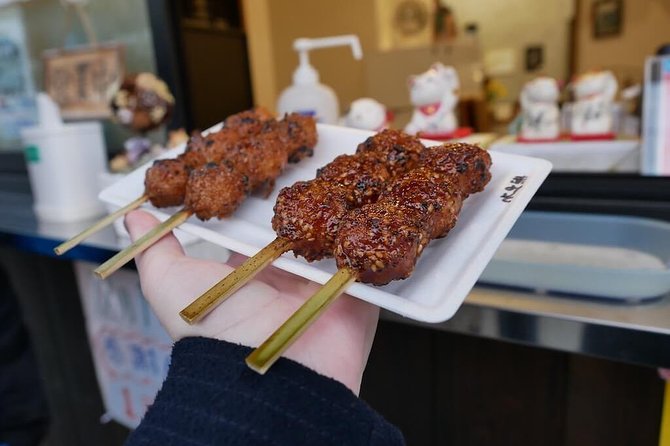
Miso kushi katsu: Nagoya on a skewer
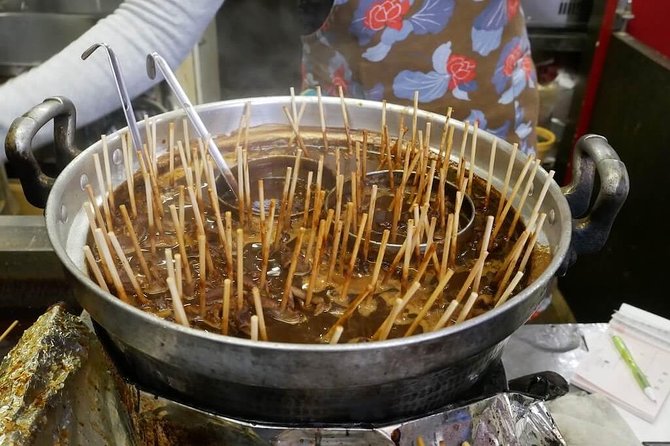
One of the first food stops is miso kushi katsu, skewered meat covered in a thick red miso sauce. It is a direct introduction to Nagoya’s preference for bold, savory flavors.
The red miso is the key point. It gives the dish a heavier, more distinctive taste than a plain fried skewer. If you already enjoy miso, this is likely to be one of the most memorable bites. If you prefer mild food, the sauce may feel strong, but that is exactly why trying it with a guide helps. You get the local version rather than a safer dish chosen at random.
This stop also sets up a useful theme: Nagoya’s food culture is not shy. The flavors can be hearty, salty, and filling. That is why you should avoid eating a large meal before meeting the guide.
Gohei mochi and the appeal of simple food
Next comes gohei mochi, grilled rice on a stick with miso sauce. It is a simple snack, but it shows how much Japanese street food can do with a few familiar ingredients.
The texture is part of the pleasure. Grilled rice takes on a firmer, toasted surface, while the miso adds sweetness and salt. You may find it easier to enjoy than the meat skewer because the flavor feels more focused and the portion is straightforward.
This is also one of the stops where a guide can add context that a menu cannot. You learn what the dish is, how it is served, and why it belongs in a Nagoya food walk. The tour does not rely only on famous restaurant dishes. It makes room for everyday snacks that you might not order on your own.
Same place, a different plate:
- Tokyo: Tsukiji Fish Market Food and Culture Walking Tour
★ 4.7 · 757 reviews - Tsukiji Fish Market: Street Food & Culture Walking Tour
★ 4.8 · 259 reviews - [1 Group Only] Osaka Street Food Tour for Family
★ 5.0 · 208 reviews - Umami Town Street Food Tour
★ 5.0 · 120 reviews
Karaage from a respected Osu shop
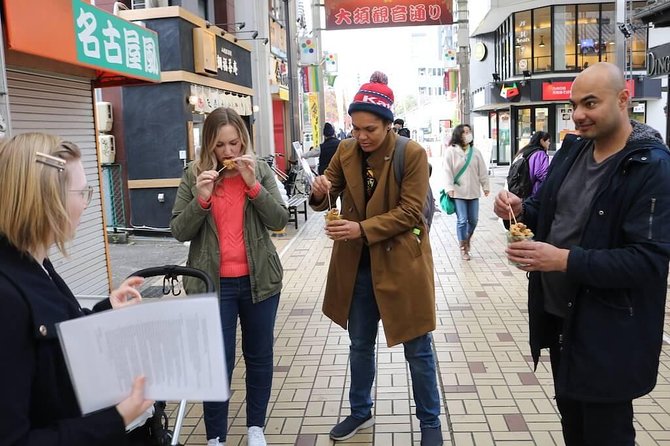
The tour then takes you to a popular shop for karaage, Japan’s crisp fried chicken. Karaage is widely available across Japan, but the point here is to taste it in the setting of Osu and at a shop selected by someone who knows the area.
This is a useful stop for groups with mixed tastes. Karaage is familiar enough to be comfortable, yet it still fits the street food theme. You can compare it with the stronger red miso dishes and notice how different cooking styles share the same walk.
The tour’s food choices also help you avoid ordering five full meals. You receive snacks at several stops rather than sitting down for one large course. Even so, the portions can add up. One guide-led outing was described as having enough food to leave people full, so arrive hungry.
Tenmusu and the local rice ball tradition
A later stop features tenmusu, a Nagoya specialty made with tempura shrimp tucked into a rice ball. It is compact, portable, and filling, which makes it a natural street food.
Tenmusu gives the walk a different texture from fried meat and grilled rice. The rice makes it more substantial, while the shrimp adds a crisp center. It is also a good reminder that local food is not always dramatic or elaborate. Some of the most useful dishes are the ones people can eat while moving through the city.
Because tenmusu is a regional specialty, this stop is especially valuable if Nagoya is only one part of a larger Japan itinerary. You may recognize rice balls elsewhere, but the local filling makes this one specific to the city’s food identity.
Sweet stops and dishes that may surprise you
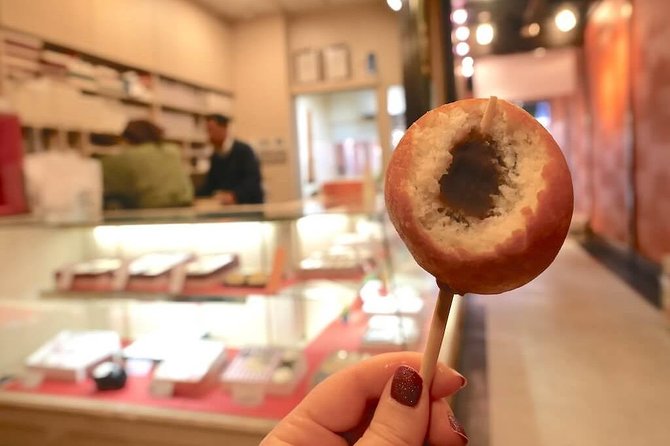
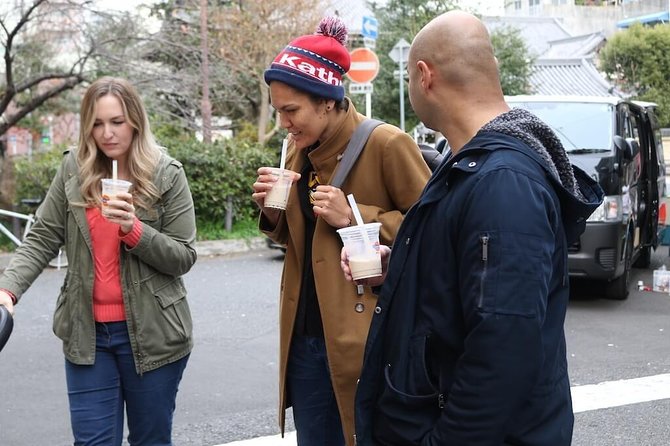
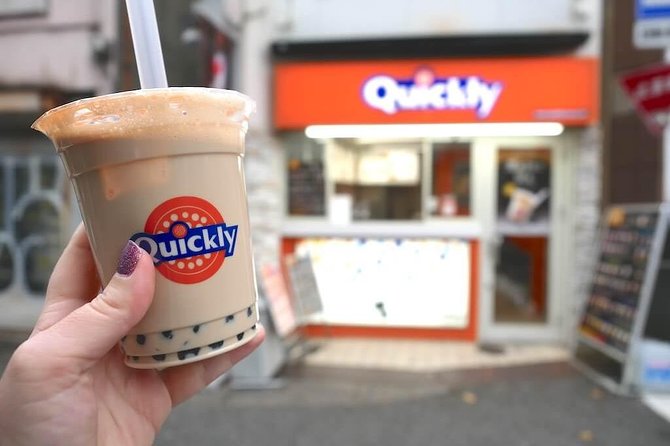
The tour includes sweet food as well as savory snacks, and the exact choices can vary. Possible treats mentioned with this experience include uiro and agemanbo, along with items such as melon pan, bubble tea, or a sweet curry-flavored snack on a stick.
Uiro is a traditional Nagoya sweet with a soft, chewy texture. It is less familiar to many international visitors than standard Japanese desserts, which makes it a worthwhile introduction. Agemanbo offers another change of pace, with a fried sweet style that feels more like a snack for walking than a formal dessert.
The changing food selection is both a strength and a small uncertainty. You get a guide who can choose good stops on the day, but you should not treat the published food list as a guaranteed menu. Food items may differ slightly between outings.
If you have a sweet tooth, tell your guide early. If you prefer savory food, ask how the stops are balanced. The tour has enough flexibility in its private setup for questions, but dietary needs should be discussed before booking.
Bansho-ji Temple and Osu beyond the food
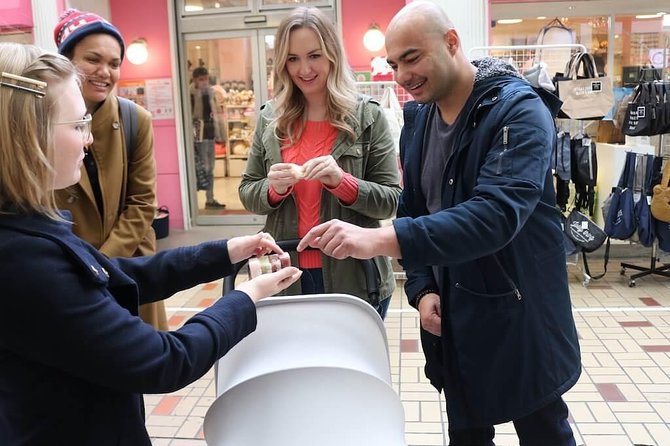
The route also includes Bansho-ji Temple, another important stop in the Osu area. This keeps the experience from becoming a snack hunt with random buildings along the way.
The temple visit adds a second point of comparison after Osu Kannon. You can ask about the differences between the sites, their place in local life, and how religious buildings fit into a busy shopping district. One guided route has also included a burial site, showing that the walk can reach corners you might not notice while browsing shops.
This is where the guide’s skill matters most. Osu is easy to explore independently, but it is harder to understand independently in just a few hours. A guide can point out why a place matters, explain a custom, and connect a small site to Nagoya’s past.
Do not expect every stop to look polished or grand. Part of Osu’s appeal is its mixed character. You may pass secondhand shops, more upmarket vintage stores, small food counters, and religious sites within a short distance. The district has retained its appeal because these different pieces remain close together.
The value of a private tour at $101.47
At $101.47 per person, this is not the cheapest way to eat in Nagoya. You could buy individual snacks for much less, especially in a shopping district filled with affordable food.
The value comes from what is bundled with those snacks:
- A private guide for your group
- Five street foods
- Cultural explanations at temples and shrines
- An included omikuji fortune
- Local shop choices
- All fees and taxes
The omikuji is a small but enjoyable extra. It gives you a traditional fortune slip to interpret and adds a hands-on cultural moment to the walk.
I would consider the price reasonable for first-time visitors who want food and orientation in one outing. It is also a fairer deal for a small group because the guide’s attention is not shared with strangers. For a solo diner focused mainly on low-cost snacks, the price will feel high.
Transportation to and from the experience is not included. You need to reach the meeting point near Osu Kannon yourself, and the tour returns there at the end. That makes it easy to connect with nearby plans, but you should allow time to find the 7-Eleven meeting point.
Timing, crowds, and comfort
The advertised duration is about two hours, though some accounts describe outings lasting closer to three. The difference may depend on food queues, questions, walking speed, and the number of stops available that day.
I would keep your schedule flexible afterward. A tight connection or fixed lunch reservation could make the walk feel rushed. A little extra time lets you enjoy the food and ask questions instead of watching the clock.
The experience runs on Monday from 11:00 a.m. to 4:00 p.m. according to the stated hours. Confirm the exact start time when booking because confirmation is subject to availability and is sent within 48 hours.
Saturday can be particularly busy in Osu. Crowds may slow the route, and popular food shops may require patience. That is not necessarily a flaw, since the crowd is part of the district’s energy, but it can make the walk less relaxed.
Wear comfortable shoes and bring a modest appetite. The route is on foot, and the food is more filling than the word snack may suggest.
Who will enjoy this Osu food walk most
This tour suits you if you want a quick, guided introduction to Nagoya rather than a full-day sightseeing program. It is especially good for:
- First-time visitors who want help reading the city
- Couples and families who prefer a private outing
- Food-focused visitors who want local specialties
- People curious about temples, shrines, and Japanese customs
- Cruise passengers or short-stay visitors with limited time in Nagoya
- Anyone who likes trying dishes they would not confidently order alone
It may not suit you if you need a strict menu, avoid meat or seafood, or have serious dietary restrictions. The experience is specifically not recommended for people with dietary restrictions unless they contact the operator before booking.
English ability appears to vary by guide, but the strongest accounts single out Patricia, Erica, and Lena. Patricia was praised for linking food with the area’s shops, temples, and burial site. Erica was appreciated for explaining Japanese traditions, and Lena was singled out for clear English and a particularly enjoyable food route.
Should you book the Osu walking tour?
Book it if you want local food with useful cultural explanation, not just a list of samples. The private format, five included foods, temple stops, and flexible route make this a strong first look at Osu.
Skip it if your main goal is the cheapest possible meal or if you need complete control over every ingredient. Also allow more than two hours in your plans, especially on a Saturday.
For most first-time visitors to Nagoya, I think this is a smart introduction to Osu. You get red miso, grilled rice, fried chicken, tenmusu, sweets, temples, and a guide who can explain why they belong together. Come hungry, keep your afternoon open, and let the district surprise you a little.
FAQ
How long does the Nagoya Street Food Walking Tour of Osu last?
The advertised duration is approximately two hours. Some outings have lasted closer to three hours, so it is wise to leave extra time afterward.
What food is included?
Five street foods are included. Possible dishes include miso kushi katsu, gohei mochi, karaage, tenmusu, uiro, and agemanbo. Food items may differ slightly between outings.
Is the tour private?
Yes. Only your own group participates in the activity.
Where does the tour begin and end?
The meeting point is a 7-Eleven at 2-chōme-23-32 Ōsu, Naka Ward, Nagoya. The experience ends back at the meeting point.
Is transportation included?
No. Transportation to and from the tour is not included.
Can I cancel for a full refund?
Yes. You can cancel at least 24 hours before the start time for a full refund. Cancellations or changes made less than 24 hours before the start time are not accepted for a refund.
Just added around Japan
- Tsukiji Fish Market Street Food & Culture Walking Tour★ 5.0 · 8 reviews
- Tokyo Fish Market Food Tour: Street Food & Friendly Guide★ 3.0 · 2 reviews
- Ueno Park and Ameyoko Street Food Market Half Day Walking Tour★ 5.0 · 3 reviews
- Tokyo:Enjoy street food & Japanese food culture at Tsukiji Market★ 5.0 · 6 reviews
- Tokyo Street Food Tour – 7 Japanese Foods★ 5.0 · 16 reviews
- Tsukiji Fish Market: Street Food Tour with Tasting★ 5.0 · 4 reviews
- Tokyo: Private Tsukiji Fish Market Tour with 3 Food Stops★ 5.0 · 9 reviews
- Historic Kamakura: Temples, Shrines and Street Food Private Walking Tour★ 5.0 · 6 reviews
Street Food Tours, compared.

Old Town, Creek, Museums, Souks, & Street Food Tour
What we made of it →
Ho Chi Minh City Street Food Tour & Sightseeing By Motorbike
What we made of it →
Comuna 13 Graffiti Tour, Cable Car & Street Food
What we made of it →
Old Town, Souks, Street Food, Guided Tour & Abra Ride
What we made of it →
Small Group Hanoi Street Food Tour with a Real Foodie
What we made of it →
Saigon By Night and Street Food By Motorbike | Opt: Ao Dai Riders
What we made of it →Where this tour turns up