
Review · OSAKA
Osaka 2 Hour Local Street Food Tour in Dotonbori and Namba
Osaka eats well after dark. This two-hour walk brings you straight into Dotonbori and Namba, where neon signs, narrow lanes, temples, and small food stalls share the same few blocks. I like the small group size, capped at eight, and the way the tour mixes famous photo stops with local bites such as takoyaki, takosen, taiyaki, and kushikatsu. The English-speaking guide also earns praise for being kind, quick to respond, and helpful with questions.
The main drawback is cost control. The tour is priced at $58.93 per person, but food and drinks are extra, with about JPY1,500 suggested for snacks. You also cannot request vegan or gluten-free food, so this is best for people who can eat a standard selection of Osaka street food.
Key points to know before booking
- Eight-person maximum: A small group should make it easier to hear the guide and move through tight lanes.
- Food costs extra: Plan on about JPY1,500 per person beyond the tour price for snacks and drinks.
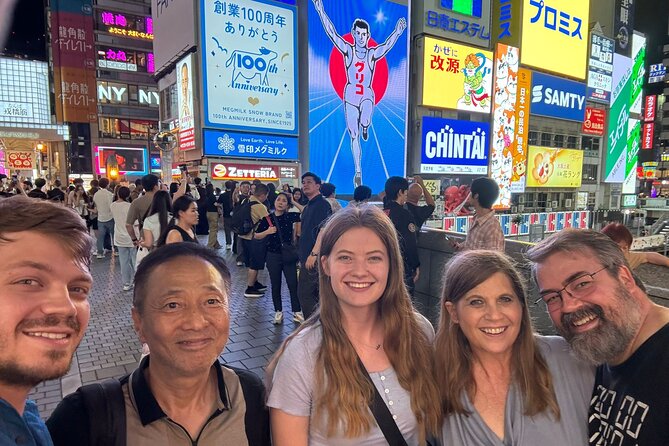
- Glico Man starts the walk: You get time for photos at Osaka’s best-known neon landmark.
- Hozenji Temple adds quiet: The moss-covered Mizukake Fudo statue offers a peaceful break from the bright streets.
- Many Osaka specialties appear: Expect options such as takoyaki, takosen, taiyaki, apple candy, pork buns, okonomiyaki, kushikatsu, and doteyaki.
- Free cancellation is available: You can receive a full refund if you cancel at least 24 hours before the start time.
Why this short Osaka food walk works
Dotonbori and Namba can feel confusing on a first visit. The signs are loud, the streets overlap, and the best food is not always found on the widest avenue. A local guide gives you a clear route through this busy part of Osaka without asking you to spend half a day finding each stop yourself.
The two-hour length is useful. You get a quick introduction to Osaka’s food culture, but you do not lose an entire afternoon to one organized activity. I would place this tour early in an Osaka stay, when you still need your bearings, or near the start of an evening when you want food ideas for later.
The group limit matters here. Dotonbori has narrow walkways and crowded corners, especially around the canal and major signs. A maximum of eight people is far easier to manage than a large coach-style group, and you should have a better chance of hearing explanations without standing far behind the guide.
This is not a formal restaurant meal. Think of it as a guided tasting walk, with food purchased during the route. That makes the experience more flexible, but it also means the final cost depends on what you choose to eat.
A few more nights of eating around Osaka worth a look
- Osaka: 2-Hour Local Street Food Tour – Dotonbori & Namba
★ 4.6 · 95 reviews - Varanasi Street Food Crawl (2 Hours Guided Food Tasting Tour)
★ 4.5 · 69 reviews - Saigon: City Unseen Highlights 2h Tour | Opt: Ao Dai Riders
★ 5.0 · 69 reviews
Meeting the guide beneath the Glico Man sign
The tour begins at Starbucks Coffee, TSUTAYA Ebisubashi, at 1-chōme-8-19 Dotonbori. This is a practical meeting point in the middle of the action, rather than somewhere remote or difficult to connect with by local transport.
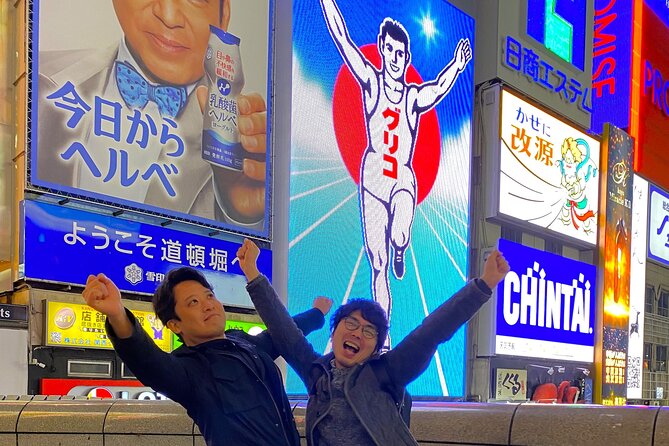
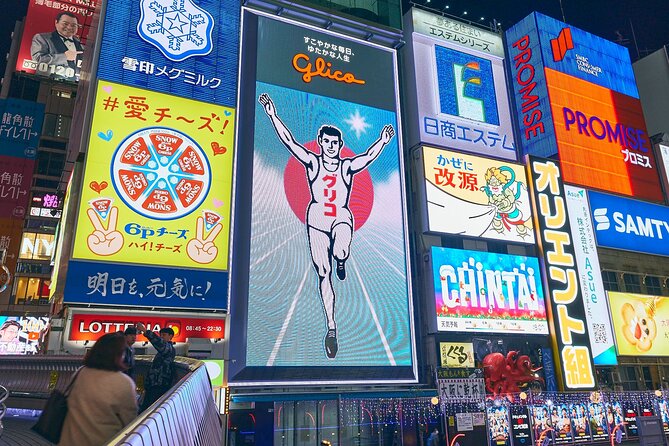
The first stop is the Dotombori Glico Sign, the famous running figure above the canal. You have about 20 minutes for photos and a look at the scene around the bridge. The sign is one of Osaka’s familiar symbols, but it is more enjoyable when you understand its setting: bright advertisements, water, shopfronts, and a constant stream of people moving along the river.
I like that the tour allows a proper photo stop instead of treating the sign as something you pass in ten seconds. If you want the classic Osaka picture, this is your chance to get it at the beginning, before the food stops take over.
There is no admission charge for this part. The value comes from the guide’s timing and local context, not from entry to a paid attraction.
Reading Dotonbori through its food signs
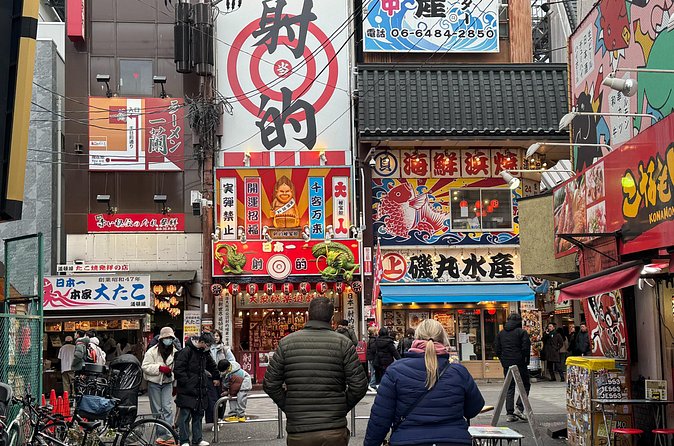
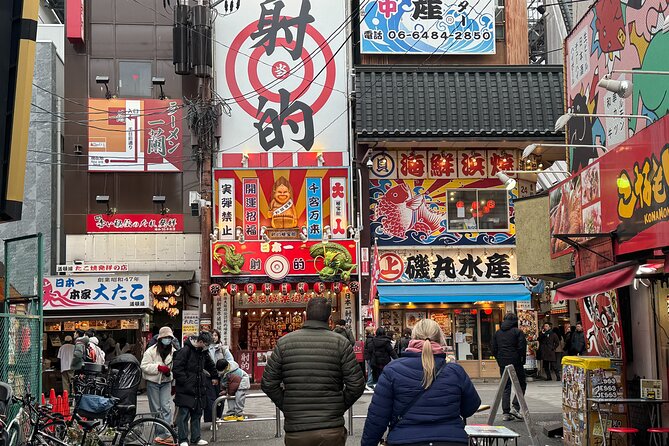
About 45 minutes are devoted to Dotonbori itself. This is the loudest and most visually packed part of the route, with giant restaurant signs, animated displays, and unusual shop decorations. Look for the oversized crab and moving pufferfish signs, both examples of how Osaka restaurants advertise with spectacle as well as menus.
The food here is designed to catch your eye. You might see sweet melonpan, skewered items, custard-filled taiyaki, and other snacks sold for quick eating. The tour focuses on well-known Osaka flavors, so you are not simply walking through a shopping district while the guide points at restaurants. You have the chance to connect the food with the streets where it is commonly eaten.
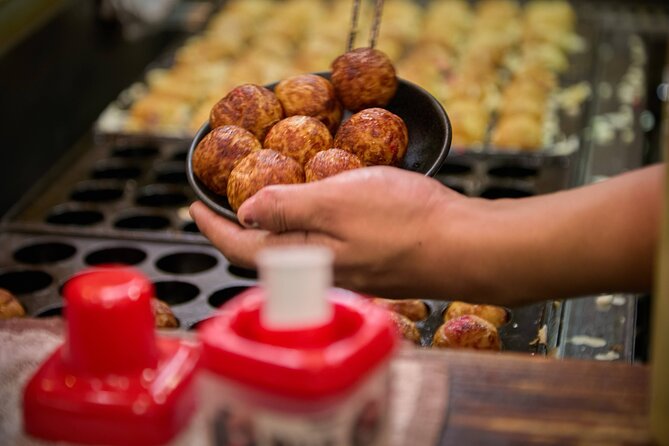
Takoyaki is the essential starting point. These small octopus-filled batter balls are cooked in round molds and served hot, often with sauce and toppings. They look easy to eat, but the center can be very hot, so take your time. Takosen combines takoyaki with a crisp rice cracker, giving you a different texture in one small snack.
Taiyaki offers a sweeter change. The fish-shaped pastry is often filled with custard, though fillings can vary. Apple candy and pork buns add more choice, which is useful if you want a mix of sweet and savory foods rather than several fried or batter-based dishes.
The main limitation is that the exact food order is not fixed in the information provided. You may be offered or able to choose from several local specialties, but you should not treat every named item as guaranteed. Your food spending is separate from the tour fee, and your appetite will shape the final bill.
A quiet fifteen minutes at Hozenji Temple
After the bright commercial streets, the route reaches Hozenji Temple. The temple receives about 15 minutes, which is short but well judged for a compact food tour. It gives you a pause without changing the whole focus of the experience.
Hozenji is known for its moss-covered Mizukake Fudo statue. The custom is to pour water over the statue while making a wish, and the repeated ritual has covered the figure in green moss. The narrow stone-paved alley around the temple feels very different from the large signs and traffic nearby.
This stop helps explain why Dotonbori is more than a wall of advertisements. The area includes small religious spaces and old lanes alongside restaurants and entertainment. I appreciate this contrast because it gives the walk a better sense of place. You are not only collecting snacks and photographs. You are also seeing how a quiet temple can sit within one of Osaka’s busiest districts.
Keep your expectations realistic. Hozenji is a brief stop, not a long temple visit with an extended historical talk. Its appeal is atmosphere and contrast, and fifteen minutes is enough to see the statue, observe the alley, and take a breath before returning to the food route.
More Street Food Tours in Osaka:
- Hungry Osaka Street Food Tour:15 Tastings & 3 Drinks with a Local
★ 5.0 · 1,727 reviews - Hungry Osaka Street Food Tour: 15 Dishes & 3 Drinks
★ 4.9 · 694 reviews - [1 Group Only] Osaka Street Food Tour for Family
★ 5.0 · 208 reviews - Umami Town Street Food Tour
★ 5.0 · 120 reviews
Namba brings the final round of Osaka flavors
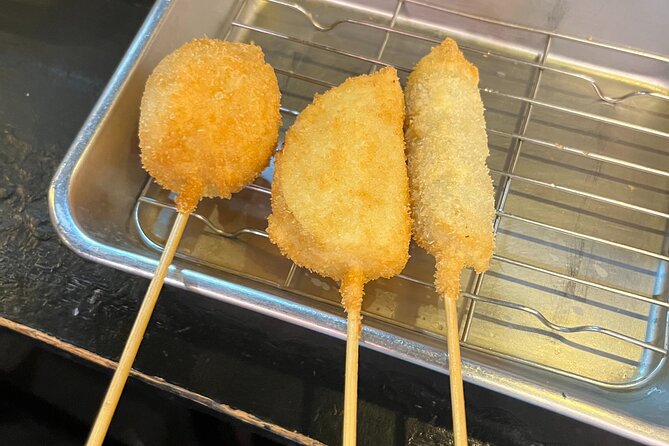
The final major section takes about 30 minutes in Namba. This part of Osaka is known for food, and the route turns back toward dishes with more substance. Depending on the available choices, you might try okonomiyaki, kushikatsu, or doteyaki.
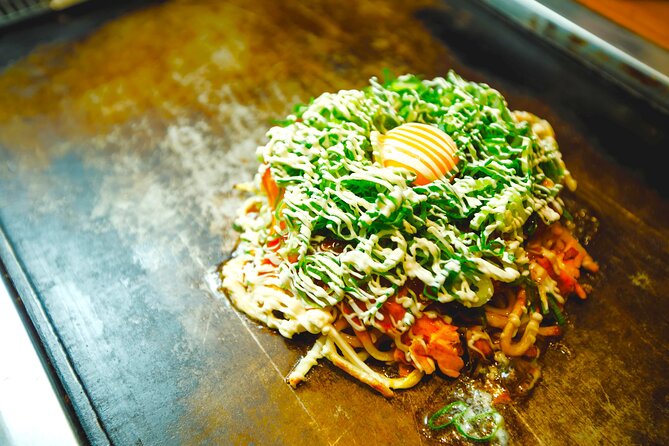
Okonomiyaki is often described as a savory pancake, though that simple label does not fully capture its appeal. The dish is made from a batter and other ingredients, then finished with sauces and toppings. Kushikatsu consists of skewered and fried items, while doteyaki is a slow-cooked beef tendon dish associated with Osaka.
These foods show a different side of the city from the quick sweets and small takoyaki portions. If you are hungry, this is likely where the tour feels most satisfying. If you have already eaten several snacks, you may prefer to keep your portions modest.
Namba is also a useful area for deciding what to eat after the tour. You will finish back at the original meeting point, so you are not left in an unfamiliar neighborhood. That makes it easy to continue exploring on your own, though the official tour itself ends at the meeting location.
What your $58.93 really covers
At $58.93 per person, this is not a cheap way to buy street food. The tour price covers the English-speaking guide and the organized walking experience, but not the food and drink. You should add about JPY1,500 per person for snacks, although your actual spending can vary with appetite and choices.
The value depends on what you want from the evening. If you only want to buy takoyaki and wander around Dotonbori, you can spend less by exploring independently. If you want a local person to shape the route, explain what you are seeing, and help you sample several Osaka specialties in two hours, the price becomes easier to justify.
The small group cap improves the calculation. With no more than eight people, the experience should feel more personal than a large street walk. You are paying partly for guidance, pacing, and convenience, not just for each piece of food.
Group discounts are listed as a feature, though the available discount amount is not specified. Check the price shown for your party before booking rather than assuming a particular percentage off.
Food restrictions and the importance of appetite
This tour cannot accommodate vegan or gluten-free requests because of the nature of the local food. That is the clearest booking concern for people with strict dietary needs. If you need to avoid certain ingredients, you should not rely on the guide to redesign the tasting route.
For other dietary preferences, the listed choices offer some variety, including sweets, pork buns, grilled foods, fried skewers, and heavier local dishes. Still, the tour is built around Osaka’s usual street-food culture, not a customized tasting menu.
I would arrive hungry but not famished. The route includes many small foods, and you may want to sample rather than eat a full portion of everything. Since food is purchased separately, you can also keep spending under control by choosing fewer items.
The tour works well for people who want an introduction rather than a food marathon. Two hours gives you a taste of the area, but it is not long enough to cover every dish or every lane in Namba and Dotonbori.
Guide communication and group comfort
The guide is English-speaking, and strong communication is one of the experience’s most praised qualities. The host is described as highly responsive, kind, and quick to answer questions. That matters when you are meeting in a crowded entertainment district and need clear help before the walk begins.
No individual guide name is provided, so you should not book this expecting a particular named host. The useful point is the communication standard: questions received quick answers, which can make the pre-tour process less stressful.
The small group also suits people who dislike rigid, impersonal tours. A group of eight can still require patience when ordering food or crossing busy streets, but it should be easier to stay together than with a large crowd.
Most people can participate, according to the available details. The experience does involve walking through city streets and narrow lanes, so comfortable shoes are a sensible choice, though no special equipment is listed.
Booking, timing, and cancellation details
Confirmation arrives at the time of booking, which gives you the meeting information promptly. The mobile ticket is useful for keeping the details on your phone while moving around Osaka.
The tour lasts approximately two hours and returns to the Starbucks TSUTAYA EBISUBASHI meeting point. That fixed end point is helpful if you plan to meet friends afterward or continue exploring Dotonbori.
Free cancellation is available if you cancel at least 24 hours before the experience starts. A cancellation made less than 24 hours ahead is not refunded, and changes inside that window are not accepted. The deadline follows Osaka local time, so check the start time carefully if you are booking from another time zone.
Who should book this Dotonbori food tour?
I would recommend it to first-time visitors who want a quick, guided introduction to Osaka’s best-known food district. It also suits people who enjoy trying several small items instead of sitting down for one long meal.
Families and small groups may like the compact format, provided everyone can eat the available food. The maximum of eight people keeps the walk manageable, and the route includes visual stops that can break up the tasting.
It is also a good fit for anyone who wants both sides of Dotonbori: the bright canalfront signs and the quiet Hozenji Temple lane. That balance makes the walk more useful than a simple list of food purchases.
I would hesitate if you need vegan or gluten-free food, dislike paying separately for tastings, or prefer a deep restaurant-based food tour. The experience is short, social, and focused on familiar Osaka snacks and street dishes.
Should you book it?
Book this tour if you want a guided first taste of Dotonbori and Namba without giving up an entire day. The route combines the Glico Man sign, lively food streets, Hozenji Temple, and several Osaka specialties in a sensible two-hour package.
Skip it if you are comfortable exploring food stalls alone or need strict dietary accommodations. For everyone else, the small group, helpful communication, and compact route make the $58.93 fee reasonable, as long as you budget another JPY1,500 or so for food and drinks.
FAQ
How long does the Osaka street food tour last?
The tour lasts approximately two hours.
Where does the tour begin?
It begins at Starbucks Coffee, TSUTAYA Ebisubashi, located at 1-chōme-8-19 Dotonbori, Chuo Ward, Osaka, 542-0071, Japan.
Where does the tour end?
The activity ends back at the original meeting point.
Is food included in the tour price?
No. Snacks, food, and drinks are not included. The suggested additional food budget is about JPY1,500 per person.
What foods might be available?
Possible foods include takoyaki, takosen, taiyaki, apple candy, pork buns, okonomiyaki, kushikatsu, and doteyaki.
Is an English-speaking guide included?
Yes. An English-speaking guide is included.
How large is the group?
The tour has a maximum of eight participants.
Can vegan or gluten-free food be provided?
No. The tour cannot accommodate vegan or gluten-free requests because of the nature of the local food.
Can most people participate?
Yes. The activity information states that most people can participate.
What is the cancellation policy?
You can cancel for a full refund if you cancel at least 24 hours before the experience starts. Cancellations made less than 24 hours before the start time are not refunded.
Just added around Osaka
- Osaka Street Food Tour: Private & Personalized★ 4.5 · 36 reviews
- Retro Osaka Street Food Tour: Shinsekai★ 4.5 · 77 reviews
- Evening Street Food Hopping Tour in Downtown Osaka★ 5.0 · 8 reviews
- Eat Osaka: Street Food Cooking in an Authentic Kitchen!★ 5.0 · 87 reviews
- Deep Dive: Osaka Food Markets from Local to Luxurious!★ 5.0 · 31 reviews
- Eat Like a Local in Osaka – Private Custom Street Food Tour★ 4.3 · 33 reviews
- Osaka Shinsekai Street Food Tour – Evening★ 5.0 · 2 reviews
- Osaka Okonomiyaki Cooking Experience for Families & Groups★ 4.9 · 8 reviews
Street Food Tours, compared.
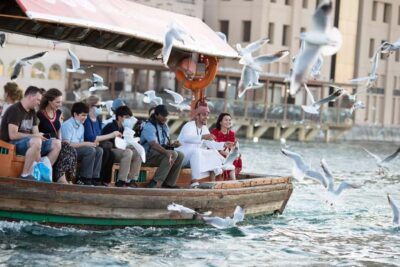
Old Town, Creek, Museums, Souks, & Street Food Tour
What we made of it →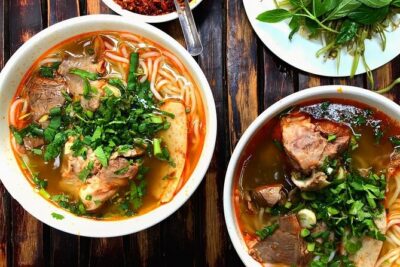
Ho Chi Minh City Street Food Tour & Sightseeing By Motorbike
What we made of it →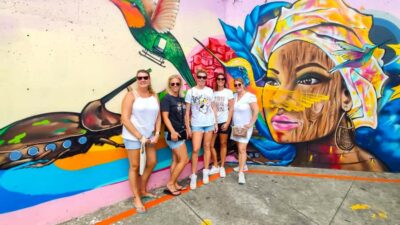
Comuna 13 Graffiti Tour, Cable Car & Street Food
What we made of it →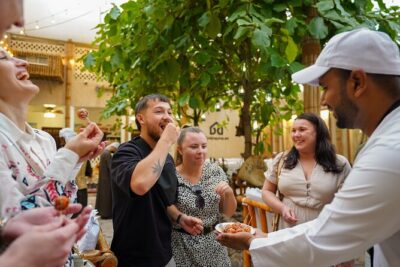
Old Town, Souks, Street Food, Guided Tour & Abra Ride
What we made of it →
Small Group Hanoi Street Food Tour with a Real Foodie
What we made of it →
Saigon By Night and Street Food By Motorbike | Opt: Ao Dai Riders
What we made of it →Where this tour turns up