
Review · OSAKA
Osaka Shinsekai Street Food Tour – Evening
Shinsekai tastes best after dark. This three-hour evening tour takes you through Osaka’s retro district, where old eateries, narrow streets, and post-war character provide the setting for kushikatsu, takoyaki, and kasu udon. I like the mix of food and local storytelling, and I like that the group is limited to 10 people.
The strongest appeal is the chance to eat in a traditional local restaurant, something you may not choose on your own. The main drawback is the $170 price, which is a serious spend for three hours and does not cover transportation, extra food, or additional drinks. You also need to arrive on time: the guide can wait only five minutes.
Key points before you book
- Shinsekai after dark: Explore one of Osaka’s most distinctive old districts at the liveliest time of day.
- Three classic Osaka dishes: Expect crispy kushikatsu, savory takoyaki, and warming kasu udon among the food stops.
- Traditional local restaurant: The experience includes the kind of down-to-earth meal many visitors might not order without help.
- Small group setting: The tour accepts between 2 and 10 participants, with private options available for an added fee.
- One drink included: Additional food and drinks cost extra, so come ready for a few optional purchases.
- Strict meeting rule: Your guide can wait only five minutes after the start time, and cannot provide directions once the tour has left.
Why Shinsekai makes such a good food-tour setting
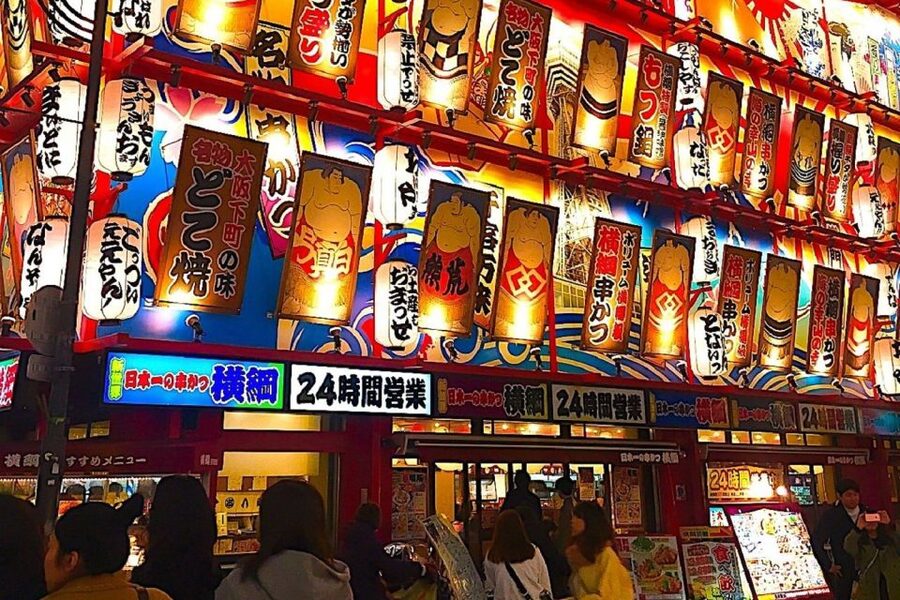
Shinsekai has a character unlike Osaka’s polished shopping districts. The area is tied to the city’s merchant culture and its early twentieth-century past, while much of the atmosphere you experience today comes from its post-war neighborhood life.
That combination gives the tour more purpose than a simple meal crawl. You are not just stopping at restaurants for a series of dishes. You are using food to understand why Osaka is often associated with practical, affordable, street-level eating.
The setting is especially fitting for an evening outing. As shops and eateries light up, Shinsekai’s old-fashioned personality comes forward. The tour description promises a look at local spots dating back to the early 1900s, along with stories about the area that you are unlikely to pick up from a quick solo walk.
I like this kind of introduction to Osaka because it does not require you to know much before arriving. Your English-speaking guide supplies the context, points out places you might otherwise pass, and helps connect each dish to the character of the neighborhood.
More Evening and Night Food Tours in Osaka:
- Evening Street Food Hopping Tour in Downtown Osaka
★ 5.0 · 8 reviews - Saigon By Night and Street Food By Motorbike | Opt: Ao Dai Riders
★ 5.0 · 4,066 reviews - Private Street Food Evening Walking Tour in Ho Chi Minh City
★ 5.0 · 3,175 reviews
Following the food through three hours
The exact order of the stops can vary, so you should think of the experience as a guided progression through Shinsekai rather than a fixed restaurant schedule. Over roughly three hours, you visit several food stops, learn about the neighborhood, and sample well-known Osaka comfort food.
The food is the main event, but the pacing matters. A good guide can make the spaces between dishes useful by explaining local customs, telling stories about older establishments, and drawing your attention to details in the streets and alleys.
You should also expect a social format. With a maximum of 10 people, the guide has a reasonable chance to answer questions and keep the group together without turning the evening into a private tour. The minimum is two participants, so solo bookings may require a special arrangement.
Because the experience takes place in working eateries, the guide also has to keep the group moving on schedule. That helps explain the strict meeting policy. Arriving late is not a minor inconvenience here, since the guide cannot call participants or give directions after the tour begins.
Kushikatsu, Osaka’s crisp and casual specialty
Kushikatsu is one of the foods most closely associated with Shinsekai. These skewered items are coated and fried, giving you a crisp outside and a hot, savory center.
This is a useful dish to try with a guide because the appeal is partly in knowing how the food fits the neighborhood. Kushikatsu is casual, filling, and closely linked with Osaka’s merchant spirit. It is not formal dining, and that is exactly the point.
You may receive several varieties during the evening, but the supplied details do not specify the exact skewers or number of portions. If you have allergies or dietary restrictions, tell the tour operator before arrival rather than waiting until you sit down.
The food stops are presented as a way to taste Osaka’s past. That does not mean every dish is old-fashioned in a museum-like sense. Instead, you get a sense of how food, business, and neighborhood life have long met in Shinsekai.
Takoyaki brings the Osaka street-food energy
Takoyaki gives the tour another classic local flavor. These small savory balls are associated with Osaka and are usually eaten hot, making them a natural fit for an evening walk.
For you, the benefit is variety. Kushikatsu offers a fried skewer format, while takoyaki provides a different texture and serving style. Together, they help show why Osaka’s food culture is often described through casual dishes rather than elaborate restaurant meals.
The guide can also help you approach foods that may be unfamiliar. One of the most useful points from the feedback on this experience is that the tour made it possible to try dishes people would not have ordered by themselves. That is real value for anyone who wants to be adventurous but does not want to guess at every menu.
Because takoyaki is served hot, you should be prepared to eat at a measured pace. The exact preparation and toppings are not specified, so I would treat the dish as part of the broader local-food experience rather than booking this tour for a particular recipe.
More Street Food Tours in Osaka:
- Hungry Osaka Street Food Tour:15 Tastings & 3 Drinks with a Local
★ 5.0 · 1,727 reviews - Hungry Osaka Street Food Tour: 15 Dishes & 3 Drinks
★ 4.9 · 694 reviews - [1 Group Only] Osaka Street Food Tour for Family
★ 5.0 · 208 reviews - Umami Town Street Food Tour
★ 5.0 · 120 reviews
Kasu udon adds a warm finish
Kasu udon provides a comforting change from the fried and handheld foods. It is a bowl of udon with kasu, a traditional ingredient associated with sake production, giving the dish a distinct connection to Japanese food culture.
A warm bowl can be especially welcome during an evening in Osaka. It also gives the meal a different rhythm. Instead of moving from one snack to another, you get a more substantial dish that lets you slow down and take in the neighborhood.
The tour does not state the exact restaurant or portion size for the kasu udon. Still, its inclusion makes the food selection feel more rounded. You sample fried food, a famous Osaka snack, and a noodle dish rather than eating three versions of the same thing.
If you are unsure about unfamiliar ingredients, ask the guide before ordering or eating. Dietary restrictions and allergies should be reported in advance, and the operator provides a contact address for special arrangements.
The local restaurant experience is a major reason to go
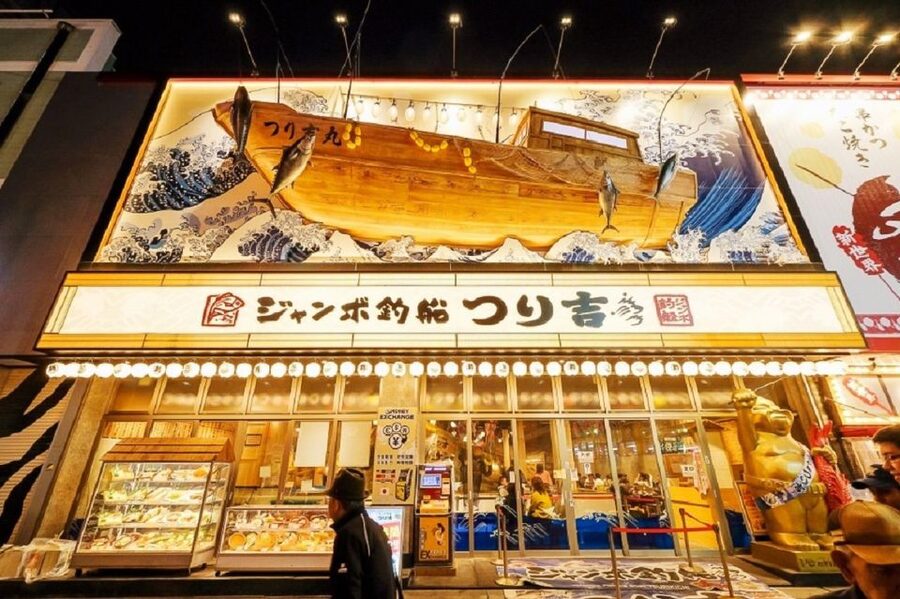
The most useful part of this experience may be the traditional local restaurant visit. Many people are comfortable ordering familiar dishes in a modern food hall, but a small neighborhood restaurant can be harder to approach without language help or local guidance.
That is where this tour earns some of its price. You are not only paying for food. You are paying for someone to lead you into places and choices that may be difficult to manage independently.
I also like that the tour is not presented as a polished luxury meal. Shinsekai’s appeal lies in its everyday character, and a traditional local restaurant fits that mood better than a formal tasting menu would.
Still, expectations matter. The price is $170 per person, and one drink is included. The tour includes food at several stops, but additional drinks and food are extra. If you are mainly seeking the least expensive way to eat kushikatsu and takoyaki, you can spend less by ordering on your own.
The stronger case for booking is the combination of guidance, local stories, and access to a traditional eating setting. The weaker case is simple hunger at the lowest possible cost.
What the guide adds to the evening
The English-speaking local guide is responsible for more than pointing out restaurants. The guide’s role is to explain the area’s history, introduce its stories, and help you understand how the food reflects Osaka’s merchant culture.
That personal element received clear praise in the feedback. One booking described the guide as especially friendly, while another highlighted the fun of trying food that would not have been chosen independently. Those comments point to the tour’s strongest feature: the human help between and during the tastings.
You should expect a guide-led experience rather than a self-guided food map. Ask questions as you go, especially if you want to know why a particular shop or dish matters. The small group limit of 10 should make conversation possible, though the actual feel will depend on how many people book that evening.
Private tours are available by arrangement for an additional rate. This may suit families, couples, or groups that want more control over pace and food choices.
Meeting in Ebisucho or at the Hankai Terminal
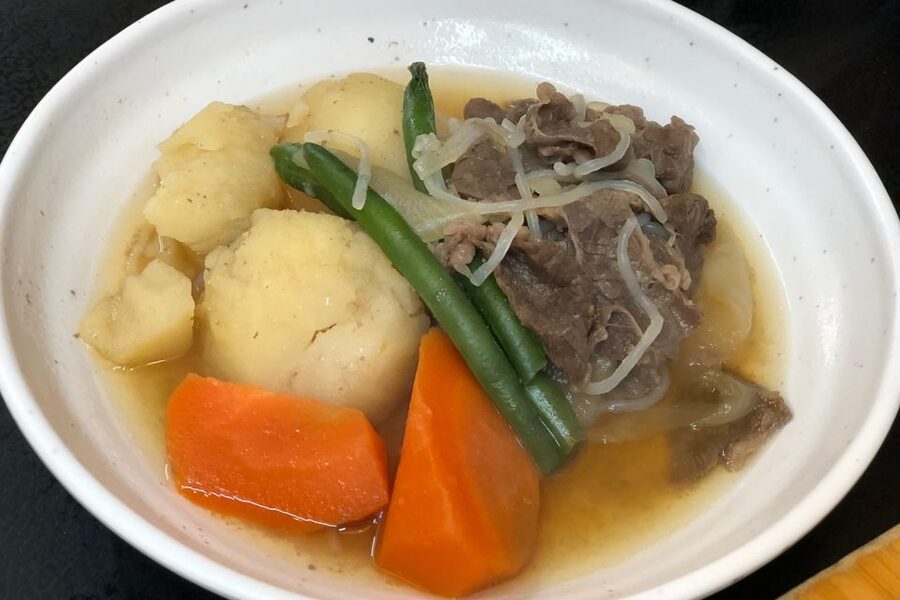
There are two nearby station areas used for the meeting point. One is Ebisucho Station, served by the Hankaidenki-Hankai Line and the Sakai Suji Line. The other is Hankai Terminal, served by the Hankai Tramway Line.
Your guide will hold a sign. Check your route carefully before setting out, since the tour can leave after only five minutes. Once the group has departed, the guide cannot give directions or contact participants by phone.
Transportation to the meeting point is not included. Hotel pickup is also not included, although it may be arranged for an additional charge. You should budget for your own train or tram fare and allow enough time to find the correct station exit and meeting area.
I would arrive early, especially if Shinsekai is unfamiliar to you. The strict policy is not meant to be harsh. The guide has restaurant reservations and a group to manage, so waiting for late arrivals could affect the whole evening.
Is $170 a fair price?
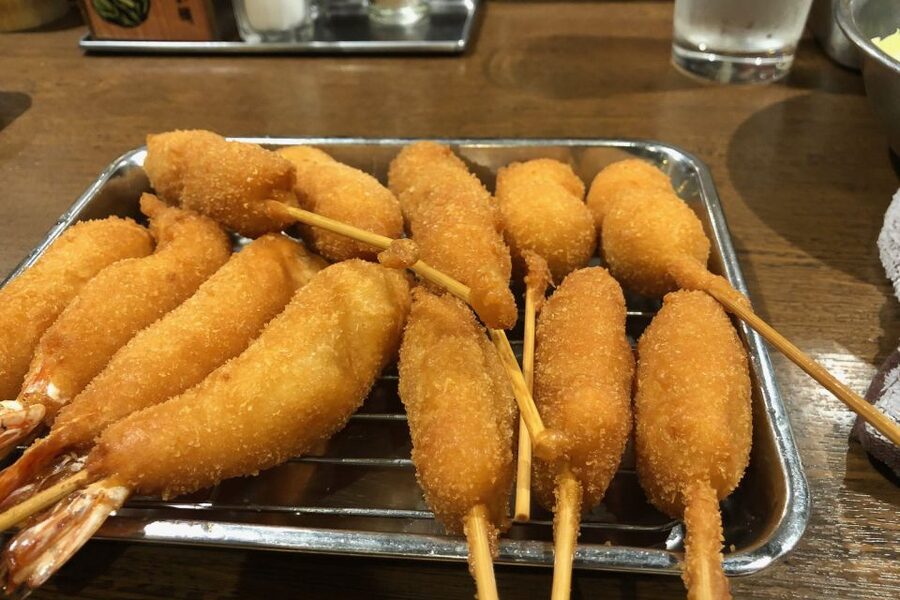
At $170 per person, this is not a bargain food walk. The tour lasts three hours, includes several local food stops, one drink, and an English-speaking guide, but you still pay for transportation and any extra purchases.
The value depends on what you want from Osaka. If you only want to sample a few famous dishes, you can likely spend less by exploring independently. If you want the stories, restaurant access, and confidence to order unfamiliar food, the price becomes easier to justify.
The small group also matters. A maximum of 10 people is not the same as a private tour, but it is more personal than a large coach outing. You can request a private experience for an additional charge if that format suits you better.
I would consider this tour most worthwhile early in an Osaka visit. It can give you a useful sense of Shinsekai and help you understand dishes you may encounter elsewhere in the city. For a return visit focused only on eating, the cost may feel harder to defend.
Who should book this Shinsekai food tour?
I would recommend it to you if you enjoy local food but feel uncertain about ordering in unfamiliar places. It is also a good match if you want neighborhood stories along with your meal, rather than a list of dishes with little context.
The tour should suit couples, friends, and small family groups who can keep to a fixed evening schedule. Children aged 10 and older require a passport copy, so families should prepare that document if applicable.
You may want to choose another option if you need a fully private experience, dislike fried or unfamiliar foods, or want complete control over restaurant choices. The operator asks you to share dietary restrictions and allergies, but the available information does not promise that every restriction can be accommodated.
Single participants can sometimes be accommodated, although the normal minimum is two people. Contact the operator before booking if you are traveling alone or need a larger group arrangement.
Practical booking advice
Book only after checking the starting time that fits your plans. The duration is three hours, but the available start times vary, so you need to confirm the schedule for your date.
You can reserve now and pay later, which helps if your Osaka plans are still changing. Cancellation is free up to 24 hours in advance for a full refund.
Bring enough money for optional food and drinks, and remember that transportation is separate. Most important, plan to reach Ebisucho Station or the Hankai Terminal early. Five minutes is a very small grace period.
Should you book it?
Book this experience if you want Shinsekai explained by a local guide and you like the idea of trying dishes you might skip on your own. The traditional restaurant visit, friendly guide service, and mix of kushikatsu, takoyaki, and kasu udon give the evening a clear sense of place.
Skip it if $170 feels too high for a three-hour meal outing or if you prefer to explore Osaka’s food scene independently. For the right person, the value is not simply in the number of dishes. It is in getting through the old streets with confidence, understanding what you are eating, and sharing the evening with a small group.
FAQ
How long does the Osaka Shinsekai Street Food Tour last?
The tour lasts three hours and takes place in the evening.
What food is included?
The experience includes local dishes at several food stops. The featured foods are kushikatsu skewers, takoyaki, and kasu udon.
Is a drink included?
Yes. One drink is included. Additional drinks and extra food are available at your own expense.
Where does the tour meet?
The meeting points are near Ebisucho Station, served by the Hankaidenki-Hankai Line and Sakai Suji Line, or Hankai Terminal on the Hankai Tramway Line. Your guide will hold a sign.
What happens if I arrive late?
The guide can wait only five additional minutes after the scheduled start time. After that, the tour departs, and the guide cannot provide directions or be contacted by phone.
How many people can join the tour?
The normal group size is between 2 and 10 participants. Larger groups and single participants may sometimes be accommodated, and private tours are available for an additional rate.
Can I cancel the booking?
Yes. You can cancel up to 24 hours in advance for a full refund. The reserve-now, pay-later option is also available.
Just added around Osaka
- Osaka Street Food Tour: Private & Personalized★ 4.5 · 36 reviews
- Retro Osaka Street Food Tour: Shinsekai★ 4.5 · 77 reviews
- Osaka 2 Hour Local Street Food Tour in Dotonbori and Namba★ 5.0 · 2 reviews
- Evening Street Food Hopping Tour in Downtown Osaka★ 5.0 · 8 reviews
- Eat Osaka: Street Food Cooking in an Authentic Kitchen!★ 5.0 · 87 reviews
- Deep Dive: Osaka Food Markets from Local to Luxurious!★ 5.0 · 31 reviews
- Eat Like a Local in Osaka – Private Custom Street Food Tour★ 4.3 · 33 reviews
- Osaka Okonomiyaki Cooking Experience for Families & Groups★ 4.9 · 8 reviews
Evening and Night Food Tours, compared.
Saigon By Night and Street Food By Motorbike | Opt: Ao Dai Riders
What we made of it →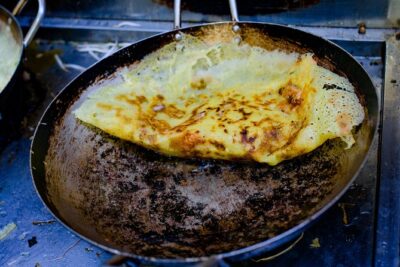
Private Street Food Evening Walking Tour in Ho Chi Minh City
What we made of it →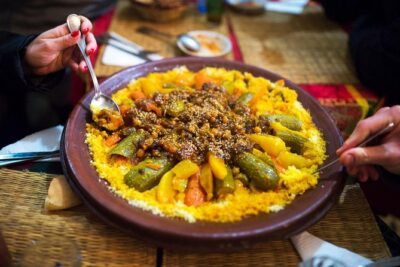

Small Group: Singapore Street Food & Night Tour with 9 tastings
What we made of it →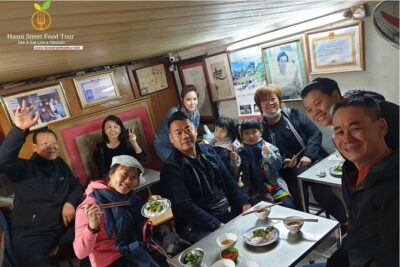
Tasting 8 Different Street Foods + Local Drink at Evening Time by Walking
What we made of it →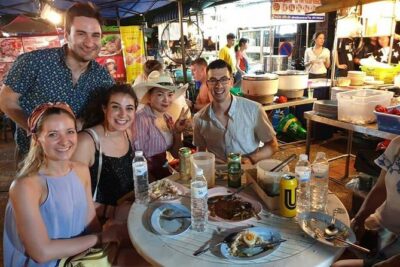
Small-Group Chiang Mai Evening Street Food Tour
What we made of it →
Bangkok Tuk-Tuk Tour by Night with Chinatown Street Food Meal
What we made of it →
Where this tour turns up