
Review · OSAKA
Deep Dive: Osaka Food Markets from Local to Luxurious!
Markets tell Osaka’s story best. This four-hour private tour moves from polished department-store food halls to neighborhood markets, Korea Town, kitchen shops, and the bright streets of Namba. I especially like the range of food settings and the way a guide explains how locals shop, cook, and order. I also like the choice of morning or afternoon departures, which makes it easier to fit into a busy Osaka visit.
The main caution is cost. At $91 per person, you still pay separately for transportation, snacks, drinks, and anything you buy. The tour is valuable for cultural context and personal guidance, but it is not a guaranteed tasting tour, despite the food-focused description.
Key points before you book
- Seven connected Osaka stops: See Takashimaya’s underground food hall, Pulala Tenma, Tenjinbashi-suji, Tsuruhashi Korea Town, Kuromon Market, Doguyasuji, and Namba.
- Private guiding: Only your own group takes part, allowing time for questions, shopping, photographs, and small changes to the route.
- Food costs extra: Samples, meals, refreshments, and souvenirs are not included. Plan a separate snack budget.
- Local and tourist Osaka together: You see ordinary shopping areas as well as famous Kuromon Market and Dotonbori.
- Moderate walking: This is an active half-day, with several market areas and public transportation between locations.
- Strong guide reputation: Ferdinand, Kevin, Thomas, Lito, Alejandro, Damian, and Oshi are praised for cultural explanations, translation help, and tailoring the outing to personal interests.
Why this market tour feels different from a standard food walk
Many Osaka food tours concentrate on eating. This one is more about learning how food reaches the table.
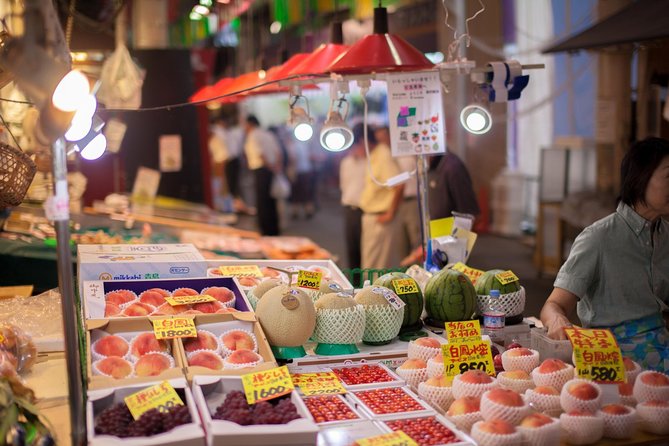
You move through places where people buy ingredients, prepared dishes, cookware, sweets, meat, seafood, vegetables, and imported products. Your guide helps you understand the difference between a department-store food floor, a neighborhood market, a Korean shopping district, and a market built mainly for sightseers.
That wider view is the tour’s main strength. You are not simply handed a dish and told that it is delicious. You get help reading the setting around it. You can ask what an ingredient is, how it is used, why a shop sells certain products, or how Japanese and Korean food traditions meet in Osaka.
The private format matters here. Guides such as Ferdinand and Kevin have been praised for answering many questions, while Lito and Alejandro adjusted the outing around personal interests and schedules. If you want to stop for photographs, look closely at kitchen tools, or ask about a food you have never seen, a private guide gives you more breathing room than a large group.
There is one important point to understand. Food may be available to purchase during the tour, and some past outings included a restaurant stop or purchased samples, but food is not included in the price. You should think of this as a guided market and food-culture tour, not a fixed series of tastings.
More Night Market Food Tours in Osaka:
- Deep Dive: Osaka Food Markets from Local to Luxurious!
★ 5.0 · 2 reviews - Small Group: Michelin and Local Hawker Food Tour with 9 tastings
★ 5.0 · 1,890 reviews - Seoul Street Food Market Tour
★ 5.0 · 1,226 reviews
Takashimaya’s depachika: Osaka food at its most polished
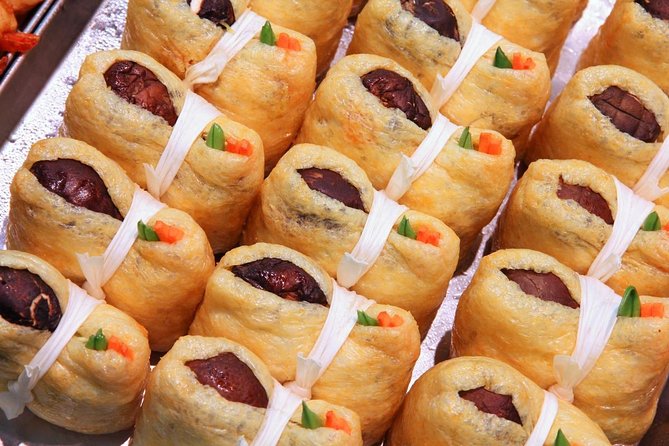
The tour begins with the underground food hall at Takashimaya Osaka Store. In Japan, these department-store basements are called depachika. They are known for carefully presented food, from raw ingredients to sweets, prepared dishes, Western specialties, and Japanese classics.
This is a useful first stop because it shows the refined side of Osaka food shopping. Displays are often as neat as a jewelry counter, and the quality can be high. Your guide can point out items that may look familiar but have a different Japanese style or purpose.
You will have about 20 minutes here. That is enough to get oriented, but not enough for a slow shopping session. If you see something you want, remember that purchases are your responsibility. The polished setting also offers a useful contrast with the more practical markets later in the day.
Pulala Tenma: A closer look at ordinary shopping
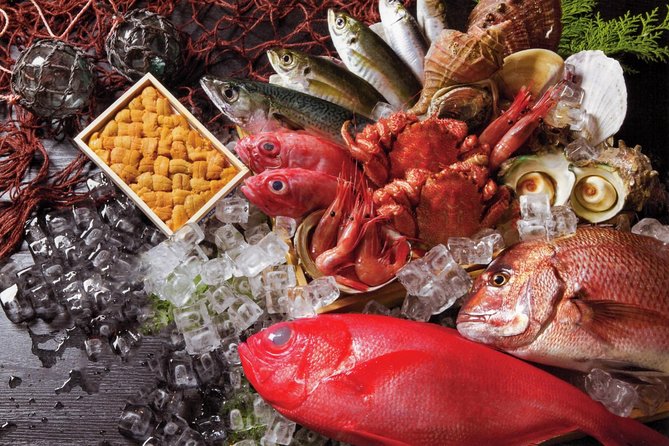
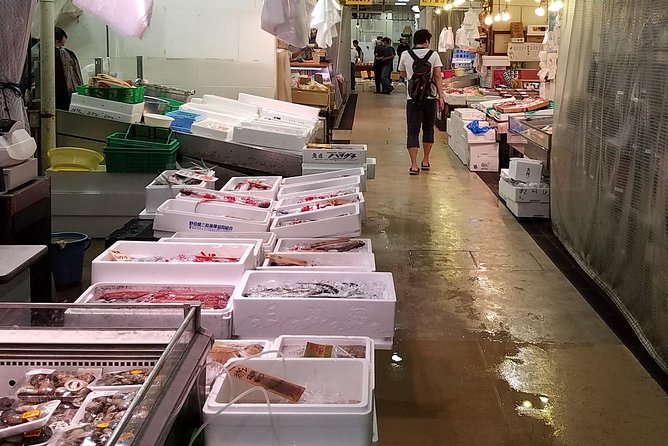
At Pulala Tenma, the mood shifts. This local wet market presents seafood, meat, vegetables, and other basic ingredients in a setting aimed more at everyday shoppers than sightseeing crowds.
This stop helps answer a simple question: What does local food shopping look like outside the famous market streets? Your guide can explain how separate ingredients become the dishes served in Osaka restaurants and homes.
You spend roughly 30 minutes here. It is a good place to ask about unfamiliar produce or seafood, especially if you enjoy cooking. It may feel less immediately exciting than a market built for visitors, but that is exactly why it adds value. You see a more ordinary side of the city.
Tenjinbashi-suji: Shopping, history, and a very Osaka supermarket
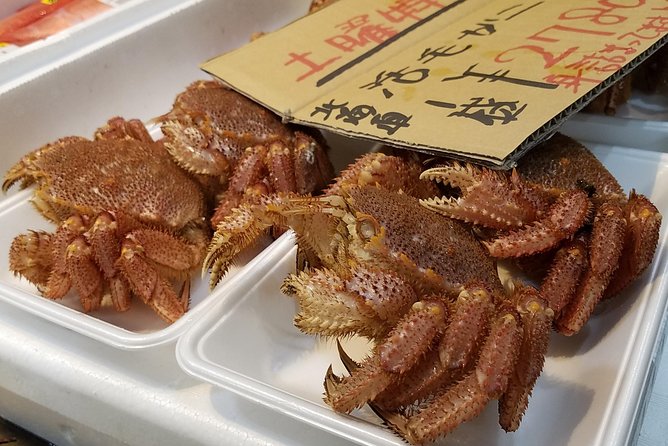
Tenjinbashi-suji Shopping Street is described as Japan’s longest covered shopping arcade. The route uses about 40 minutes to explain its role in Osaka life, then includes a stop at a local supermarket.
This is more than a food stop. The covered arcade gives you a sense of how shopping, small businesses, and neighborhood life fit together. Your guide can explain the street’s past and its modern role, while the supermarket shows products that may never appear on a tourist menu.
I like this part because it gives you practical confidence. After seeing what locals buy, you may feel less dependent on restaurants aimed at international visitors. You can also ask your guide to explain packaging, ingredients, or household products that would otherwise remain a mystery.
The arcade can tempt you into long browsing. With a fixed four-hour schedule, keep an eye on the time. The private format helps, but you still have several major stops ahead.
Same place, a different plate:
- Hungry Osaka Street Food Tour:15 Tastings & 3 Drinks with a Local
★ 5.0 · 1,727 reviews - Hungry Osaka Street Food Tour: 15 Dishes & 3 Drinks
★ 4.9 · 694 reviews - [1 Group Only] Osaka Street Food Tour for Family
★ 5.0 · 208 reviews - Umami Town Street Food Tour
★ 5.0 · 120 reviews
Tsuruhashi Korea Town: Food, clothing, and Osaka’s Korean connection
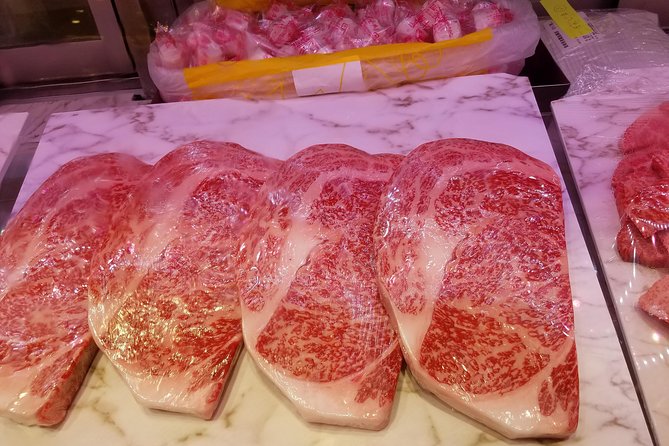
Osaka Tsuruhashi Ichiba introduces a different cultural layer. This is one of the city’s busiest Korean districts, with food alongside clothing and other goods.
The area is useful for understanding that Osaka’s food culture did not develop in isolation. Korean influences are part of the city’s social and culinary story, and this stop lets your guide explain those connections while you walk through shops.
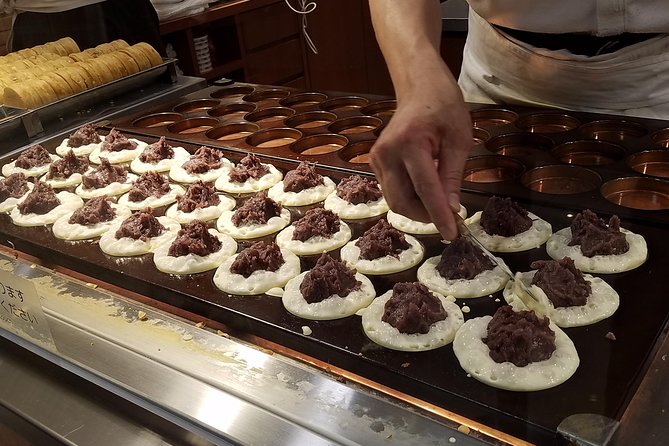
You have around 30 minutes. That is enough for a taste of the area and perhaps a snack purchase, but not a full shopping expedition. Guides have also adjusted this section for children interested in sweets and other treats, which can make it a welcome change of pace for families.
The district is not only about eating. If you expect a nonstop procession of samples, you may find the format slower and more educational than anticipated. If you enjoy food, culture, and everyday shopping in the same place, it is one of the more rewarding stops.
Kuromon Market: Famous, photogenic, and not cheap
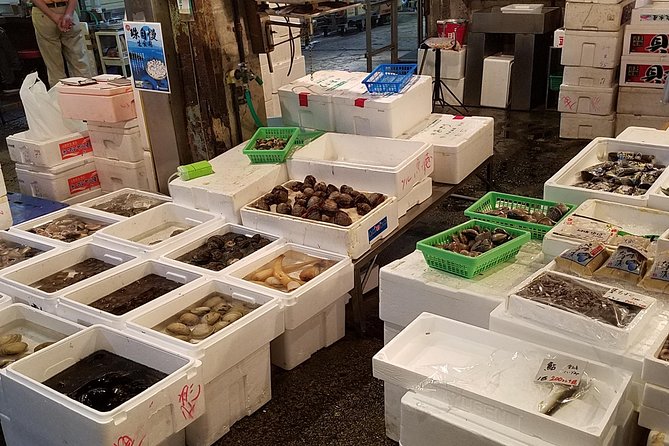
Kuromon Market is the best-known market on the route. It has become a major stop for visitors, and its stalls offer excellent visual appeal. Fresh seafood and other food displays make this an easy place to understand why Osaka attracts food lovers.
The trade-off is price. This market can be more expensive than neighborhood shopping areas, so do not assume every purchase is a bargain. Your guide can help you judge what looks worthwhile and explain what you are seeing.
You get about 25 minutes here, which keeps the visit focused. Use that time for photographs, questions, and one or two carefully chosen purchases if something catches your eye. Since food is not included, bring money if you want to eat.
Kuromon works best when viewed as part of the larger route. On its own, it can feel like a tourist market. After seeing Pulala Tenma and Tenjinbashi-suji, you can better understand how Kuromon differs from places used more routinely by local shoppers.
Doguyasuji: The practical souvenir stop
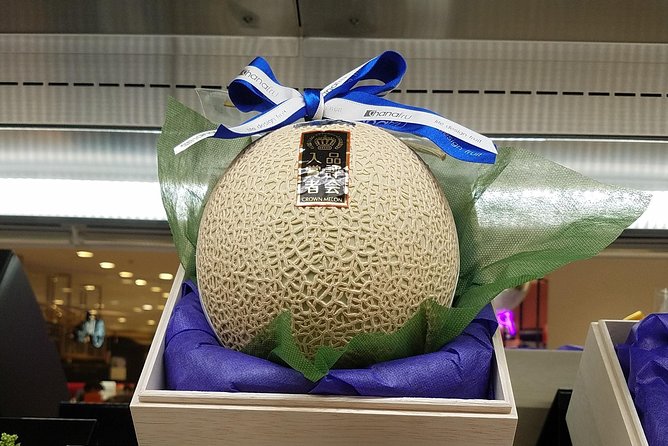
Sennichimae Doguyasuji Shopping Street is devoted to kitchenware. This is where food culture becomes something you can take home.
You might find Japanese cooking knives, ceramics, serving dishes, tea cups, lacquer chopsticks, and the famously realistic plastic food models used outside restaurants. The route allows about 25 minutes, so you will need to choose between browsing and buying.
A knife can be an excellent purchase, but think about luggage, airline rules, and how you will transport it before committing. The same applies to ceramics and heavier serving pieces. Smaller chopsticks or tea items may be easier choices.
This stop also shows that Osaka’s food identity is not limited to restaurants and ingredients. The tools, dishes, signs, and displays all shape how food is prepared and presented.
Namba and Dotonbori: Finishing among Osaka’s best-known sights
The tour ends in Minami, the Namba and Dotonbori area, with the final meeting point at Ebisu Bridge. If time remains, your guide can show you some of the main sights in this lively part of the city.
Ending here makes practical sense. You finish near restaurants, bars, shops, and major sightseeing areas, so you can continue your evening without crossing Osaka again. You also arrive with more context for the food signs and restaurant districts around you.
The route begins at the McDonald’s in front of Temma Station and ends at Ebisu Bridge. That north-to-south movement gives the outing a clear shape, but it also means you should not expect to return to the starting point. Confirm any pickup details before booking, since a meeting point is specifically provided.
What the $91 price really buys you
The $91 fee pays mainly for access to a private guide who can explain the city and help you navigate. It does not cover the food itself.
You also pay about 330 yen per adult for transportation during the tour. Snacks, meals, drinks, samples, and souvenirs cost extra. That can make the final price notably higher if you purchase several foods or stop for a meal.
I think the price makes the most sense for people who value explanation. If you only want to eat as much as possible, you can spend less by visiting a market on your own. If you want help understanding products, customs, cultural links, and neighborhood differences, the guide adds real value.
The private arrangement is another reason the price may work for couples, families, or small groups. Group discounts are offered, and sharing the cost across several people can improve the value. The tour is also booked, on average, 48 days ahead, so popular dates may require planning.
Walking, timing, and comfort
Four hours sounds manageable, but this is an active outing. You move between several shopping areas, spend time on your feet, and use public transportation. One stop specifically follows another, so there is not much room for a slow pace if you want to see everything.
Wear comfortable shoes and keep your hands free for purchases. Osaka summers can be hot, and one past outing included a cool drink at an air-conditioned restaurant after walking in 36-degree weather. That sort of break is not guaranteed, so plan your clothing and water needs carefully.
Children can take part if accompanied by an adult. The route may work well for older children interested in sweets, markets, or gaming-related shopping, but the amount of walking can be tiring for young kids.
Morning and afternoon departures give you useful flexibility. A morning start can leave your evening open in Dotonbori. An afternoon start may work better if you want a slower morning or dinner after the tour.
The guides are the heart of the experience
The strongest part of this outing is the guide.
Ferdinand is praised for culinary training, cultural explanations, translation help, and an easy sense of humor. Kevin is noted for clear communication and explanations that connect Japanese, Chinese, and Korean cultures. Thomas has adjusted routes for children, including interests in mochi and gaming.
Lito has been flexible about schedules and personal needs. Alejandro is praised for excellent English and thoughtful explanations of Japanese customs. Damian has taken time for questions, shopping, and photographs. Oshi has been described as pleasant and well informed during a hot walking day.
Guide quality can vary from person to person, but the pattern is clear: the best experience comes when you ask questions. Tell your guide what you eat, what you want to buy, and how much walking suits your group. This is not a silent route from stall to stall. It works best as a conversation.
Who should book this Osaka tour?
I would choose this tour early in an Osaka visit if I wanted help getting oriented. After four hours, you should have a better sense of where to shop, how markets differ, and how to order or buy foods on your own.
It suits:
- First-time visitors who want context before exploring alone
- Food lovers interested in ingredients, not only finished dishes
- Couples and families who prefer private guiding
- Shoppers looking for knives, ceramics, chopsticks, or food gifts
- Visitors curious about Japanese and Korean cultural connections
- People who enjoy walking and asking many questions
I would hesitate if you want a meal-based tour with generous included tastings. The $91 price, transportation fee, and separate food costs need to be accepted from the start. You may enjoy a more affordable self-guided visit if your main goal is simply to browse Kuromon or eat in Dotonbori.
FAQ
How long does the Osaka food market tour last?
The tour lasts approximately four hours.
Is the tour private?
Yes. Only your own group participates in the activity.
Are food samples and meals included?
No. Samples, food items, refreshments, snacks, and souvenirs are not included. You are responsible for buying anything you want to eat or take home.
How much does transportation cost during the tour?
Transportation costs 330 yen per adult.
Where does the tour start and finish?
It starts at the McDonald’s in front of Temma Station, at 4-chōme-12-1 Tenjinbashi. It ends at Ebisu Bridge in Dotonbori.
Can I choose a morning or afternoon departure?
Yes. The tour offers a choice of morning or afternoon timing.
Can children join the tour?
Yes, but children must be accompanied by an adult. The route includes a moderate amount of walking, so consider your child’s stamina before booking.
Should you book it?
Book this tour if you want Osaka explained, not simply served on a plate. The mix of a polished depachika, local markets, Tenjinbashi-suji, Korea Town, Kuromon, kitchen shops, and Namba gives you a broad view of the city’s food culture.
Just budget honestly. The tour price covers the private guide, while eating and shopping are extra. If you accept that distinction, this can be a smart first-day orientation and a useful bridge to exploring Osaka on your own.
Just added around Osaka
- Osaka Street Food Tour: Private & Personalized★ 4.5 · 36 reviews
- Retro Osaka Street Food Tour: Shinsekai★ 4.5 · 77 reviews
- Osaka 2 Hour Local Street Food Tour in Dotonbori and Namba★ 5.0 · 2 reviews
- Evening Street Food Hopping Tour in Downtown Osaka★ 5.0 · 8 reviews
- Eat Osaka: Street Food Cooking in an Authentic Kitchen!★ 5.0 · 87 reviews
- Eat Like a Local in Osaka – Private Custom Street Food Tour★ 4.3 · 33 reviews
- Osaka Shinsekai Street Food Tour – Evening★ 5.0 · 2 reviews
- Osaka Okonomiyaki Cooking Experience for Families & Groups★ 4.9 · 8 reviews
Night Market Food Tours, compared.
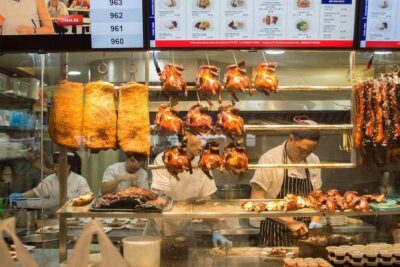
Small Group: Michelin and Local Hawker Food Tour with 9 tastings
What we made of it →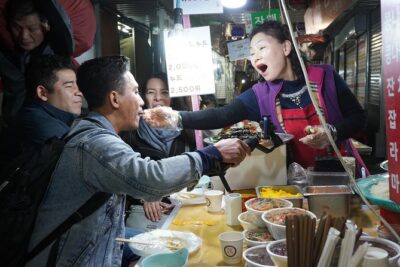
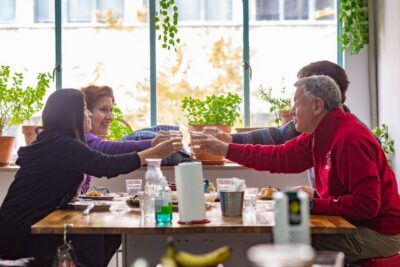
Food Market Visit and Cooking Class with Wine
What we made of it →
Venice Street Food Tour with Local Guide with Local Food Market Visit
What we made of it →
Cancun Taco Tour, Local Beer and Night Market with Transportation
What we made of it →
Tsukiji Fish Market Food and Culture Walking Tour
What we made of it →
Cancun Street Food Tour with Food Stalls, Local Market and Murals
What we made of it →Where this tour turns up