
Review · ROME
Budget Street Food Tour of Campo de Fiori, Jewish Ghetto & Pantheon with Gelato
Rome tastes better on foot. This two-and-a-half-hour food walk links Campo de’ Fiori, the Jewish Ghetto, Piazza della Minerva, and the Pantheon with tastings and stories from a local guide. I like the route because it mixes famous sights with quieter corners, and I like the small-group limit of 15, which makes it easier to hear the guide and ask questions. The main drawback is that the food is not itemized, drinks cost extra, and the tour cannot handle vegan, gluten-free, or dairy-free diets.
The price is about $54.13 per person, a fair deal if you want both food and orientation in central Rome. Guides including Francesca, Arianna, and Matia have earned warm praise for their humor, history knowledge, and easy manner. Book this early if possible, since the tour is often reserved about 20 days ahead.
Key points to know before booking
- Campo de’ Fiori is the starting point: Meet under the statue of Giordano Bruno in Piazza Campo de’ Fiori.
- Five historic stops shape the walk: You visit Torre Argentina, the Turtle Fountain, the Jewish stumbling stones, Piazza della Minerva, and the Pantheon.
- Food and gelato are part of the experience: Tastings are included, but drinks are available to buy separately.
- The guides are a major strength: Francesca, Arianna, and Matia are praised for lively stories and personal attention.
- The group is capped at 15 people: That is small enough for a more relaxed pace without the cost of a private tour.
- Diet limits matter: Vegetarian food is available with advance notice, but vegan, gluten-free, and dairy-free diets cannot be accommodated.
Why this route works for a first taste of Rome
This is not a tour built around one grand monument. It is a walking sampler of Rome, with food used as the thread connecting the sights. You begin in Campo de’ Fiori, cross through areas tied to Jewish Roman life, pause at small fountains and memorial stones, then finish near the Pantheon with gelato.
I like that balance. Rome can feel like one giant parade of churches, ruins, and marble facades. A food walk gives you a reason to slow down. You are not only looking at old stones. You are stopping for a bite, hearing how the city developed, and seeing how daily life continues around the monuments.
The route is also useful early in a visit. You get a basic map of the historic center without spending half a day on a formal sightseeing circuit. The end point at Piazza di Sant’Eustachio is close to the Pantheon area, so you can continue exploring on your own afterward.
The tour is offered in English, with a choice of morning or afternoon departures. That flexibility helps if you are working around a museum booking, a jet-lagged morning, or a late lunch. The pace should suit anyone with moderate physical fitness, but remember that this is a walking tour over city streets. Wear practical shoes and dress for sun or rain.
More Street Food Tours in Rome:
- Rome: Street Food Tour with Local Guide
★ 4.8 · 4,077 reviews - Rome: Trastevere & Campo de Fiori Street Food Walking Tour
★ 4.9 · 2,768 reviews - Rome Street Food Tour with Local Guide
★ 5.0 · 2,361 reviews
Meeting under Giordano Bruno in Campo de’ Fiori
Your meeting point is Piazza Campo de’ Fiori, specifically near the statue of Giordano Bruno. This square is a lively place to begin, with a long connection to markets, public gatherings, and some of Rome’s more complicated stories.
The statue gives your guide an immediate way to introduce the city’s political and religious past. Francesca, one of the guides praised for this tour, has been described as especially good at connecting food, local life, and Roman history. Arianna also receives high marks for making the experience feel informal, almost like stopping at friends’ homes for a quick bite and drink.
That tone matters. A good street food tour should not feel like a lecture with snacks attached. The strongest part of this experience appears to be the mix of conversation, local food, and short historical explanations.
Campo de’ Fiori can be crowded, especially around the market area, so arrive with enough time to find the statue. The listing gives the meeting location, but not hotel pickup. You need to make your own way there, though the area is near public transportation.
Torre Argentina and the story of Julius Caesar
The first stop is Torre Argentina, a sunken archaeological area best known for its connection to Julius Caesar’s assassination. You spend about 10 minutes here, with free admission.
This is a clever opening stop. The site is famous, but it is easy to pass without understanding what you are looking at. Your guide can give the ruins a clear human story before the group moves on. The presence of a cat sanctuary also adds a modern touch to an ancient setting, making the stop more memorable than a simple look at weathered masonry.
Ten minutes is enough for an introduction, not a full archaeological visit. If you want a long look at the ruins or more time with the cats, you would need to return later on your own. For this tour, the point is orientation and context, not a detailed excavation visit.
This stop also shows the basic rhythm of the outing: a short walk, a compact story, and food or local culture woven into the wider route. You will not spend hours at each monument, so keep your expectations focused on a tasting walk rather than a full guided tour of every site.
The Turtle Fountain and a short Roman story

Next comes Fontana delle Tartarughe, or the Turtle Fountain. The stop lasts about five minutes and includes a funny story about how the fountain came to be.
Small monuments like this are where a local guide can add real value. You can find the major landmarks in any guidebook, but a short tale about a fountain gives the street more personality. The stop also offers a pause between the larger historical subjects on the route.
Do not expect a long explanation or a formal art lesson. Five minutes is brief. The appeal is the quick story, the fountain’s unusual name, and the chance to see a less obvious part of central Rome without making a separate visit.
For me, these small stops help keep the tour from becoming a checklist of famous buildings. They also give the group a change of pace. You are moving through the city instead of standing in one place while the guide talks for long stretches.
Same place, a different plate:
- Rome: Trastevere Street Food Walking Tour with Local Expert
★ 4.8 · 1,784 reviews - Roman Food Tour with Visit to the Trionfale Food Market
★ 5.0 · 471 reviews - Trastevere & Campo de’ Fiori Street Food Tour, Eat Like a Local
★ 5.0 · 207 reviews - Hidden Rome: Small Group E-Bike Tour with Street Food Stops
★ 5.0 · 169 reviews
The Jewish Ghetto and the meaning of stumbling stones
The most serious part of the tour comes at the Pietre d’Inciampo, known in English as stumbling stones. You spend around 30 minutes learning about these small memorials to Jewish people deported during the Second World War.
This section adds weight to the food and sightseeing. The memorial stones are placed in streets where people once lived, making the history personal and immediate. Rather than treating the Jewish Ghetto as a decorative old quarter, the guide helps you understand the lives and losses connected to the area.
The 30-minute timing suggests that this is the longest single history stop on the route. That is appropriate. You need more than a quick photograph to understand why these memorials matter. A strong guide should handle this subject with care, and the overall praise for the guides suggests that the storytelling is one of the tour’s strongest features.
This stop may feel different from the lighter food portions of the walk, but that contrast is valuable. Rome is not only fountains, pasta, and ancient temples. A useful city tour gives you room for difficult history too.
Piazza della Minerva and the elephant with the raised trunk
At Piazza della Minerva, you meet one of Rome’s most curious public sculptures: a stone elephant carrying a small obelisk on its back. The stop lasts about 10 minutes, and the monument’s story is part of the tour.
The elephant is an ideal guide-talk subject because it looks playful at first, then becomes more interesting once you hear the explanation behind it. The piazza also leads naturally toward the Pantheon, so this is both a sightseeing stop and a bridge to the final monument.
Admission is included for this stop, according to the tour information. The description does not say that you enter a separate attraction here, so think of it as a guided look at the square and its monument rather than a long indoor visit.
I like this part of the route because it rewards curiosity. Rome is full of odd details that you might photograph without asking why they are there. A local guide can turn a strange elephant into a memorable piece of the city’s character.
The Pantheon, where several eras meet
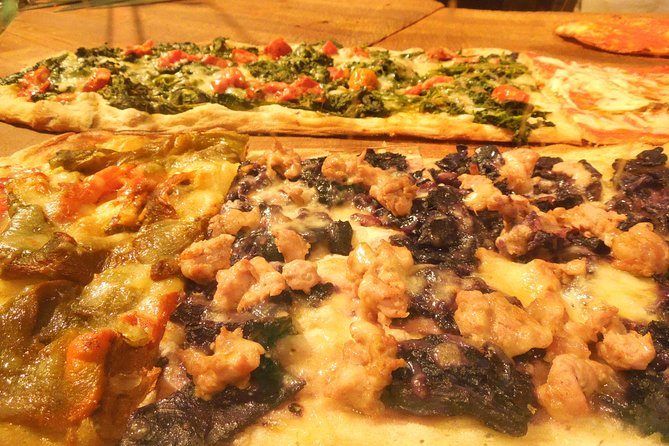
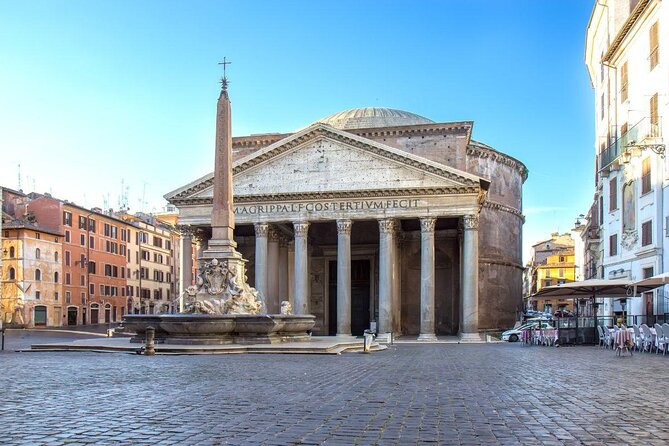
The final major sight is the Pantheon, with about 15 minutes devoted to its story. The guide addresses its changing identity as a pagan temple, Christian church, and work of art.
That is a lot to cover in 15 minutes, so this should be treated as an introduction. The Pantheon rewards a longer visit if you have the time. Still, a focused explanation can help you see more when you return or enter afterward.
The Pantheon is also a fitting finish because it brings together the main themes of the tour: ancient Rome, changing religious life, art, and the practical way the modern city uses historic spaces. You finish nearby at Piazza di Sant’Eustachio, a convenient point for continuing through the center.
The tour information does not promise a reserved entry or a detailed indoor visit. If entering the Pantheon is important to you, check the current access arrangements separately and allow extra time after the tour. The listed Pantheon stop is mainly a guided exterior and historical experience.
Food tastings, drinks, and the gelato finish
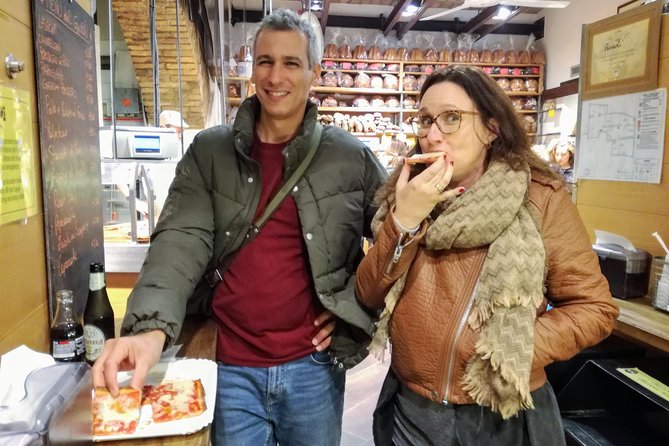
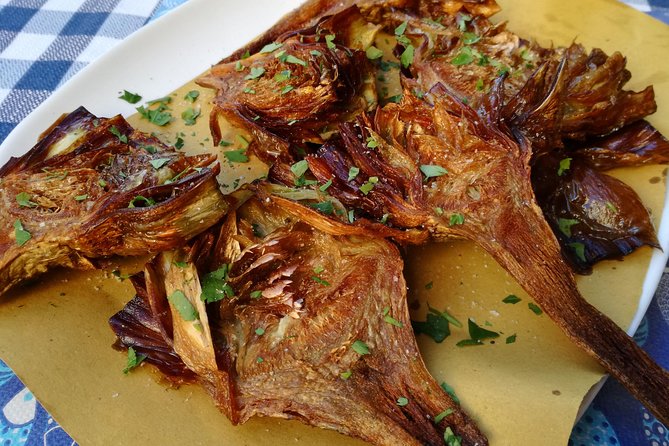
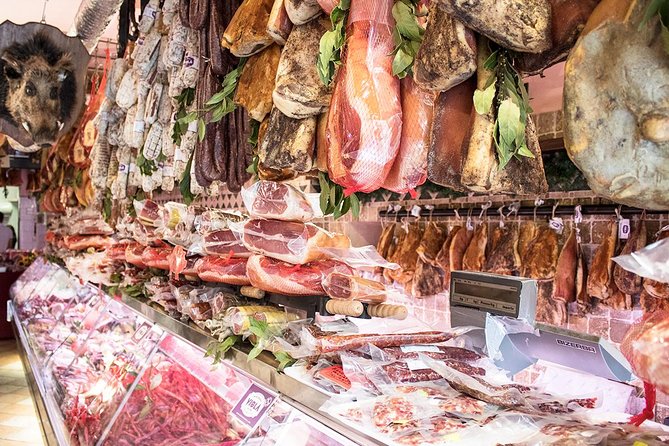
Food tasting is included, and gelato is part of the advertised experience. The route is designed to let you sample Roman street food rather than sit down for a full restaurant meal.
The exact tasting menu is not provided, so I would not book this expecting named dishes or a guaranteed amount of food. One useful clue comes from the experience itself: food and drinks are treated separately. Drinks are not included, though you can buy them during the tour. The comments about local beer and wine suggest that drink purchases may be available at some food stops.
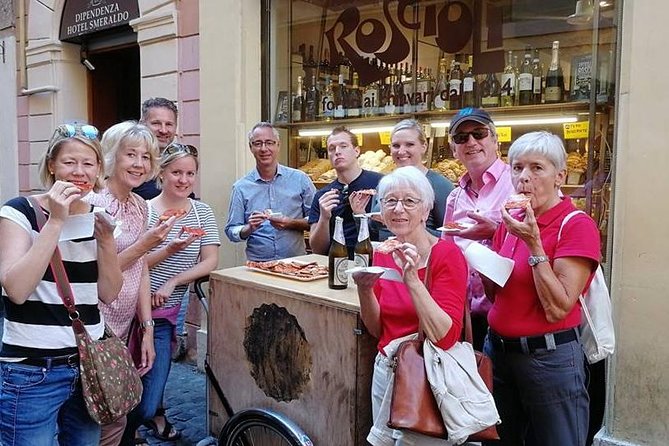
One rating described the food as plentiful, while another praised the snacks and drinks for feeling like casual visits with friends. That makes this tour sound more generous than a token tasting, but the precise portions can vary. If you want a full lunch, eat lightly beforehand or plan a meal after the walk.
The gelato finish gives the experience a pleasant final note. It also suits the route well, since the tour ends near Piazza di Sant’Eustachio and the Pantheon. You get a sweet stop without needing to commit to a long restaurant meal.
Vegetarians can be accommodated if you request that at booking. The tour does not accommodate vegan, gluten-free, or dairy-free diets. That restriction is important because street food tastings can be hard to adjust on the spot. Contact the provider in advance if vegetarian food is needed.
How the guides shape the experience
The strongest praise goes to the guides. Francesca is described as warm, informed, and especially good with both Roman food and local history. Arianna is praised for her humor and for linking her own experience to the city’s food traditions. Matia is described as an excellent guide who kept the dialogue and history engaging.
Those details point to the tour’s real selling point. The food alone may not justify the price if you already know Rome’s eating scene. The combination of tastings with a guide who can explain the neighborhoods is what gives the outing value.
The small-group format helps here. With a maximum of 15 people, you should have a better chance of hearing the guide than on a large coach-style walk. You can also ask questions without needing to shout across a crowd. It is not a private tour, but it aims for a more personal pace.
The tour has a perfect 5 rating from 13 recorded ratings, with every rating recommending it. That is encouraging, though the sample is small. I would treat it as a strong sign of consistent satisfaction, not a guarantee that every food preference or guide style will suit you.
Is $54.13 a good value?
At about $54.13 per person, this sits above the price of a simple self-guided walk but below the cost of a private food tour. You are paying for three things: multiple food tastings, a local guide, and a compact route through several central neighborhoods.
I think the value is good if you want an introduction to Rome and prefer learning through food. You also avoid spending time researching where to stop, how to connect the Campo de’ Fiori area with the Jewish Ghetto, or how to fit the Pantheon into the walk.
The value is weaker if you mainly want a long meal, a detailed Pantheon visit, or a fully customized food route. The tour lasts about 2 hours and 30 minutes, and the monument stops are short. It is a sampler, not a full-day food crawl or an archaeological tour.
Morning and afternoon departures add practical value. You can place the walk at the beginning of your visit to get your bearings, or later after you have seen the main sights. Several direct comments suggest that booking it early in a Rome stay would be wise, since the guide can help you understand the city and point you toward places to explore later.
Who should book this Rome food walk?
I would recommend it to first-time visitors, couples, families with older children, and anyone who likes history in manageable portions. One family found that teenagers enjoyed trying both familiar and new foods, while the historical stories kept the experience fun rather than stiff.
It also suits people who want a small group but do not want to pay for a private guide. The maximum of 15 gives you personal attention while keeping the price reasonable.
You should think twice if you have strict dietary needs. Vegetarian food is possible with advance notice, but vegan, gluten-free, and dairy-free diets are not supported. You should also skip it if moderate walking in sun or rain would be difficult.
The tour goes ahead in all weather, so bring suitable clothing. Drinks are extra, hotel pickup is not provided, and you will need to reach Campo de’ Fiori independently. Free cancellation is available up to 24 hours before the start time, but changes or cancellations inside that window are not refunded.
Final verdict: a smart first-day food tour
Book this tour if you want a friendly introduction to central Rome that combines food, serious history, odd monuments, and gelato in one compact walk. The best reasons to go are the guide quality, the small group, and the route’s mix of famous and less obvious places.
I would not choose it as your only Pantheon visit or as a substitute for a full meal. But as a first or second day activity, it makes good sense. You get a taste of Roman street food, hear the stories behind Torre Argentina and the Jewish memorial stones, and finish near some of the city’s most useful sights.
FAQ
How long does the tour last?
The tour lasts approximately 2 hours and 30 minutes.
What language is the tour offered in?
The experience is offered in English.
Where does the tour begin?
It begins at Piazza Campo de’ Fiori in Rome, near the statue of Giordano Bruno.
Where does the tour end?
It ends at Piazza di Sant’Eustachio, near the Pantheon area.
What food is included?
Food tastings are included, and the experience includes a gelato stop. The exact tasting menu is not specified.
Are drinks included?
No. Drinks are not included, but they are available to purchase.
Is a vegetarian option available?
Yes. A vegetarian option is available, but you need to request it when booking.
Can the tour accommodate vegan, gluten-free, or dairy-free diets?
No. The tour does not accommodate vegan, gluten-free, or dairy-free diets.
How many people can join the tour?
The group has a maximum of 15 people.
Does the tour run in bad weather?
Yes. The experience operates in sun or rain, so you should dress appropriately.
What is the cancellation policy?
You can cancel up to 24 hours before the start time for a full refund. Cancellations or changes made less than 24 hours before the start time are not accepted for a refund.
Just added around Rome
- Testaccio Street Food Tour Eat Like a Local★ 3.5 · 2 reviews
- Vegan Street Food Tour in Rome★ 5.0 · 6 reviews
- Tasty Trastevere Street Food Tour in Rome from Tiberine Island to Ponte Sisto★ 5.0 · 25 reviews
- Tasty Rome Street Food Tour around Campo de’ Fiori Market & Jewish Ghetto★ 5.0 · 2 reviews
- Vatican Street Food Tour and Wine Experience with Local Guide★ 5.0 · 7 reviews
- Rome Trastevere Street Food Tour: Eat and Drink Like a Local★ 5.0 · 35 reviews
- Gems of Rome: Small group E-bike tour with street food stops★ 5.0 · 36 reviews
- Campo de’ Fiori & Jewish Ghetto Rome Street Food & Walking Tour★ 5.0 · 5 reviews
Street Food Tours, compared.
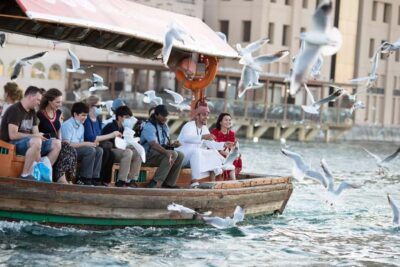
Old Town, Creek, Museums, Souks, & Street Food Tour
What we made of it →
Ho Chi Minh City Street Food Tour & Sightseeing By Motorbike
What we made of it →
Comuna 13 Graffiti Tour, Cable Car & Street Food
What we made of it →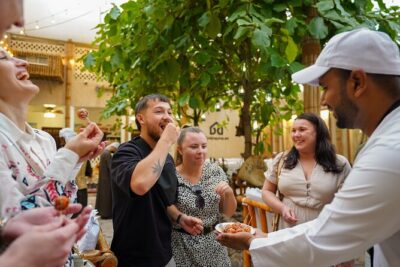
Old Town, Souks, Street Food, Guided Tour & Abra Ride
What we made of it →
Small Group Hanoi Street Food Tour with a Real Foodie
What we made of it →
Saigon By Night and Street Food By Motorbike | Opt: Ao Dai Riders
What we made of it →Where this tour turns up