

Review · ROME
Vegan Street Food Tour in Rome
Rome tastes better when history comes with lunch. This 2.5-hour walking tour links Campo de’ Fiori, the Jewish Quarter, and several small food stops where classic Roman dishes are made with plant-based ingredients. I like the smart mix of local food and Roman history, and I especially like that the guide explains both naturally vegan dishes and vegan versions of traditional recipes.
The experience is led by a passionate vegan advocate, with Arianna earning especially warm praise for her friendly manner, menu advice, and ability to make a group feel at ease. The main consideration is the price: at $93.45 per person, it is not a cheap snack walk. Still, lunch, drinks, a guide, and several tastings are included, and the food portions appear generous enough to replace a meal.
Key things to know before booking
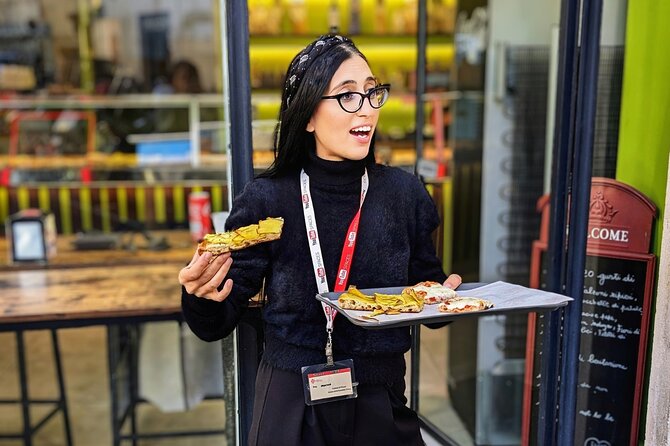
- Roman food gets a plant-based makeover: Expect vegan versions of familiar dishes, along with foods that are naturally vegan or can be ordered without animal products.
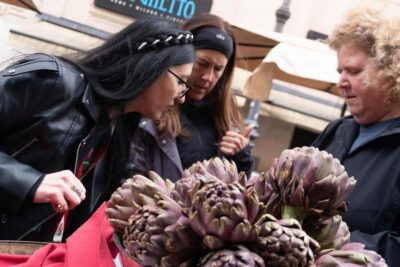
- The Jewish Quarter is the food heart of the walk: This historic area provides the setting for some of the most memorable tastings, including fried artichoke and vegan supplì.
- History comes between bites: Campo de’ Fiori, the Theatre of Pompey, Via dei Giubbonari, Passetto del Biscione, and Piazza Mattei all add context.
- Arianna is a major strength: Her warmth, practical menu guidance, and enthusiasm for vegan food help make the tour useful beyond the afternoon itself.
- Food is included, and there is plenty of it: Tastings cover appetizers, main courses, desserts, and soda or another soft drink.
- It is a small-group outing: The maximum group size is 15, which should make conversation with the guide easier than on a large bus-style tour.
Why this tour works for vegan visitors in Rome
Rome is famous for dishes built around pasta, cheese, meat, and fried foods. That can make ordering feel like a puzzle when you eat vegan, especially if you want more than a salad. This tour tackles that problem directly by showing you which Roman foods are naturally plant-based and which can be adapted.
I like this approach because it gives you more than a single meal. You leave with a better sense of how to read Roman menus and how to ask for suitable dishes. One particularly useful part of the experience is the distinction between food that is vegan by default and food that has been changed to meet vegan needs.
That difference matters. A restaurant may offer a vegan special, but it may also have traditional dishes that already fit your diet or can be adjusted with a simple request. The tour aims to point out both types, helping you make smarter choices during the rest of your stay.
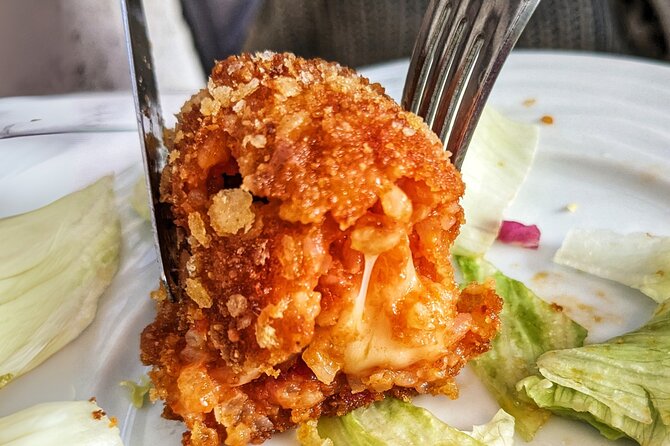
The food also appears to be substantial. Tastings cover savory bites, main dishes, and sweets, rather than stopping after one or two small samples. Supplì, a fried Roman rice snack usually made with cheese, is presented in vegan form, and fried artichoke is another notable find.
You do not need to be vegan to enjoy the outing. If you are traveling with a mixed group, the tour can work well because the focus is on Roman food itself, not only on dietary restrictions. The plant-based versions offer a fresh look at dishes that you might otherwise pass over.
More Vegan and Vegetarian Street Food in Rome:
- Rome: Vegan Street Food Tour with Local Guide
★ 5.0 · 37 reviews - Vegan Street Food & Stories of Hanoi
★ 5.0 · 282 reviews - Hanoi: Vegan Street Food & Stories
★ 4.9 · 201 reviews
Starting at Basilica di Sant’Andrea della Valle
The meeting point is Basilica di Sant’Andrea della Valle on Corso Vittorio Emanuele II. This gives the tour a central starting point, with the walk heading toward Campo de’ Fiori and the older streets around the city center.
Your mobile ticket is accepted, and the tour is offered in English. The group can include up to 15 people, a useful limit for a walking tour where you need to hear explanations and keep together through narrow streets.
The tour lasts about two hours and 30 minutes. That is long enough for several food stops and historical sights, but short enough to fit into a morning or afternoon without taking over your entire day. Because lunch is included, I would treat this as a meal with a walking tour attached, not as a quick tasting before dinner.
Wear comfortable shoes. The route includes several historic streets and walking passages, and the experience is built around moving from one neighborhood stop to the next. Exact tasting portions and restaurant arrangements can vary, so you should arrive ready for a flexible food walk rather than a fixed restaurant meal.
Campo de’ Fiori: Rome’s old flower market
The first stop is Campo de’ Fiori, a square known historically as Rome’s flower market. The stop lasts about 10 minutes and has no separate admission fee.
This is a good opening point because it sets up the connection between food, public space, and city life. Campo de’ Fiori is one of those places where the setting does part of the teaching. Instead of beginning with a long lecture, the tour starts by placing you in a familiar Roman square and then moving into the city’s older food traditions.
Do not expect a full market visit based on the supplied details. The stop is brief, so it works more as an introduction than as the main eating portion. The real value here is orientation: you begin in a central location, hear about the area’s past, and then follow the route toward streets with deeper ties to Roman cuisine.
The Theatre of Pompey, hiding inside a pizzeria
Next comes the Theatre of Pompey, where ancient ruins can be viewed inside a pizzeria. The stop lasts about 20 minutes and is also included in the tour price.
This is the kind of Rome surprise that makes a walking route memorable. You are not simply looking at an isolated ruin behind a fence. Instead, the ancient remains are folded into an active modern food business, creating a direct link between old Rome and the city you see today.
The setting also fits the tour’s central idea. Roman food is not presented as something frozen in the past. It continues inside modern restaurants, bakeries, and pizzerias, often in places where older layers of the city remain visible.
The available information does not specify exactly what food is served at this stop, so it is best to think of the Theatre of Pompey as a cultural and visual highlight rather than counting on a particular dish there. The 20-minute visit should give the guide enough time to explain the site while keeping the group moving.
More Street Food Tours in Rome:
- Rome: Street Food Tour with Local Guide
★ 4.8 · 4,077 reviews - Rome: Trastevere & Campo de Fiori Street Food Walking Tour
★ 4.9 · 2,768 reviews - Rome Street Food Tour with Local Guide
★ 5.0 · 2,361 reviews - Rome: Trastevere Street Food Walking Tour with Local Expert
★ 4.8 · 1,784 reviews
Via dei Giubbonari and the Passetto del Biscione
Between the named stops, the route follows Via dei Giubbonari, a historic street that leads you deeper into the older center. Walking this stretch helps connect the food stops rather than making the outing feel like a series of unrelated restaurant visits.
The route also crosses Passetto del Biscione, a narrow passage with a medieval feel. The description invites you to imagine yourself in middle-age Rome, and that is exactly the charm of this part of the walk. It is a change of pace from the open squares, with a more enclosed and atmospheric setting.
These short walking sections matter because Rome is best understood on foot. You get the food, but you also see how the city’s streets shift from broad public spaces to tucked-away passages. The tradeoff is that anyone hoping for a seated meal from start to finish may find the moving format less relaxed.
The Antico Quartiere Ebraico and the roots of Roman food

The main cultural and culinary section takes place in the Antico Quartiere Ebraico, or the old Jewish Quarter. The stop lasts about 30 minutes and focuses on the roots of Roman cuisine through a vegan lens.
This is likely the most important part of the experience for anyone interested in how food and local identity overlap. The Jewish Quarter has its own culinary traditions, and the tour uses the neighborhood to explain how Roman dishes can be understood, adapted, and enjoyed without animal products.
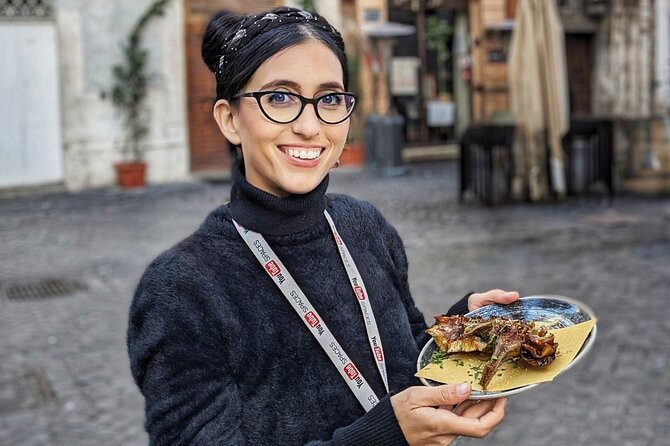
Fried artichoke is one of the specific foods highlighted by the experience. Vegan supplì is another. Supplì is especially useful for visitors because it shows how a familiar Roman street snack can be changed into a plant-based version while keeping its basic appeal as a crisp, filling bite.
The tour also serves dishes across several courses. You might have appetizers, main courses, and desserts, with enough food that you may not want to schedule a large meal immediately afterward. That generous approach is one reason the price can make sense, especially if the tastings function as your lunch.
I would pay close attention here to the guide’s advice about restaurants and menus. The most practical benefit may come after the tour, when you are choosing a Roman meal on your own. Arianna is described as explaining which restaurants offer naturally vegan food and which ones can modify traditional dishes.
Piazza Mattei and the Turtle Fountain
The route finishes at Piazza Mattei, home to the Fontana delle Tartarughe, or Turtle Fountain. The stop lasts about 15 minutes and offers a pleasant final pause after the food tastings and neighborhood walk.
The fountain is tied to a good-luck wish in the tour’s presentation, giving the ending a light, friendly touch. It is also a fitting final sight because the square provides a clear sense of place after the route’s smaller streets and enclosed passages.
The finish is at Largo di Torre Argentina, near Rome’s sacred archaeological area. That means you do not return to the starting point, so plan your next activity from the ending location rather than the basilica. The route is useful if you want to continue exploring central Rome afterward.
What the $93.45 price includes
The cost is $93.45 per person. That is a fairly serious price for a two-and-a-half-hour food walk, so the value depends on how much you eat and how much you want the guide’s interpretation.
In this case, the price includes all food, soda or another soft drink, and the guide. The tour is not just a handful of samples. The food covers several stages of a meal, from appetizers to main courses and desserts. Multiple restaurant stops also add variety that would be harder to arrange on your own in one short outing.
I see the strongest value for first-time vegan visitors to Rome. You are paying for a full introduction to plant-based Roman food, plus help understanding menus for the rest of your trip. If you already know the city well and mainly want a cheap lunch, you can likely spend less by choosing a restaurant yourself.
The small group also helps support the price. A maximum of 15 people is not private-tour size, but it is manageable for a food walk. You should have a better chance of hearing the guide, asking questions, and getting useful advice than you would in a very large group.
The guide can shape the whole experience
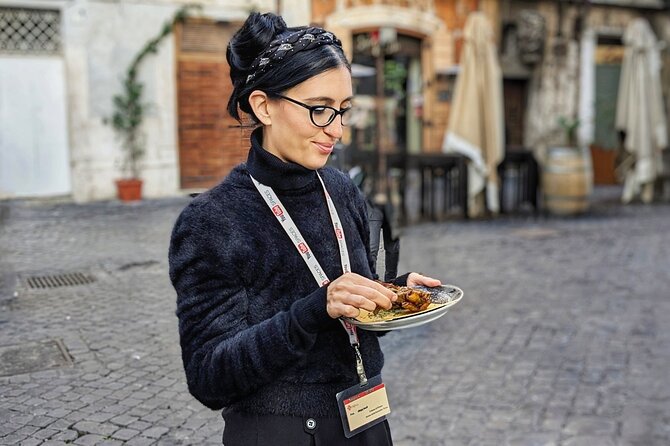
The guide is central to this tour. Arianna receives especially strong praise for being friendly, personable, entertaining, and passionate about veganism. Her role is not simply to point out the next dish. She helps explain how to approach Roman restaurants with more confidence.
That practical guidance may be the most lasting part of the tour. You can ask about traditional dishes, vegan substitutions, and places to eat later. The experience is also described as a small history lesson, with explanations at the sights woven into the food walk.
The tone sounds social rather than formal. Arianna makes an effort to get to know the people in the group, which may suit solo visitors and couples who want a friendly outing. If you prefer a quiet, self-directed meal, this format may feel more structured than necessary.
Who should book it?
I would recommend this tour to vegan visitors who want more than a list of plant-based restaurants. It is also a good choice for anyone visiting Rome for the first time who wants an easy introduction to the city center, local food customs, and the Jewish Quarter.
Mixed-diet groups should consider it too. You do not need to follow a vegan diet to enjoy the food, and the tour can show everyone how Roman dishes work before the group chooses restaurants independently.
The tour may be less suitable if you have very limited time, want a private experience, or dislike walking between several food stops. The route is compact, but it is still a walking tour with historic streets and passages. Also, because the cost is fixed and the food is plentiful, it may be more than you need if you are only looking for one small snack.
Free cancellation is available when you cancel at least 24 hours before the start time. Changes or cancellations made later are not accepted for a refund, so keep that deadline in mind when planning your Rome schedule. Service animals are allowed, and most people can participate.
Should you book the Vegan Street Food Tour in Rome?
Book it if you want a generous lunch, Roman history, and useful advice for eating vegan after the tour. The combination of the Jewish Quarter, ancient ruins inside a pizzeria, fried artichoke, vegan supplì, and menu guidance gives the experience a clear sense of place.
At $93.45, it is not the bargain option. But the included food is substantial, the group is capped at 15, and the guide’s advice can help you avoid guesswork for the rest of your stay. For vegan visitors, especially those new to Rome, that makes the tour a sensible first or second-day activity.
FAQ
How long is the Vegan Street Food Tour in Rome?
The tour lasts approximately two hours and 30 minutes.
How much does the tour cost?
The listed price is $93.45 per person.
Is the tour offered in English?
Yes. The experience is offered in English.
What food is included?
All food is included, with tastings covering appetizers, main courses, and desserts. Soda or another soft drink is also included.
Where does the tour start?
The meeting point is Basilica di Sant’Andrea della Valle on Corso Vittorio Emanuele II, 00186 Rome.
Where does the tour end?
The tour ends at Largo di Torre Argentina, near Rome’s sacred archaeological area.
What places does the tour visit?
The route includes Campo de’ Fiori, the Theatre of Pompey, Via dei Giubbonari, Passetto del Biscione, the Antico Quartiere Ebraico, and Piazza Mattei with the Fontana delle Tartarughe.
How many people can join the tour?
The maximum group size is 15 people.
Can I cancel for a full refund?
Yes, if you cancel at least 24 hours before the experience starts. Cancellations made less than 24 hours before the start time are not refunded.
Just added around Rome
- Testaccio Street Food Tour Eat Like a Local★ 3.5 · 2 reviews
- Tasty Trastevere Street Food Tour in Rome from Tiberine Island to Ponte Sisto★ 5.0 · 25 reviews
- Tasty Rome Street Food Tour around Campo de’ Fiori Market & Jewish Ghetto★ 5.0 · 2 reviews
- Vatican Street Food Tour and Wine Experience with Local Guide★ 5.0 · 7 reviews
- Gems of Rome: Small group E-bike tour with street food stops★ 5.0 · 36 reviews
- Rome Trastevere Street Food Tour: Eat and Drink Like a Local★ 5.0 · 35 reviews
- Campo de’ Fiori & Jewish Ghetto Rome Street Food & Walking Tour★ 5.0 · 5 reviews
- Small-Group Rome Street Food Guided Tour★ 5.0 · 15 reviews
Vegan and Vegetarian Street Food, compared.

Mexico City Vegan & Vegetarian Street Food Adventure
What we made of it →
Hanoi Vegan Street Food Tour and Train Street
What we made of it →
Where this tour turns up