
Review · ROME
Campo de’ Fiori & Jewish Ghetto Rome Street Food & Walking Tour
Craving Rome beyond pizza clichés? This 2.5-hour walk links Campo de’ Fiori and the Jewish Ghetto through food, markets, ruins, and local traditions. I like the easy pace and the useful mix of savory and sweet tastings. I also like that food and a sip of wine and beer are included, so you can leave your wallet tucked away during the stops.
The main drawback is dietary flexibility. Vegetarians can be accommodated with advance notice, but this tour does not accept gluten-free, dairy-free, or vegan participants. The history may also take up a little more time than the food, which is a plus for curious walkers but less ideal if you want a nonstop tasting crawl.
Key things to know before booking
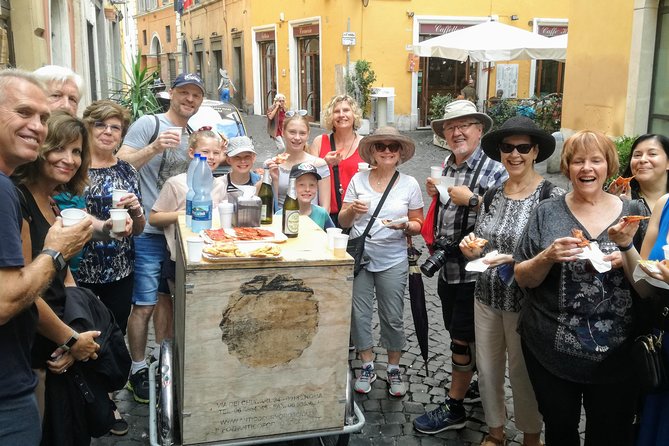
- Campo de’ Fiori starts the tour with Rome’s central food market, including fruit, vegetables, seafood, and meat.
- Largo di Torre Argentina adds ancient Roman ruins between the two food-focused neighborhoods.
- The Jewish Ghetto supplies the strongest cultural context, with attention to the area’s Jewish traditions and past.
- Food tastings, wine, and beer are included, though extra drinks cost more.
- The group is limited to 15 people, a useful size for walking and listening to the guide.
- The tour ends near Piazza di S. Eustachio, not back at the starting point.
Why this Rome food walk works
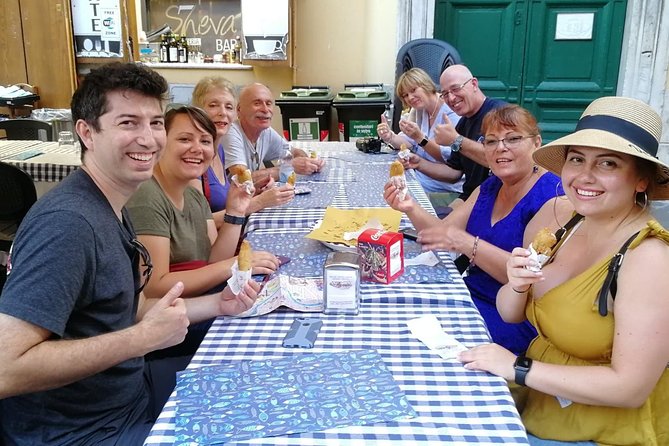
Rome has plenty of food tours, but this one makes sense because it joins eating with a compact walk through central neighborhoods. You are not simply moved from one restaurant to the next. You see a market, pass major archaeological remains, and enter an area shaped by Jewish Roman traditions.
That balance is the main selling point. If you want a history lesson with your snacks, you get both. If you want a full restaurant-style meal served in several courses, this may feel lighter than expected, even though one account describes the portions as filling enough to finish stuffed.
At $53.23 per person, the price is fair if you treat the tour as a small meal plus a guided orientation to central Rome. The included samples remove the need to pay at each food stop, and the included sip of wine and beer adds a little value. You still need to pay for extra drinks, so do not read the price as an all-you-can-eat or all-inclusive evening.
The group cap of 15 matters. It is large enough to have some energy, but small enough that the guide can usually keep the walk together. You should expect a social outing rather than a private food lesson.
More Street Food Tours in Rome:
- Rome: Street Food Tour with Local Guide
★ 4.8 · 4,077 reviews - Rome: Trastevere & Campo de Fiori Street Food Walking Tour
★ 4.9 · 2,768 reviews - Rome Street Food Tour with Local Guide
★ 5.0 · 2,361 reviews
Meeting at Campo de’ Fiori
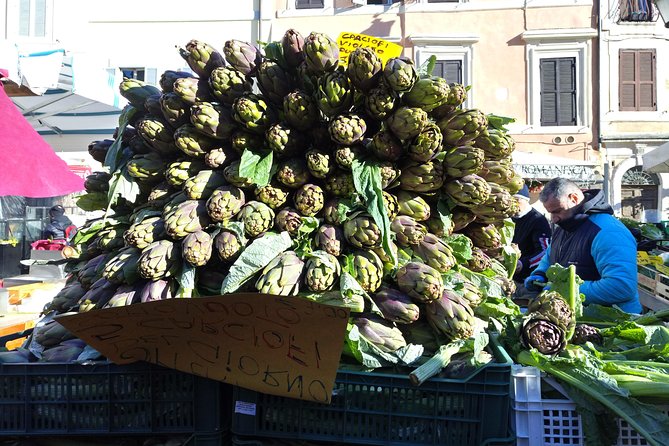
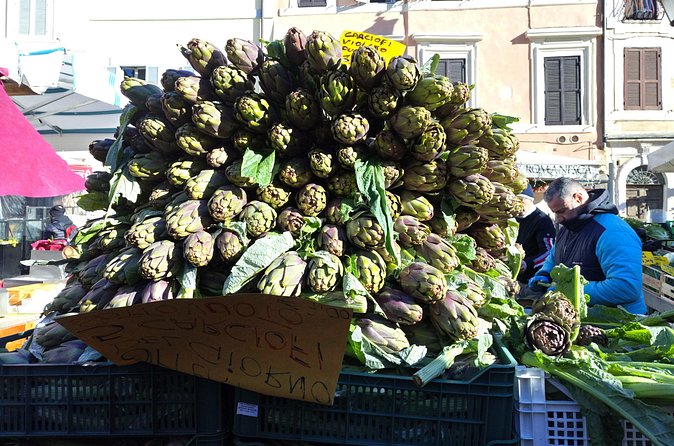
The tour begins at Piazza Campo de’ Fiori, one of the easiest places to understand Rome’s everyday food culture. The square is home to the city’s main market, where you can stroll among stands selling fresh fruit, vegetables, seafood, and meat.
This first stop gives the walk a strong start because the food is tied to a working market rather than presented only as a polished restaurant product. You get a look at the ingredients and shopping traditions behind Roman cooking. The market also gives your guide a natural setting for explaining local food habits.
The exact tasting choices are not specified, so you should not book this expecting a fixed menu of named dishes. The tour promises both savory and sweet delicacies, with samples included. One food that received especially strong praise was supplì, a Roman fried rice snack. A participant enjoyed it enough to return the next day for more, so it is worth asking your guide where it comes from if it appears during your walk.
Campo de’ Fiori can also be a busy place, so stay close to the group and listen for meeting instructions. The tour begins outdoors and takes place rain or shine. Comfortable shoes and a moderate level of fitness are sensible, even though the pace has been described as easy.
Reading the ruins at Largo di Torre Argentina
From the market area, the walk includes Largo di Torre Argentina. Here, four principal ruins mark what were once important temples of ancient Rome.
This stop changes the rhythm of the tour. Instead of tasting something at every moment, you pause to look at the remains and hear about the Roman age. That is one reason the experience feels broader than a simple food crawl. You are eating your way through central Rome, but you are also learning how old layers of the city sit beside modern streets.
Largo di Torre Argentina is particularly useful for first-time visitors because it helps you connect Rome’s daily life with its archaeological past. You may be walking between food stops, then suddenly looking down at substantial ancient remains. The information provided does not promise a long archaeological lecture, so expect a focused explanation rather than a specialist site visit.
This is also where expectations matter. One account found the tour somewhat more focused on local history than on food. If you want a tasting every few minutes, this stop may feel like a pause from the main event. I see it as part of the value, especially for anyone who wants the walk to explain the city rather than simply feed you.
Entering Rome’s Jewish Ghetto
The Roman Ghetto is the tour’s most distinctive neighborhood stop. It was once the area where most of Rome’s Jewish population lived, and it continues to preserve elements of Jewish culture and tradition.
The tour uses the neighborhood to explain its origins and local customs, adding context that a standard market visit may miss. This part received praise for giving a clear account of how the Jewish Ghetto began. You should expect the guide to connect the food with the place, rather than treating the neighborhood as a backdrop for snacks.
That connection gives the tastings more meaning. A food tour is more useful when you understand why a dish or preparation belongs to a particular community. The supplied details do not identify every dish served in the Ghetto, so I would avoid booking with a fixed list in mind. Instead, think of the food as a way to meet the neighborhood’s traditions while walking through it.
The Ghetto also provides the tour with a different mood from Campo de’ Fiori. The first stop centers on a market and ingredients. The Ghetto brings community history and cultural continuity into the conversation. Together, the neighborhoods make a more rounded introduction to Rome’s food life.
Same place, a different plate:
- Rome: Trastevere Street Food Walking Tour with Local Expert
★ 4.8 · 1,784 reviews - Roman Food Tour with Visit to the Trionfale Food Market
★ 5.0 · 471 reviews - Trastevere & Campo de’ Fiori Street Food Tour, Eat Like a Local
★ 5.0 · 207 reviews - Hidden Rome: Small Group E-Bike Tour with Street Food Stops
★ 5.0 · 169 reviews
What you are likely to eat and drink
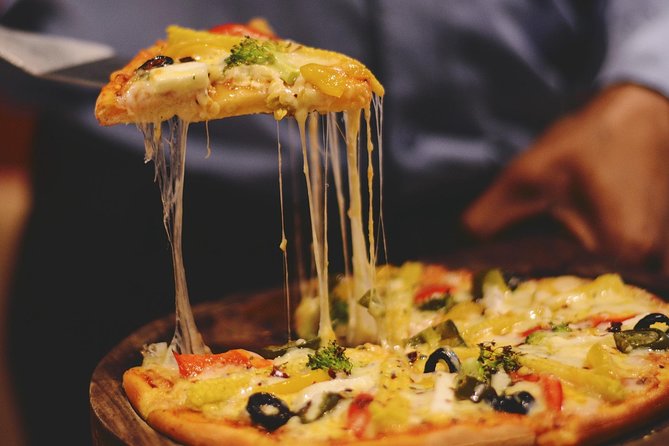
The tour includes savory and sweet tastings. The exact number and names of samples are not provided, so the safest expectation is a varied set of small portions rather than a published tasting menu.
The portions appear to be generous enough for many people to use the tour as a lunch or dinner replacement. One especially positive account described having plenty of food and feeling full at the end. Another felt the food portion was less than expected for a tour marketed around food. Both reactions can be true: the servings may satisfy you, but the time spent talking about history can make the event feel less food-heavy.
Supplì is the standout dish in the available feedback. It is a useful example of what makes this kind of tour worthwhile: you get to try a Roman specialty, then decide if you want to seek it out again. If you enjoy it, note the name before leaving. A return visit the next day may be one of the best compliments a food stop can earn.
A sip of wine and beer is included. Extra drinks are not, so budget a little more if you want several glasses, bottled water, or another beverage. The listing does not say whether every tasting pairs with a drink, so do not assume a drink comes with each sample.
The guide and the pace
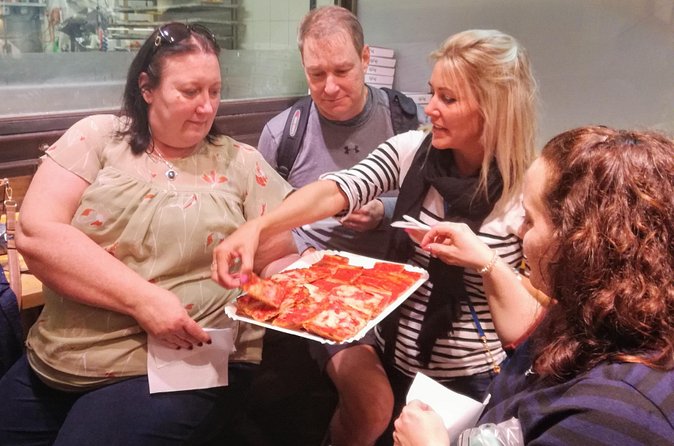
The guide is an important part of this tour because the route depends on explanation as much as eating. The guide is described as professional, informative, and able to cover both neighborhood details and wider Roman history.
Martina received particular praise for her local information, historical knowledge, and easy pace. That does not guarantee she will lead every departure, but it shows the kind of guiding that suits this route: friendly, well informed, and comfortable moving between food and history.
The pace sounds gentle rather than athletic. You walk a bit, eat a bit, and continue through the neighborhoods. Still, the tour requires a moderate level of physical fitness, and there is no promise of special assistance for anyone who finds standing or walking difficult. Near public transportation, the meeting point is practical for reaching the start, while the final stop at Piazza di S. Eustachio gives you a different place from which to continue your day.
Because the outing takes place rain or shine, check the forecast before leaving your hotel. A light rain jacket, comfortable shoes, and a willingness to keep moving will make the experience easier.
Food restrictions and who should skip it
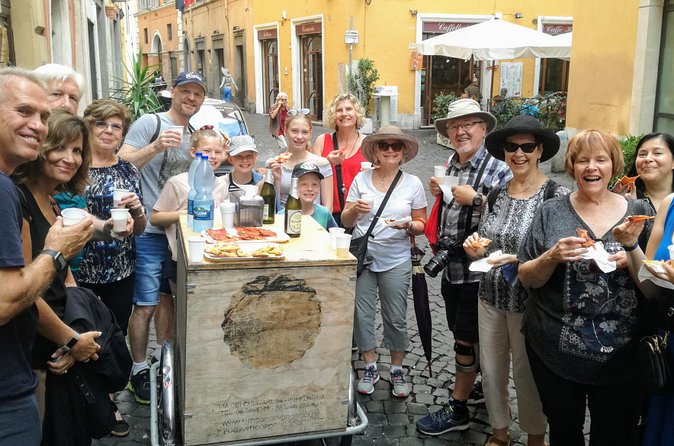
This is not a flexible tour for every diet. Vegetarians can be accommodated if you provide the information ahead of time. Gluten-free, dairy-free, and vegan diets cannot be accommodated.
That limitation is important enough to decide your booking around it. If you have a serious allergy or need strict separation from certain ingredients, this may not be the right choice. The food stops are set across the route, and the tour does not promise substitutions for every restriction.
The tour suits you best if you:
- Eat meat, dairy, and gluten without restriction.
- Want both food and neighborhood history.
- Prefer small tastings to choosing a full restaurant meal.
- Enjoy an easy-paced group walk.
- Like having a guide explain the setting around the food.
- Want a central Rome activity over lunch or dinner.
It is less suitable if you want a purely culinary tour, a private guide, a fixed tasting menu, or a completely hands-off walking experience.
Is $53.23 good value?
The value depends on what you compare it with. For roughly the cost of a modest meal in central Rome, you receive food tastings, a professional guide, a sip of wine and beer, and a guided walk through three important areas.
You are paying for interpretation as well as ingredients. Campo de’ Fiori gives you market culture, Largo di Torre Argentina gives you Roman ruins, and the Jewish Ghetto provides a cultural and historical setting. That is a strong package for a first or second day in Rome when you want to get oriented.
The price is less attractive if you measure value only by quantity. The food list is not published, and one account expected more tasting relative to the amount of history. You should also remember that additional drinks are not included.
I would regard the tour as a good-value lunch or dinner replacement for someone who wants a guided outing with enough food to feel satisfied. I would not choose it solely for a long list of tastings.
Timing, group size, and booking advice
The tour lasts approximately two hours and 30 minutes. That is long enough to visit both neighborhoods and include the archaeological stop without taking up an entire day.
A maximum of 15 people keeps the group from becoming unwieldy. You still need to be ready for a shared experience, but the size should allow the guide to speak without shouting across a huge crowd.
You receive confirmation at booking, and the ticket is mobile, which is convenient for an activity that starts in a busy public square. The tour is offered in English. Service animals are allowed, and the route is near public transportation.
If you have dietary requirements, tell the provider when booking rather than waiting until the meeting point. Vegetarians need advance notice, and the strict restrictions listed above cannot be accepted.
Free cancellation is available up to 24 hours before the start time for a full refund. Changes or cancellations inside that window are not accepted for a refund. The tour also requires a minimum number of participants, so if the provider cancels for that reason, you are offered another date or experience, or a full refund.
Should you book this Campo de’ Fiori food tour?
Book it if you want a friendly food walk with real historical weight. The best parts are the combination of market life, Roman ruins, and the Jewish Ghetto, plus the chance to try local food without paying separately at every stop.
I would especially recommend it for first-time Rome visitors who want to understand where they are while eating. It also suits anyone who likes a relaxed pace and enough food to replace a casual lunch or dinner.
Skip it if your main goal is a serious tasting marathon, or if you need vegan, dairy-free, or gluten-free food. For the right eater, though, this is a sensible way to spend 150 minutes in central Rome, with supplì and other samples adding flavor to a walk that gives the city some useful context.
FAQ
How long is the Campo de’ Fiori and Jewish Ghetto tour?
The tour lasts approximately two hours and 30 minutes.
Where does the tour begin?
It begins at Piazza Campo de’ Fiori, P.za Campo de’ Fiori, 00186 Roma RM, Italy.
Where does the tour end?
The tour ends at Piazza di S. Eustachio, 00186 Roma RM, Italy.
Is food included in the price?
Yes. Food tastings are included, along with a sip of wine and beer.
Are extra drinks included?
No. Extra drinks are not included.
Can vegetarians join the tour?
Yes, vegetarians can be accommodated if you advise the provider in advance. Gluten-free, dairy-free, and vegan participants cannot be accommodated.
What is the cancellation policy?
You can cancel at least 24 hours before the start time for a full refund. Cancellations or changes made less than 24 hours before the start time are not accepted for a refund.
Just added around Rome
- Testaccio Street Food Tour Eat Like a Local★ 3.5 · 2 reviews
- Vegan Street Food Tour in Rome★ 5.0 · 6 reviews
- Tasty Trastevere Street Food Tour in Rome from Tiberine Island to Ponte Sisto★ 5.0 · 25 reviews
- Tasty Rome Street Food Tour around Campo de’ Fiori Market & Jewish Ghetto★ 5.0 · 2 reviews
- Vatican Street Food Tour and Wine Experience with Local Guide★ 5.0 · 7 reviews
- Rome Trastevere Street Food Tour: Eat and Drink Like a Local★ 5.0 · 35 reviews
- Gems of Rome: Small group E-bike tour with street food stops★ 5.0 · 36 reviews
- Small-Group Rome Street Food Guided Tour★ 5.0 · 15 reviews
Street Food Tours, compared.
Old Town, Creek, Museums, Souks, & Street Food Tour
What we made of it →
Ho Chi Minh City Street Food Tour & Sightseeing By Motorbike
What we made of it →
Comuna 13 Graffiti Tour, Cable Car & Street Food
What we made of it →
Old Town, Souks, Street Food, Guided Tour & Abra Ride
What we made of it →
Small Group Hanoi Street Food Tour with a Real Foodie
What we made of it →
Saigon By Night and Street Food By Motorbike | Opt: Ao Dai Riders
What we made of it →Where this tour turns up