
Review · MARRAKESH
Discover Marrakech Street Food with a Local Guide
Marrakech tastes better after dark. This four-hour Medina food tour is appealing because it serves 7 to 12 Moroccan dishes, not just the usual tagine and couscous, and because guide Mehdi brings you to family-run places beyond the main tourist route. I also like that drinks are included, so you can focus on eating rather than counting dirhams. The main consideration is the generous amount of food, which may be too much if you have a small appetite.
You meet at Post du Maroc beside Jamaa el Fna Square, a handy central point, then walk and drive through several local neighborhoods. I like the mix of food, stories, and practical advice about where to eat and shop. Still, the exact tastings depend on the time of day, and the published details give both a three-hour touring schedule and a four-hour total duration, so it is wise to confirm the timing when you book.
Key points to know before booking
- Seven to twelve tastings cover a full day of Moroccan eating: Expect breakfast items, soup, sweets, grilled food, drinks, and snacks rather than one large restaurant meal.
- Mehdi receives especially warm praise: He is described as attentive, cheerful, passionate, and generous with explanations about food and tradition.
- Jamaa el Fna is both the meeting point and the city’s great stage: The tour starts near Café de France and Post du Maroc, right in the middle of Marrakech’s famous square.
- Morning and evening routes can produce different plates: Some street foods are only available at certain hours, so your menu is not fixed.
- Walking is combined with driving: You will cover more than one neighborhood, but the precise vehicle arrangements and group size are not stated.
- The $50 price includes all tastings and drinks: That makes the cost easier to judge, especially if you would otherwise pay for several small meals.
Starting at Jamaa el Fna Square
The tour begins at Post du Maroc at Jamaa el Fna Square, with Café de France also given as a reference point. This is useful in practical terms. Jamaa el Fna is easy to recognize, but it is also a busy place with several similar cafés, signs, and entrances. I would arrive a little early and keep the meeting instructions open on your phone.
The square is a fitting place to begin. It is the public heart of the Medina, where food stalls, performers, sellers, and passersby create a steady flow of activity. You do not need a long lecture before eating here. The setting gives you an immediate sense of how food fits into daily life in Marrakech.
The meeting point is central, but the supplied location code and the written directions are not perfectly identical. One gives a plus code, while the other names Post du Maroc at Jamaa el Fna. Confirm the exact pin with the activity provider before setting out, especially if you are staying in a less familiar part of the Medina.
More Street Food Tours in Morocco:
- Marrakech: Street Food Tour with a Local Guide
★ 4.9 · 3,119 reviews - Marrakech: Street Food Tour by Night
★ 4.8 · 2,838 reviews - The Original Marrakech Street Food Tour
★ 5.0 · 248 reviews
Breakfast plates: msemen, harcha, and khaneza
The first part of the tasting list leans toward Moroccan breakfast. Msemen is a layered Moroccan pancake, usually folded into a square and cooked on a hot surface. Harcha is another pancake-like bread, made with semolina and valued for its crumbly texture. These are simple foods, but they show how much Moroccan cooking depends on bread, grains, butter, oil, and careful cooking.
Khaneza brings eggs and vegetables together with bread. It is the kind of dish that helps you understand the difference between eating Moroccan food in a hotel dining room and eating food made for ordinary daily life. You get familiar ingredients in a form that is quick, filling, and suited to a morning stop.
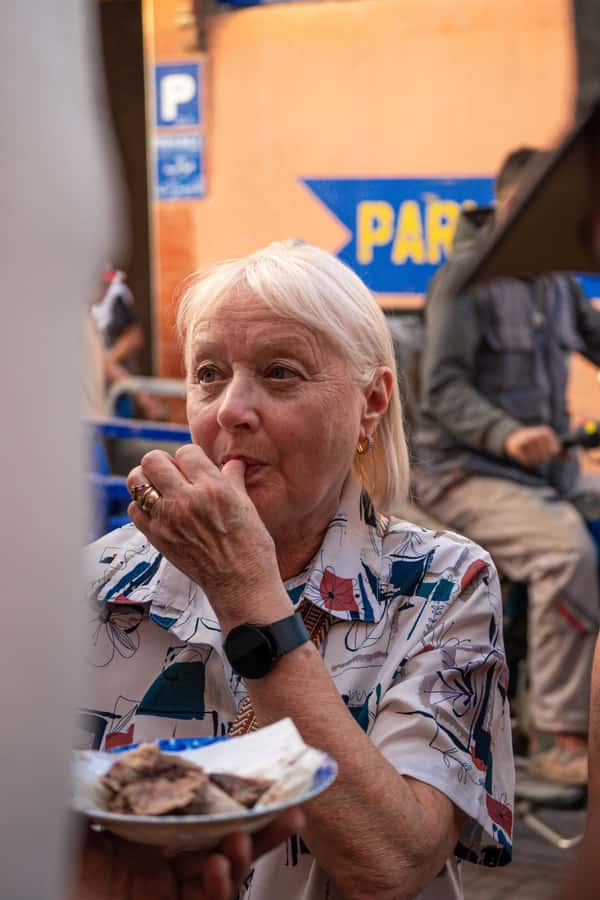
I would not treat these tastings as small samples in the museum sense. With up to 12 foods on the route, each portion may be modest, but the total meal builds quickly. Pace yourself from the beginning. It is easy to think you can eat everything at the first two stops, then discover that grilled meat, soup, sweets, and juice are still ahead.
Soup, sweets, and a spiced drink
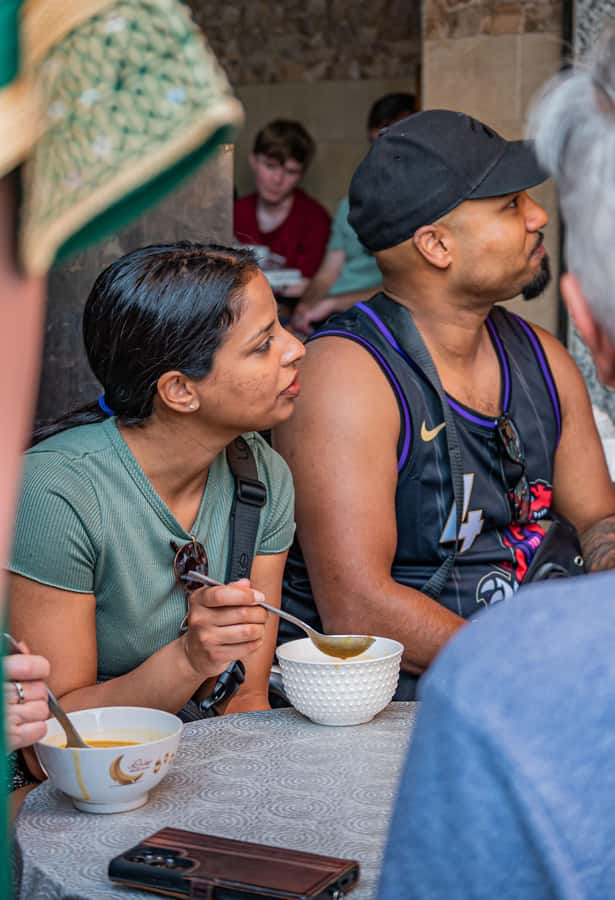
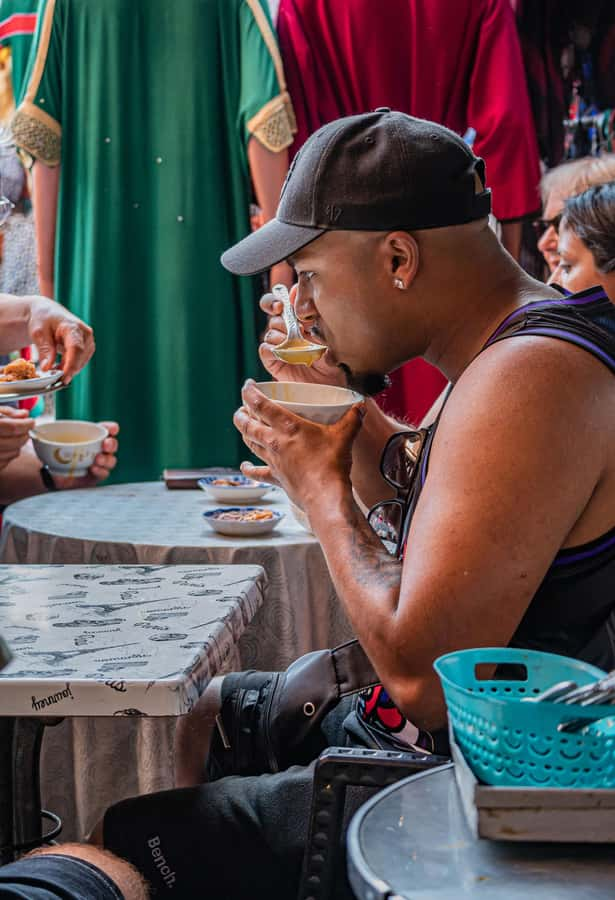
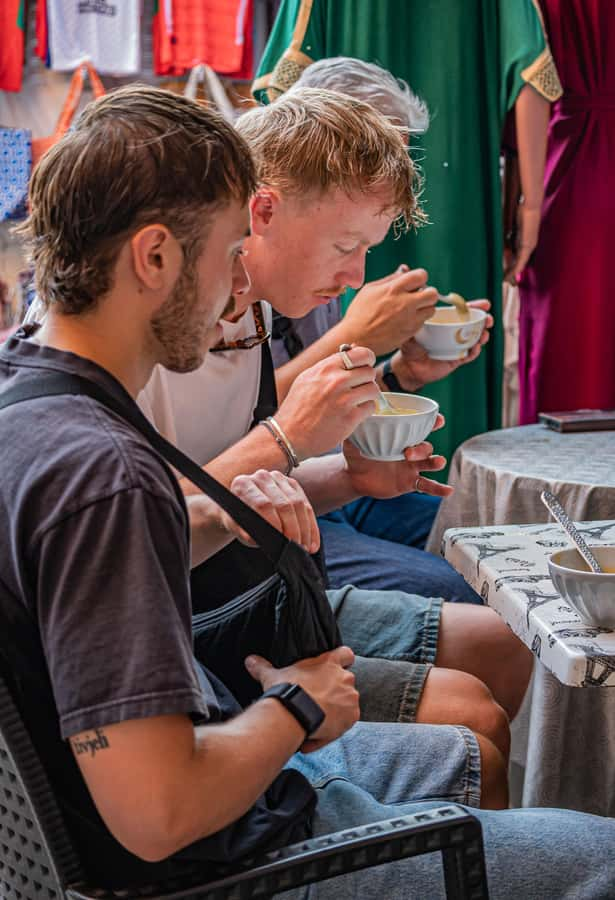
Harira is listed as a classic vegetarian Moroccan soup. It is commonly associated with comfort and home cooking, and on this tour it gives you a warm, savory break from the breads and pastries. Chebakiya adds the sweet side of the route: a sesame-coated Moroccan pastry with a sticky, spiced character.
Khoudenjal is a spiced herbal infusion. This is one of the more interesting inclusions because it broadens the idea of Moroccan drinks beyond mint tea. The tour does not promise a fixed recipe, so you should think of it as a chance to taste a local herbal preparation rather than a guaranteed version with a specific flavor profile.
These foods also show why the tour is more useful than a simple list of market stops. Your guide explains the customs connected with the dishes and the way food is prepared and eaten. Mehdi is praised for taking time to explain what you are tasting, which matters when a pastry or soup has a name you would otherwise forget as soon as you leave the stall.
Local drinks and a touch of sweetness
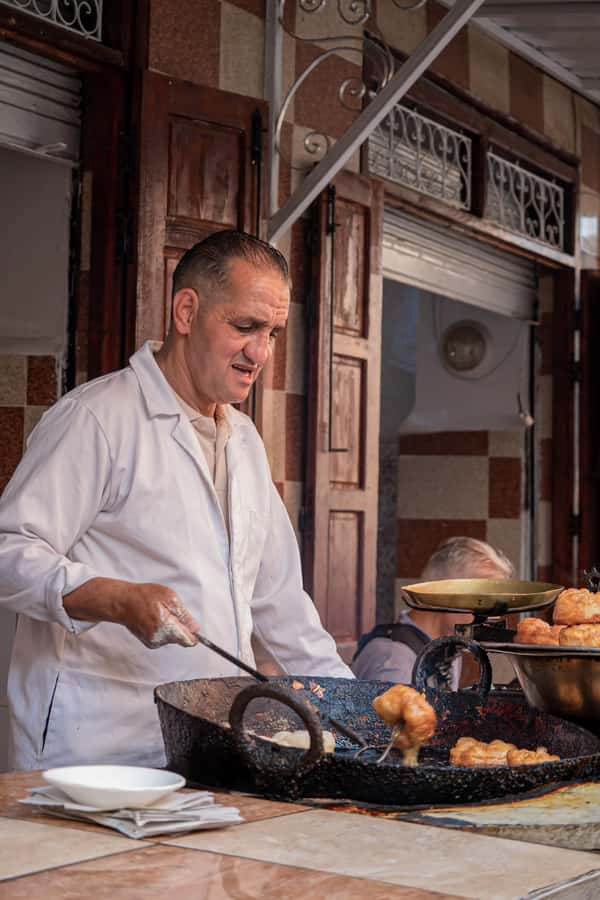
Raïb is described as traditional Moroccan frozen yogurt, while assir is fresh fruit juice. Both offer a welcome change in texture and temperature during a food-heavy route. The juice may also help break up the richer foods, though the exact fruit is not specified.
A selection of local nuts may appear as another snack. This is a small detail, but it adds variety and keeps the tour from becoming a parade of similar pastries and grilled meats. If you have allergies, tell the guide before the tour. The provider says alternatives may be arranged, but you should not wait until a dish is in front of you.
The food list is a guide, not a promise of every item. The activity notes that certain street foods are available only at particular times. A morning tour and a night tour can therefore feel quite different, even if both include the same general mix of savory food, sweets, and drinks.
Same place, a different plate:
- Marrakech Street Food Tour
★ 5.0 · 220 reviews - Marrakech Night Street Food Tour / Taste The Real Marrakech
★ 4.9 · 200 reviews - Casablanca Food Tour – Moroccan Street Food Tour
★ 5.0 · 86 reviews - Marrakech street food tour with a local
★ 5.0 · 55 reviews
Grilled food and less familiar street specialties
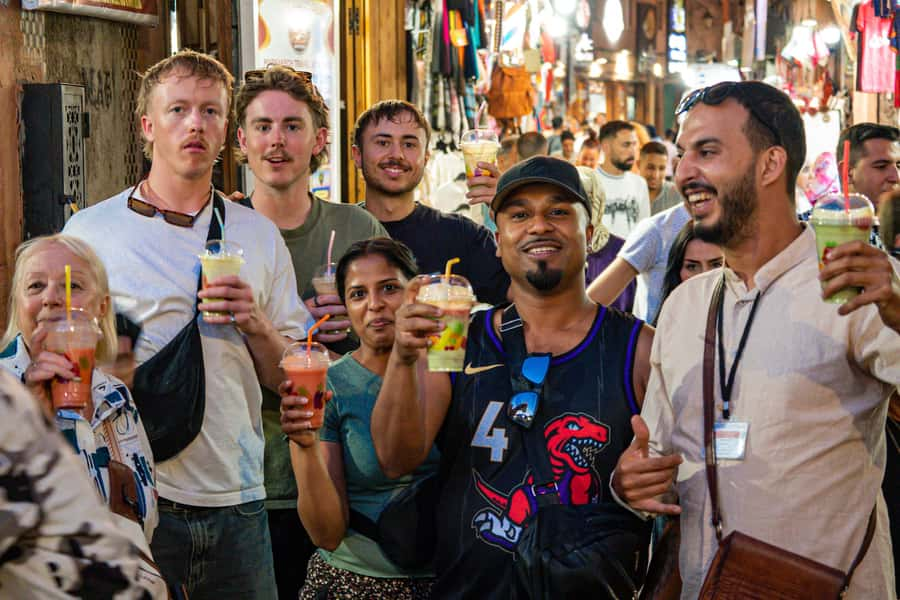
The savory part of the route may include chwa, grilled beef or chicken. This is likely to be one of the easiest dishes for cautious eaters, since the ingredients are familiar and the appeal comes from the grill, seasoning, and setting.
Berbouche, or snail soup, is a more adventurous choice. It is included as a possibility, not a guarantee. If you are curious about Moroccan street food, this is exactly the sort of item that can make the tour memorable. If snails are not for you, tell the guide plainly and ask what alternatives are available.
Sardil mechoui is listed as grilled sardine meatballs. It brings fish into a menu that might otherwise lean heavily toward bread, soup, and meat. Maklla, a Moroccan-style shakshuka, adds eggs and vegetables in a spiced preparation. Taken together, these dishes show the range of the route: breakfast breads, warming soup, grilled foods, seafood, eggs, sweets, and drinks.
The exact order is not supplied, and it may change with the market or restaurant stop. That is normal for a food walk tied to opening hours and fresh cooking. I would book this tour for discovery rather than for a carefully controlled menu.
Walking through the Medina, with some driving
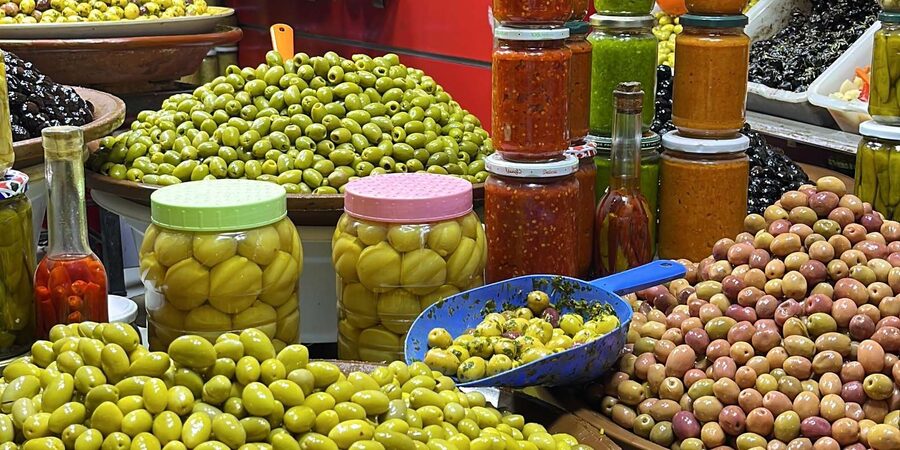
The tour combines walking and driving. Walking lets you see the Medina at close range, including the small food stalls and side streets where a vehicle cannot go. Driving allows the route to reach more than one neighborhood and may reduce the amount of walking between stops.
The published schedule describes a guided tour, walk, and class lasting three hours, while the overall activity duration is four hours. That likely reflects time for transfers, stops, and eating, but the wording is not precise enough to promise an exact breakdown. Ask the provider how much time is spent on foot and how much is spent in the vehicle if that affects your plans.
This format suits you if you want a broad taste of Marrakech rather than a single market visit. It is less suitable if you want a quiet, slow meal or a detailed cooking lesson. The word class appears in the itinerary, but the main description focuses on tasting and explanation, not hands-on cooking.
You should also wear shoes you can walk in and avoid arriving overly full. The route passes through active local areas, and eating while moving from one stop to another requires a little flexibility. Specific accessibility information is not provided, so anyone needing step-free access or limited walking should check before booking.
What Mehdi adds to the meal
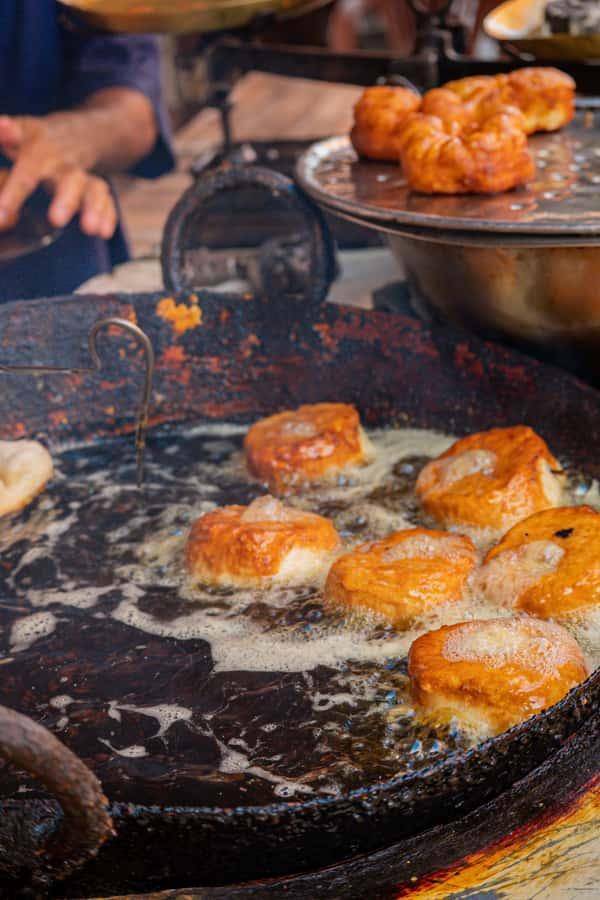
The strongest praise centers on Mehdi. He is described as friendly, attentive, cheerful, and passionate about food. He also gives explanations about Moroccan traditions, rather than simply pointing at a plate and naming it.
That personal guidance is the real reason to consider paying for this tour. You can find food in Jamaa el Fna without a guide, but you may not know which places are aimed mainly at tourists, how to order, or what an unfamiliar dish contains. Here, the guide helps you make sense of the choices and offers advice about where to eat and shop during the rest of your stay.
Several people particularly valued the local character of the stops. The food is not presented as a polished restaurant tasting designed for visitors. Instead, the route includes family-run stalls and lesser-known places where Marrakchis eat and meet. That does not guarantee that every dish will suit your taste, but it gives the tour a stronger connection to daily life.
The tone also seems suitable for families with older children. A parent specifically enjoyed the experience with two 15-year-old sons. Younger children may find four hours of walking and eating tiring, and no child-specific program is described.
Is $50 good value?
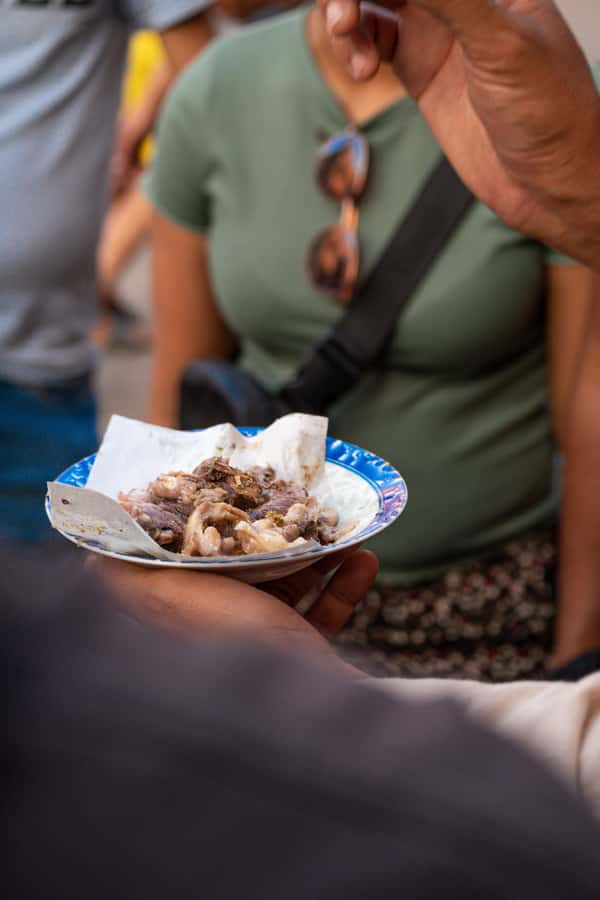
At $50 per person, this is not the cheapest way to eat in Marrakech. You can buy individual snacks for much less, especially if you are comfortable ordering on your own. The price becomes more reasonable when you count the guide, the route through several areas, 7 to 12 tastings, and drinks.
The range matters. If you receive only seven tastings, the value is different from a day with 10 or 12 dishes. Still, these are not all full meals, and the tour is intended to replace several small eating stops rather than one restaurant bill. You are also paying for context and confidence, particularly if this is your first visit to Marrakech.
All food and drinks are included. Hotel pickup and drop-off are not, so you need to reach the central meeting point yourself. There is also no suggestion that shopping or extra purchases are included. Bring appetite and curiosity, but you should still carry a little money for anything you decide to buy afterward.
The provider offers reserve now and pay later, along with free cancellation up to 24 hours before the start time. Those terms are useful if your Medina plans are still shifting, though I would still confirm the start time and meeting point before finalizing your day.
Who should book this Medina food tour?
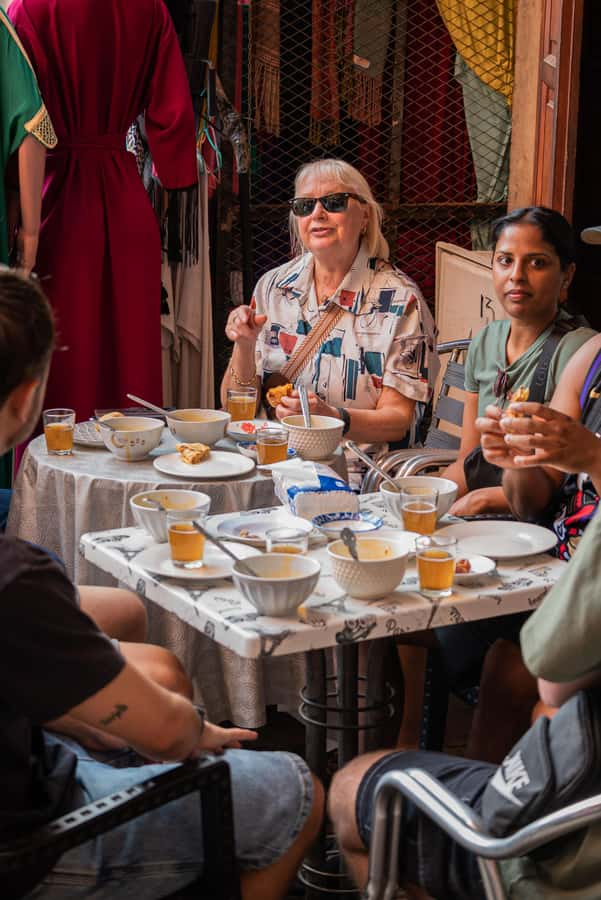
I would recommend it most strongly to first-time visitors who want an introduction to Moroccan food without spending days guessing at menus. It also suits couples, families with teenagers, and friends who enjoy sampling many things rather than ordering one dish each.
It is a good choice if you want:
- A guided introduction to foods beyond tagine and couscous
- Advice about local places to eat and shop
- A mix of street stalls, family-run spots, and neighborhood stops
- A social activity with food at its center
- Help tasting unfamiliar dishes such as snail soup or sardine meatballs
I would be more cautious if you have strict dietary needs, a very small appetite, or difficulty walking and transferring between locations. Allergies and dietary restrictions may be accommodated, but alternatives are not listed in advance. The route also changes with the time of day, so picky eaters should ask questions before booking.
The tour is offered in Arabic, English, and French. That makes it practical for a wide range of visitors, and the food explanations are a major part of its value. If you already know Marrakech well and feel comfortable ordering in local stalls, you may prefer to spend the $50 on several independent meals.
Should you book it?
Book this tour if you want a friendly introduction to Marrakech through food, especially if you value local guidance more than a fixed menu. Mehdi’s attentive style, the wide range of possible tastings, and the mix of walking and driving make it a strong first or second-day activity.
Skip it if you want complete control over every dish, a quiet sit-down meal, or a short tasting with little walking. Also confirm the start time, exact meeting point, and likely food list before you go. For most curious eaters, the chance to try msemen, harira, chebakiya, grilled specialties, fresh juice, and perhaps berbouche in one guided outing makes the $50 price fair.
FAQ
How long does the Marrakech street food tour last?
The advertised duration is four hours. The itinerary also describes three hours of guided touring, walking, and class activities, so confirm the exact timing with the provider.
Where does the tour meet?
The meeting point is Post du Maroc at Jamaa el Fna Square. Café de France is also used as a nearby reference point, and a plus code is provided in the tour details.
What languages does the guide speak?
The tour is offered in Arabic, English, and French.
How many dishes will I taste?
You can expect between 7 and 12 local dishes. Another description gives a likely range of 10 to 12 tastings, but the final number depends on timing and food availability.
Are drinks included?
Yes. All food and drinks associated with the tastings are included in the price.
Is hotel pickup included?
No. Hotel pickup and drop-off are not included, so you must make your own way to the meeting point.
Can the tour accommodate allergies or dietary restrictions?
You should notify the provider in advance. The guide will do their best to offer suitable alternatives, but specific replacement dishes are not listed.
What foods might be included?
Possible tastings include msemen, harcha, harira, chebakiya, Khoudenjal, khaneza, raïb, chwa, berbouche, sardil mechoui, maklla, assir, and local nuts. The selection can change with the time of day.
Just added around Morocco
- Marrakech Tasting Tour: Experience Local Street Food & Culture!★ 5.0 · 5 reviews
- Marrakech Street food Tours★ 4.5 · 15 reviews
- Local Hidden Spots Street Food Tour in Medina Marrakech★ 5.0 · 30 reviews
- 3 Hours Private Tour Marrakech Night Market★ 5.0 · 2 reviews
- Marrakech Street Food with +10Tasting & Tanjia Dinner|Guided Walk★ 5.0 · 21 reviews
- Taste Marrakech Street food tour from Medina★ 5.0 · 34 reviews
- Essaouira Guided Tour: 3 on 1 – Nightlife tour, Live like a local & Street food★ 4.5 · 32 reviews
- Fez Street Food Tour★ 4.5 · 33 reviews
Street Food Tours, compared.
Old Town, Creek, Museums, Souks, & Street Food Tour
What we made of it →
Ho Chi Minh City Street Food Tour & Sightseeing By Motorbike
What we made of it →
Comuna 13 Graffiti Tour, Cable Car & Street Food
What we made of it →
Old Town, Souks, Street Food, Guided Tour & Abra Ride
What we made of it →
Small Group Hanoi Street Food Tour with a Real Foodie
What we made of it →
Saigon By Night and Street Food By Motorbike | Opt: Ao Dai Riders
What we made of it →Where this tour turns up