
Review · ROME
Rome Street Food Tour – History, Craft and Authentic Taste
Rome tastes better on foot. This three-hour walk links old lanes, Roman landmarks, small food stops, and a mosaic workshop, so you get more than a string of snacks. I especially like the generous spread of food, from supplì and sliced pizza to Jewish-style fried artichoke, and the way the guide ties each bite to the neighborhood around it.
The group is capped at 10 people, which should make it easier to hear stories and ask questions. I also like the route for a first evening in Rome, since it ends near Piazza Navona and helps you get your bearings. The main drawback is that the schedule moves through several stops in a short time, and dietary restrictions may limit what you can taste.
Quick reasons to consider this Rome food walk
- Start with skewers and wine at Largo dei Librari, then continue through Rome’s oldest central neighborhoods.
- Taste classic Roman street food, including supplì, pizza, carciofo alla Giudia, gelato, and tiramisu.
- Visit a working mosaic shop when it is open, with a craft demonstration or a replacement food tasting if it is unavailable.
- Walk through the Jewish Ghetto, Campo de’ Fiori, the Pantheon area, and Piazza Navona.
- Keep the group small, with a maximum of 10 people and frequent opportunities for personal questions.
- Plan for a full meal, since the combined samples are intended to leave you satisfied.
A small-group route through Rome’s old center
The tour begins at Largo dei Librari, on Via dei Giubbonari, 90. From there, you set off through the historic center, with food served along the way rather than at one long sit-down meal.
That format suits Rome well. The city’s best food moments often happen in compact shops and casual places, not in grand dining rooms. You can sample several local specialties without spending a whole evening at one table, and the walking keeps the route connected to Roman streets, churches, ruins, and squares.
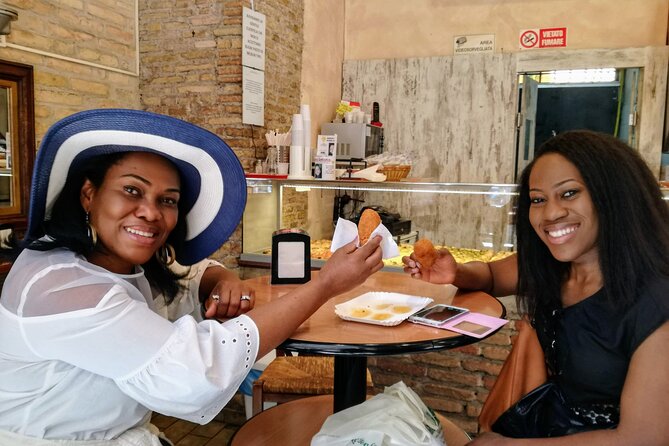
The maximum group size is 10. Actual groups can be smaller. One booking had only two people, while other groups numbered four, six, or eight. That matters because the guide can explain the food, adjust the pace, and point out small details without having to manage a crowd.
The guides praised in the feedback include Chris, Daniele, Daniel, Serena, Virginia, and Mattia. Their strengths were slightly different, but the repeated pattern was clear: strong explanations of Roman history, a friendly manner, and useful tips about food and the city. If you are assigned Daniele, you may get especially detailed commentary about the Jewish Ghetto. Mattia was praised for combining food stops with memorable facts and an easygoing group atmosphere.
More History Walks in Rome:
- Rome: Trastevere street food and history tour – small group
★ 5.0 · 58 reviews - Rome Street Food: Small Group Tour in the Historic Centre
★ 4.8 · 9 reviews - Palermo: Street Food and History Walking Tour
★ 4.9 · 1,486 reviews
Largo dei Librari starts the tasting
The first food stop comes almost immediately. At Largo dei Librari, you receive meat and cheese skewers with a glass of red wine. Alcohol is not included in the listed price, so you should confirm the cost or choose another drink if needed.
This is a sensible opening. You are not asked to wait through a long introduction before eating, and the skewer gives you a first taste while the guide sets the scene. It is also a good moment to tell the guide about vegetarian, gluten, or lactose concerns before the later stops.
The tour description calls the included food snacks, but the total amount is more substantial than that word suggests. The tastings add up to a generous meal, according to the supplied details, so avoid eating a large lunch right before you arrive.
Campo de’ Fiori brings history and supplì
Campo de’ Fiori is one of the best-known squares on the route. In the morning, it hosts one of Rome’s oldest food markets. The square also holds the statue of Giordano Bruno, the monk who was executed for heresy.
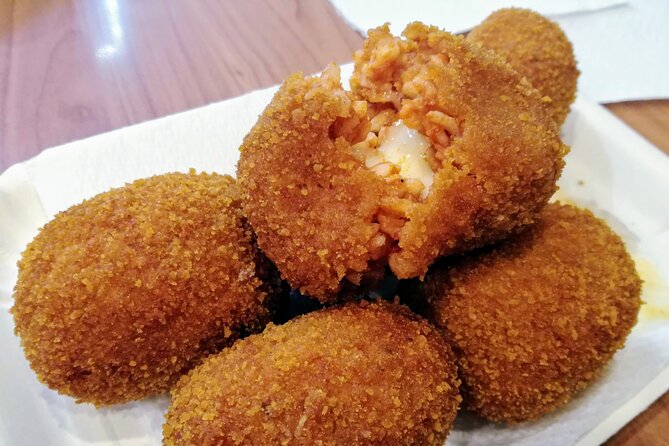
The food here is supplì, a fried rice ball filled with tomato sauce and mozzarella. It is a classic Roman snack, with a crisp outside and a soft, savory center. The spelling in the tour material says fried rise balls, but the dish is the familiar Roman supplì made with rice.
I like this pairing of place and food. You are not just handed a fried snack in an anonymous shop. The square gives the guide a chance to explain Roman public life, religious conflict, and the way food markets still shape the city’s daily rhythm.
Campo de’ Fiori can be busy, especially around market hours. You should expect to stand or walk while eating, rather than settle into a quiet table. That is part of the appeal, but it may not suit anyone who prefers a slow meal with plenty of seating.
The mosaic workshop adds a change of pace
After the food at Campo de’ Fiori, the route includes a visit to a mosaic artisan shop. The artisan explains how the work is done, including the steps involved in making a sample such as a photo frame and the way tiles are cut.
This is one of the more unusual parts of the experience. Many food walks stay focused on eating, but the mosaic stop shows another side of Roman craft. It gives your palate a break and adds something practical to the walk.
The workshop operates only on working days and depends on availability. If it cannot take place, an additional food tasting is offered instead. That means you should not book this tour solely for the craft visit, but it is a welcome bonus when available.
More Street Food Tours in Rome:
- Rome: Street Food Tour with Local Guide
★ 4.8 · 4,077 reviews - Rome: Trastevere & Campo de Fiori Street Food Walking Tour
★ 4.9 · 2,768 reviews - Rome Street Food Tour with Local Guide
★ 5.0 · 2,361 reviews - Rome: Trastevere Street Food Walking Tour with Local Expert
★ 4.8 · 1,784 reviews
Passetto del Biscione leads to pizza
Passetto del Biscione is a narrow, atmospheric shortcut through the alleys. Its frescoes make the short passage more memorable than an ordinary connection between two streets, and it leads toward the next tasting: sliced pizza.
Roman pizza served by the slice is simple, portable, and well suited to a walking route. You can try it without committing to a full pie, leaving room for the later dishes. The tour does not specify the exact toppings, so the available selection may vary.
This is also where the route begins to feel like a neighborhood walk rather than a checklist of famous sights. The food gives you a reason to move from one lane to another, while the guide fills in the stories that are easy to miss when you walk alone.
Largo Argentina puts Caesar’s death in context
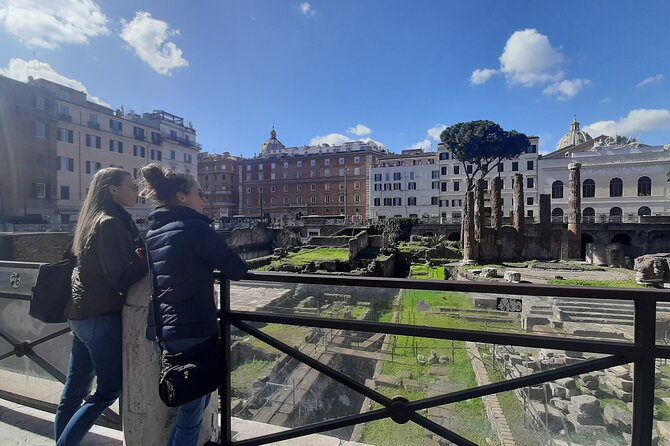
The next stop is the Area Sacra di Largo Argentina, the archaeological site associated with the assassination of Julius Caesar. The tour pauses here for about 15 minutes.
Admission is not included. The stated itinerary does not promise an interior visit, so you should treat this as a historical stop and ask the guide what access is available on your date. Even from the outside, the site helps explain how modern Rome is layered over ancient structures.
This pause is valuable because it breaks up the food tastings with a major historical reference. You get a sense of Rome as a city where ordinary streets sit beside remains connected to events that changed the ancient world.
The Jewish Ghetto and fried artichoke
The route continues into the Ghetto, where you see remains of ancient Roman structures and the exterior of Rome’s synagogue. The synagogue visit is outside only, so do not expect an interior tour.
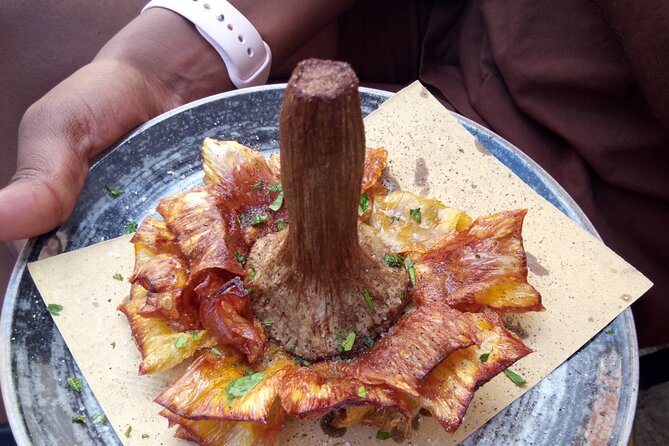
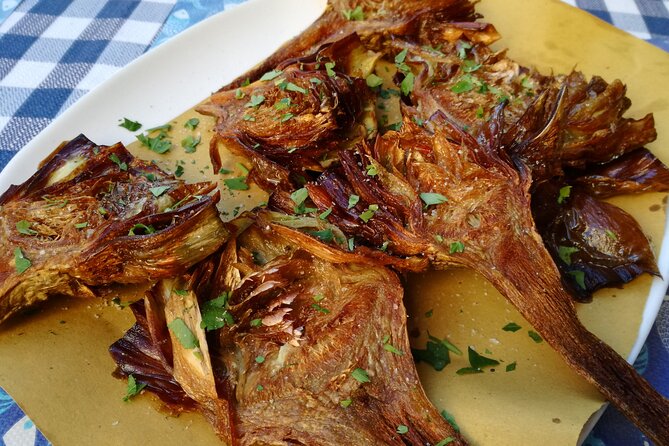
The food highlight here is carciofo alla Giudia, the famous deep-fried Jewish-style artichoke. It is one of the most distinctive bites on the walk, and it received particularly warm praise in the feedback. One person described the fried artichoke as a favorite, while another singled out fried zucchini flowers with anchovies as a favorite dish. The exact tasting can vary, but the food in this part of Rome is clearly a major reason to take the tour.
The Ghetto is also where the historical commentary seems strongest. Daniele was praised for his detailed explanations of the area and his clear affection for Rome. Guides also pointed out ancient building shapes and traces of older Roman structures that you might otherwise pass without noticing.
The artichoke is fried, and the food is not designed around special diets. Vegetarians can usually be accommodated if the request is made when booking, but vegans cannot be accommodated according to the supplied information. Gluten or lactose intolerances may be possible to manage, but every tasting cannot be guaranteed.
The Pantheon is a narrated exterior stop
The guide takes you to the Pantheon but does not take the group inside. You receive the main details about the monument during a 15-minute stop.
That limitation is important. If seeing the interior is a priority, plan a separate visit. The value here is orientation and context, especially if this is your first time in the area. A guide can explain what you are looking at and point out details before you return on your own.
The route keeps moving, so you will not get an extended architectural lecture. Still, this stop adds weight to the food walk and connects the casual eating to one of Rome’s major landmarks.
Gelato at Sant’ Eustachio
At Sant’ Eustachio, it is time for gelato. After the savory foods, this sweet stop provides a clear change in flavor and pace.
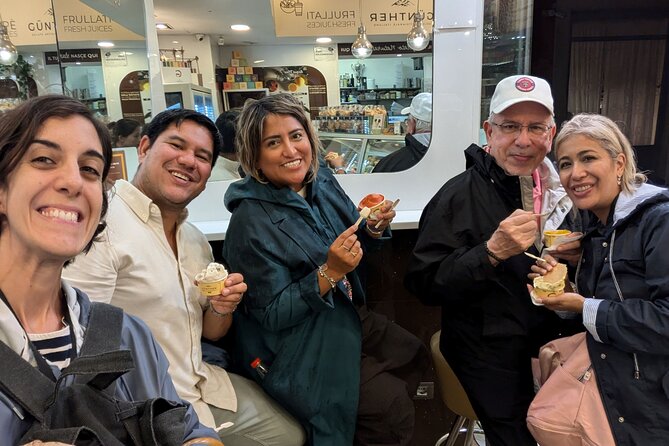
The exact flavor choices are not listed, so you should ask the guide what is available. The food is part of the tour price, while alcoholic drinks are separate. The supplied feedback repeatedly praised the gelato, including one especially enthusiastic mention of pistachio.
Gelato can be a small serving, but here it is one course in a longer series. By this point, you have already had skewers, supplì, pizza, and artichoke, so you probably will not be looking for a full dessert portion.
Piazza Navona finishes with tiramisu
The tour reaches Piazza Navona near the end. This grand square is known for Bernini’s Fountain of the Four Rivers, and the guide explains the setting before serving the final tasting, tiramisu.
Piazza Navona is a strong ending point. It is easy to recognize, close to major central sights, and useful for continuing your evening. The tour officially ends there, even though the itinerary also includes Piazza della Minerva afterward. That ordering is a small point worth checking when you book, since the listed route places both locations near the finish.
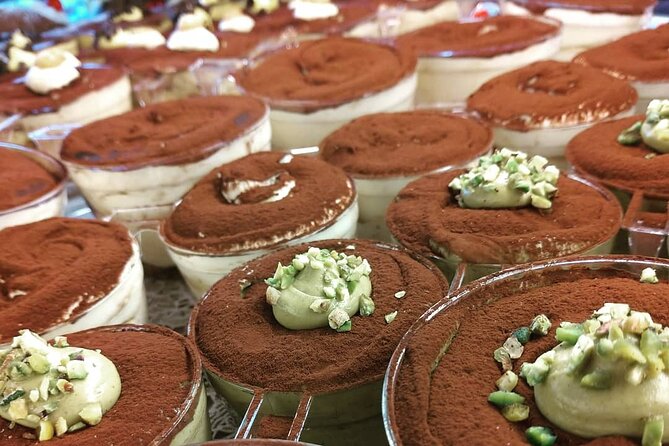
The tiramisu is described as the grand finale, with the wording suggesting a surprise element. Do not assume a specific variation beyond tiramisu, but expect a final sweet course rather than another savory sample.
Piazza della Minerva and Bernini’s elephant
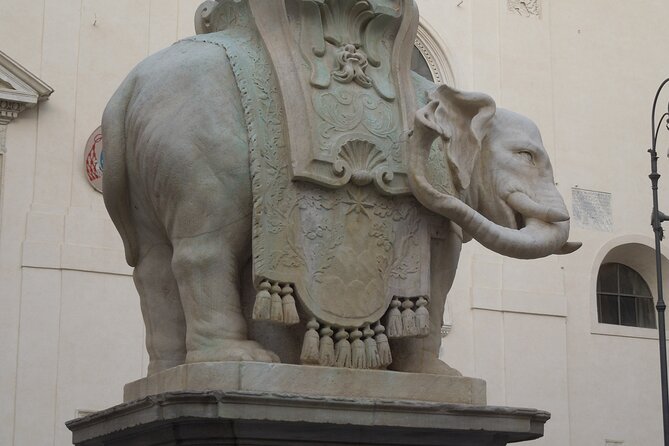
The final listed sightseeing stop is Piazza della Minerva, home to Bernini’s stone elephant statue. The guide explains its story during a short 15-minute visit.
This is a fitting last detail because it is easy to walk past the small elephant without knowing why it is there. The stop shows the tour’s basic strength: you are fed, but you are also taught how to read Rome’s streets and monuments.
The route covers a lot in three hours. That is good for first-time orientation, but it also means the walk has a steady pace. Wear comfortable shoes and arrive ready to walk and stand. The tour operates in sun or rain except in extreme weather, and rain alone does not qualify for a last-minute refund.
Is the $83.13 price fair?
At $83.13 per person, this is not the cheapest way to eat in Rome. But the cost includes a substantial run of tastings, a guide for about three hours, historical commentary, and a small group capped at 10.
If you bought each snack separately, you might spend less. You would not, however, get the same route, explanations, or help finding the food stops. The strongest value comes from using the walk as both a first meal and an introduction to central Rome.
The price makes the most sense on your first or second day, when you want a useful overview and a list of places or foods to revisit. It is less compelling if you already know the center well and only want a large sit-down dinner.
The tour is often booked well ahead, with an average booking time of 88 days. That suggests you should reserve early for a particular date, especially if you want a small group.
Who should book this experience?
I would recommend it to first-time Rome visitors, couples, solo travelers, and small groups who like learning while they eat. It also suits anyone who wants to try Roman specialties without researching every bakery, snack counter, and neighborhood restaurant in advance.
It is a good choice for people who enjoy guides with personality. The feedback praises Chris, Daniele, Daniel, Serena, Virginia, and Mattia for being friendly, patient, funny, and full of useful facts. Guide assignments can vary, but the experience clearly depends a great deal on the person leading the walk.
You should think twice if you need every stop to be fully accessible, since reduced-mobility visitors are advised to book a private tour so the pace does not affect the rest of the group. You should also be cautious if you have serious allergies or strict dietary rules. Restrictions must be stated at booking, and the operator cannot guarantee every tasting.
Free cancellation is available up to 24 hours before the start time. After that, refunds are not available, and changes are not accepted. If the minimum number is not reached, you are offered another date, an alternative experience, or a full refund.
Should you book the Rome street food tour?
Yes, if you want a compact introduction to Rome that combines food, neighborhoods, and history. The fried artichoke, supplì, pizza, gelato, and tiramisu give you a useful sample of Roman eating, while the route adds Largo Argentina, the Jewish Ghetto, the Pantheon, Piazza Navona, and Bernini’s elephant.
The best reason to book is the balance. You are not spending three hours only looking at monuments, and you are not eating without context. Book it early, mention dietary needs in advance, wear good walking shoes, and keep dinner plans light. For a first day in Rome, this is a practical and flavorful way to begin.
FAQ
How long is the Rome Street Food Tour?
The tour lasts approximately three hours.
What food is included?
Included tastings are skewers, supplì, sliced pizza, fried artichoke, gelato, tiramisu, and a possible surprise tasting.
Are alcoholic drinks included?
No. Alcoholic beverages can be purchased separately according to your preference.
Where does the tour start?
It starts at Largo dei Librari, Via dei Giubbonari, 90, 00186 Rome.
Where does the tour end?
The stated meeting information lists Piazza Navona as the end point.
Is the mosaic workshop guaranteed?
No. The workshop operates according to availability and on its working days. If it is unavailable, an additional food tasting is offered instead.
Can vegetarians join the tour?
Yes, vegetarians can be accommodated, but you must advise the operator when booking. Vegans cannot be accommodated according to the supplied tour information.
How far in advance can I cancel for a refund?
You can cancel at least 24 hours before the experience start time for a full refund. Cancellations made less than 24 hours before the start time are not refunded.
Just added around Rome
- Testaccio Street Food Tour Eat Like a Local★ 3.5 · 2 reviews
- Vegan Street Food Tour in Rome★ 5.0 · 6 reviews
- Vatican Street Food Tour and Wine Experience with Local Guide★ 5.0 · 7 reviews
- Tasty Trastevere Street Food Tour in Rome from Tiberine Island to Ponte Sisto★ 5.0 · 25 reviews
- Tasty Rome Street Food Tour around Campo de’ Fiori Market & Jewish Ghetto★ 5.0 · 2 reviews
- Gems of Rome: Small group E-bike tour with street food stops★ 5.0 · 36 reviews
- Rome Trastevere Street Food Tour: Eat and Drink Like a Local★ 5.0 · 35 reviews
- Campo de’ Fiori & Jewish Ghetto Rome Street Food & Walking Tour★ 5.0 · 5 reviews
Street Food Tours, compared.
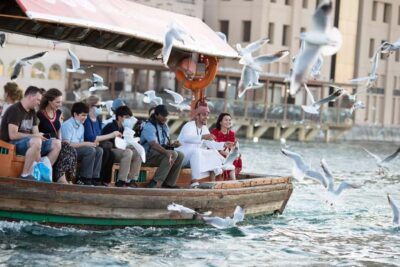
Old Town, Creek, Museums, Souks, & Street Food Tour
What we made of it →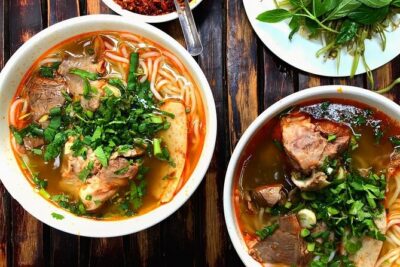
Ho Chi Minh City Street Food Tour & Sightseeing By Motorbike
What we made of it →
Comuna 13 Graffiti Tour, Cable Car & Street Food
What we made of it →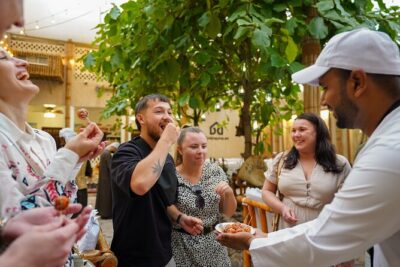
Old Town, Souks, Street Food, Guided Tour & Abra Ride
What we made of it →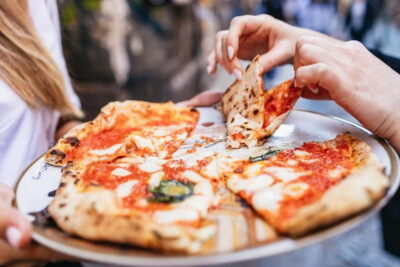
Small Group Hanoi Street Food Tour with a Real Foodie
What we made of it →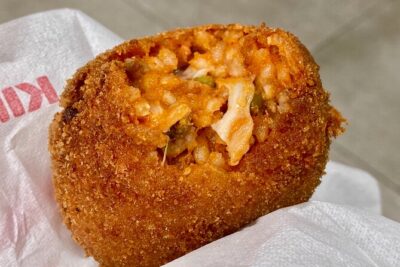
Saigon By Night and Street Food By Motorbike | Opt: Ao Dai Riders
What we made of it →Where this tour turns up