
Review · TOKYO
Tsukiji Fish Market Street Food & Culture Walking Tour
Tsukiji is best tasted one bite at a time. This 90-minute walk through Tokyo’s famous Outer Market combines food, local stories, and easy pacing. I like the frequent stops and the chance to try several kinds of food, from fatty tuna nigiri and grilled scallops to sweets. I also like the local viewpoint, especially the side streets and lesser-known shops that are easy to miss when you explore alone.
The main consideration is that $38 does not cover every food purchase. Tastings are included, but additional food and drinks cost extra, and you’ll need to make your own way to the market. The market can also be crowded, so this is a guided introduction rather than a long, leisurely meal.
Key points at a glance
- Fatty tuna nigiri and grilled scallops: Two praised food stops that show off Tsukiji’s seafood focus.
- Atsu’s personal touch: The university student guide has taken solo visitors through favorite foods and market specialties.
- Tsukiji Hongwanji Temple: The tour includes admission to this distinctive nearby temple, adding cultural context beyond eating.
- Short, gentle route: Frequent breaks make the walk easier for families and anyone who prefers not to rush.
- English-speaking local guide: You can ask questions as you go instead of trying to decode every stall alone.
- Edited photos included: You get more than food memories, with photographs of the market and your group.
Why Tsukiji still works after the wholesale market moved
Many people hear Tsukiji and think of the early-morning tuna auction. That auction and the wholesale market moved to Toyosu, but Tsukiji’s Outer Market remains a major place for food shopping, small restaurants, kitchen shops, and quick bites.
That distinction matters. This tour is not an auction visit, and it is not built around watching wholesale trading. Instead, you walk through the public market area where food stalls and specialist vendors serve shoppers and curious visitors.
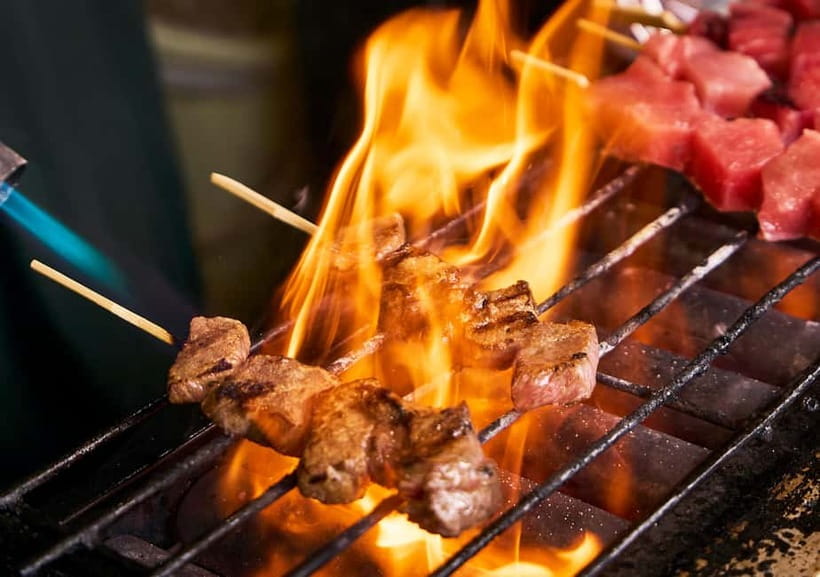
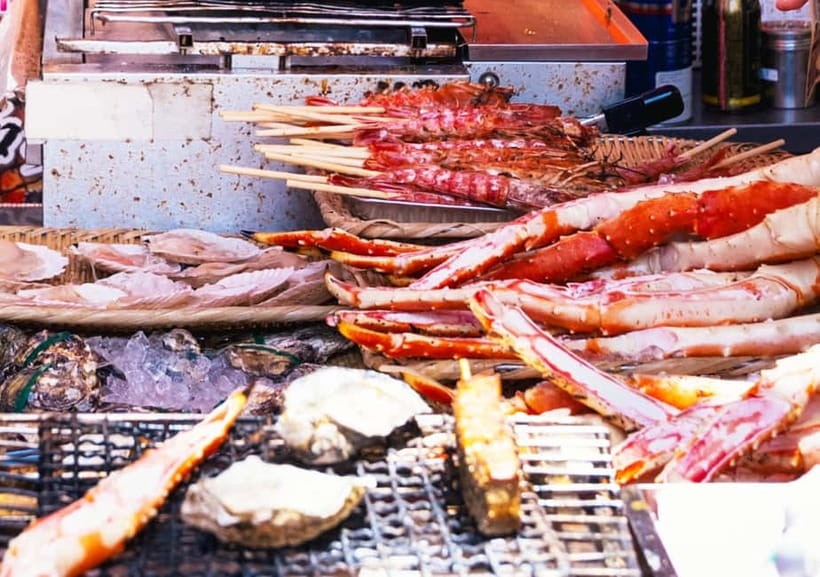
The appeal is the variety packed into a small area. You might see seafood being prepared, meat cooking on a hot grill, sweets arranged for sale, and narrow lanes filled with signs and color. A guide helps turn that visual overload into something you can understand.
I find a local guide especially useful at markets. Without one, it is easy to stop at the first appealing stall, miss the best-known specialties, or feel unsure about how to order. Here, the point is to sample several foods while learning why the market matters to Tokyo’s food culture.
More Street Food Tours in Tokyo:
- Tsukiji Fish Market: Street Food & Culture Walking Tour
★ 5.0 · 669 reviews - Tsukiji Fish Market: Street Food & Culture Walking Tour
★ 4.8 · 259 reviews - Tokyo: Togoshi Ginza Street Food Tour
★ 5.0 · 34 reviews
Meeting at Family Mart and getting started
The meeting point is Family Mart. You should plan your route to the meeting place in advance, since transportation to and from Tsukiji is not included.
Once you meet the guide, the tour moves into the Tsukiji area with a short walk and regular stops. The pace is designed to be relaxed rather than athletic. That makes the tour a practical choice if your group includes children, older family members, or anyone who prefers to pause often.
The frequent stops also suit the market itself. Tsukiji is not a place to rush through with your head down. You will want time to look at displays, take photographs, and decide what you are seeing. A short route with pauses gives you room to do that.
Keep your belongings close. The market can be crowded, and narrow walking areas require attention. Comfortable shoes are a good idea, even though the walk is not described as strenuous.
Exploring the Outer Market by taste
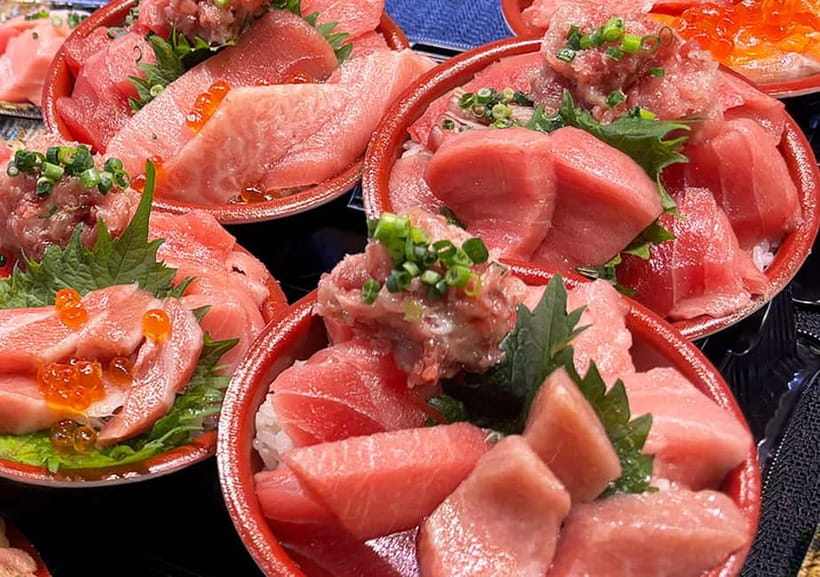
The food is the center of the experience. You sample a range of bites rather than sit down for one complete meal. That format lets you compare flavors and see several parts of Tsukiji in a limited amount of time.
Specific tasting portions can vary, so do not treat the $38 price as an all-you-can-eat package. The tour includes tastings, but personal purchases and extra food or drinks are separate. If you see something appealing along the way, you may want to budget for it.
Fatty tuna nigiri
Fatty tuna nigiri was one of the memorable foods singled out by solo visitor Alexa. This is a good example of why a guide can add value. You are not simply buying sushi. You can ask about the food, the stall, and the way the market handles its specialties.
The portion is likely to be small, as you are tasting several items rather than eating one large lunch. That is useful if you want to keep sampling, but less useful if you arrive hungry and expect a full meal. I would eat lightly beforehand, while leaving enough appetite for the stops.
Same place, a different plate:
- Tokyo: Tsukiji Fish Market Food and Culture Walking Tour
★ 4.7 · 757 reviews - Tokyo Street Food Tour – 7 Japanese Foods
★ 5.0 · 16 reviews - Tokyo: Private Tsukiji Fish Market Tour with 3 Food Stops
★ 5.0 · 9 reviews - Private Tokyo food scene 6 hour experience: Depatika, street food, izakaya
★ 5.0 · 9 reviews
Grilled scallops
Grilled scallops provide a different experience from sushi. You get the aroma of food cooking and the pleasure of eating something hot from the grill. Along with meat and other seafood, the scallops help show that Tsukiji is more than a raw-fish stop.
A guide can also explain how the food is prepared. One especially praised part of the experience was the time taken to describe preparation and let everyone stop for a taste. That matters in a group because food tours can otherwise feel rushed, with one person eating while everyone else waits.
Meat, sweets, and extra purchases
The tour promises a mix that includes juicy meats and sweet treats. This broad selection is helpful if your group has different preferences. One person can enjoy seafood while another looks forward to something grilled or sugary.
The exact food lineup is not fixed in the information provided, so you should expect the guide to choose among available stops rather than follow a guaranteed menu. That flexibility can be a strength in a market, where opening hours and stock may change. It also means you should not book this tour solely for one particular dish unless that food is specifically confirmed.
Additional food and drinks are not included. Bring a little extra spending money if you want to continue eating after the official tastings.
Tsukiji’s side streets and local stories
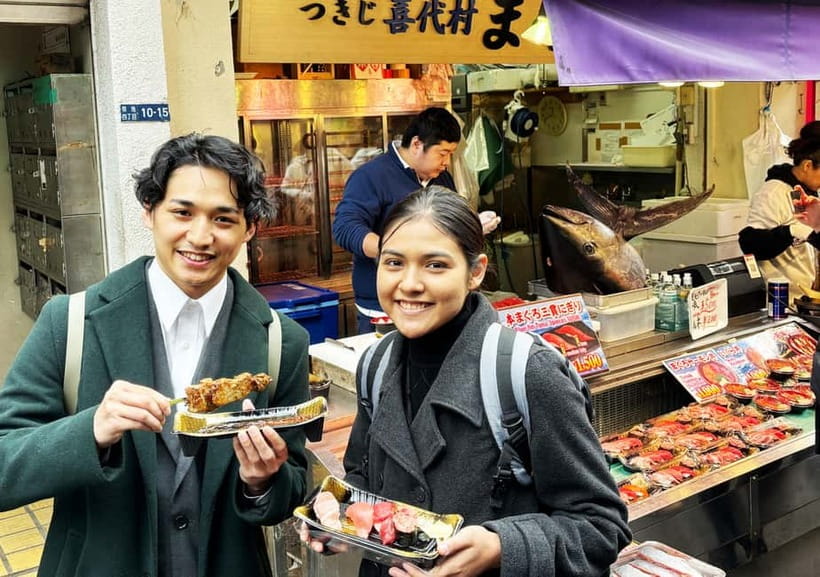
The best part of a guided market walk may not be the first bite. It can be the explanation of what you are looking at.
A guide can point out vendor specialties, explain the role of different shops, and help you notice how the market works beyond its famous name. The tour also takes you through routes and side streets that you might not choose on your own. One solo visitor described the experience as finding lesser-known places and exploring back lanes, which is exactly the sort of access a short guided walk can provide.
Atsu, one of the guides, was praised for showing favorite foods and explaining market specialties. As a university student, he brings a local, conversational perspective rather than a formal lecture. That style should suit you if you prefer questions and conversation while walking.
The guide’s role is also practical. You do not need to keep stopping to check a map, and you do not have to decide which stall deserves your time. The tour takes care of the basic direction so you can focus on food, photographs, and the atmosphere around you.
Tsukiji Hongwanji Temple adds a welcome pause
Admission to Tsukiji Hongwanji Temple is included. This gives the tour a useful change of pace between food stops.
The temple adds a cultural and architectural stop to what could otherwise be a straightforward eating walk. You can pause, look around, and hear more about the area’s background. Since the temple is listed as part of the included admissions, you do not need to arrange a separate ticket for this part of the visit.
It also helps balance the tour. Ninety minutes of constant food sampling could feel hurried or repetitive. A temple visit creates a quieter moment and gives you a chance to rest before continuing through the market.
The information provided does not promise a detailed temple lecture or a long visit, so think of it as one stop within a broader market tour, not a dedicated temple sightseeing experience.
Photography, edited photos, and family pacing
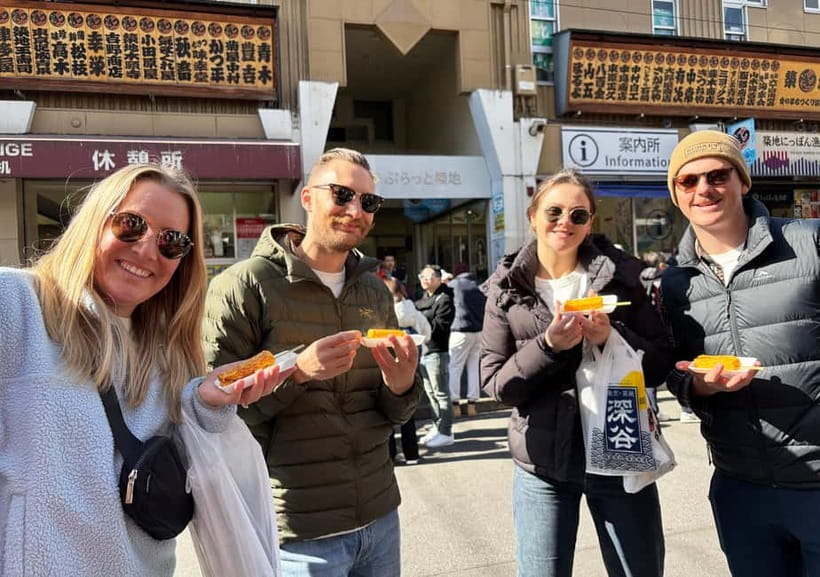
This experience is built with photographs in mind. Tsukiji offers plenty to point a camera at, including colorful displays, food preparation, signs, and the people in your group enjoying the stops.
Edited photos are included, which is a useful extra for families and couples. You can focus on being present instead of asking someone else to take every picture. It also means you may come away with images that show the experience, not just close-ups of food.
The tour description puts clear emphasis on short walking sections, regular pauses, and time to rest. That makes it more approachable than a fast market crawl. You still need comfortable shoes, but you are not expected to maintain a demanding pace.
I would still be realistic about the setting. A food market has crowds, active stalls, and limited space. A guide can keep the route organized, but cannot make Tsukiji quiet or empty. Keep children close and watch your bags when the lanes fill up.
How the $38 price stacks up
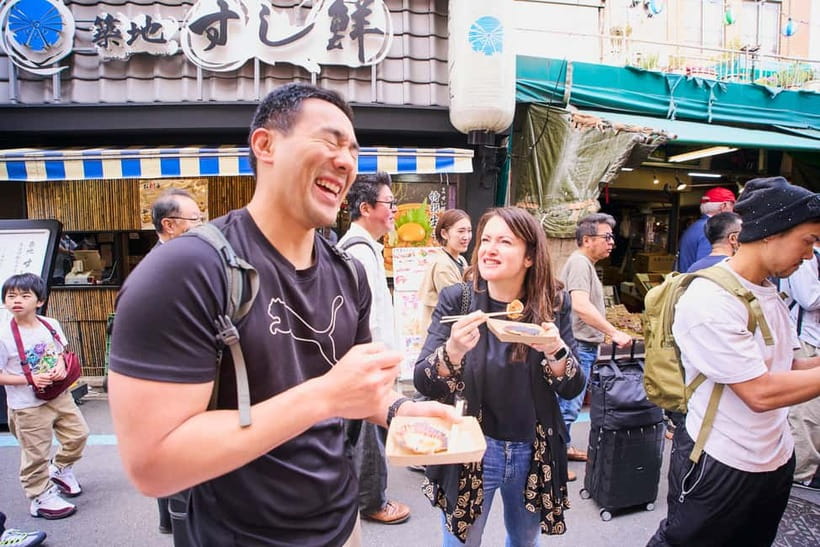
At $38 per person, the price is reasonable if you value guidance, several tastings, temple admission, and edited photos. You are paying for more than food. You are also paying for someone to organize the route, explain the area, and help you avoid wasting time at random stalls.
The value is strongest for first-time visitors to Tsukiji. If you already know the market well, speak Japanese, and enjoy choosing every stop yourself, you may prefer to explore independently and spend your money directly on food.
The tasting format also matters. This is not a sit-down meal with a clearly stated number of courses. It is a guided sampling walk. Your food budget may rise if you want extra seafood, sweets, or drinks, so include that in your planning.
For a family, the price can make sense because the relaxed structure removes some of the work. You do not have to plan a route through a crowded market, and the guide creates a simple rhythm of walking, stopping, tasting, and resting.
Who will enjoy this tour most
I would consider this tour a good match for:
- First-time visitors to Tsukiji
- Solo visitors who want company and local advice
- Families who prefer short walks and regular pauses
- Food lovers who want several small tastings
- People curious about Japanese food culture
- Visitors who would rather ask questions than read signs alone
Solo visitors may get especially good value if the group is small. Alexa booked as a solo visitor and ended up with a private tour when no one else joined. That is not something you can count on, but a small group can make the guide’s advice more personal.
The tour also suits people who enjoy conversation. The guides have been praised for clear communication, energy, and listening carefully to questions. If you want a silent, self-directed food crawl, this may feel too structured.
Things to know before you book
The 90-minute duration is both a benefit and a limit. It fits neatly into a Tokyo sightseeing day and will not consume an entire morning or afternoon. On the other hand, you will only get an introduction to Tsukiji, not a complete market exploration.
Food availability may affect the stops. The experience includes a variety of tastings, but the supplied information does not list a fixed menu or guarantee every dish on every departure. If you have allergies or strict dietary needs, ask before booking rather than assuming the guide can adjust the route.
Transportation is not included, so allow time to reach Family Mart and to continue to your next stop afterward. The tour itself is in English, and the guide is live rather than audio-based.
You can cancel up to 24 hours in advance for a full refund, and you can reserve now while paying later. Those policies are helpful if your Tokyo plans are still shifting.
My verdict on this Tsukiji food walk
I like this tour because it keeps things simple: meet a local guide, walk a manageable route, taste several foods, hear the stories behind the market, and stop for photographs. The strongest points are the food variety, the friendly conversational guiding, and the effort to show more than the obvious main lane.
The drawbacks are clear but manageable. You will need to pay for transportation and extra food, the market can be crowded, and the 90-minute route cannot cover everything. The food menu may also change.
Book this tour if you want an easy introduction to Tsukiji with context and company. Choose it especially if you are traveling solo, visiting with family, or feel unsure about ordering at market stalls. Skip it if you already know Tsukiji well or would rather spend your full food budget choosing your own meals without a guide.
FAQ
How long is the Tsukiji Fish Market Street Food & Culture Walking Tour?
The tour lasts 90 minutes.
What language is the tour offered in?
The live tour guide speaks English.
Where does the tour meet?
The meeting point is at Family Mart.
Is food included in the price?
Food tastings are included, but additional food and drinks are not included. Personal expenses are also separate.
Is transportation to Tsukiji included?
No. Transportation to and from the market is not included.
Does the tour include Tsukiji Hongwanji Temple?
Yes. Admission to Tsukiji Hongwanji Temple is included, along with admission to Tsukiji and Tsukiji Jogai Market.
Can I cancel the booking for a refund?
Yes. You can cancel up to 24 hours in advance for a full refund. You can also reserve now and pay later.
Just added around Tokyo
- Tokyo Fish Market Food Tour: Street Food & Friendly Guide★ 3.0 · 2 reviews
- Ueno Park and Ameyoko Street Food Market Half Day Walking Tour★ 5.0 · 3 reviews
- Tsukiji Fish Market: Street Food Tour with Tasting★ 5.0 · 4 reviews
- Tokyo:Enjoy street food & Japanese food culture at Tsukiji Market★ 5.0 · 6 reviews
- Tokyo Street Food Tour – 7 Japanese Foods★ 5.0 · 16 reviews
- Matsushima Bay, Islands and Seafood Market day tour from Tokyo★ 5.0 · 2 reviews
- Tokyo: Private Tsukiji Fish Market Tour with 3 Food Stops★ 5.0 · 9 reviews
- Historic Kamakura: Temples, Shrines and Street Food Private Walking Tour★ 5.0 · 6 reviews
Street Food Tours, compared.

Old Town, Creek, Museums, Souks, & Street Food Tour
What we made of it →
Ho Chi Minh City Street Food Tour & Sightseeing By Motorbike
What we made of it →
Comuna 13 Graffiti Tour, Cable Car & Street Food
What we made of it →
Old Town, Souks, Street Food, Guided Tour & Abra Ride
What we made of it →
Small Group Hanoi Street Food Tour with a Real Foodie
What we made of it →
Saigon By Night and Street Food By Motorbike | Opt: Ao Dai Riders
What we made of it →Where this tour turns up