
Review · TOKYO
Tsukiji Fish Market: Street Food & Culture Walking Tour
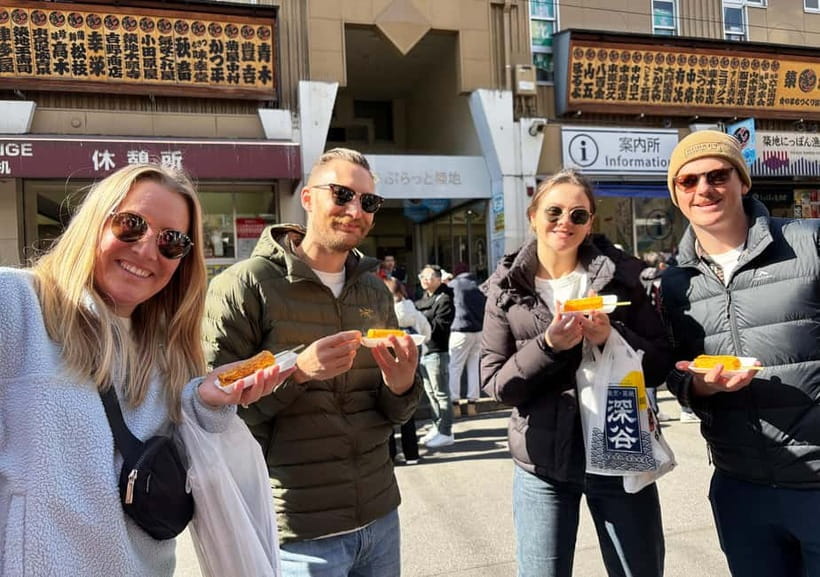
Follow your appetite through Tsukiji. This two-hour walk pairs the market’s best-known foods with a visit to Tsukiji Hongwanji Temple, giving you both local flavor and cultural context. I like the fresh wasabi tasting and the way guides such as Kawa, George, Mao, and Chihiro explain unfamiliar foods without making you feel rushed or out of place.
I also like the freedom to choose what you eat, from tuna and sushi to wagyu, scallops, eel, fish cake, dumplings, and grilled octopus. The main consideration is timing: on Wednesdays, Sundays, and national holidays, roughly half of the outer market shops may be closed, so the selection can be smaller.
Tsukiji in six useful points
- The temple comes first: Tsukiji Hongwanji offers a calm architectural start before the food stalls take over.
- Fresh wasabi is a highlight: The guide may grate or provide fresh wasabi, a sharp, fragrant addition that changes the flavor of sushi and seafood.
- Food choices are flexible: You can spend as much or as little as you like at the market, but bring cash for purchases.
- The guides make the difference: Kawa, George, Mao, Chihiro, Tomo, Kenny, Daichi, and others are praised for clear English, patience, and strong food knowledge.
- The market is more than fish: Expect wagyu, eel, grilled scallops, omelets, rice snacks, ceramics, spices, and other Japanese specialties.
- Two hours goes quickly: About 20 minutes are spent at the temple, 80 minutes in the market with tastings, and another 20 minutes exploring the market area.
Why Tsukiji still matters after the wholesale market moved
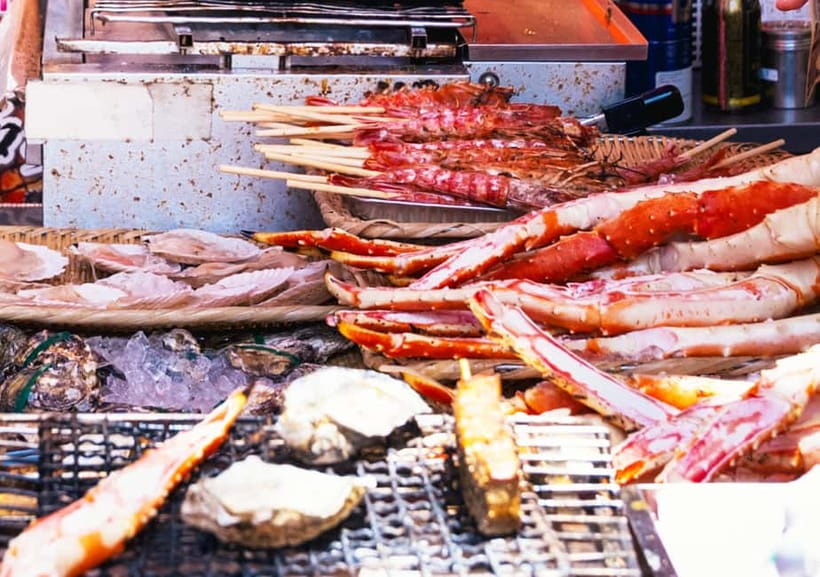
Tsukiji is often called a fish market, but that label is now too narrow. The wholesale section moved to Toyosu, while Tsukiji’s outer market continues to serve shoppers, cooks, restaurant owners, and curious visitors.
The outer market is a working food district. It is not simply a row of attractions arranged for sightseeing. Shops sell seafood, seasonings, knives, preserved foods, kitchen goods, sweets, and ingredients used in Japanese cooking. The tour helps you understand what you are looking at, which is useful when labels are unfamiliar and stalls are crowded with choices.
Your guide also explains how preservation methods build flavor. Drying, curing, pickling, and other traditional techniques do more than keep food usable. They can strengthen umami, the savory depth that runs through so much Japanese cooking.
That context gives the market more meaning. You are not just sampling a piece of tuna or buying a snack. You are seeing how Japanese food culture connects ingredients, seasonality, craft, and careful preparation.
More Street Food Tours in Tokyo:
- Tsukiji Fish Market: Street Food & Culture Walking Tour
★ 5.0 · 669 reviews - Tokyo: Togoshi Ginza Street Food Tour
★ 5.0 · 34 reviews - Tokyo Street Food Tour – 7 Japanese Foods
★ 5.0 · 16 reviews
Starting at Tsukiji Hongwanji Temple
The tour begins at Tsukiji Hongwanji Temple, usually called Tsukiji Hongwanji or Tsukiji Hongan-ji. The meeting point is at the temple, though the exact starting option can vary when you book.
The temple gets about 20 minutes. That is enough time for your guide to point out the architecture, carvings, interior details, and basic customs without turning the visit into a long lecture. One guide, Chihiro, explained the purification procedure before entering, which is a useful introduction if you have not visited a Japanese temple before.
The building has an unusual appearance, and it provides a sharp contrast to the market outside. Inside, the mood is quieter and more reflective. I like this opening because it places Tsukiji in a wider cultural setting before you start eating.
This stop is not the main reason to book the walk, and food-focused visitors may be eager to get moving. Still, the temple gives the neighborhood a sense of place. It also helps you understand that Tsukiji is not only a commercial food center. Religious life, daily shopping, cooking, and neighborhood history sit close together.
The outer market with a local guide
After the temple, the tour moves into the Tsukiji Outer Market. This is the main part of the walk, lasting about 80 minutes and combining explanation, browsing, and food tastings.
Expect a compact, active market area where you may see seafood, specialty ingredients, prepared foods, seasonings, and traditional goods. You might find stalls selling items you would not know how to identify on your own. This is where a good guide earns the fee.
Guides such as George and Kawa are praised for explaining what ingredients are used for, how they are prepared, and which shops offer good value. Mao has been praised for helping people feel comfortable trying foods they had never considered. Tomo is noted for tailoring recommendations to the group, while Kenny has been praised for taking photos and creating an intimate, easygoing outing.
The guide’s role is not just to point at food. It is to help you decide what is worth trying. At a market like Tsukiji, that can save you money and prevent a meal from becoming a random series of purchases.
You may also get practical tips for returning on your own later. Ben, one of the most enthusiastic participants, appreciated being able to spend as much or as little as he wanted while receiving advice about what to try. That flexibility is important because the $22 tour price does not mean every market purchase is covered.
What you may taste at Tsukiji
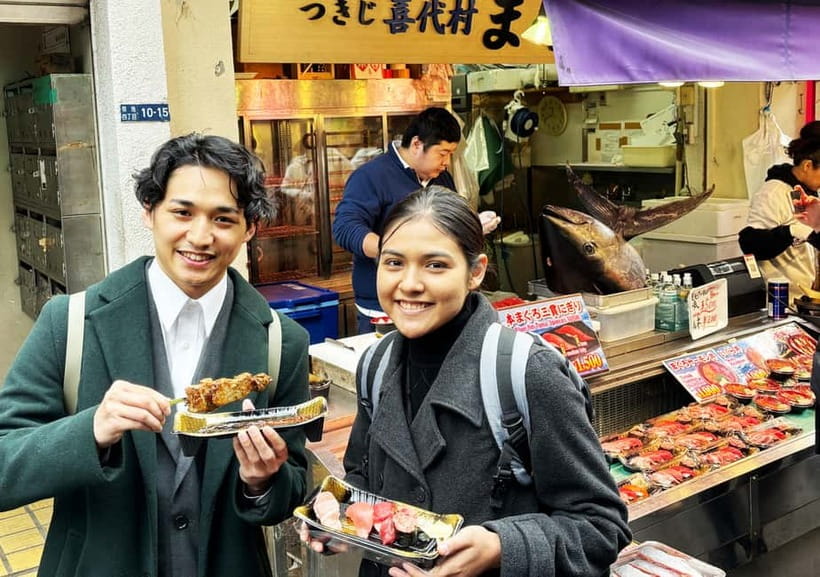
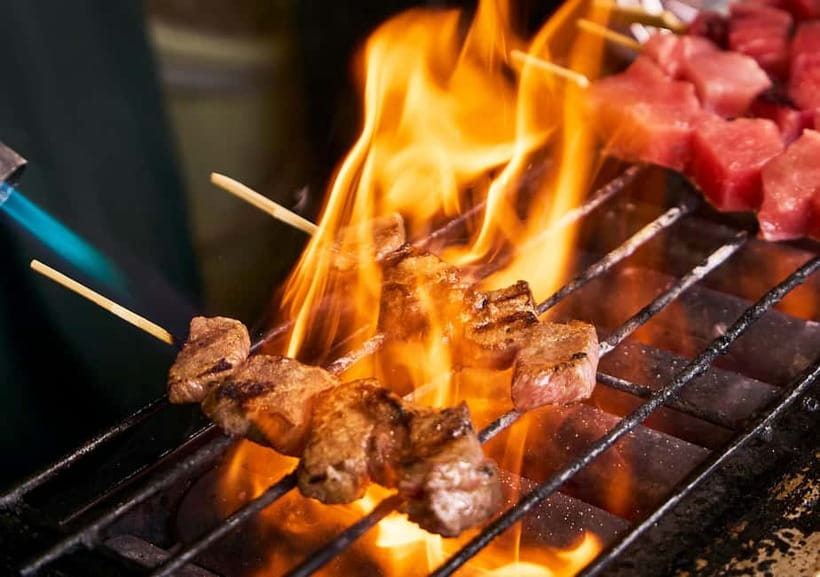
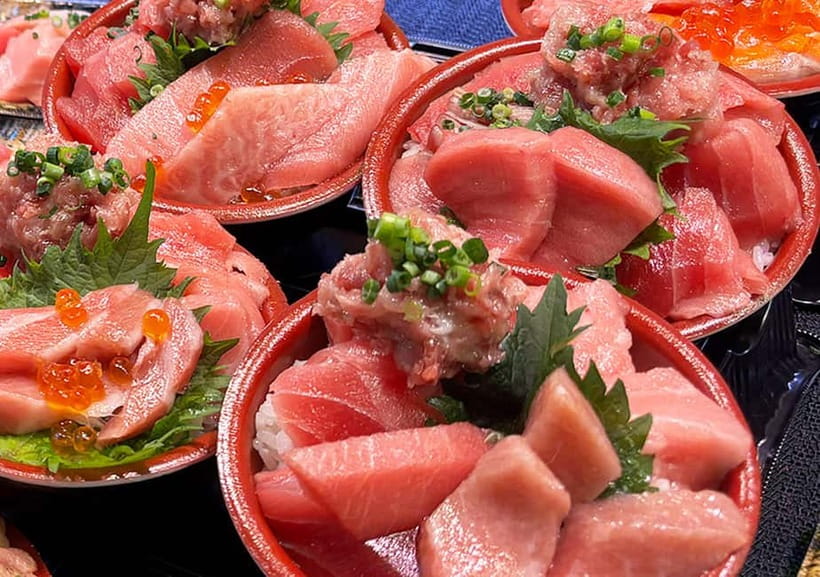
The precise food lineup can change with the day, the open shops, and your own choices. The foods mentioned during this tour include fresh tuna, sushi, wagyu, grilled scallops, eel, fish cake, omelet, dumplings, skewered octopus, rice snacks, and other traditional street foods.
Several people especially enjoyed the combination of seafood and meat. A wagyu sirloin skewer was a favorite for one participant, while another enjoyed tuna sushi, eel, grilled scallops, and wagyu in the same outing. This mix keeps the tasting from becoming one long seafood course.
The fish preparation demonstration can be another strong moment. It offers a look at the care and skill behind Japanese seafood service, rather than presenting fish as something that simply arrives ready to eat. The exact demonstration may vary, particularly when shops are closed.
Fresh wasabi is one of the tour’s most distinctive extras. The guide may provide a special wasabi set or grate fresh wasabi for the group. It has a sharper, fresher character than the familiar green paste often served outside Japan, and a small amount can change the taste of tuna or sushi.
Bring cash. The tour information specifically lists it as something to carry, and several participants found it useful when buying extra food or snacks. You are encouraged to choose according to your appetite and budget, which is better than being locked into a fixed tasting menu.
Same place, a different plate:
- Tokyo: Tsukiji Fish Market Food and Culture Walking Tour
★ 4.7 · 757 reviews - Tokyo: Private Tsukiji Fish Market Tour with 3 Food Stops
★ 5.0 · 9 reviews - Private Tokyo food scene 6 hour experience: Depatika, street food, izakaya
★ 5.0 · 9 reviews - Tsukiji Fish Market Street Food & Culture Walking Tour
★ 5.0 · 8 reviews
Preservation, umami, and Japanese food craft
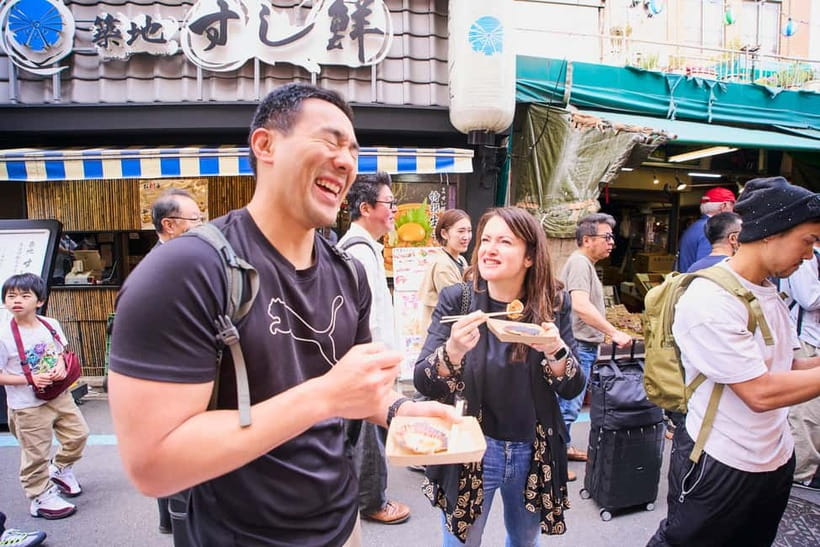
The market becomes more interesting when you pay attention to preparation methods. Your guide can explain how ingredients are preserved and why that changes their taste.
Traditional preservation methods can concentrate flavor and add savory depth. You may encounter dried, cured, pickled, or otherwise treated products, along with specialty spices and seasonings. The point is not simply that Japanese food is fresh. It is that freshness and preservation often work together.
That is where the tour provides value beyond a casual market visit. You can ask why an ingredient is prepared in a certain way, how it might be used at home, or what kind of dish it suits. Rita appreciated having a guide identify ingredients and explain cooking methods, which is exactly the sort of help that makes an unfamiliar market easier to understand.
The guides also explain craftsmanship. Cutting fish, preparing seafood, selecting produce, and handling traditional ingredients all require care. If you are interested in Japanese cuisine, these details make the tasting feel less like a snack crawl and more like an introduction to the work behind each bite.
The final 20 minutes around the market
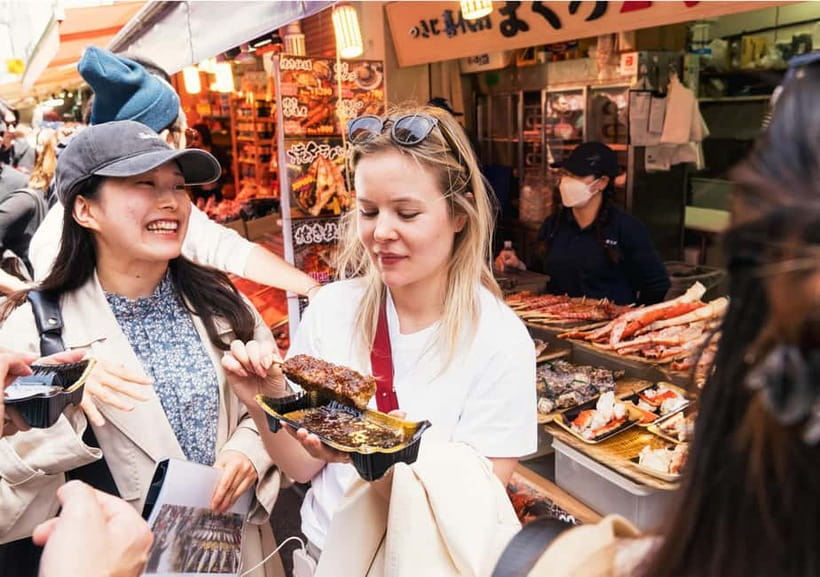
The last part of the walk adds another 20 minutes of guided exploration in the outer market. This gives you time to revisit an area, ask questions, or see shops you may have missed during the tasting section.
Some people use this part to look for gifts or cooking ingredients. Ceramics, rice snacks, seasonings, and other traditional goods have all been mentioned as useful discoveries. You may also receive suggestions about where to shop later, which is handy if you want to return without a guide.
The pace can feel quick because there is a lot to see and eat. A two-hour tour is enough for an introduction, not for a slow inspection of every lane. If you want to study kitchenware, compare seafood stalls, or sit down for a full meal, plan additional time after the tour.
The walk returns to Tsukiji Hongwanji Temple. This makes the route easy to understand, though the exact meeting and drop-off option should be checked when booking.
Guide quality and group atmosphere
The strongest feature of this outing is the guide. The tour has been led by people including Kawa, George, Mao, Chihiro, Tomo, Kenny, Daichi, Naoto, Ayaka, and others. Names and assignments can change, but the repeated pattern is clear: guides are valued for friendly explanations, good English, food recommendations, and attention to personal preferences.
Some groups have been very small, even consisting of one person. A small group makes it easier to ask questions and adjust the tasting choices. It also means the guide can pay attention to dietary comfort, curiosity, and appetite, although the supplied information does not promise specific dietary arrangements.
The guides are also practical. George has been praised for steering people toward good food at reasonable prices. Maggie appreciated having Naoto handle queues while the group explored nearby stalls. In hot weather, Jihoro looked for shade, showing the sort of small care that can matter during a walking tour.
Do not expect a formal cooking class. You may see food preparation and hear useful explanations, but the core format is a guided market walk with tastings and cultural commentary.
Is $22 good value?
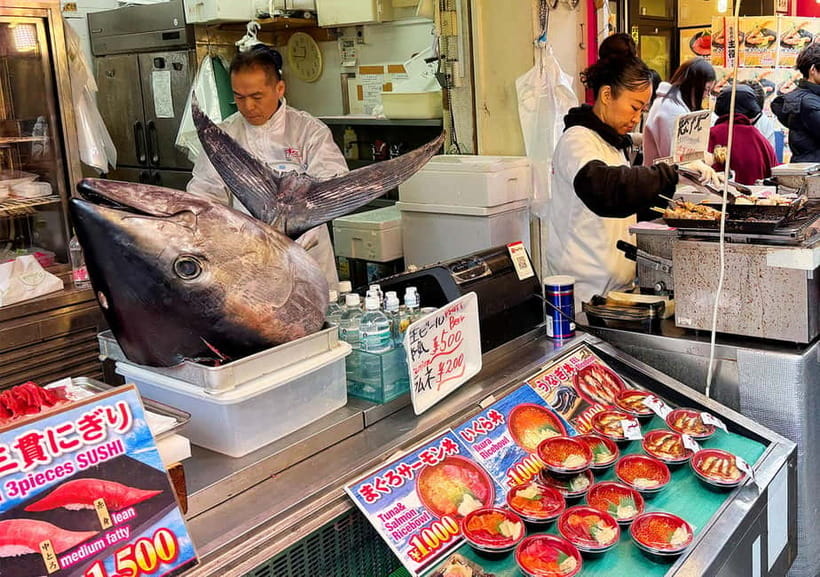
At $22 per person, the price is modest for a two-hour guided introduction in central Tokyo. You are paying for the guide’s market knowledge, the temple visit, the route, the explanations, and help choosing food.
The value is highest if this is your first visit to Tsukiji. You could walk around alone, and one participant reasonably felt that some research might be enough to manage the market independently. That is fair. The market is accessible, and independent visitors can choose their own pace.
The difference is that a guide can reduce guesswork. You get help identifying ingredients, understanding food traditions, finding worthwhile stalls, and choosing items that suit your budget. You also gain cultural context that is difficult to pick up from signs alone.
Food purchases are separate in practical terms, so bring cash beyond the tour price if you want to sample more. The flexible approach is a benefit because you are not forced to pay for foods you do not want, but your final spending depends on your appetite.
Choose your day carefully
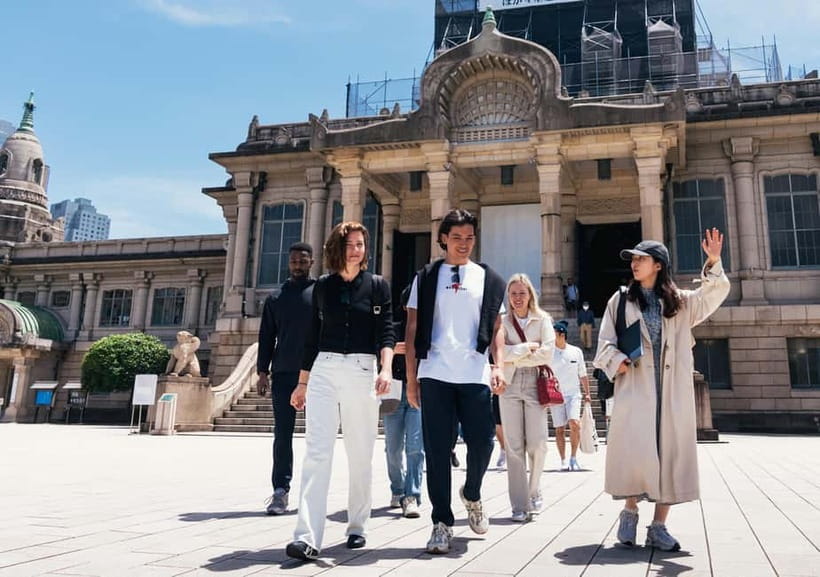
The market is not equally active every day. On Wednesdays, Sundays, and national holidays, about half of the outer market shops may be closed. The tour still operates, but the route and food choices can differ.
If your schedule allows, avoid those days for the fullest selection. One participant specifically wished they had not chosen a Wednesday because fewer stalls were open and they missed a fish-cutting demonstration.
That does not make a Wednesday tour pointless. Some shops remain open, and the temple, guide explanations, and market atmosphere are still available. Just set your expectations properly. A day with many closures may feel quieter and offer fewer tastings.
Accessibility, timing, and practical comfort
The activity is listed as wheelchair accessible, and the duration is two hours. Starting times vary, so check availability when choosing a date.
Wear comfortable shoes because the experience is on foot. The supplied information specifically asks you to bring cash, which is the most important practical tip. Napkins and wipes may be supplied by the guide, but carrying your own is still sensible around market food.
The tour is offered in English with a live guide. English quality has been praised repeatedly, including George’s clear explanations and Kawa’s attentive answers.
Because the market is active and compact, stay close to your guide. If you want a particular food, have a strong preference, or wish to avoid something, say so early. The guides are accustomed to adjusting recommendations.
Who should book this Tsukiji walk?
I would choose this tour if you are visiting Tsukiji for the first time, enjoy trying several small foods, or want help making sense of Japanese ingredients. It also suits people who like a mix of culture and food rather than a meal at one restaurant.
Families and mixed groups may appreciate the flexible spending. One person can try wagyu, another can focus on seafood, and everyone can still share the market walk.
Food enthusiasts will value the explanations about preservation, fish preparation, wasabi, and cooking methods. The tour also works well early in a Tokyo stay because the guide can suggest places and foods to explore later.
I would skip it if you prefer total independence, want to spend hours at a single stall, or already know Tsukiji well. You can explore the market without a guide, and two hours may feel short if your main goal is shopping.
Final verdict: book it for guidance, not just food
This is a well-priced introduction to Tsukiji that combines a temple visit, market orientation, tastings, and practical food advice. The fresh wasabi, varied bites, and fish preparation explanations give it character, while the guides make the unfamiliar parts easier to enjoy.
Book it if you want a friendly local escort through your first Tsukiji visit, especially on a day when most shops are open. Avoid Wednesdays, Sundays, and national holidays if you want the broadest market selection, and bring cash so you can follow your appetite beyond the included walk.
FAQ
How long does the Tsukiji Fish Market tour last?
The tour lasts two hours. About 20 minutes are spent at Tsukiji Hongwanji Temple, about 80 minutes in the outer market with food tasting, and another 20 minutes exploring the market.
What language is the tour offered in?
The tour is offered in English with a live guide.
Where does the tour begin?
The tour begins at Tsukiji Hongwanji Temple. The exact meeting option may vary depending on the booking selected.
Does the tour visit Tsukiji Hongwanji Temple?
Yes. The temple is included as a guided stop and takes about 20 minutes.
What foods can I try?
Food options can include tuna, sushi, wagyu, grilled scallops, eel, fish cake, omelet, dumplings, skewered octopus, rice snacks, and other traditional market foods. The exact selection can vary.
Is fresh wasabi included?
The experience includes a special wasabi set from the guide, and fresh wasabi may be grated or provided during the tour.
Should I bring cash?
Yes. Cash is listed as an important item to bring, particularly if you want to purchase additional food or goods at the market.
Are shops open every day?
About half of the Tsukiji Outer Market shops may be closed on Wednesdays, Sundays, and national holidays. Tours still operate, but the available shops and food selection may differ.
Just added around Tokyo
- Tsukiji Fish Market Street Food & Culture Walking Tour★ 5.0 · 8 reviews
- Tokyo Fish Market Food Tour: Street Food & Friendly Guide★ 3.0 · 2 reviews
- Ueno Park and Ameyoko Street Food Market Half Day Walking Tour★ 5.0 · 3 reviews
- Tokyo:Enjoy street food & Japanese food culture at Tsukiji Market★ 5.0 · 6 reviews
- Tokyo Street Food Tour – 7 Japanese Foods★ 5.0 · 16 reviews
- Tsukiji Fish Market: Street Food Tour with Tasting★ 5.0 · 4 reviews
- Matsushima Bay, Islands and Seafood Market day tour from Tokyo★ 5.0 · 2 reviews
- Tokyo: Private Tsukiji Fish Market Tour with 3 Food Stops★ 5.0 · 9 reviews
Street Food Tours, compared.

Old Town, Creek, Museums, Souks, & Street Food Tour
What we made of it →
Ho Chi Minh City Street Food Tour & Sightseeing By Motorbike
What we made of it →
Comuna 13 Graffiti Tour, Cable Car & Street Food
What we made of it →
Old Town, Souks, Street Food, Guided Tour & Abra Ride
What we made of it →
Small Group Hanoi Street Food Tour with a Real Foodie
What we made of it →
Saigon By Night and Street Food By Motorbike | Opt: Ao Dai Riders
What we made of it →Where this tour turns up