
Review · BANGKOK
Bangkok: Chinatown Street Food Tour with 8+ Local Dishes
Follow your appetite through Bangkok. This three-hour walk links Hua Lumphong and Chinatown with eight or more Thai tastings at six local stops, giving you a useful introduction to dishes you might not order on your own. The food reflects the area’s Chinese roots, but the cooking is distinctly Thai, with spicy, sweet, grilled, steamed, and rice-based flavors appearing along the way.
I like the small group, limited to 10 people, because it gives the guide room to explain dishes and keep everyone together on busy streets. I also like the mix of food stalls, cookshops, and restaurants, rather than a tour that stays in one polished dining room. The main drawback is the price: at $73 per person, it is not cheap by Bangkok standards, especially since transportation is not included.
Key points at a glance
- Six stops and 8+ tastings: You get a full meal’s worth of food, not just a few sample bites.
- Hua Lumphong meeting point: The tour starts outside Hua Lamphong MRT Station exit 3, where you look for an orange umbrella.
- Thai food with Chinese influence: Chinatown’s background shapes the food, especially at the dim sum and dessert stops.
- A three-hour walking tour: Children are welcome, but the pace and distance may be tiring for young children.
- Small groups of up to 10: This makes it easier to ask questions and hear the English-speaking guide.
- A secret dish included: One tasting is kept as a surprise, adding a little fun to the route.
Starting at Hua Lamphong MRT Station exit 3
Your meeting point is outside Hua Lamphong MRT Station exit 3 on Rong Muang Road. Look for the guide holding an orange umbrella. That detail matters in Bangkok, where a clear landmark can save you from wandering around a station entrance looking for a group.
The tour ends back at the same meeting point, so you do not need to arrange a pickup or figure out a new location at the end. Transportation is not included, but the starting point is easy to identify if you are using the MRT.
The tour is conducted in English. Since the group can have up to 10 people, you should get a more personal experience than on a large coach-style food outing. The guide can explain what you are eating, answer questions, and help you follow the route through streets that may feel confusing at first.
Bring an umbrella. Bangkok weather can change quickly, and the tour continues even if the sky turns wet. Comfortable walking shoes are also sensible, although the supplied information specifically warns that the activity is not suitable for people with mobility impairments or wheelchair users.
More Chinatown Food Tours in Bangkok:
- Bangkok Tuk-Tuk Tour by Night with Chinatown Street Food Meal
★ 5.0 · 635 reviews - Bangkok Tuk-Tuk by Night with Chinatown Street Food Meal
★ 4.6 · 263 reviews - Bangkok: Chinatown Food Tour with Michelin Food Stalls
★ 4.8 · 226 reviews
First tastes: basil chicken and jasmine rice
The food begins with spicy basil chicken served over jasmine rice. This is a smart opening dish because it introduces one of Thailand’s most familiar flavor combinations in a filling, practical way.
Expect the basil chicken to bring heat and strong seasoning. The jasmine rice helps soften the spice and gives you a useful base before the rest of the meal. If you are new to Thai food, this first stop gives you an immediate sense of the balance between rice, meat, herbs, and chili.
The portion is part of a larger series of tastings, so you should pace yourself. You are not stopping for one dish and then walking on hungry. By the end of the tour, the eight or more tastings can add up to a substantial meal.
This stop also shows why a guide helps. A dish such as basil chicken may look familiar, but the guide can explain how it fits into everyday Thai eating and how the local version differs from what you might find outside Thailand. You will get more from it if you treat the tasting as both lunch and a short food lesson.
Grilled pork, sticky rice, and local beer
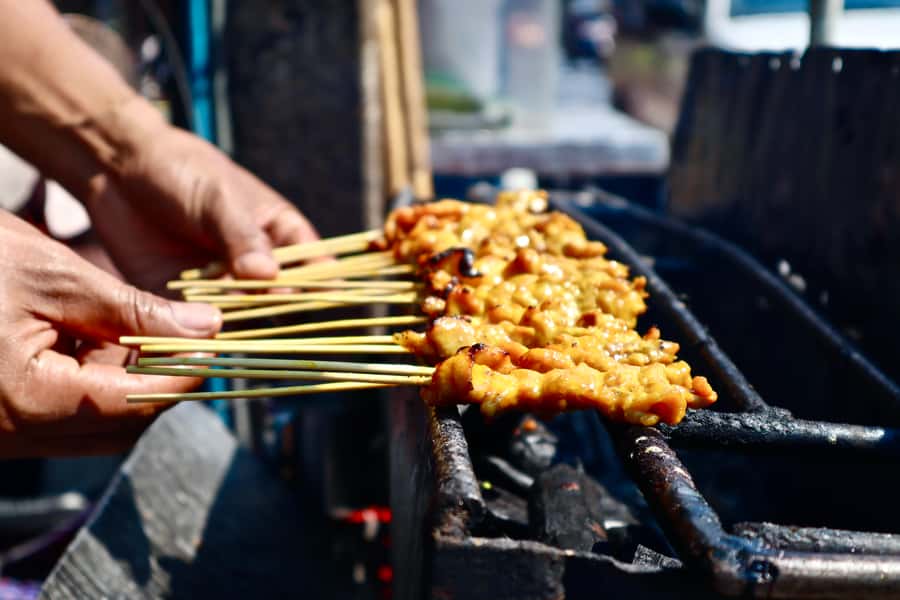
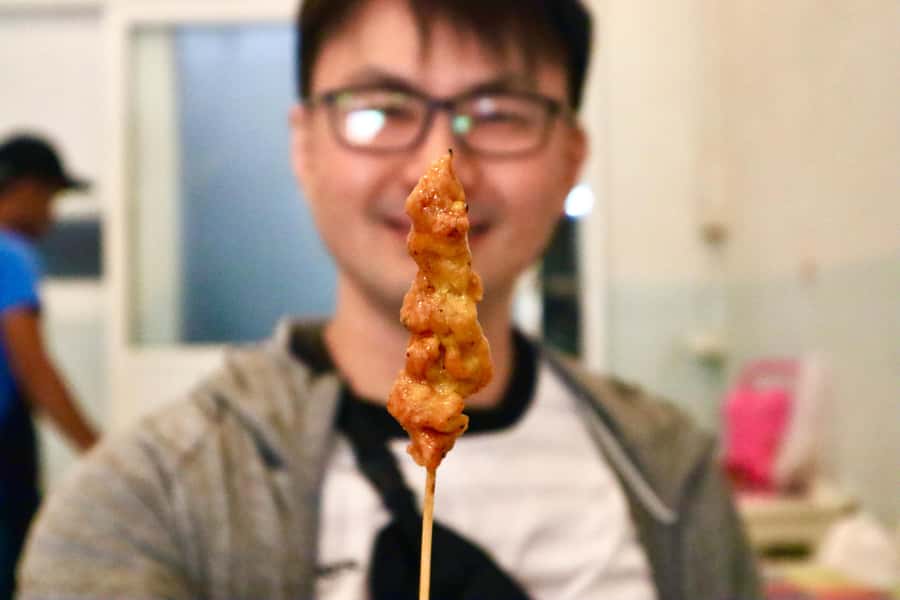
The next major taste is spicy grilled pork with seasoning, served with sticky rice and a local beer. This pairing shifts the meal from a saucy rice dish to something smoky, salty, and suited to eating by hand.
Sticky rice gives the pork a chewy contrast and helps balance the seasoning. The beer is included as part of the tasting experience, though non-alcoholic drinks are available for children. If you do not drink alcohol, make that clear to your guide so the alternative is arranged.
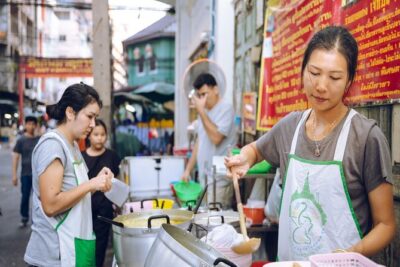
This is one of the stops where the route feels most connected to ordinary local eating. Rather than simply sampling famous Thai dishes in a restaurant, you get a combination that works as a casual meal. The guide also helps make the stop feel less awkward, since the group arrives with an existing relationship with the food vendors.
That relationship has practical value. A guide who knows the stops can help the group receive food efficiently and can explain what is being served without leaving you to guess. One particularly positive account described the vendor service as excellent at each location, which suggests that the guide’s local connections are an important part of what you are paying for.
Dim sum in a Chinatown restaurant
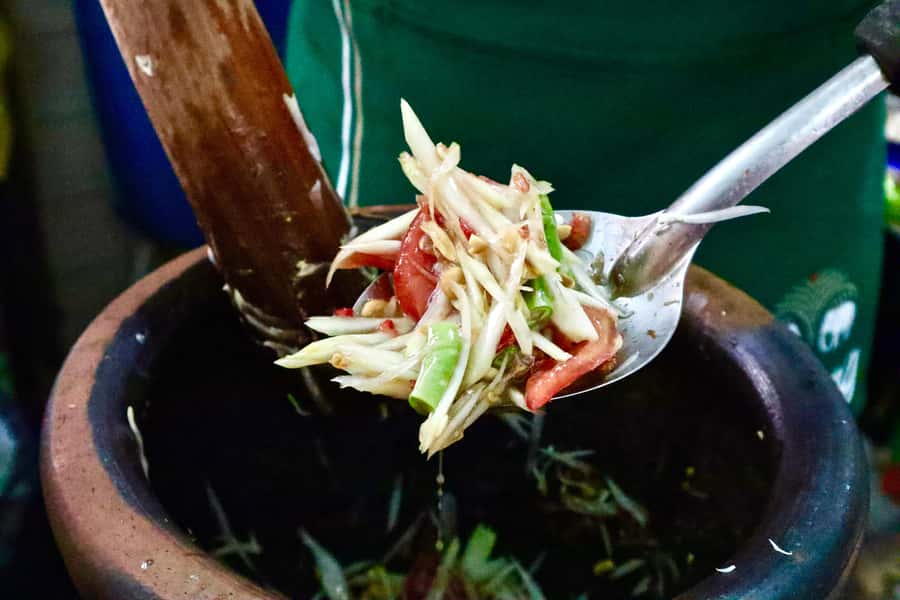
The route then moves to a restaurant for dim sum. This stop gives the tour a clear Chinese note and helps explain why Chinatown is different from other Bangkok food areas.
The neighborhood was originally settled by Chinese people, but the food today is not simply Chinese food transplanted into Thailand. Thai flavors and local habits have shaped what you find here. The dim sum stop offers a direct way to see that blend, especially after the earlier Thai dishes.
Restaurant seating can also give you a short break from walking. That is welcome on a three-hour route, particularly in hot weather. At the same time, you should not expect a long sit-down meal. The tour continues through several venues, so the purpose is to taste and learn rather than linger over a single order.
I like this part of the route because it adds variety. A food tour can become repetitive if every stop is another noodle bowl or grilled skewer. Here, the change from street food to restaurant dim sum keeps the meal moving in a different direction.
More Street Food Tours in Bangkok:
- Bangkok: Michelin Guide Street Food Tour by Tuk Tuk
★ 4.4 · 1,274 reviews - Bangkok: E-Scooter Night Tour with Local Street Food
★ 4.8 · 488 reviews - Night Street Food Tour of Bangkok’s Chinatown
★ 5.0 · 173 reviews - Bangkok Food Tour by Tuk Tuk – Hotel-pickup & Dinner
★ 5.0 · 113 reviews
Chinatown streets and Asian desserts
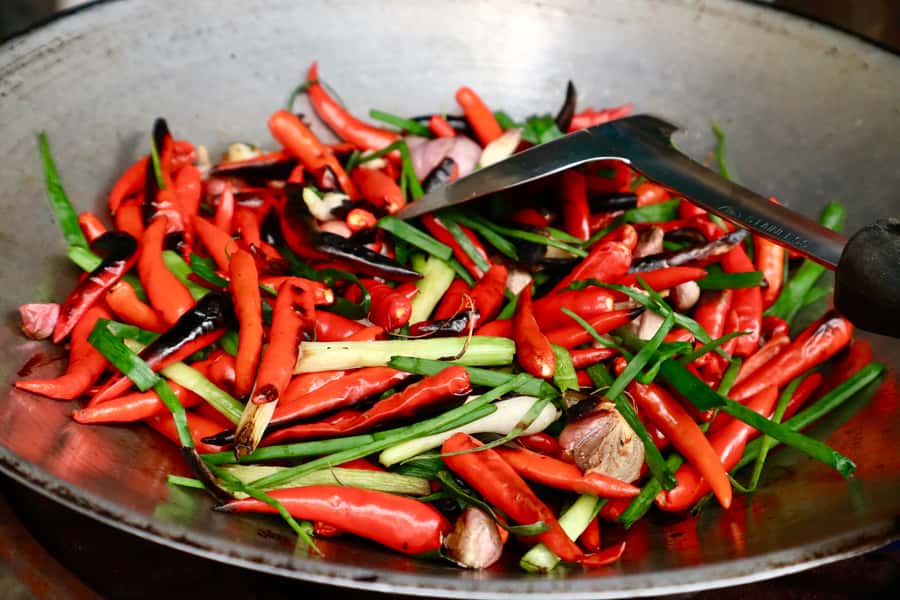
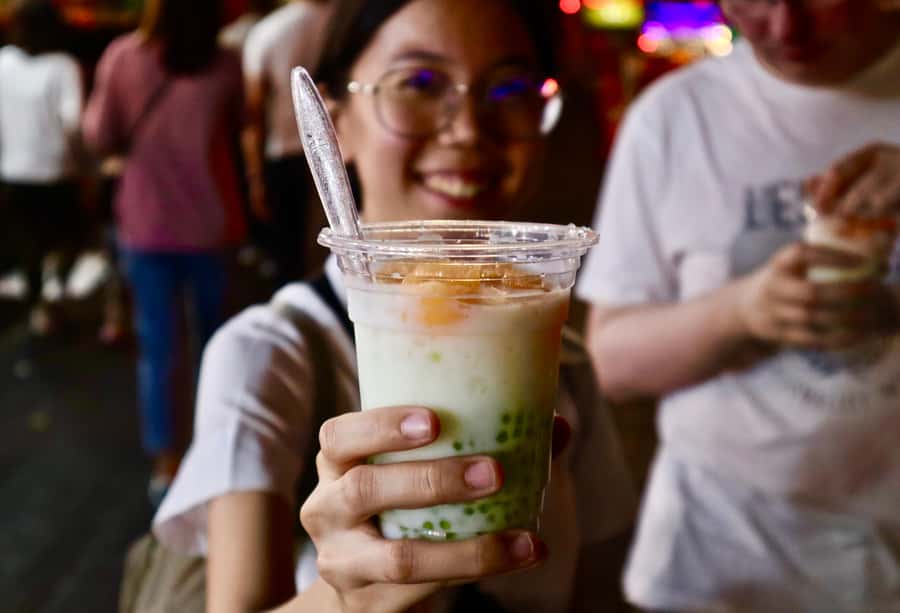
In Chinatown, you will taste Asian desserts while walking through the streets. This is a useful place for something sweet, since the earlier dishes lean heavily toward spice, salt, grilled seasoning, and rice.
Dessert also lets you notice another side of Chinatown. The district is not only about savory street food. Its Chinese background appears in the sweets and in the way different food traditions share the same streets.
The wording of the experience does not specify each dessert, so you should not book this expecting a fixed list of named sweets. The exact choice may depend on what is available during the tour. What is clear is that you will receive dessert tastings as part of the Chinatown walk.
This section may be especially enjoyable if you like to see food in context. You are not being taken from one isolated dining room to another. You are walking through the neighborhood, taking in the city around you, and eating as you go. The tradeoff is that street conditions can be crowded, hot, or uneven, so the walk demands reasonable stamina.
The secret dish keeps the route playful
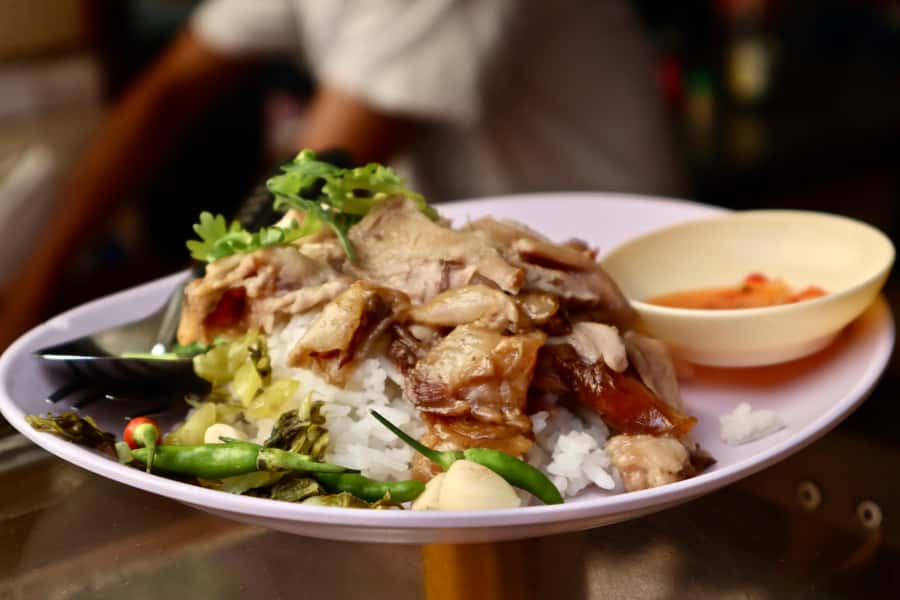
As with the other Secret Food Tours, the experience includes a secret dish. You are not told exactly what it is in advance, so part of the fun is allowing the guide to make one choice for you.
A secret dish can be a small detail, but it changes the mood. Instead of checking off a printed list, you have one surprise built into the meal. It also gives the guide a chance to show you something that may not fit neatly into the better-known Thai food categories.
You should still contact the supplier by email before booking if you have dietary needs. The tour may be able to accommodate them, but you should not assume every tasting can be changed on the spot. This is particularly important when the menu includes multiple vendors and a surprise dish.
What six venues and 8+ tastings really mean
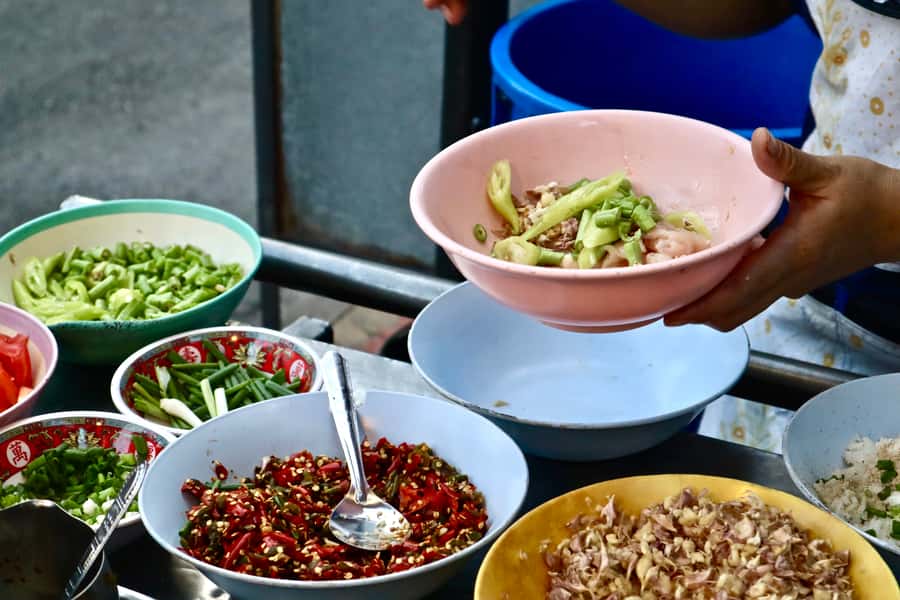
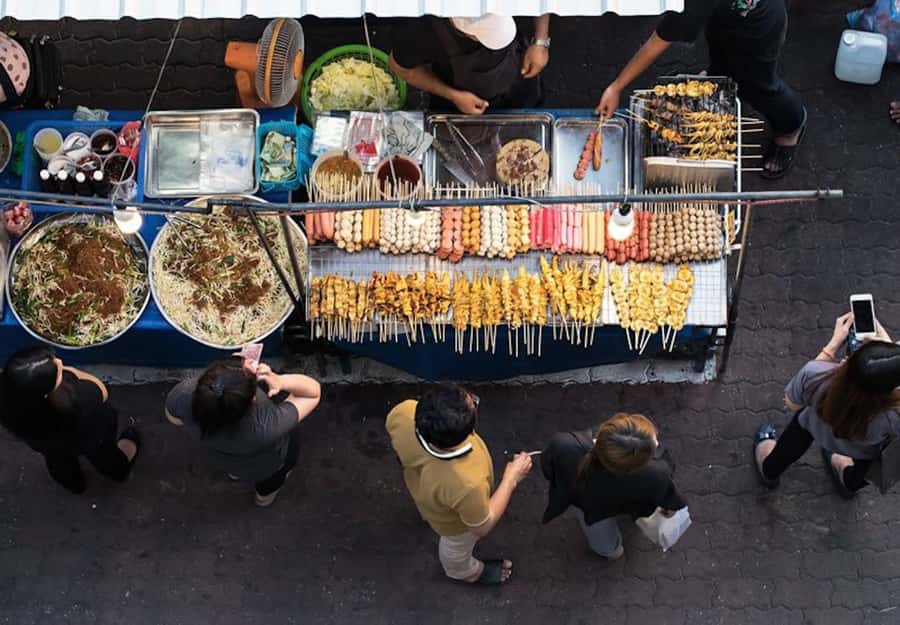
Six venues is a strong format for a three-hour tour. You see more than one type of food business, and each stop contributes a different part of the meal. The route includes cookshops, street-style food, a restaurant, and dessert stops.
The number of tastings also matters. Eight or more samples usually gives you enough food to treat the tour as lunch or an early dinner, rather than an appetizer before a separate meal. One account described nine total stops with plentiful food and drink, although the official details specify six stops. The safest expectation is six venues and at least eight tastings, with the exact count possibly varying.
That uncertainty is not necessarily a problem. Food tours depend on operating vendors, available dishes, and the guide’s route. You should arrive hungry but not expect a rigid restaurant-style menu. The best approach is to see the tour as a guided tasting route, not a guaranteed list of exact portions.
The guide is also central to the experience. A good guide turns a string of snacks into a story about place, food, and daily life. Jan was singled out for being a wonderful guide, which is useful to know if you happen to see that name when choosing a date. The tour is not just about eating quickly. It includes explanations of Thai culture and food traditions along the way.
Is $73 good value in Bangkok?
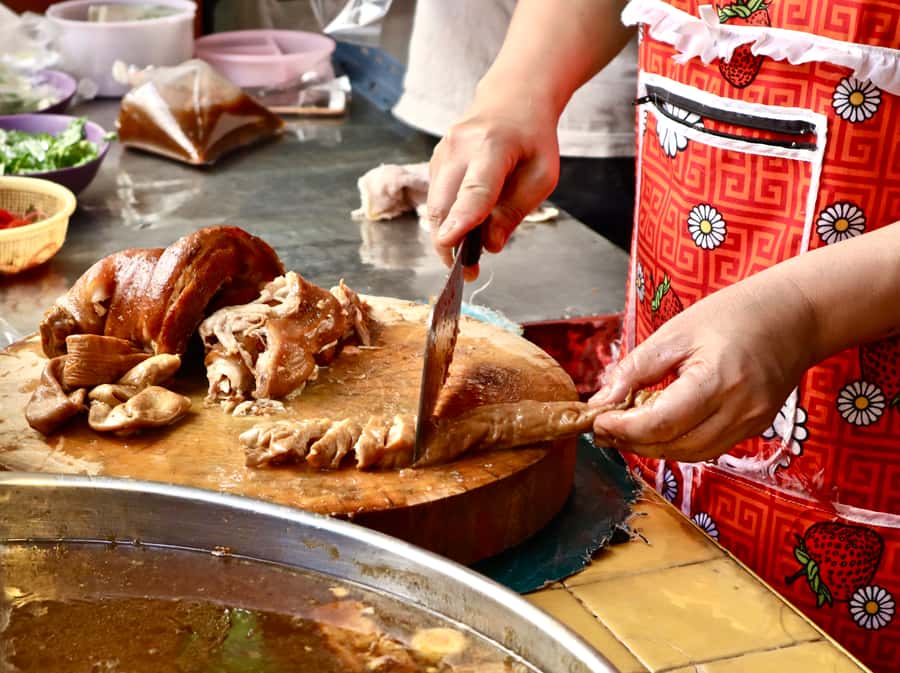
At $73 per person, this is a premium food walk for Bangkok. You can eat very cheaply in the city, so the price will not make sense if you only measure it by the cost of the food itself.
You are also paying for the guide, the planning, the small group, the vendor relationships, and the chance to visit places you might not find alone. Several stops in unfamiliar side streets can be hard to organize independently, especially on a first visit. The guide removes much of that guesswork.
Still, one participant felt the price did not quite match the value for Thailand. That is a fair concern. If you already know Bangkok well, speak some Thai, and enjoy finding food stalls independently, you may prefer to spend $73 across several self-guided meals.
I would see the price as more reasonable for a first visit, for people who want cultural context, or for anyone who prefers a planned route. It is less compelling if your main goal is the cheapest possible meal. Since transportation is excluded, factor in the cost of getting to Hua Lamphong MRT Station and any plans after the tour.
Who should book this Chinatown food walk?
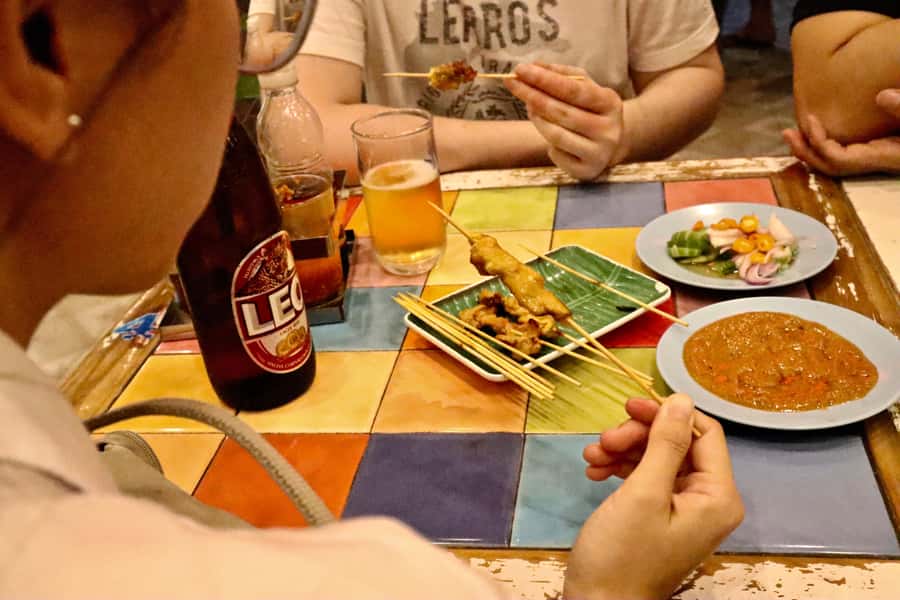
This tour suits people who want a guided introduction to Bangkok food without committing to a full-day excursion. You get several dishes, a local guide, and a manageable three-hour time frame.
It is also a good choice if you are nervous about ordering from unfamiliar stalls. The guide handles the route and explains the food, while the small group keeps the experience more personal. You can try dishes with less worry about choosing poorly or missing the best local stops.
Families can join, and children age two or under go free. Children can receive non-alcoholic drinks, but the long walk may be tiring. Older children who enjoy tasting new foods may do well, while very young children could find the heat, crowds, and three-hour duration difficult.
This is not the right choice for wheelchair users or people with mobility impairments. It is a walking route through streets and food venues, and the access information makes that limitation clear.
People with food allergies or strict dietary requirements should email the supplier before booking. Do not rely on being able to make last-minute changes at every stop.
Practical tips for making the tour better
Arrive at Hua Lamphong MRT Station exit 3 with enough time to find the orange umbrella without rushing. The start is specific, but stations and surrounding streets can still take a moment to navigate.
Eat lightly beforehand. The combination of basil chicken, grilled pork, sticky rice, dim sum, desserts, drinks, and the secret dish can add up quickly. You want enough appetite to enjoy the later stops.
Carry an umbrella, even if the morning begins clear. It can protect you from rain and sun, and the tour information specifically asks you to bring one.
Wear shoes suited to a long city walk. The tour is not suitable for wheelchair users or people with mobility impairments, and the route may be tiring for anyone unused to walking in Bangkok heat.
If you do not drink alcohol, ask for a non-alcoholic option. Children can receive non-alcoholic drinks, and the guide should know about your preference before the beverage stop.
Should you book the Bangkok Chinatown Street Food Tour?
Book it if you want a structured, food-heavy introduction to Chinatown and value a local guide more than the lowest possible price. The combination of six venues, eight or more tastings, Chinese-Thai food connections, and a small group gives you a useful first look at Bangkok eating.
Skip it if $73 feels high for a three-hour meal, or if you prefer to explore food stalls alone. The price is the clear sticking point, and Bangkok offers plenty of inexpensive eating for independent visitors.
For most first-time visitors who want help finding local favorites, I think the tour makes sense. Go hungry, bring an umbrella, and expect a walk as much as a meal.
FAQ
How long does the Bangkok Chinatown food tour last?
The tour lasts three hours.
Where does the tour begin?
It begins outside Hua Lamphong MRT Station exit 3 on Rong Muang Road. The guide will be holding an orange umbrella.
Where does the tour end?
The tour ends back at the meeting point outside Hua Lamphong MRT Station.
How many tastings are included?
The tour includes eight or more tastings at six different venues.
Are children allowed to join?
Yes. Children are welcome, and children age two or under can join free. The tour is a long walk, and non-alcoholic drinks are available for children.
Can the tour accommodate dietary requirements?
You should email the supplier before booking to ask if your dietary needs can be accommodated. Do not wait until the tour begins to raise the issue.
Just added around Bangkok
- LR-01 TaLad NangLerng, ride along the old town and try local street foods★ 4.5 · 13 reviews
- Famous Thai Street Food Tasting Experience!★ 5.0 · 4 reviews
- Street Food at China Town★ 4.5 · 4 reviews
- Private – STREET FOOD TOUR THONBURI incl. dinner★ 4.5 · 5 reviews
- Bangkok 3-in-1 Tour: Longtail Boat,TukTuk & Street Food Adventure★ 5.0 · 73 reviews
- 4-Hour Hidden Bangkok TukTuk Street Food Guided Tour★ 5.0 · 23 reviews
- Private Tour : Bangkok Night Private Tuk Tuk Tour and Street food★ 4.5 · 5 reviews
- The 10 Tastings of Bangkok: Private Street Food Tour★ 4.5 · 49 reviews
Chinatown Food Tours, compared.
Bangkok Tuk-Tuk Tour by Night with Chinatown Street Food Meal
What we made of it →
Bangkok Tuk-Tuk by Night with Chinatown Street Food Meal
What we made of it →
Chinatown Food Tour with Michelin Food Stalls
What we made of it →
Night Street Food Tour of Bangkok’s Chinatown
What we made of it →
Sydney’s Chinatown Street Food and Stories Walking Tour
What we made of it →
Bangkok Hidden Gems: Talad Noi, Chinatown & Street Food Tour
What we made of it →
Michelin Premium Food Tour with Hawker Centre & Chinatown Tour
What we made of it →Where this tour turns up