
Review · ROME
Flavors of Rome Campo Marzio Street Food Tour and Sightseeing
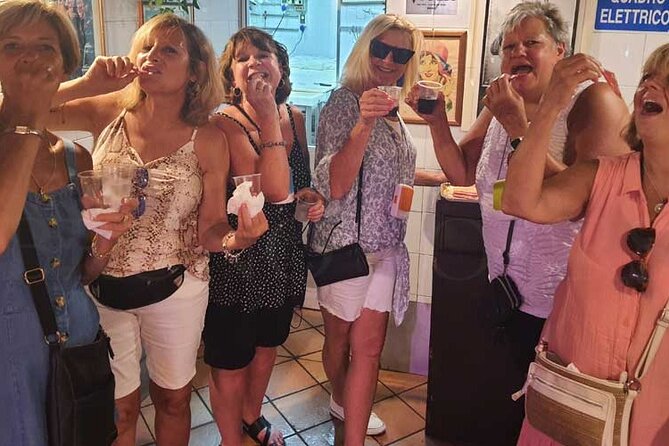
Rome tastes better on foot. This 2.5-hour small-group walk links Roman food with the streets and ruins that give each bite its meaning. I like the mix of familiar sights and less formal food stops, especially the crisp fried supplì, Roman-Jewish artichoke, homemade pizza, and gelato. I also like the route’s size, capped at 15 people, which gives your guide room to answer questions.
The main drawback is the food policy. This tour cannot accommodate gluten-free, dairy-free, or vegan diets, and nut or dried-fruit allergies may carry a cross-contamination risk. Vegetarians can be accommodated, but you must say so in advance. Drinks are not included, so bring some extra euros for water or anything else you want along the way.
Four things to know before you book
- Four savory tastings plus gelato: You sample cheese and salumi, supplì, carciofo alla giudia, homemade pizza, and artisanal gelato.
- A history walk with food attached: The route passes Campo de’ Fiori, the Jewish Ghetto, the temples of Apollo Sosianus and Bellona, Largo Argentina, and the Pantheon.
- A compact route through central Rome: The walk begins at Piazza Campo de’ Fiori and ends near the Pantheon at Piazza di Sant’Eustachio.
- Small by city-tour standards: The maximum group size is 15, a useful limit for busy market lanes and food counters.
- Guide quality matters here: Ramona, Mattei, and Monica received especially warm praise for humor, clear explanations, and making the food part of the history.
- Rain or shine: Wear shoes suited to Rome’s uneven streets and be ready to continue in wet weather.
Starting at Campo de’ Fiori with cheese and salumi
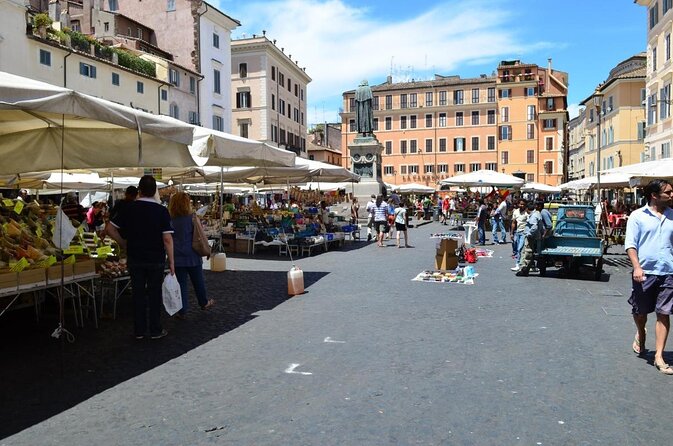
The tour starts at Piazza Campo de’ Fiori, one of Rome’s best-known public squares. Your guide takes you through the open-air market first, then into a traditional Roman norcineria, a shop specializing in cured meats and related products.
This is a smart beginning because it introduces the everyday side of Italian eating before the route moves toward ancient monuments. You taste cheeses and salumi produced by Italian farmers, with the guide explaining what Romans eat and how to approach these foods. The point is not simply to collect samples. It is to understand why a slice of cured meat, a local cheese, or a piece of bread can be a normal part of a Roman food stop.
The market itself can be busy, and the square is one of the more popular places in central Rome. A small group helps here. With no more than 15 people, you have a better chance of hearing the guide and staying together while moving between stalls and shops.
The first tasting is also a good test of your expectations. This is not a sit-down meal with a fixed table and a long menu. It is a walking introduction built around small portions. You should arrive ready to keep moving, not expecting a full lunch.
From Campo de’ Fiori, the group tastes supplì while continuing through the streets. Supplì is a Roman fried rice snack, usually associated with a crisp exterior and a soft center. It gives you a distinctly local alternative to the better-known pizza and pasta that dominate many Rome food tours.
More Street Food Tours in Rome:
- Rome: Street Food Tour with Local Guide
★ 4.8 · 4,077 reviews - Rome: Trastevere & Campo de Fiori Street Food Walking Tour
★ 4.9 · 2,768 reviews - Rome Street Food Tour with Local Guide
★ 5.0 · 2,361 reviews
Walking into the Jewish Ghetto for carciofo alla giudia
The next stop takes you into Rome’s Jewish Ghetto, described as the oldest Jewish community in Europe. This section gives the tour more weight than a simple market crawl because the guide connects food with the streets around it.
You receive an overview of the Theatre of Pompey, the Portico of Octavia, and the Fountain of the Turtles. These stops help you read the area as a layered part of Rome rather than just a place to grab lunch. The route does not present these landmarks as isolated photo opportunities. Instead, they become reference points during the walk.
The food here is carciofo alla giudia, a Roman-Jewish fried artichoke. This is one of the most distinctive tastings on the route, and it is often a highlight for people who enjoy trying a dish with a strong connection to its neighborhood.
The artichoke is also a useful reminder that Roman food is not one single tradition. The city’s cooking reflects many communities and centuries of change. A good guide can make that clear without turning the stop into a lecture. Monica was especially praised for explaining how each food related to the history around it, including the Jewish quarter.
This section may be less comfortable for anyone who dislikes fried foods or artichokes, and the tour does not offer a vegan or dairy-free format. If you have a vegetarian diet, contact the provider before the tour rather than hoping to adjust on the day.
Apollo Sosianus, Bellona, and a slice of homemade pizza
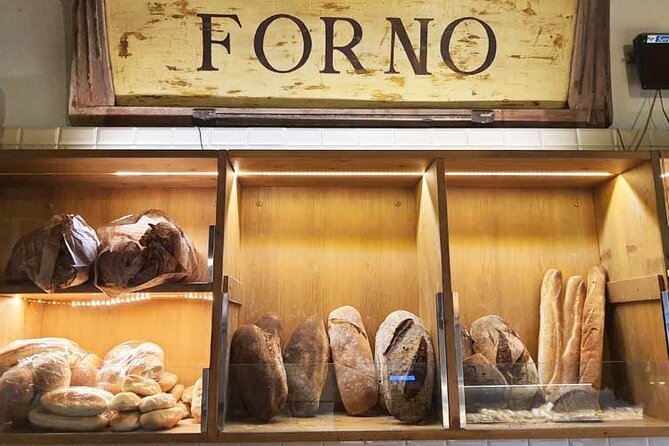
The route then reaches the temples of Apollo Sosianus and Bellona. These ancient remains offer a change of pace from market stalls and neighborhood streets. You pause to look at the architecture before stopping for a slice of homemade pizza.
That order works well. The ruins create a historical pause, and the pizza brings the group back to the practical pleasure of eating in Rome. The tour keeps shifting between old stones and current food, which is one of its strongest ideas.
The pizza stop should not be confused with a formal restaurant meal. You get a slice rather than a complete pizza service, which suits the walking format. It is a chance to compare this Roman street-food experience with the earlier supplì and the later gelato.
I like this part because it shows how little distance separates Rome’s ancient past from its ordinary daily habits. You can look at surviving temple architecture, then eat a simple slice made for modern life. The guide’s commentary is important here, since the ruins can be easy to pass without understanding what you are seeing.
The tour’s history component is broad rather than exhaustive. You will not get a full archaeological tour of every monument in central Rome. You will get enough context to make the route more legible, with food giving the discussion a natural rhythm.
Largo Argentina and the place associated with Julius Caesar
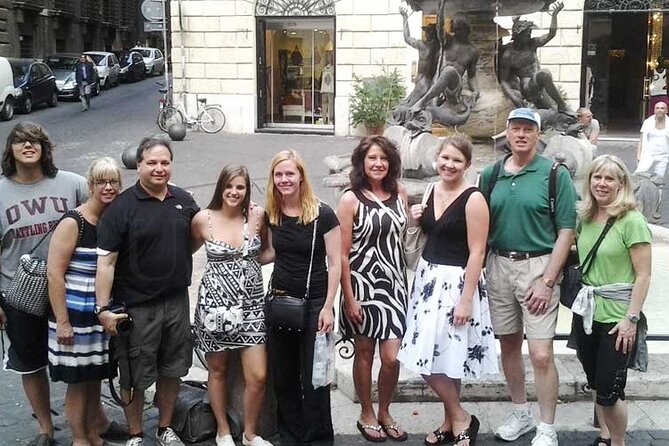
At Area Sacra di Largo Argentina, you walk around a group of Republican temples. The site is also associated with the assassination of Julius Caesar, making it one of the route’s most recognizable historical moments.
This is a good stop for anyone who enjoys seeing major Roman history in an open setting rather than only inside museums. The remains can look confusing without explanation, so the guide’s overview adds real value. You are not just passing another excavation. You are getting a reason to remember it.
The site also fits the structure of the tour. After the market, food shops, Jewish Ghetto, and pizza, Largo Argentina brings the focus back to ancient Rome. It keeps the experience from becoming a string of unrelated tastings.
Do not expect a long private visit or a detailed archaeological seminar. The listed time at each stop is about 30 minutes, and the whole route has to reach the Pantheon on schedule. Think of the history as clear orientation, with enough detail to make later independent sightseeing more rewarding.
If Monica is leading your group, you may get especially strong connections between the ancient sites and the food. Her explanations were praised for giving even repeat visitors a fresh appreciation of Rome, including the kind of playful historical-food connection remembered as historical lasagna.
Same place, a different plate:
- Rome: Trastevere Street Food Walking Tour with Local Expert
★ 4.8 · 1,784 reviews - Roman Food Tour with Visit to the Trionfale Food Market
★ 5.0 · 471 reviews - Trastevere & Campo de’ Fiori Street Food Tour, Eat Like a Local
★ 5.0 · 207 reviews - Hidden Rome: Small Group E-Bike Tour with Street Food Stops
★ 5.0 · 169 reviews
Ending at the Pantheon with artisanal gelato
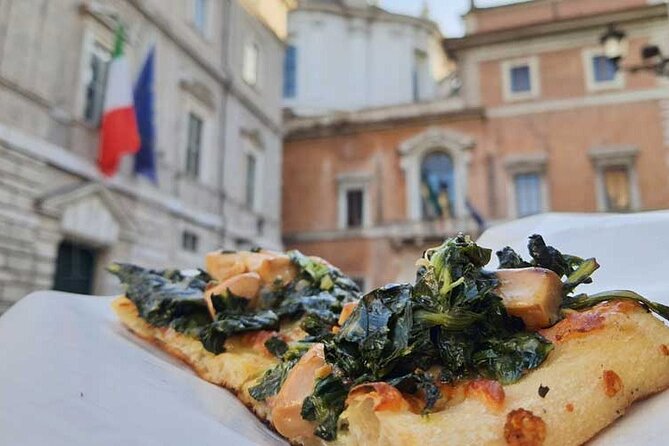
The tour finishes at the Pantheon, one of central Rome’s essential landmarks. The end point is Piazza di Sant’Eustachio, a short distance from the monument and convenient for continuing your day in the historic center.
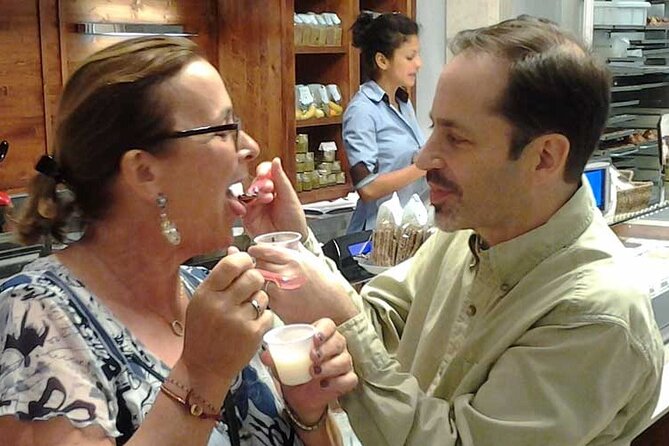
Your final tasting is artisanal gelato. This is a fitting finish after several savory foods, and it gives the guide one last chance to talk about how Romans enjoy a sweet break. Lemon and basil gelato received particular praise, so ask about that combination if it is available during your visit.
The Pantheon also makes the ending practical. You can continue sightseeing nearby rather than spending time returning to the starting point. The tour does not include admission tickets to attractions, but the route itself provides outdoor sightseeing and ends beside one of Rome’s most famous monuments.
This final stop may be the most universally appealing food moment, especially if you have already eaten cheese, salumi, fried rice, artichoke, and pizza. Still, remember that dairy-free visitors cannot use this tour as planned because gelato is part of the food experience and the tour does not accommodate dairy-free diets.
How much food do you actually get?
You receive several tastings, but this is not designed as a full restaurant lunch. The food includes:
- Cheese and salumi at a Roman norcineria
- Supplì
- Carciofo alla giudia
- Homemade pizza
- Artisanal gelato
For many people, that will add up to a satisfying light meal. I would not book it as your only substantial food plan for the day if you usually need large portions. A breakfast beforehand can help, particularly if your tour time falls between meals.
The variety is the real value. You try cured food, fried food, pizza, a vegetable-based specialty, and gelato in one compact route. You also learn how each item fits into a neighborhood or a piece of Roman history.
Drinks are excluded. That is a small but important cost to remember, especially in warm weather. Carry water or budget for buying it during the walk.
Is $54.07 a fair price?
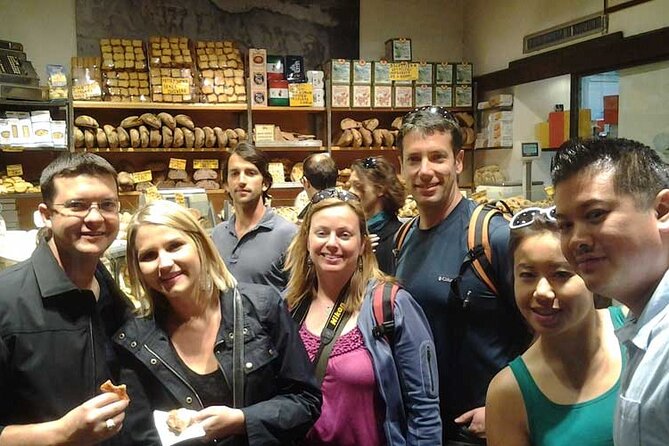
At $54.07 per person, this tour sits in a reasonable range for a guided food walk in central Rome, provided you value the historical commentary as much as the tastings. You are paying for a professional local guide, a small group, several food samples, and a route that covers multiple important areas without requiring separate planning.
The value is strongest for a first visit. The tour helps you get your bearings around Campo de’ Fiori, the Jewish Ghetto, Largo Argentina, and the Pantheon. It also gives you a list of foods to seek out later, such as supplì, Roman-Jewish artichokes, and gelato with unusual flavors.
The value is weaker if you already know these neighborhoods well or want a long, sit-down culinary experience. The route moves at a walking-tour pace, and the portions are tastings rather than courses. You are buying access to a guided introduction, not a luxurious meal.
The 5 rating from 15 published ratings is encouraging, but the sample is small. The most consistent praise centers on the guides, especially Ramona, Mattei, and Monica. That matters because this experience depends heavily on how well the guide connects food, humor, and history.
Group size, pace, and practical planning
The group can include up to 15 people. That is small enough to feel manageable but not private. If you want personal attention without paying for a private tour, this limit is useful. It also means the group may still need to wait at crowded food counters or narrow streets.
The tour lasts about two hours and 30 minutes. Each of the five listed stops is allocated roughly 30 minutes, though walking and food service shape the exact pace. You should wear comfortable shoes and avoid planning a tightly timed attraction immediately afterward.
The start is at Piazza Campo de’ Fiori. The end is Piazza di Sant’Eustachio, near the Pantheon. Both points are in central Rome and near public transportation, so the tour is easy to connect with other sightseeing.
The experience runs rain or shine. A light raincoat, water-resistant shoes, and a flexible attitude are sensible. Since much of the appeal comes from walking through open squares and streets, poor weather may affect comfort even though the tour continues.
Confirmation arrives at booking, and cancellation is free if you cancel at least 24 hours before the start time. Cancellations or changes inside that 24-hour window are not refunded or accepted.
Who should book this Rome food walk?
I would recommend it most strongly to first-time Rome visitors who want a quick orientation with something to eat along the way. It also suits repeat visitors who have seen the major sights but want more context for the neighborhoods around them.
Food-curious couples, solo visitors, and small groups of friends should find the format easy to enjoy. The mix of tasting and sightseeing prevents the history from feeling too formal, while the historic stops prevent the food from feeling disconnected from Rome.
Families may appreciate the short duration, though the pace, fried foods, and group format will not suit every child. Anyone with strict dietary needs should skip this tour unless the provider confirms that your needs can be handled. Gluten-free, dairy-free, and vegan participants cannot be accommodated, and nut or dried-fruit allergies involve possible cross-contamination.
Should you book it?
Book this tour if you want a compact, food-focused introduction to central Rome and enjoy learning why a local dish belongs to a particular neighborhood. The combination of Campo de’ Fiori, the Jewish Ghetto, ancient temples, Largo Argentina, and the Pantheon gives you a useful first look at the city.
Skip it if you want a full meal, a private guide, or a tour built around dietary flexibility. For everyone else, the strongest reason to book is the guide-led connection between food and place. Ramona’s humor, Mattei’s energy, and Monica’s historical explanations show how much the right guide can add.
FAQ
How long does the tour last?
The tour lasts approximately two hours and 30 minutes.
Where does the tour begin?
It begins at Piazza Campo de’ Fiori in Rome.
Where does the tour end?
It ends at Piazza di Sant’Eustachio, near the Pantheon.
What food is included?
The tastings include cheese and salumi, supplì, carciofo alla giudia, homemade pizza, and artisanal gelato.
Are drinks included?
No. Drinks are not included in the tour price.
Can vegetarians join?
Yes, vegetarians can be accommodated if you advise the provider in advance.
Can people with gluten-free, dairy-free, or vegan diets join?
No. The tour does not accommodate gluten-free, dairy-free, or vegan participants.
What is the maximum group size?
The tour has a maximum of 15 participants.
Does the tour operate in bad weather?
Yes. The tour takes place rain or shine.
Can I cancel for a refund?
Yes, you can receive a full refund if you cancel at least 24 hours before the experience starts. Cancellations or changes made less than 24 hours before the start time are not accepted or refunded.
Just added around Rome
- Testaccio Street Food Tour Eat Like a Local★ 3.5 · 2 reviews
- Vegan Street Food Tour in Rome★ 5.0 · 6 reviews
- Tasty Trastevere Street Food Tour in Rome from Tiberine Island to Ponte Sisto★ 5.0 · 25 reviews
- Tasty Rome Street Food Tour around Campo de’ Fiori Market & Jewish Ghetto★ 5.0 · 2 reviews
- Vatican Street Food Tour and Wine Experience with Local Guide★ 5.0 · 7 reviews
- Rome Trastevere Street Food Tour: Eat and Drink Like a Local★ 5.0 · 35 reviews
- Gems of Rome: Small group E-bike tour with street food stops★ 5.0 · 36 reviews
- Campo de’ Fiori & Jewish Ghetto Rome Street Food & Walking Tour★ 5.0 · 5 reviews
Street Food Tours, compared.
Old Town, Creek, Museums, Souks, & Street Food Tour
What we made of it →
Ho Chi Minh City Street Food Tour & Sightseeing By Motorbike
What we made of it →
Comuna 13 Graffiti Tour, Cable Car & Street Food
What we made of it →
Old Town, Souks, Street Food, Guided Tour & Abra Ride
What we made of it →
Small Group Hanoi Street Food Tour with a Real Foodie
What we made of it →
Saigon By Night and Street Food By Motorbike | Opt: Ao Dai Riders
What we made of it →Where this tour turns up