
Review · MARRAKESH
Marrakech Street Food Tour – Taste Local Flavors
Follow your appetite through Marrakech. This two-hour evening walk takes you from Jemaa el-Fnaa Square into the Medina, Mellah market, and the souks, with stops for Moroccan dishes, sweets, spices, and mint tea. It offers a useful look at local food culture without asking you to commit to a full-day cooking class or formal restaurant meal.
I like the mix of savory and sweet tastings, from tagine and roast lamb to dates, pastries, almond drinks, and Moroccan salads. I also like the relaxed finish in a traditional café, where rugs, mosaic lamps, fountains, and mint tea replace the noise of the food stalls. The main consideration is the short two-hour format: you will sample many flavors, but you will not have time for a slow, detailed visit at every stop.
The guides are a major part of the experience. NaJib received especially warm praise for his kindness, food knowledge, and help getting guests back to their taxi, while Abdou was praised for his generosity and friendly manner. Still, your exact route and the amount of time at each food stop can vary, especially between a shared group and a private tour.
Five things worth knowing before you book
- Jemaa el-Fnaa is your starting point: The tour begins at Marrakech’s famous central square, then leads into the Medina and nearby food areas.
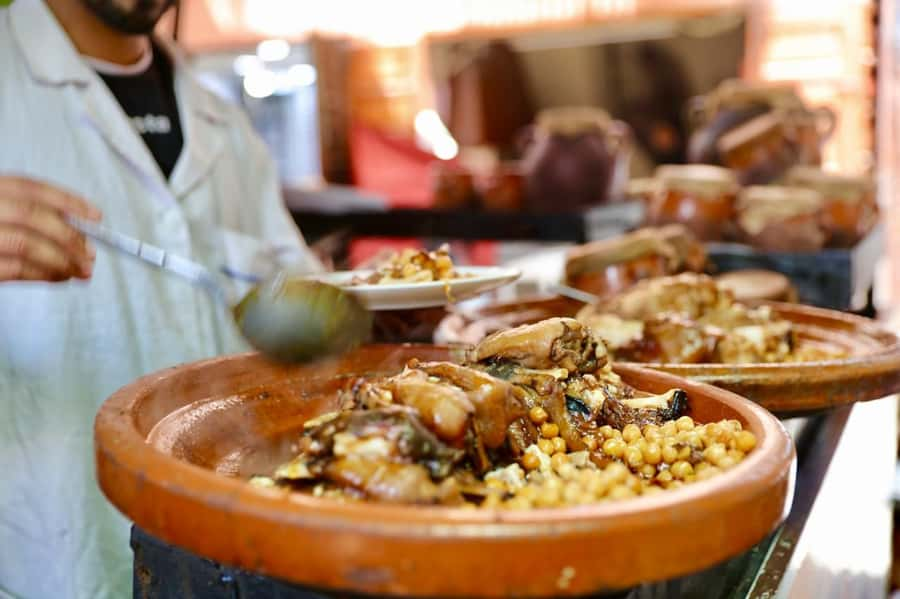
- You sample more than tagine: Expect opportunities to try méchoui, tangia, kofte, pastries, dates, Moroccan salads, almond drinks, and fresh bread.
- The Mellah market adds local detail: You see produce, meats, spices, and everyday food buying rather than only tourist-facing stalls.
- Mint tea closes the evening: The final café stop gives you a seat, a drink, and time to take in Moroccan decoration.
- Private and shared formats are available: A private outing may offer a more personal pace, while a shared tour can suit visitors who want a lower-cost social experience.
Starting at Jemaa el-Fnaa after sunset
The meeting point at Jemaa el-Fnaa Square makes practical sense. It is one of Marrakech’s best-known landmarks, so it gives you an easy place to begin, and the evening setting puts the square’s food culture at center stage.
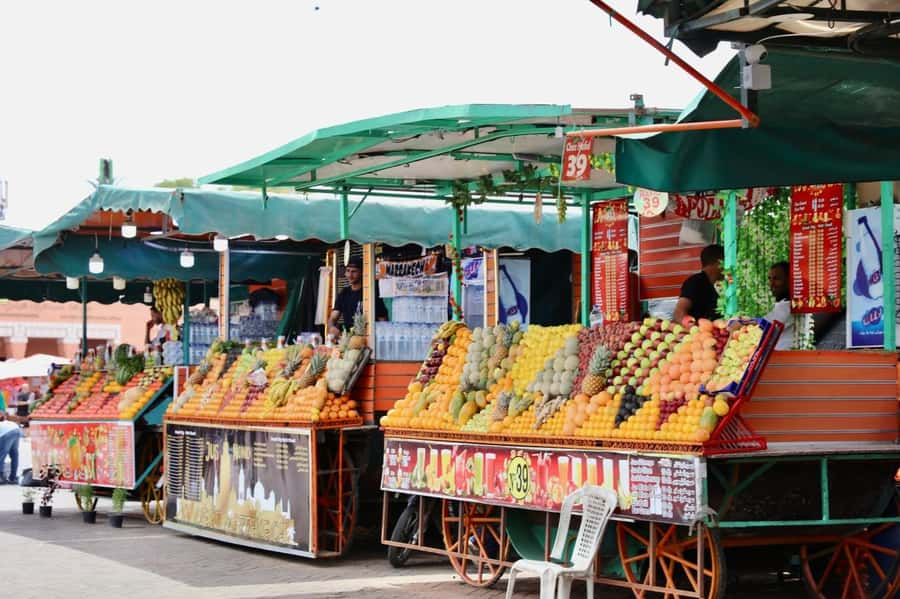
From there, you walk into the Medina and its souks. This is not a sightseeing tour with a few snacks added on. Food is the main thread, and the guide uses the streets, stalls, bakeries, and market displays to explain what you are eating.
I like this format because Moroccan food makes more sense when you see its ingredients before they reach the plate. Fresh produce, cuts of meat, spices, bread, and sweets all appear as part of the same food system. You get a better sense of how ordinary meals connect with the market.
The tradeoff is sensory overload. Marrakech at night can be noisy and crowded, and the smells of grilled meat, spices, bread, and sweets compete for your attention. That is part of the appeal, but you should wear comfortable shoes and stay close to your guide.
More Street Food Tours in Morocco:
- Marrakech: Street Food Tour with a Local Guide
★ 4.9 · 3,119 reviews - Marrakech: Street Food Tour by Night
★ 4.8 · 2,838 reviews - The Original Marrakech Street Food Tour
★ 5.0 · 248 reviews
Through Mellah market and the Medina
The walk includes Mellah market, an area filled with fresh produce, meats, and local specialties. It gives the tour a more grounded feel than simply eating at restaurants aimed at visitors.
Your guide can point out ingredients and explain how Moroccan cooks use them. Saffron, cumin, and ras el hanout are singled out as important flavors to notice. Ras el hanout is a complex spice blend, and tasting it alongside simpler seasonings helps you understand why Moroccan dishes can smell so different from one another.
You also learn about haggling, an everyday part of shopping in many souks. The tour does not turn bargaining into a performance. Instead, it gives you a little context for what you see around you, which can make later market visits less confusing.
The market portion may be the most useful part for anyone staying in Marrakech for several days. A plate of food can be memorable, but learning to recognize spices, bread, produce, and cooking methods gives you a better chance of making sense of the city’s food stalls on your own.
Pastry ovens, fresh bread, and Moroccan sweets
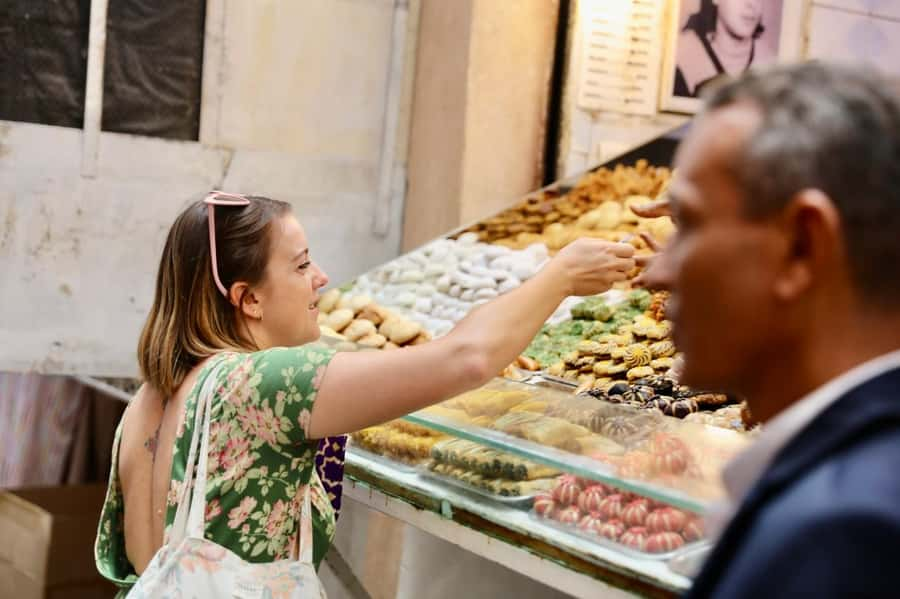
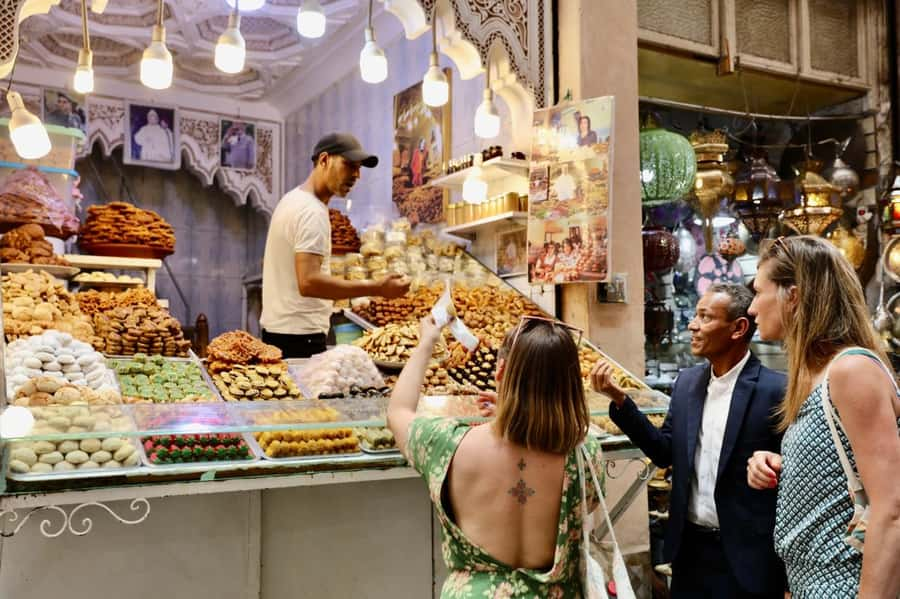
One of the more distinctive details is the chance to watch artisan pastry chefs at work. This brings the food out of the display case and into the process of making it.
You may see how pastries are prepared, shaped, or baked, then sample sweet items during the walk. Dates and Moroccan pastries provide a useful contrast to the meat dishes, while an almond drink adds another traditional flavor.
The tour also includes a local tagine recipe as a souvenir. That is a small but practical touch. You can buy a spice blend later, but a recipe gives you a way to remember the meal in your own kitchen.
You should not expect a hands-on cooking lesson. The available information describes demonstrations, explanations, and tasting rather than a class where you prepare the food yourself. If you want to cook alongside a chef, choose a dedicated cooking workshop instead.
Tagine, tangia, méchoui, and kofte
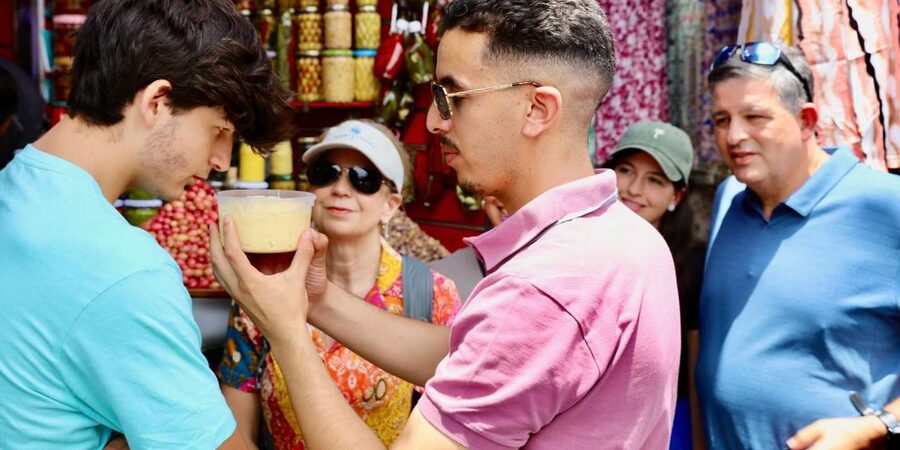
The savory portion covers several dishes associated with Moroccan food. Tagine is the familiar centerpiece, but the inclusion of tangia and méchoui gives the tour more range.
Méchoui is roast lamb, usually valued for its tender meat and slow cooking. Tangia is another Marrakech specialty, traditionally connected with long, slow cooking. Kofte brings a seasoned minced-meat dish into the mix, usually served with freshly baked bread.
The point is not to compare every dish like a restaurant critic. It is to notice how Moroccan food uses time, heat, spices, and bread to create filling meals from straightforward ingredients.
The food can be generous. One French-speaking guest described the portions as delicious but very filling, with a laughing warning that you may eat more than expected. Keep that in mind before the tour. A light meal earlier in the day may be sensible, since the tasting stops add up.
The exact dishes may depend on availability and the route that evening. The tour description lists the main food examples, but it does not promise a fixed tasting menu. If you have allergies or strict dietary needs, ask the provider before booking.
Same place, a different plate:
- Marrakech Street Food Tour
★ 5.0 · 220 reviews - Marrakech Night Street Food Tour / Taste The Real Marrakech
★ 4.9 · 200 reviews - Casablanca Food Tour – Moroccan Street Food Tour
★ 5.0 · 86 reviews - Marrakech street food tour with a local
★ 5.0 · 55 reviews
Three Moroccan salads and the details between bites
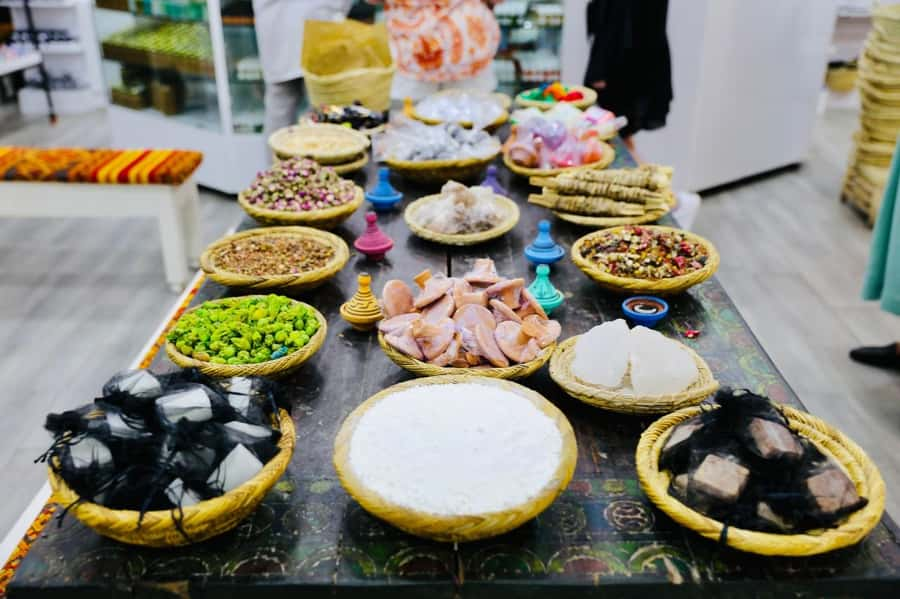
The tour includes three authentic Moroccan salads made with fresh ingredients. These are useful not just as side dishes, but as a way to see the range of Moroccan cooking.
Salads in Morocco need not mean a bowl of raw lettuce. They may include cooked vegetables, herbs, seasoning, and carefully balanced flavors. Tasting several versions side by side can help you notice how cumin, fresh ingredients, and cooking methods change the result.
This is also where the guide’s explanations matter. A good food walk should tell you what you are eating, how it is prepared, and why it belongs in the local kitchen. The guides speak English, Arabic, and French, so you can choose the language that makes those details easiest to follow.
The language options are helpful for mixed groups. A shared tour may have people with different interests, while a private tour gives you more room to ask questions. The experience is not described as a formal class, but it does offer practical food information you can use during the rest of your stay.
Why the private option may be worth the extra cost
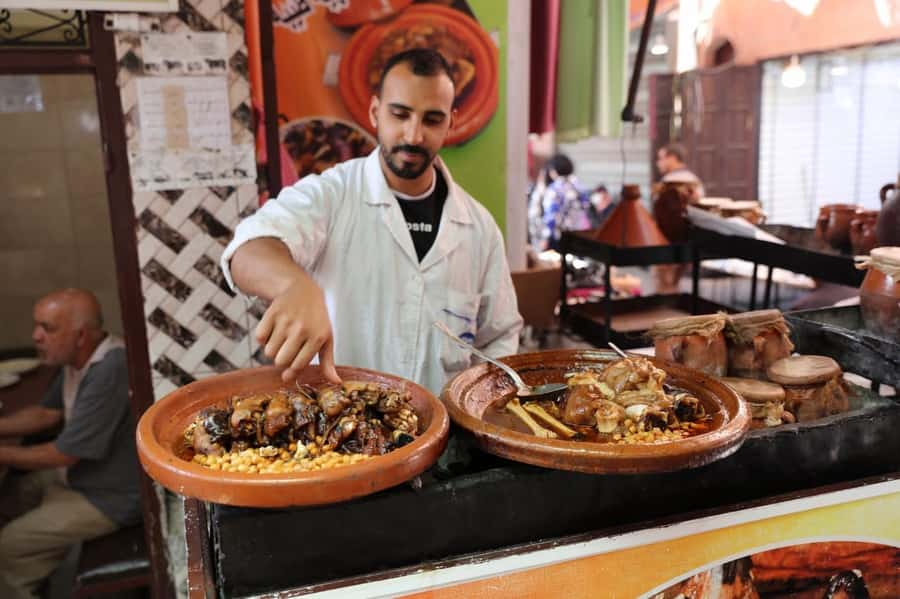
At $40 per person, the tour is priced above a simple meal but below a large, full-day food program. Your fee covers a guide, food, drinks, and either a shared or private format, depending on the booking you choose.
I see the value in the combination. You are not paying only for a plate of food. You are paying for a route through the Medina, help identifying dishes, explanations of spices and markets, and several tastings that would be harder to organize on your own in one evening.
A shared tour should suit you if you want a social outing and prefer to keep the cost controlled. The main drawback is less control over pace. You may need to wait for others, and the guide must balance different appetites and interests.
A private tour makes more sense for couples, families, or anyone who wants to ask many questions. One booking became private and received especially warm praise for NaJib’s personal attention, politeness, and willingness to help with the return to a taxi. That extra care cannot be guaranteed with every guide, but it shows why the private format can feel more personal.
The café finish with mint tea
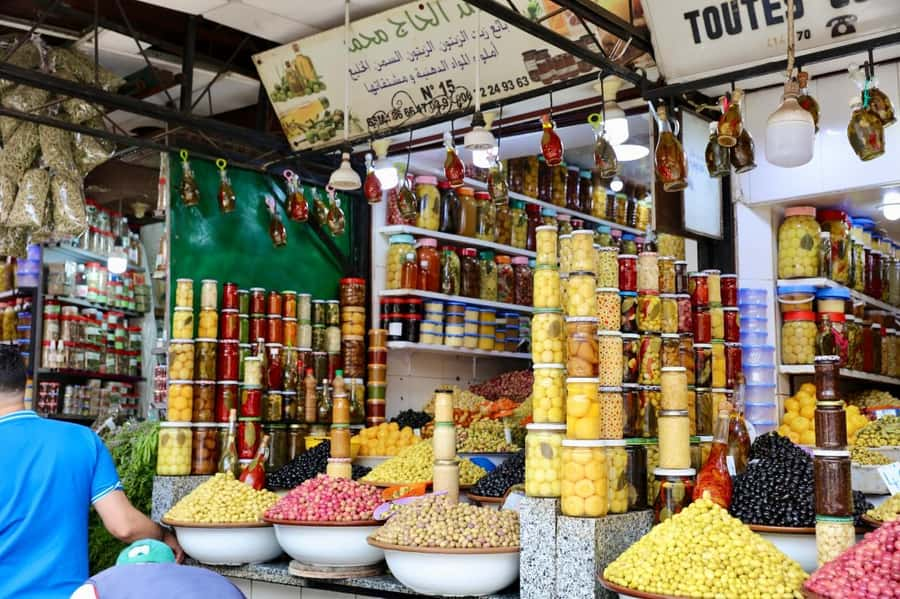
The last stop is a café terrace, where you sit down with Moroccan mint tea. After walking through the Medina, this pause matters. Two hours of standing, tasting, and navigating narrow streets can leave you ready for a chair.
The setting is described with rugs, mosaic lamps, fountains, and Moroccan decoration. This is not just a final drink. It gives you time to talk with the guide, ask about dishes you tried, and absorb the evening at a slower pace.
Mint tea is a fitting end because it is both a drink and a social custom. You finish with something familiar to anyone who has seen Moroccan tea service, but the café setting makes it less rushed than a quick cup at a food stall.
The tour does not include hotel pickup or drop-off. You need to arrange your own way to Jemaa el-Fnaa and your own return afterward. One guide helped walk a guest back to a booked taxi, but that was a personal gesture, not a listed transport service.
What the two-hour timing means
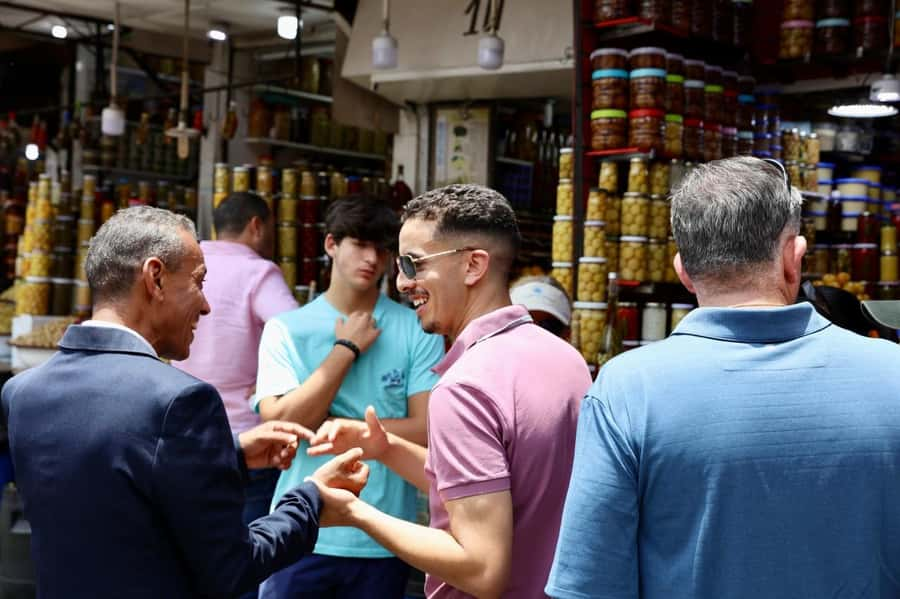
Two hours is enough for a focused introduction, especially if you have only a short stay in Marrakech. You get a route, several food samples, market context, and a seated drink without giving up an entire evening.
It is not enough for a slow meal at each stop. Think of the experience as a guided tasting walk rather than dinner at several restaurants. You will likely move between stops, eat modest amounts at many points, and finish feeling that you have sampled a broad range of Moroccan flavors.
The nighttime schedule also changes the mood. The Medina becomes more atmospheric after dark, and the evening food scene is part of the appeal. If you prefer quiet streets and long conversations, the noise may be tiring. If you want to see Marrakech at one of its liveliest times, the timing works well.
The activity is listed as wheelchair accessible. Because the route takes place in the Medina and souks, you should still confirm the practical route details before booking if you have specific mobility requirements. The information confirms accessibility but does not describe the exact street surfaces or any step-free access at every food stop.
What the guides add to the meal
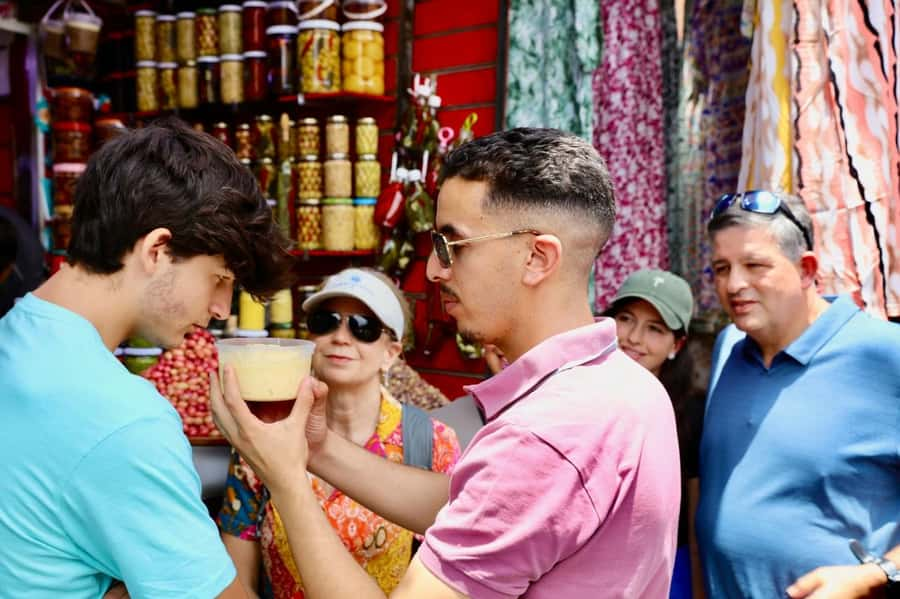
The food is the reason to book, but the guide determines how much you take away from it. The strongest praise went to the guides’ friendliness, generosity, and personal attention.
NaJib was described as polite, welcoming, and able to explain a wide range of subjects. Abdou was praised for being kind and generous during a meal that felt both delicious and very filling. Those comments suggest that the guiding style can be warm rather than purely scripted.
You should still keep expectations realistic. A guide may explain Moroccan cuisine, spices, market customs, and recipes, but no short walk can cover every regional dish or cooking tradition. The value is in getting a useful introduction while you eat.
If you book, asking whether NaJib or Abdou is available may be worthwhile, though guide requests cannot be assumed to be guaranteed. The tour is offered in English, Arabic, and French, which also helps you choose the right fit for your group.
Who should book this Marrakech food walk?
I would recommend it to you if you enjoy trying several foods in one evening and want more context than a restaurant meal provides. It is especially useful early in a Marrakech stay, when you are still learning the city’s food vocabulary and deciding what to try next.
It suits first-time visitors, couples, small groups, and curious eaters who like walking. The private option can work well for families or anyone who wants a more flexible conversation with the guide.
You may want to skip it if you dislike crowded markets, have a very restricted diet, or prefer a quiet sit-down dinner. You should also consider another activity if you want a full cooking lesson, extensive historical sightseeing, or hotel transportation.
Booking is flexible, with free cancellation up to 24 hours before the tour and a reserve-now, pay-later option. Starting times depend on availability, so check the evening schedule that fits your plans.
Should you book the Marrakech Street Food Tour?
Book it if you want a compact, food-centered introduction to Marrakech after dark. For $40, you receive more than a meal: you get several tastings, a guided walk through the Medina and Mellah market, explanations of spices and local dishes, and mint tea in a traditional café.
The best reason to choose it is the range. You can move from tagine and tangia to pastries, dates, salads, almond drinks, and mint tea in one evening. The best reason to hesitate is the fixed two-hour window and the uncertainty that comes with a shared route.
If personal attention matters, choose the private option. If you mainly want to taste, walk, and keep the price in check, the group format should do the job. Either way, arrive hungry, wear comfortable shoes, and save room for one more bite than you think you can manage.
FAQ
Where does the Marrakech Street Food Tour start?
The tour starts at Jemaa el-Fnaa Square in Marrakech.
How long does the tour last?
The tour lasts two hours.
What food can I expect to taste?
Possible tastings include tagine, méchoui, tangia, kofte, Moroccan pastries, dates, almond drinks, freshly baked bread, and three Moroccan salads.
Does the tour include drinks?
Yes. Food and drinks are included, with mint tea served at the final café stop.
Is mint tea included?
Yes. The tour ends with a relaxing mint tea session at a café terrace.
Can I choose a private tour?
Yes. You can select either a shared group tour or a private tour.
Which languages does the guide speak?
Guides are available in English, Arabic, and French.
Is hotel pickup included?
No. Hotel pickup and drop-off are not included.
Is the tour wheelchair accessible?
Yes. The activity is listed as wheelchair accessible.
Can I cancel for a full refund?
Yes. You can cancel up to 24 hours in advance for a full refund.
Just added around Morocco
- Marrakech Street food Tours★ 4.5 · 15 reviews
- Local Hidden Spots Street Food Tour in Medina Marrakech★ 5.0 · 30 reviews
- Marrakech Tasting Tour: Experience Local Street Food & Culture!★ 5.0 · 5 reviews
- 3 Hours Private Tour Marrakech Night Market★ 5.0 · 2 reviews
- Marrakech Street Food with +10Tasting & Tanjia Dinner|Guided Walk★ 5.0 · 21 reviews
- Taste Marrakech Street food tour from Medina★ 5.0 · 34 reviews
- Essaouira Guided Tour: 3 on 1 – Nightlife tour, Live like a local & Street food★ 4.5 · 32 reviews
- Fez Street Food Tour★ 4.5 · 33 reviews
Street Food Tours, compared.
Old Town, Creek, Museums, Souks, & Street Food Tour
What we made of it →
Ho Chi Minh City Street Food Tour & Sightseeing By Motorbike
What we made of it →
Comuna 13 Graffiti Tour, Cable Car & Street Food
What we made of it →
Old Town, Souks, Street Food, Guided Tour & Abra Ride
What we made of it →
Small Group Hanoi Street Food Tour with a Real Foodie
What we made of it →
Saigon By Night and Street Food By Motorbike | Opt: Ao Dai Riders
What we made of it →Where this tour turns up