
Review · OSAKA
Osaka: Kuromon Market Street Food Tour with Pro Local Guide
Come hungry, leave better oriented. This two-hour walk through Kuromon Market gives you a useful first look at Osaka’s food culture, with four to five local samples and a guide who can explain what you are eating. I especially like the small group limit of 10 people and the added stops at Sennichimae Doguyasuji Shotengai and Hozenji Yokocho, which make this more than a quick market snack run.
I also like the personal touch reported by guests who toured with guides Goku and Yuna. Yuna adjusted the walk to suit individual tastes and knew many of the market traders, while Goku earned praise for his food suggestions and easy company. The main caution is simple: people with food allergies should not book this tour, even though ordinary dietary requests may be accommodated.
Key points at a glance
- Four to five food samples: Expect local favorites such as grilled scallops, yakitori skewers, and takoyaki, though the exact selection can vary.
- Kuromon Market in the spotlight: You spend the full two hours around Osaka’s famous food market, known locally as Osaka’s Kitchen.
- Three useful areas in one walk: The route also includes Sennichimae Doguyasuji Shotengai and Hozenji Yokocho.
- Small groups capped at 10: This gives you a better chance to ask questions and discuss food preferences.
- Guides with local connections: Goku and Yuna have received especially warm praise for recommendations, flexibility, and personal knowledge of Osaka.
- Good practical preparation: Wear comfortable shoes, bring cash and a camera, and arrive ready to eat.
Why Kuromon Market makes a good first stop
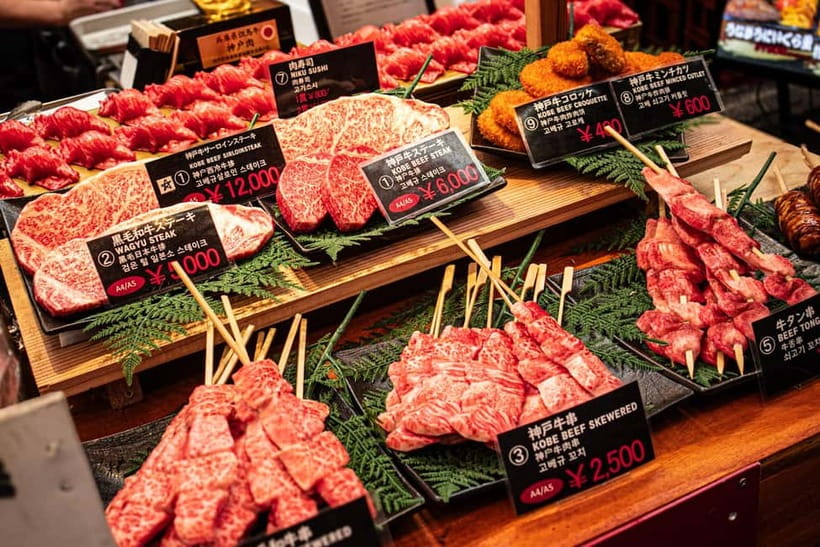
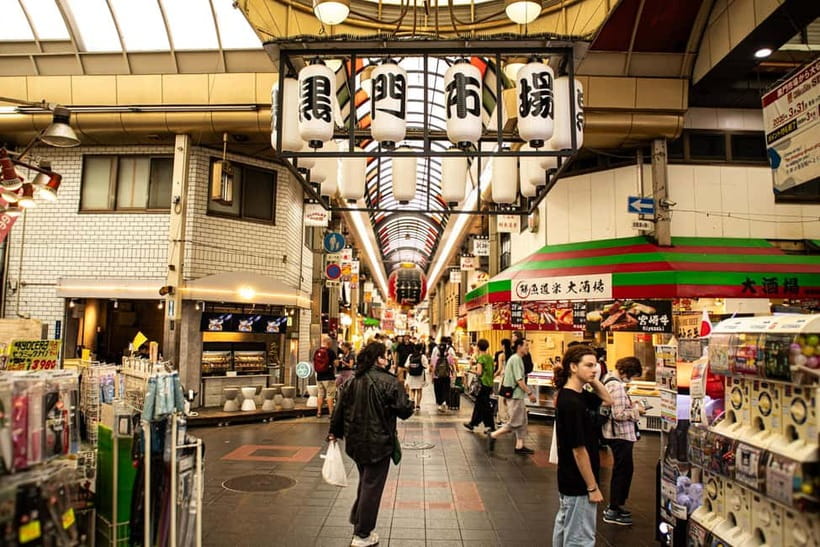
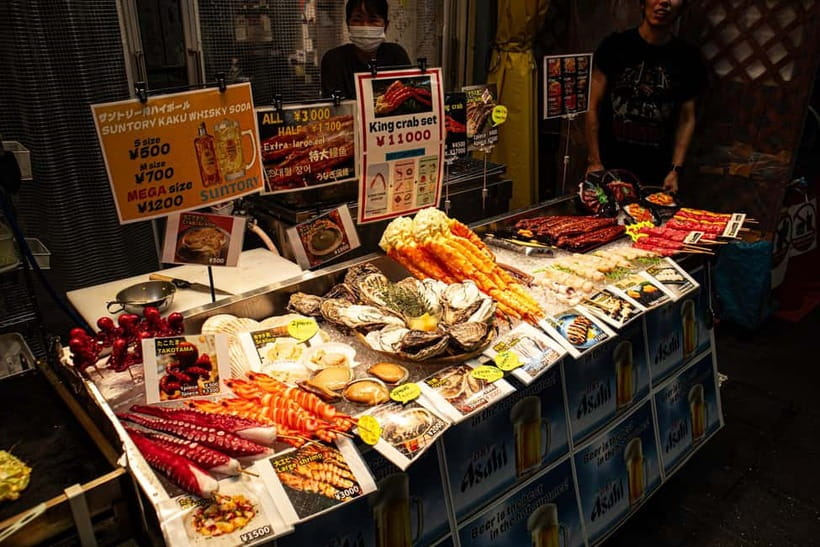
Kuromon Ichiba Market is a natural place to begin learning how Osaka eats. The market is known as Osaka’s Kitchen, and that nickname tells you what to expect: food is not merely sold here as a souvenir or photo prop. It is central to the identity of the area.
A guide helps turn a walk through stalls into a meal with context. You can ask what a dish is, how it is prepared, and why it matters in Osaka. Without that help, it is easy to point at something appealing, order it, and miss the story behind it.
The tour sets aside two hours for the market visit. That is enough time for several tastings and conversation, but it is not a slow, all-day food crawl. I see this as a strength for most people. You get a focused introduction without giving up half your day.
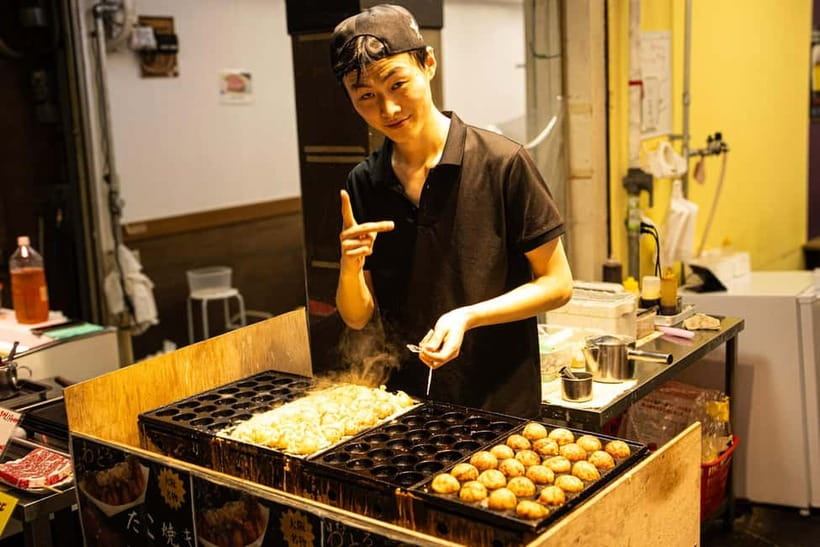
The four to five samples are a useful middle ground. You will taste several local foods, but you are not expected to eat a full meal at every stop. Examples include grilled scallops, yakitori skewers, and takoyaki. Takoyaki, the familiar Osaka-style battered octopus snack, is a particularly fitting choice in this setting, though the exact food lineup is not fixed.
Come with some appetite. Additional food and drinks are not included, so you may want to buy something extra if a stall catches your eye or if the sample portions leave you wanting more.
More Street Food Tours in Osaka:
- Hungry Osaka Street Food Tour:15 Tastings & 3 Drinks with a Local
★ 5.0 · 1,727 reviews - Hungry Osaka Street Food Tour: 15 Dishes & 3 Drinks
★ 4.9 · 694 reviews - [1 Group Only] Osaka Street Food Tour for Family
★ 5.0 · 208 reviews
What the Kuromon food stops are really like
The best part of a market tour is not simply the number of bites. It is the chance to compare foods that look similar from the outside and to learn how locals approach them.
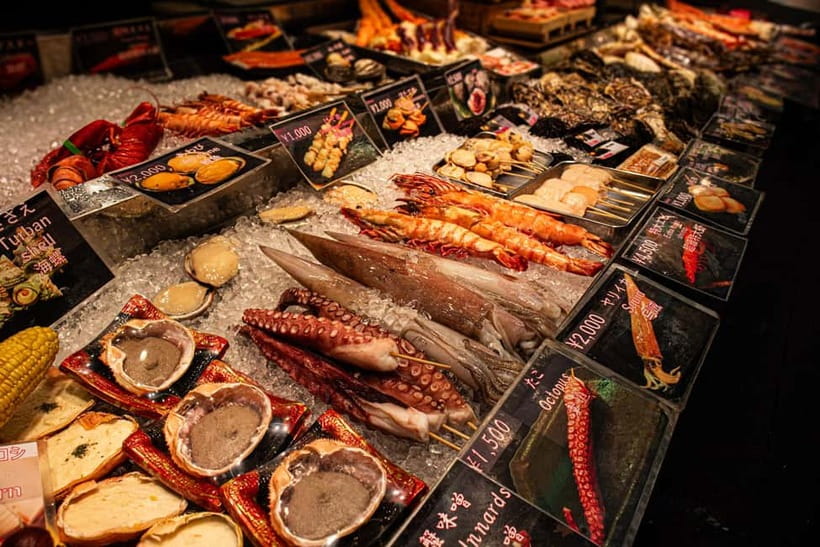
A grilled scallop gives you a taste of the market’s seafood side. Yakitori shows a different style of casual eating, built around skewers and quick service. Takoyaki brings in one of Osaka’s best-known street foods. Together, these examples offer variety in texture, preparation, and flavor.
Your guide can also help with the social side of eating in Japan. The guide is described as a professional Japanese cultural and etiquette expert, so the tour is intended to cover more than ingredients. That matters if you are unsure about how to order, where to stand, or how to approach a busy food stall.
You should keep your expectations sensible. This is not presented as a private chef experience or a sit-down restaurant meal. The food is eaten as part of a walking route, and the focus is on sampling and learning. If you want a long lunch with generous portions, the $51 price may feel less attractive. If you want a well-planned introduction to Osaka’s market food, the cost is easier to justify.
Sennichimae Doguyasuji Shotengai adds a different flavor
The route does not stop at food. Sennichimae Doguyasuji Shotengai is known for Japanese kitchenware, making it a useful change of pace after the market tastings.
Here, your guide can point out the kind of tools and objects that shape Japanese cooking culture. The information provided does not promise specific shops or purchases, so you should treat this as an introduction rather than a shopping tour. Still, this stop gives you a better idea of how food culture extends beyond what appears on a plate.
It is also a good place to get souvenir advice. The guide offers insider suggestions about souvenirs, which can save you from buying the first novelty item you see. If you enjoy cooking, this part may be especially appealing. If you are focused only on eating, it may feel like a short pause from the main attraction.
That balance is one reason the guide matters. A fixed audio tour could tell you where you are, but a local guide can respond to your interests. Yuna, one of the named guides, was praised for adjusting the experience around personal likes, dislikes, and interests. That sort of flexibility is valuable in a market where not every food appeals to every person.
Hozenji Yokocho brings in old Osaka atmosphere
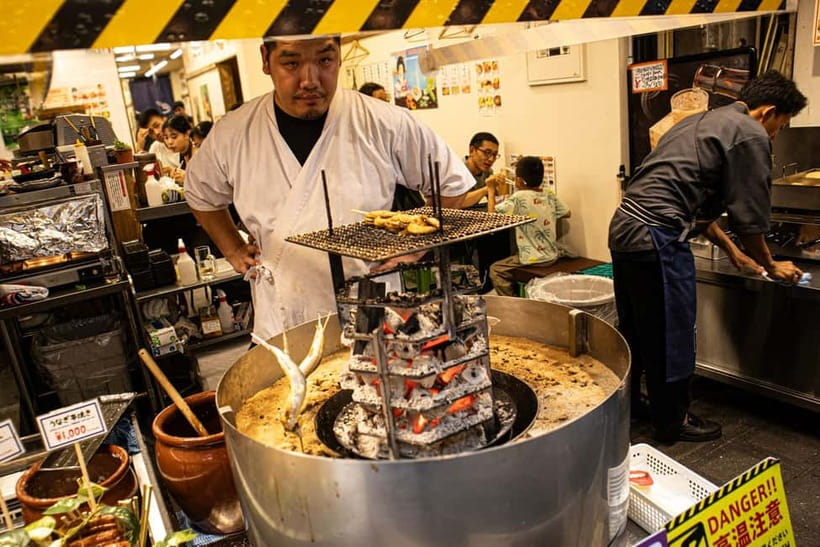
Hozenji Yokocho provides the route’s most traditional setting. This narrow alley area offers a different mood from the market and the kitchenware street, giving you a glimpse of older Osaka pathways and neighborhood character.
The stop helps connect food with place. Osaka’s dining culture is not limited to market stalls. It also appears in small lanes, local gathering spots, and long-running customs. Your guide can explain that connection through stories about Osaka’s food culture and local markets.
Do not expect a long historical lecture. The tour lasts only two hours and includes several food stops, so the information will be selective. That is probably the right approach for a first visit. You get enough background to understand the places you pass without turning a snack walk into a formal history class.
Hozenji Yokocho also makes the route feel more varied. The tour starts with market activity, moves through kitchenware shops, and finishes with a traditional alley setting. You are not simply walking in a straight line from one food stall to another.
Same place, a different plate:
- Umami Town Street Food Tour
★ 5.0 · 120 reviews - Osaka: 2-Hour Local Street Food Tour – Dotonbori & Namba
★ 4.6 · 95 reviews - Eat Osaka: Street Food Cooking in an Authentic Kitchen!
★ 5.0 · 87 reviews - Retro Osaka Street Food Tour: Shinsekai
★ 4.5 · 77 reviews
The guides are the key to the experience
Food markets can be confusing, especially when you do not read Japanese or know which stalls are worth your time. A local guide gives you a clear path and a person to ask.
Goku received especially warm praise for delicious food choices, helpful recommendations, and a friendly connection with his group. That last point matters. A two-hour walk works best when the guide feels approachable rather than rushed.
Yuna was praised for having lived in Osaka for many years and for knowing many traders personally. Her reported ability to adjust the route to personal likes and dislikes suggests that this is not meant to be a rigid script. If you have strong preferences, tell the guide early.
The guide language is English, with French, Spanish, Russian, and Japanese also available upon request. You should confirm your preferred language when booking rather than assume it will be offered automatically.
The group limit is 10 people. That is small enough for questions and conversation, while still keeping the price below many private tour rates. Private groups are also available, though the cost for that option is not provided.
Is $51 a fair price?
At $51 per person, the price covers a two-hour guided walk, four to five food samples, and visits to three distinct Osaka areas. Transportation to and from the meeting point, plus extra food and drinks, are not included.
For a self-guided visitor, $51 is a meaningful premium. You could walk through Kuromon Market on your own and pay only for what you eat. The value here comes from the guide’s explanations, food selection, cultural background, and help with local etiquette.
I would see the price as fair if you are new to Osaka, uncertain about Japanese food, or short on time. The guide helps you make better use of two hours and may prevent you from wasting money on random choices. It also gives you a starting point for returning to the market later by yourself.
The value is weaker if you already know Kuromon Market well, speak Japanese comfortably, or prefer to choose every dish independently. It is also not the best fit if you want a long, filling meal. Think of the fee as paying for orientation and access to local insight, with food included as part of the lesson.
Timing, meeting points, and what to bring
There are two possible starting options, both at the Picasso Nihonichi Building and the Sumitomo Mitsui Banking Corporation ATM. The exact meeting point may depend on the option you book, so check your confirmation carefully.
The listed route returns to the same two location options. That makes the tour easy to connect with nearby plans, but transportation to the meeting point is your responsibility.
Wear comfortable shoes. You will be walking for two hours, and a market route may involve standing while eating. Bring cash because extra purchases and drinks are not included. A camera is also recommended, though you should be considerate when photographing stalls, sellers, and other people.
The tour offers free cancellation up to 24 hours in advance, and you can reserve now and pay later. Those terms are useful if your Osaka schedule is still changing. Starting times depend on availability.
Food preferences and allergy concerns
Dietary requests can be accommodated, so tell the provider about your needs before the tour. That does not mean every restriction can be handled safely.
People with food allergies are specifically listed as unsuitable for this experience. If an allergy could cause a serious reaction, do not rely on a general request or verbal reassurance. This tour is built around market food, shared surroundings, and changing sample options, so it is not the right choice for allergy-sensitive diners.
For ordinary dislikes or preferences, the experience may be more flexible. The adjustment reported with Yuna is encouraging for people who avoid certain foods or want to focus on particular interests. Still, you should communicate clearly when booking and again at the start.
Who will enjoy this Osaka walk most?
I would recommend this tour to first-time visitors who want a quick, guided introduction to Osaka’s food culture. It suits people who enjoy trying small portions, asking questions, and learning why a place matters.
It is also a good match for couples and small groups. The 10-person maximum keeps the experience more personal than a large coach-style outing. The positive comments about Goku and Yuna suggest that the human connection can be as important as the food.
You may also like it if you want help choosing souvenirs. The kitchenware stop gives the walk a practical shopping angle, while the Hozenji Yokocho visit adds a traditional local setting.
I would be more cautious if you are a serious food enthusiast seeking rare dishes, large portions, or a full restaurant itinerary. The tour offers selected samples rather than a complete survey of Osaka cuisine. It is an introduction, not an exhaustive food expedition.
Should you book the Kuromon Market tour?
Book it if you want a friendly two-hour orientation to Osaka through food, markets, kitchenware, and old alleyways. The strongest reasons are the small group size, four to five tastings, and guides such as Goku and Yuna, who have been praised for personal recommendations and flexibility.
Skip it if you have severe food allergies, dislike walking while eating, or prefer to choose every stop on your own. Also remember that $51 does not cover transportation or extra purchases.
For most first-time visitors, the tour makes sense early in an Osaka stay. You can learn what to order, pick up food and souvenir tips, and return to Kuromon Market later with more confidence. That practical head start is the real value.
FAQ
How long does the Kuromon Market food tour last?
The tour lasts two hours and centers on a walking visit to Kuromon Ichiba Market.
How many food samples are included?
You receive four to five selected samples of local dishes. Examples include grilled scallops, yakitori skewers, and takoyaki.
What places are visited besides Kuromon Market?
The tour includes Sennichimae Doguyasuji Shotengai and Hozenji Yokocho.
What languages are available?
English is the main tour language. French, Spanish, Russian, and Japanese may also be available upon request.
Can dietary requests be accommodated?
Dietary requests can be accommodated, but people with food allergies are not considered suitable for this tour.
What is the group size?
The small-group tour has a maximum of 10 people. Private groups are also available.
Just added around Osaka
- Osaka Street Food Tour: Private & Personalized★ 4.5 · 36 reviews
- Retro Osaka Street Food Tour: Shinsekai★ 4.5 · 77 reviews
- Osaka 2 Hour Local Street Food Tour in Dotonbori and Namba★ 5.0 · 2 reviews
- Evening Street Food Hopping Tour in Downtown Osaka★ 5.0 · 8 reviews
- Eat Osaka: Street Food Cooking in an Authentic Kitchen!★ 5.0 · 87 reviews
- Deep Dive: Osaka Food Markets from Local to Luxurious!★ 5.0 · 31 reviews
- Eat Like a Local in Osaka – Private Custom Street Food Tour★ 4.3 · 33 reviews
- Osaka Shinsekai Street Food Tour – Evening★ 5.0 · 2 reviews
Street Food Tours, compared.

Old Town, Creek, Museums, Souks, & Street Food Tour
What we made of it →
Ho Chi Minh City Street Food Tour & Sightseeing By Motorbike
What we made of it →
Comuna 13 Graffiti Tour, Cable Car & Street Food
What we made of it →
Old Town, Souks, Street Food, Guided Tour & Abra Ride
What we made of it →
Small Group Hanoi Street Food Tour with a Real Foodie
What we made of it →
Saigon By Night and Street Food By Motorbike | Opt: Ao Dai Riders
What we made of it →Where this tour turns up